
Lubricant Additives Market Report 2026
Global Outlook – By Type (Dispersants, Viscosity Index Improvers, Detergents, Anti-Wear Agents, Antioxidants, Corrosion Inhibitors, Friction Modifiers, Emulsifiers, Other Types), By Lubricant Type (Engine Oil, Transmission And Gear Oils, Hydraulic Fluids, Greases, Metal Working Fluids, Other Lubricant Types), By End User (Automotive And Transportation, Food Processing, Metal Working, Power Generation, Other End User) – Market Size, Trends, Strategies, and Forecast to 2030
Lubricant Additives Market Overview
• Lubricant Additives market size has reached to $18.79 billion in 2025 • Expected to grow to $23.98 billion in 2030 at a compound annual growth rate (CAGR) of 5% • Growth Driver: Surging Automotive Sales Propel Expansion In The Lubricant Additives Market • Market Trend: Innovative Multifunctional Lubricant Additives Enhance Performance And Efficiency In Polyester Applications • Asia-Pacific was the largest region and fastest growing region.Market Gains By 2030 – Top Opportunities By Segment
Market Gain identifies the most promising market opportunities by highlighting the segments or products expected to generate the highest incremental revenue growth over the next five years.
What Is Covered Under Lubricant Additives Market?
Lubricant additives are substances that are added to lubricants in order to improve their performance and extend their lifespan. Its primary function is to increase the quality of the base stock under varying operating situations and to meet the high-performance requirements of any machinery. The main types of lubricant additives are dispersants, viscosity index improvers, detergents, anti-wear agents, antioxidants, corrosion inhibitors, friction modifiers, emulsifiers, and other types. Dispersants are chemical substances that help break up an oil slick into extremely minute droplets that dissolve throughout the water. The various lubricant types include engine oil, transmission and gear oils, hydraulic fluids, greases, metal working fluids, and other lubricants types. They are used by various end-users such as automotive and transportation, food processing, metal working, power generation, and other end users.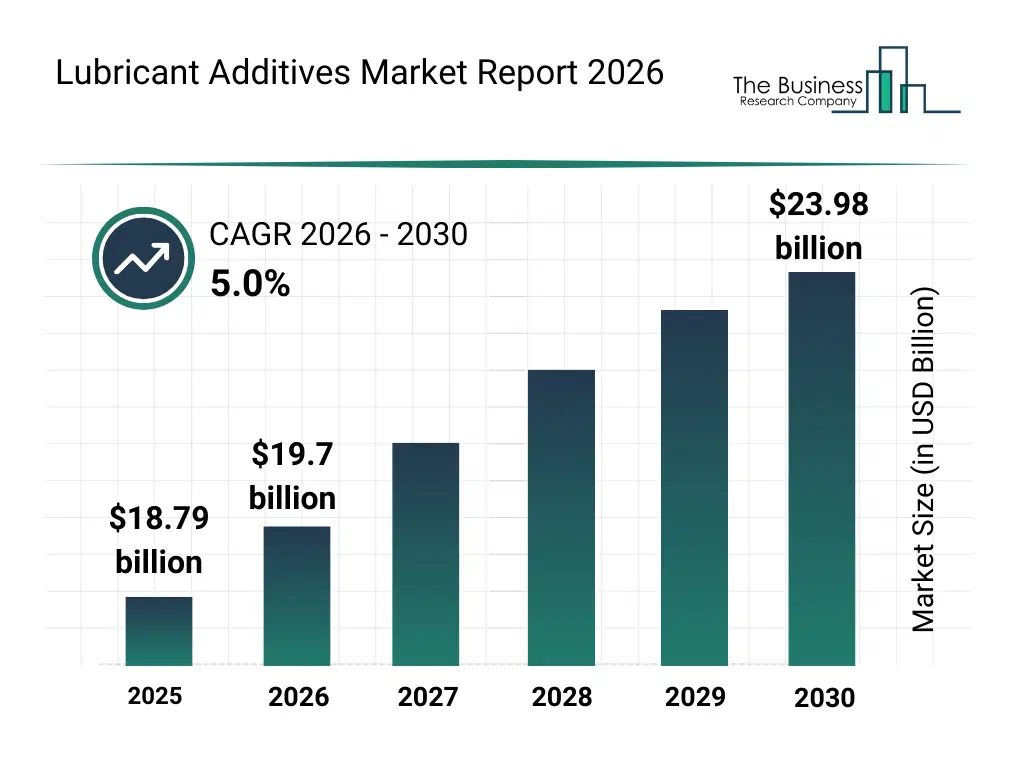
What Is The Lubricant Additives Market Size and Share 2026?
The lubricant additives market size has grown steadily in recent years. It will grow from $18.79 billion in 2025 to $19.7 billion in 2026 at a compound annual growth rate (CAGR) of 4.9%. The growth in the historic period can be attributed to growth of automotive production, expansion of industrial machinery usage, increasing demand for long-drain lubricants, availability of conventional additive chemistries, established lubricant blending capacity.What Is The Lubricant Additives Market Growth Forecast?
The lubricant additives market size is expected to see strong growth in the next few years. It will grow to $23.98 billion in 2030 at a compound annual growth rate (CAGR) of 5.0%. The growth in the forecast period can be attributed to rising adoption of electric and hybrid vehicles, increasing demand for high-temperature stable additives, expansion of industrial automation equipment, growing focus on biodegradable lubricants, increasing investments in additive innovation. Major trends in the forecast period include increasing demand for high-performance engine oil additives, rising adoption of low-emission lubricant formulations, growing use of advanced anti-wear agents, expansion of synthetic and semi-synthetic lubricants, enhanced focus on fuel efficiency.
Global Lubricant Additives Market Segmentation
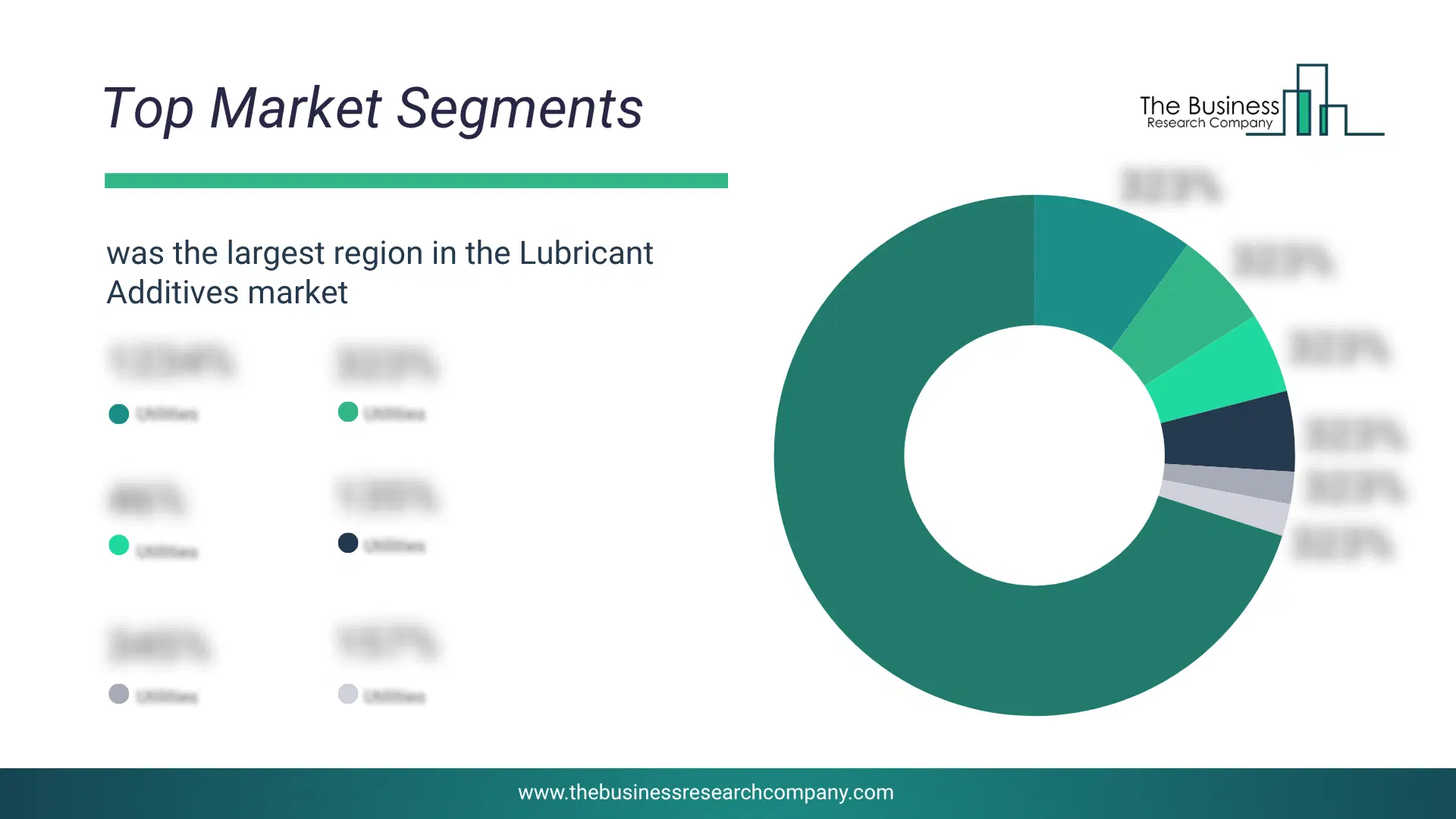
1) By Type: Dispersants, Viscosity Index Improvers, Detergents, Anti-Wear Agents, Antioxidants, Corrosion Inhibitors, Friction Modifiers, Emulsifiers, Other Types 2) By Lubricant Type: Engine Oil, Transmission And Gear Oils, Hydraulic Fluids, Greases, Metal Working Fluids, Other Lubricant Types 3) By End User: Automotive And Transportation, Food Processing, Metal Working, Power Generation, Other End User Subsegments: 1) By Dispersants: Ashless Dispersants, Metallic Dispersants 2) By Viscosity Index Improvers: Olefin Copolymers, Polyisobutylenes, Styrene-Diene Copolymers 3) By Detergents: Overbased Detergents, Neutral Detergents 4) By Anti-Wear Agents: Zinc Dialkyldithiophosphate (ZDDP), Phosphorus Compounds, Sulfur Compounds 5) By Antioxidants: Phenolic Antioxidants, Aminic Antioxidants, Organosulfur Compounds 6) By Corrosion Inhibitors: Fatty Acid Derivatives, Amines And Amine Salts, Phosphate Esters 7) By Friction Modifiers: Organic Friction Modifiers, Molybdenum Compounds 8) By Emulsifiers: Nonionic Emulsifiers, Anionic Emulsifiers, Cationic Emulsifiers 9) By Other Types: Pour Point Depressants, Foam Inhibitors, Extreme Pressure Additives The top segments in the lubricant additives market will be: • Dispersants will reach $5.63 Billion by 2030. • Viscosity Index Improvers will reach $5.37 Billion by 2030. • Detergents will reach $2.55 Billion by 2030. • Anti-Wear Agents will reach $2.31 Billion by 2030. • Antioxidants will reach $2.08 Billion by 2030.What Is The Driver Of The Lubricant Additives Market?
The increasing automotive sales are expected to boost the growth of the lubricant additives market going forward. The automotive industry consists of a wide range of organizations and enterprises with the essential objective of designing, developing, marketing, producing, and selling motor vehicles. Lubricant additives are used in automotive engines to improve the performance and extend the life of the lubricant; thus, the usage of lubricant additives increased in the automotive sector. For instance, in March 2024, according to the European Automobile Manufacturers' Association, a Belgium-based auto industry body, in 2023, global car production rose by 10.2% compared with 2022. Therefore, the increasing automotive sales are driving the growth of the lubricant additives industry.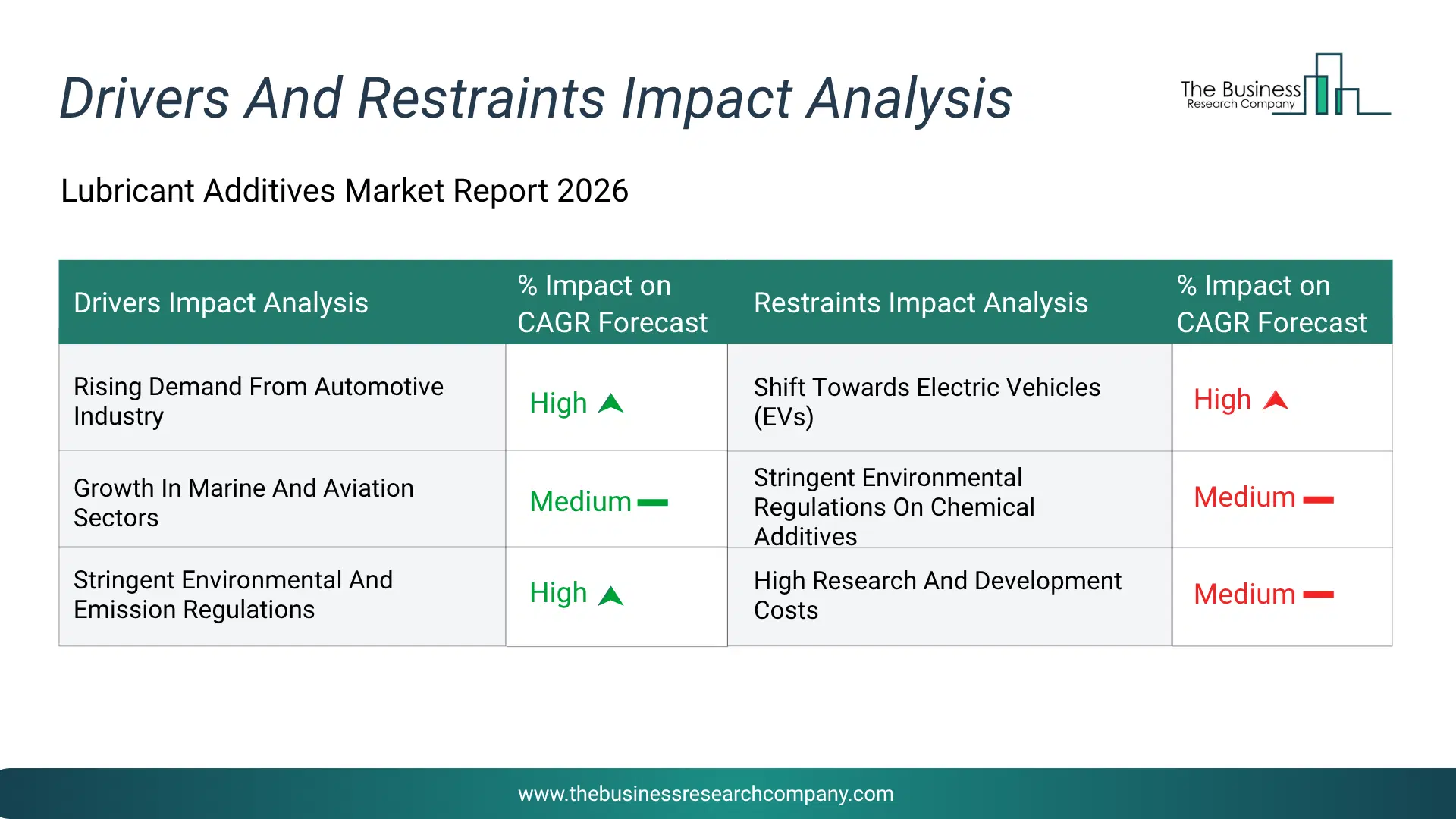
Infographic Chart Showing Key Market Drivers Analysis And Restraints For Lubricant Additives Market
The chart presents an impact analysis of key drivers and restraints, quantifying their relative influence on the market's growth rate and helping assess the balance between growth enablers and limiting factors. This chart offers a high-level perspective; the full report contains more detailed insights.
How Will The Drivers Impact Growth In The Global Lubricant Additives Market?
• Rising Demand From Automotive Industry (High) – During the forecast period, the rising demand from the automotive industry is expected to become a key growth driver for the lubricant additives market by 2030. Increasing vehicle production and a growing global vehicle parc are creating sustained demand for advanced lubricants that improve engine cleanliness, reduce friction, and enhance operational reliability. Modern powertrains require high-performance additive packages capable of supporting longer drain intervals and improved fuel economy. Lubricant manufacturers are therefore focusing on developing specialized additive formulations that meet evolving engine specifications and performance requirements. • Growth In Marine And Aviation Sectors (Medium) – During the forecast period, the growth in marine and aviation sectors is expected to emerge as a major factor driving the expansion of the lubricant additives market by 2030. Increasing global trade activities, expanding commercial fleets, and rising air passenger traffic are boosting the consumption of high-performance lubricants across marine vessels and aircraft. These applications require additives that can withstand extreme operating conditions, provide superior oxidation stability, and protect critical equipment from wear. The growing need for reliability and efficiency in transportation assets is further accelerating the adoption of advanced additive technologies. • Stringent Environmental And Emission Regulations (High) – During the forecast period, the stringent environmental and emission regulations are expected to act as a key growth catalyst for the lubricant additives market by 2030. Regulatory authorities worldwide are implementing stricter standards aimed at reducing emissions, improving energy efficiency, and minimizing environmental impact. This is encouraging the development of low-ash, low-sulfur, and environmentally compatible lubricant formulations that rely on advanced additive technologies. Manufacturers are increasingly investing in innovative solutions that support regulatory compliance while maintaining equipment performance and durability.How Will The Restraints Impact Growth In The Global Lubricant Additives Market?
• Shift Towards Electric Vehicles (EVs) (High) – During the forecast period, the growing adoption of electric vehicles acts as a significant restraint on the lubricant additives market because EVs require far fewer lubricants compared to traditional internal combustion engine (ICE) vehicles. Conventional engines depend heavily on engine oils enhanced with additives to reduce friction, prevent wear, and improve efficiency. In contrast, EVs have simpler drivetrains with fewer moving parts, which drastically lowers the need for engine oils and related additives. As global governments promote EV adoption through incentives and regulations, the demand for automotive lubricants—and consequently lubricant additives—declines. This structural shift reduces long-term growth opportunities for additive manufacturers, particularly those heavily dependent on the automotive sector. Additionally, EV-specific fluids often require different formulations, forcing companies to adapt while facing shrinking volumes in their core product segments. • Stringent Environmental Regulations On Chemical Additives (Medium) – During the forecast period, the increasingly strict environmental policies imposed by regulatory bodies such as the Environmental Protection Agency limit the use of certain chemical additives due to their potential environmental and health hazards. Many traditional lubricant additives contain substances that can contribute to pollution, toxicity, and bioaccumulation. As a result, manufacturers must comply with evolving regulations that restrict or ban specific chemicals, leading to reformulation challenges. This not only increases compliance costs but also slows down product development cycles. Companies may need to invest in safer, environmentally friendly alternatives, which may not always deliver the same performance levels or may be more expensive. These regulatory pressures can reduce profit margins and create barriers for smaller players who lack the resources to meet compliance standards, thereby restraining overall market growth. • High Research And Development Costs (High) – During the forecast period, the lubricant additives industry requires continuous innovation to meet evolving performance standards, environmental regulations, and changing machinery requirements. Developing advanced additives that can withstand extreme conditions, improve efficiency, and remain environmentally compliant involves significant investment in research and development (R&D). This high cost burden can be a major restraint, especially for small and medium-sized enterprises that may lack sufficient capital. Moreover, the R&D process is often time-consuming and uncertain, with no guaranteed commercial success. Companies must also invest in testing, certification, and scaling up production, further increasing expenses. As competition intensifies and customers demand high-performance, sustainable solutions, the pressure to innovate grows, making it difficult for some players to sustain profitability and limiting market expansion.Key Players In The Global Lubricant Additives Market
Major companies operating in the lubricant additives market are Badische Anilin und Soda Fabrik Societas Europaea SE, Evonik Industries AG, Infineum International Limited, Chevron Oronite, The Lubrizol Corporation, Croda International PLC., Afton Chemical Corporation, Exxon Mobil Corporation, Valvoline Inc., Italmatch Chemicals S.p.A, Vanderbilt Chemicals LLC, Rhein Chemie Corporation, Laxness Corporation, Dover Chemical Corporation, Wuxi South Petroleum Additives, Akzo Nobel, Shell International B.V, China National Petroleum Corporation, Shamrock, Tianhe Chemicals, BRB International, Adeka Corporation, Dorfketal Chemicals (I) Pvt Ltd, Jinzhou Kangtai Lubricant Additives Co. Ltd, King Industries Inc., Multisol Group, RT Vanderbilt Holding Company Inc., Shepherd Chemical, Sinopec Corp., Total S.A., Royal Dutch Shell plc, British Petroleum public limited company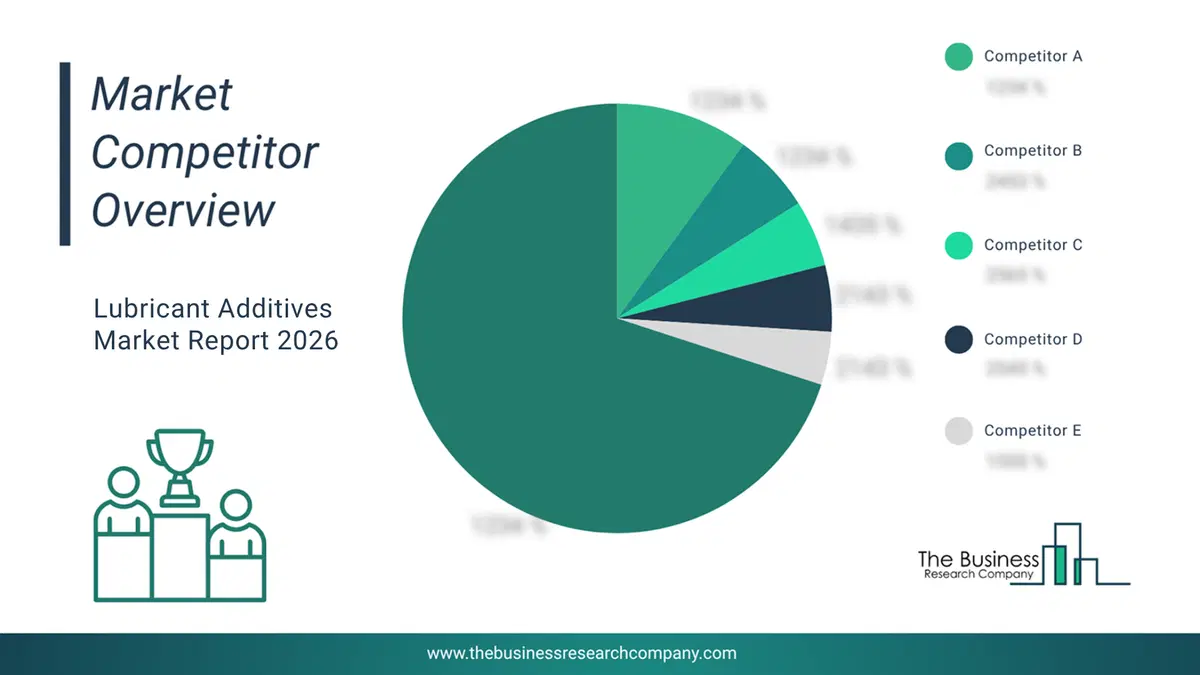
This chart is for illustrative purposes; the full report includes a detailed competitor analysis and comprehensive overview of the top 10 companies in the market.
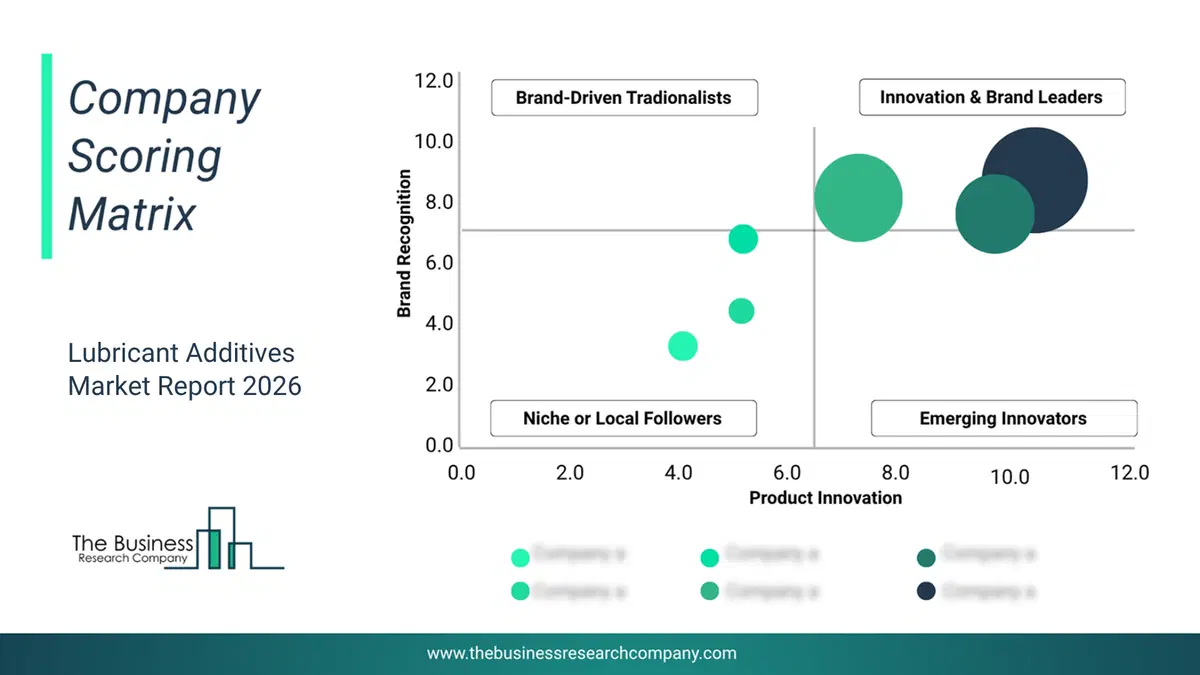
This chart maps companies by product innovation and brand strength, with bubble size indicating relative revenue, helping identify market leaders, challengers, and niche players. This is an illustrative chart; the full report provides a complete and accurate competitive analysis.
Global Lubricant Additives Market Trends and Insights
Major companies operating in the lubricant additives market are developing new products, such as multifunctional lubricant additives, to provide reliable services to customers. Multifunctional lubricant additives are chemical substances incorporated into lubricants to improve their performance and characteristics for various functions. For instance, in January 2024, CAI Performance Additives, a US-based producer of high-performance additives, launched the ST-PA229C series of lubricant additives for polyester applications. It offers superior performance designed for polyester applications such as PET and PBT. These additives enhance the temperature range for PET crystallization, leading to reduced cycle times and energy savings during sheet film production and injection molding. Key features include an increased melt flow index, improved elongation, enhanced dispersion, better compatibility, and the ability to increase loading content, making them versatile for various applications.What Are Latest Mergers And Acquisitions In The Lubricant Additives Market?
In February 2025, Univar Solutions, a US-based distributor of specialty chemicals and ingredients, acquired Brad-Chem Holdings for an undisclosed amount. With this acquisition, Univar Solutions aims to strengthen its Ingredients & Specialties business and expand its ability to supply and blend specialty lubricant additives, functional additives, and base stocks across the UK and Europe. Brad-Chem Holdings is a UK-based supplier that manufactures and distributes corrosion control products, multi-metal corrosion inhibitors, solid lubricants, and other lubricant additives for lubricants, metal-working fluids, coatings, and related industries.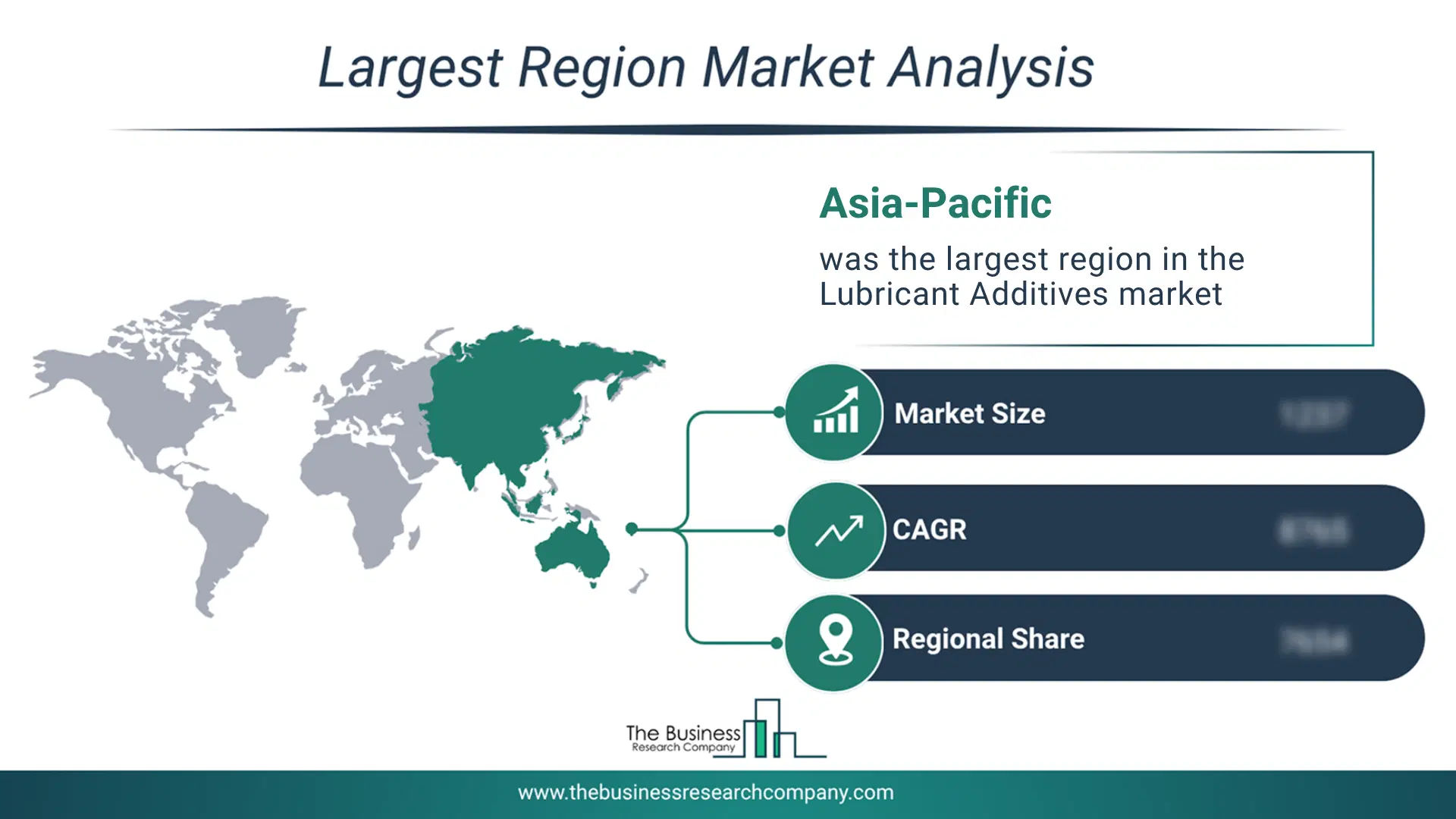
Regional Insights
Asia-Pacific was the largest region in the lubricant additives market in 2025. The regions covered in this market report are Asia-Pacific, South East Asia, Western Europe, Eastern Europe, North America, South America, Middle East, Africa The countries covered in this market report are Australia, Brazil, China, France, Germany, India, Indonesia, Japan, Taiwan, Russia, South Korea, UK, USA, Canada, Italy, SpainWhat Defines the Lubricant Additives Market?
The lubricant additives market consists of sales of extreme pressure additives, extreme temperature additives, and biocide additives. Values in this market are ‘factory gate’ values, that is the value of goods sold by the manufacturers or creators of the goods, whether to other entities (including downstream manufacturers, wholesalers, distributors, and retailers) or directly to end customers. The value of goods in this market includes related services sold by the creators of the goods.How is Market Value Defined and Measured?
The market value is defined as the revenues that enterprises gain from the sale of goods and/or services within the specified market and geography through sales, grants, or donations in terms of the currency (in USD unless otherwise specified). The revenues for a specified geography are consumption values that are revenues generated by organizations in the specified geography within the market, irrespective of where they are produced. It does not include revenues from resales along the supply chain, either further along the supply chain or as part of other products.
This chart presents market attractiveness based on a quantitative evaluation of growth, competition, strategic alignment, and risk, offering a clear view of opportunity areas for decision-making. This chart is for illustrative purposes; the full report contains the complete analysis.

This chart highlights the Total Addressable Market (TAM) by estimating the maximum revenue opportunity using an assumption-driven approach, supporting strategic planning and opportunity sizing across markets. The chart is illustrative; the full report provides a more comprehensive analysis.
What Key Data and Analysis Are Included in the Lubricant Additives Market Report 2026?
The lubricant additives market research report is one of a series of new reports from The Business Research Company that provides market statistics, including industry global market size, regional shares, competitors with the market share, detailed market segments, market trends and opportunities, and any further data you may need to thrive in the lubricant additives industry. The market research report delivers a complete perspective of everything you need, with an in-depth analysis of the current and future state of the industry.Lubricant Additives Market Report Forecast Analysis
| Report Attribute | Details |
|---|---|
| Market Size Value In 2026 | $19.7 billion |
| Revenue Forecast In 2030 | $23.98 billion |
| Growth Rate | CAGR of 4.9% from 2026 to 2030 |
| Base Year For Estimation | 2025 |
| Actual Estimates/Historical Data | 2020-2025 |
| Forecast Period | 2026 - 2030 |
| Market Representation | Revenue in USD Billion and CAGR from 2026 to 2030 |
| Segments Covered | Type, Lubricant Type, End User |
| Regional Scope | Asia-Pacific, Western Europe, Eastern Europe, North America, South America, Middle East, Africa |
| Country Scope | The countries covered in the report are Australia, Brazil, China, France, Germany, India, Indonesia, Japan, Taiwan, Russia, South Korea, UK, USA, Canada, Italy, Spain. |
| Key Companies Profiled | Badische Anilin und Soda Fabrik Societas Europaea SE, Evonik Industries AG, Infineum International Limited, Chevron Oronite, The Lubrizol Corporation, Croda International PLC., Afton Chemical Corporation, Exxon Mobil Corporation, Valvoline Inc., Italmatch Chemicals S.p.A, Vanderbilt Chemicals LLC, Rhein Chemie Corporation, Laxness Corporation, Dover Chemical Corporation, Wuxi South Petroleum Additives, Akzo Nobel, Shell International B.V, China National Petroleum Corporation, Shamrock, Tianhe Chemicals, BRB International, Adeka Corporation, Dorfketal Chemicals (I) Pvt Ltd, Jinzhou Kangtai Lubricant Additives Co. Ltd, King Industries Inc., Multisol Group, RT Vanderbilt Holding Company Inc., Shepherd Chemical, Sinopec Corp., Total S.A., Royal Dutch Shell plc, British Petroleum public limited company |
| Customization Scope | Request for Customization |
| Pricing And Purchase Options | Explore Purchase Options |