
Lubricants Market Report 2026
Global Outlook – By Base Oil (Bio-Based Oil, Mineral Oil, Synthetic Oil), By Product Type (Automotive Oil, Hydraulic Oil, Gear Oil, Compressed Oil, Greases, Metal Working Fluid), By End User Vertical (Automotive, Industrial, Marine, Chemical, Oil And Gas, Aerospace, Others End Users) – Market Size, Trends, Strategies, and Forecast to 2030
Lubricants Market Overview
• Lubricants market size has reached to $161.58 billion in 2025 • Expected to grow to $187.79 billion in 2030 at a compound annual growth rate (CAGR) of 3.1% • Growth Driver: Rise In Automotive Industry Fuels Growth In The Lubricants Market • Market Trend: New Synthetic Oils Enhance Engine Protection, Performance And Durability In Extreme Conditions • Asia-Pacific was the largest region in 2025.Market Gains By 2030 – Top Opportunities By Segment
Market Gain identifies the most promising market opportunities by highlighting the segments or products expected to generate the highest incremental revenue growth over the next five years.
What Is Covered Under Lubricants Market?
A lubricant is a substance used to lubricate an engine or component. It controls friction and damage on surfaces that are in contact with bodies in relative motion. Lubricant functionality reduces the wear and tear on machinery, leading to a longer lifespan for the equipment. The main base oil of lubricants are bio-based oil, mineral oil and synthetic oil. Bio-based oil refers to lubricants that are made from raw, renewable materials, unlike traditional petroleum-based lubricants. Bio-based oils are biodegradable, renewable, and have a lower environmental impact than petroleum-based oils. It includes product type such as automotive oil, hydraulic oil, gear oil, compressed oil, greases, and metal working fluid, which are used in automotive, industrial, marine, chemical, oil and gas, aerospace, and others.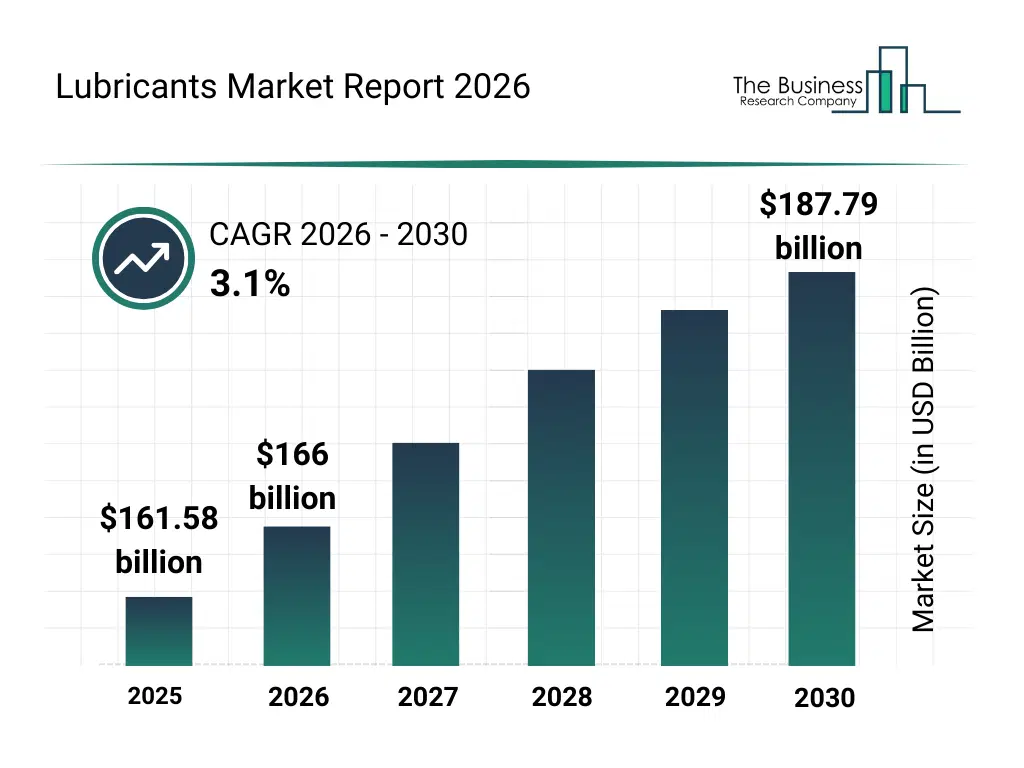
What Is The Lubricants Market Size and Share 2026?
The lubricants market size has grown steadily in recent years. It will grow from $161.58 billion in 2025 to $166 billion in 2026 at a compound annual growth rate (CAGR) of 2.7%. The growth in the historic period can be attributed to growth of automotive production, industrial machinery expansion, demand for equipment maintenance, reliance on mineral based oils, growth of manufacturing sectors.What Is The Lubricants Market Growth Forecast?
The lubricants market size is expected to see steady growth in the next few years. It will grow to $187.79 billion in 2030 at a compound annual growth rate (CAGR) of 3.1%. The growth in the forecast period can be attributed to shift toward electric mobility lubricants, stricter emission regulations, demand for energy efficient machinery, growth of industrial automation, rising adoption of biodegradable lubricants. Major trends in the forecast period include rising demand for synthetic lubricants, growing adoption of bio based lubricants, increased focus on high performance engine oils, expansion of industrial lubricant applications, development of long life lubricant formulations.
Global Lubricants Market Segmentation
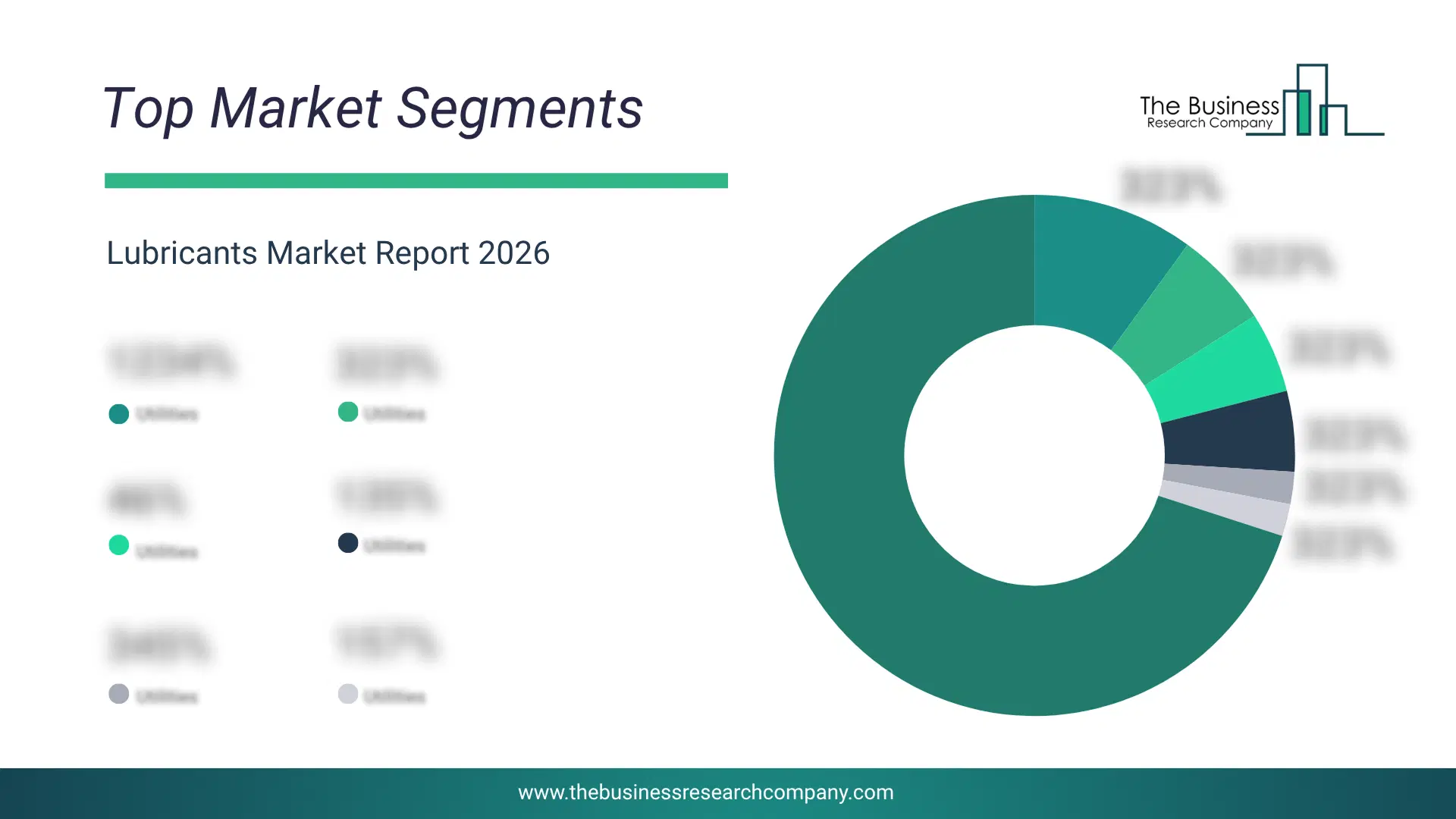
1) By Base Oil: Bio-Based Oil, Mineral Oil, Synthetic Oil 2) By Product Type: Automotive Oil, Hydraulic Oil, Gear Oil, Compressed Oil, Greases, Metal Working Fluid 3) By End User Vertical: Automotive, Industrial, Marine, Chemical, Oil And Gas, Aerospace, Others End Users Subsegments: 1) By Bio-Based Oil: Vegetable Oils, Animal Fats, Ester-Based Oils 2) By Mineral Oil: Paraffinic Oils, Naphthenic Oils, Refining Techniques 3) By Synthetic Oil: PAO (Polyalphaolefins), Ester-Based Synthetic Oils, Group III Base Oils The top segments in the lubricants market will be: • Mineral Oil will reach $123.58 Billion by 2030. • Synthetic Oil will reach $44.78 Billion by 2030. • Bio-Based Oil will reach $18.79 Billion by 2030.What Is The Driver Of The Lubricants Market?
The surge in automotive industry is expected to propel the growth of lubricants market going forward. The automotive industry refers to the sector of the economy involved in the design, development, manufacturing, marketing, and sale of motor vehicles. Lubricants in automobiles are used to reduce friction and wear between moving parts, ensuring smooth operation and extending the lifespan of engine components. For instance, in May 2025, according to the European Automobile Manufacturers’ Association (ACEA), a Belgium-based motor vehicle manufacturing company, South American car production grew by 1.7% in 2024 compared to 2023, largely driven by Brazil, which experienced a 6.3% rise, producing approximately 1.9 million cars. Meanwhile, global bus production reached 362,005 units last year, marking a 10.3% increase from 2023. Therefore, the surge in the automotive industry is driving the growth of the lubricants industry.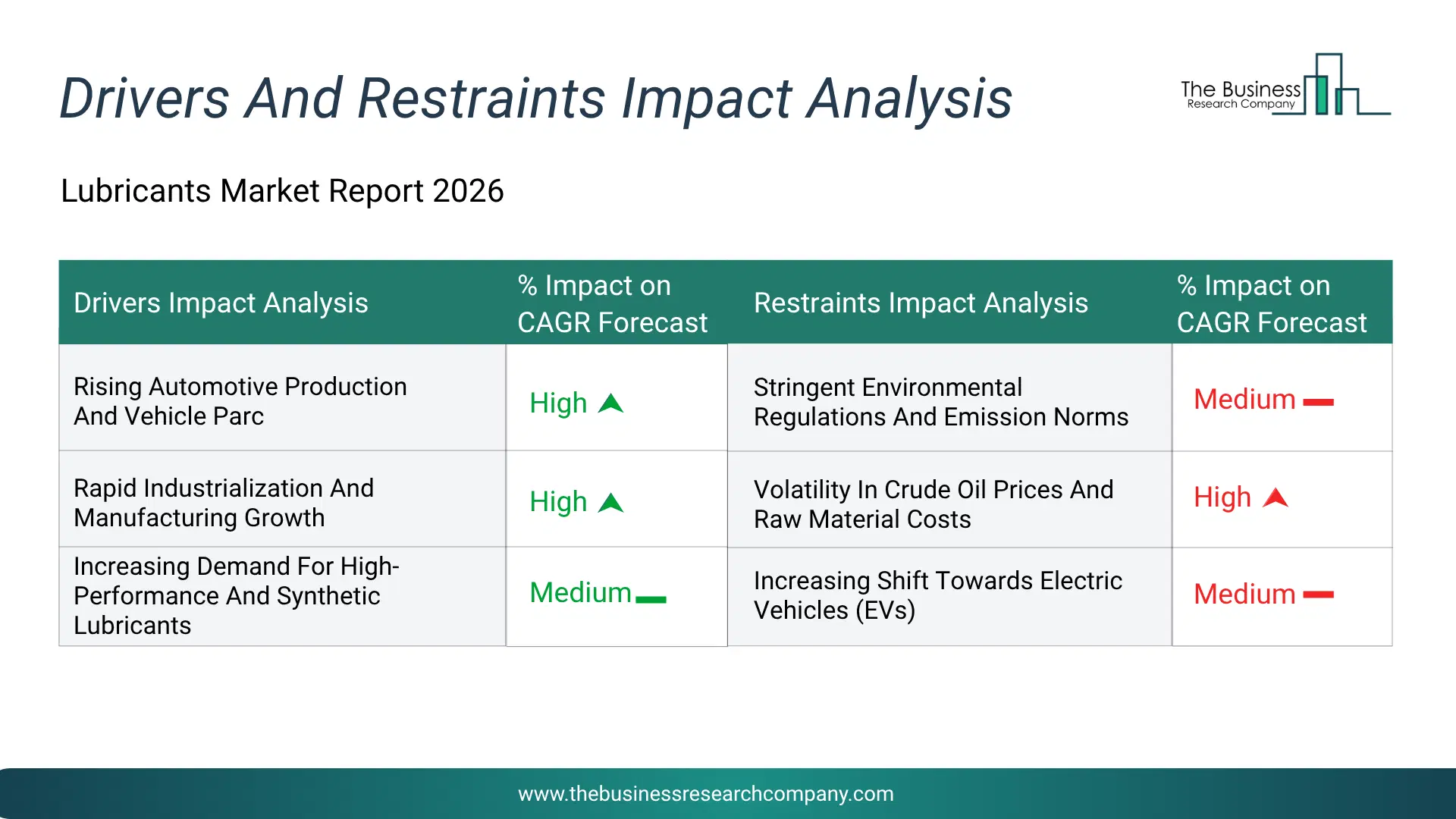
Infographic Chart Showing Key Market Drivers Analysis And Restraints For Lubricants Market
The chart presents an impact analysis of key drivers and restraints, quantifying their relative influence on the market's growth rate and helping assess the balance between growth enablers and limiting factors. This chart offers a high-level perspective; the full report contains more detailed insights.
How Will The Drivers Impact Growth In The Global Lubricants Market?
• Rising Automotive Production And Vehicle Parc (High) – During the forecast period, the rising automotive production and vehicle parc is expected to become a key growth driver for the lubricants market by 2030. Rising automotive production and vehicle parc acts as a major driver for the lubricants market because the increasing number of vehicles directly boosts the demand for engine oils, transmission fluids, and greases required for efficient operation. Lubricants play a vital role in reducing friction, improving fuel efficiency, and extending engine life, making them essential for both new and aging vehicles. As vehicle ownership expands across emerging and developed regions, regular maintenance and oil replacement cycles further increase consumption. The growing aftermarket servicing industry also strengthens recurring demand for lubricant products. This continuous dependence on automotive usage significantly accelerates market growth. • Rapid Industrialization And Manufacturing Growth (High) – During the forecast period, the rapid industrialization and manufacturing growth is expected to emerge as a major factor driving the expansion of the lubricants market by 2030. Rapid industrialization and manufacturing growth acts as a major driver for the lubricants market because expanding industrial activities require efficient lubrication to ensure smooth machinery operation and minimize wear and tear. Industries such as construction, mining, energy, and heavy engineering rely heavily on industrial oils and greases to enhance productivity and reduce downtime. Lubricants help control heat, prevent corrosion, and improve equipment lifespan, making them indispensable in large-scale operations. As developing economies continue to industrialize, the demand for high-performance lubrication solutions rises steadily. This widespread industrial usage creates sustained and long-term market expansion. • Increasing Demand For High-Performance And Synthetic Lubricants (Medium) – During the forecast period, the increasing demand for high-performance and synthetic lubricants is expected to act as a key growth catalyst for the lubricants market by 2030. Increasing demand for high-performance and synthetic lubricants acts as a major driver for the lubricants market because modern engines and machinery require advanced formulations that offer superior thermal stability, oxidation resistance, and longer service intervals. These lubricants improve efficiency, reduce maintenance frequency, and support compliance with stringent emission regulations. Consumers and industries increasingly prefer synthetic products due to their ability to enhance performance and reduce operational costs over time. Technological advancements and innovation in lubricant formulations further strengthen their adoption across automotive and industrial sectors. This shift toward premium and efficient products significantly drives overall market growth.How Will The Restraints Impact Growth In The Global Lubricants Market?
• Stringent Environmental Regulations And Emission Norms (High) – During the forecast period, the stringent environmental regulations and emission norms act as a major restraint on the lubricants market by limiting the formulation and usage of conventional petroleum-based products. Regulatory bodies increasingly mandate low-toxicity, biodegradable, and low-emission lubricants, forcing manufacturers to invest heavily in R&D and reformulation. Compliance with standards such as REACH and other environmental frameworks increases production costs and extends product approval timelines. Smaller manufacturers often struggle to meet these requirements, reducing market competitiveness. As a result, regulatory pressure slows down overall market expansion while shifting demand toward costlier sustainable alternatives. • Volatility In Crude Oil Prices And Raw Material Costs (High) – During the forecast period, the volatility in crude oil prices and raw material costs significantly restrains the lubricants market by creating uncertainty in production expenses and pricing strategies. Since base oils are derived from crude oil, fluctuations directly impact manufacturing costs and profit margins. This instability makes it difficult for companies to maintain consistent pricing, affecting long-term contracts and customer trust. Frequent price changes also disrupt supply chain planning and inventory management. Consequently, market growth is hindered as both manufacturers and end-users face financial unpredictability. • Increasing Shift Towards Electric Vehicles (EVs) (Medium) – During the forecast period, the increasing shift towards electric vehicles (EVs) acts as a restraint by reducing the demand for traditional engine oils and related lubricants. EVs require fewer lubricants due to the absence of internal combustion engines, limiting consumption volumes in the automotive segment. As EV adoption accelerates globally, especially in developed regions, lubricant manufacturers face declining demand from a key end-use sector. This transition forces companies to diversify into specialized fluids, which may involve additional costs and uncertain returns. Therefore, the growing EV ecosystem gradually constrains the long-term growth potential of conventional lubricant products.Key Players In The Global Lubricants Market
Major companies operating in the lubricants market report include China Petroleum & Chemical Corporation, PetroChina Company Limited, ExxonMobil Corp., Shell plc, Total Energies, BP plc, Chevron Corp., Philips 66 Company, Petróleo Brasileiro S.A., ENEOS Corporation, Idemitsu Kosan Co. Ltd., Lukoil Oil Company, S-Oil Corporation, Calumet Specialty Products Partners L.P, Fuchs SE, Castrol Limited, Quaker Houghton, Valvoline Inc., Petronas Lubricant International, Gulf Oil Marine Ltd., Blaser Swisslube Inc., Amsoil Inc., Pennzoil, Zeller Gmelin Gmbh & Co. KG, Pennine Lubricants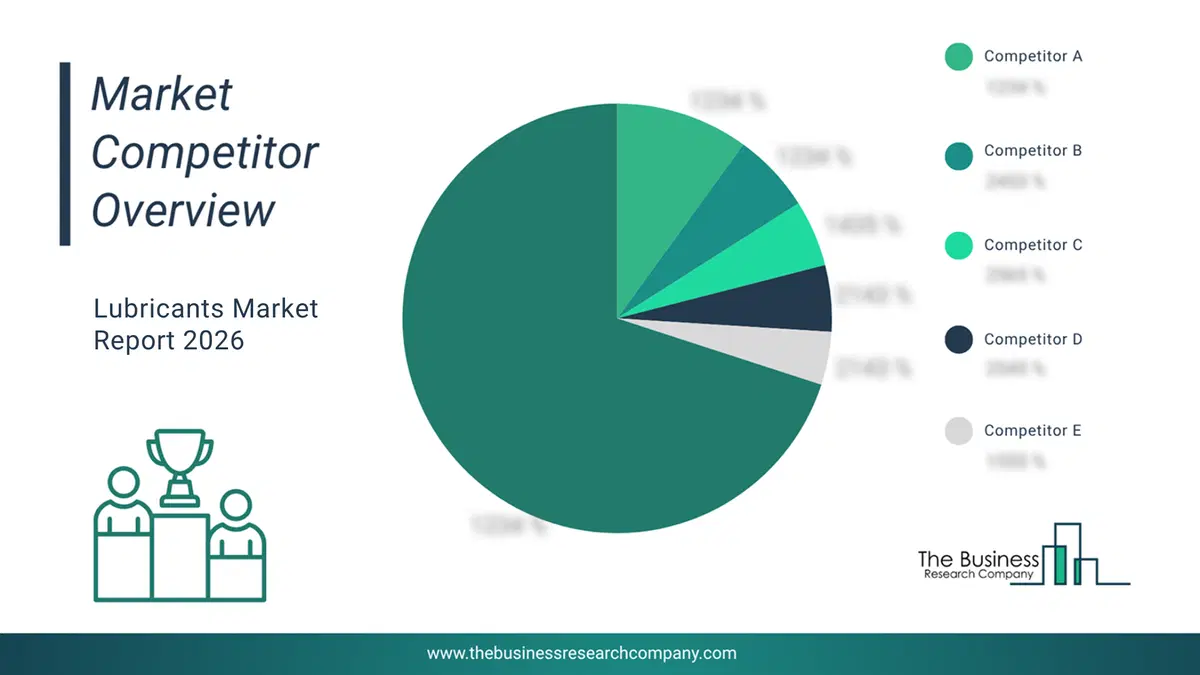
This chart is for illustrative purposes; the full report includes a detailed competitor analysis and comprehensive overview of the top 10 companies in the market.
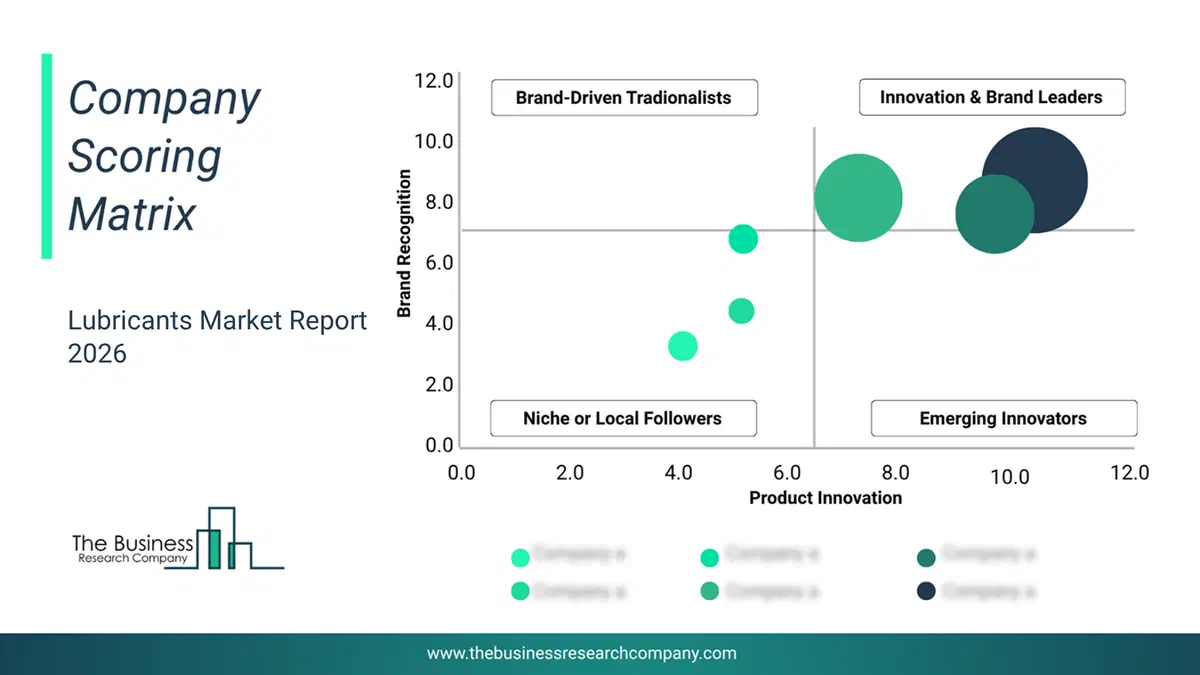
This chart maps companies by product innovation and brand strength, with bubble size indicating relative revenue, helping identify market leaders, challengers, and niche players. This is an illustrative chart; the full report provides a complete and accurate competitive analysis.
Global Lubricants Market Trends and Insights
Major companies operating in the lubricants market are developing new products, such as advanced marine and powersport oils, to provide superior engine protection and performance for four-stroke marine and off-road vehicles under extreme conditions. Advanced marine and powersport oils are specialized lubricants formulated to provide high performance, protection, and efficiency for marine engines and powersport vehicles operating under demanding conditions. For instance, in September 2023, Valvoline, a US-based company that provides a wide range of automotive and industrial lubricant solutions, launched the Valvoline Full Synthetic 4-Stroke Marine Oil and Valvoline Ultimate Powersport Full Synthetic 4-Stroke Motor Oil. It is designed to provide enhanced protection and performance in extreme conditions. The Valvoline Full Synthetic 4-Stroke Marine Oil offers up to eight times better defense against rust and 50% stronger wear protection, crucial for engines exposed to corrosive environments like saltwater. The Ultimate Powersport Full Synthetic 4-Stroke Motor Oil is tailored for small engines in ATVs, UTVs, and personal watercraft, ensuring optimal performance and durability. Both products feature powerful cleaning agents to prevent dirt buildup in high-revving engines, enhancing overall engine longevity.What Are Latest Mergers And Acquisitions In The Lubricants Market?
In March 2023, Saudi Arabian Oil Group (Saudi Aramco), a Saudi Arabia-based petroleum and natural gas company, acquired Valvoline Inc.’s global products business for $2.65 billion. This acquisition significantly enhances Aramco's global presence in the lubricants industry, offering strategic expansion opportunities, a strengthened downstream portfolio, and leveraging Valvoline's established brand equity to solidify Aramco's position as a major player in the integrated, branded lubricants market. Valvoline Inc. is a US-based automotive services company that manufactures and distributes finished lubricants and automotive chemicals.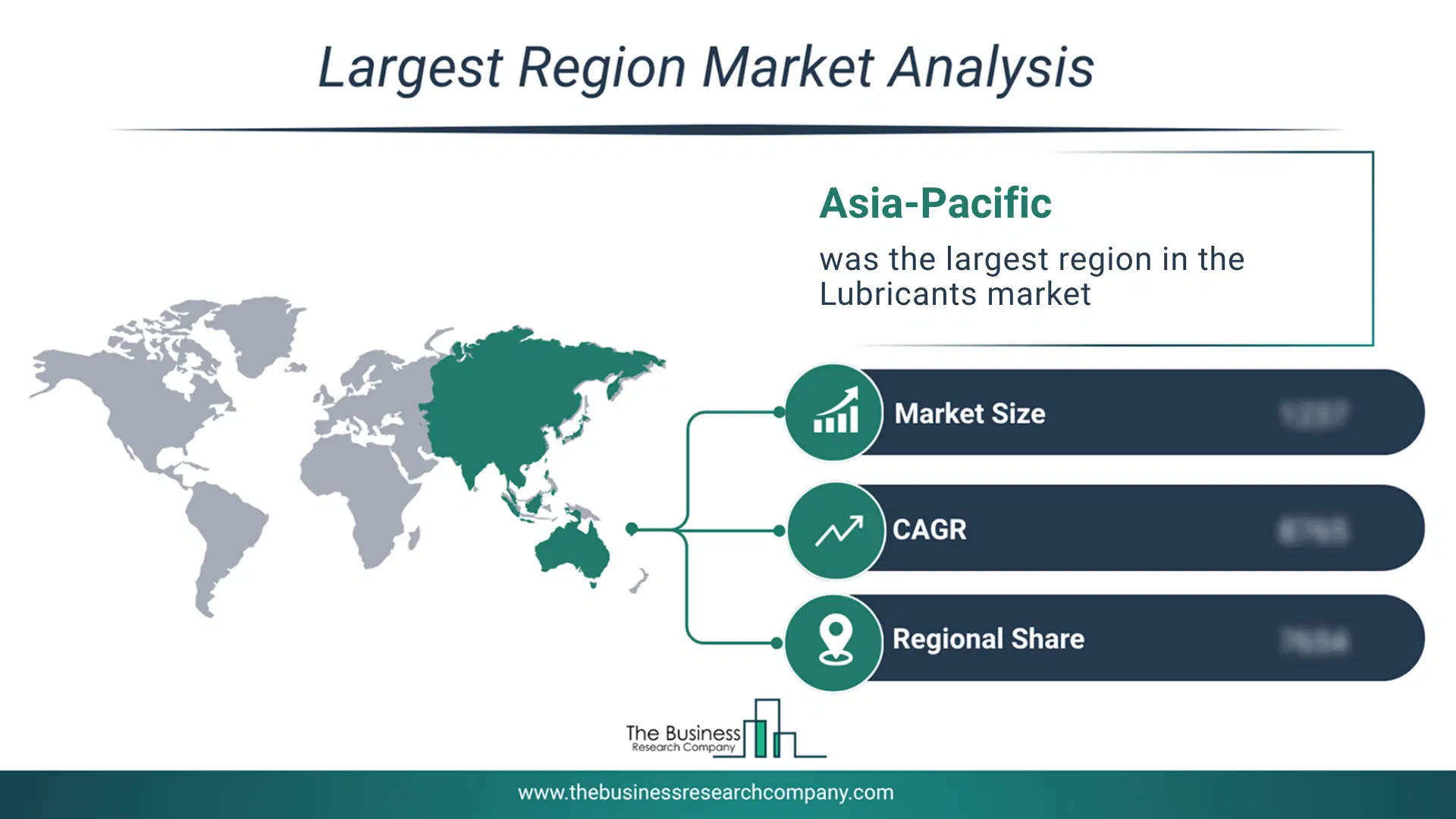
Regional Outlook
Asia-Pacific was the largest region in the lubricants market in 2025. The regions covered in this market report include Asia-Pacific, South East Asia, Western Europe, Eastern Europe, North America, South America, Middle East, Africa. The countries covered in this market report include Australia, Brazil, China, France, Germany, India, Indonesia, Japan, Taiwan, Russia, South Korea, UK, USA, Canada, Italy, SpainWhat Defines the Lubricants Market?
The lubricants market consists of sales of engine oil, grease, industrial oils, transmission fluids, lubricant dispensing systems, sealants, and aviation lubricants. Values in this market are ‘factory gate’ values, that is the value of goods sold by the manufacturers or creators of the goods, whether to other entities (including downstream manufacturers, wholesalers, distributors and retailers) or directly to end customers. The value of goods in this market includes related services sold by the creators of the goods.How is Market Value Defined and Measured?
The market value is defined as the revenues that enterprises gain from the sale of goods and/or services within the specified market and geography through sales, grants, or donations in terms of the currency (in USD unless otherwise specified). The revenues for a specified geography are consumption values that are revenues generated by organizations in the specified geography within the market, irrespective of where they are produced. It does not include revenues from resales along the supply chain, either further along the supply chain or as part of other products.
This chart presents market attractiveness based on a quantitative evaluation of growth, competition, strategic alignment, and risk, offering a clear view of opportunity areas for decision-making. This chart is for illustrative purposes; the full report contains the complete analysis.

This chart highlights the Total Addressable Market (TAM) by estimating the maximum revenue opportunity using an assumption-driven approach, supporting strategic planning and opportunity sizing across markets. The chart is illustrative; the full report provides a more comprehensive analysis.
What Key Data and Analysis Are Included in the Lubricants Market Report 2026?
The lubricants market research report is one of a series of new reports from The Business Research Company that provides market statistics, including industry global market size, regional shares, competitors with the market share, detailed market segments, market trends and opportunities, and any further data you may need to thrive in the lubricants industry. The market research report delivers a complete perspective of everything you need, with an in-depth analysis of the current and future state of the industry.Lubricants Market Report Forecast Analysis
| Report Attribute | Details |
|---|---|
| Market Size Value In 2026 | $166 billion |
| Revenue Forecast In 2030 | $187.79 billion |
| Growth Rate | CAGR of 2.7% from 2026 to 2030 |
| Base Year For Estimation | 2025 |
| Actual Estimates/Historical Data | 2020-2025 |
| Forecast Period | 2026 - 2030 |
| Market Representation | Revenue in USD Billion and CAGR from 2026 to 2030 |
| Segments Covered | Base Oil, Product Type, End User Vertical |
| Regional Scope | Asia-Pacific, Western Europe, Eastern Europe, North America, South America, Middle East, Africa |
| Country Scope | The countries covered in the report are Australia, Brazil, China, France, Germany, India, Indonesia, Japan, Taiwan, Russia, South Korea, UK, USA, Canada, Italy, Spain. |
| Key Companies Profiled | China Petroleum & Chemical Corporation, PetroChina Company Limited, ExxonMobil Corp., Shell plc, Total Energies, BP plc, Chevron Corp., Philips 66 Company, Petróleo Brasileiro S.A., ENEOS Corporation, Idemitsu Kosan Co. Ltd., Lukoil Oil Company, S-Oil Corporation, Calumet Specialty Products Partners L.P, Fuchs SE, Castrol Limited, Quaker Houghton, Valvoline Inc., Petronas Lubricant International, Gulf Oil Marine Ltd., Blaser Swisslube Inc., Amsoil Inc., Pennzoil, Zeller Gmelin Gmbh & Co. KG, Pennine Lubricants |
| Customization Scope | Request for Customization |
| Pricing And Purchase Options | Explore Purchase Options |