

Lumbosacral Radicular Pain Market Report 2026
Global Outlook – By Treatment Type (Pharmacological Treatment, Non-Pharmacological Treatment, Interventional Procedures), By Route Of Administration (Oral, Topical, Injectable, Implantable), By Distribution Channel (Hospital Pharmacies, Retail Pharmacies, Online Pharmacies), By End User (Hospitals, Specialty Clinics, Rehabilitation Centers, Homecare Settings) – Market Size, Trends, Strategies, and Forecast to 2030
Lumbosacral Radicular Pain Market Overview
• Lumbosacral Radicular Pain market size has reached to $0.97 billion in 2025 • Expected to grow to $1.28 billion in 2030 at a compound annual growth rate (CAGR) of 5.7% • Growth Driver: Rising Cases Of Degenerative Spinal Conditions Fueling Market Growth Due To Increasing Need For Early Diagnosis And Management • North America was the largest region in 2025.What Is Covered Under Lumbosacral Radicular Pain Market?
Lumbosacral radicular pain refers to pain that originates in the lower spine (lumbar and sacral regions) and radiates along the path of a spinal nerve into the leg. It is commonly caused by nerve root compression or irritation, often due to conditions such as a herniated disc or spinal stenosis. The main treatment types for lumbosacral radicular pain include pharmacological treatments, non-pharmacological treatments, and interventional procedures. Pharmacological treatments are therapies that use medications or drugs to diagnose, treat, or prevent medical conditions. The various routes of administration include oral, topical, injectable, and implantable. The multiple distribution channels involved are hospital pharmacies, retail pharmacies, and online pharmacies and are used by several end-users such as hospitals, specialty clinics, rehabilitation centers, and homecare settings.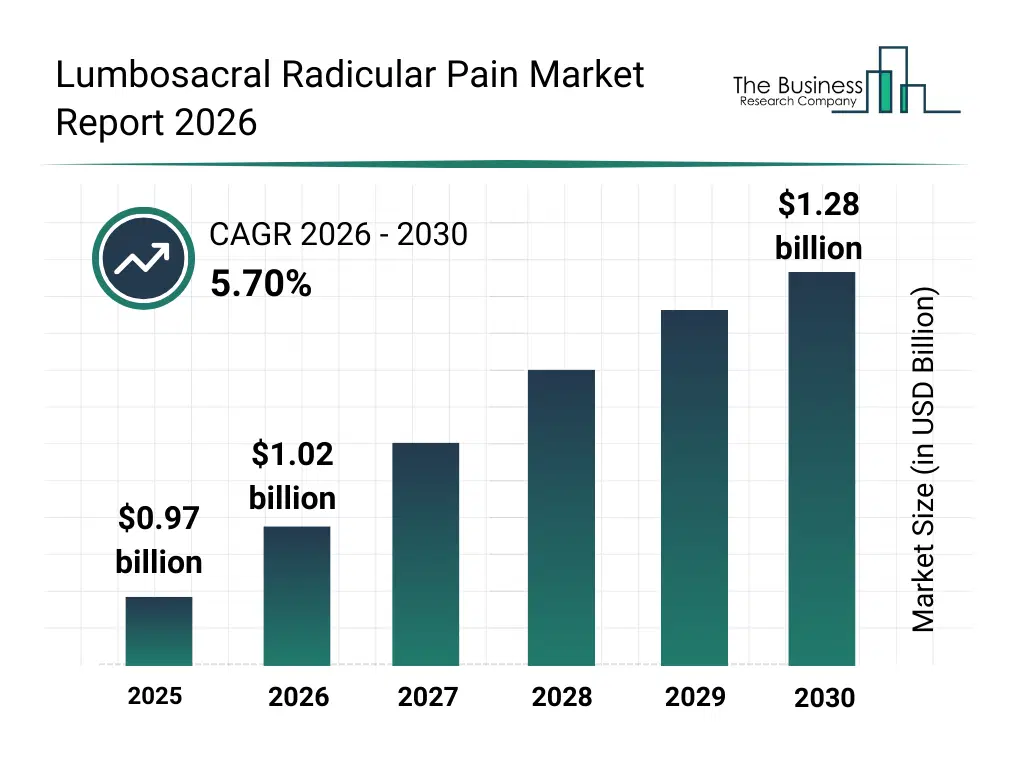
What Is The Lumbosacral Radicular Pain Market Size and Share 2026?
The lumbosacral radicular pain market size has grown strongly in recent years. It will grow from $0.97 billion in 2025 to $1.02 billion in 2026 at a compound annual growth rate (CAGR) of 6.0%. The growth in the historic period can be attributed to aging population, spinal degenerative disorders, opioid-based pain management, hospital pain clinics, orthopedic surgery volumes.What Is The Lumbosacral Radicular Pain Market Growth Forecast?
The lumbosacral radicular pain market size is expected to see strong growth in the next few years. It will grow to $1.28 billion in 2030 at a compound annual growth rate (CAGR) of 5.7%. The growth in the forecast period can be attributed to non-opioid pain therapy adoption, outpatient pain procedures, digital pain monitoring tools, minimally invasive spine technologies, rehabilitation program expansion. Major trends in the forecast period include rising use of multimodal pain management, growth of interventional spine procedures, increased demand for non-opioid therapies, expansion of rehabilitation-based care, adoption of minimally invasive pain treatments.
Global Lumbosacral Radicular Pain Market Segmentation
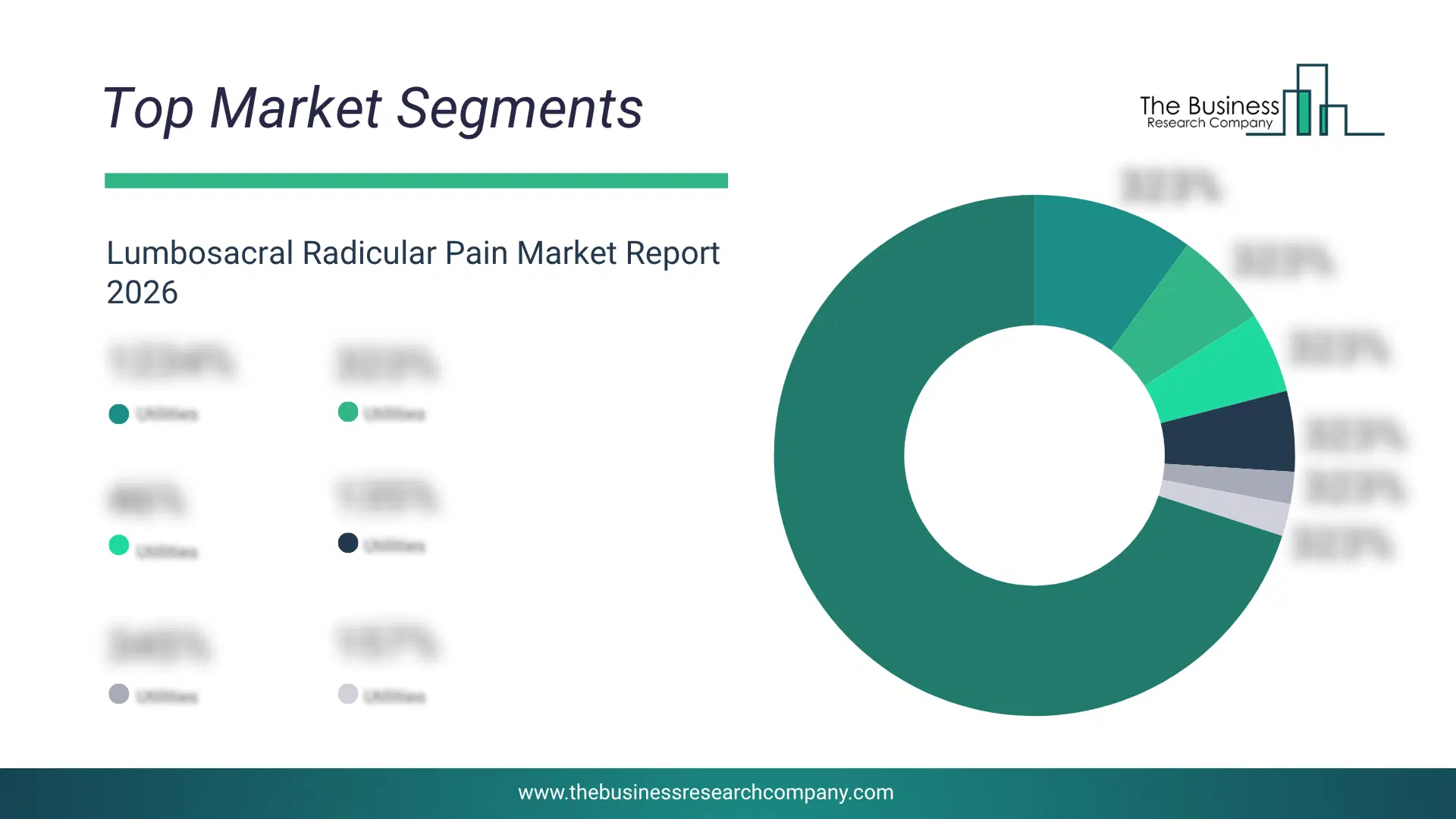
1) By Treatment Type: Pharmacological Treatment, Non-Pharmacological Treatment, Interventional Procedures 2) By Route Of Administration: Oral, Topical, Injectable, Implantable 3) By Distribution Channel: Hospital Pharmacies, Retail Pharmacies, Online Pharmacies 4) By End User: Hospitals, Specialty Clinics, Rehabilitation Centers, Homecare Settings Subsegments: 1) By Pharmacological Treatment: Nonsteroidal Anti-Inflammatory Drugs, Opioids, Anticonvulsants, Antidepressants, Muscle Relaxants, Corticosteroids 2) By Non-Pharmacological Treatment: Physical Therapy, Exercise And Rehabilitation Programs, Chiropractic Care, Acupuncture, Cognitive Behavioral Therapy, Heat And Cold Therapy 3) By Interventional Procedures: Epidural Steroid Injections, Radiofrequency Ablation, Nerve Root Blocks, Spinal Cord Stimulation, Minimally Invasive Decompression, Intrathecal Drug Delivery SystemsWhat Are The Drivers Of The Lumbosacral Radicular Pain Market?
The increasing prevalence of degenerative spinal conditions is expected to propel the growth of the lumbosacral radicular pain market going forward. Degenerative spinal conditions refer to a group of disorders caused by the gradual wear and tear of the spine over time. The rise in degenerative spinal conditions is due to aging populations and lifestyle factors that increase the risk of spinal wear and nerve compression, leading to higher demand for diagnosis and treatment. Lumbosacral radicular pain helps identify underlying degenerative spinal conditions by signaling nerve root irritation or compression, guiding clinical evaluation and management. For instance, in May 2023, according to the University of Sydney, an Australia-based public university, it is anticipated that more than 800 million people worldwide will suffer from back discomfort by 2050. Therefore, the increasing prevalence of degenerative spinal conditions drives the growth of the lumbosacral radicular pain industry. The rising prevalence of obesity is expected to propel the growth of the lumbosacral radicular pain market going forward. Obesity refers to a medical condition characterized by excessive body fat accumulation, typically defined as having a body mass index of 30 or higher, which increases the risk of various health complications. The increasing prevalence of obesity is driven by sedentary lifestyles and processed food consumption patterns, as modern work environments increasingly involve prolonged sitting and desk-based activities while convenient access to high-calorie, nutrient-poor foods has become widespread in developed nations. Growing obesity directly supports higher incidence of lower back and leg pain caused by compressed nerve roots, as excess body weight places additional mechanical stress on the lumbar spine and surrounding structures, leading to nerve compression and inflammation. For instance, in May 2025, according to the Office for Health Improvement and Disparities, a UK-based government body, from 2023 to 2024, an estimated 64.5% of adults aged 18 and over in England were overweight or living with obesity, up from 64.0% in 2022 to 2023. Therefore, the rising prevalence of obesity is driving the growth of the lumbosacral radicular pain industry.Key Players In The Global Lumbosacral Radicular Pain Market
Major companies operating in the lumbosacral radicular pain market are Medtronic plc, Boston Scientific Corporation, Nevro Corp., SPR Therapeutics, Saluda Medical Pty Ltd., Nalu Medical Inc., Abbott Neuromodulation, Stryker Corporation, Zimmer Biomet Holdings Inc., Globus Medical Inc., NuVasive Inc., Orthofix Medical Inc., B. Braun Melsungen AG, Teleflex Incorporated, Merit Medical Systems Inc., Avanos Medical Inc., Halyard Health Inc., Terumo Corporation, Baxter International Inc., Fresenius Kabi AG, Hikma Pharmaceuticals PLC, Pfizer CentreOne, Teva Pharmaceutical Industries Ltd., Mallinckrodt Pharmaceuticals, Sun Pharmaceutical Industries Ltd., Lupin Limited, Zydus Lifesciences Ltd., Cipla Ltd., Dr. Reddy’s Laboratories Ltd., Amneal Pharmaceuticals Inc., Perrigo Company plc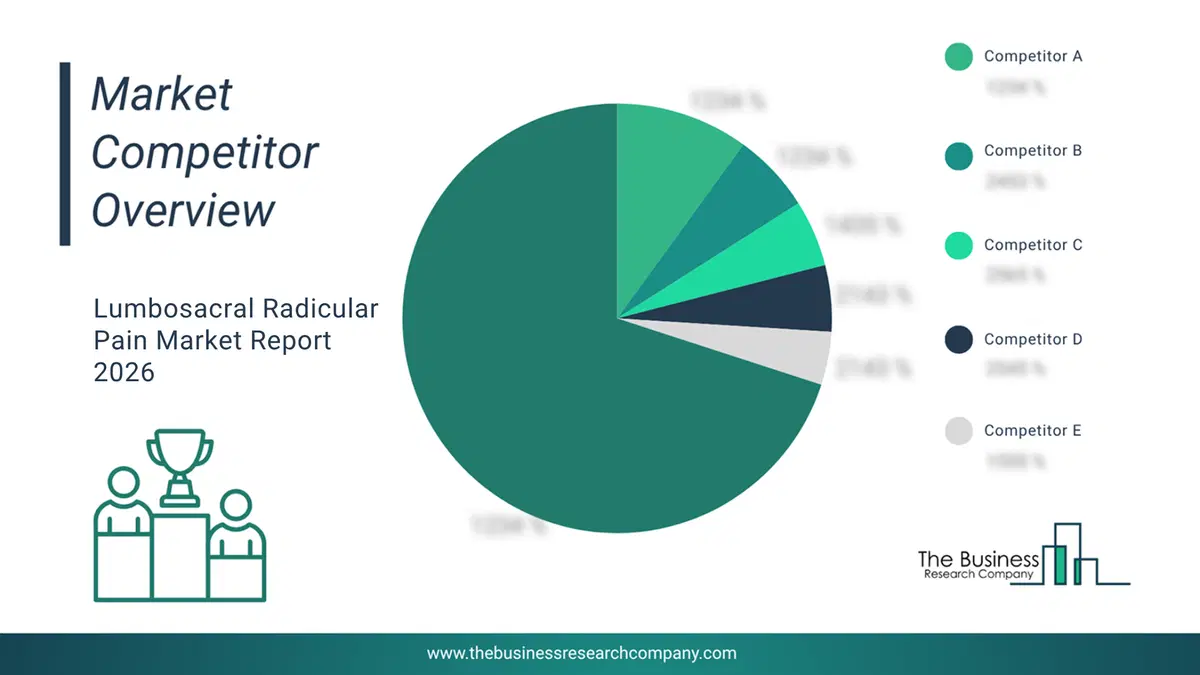
This chart is for illustrative purposes; the full report includes a detailed competitor analysis and comprehensive overview of the top 10 companies in the market.
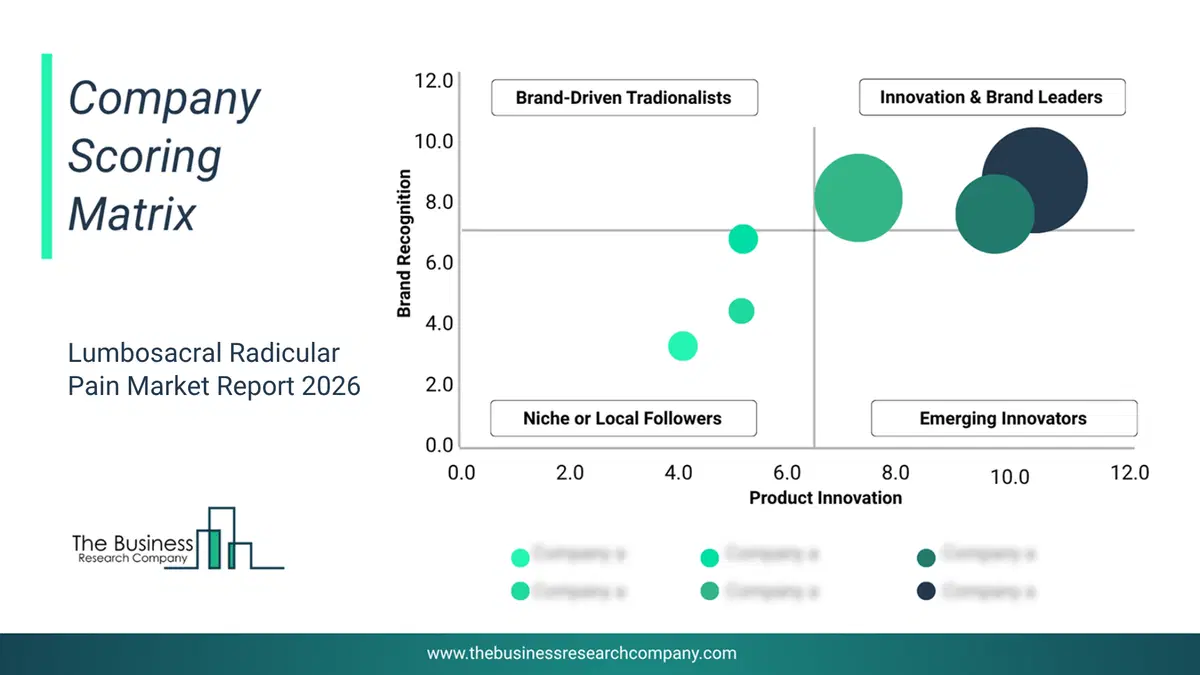
This chart maps companies by product innovation and brand strength, with bubble size indicating relative revenue, helping identify market leaders, challengers, and niche players. This is an illustrative chart; the full report provides a complete and accurate competitive analysis.
What Are Latest Mergers And Acquisitions In The Lumbosacral Radicular Pain Market?
In October 2024, Stryker Corporation, a US-based medical technology company, acquired Vertos Medical Inc. for an undisclosed amount. Through this acquisition, Stryker aims to strengthen its portfolio in minimally invasive spine treatments by integrating Vertos Medical’s innovative technologies, enhancing patient outcomes, and expanding its leadership in the spinal health market. Vertos Medical Inc. is a US-based company specializing in minimally invasive lumbar spinal stenosis (LSS) treatments.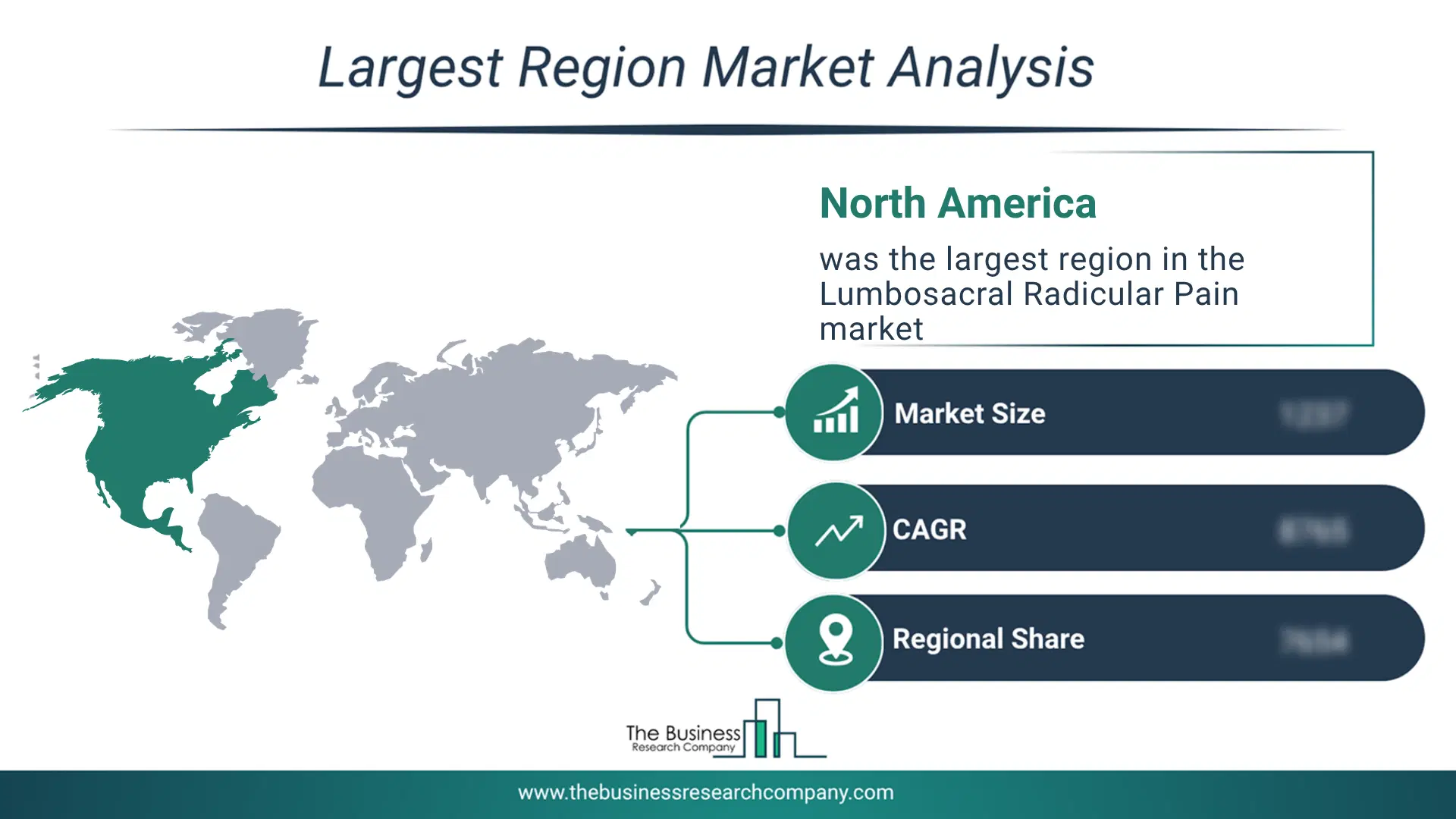
Regional Insights
North America was the largest region in the lumbosacral radicular pain market in 2025. The regions covered in this market report are Asia-Pacific, South East Asia, Western Europe, Eastern Europe, North America, South America, Middle East, Africa. The countries covered in this market report are Australia, Brazil, China, France, Germany, India, Indonesia, Japan, Taiwan, Russia, South Korea, UK, USA, Canada, Italy, Spain.What Defines the Lumbosacral Radicular Pain Market?
The lumbosacral radicular pain market includes revenues earned by entities by providing services such as non-surgical treatment services, interventional pain management services, and rehabilitation and follow-up services. The market value includes the value of related goods sold by the service provider or included within the service offering. Only goods and services traded between entities or sold to end consumers are included.How is Market Value Defined and Measured?
The market value is defined as the revenues that enterprises gain from the sale of goods and/or services within the specified market and geography through sales, grants, or donations in terms of the currency (in USD unless otherwise specified). The revenues for a specified geography are consumption values that are revenues generated by organizations in the specified geography within the market, irrespective of where they are produced. It does not include revenues from resales along the supply chain, either further along the supply chain or as part of other products.
This chart presents market attractiveness based on a quantitative evaluation of growth, competition, strategic alignment, and risk, offering a clear view of opportunity areas for decision-making. This chart is for illustrative purposes; the full report contains the complete analysis.

This chart highlights the Total Addressable Market (TAM) by estimating the maximum revenue opportunity using an assumption-driven approach, supporting strategic planning and opportunity sizing across markets. The chart is illustrative; the full report provides a more comprehensive analysis.
What Key Data and Analysis Are Included in the Lumbosacral Radicular Pain Market Report 2026?
The lumbosacral radicular pain market research report is one of a series of new reports from The Business Research Company that provides market statistics, including industry global market size, regional shares, competitors with the market share, detailed market segments, market trends and opportunities, and any further data you may need to thrive in the lumbosacral radicular pain industry. The market research report delivers a complete perspective of everything you need, with an in-depth analysis of the current and future state of the industry.Lumbosacral Radicular Pain Market Report Forecast Analysis
| Report Attribute | Details |
|---|---|
| Market Size Value In 2026 | $1.02 billion |
| Revenue Forecast In 2030 | $1.28 billion |
| Growth Rate | CAGR of 6.0% from 2026 to 2030 |
| Base Year For Estimation | 2025 |
| Actual Estimates/Historical Data | 2020-2025 |
| Forecast Period | 2026 - 2030 |
| Market Representation | Revenue in USD Billion and CAGR from 2026 to 2030 |
| Segments Covered | Treatment Type, Route Of Administration, Distribution Channel, End User |
| Regional Scope | Asia-Pacific, Western Europe, Eastern Europe, North America, South America, Middle East, Africa |
| Country Scope | The countries covered in the report are Australia, Brazil, China, France, Germany, India, Indonesia, Japan, Taiwan, Russia, South Korea, UK, USA, Canada, Italy, Spain. |
| Key Companies Profiled | Medtronic plc, Boston Scientific Corporation, Nevro Corp., SPR Therapeutics, Saluda Medical Pty Ltd., Nalu Medical Inc., Abbott Neuromodulation, Stryker Corporation, Zimmer Biomet Holdings Inc., Globus Medical Inc., NuVasive Inc., Orthofix Medical Inc., B. Braun Melsungen AG, Teleflex Incorporated, Merit Medical Systems Inc., Avanos Medical Inc., Halyard Health Inc., Terumo Corporation, Baxter International Inc., Fresenius Kabi AG, Hikma Pharmaceuticals PLC, Pfizer CentreOne, Teva Pharmaceutical Industries Ltd., Mallinckrodt Pharmaceuticals, Sun Pharmaceutical Industries Ltd., Lupin Limited, Zydus Lifesciences Ltd., Cipla Ltd., Dr. Reddy’s Laboratories Ltd., Amneal Pharmaceuticals Inc., Perrigo Company plc |
| Customization Scope | Request for Customization |
| Pricing And Purchase Options | Explore Purchase Options |