

Lumbosacral Radicular Pain Management Market Report 2026
Global Outlook – By Medication (Non-Steroidal Anti-Inflammatory Drugs, Opioids, Antidepressants, Anticonvulsants, Steroids), By Physical Therapy (Manual Therapy, Exercise Therapy, Electrotherapy, Thermal Therapy, Hydrotherapy), By Route Of Administration (Oral, Topical), By End-User (Hospital Pharmacy, Retail Pharmacy, Online Pharmacy) – Market Size, Trends, Strategies, and Forecast to 2030
Lumbosacral Radicular Pain Management Market Overview
• Lumbosacral Radicular Pain Management market size has reached to $0.9 billion in 2025 • Expected to grow to $1.17 billion in 2030 at a compound annual growth rate (CAGR) of 5.4% • Growth Driver: The Rising Prevalence Of Back Pain Disorders Is Fueling The Growth Of The Market Due To Increasing Sedentary Lifestyles And The Resulting Need For Effective Lumbosacral Radicular Pain Management • Market Trend: Advancement Of Non-Opioid Therapies Targeting Nav1.8 For Lumbosacral Radicular Pain Relief • North America was the largest region in 2025 and Asia-Pacific is the fastest growing region.What Is Covered Under Lumbosacral Radicular Pain Management Market?
Lumbosacral radicular pain management refers to the comprehensive approach to diagnosing, treating, and relieving pain that originates from irritation or compression of the spinal nerve roots in the lumbosacral region (lower back and sacral area). It is commonly associated with conditions such as herniated discs, spinal stenosis, or degenerative disc disease. Management focuses on easing inflammation, decompressing the affected nerves, and promoting functional recovery. The primary objective is to enhance mobility, minimize pain, and improve the patient’s overall quality of life. The main types of lumbosacral radicular pain management medications are non-steroidal anti-inflammatory drugs, opioids, antidepressants, anticonvulsants, and steroids. NSAIDs are widely used as a first-line treatment to reduce inflammation and relieve pain in lumbosacral radicular conditions by inhibiting inflammation-causing enzymes. It is treated with several physical therapies, such as manual therapy, exercise therapy, electrotherapy, thermal therapy, and hydrotherapy, and is administered through several routes of administration, such as oral and topical, and is used by various end-users, including hospital pharmacies, retail pharmacies, and online pharmacies.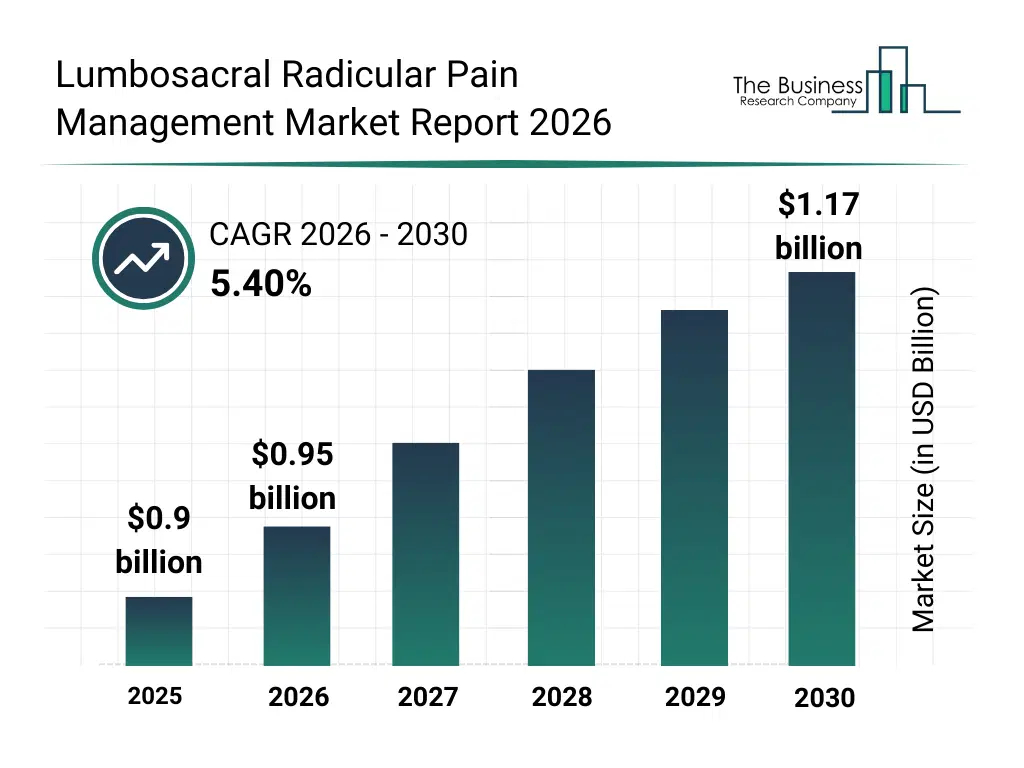
What Is The Lumbosacral Radicular Pain Management Market Size and Share 2026?
The lumbosacral radicular pain management market size has grown strongly in recent years. It will grow from $0.9 billion in 2025 to $0.95 billion in 2026 at a compound annual growth rate (CAGR) of 5.7%. The growth in the historic period can be attributed to rising cases of spinal disc disorders, reliance on pharmacological pain relief, hospital-based pain treatment, increasing orthopedic consultations, growth of physical therapy services.What Is The Lumbosacral Radicular Pain Management Market Growth Forecast?
The lumbosacral radicular pain management market size is expected to see strong growth in the next few years. It will grow to $1.17 billion in 2030 at a compound annual growth rate (CAGR) of 5.4%. The growth in the forecast period can be attributed to aging population growth, demand for long-term pain management, adoption of non-invasive therapies, home-based rehabilitation expansion, advancements in pain diagnostics. Major trends in the forecast period include growing preference for multimodal pain management, increased adoption of non-opioid therapies, expansion of physical therapy-based interventions, rising demand for minimally invasive pain treatments, integration of personalized pain management plans.
Global Lumbosacral Radicular Pain Management Market Segmentation
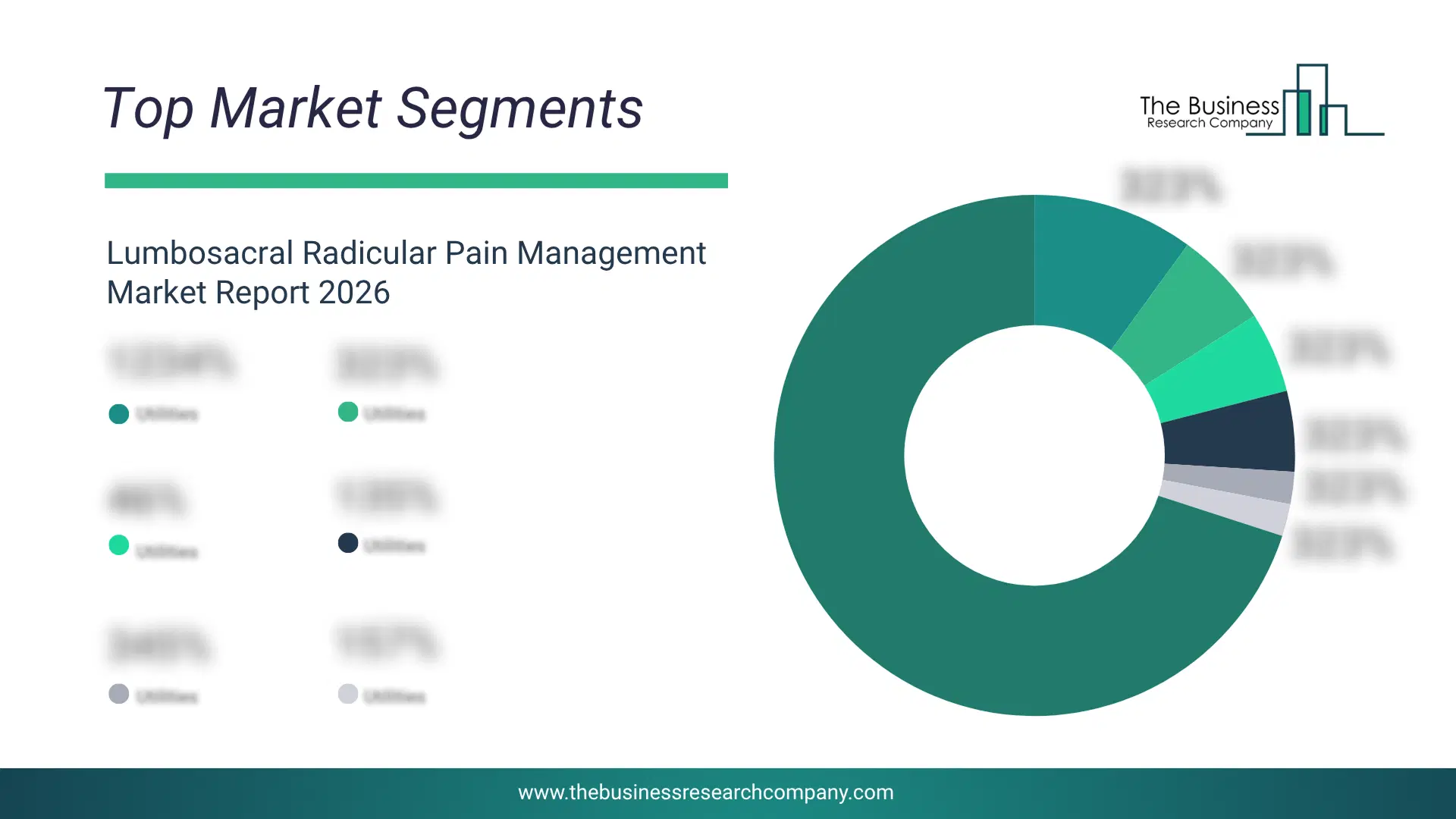
1) By Medication: Non-Steroidal Anti-Inflammatory Drugs, Opioids, Antidepressants, Anticonvulsants, Steroids 2) By Physical Therapy: Manual Therapy, Exercise Therapy, Electrotherapy, Thermal Therapy, Hydrotherapy 3) By Route Of Administration: Oral, Topical 4) By End-User: Hospital Pharmacy, Retail Pharmacy, Online Pharmacy Subsegments: 1) By Non-Steroidal Anti-Inflammatory Drugs: Ibuprofen, Naproxen, Diclofenac, Celecoxib, Etoricoxib 2) By Opioids: Tramadol, Oxycodone, Morphine, Hydrocodone, Fentanyl 3) By Antidepressants: Amitriptyline, Nortriptyline, Duloxetine, Desvenlafaxine, Venlafaxine 4) By Anticonvulsants: Gabapentin, Pregabalin, Carbamazepine, Lamotrigine, Topiramate 5) By Steroids: Dexamethasone, Methylprednisolone, Prednisone, Triamcinolone, HydrocortisonWhat Is The Driver Of The Lumbosacral Radicular Pain Management Market?
The rising prevalence of back pain disorders is expected to propel the growth of the lumbosacral radicular pain management market going forward. Back pain disorders refer to a range of conditions that affect the spine, muscles, or nerves in the back, causing discomfort or pain. The rising prevalence of back pain disorders is due to sedentary lifestyles, which weaken back muscles, causing poor posture and persistent pain. Lumbosacral radicular pain management aims to relieve nerve root irritation in the lower back, reducing pain and inflammation. It restores mobility and improves quality of life. For instance, in June 2024, according to the Australian Institute of Health and Welfare, an Australia-based government agency, in 2023, back problems were the third leading contributor to disease burden in Australia, representing 4.3% of the country’s total disease burden. Therefore, the rising prevalence of back pain disorders drives the growth of the lumbosacral radicular pain management industry.Key Players In The Global Lumbosacral Radicular Pain Management Market
Major companies operating in the lumbosacral radicular pain management market are Pfizer Inc., Johnson & Johnson Services Inc., Bayer AG, Sanofi SA, Bristol-Myers Squibb, AstraZeneca plc, Novartis AG, GSK plc, Medtronic plc, Eli Lilly and Company, Amgen Inc, Koninklijke Philips NV, Stryker Corporation, Teva Pharmaceutical Industries Ltd, Boston Scientific Corporation, Dr Reddy’s Laboratories Ltd, NuVasive Inc., Nobel Biocare Holdings AG, Ultradent Products Inc., Nevro Corp., Zynex Inc., Eliem Therapeutics, Vertebral Technologies Inc., Semnur Pharmaceuticals Inc.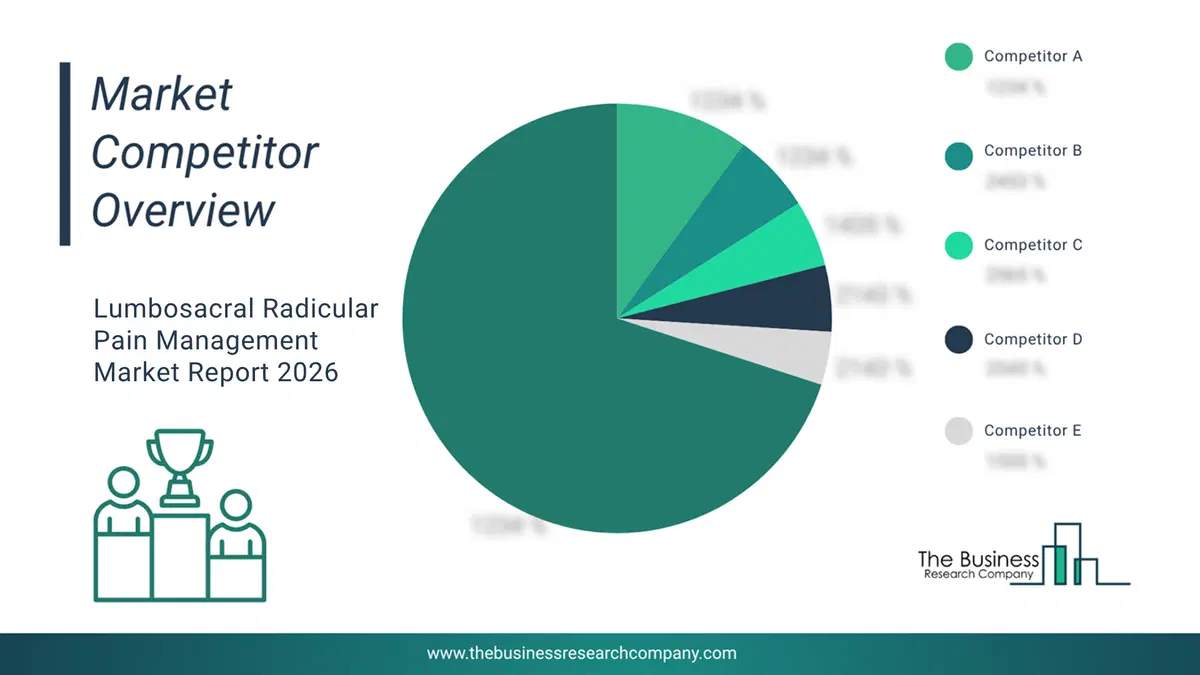
This chart is for illustrative purposes; the full report includes a detailed competitor analysis and comprehensive overview of the top 10 companies in the market.
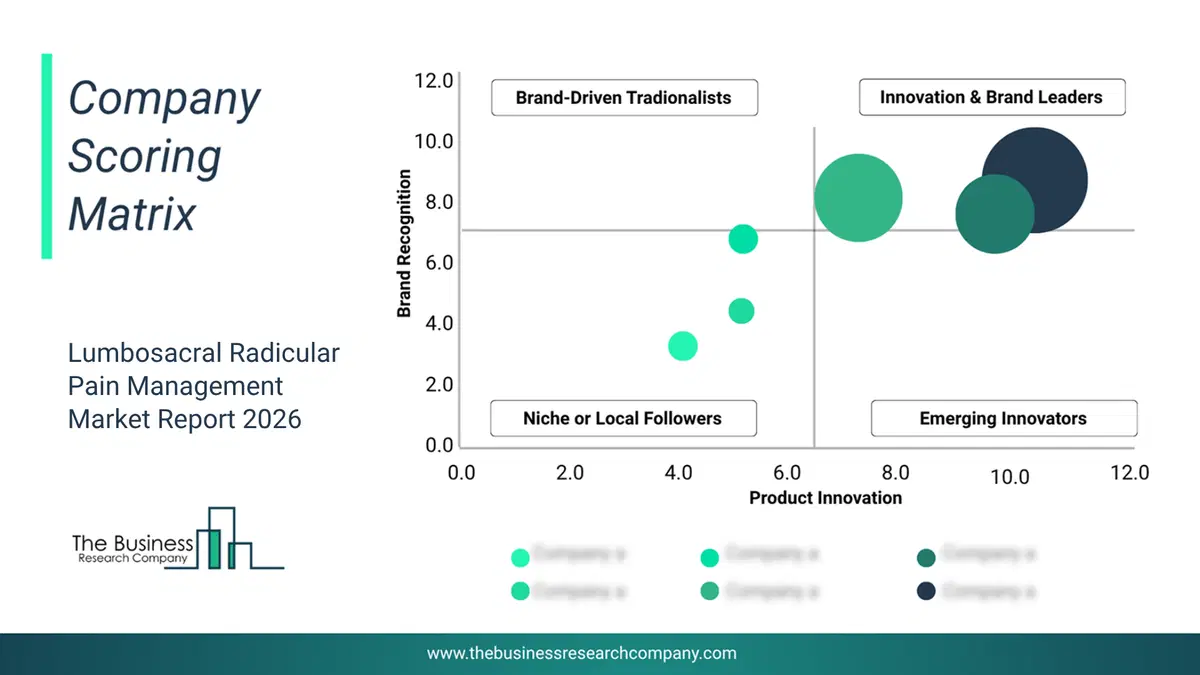
This chart maps companies by product innovation and brand strength, with bubble size indicating relative revenue, helping identify market leaders, challengers, and niche players. This is an illustrative chart; the full report provides a complete and accurate competitive analysis.
Global Lumbosacral Radicular Pain Management Market Trends and Insights
Major companies operating in the lumbosacral radicular pain management market are focusing on developing advanced treatments, such as investigational oral NaV1.8 pain signal inhibitors, to offer a non-opioid alternative for long-lasting pain relief. An investigational oral NaV1.8 pain signal inhibitor is a trial-stage medication that targets the NaV1.8 sodium channel, a key pathway for transmitting pain through sensory nerves. For instance, in December 2024, Vertex Pharmaceuticals, a US-based biotech company, announced results from its Phase 2 study of suzetrigine for painful lumbosacral radiculopathy (LSR). The study met its primary endpoint, showing a statistically significant and clinically meaningful reduction in pain from baseline in the suzetrigine group. Suzetrigine was generally well tolerated, with no serious adverse events reported. Vertex plans to address the high placebo response in future Phase 3 trials to assess the drug’s efficacy better.What Are Latest Mergers And Acquisitions In The Lumbosacral Radicular Pain Management Market?
In October 2024, Stryker Corporation, a US-based medical technology company, acquired Vertos Medical Inc. for an undisclosed amount. With this acquisition, Stryker aims to enhance its interventional pain management portfolio, expand its presence in ambulatory surgery centers, and strengthen its offerings in minimally invasive treatments for chronic lower back pain. Vertos Medical Inc. is a US-based company specializing in interventional pain management solutions for the minimally invasive mild procedure for treating lumbar spinal stenosis.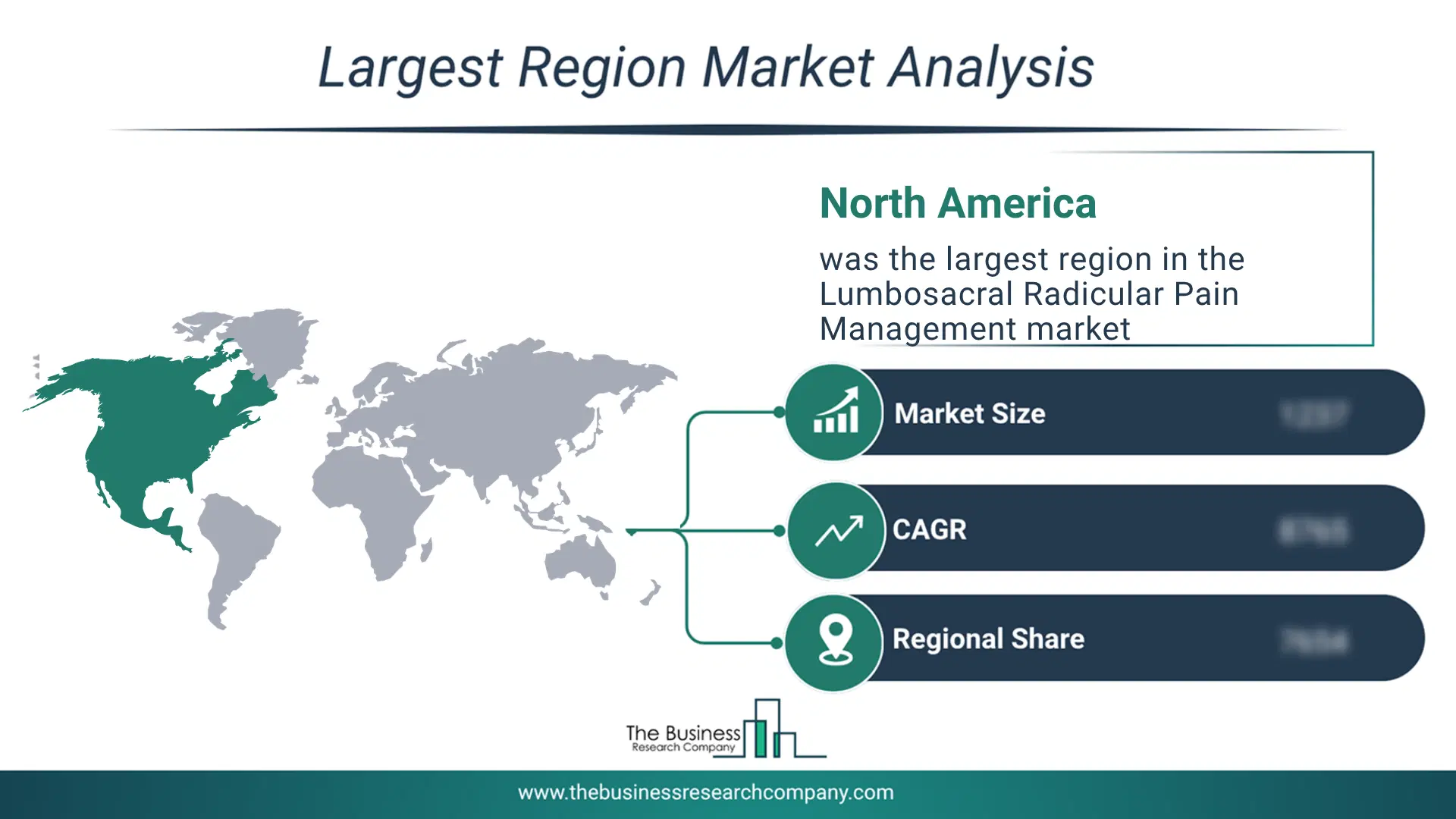
Regional Insights
North America was the largest region in the lumbosacral radicular pain management market in 2025. Asia-Pacific is expected to be the fastest-growing region in the forecast period. The regions covered in this market report are Asia-Pacific, South East Asia, Western Europe, Eastern Europe, North America, South America, Middle East, Africa. The countries covered in this market report are Australia, Brazil, China, France, Germany, India, Indonesia, Japan, Taiwan, Russia, South Korea, UK, USA, Canada, Italy, Spain.What Defines the Lumbosacral Radicular Pain Management Market?
The lumbosacral radicular pain management market consists of revenues earned by entities by providing services such as psychological therapy, surgical intervention, chiropractic care, and pharmacological management. The market value includes the value of related goods sold by the service provider or included within the service offering. The lumbosacral radicular pain management market includes sales of muscle relaxants, epidural steroid injections, and nerve blocks. Values in this market are ‘factory gate’ values, that is, the value of goods sold by the manufacturers or creators of the goods, whether to other entities (including downstream manufacturers, wholesalers, distributors, and retailers) or directly to end customers. The value of goods in this market includes related services sold by the creators of the goods.How is Market Value Defined and Measured?
The market value is defined as the revenues that enterprises gain from the sale of goods and/or services within the specified market and geography through sales, grants, or donations in terms of the currency (in USD unless otherwise specified). The revenues for a specified geography are consumption values that are revenues generated by organizations in the specified geography within the market, irrespective of where they are produced. It does not include revenues from resales along the supply chain, either further along the supply chain or as part of other products.
This chart presents market attractiveness based on a quantitative evaluation of growth, competition, strategic alignment, and risk, offering a clear view of opportunity areas for decision-making. This chart is for illustrative purposes; the full report contains the complete analysis.

This chart highlights the Total Addressable Market (TAM) by estimating the maximum revenue opportunity using an assumption-driven approach, supporting strategic planning and opportunity sizing across markets. The chart is illustrative; the full report provides a more comprehensive analysis.
What Key Data and Analysis Are Included in the Lumbosacral Radicular Pain Management Market Report 2026?
The lumbosacral radicular pain management market research report is one of a series of new reports from The Business Research Company that provides market statistics, including industry global market size, regional shares, competitors with the market share, detailed market segments, market trends and opportunities, and any further data you may need to thrive in the lumbosacral radicular pain management industry. The market research report delivers a complete perspective of everything you need, with an in-depth analysis of the current and future state of the industry.Lumbosacral Radicular Pain Management Market Report Forecast Analysis
| Report Attribute | Details |
|---|---|
| Market Size Value In 2026 | $0.95 billion |
| Revenue Forecast In 2030 | $1.17 billion |
| Growth Rate | CAGR of 5.7% from 2026 to 2030 |
| Base Year For Estimation | 2025 |
| Actual Estimates/Historical Data | 2020-2025 |
| Forecast Period | 2026 - 2030 |
| Market Representation | Revenue in USD Billion and CAGR from 2026 to 2030 |
| Segments Covered | Medication, Physical Therapy, Route Of Administration, End-User |
| Regional Scope | Asia-Pacific, Western Europe, Eastern Europe, North America, South America, Middle East, Africa |
| Country Scope | The countries covered in the report are Australia, Brazil, China, France, Germany, India, Indonesia, Japan, Taiwan, Russia, South Korea, UK, USA, Canada, Italy, Spain. |
| Key Companies Profiled | Pfizer Inc., Johnson & Johnson Services Inc., Bayer AG, Sanofi SA, Bristol-Myers Squibb, AstraZeneca plc, Novartis AG, GSK plc, Medtronic plc, Eli Lilly and Company, Amgen Inc, Koninklijke Philips NV, Stryker Corporation, Teva Pharmaceutical Industries Ltd, Boston Scientific Corporation, Dr Reddy’s Laboratories Ltd, NuVasive Inc., Nobel Biocare Holdings AG, Ultradent Products Inc., Nevro Corp., Zynex Inc., Eliem Therapeutics, Vertebral Technologies Inc., Semnur Pharmaceuticals Inc. |
| Customization Scope | Request for Customization |
| Pricing And Purchase Options | Explore Purchase Options |