

Lung Cancer Liquid Biopsy Market Report 2026
Global Outlook – By Product (Instruments, Consumables, Kits And Reagents, Software And Services), By Technology (Multi-Gene-Parallel Analysis (Ngs), Single-Gene Analysis (PCR Microarrays)), By Biomarker (Cell-Free Deoxyribonucleic Acid, Circulating Tumor Deoxyribonucleic Acid, Extracellular Vesicles, Circulating Tumor Cells, Other Biomarkers), By Clinical Application (Therapy Selection, Treatment Monitoring, Early Cancer Screening, Recurrence Monitoring, Other Applications), By End User (Diagnostics And Imaging Centres, Hospitals, Academics And Research Centers, Other End Users) - Market Size, Trends, And Global Forecast 2026-2035
Lung Cancer Liquid Biopsy Market Overview
• Lung Cancer Liquid Biopsy market size has reached to $1.12 billion in 2025 • Expected to grow to $2.42 billion in 2030 at a compound annual growth rate (CAGR) of 16.7% • Growth Driver: Surge In Lung Cancer Cases Fuels Growth Of Market Due To Demand For Early Detection And Personalized Treatment • Market Trend: Technological Advancements In Blood-Based Lung Cancer Screening Drive Early Detection Efforts • North America was the largest region in 2025 and Asia-Pacific is the fastest growing region.Market Gains By 2030 – Top Opportunities By Segment
Market Gain identifies the most promising market opportunities by highlighting the segments or products expected to generate the highest incremental revenue growth over the next five years.
What Is Covered Under Lung Cancer Liquid Biopsy Market?
Lung cancer liquid biopsy is a non-invasive technique that analyzes blood or other body fluids to detect tumor-derived genetic material or cells. It enables early diagnosis, genetic profiling, and monitoring of lung cancer by capturing cancer-specific biomarkers, offering an alternative to surgical tissue biopsies. The various lung cancer liquid biopsy products include instruments, consumables kits and reagents, and software and services. Instruments refers to the hardware and analytical devices used to process and analyze liquid biopsy samples. The technology involves multi-gene parallel analysis, such as next-generation sequencing (NGS), and single-gene analysis methods, such as PCR and microarrays. The various biomarkers include cell-free DNA, circulating tumor DNA, extracellular vesicles, circulating tumor cells, and other related markers, used in applications such as therapy selection, treatment monitoring, early cancer screening, recurrence monitoring, and other uses. The various end-users consist of diagnostic and imaging centers, hospitals, academic and research institutions, as well as other user groups.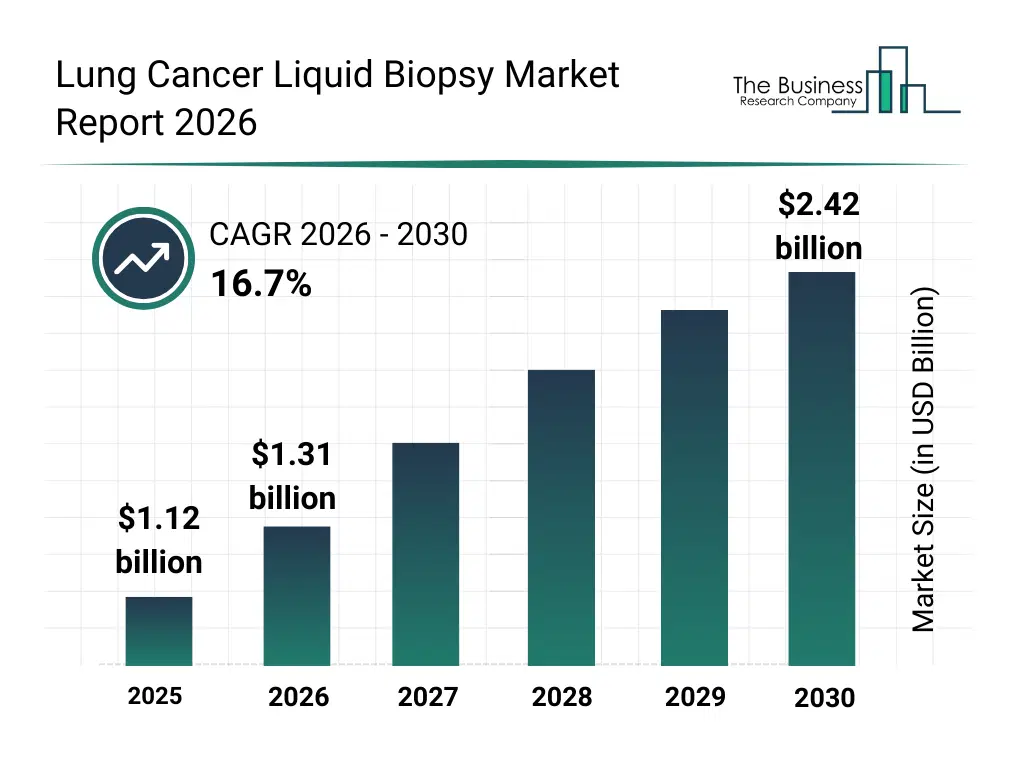
What Is The Lung Cancer Liquid Biopsy Market Size and Share 2026?
The lung cancer liquid biopsy market size has grown rapidly in recent years. It will grow from $1.12 billion in 2025 to $1.31 billion in 2026 at a compound annual growth rate (CAGR) of 17.0%. The growth in the historic period can be attributed to increasing lung cancer incidence rates, limitations of tissue biopsy procedures, advancements in molecular diagnostics, availability of circulating biomarker technologies, growth of oncology research activities.What Is The Lung Cancer Liquid Biopsy Market Growth Forecast?
The lung cancer liquid biopsy market size is expected to see rapid growth in the next few years. It will grow to $2.42 billion in 2030 at a compound annual growth rate (CAGR) of 16.7%. The growth in the forecast period can be attributed to increasing demand for precision oncology solutions, expansion of liquid biopsy clinical applications, rising adoption of companion diagnostics, growing integration of ai-driven data analysis, increased focus on early cancer screening programs. Major trends in the forecast period include increasing adoption of non-invasive diagnostic techniques, rising use of ngs-based liquid biopsy tests, growing demand for early cancer detection, expansion of personalized oncology diagnostics, enhanced integration of bioinformatics platforms.
Global Lung Cancer Liquid Biopsy Market Segmentation
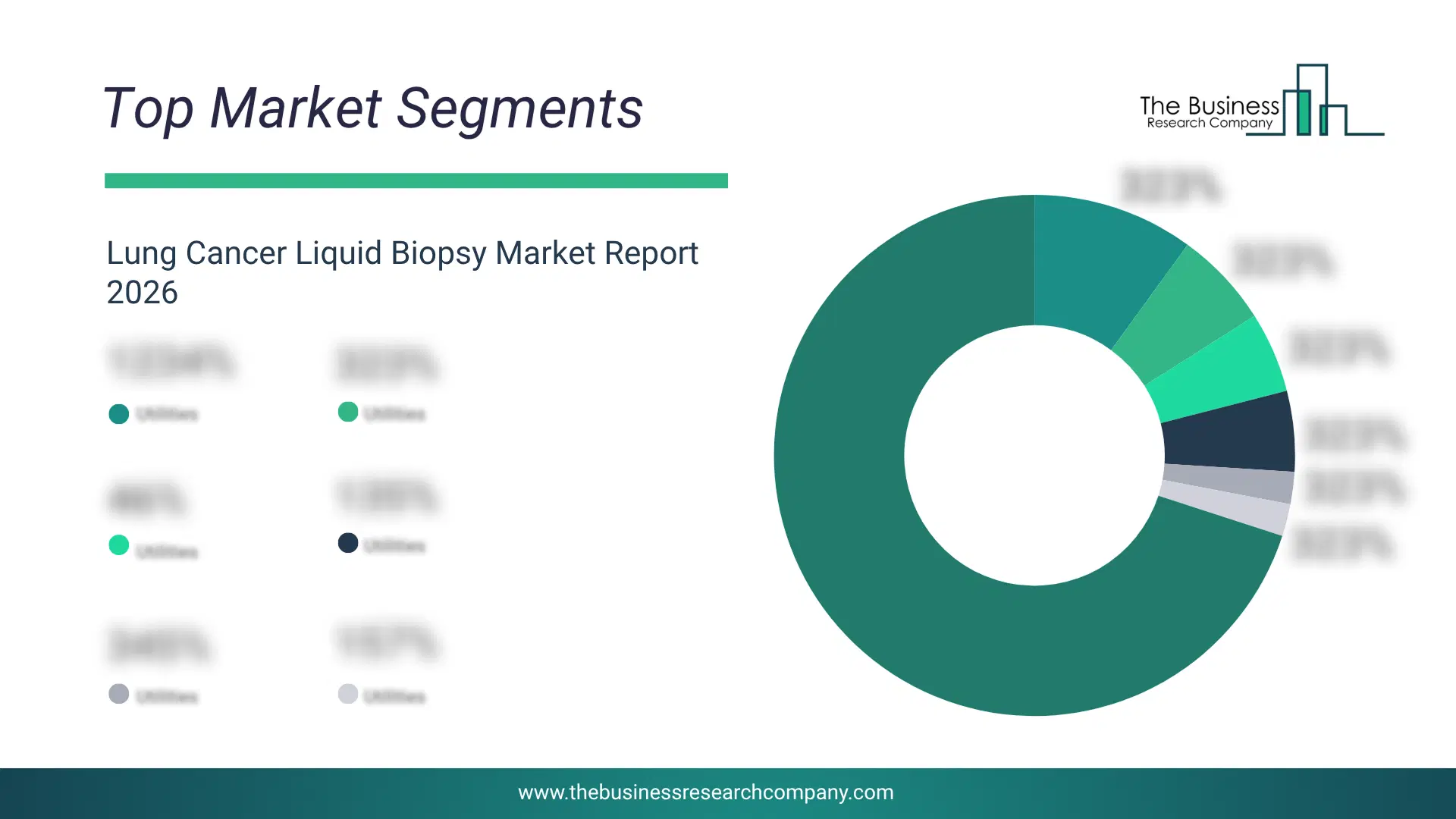
1) By Product: Instruments, Consumables, Kits And Reagents, Software And Services 2) By Technology: Multi-Gene-Parallel Analysis (Ngs), Single-Gene Analysis (PCR Microarrays) 3) By Biomarker: Cell-Free Deoxyribonucleic Acid, Circulating Tumor Deoxyribonucleic Acid, Extracellular Vesicles, Circulating Tumor Cells, Other Biomarkers 4) By Clinical Application: Therapy Selection, Treatment Monitoring, Early Cancer Screening, Recurrence Monitoring, Other Applications 5) By End User: Diagnostics And Imaging Centres, Hospitals, Academics And Research Centers, Other End Users Subsegments: 1) By Instruments: PCR Instruments, Microarray Instruments, Next-Generation Sequencing (NGS) Instruments 2) By Consumables Kits And Reagents: Sample Collection Kits, Amplification Reagents, Sequencing Reagents 3) By Software And Services: Data Analysis Software, Cloud-Based Services, Bioinformatics Tools The top segments in the lung cancer liquid biopsy market will be: • Circulating Tumor Deoxyribonucleic Acid will reach $1117.8 Million by 2025. • Single-Gene Analysis (PCR Microarrays) will reach $577.4 Million by 2025. • Instruments will reach $545.7 Million by 2025. • Multi-Gene-Parallel Analysis (NGS) will reach $540.3 Million by 2025. • Consumables, Kits And Reagents will reach $422.5 Million by 2025.What Is The Driver Of The Lung Cancer Liquid Biopsy Market?
The increasing incidence of lung cancer is expected to propel the growth of the lung cancer liquid biopsy market going forward. Lung cancer is a disease characterized by the uncontrolled growth of abnormal cells in the lungs, often caused by smoking and environmental exposures. Lung cancer is increasing mainly due to continued tobacco use, as smoking exposes lungs to carcinogens that trigger abnormal cell growth. Lung cancer liquid biopsy helps by detecting cancer-related genetic mutations and tumor DNA from a blood sample, enabling early diagnosis, treatment selection, and monitoring of disease progression or response to therapy. For instance, in January 2023, according to a report published by the American Cancer Society (ACS), a U.S.-based nonprofit organization, in 2023, it is estimated that 238,340 individuals, including 117,550 men and 120,790 women, will be diagnosed with lung cancer, and 127,070 people are expected to die from the disease. Therefore, the increasing incidence of lung cancer is driving the growth of the lung cancer liquid biopsy industry.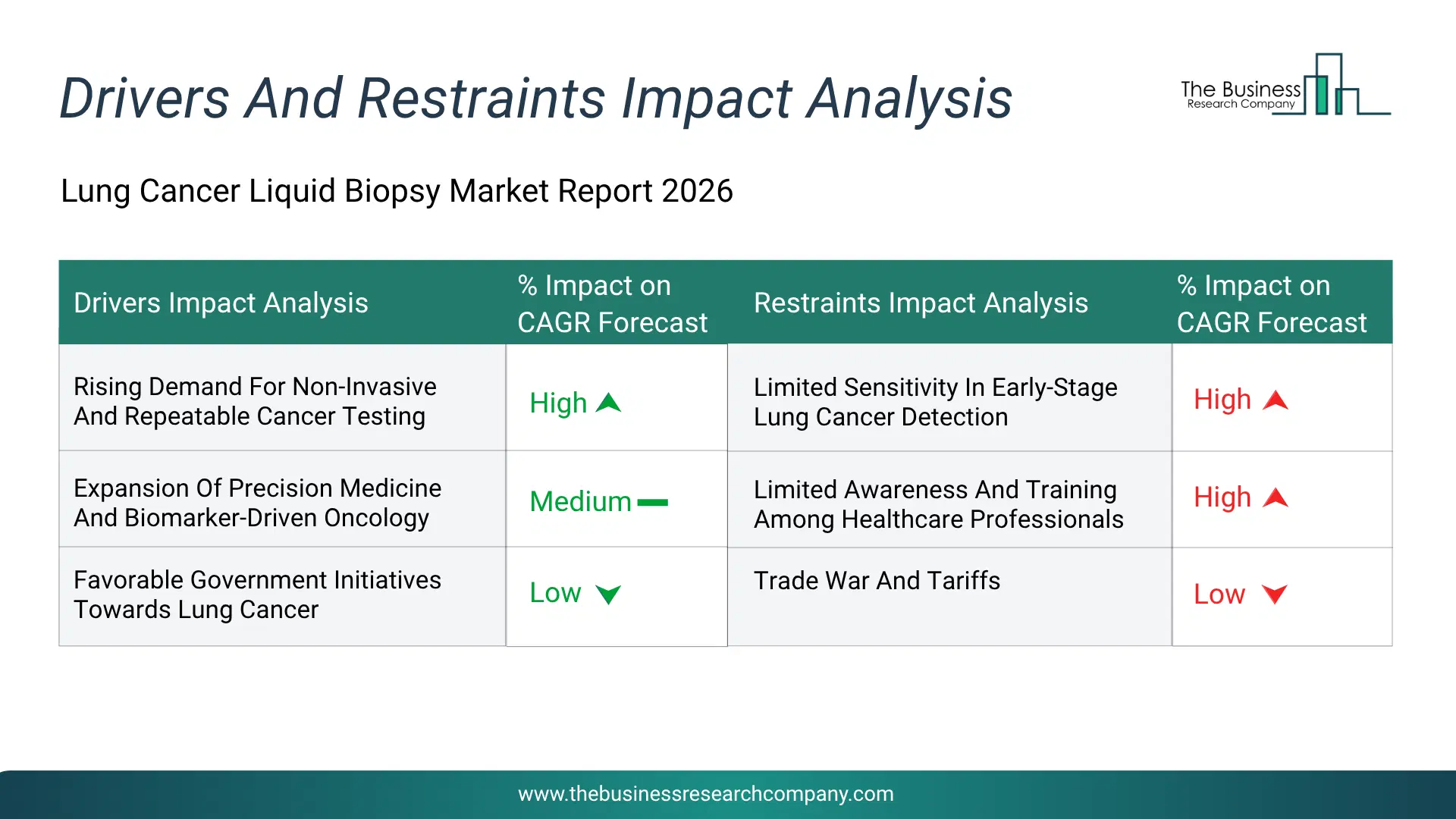
Infographic Chart Showing Key Market Drivers Analysis And Restraints For Lung Cancer Liquid Biopsy Market
The chart presents an impact analysis of key drivers and restraints, quantifying their relative influence on the market's growth rate and helping assess the balance between growth enablers and limiting factors. This chart offers a high-level perspective; the full report contains more detailed insights.
How Will The Drivers Impact Growth In The Global Lung Cancer Liquid Biopsy Market?
• Rising Demand For Non-Invasive And Repeatable Cancer Testing (High) – The rising demand for non-invasive and repeatable cancer testing will become a key driver of growth in the lung cancer liquid biopsy market by 2030. Traditional tissue biopsies are often invasive, costly and difficult to perform multiple times, limiting their suitability for continuous monitoring. In contrast, liquid biopsy uses simple blood samples, enabling safer and more convenient testing. This allows clinicians to track disease progression, detect mutations and assess treatment response in real time. As healthcare providers prioritize patient comfort and early detection, the adoption of such minimally invasive diagnostic solutions is rising, thereby supporting market expansion and improving overall cancer management outcomes. As a result, the rising demand for non-invasive and repeatable cancer testing is anticipated to contributing to a 2.0% annual growth in the market. • Expansion Of Precision Medicine And Biomarker-Driven Oncology (Medium) – The expansion of precision medicine and biomarker-driven oncology will emerge as a major factor driving the expansion of the lung cancer liquid biopsy market by 2030. Precision medicine enables treatment decisions based on individual genetic profiles, improving clinical outcomes and reducing ineffective therapies. Biomarker-based oncology further strengthens this approach by identifying specific molecular indicators that support early diagnosis and targeted treatment selection. As healthcare systems increasingly adopt these advanced diagnostic methods, demand for non-invasive tools like liquid biopsy is rising. This shift is also supported by advancements in genomic technologies and personalized cancer care, which collectively enhance diagnostic accuracy, treatment efficiency and overall patient management in lung cancer therapy. Consequently, the expansion of precision medicine and biomarker-driven oncology is projected to contributing to a 1.5% annual growth in the market. • Favorable Government Initiatives Towards Lung Cancer (Low) – The favorable government initiatives towards lung cancer will serve as a key growth catalyst for the lung cancer liquid biopsy market by 2030. Public health programs, funding for cancer research and national screening campaigns are increasing awareness and encouraging early detection. Regulatory support and fast-track approvals for innovative diagnostic technologies are also facilitating market entry for advanced liquid biopsy solutions. In addition, reimbursement policies and partnerships with private healthcare providers are improving patient access to these tests. Collectively, these initiatives are creating a supportive ecosystem that accelerates adoption, boosts investment and strengthens the overall expansion of the liquid biopsy market. Therefore, this favorable government initiatives towards lung cancer is projected to supporting to a 0.8% annual growth in the market. • Increasing Air Pollution Exposure (Low) – The increasing air pollution exposure will become a significant driver contributing to the growth of the lung cancer liquid biopsy market by 2030. Rising levels of particulate matter and toxic emissions in urban and industrial regions are contributing to a higher incidence of lung cancer, creating a greater need for early and accurate diagnostic solutions. This trend is prompting healthcare systems to prioritize timely detection and monitoring. Liquid biopsy, as a non-invasive and efficient testing method, is well positioned to meet this demand. Additionally, growing public awareness of pollution-related health risks is encouraging proactive screening, thereby supporting increased adoption of liquid biopsy technologies and overall market expansion. Consequently, the increasing air pollution exposure is projected to contributing to a 0.5% annual growth in the market.How Will The Restraints Impact Growth In The Global Lung Cancer Liquid Biopsy Market?
• Limited Sensitivity In Early-Stage Lung Cancer Detection (High) – Limited sensitivity in early-stage lung cancer detection is expected to restrain market growth during the forecast period. It creates operational, financial, regulatory, or commercial challenges that can increase costs, delay projects, reduce investments, or discourage purchasing decisions depending on the market. These challenges can reduce product adoption, affect business confidence, and limit the ability of companies to expand efficiently across key regions. This can reduce operational efficiency, delay expansion plans, and affect the ability of companies to achieve sustainable business growth. • Limited Awareness And Training Among Healthcare Professionals (Medium) – During the forecast period, limited awareness and training among healthcare professionals is likely to limit market expansion. It creates operational, financial, regulatory, or commercial challenges that can increase costs, delay projects, reduce investments, or discourage purchasing decisions depending on the market. These challenges can reduce product adoption, affect business confidence, and limit the ability of companies to expand efficiently across key regions. As a result, businesses may face increased cost pressures, slower commercial adoption, and reduced revenue opportunities. • Trade War And Tariffs (Low) – The market is expected to face challenges due to trade war and tariffs over the forecast period. It creates operational, financial, regulatory, or commercial challenges that can increase costs, delay projects, reduce investments, or discourage purchasing decisions depending on the market. These challenges can reduce product adoption, affect business confidence, and limit the ability of companies to expand efficiently across key regions. This may discourage new investments, delay strategic expansion initiatives, and weaken the overall competitive position of market participants.Key Players In The Global Lung Cancer Liquid Biopsy Market
Major companies operating in the lung cancer liquid biopsy market are F. Hoffmann-La Roche Ltd, Thermo Fisher Scientific Inc., Biocept Inc., Agilent Technologies Inc., Eurofins Scientific, Illumina Inc., Sysmex Corporation, Bio-Rad Laboratories Inc., QIAGEN N.V., Natera Inc., Myriad Genetics Inc., NeoGenomics Laboratories Inc., Guardant Health Inc., Exosome Diagnostics Inc., Menarini Silicon Biosystems S.p.A., Inivata Ltd, Lucence Diagnostics Pte Ltd, LungLife AI Inc., Biodesix Inc., Oncocyte Corporation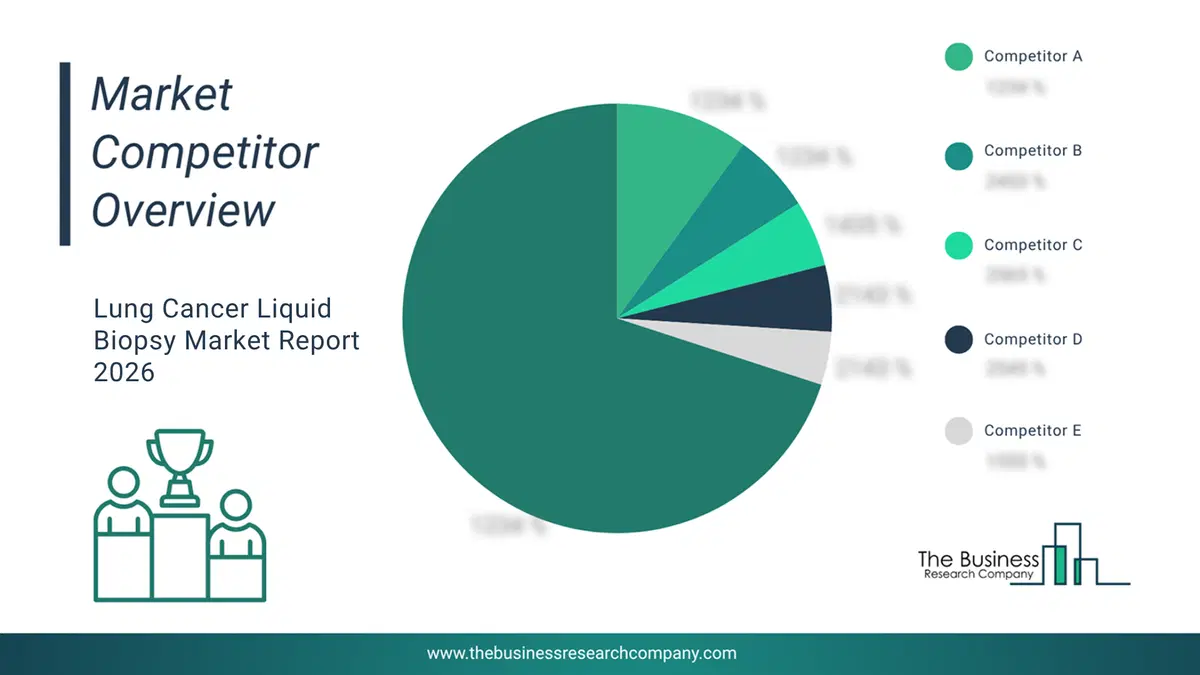
This chart is for illustrative purposes; the full report includes a detailed competitor analysis and comprehensive overview of the top 10 companies in the market.
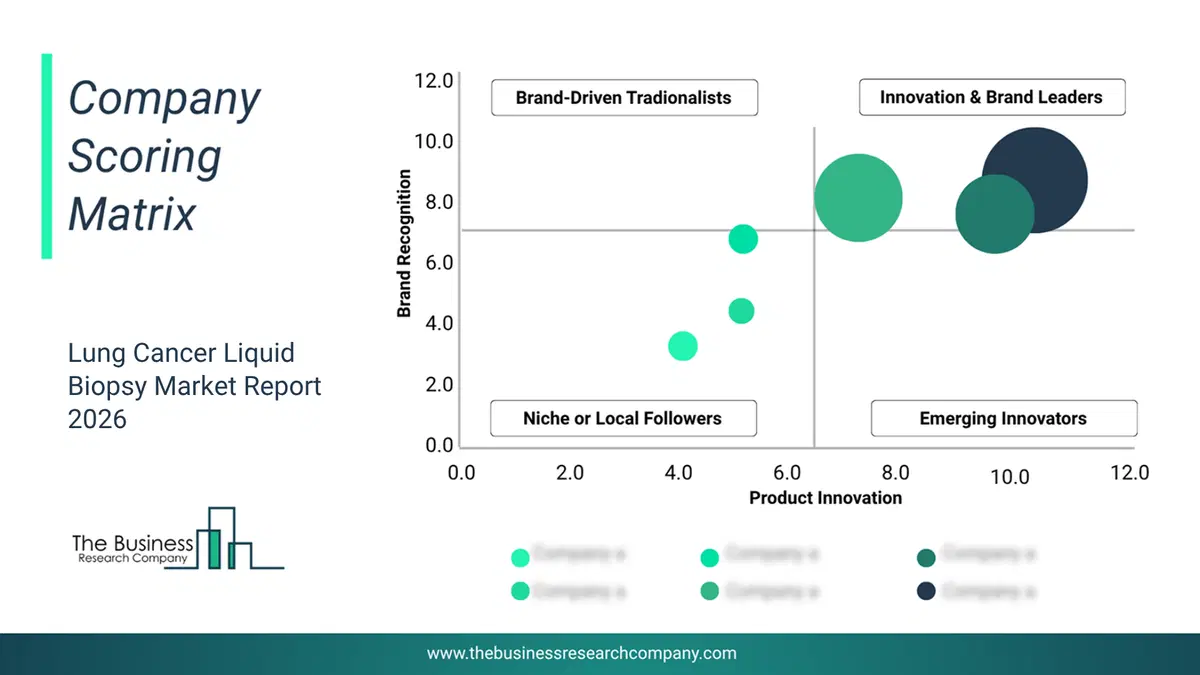
This chart maps companies by product innovation and brand strength, with bubble size indicating relative revenue, helping identify market leaders, challengers, and niche players. This is an illustrative chart; the full report provides a complete and accurate competitive analysis.
Global Lung Cancer Liquid Biopsy Market Trends and Insights
Major companies operating in the lung cancer liquid biopsy market are focusing on developing technological advancements, such as blood-based lung cancer screening tests, to enhance early detection capabilities, improve diagnostic accuracy, and enable non-invasive, real-time monitoring of tumor progression and treatment response. A blood-based lung cancer screening test is a non-invasive approach that analyzes biomarkers in the bloodstream to identify the presence of lung cancer at an early stage. For instance, in October 2023, DELFI Diagnostics Inc., a US-based biotechnology company, launched a FirstLook Lung, a blood-based liquid biopsy test designed to aid in early lung cancer detection. That leverages fragmentomics to detect early lung cancer with high sensitivity and a 99.8% negative predictive value, making it a convenient and accessible first step for at-risk individuals. Its purpose is to improve early detection, increase screening rates, and help direct further imaging resources to those most likely to benefit.What Are Latest Mergers And Acquisitions In The Lung Cancer Liquid Biopsy Market?
In February 2024, Veracyte Inc., a US-based molecular diagnostics company, acquired C2i Genomics Inc. for an undisclosed amount. With this acquisition, Veracyte aims to enhance its cancer diagnostics by adding advanced whole-genome MRD liquid biopsy capabilities for improved detection and monitoring across multiple cancer types. C2i Genomics Inc. is a US-based company specializing in cancer detection and monitoring that offers lung cancer biopsy tests.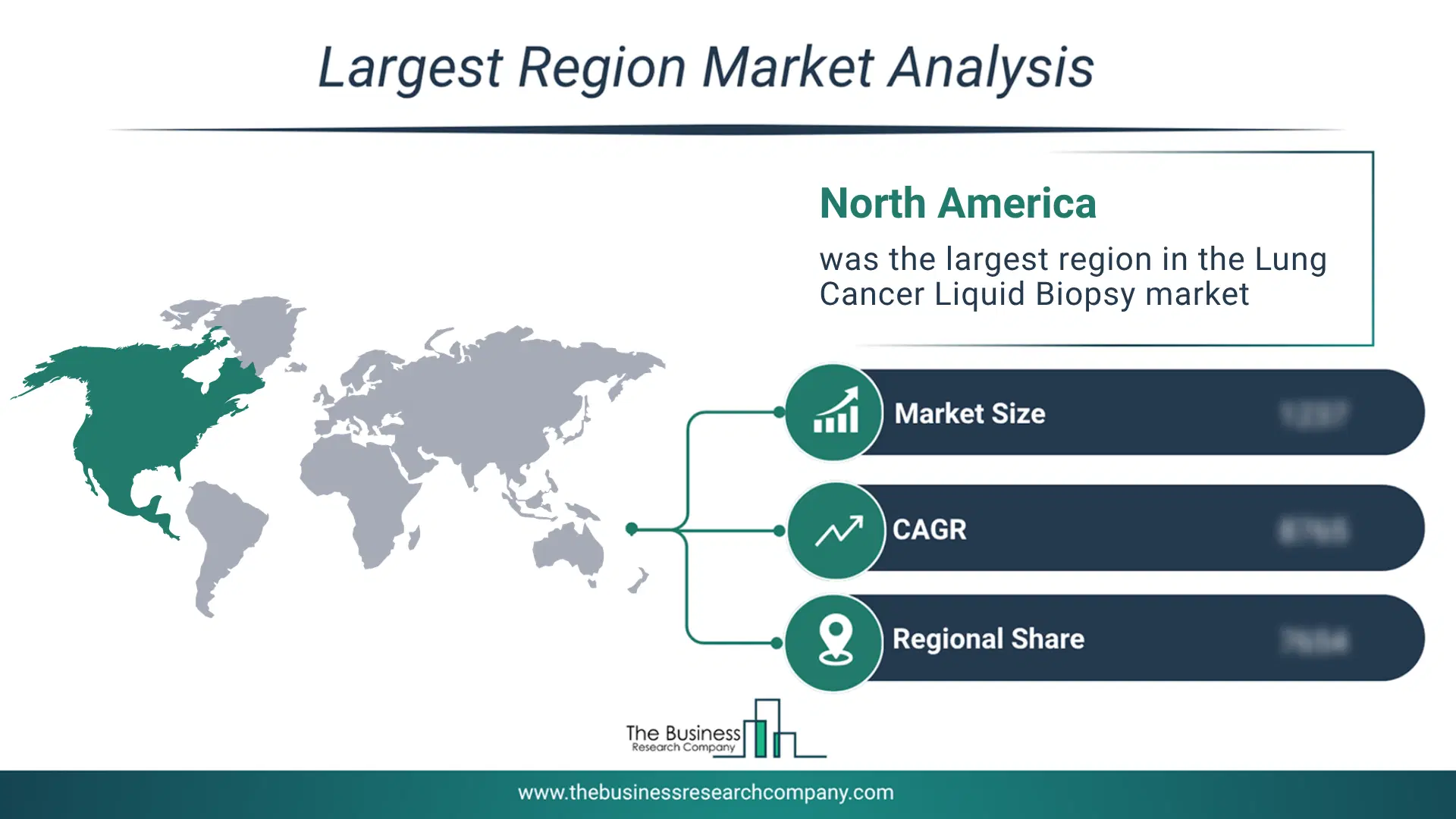
Regional Outlook
North America was the largest region in the lung cancer liquid biopsy market in 2025. Asia-Pacific is expected to be the fastest-growing region in the forecast period. The regions covered in this market report are Asia-Pacific, South East Asia, Western Europe, Eastern Europe, North America, South America, Middle East, Africa. The countries covered in this market report are Australia, Brazil, China, France, Germany, India, Indonesia, Japan, Taiwan, Russia, South Korea, UK, USA, Canada, Italy, Spain.What Defines the Lung Cancer Liquid Biopsy Market?
The lung cancer liquid biopsy market consists of revenues earned by entities by providing services such as mutation detection and genomic profiling, treatment monitoring, and early diagnosis and screening. The market value includes the value of related goods sold by the service provider or included within the service offering. The lung cancer liquid biopsy market also includes sales of NGS-based assays, CTC detection devices and others. Values in this market are ‘factory gate’ values, that is, the value of goods sold by the manufacturers or creators of the goods, whether to other entities (including downstream manufacturers, wholesalers, distributors, and retailers) or directly to end customers. The value of goods in this market includes related services sold by the creators of the goods.How is Market Value Defined and Measured?
The market value is defined as the revenues that enterprises gain from the sale of goods and/or services within the specified market and geography through sales, grants, or donations in terms of the currency (in USD unless otherwise specified). The revenues for a specified geography are consumption values that are revenues generated by organizations in the specified geography within the market, irrespective of where they are produced. It does not include revenues from resales along the supply chain, either further along the supply chain or as part of other products.
This chart presents market attractiveness based on a quantitative evaluation of growth, competition, strategic alignment, and risk, offering a clear view of opportunity areas for decision-making. This chart is for illustrative purposes; the full report contains the complete analysis.

This chart highlights the Total Addressable Market (TAM) by estimating the maximum revenue opportunity using an assumption-driven approach, supporting strategic planning and opportunity sizing across markets. The chart is illustrative; the full report provides a more comprehensive analysis.
What Key Data and Analysis Are Included in the Lung Cancer Liquid Biopsy Market Report 2026?
The lung cancer liquid biopsy market research report is one of a series of new reports from The Business Research Company that provides market statistics, including industry global market size, regional shares, competitors with the market share, detailed market segments, market trends and opportunities, and any further data you may need to thrive in the lung cancer liquid biopsy industry. The market research report delivers a complete perspective of everything you need, with an in-depth analysis of the current and future state of the industry.Lung Cancer Liquid Biopsy Market Report Forecast Analysis
| Report Attribute | Details |
|---|---|
| Market Size Value In 2026 | $1.31 billion |
| Revenue Forecast In 2035 | $2.42 billion |
| Growth Rate | CAGR of 17.0% from 2026 to 2035 |
| Base Year For Estimation | 2025 |
| Actual Estimates/Historical Data | 2020-2025 |
| Forecast Period | 2026 - 2030 - 2035 |
| Market Representation | Revenue in USD Billion and CAGR from 2026 to 2035 |
| Segments Covered | Product, Technology, Biomarker, Clinical Application, End User |
| Regional Scope | Asia-Pacific, Western Europe, Eastern Europe, North America, South America, Middle East, Africa |
| Country Scope | The countries covered in the report are Australia, Brazil, China, France, Germany, India, ... |
| Key Companies Profiled | F. Hoffmann-La Roche Ltd, Thermo Fisher Scientific Inc., Biocept Inc., Agilent Technologies Inc., Eurofins Scientific, Illumina Inc., Sysmex Corporation, Bio-Rad Laboratories Inc., QIAGEN N.V., Natera Inc., Myriad Genetics Inc., NeoGenomics Laboratories Inc., Guardant Health Inc., Exosome Diagnostics Inc., Menarini Silicon Biosystems S.p.A., Inivata Ltd, Lucence Diagnostics Pte Ltd, LungLife AI Inc., Biodesix Inc., Oncocyte Corporation |
| Customization Scope | Request for Customization |
| Pricing And Purchase Options | Explore Purchase Options |