
LYFGENIA Market Report 2026
Epidemiology, Pipeline Analysis, Market Insights & Forecasts
LYFGENIA Market Overview
• The LYFGENIA market growth in the historic period has been driven by increasing prevalence of sickle cell disease, limitations of chronic symptom-based treatments • Market expansion is supported by increasing investment in rare disease gene therapy pipelines, rising demand for curative sickle cell treatments • Growth Driver: Introduction To Sickle Cell Anemia And Its Prevalence • Market Trend: Innovative Therapies For Sickle Cell Disease • North America was the largest region in 2025.What Is Covered Under LYFGENIA Market?
LYFGENIA is a one-time gene therapy approved for treating sickle cell disease in individuals aged 12 and older with a history of vaso-occlusive events (VOEs). Its purpose is to correct enzyme deficiencies or support deficient metabolic pathways, helping to manage symptoms and improve the quality of life for individuals with rare inherited conditions. The main indication of LYFGENIA are treatment of sickle cell disease and management of symptoms associated with sickle cell disease. The treatment of sickle cell disease typically involves pain management, blood transfusions, hydroxyurea medication, and in some cases, stem cell or bone marrow transplants to manage symptoms and complications. These are available in different formulations, such as injectable formulations (intravenous) and lyophilized powder for reconstitution. It is used across various patient demographics, including pediatric, adult, and geriatric patients. Also is distributed through various channels, such as direct sales, wholesalers and distributors, retail pharmacies, and online pharmacies. Also, it is used by several end users, including hospitals, specialty clinics, hematology clinics, and research institutions.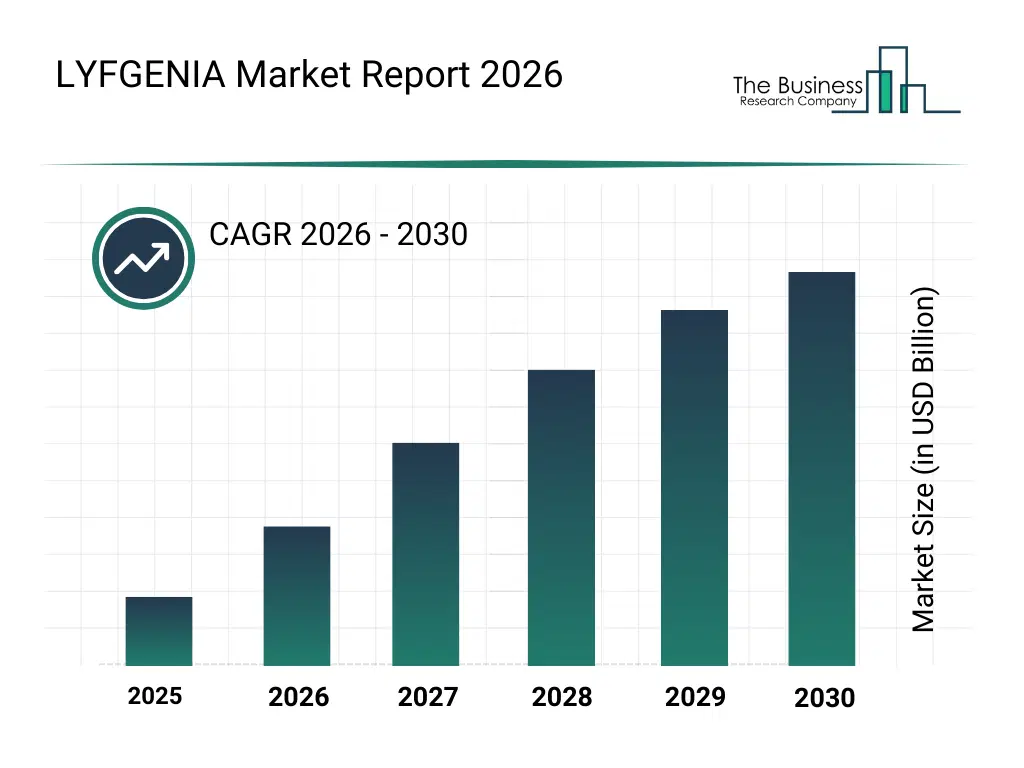
What Is The LYFGENIA Market Size and Share 2026?
The growth in the historic period can be attributed to increasing prevalence of sickle cell disease, limitations of chronic symptom-based treatments, expansion of hematology specialty centers, advancements in gene editing technologies, early approvals of curative gene therapies.What Is The LYFGENIA Market Growth Forecast?
The growth in the forecast period can be attributed to increasing investment in rare disease gene therapy pipelines, rising demand for curative sickle cell treatments, expansion of advanced therapy manufacturing facilities, growing focus on long-term patient outcomes, increasing global access to gene-based treatments. Major trends in the forecast period include increasing adoption of one-time gene therapies, rising focus on sickle cell disease curative treatments, growing use of stem cell gene modification, expansion of personalized rare disease therapies, enhanced emphasis on long-term symptom management.
Global LYFGENIA Market Segmentation
1) By Indication: Treatment Of Sickle Cell Disease, Management Of Symptoms Associated With Sickle Cell Disease 2) By Formulation: Injectable Formulation (Intravenous), Lyophilized Powder For Reconstitution 3) By Patient Demographics: Pediatric Patients, Adult Patients, Geriatric Patients 4) By Distribution Channel: Direct Sales, Wholesalers And Distributors, Retail Pharmacies, Online Pharmacies 5) By End User: Hospitals, Specialty Clinics, Hematology Clinics, Research InstitutionsWhat Are The Drivers Of The LYFGENIA Market?
The increase in the prevalence of sickle cell anemia is expected to propel the growth of the LYFGENIA market going forward. Sickle cell anemia is a genetic blood disorder characterized by the production of abnormal hemoglobin, leading to red blood cells becoming rigid and crescent-shaped, which can block blood flow and cause pain, organ damage, and increased risk of infection. The prevalence of sickle cell anemia is attributed to genetic inheritance, as it is an autosomal recessive disorder, meaning individuals must inherit two copies of the sickle cell gene, one from each parent, for the disease to manifest. LYFGENIA is a gene therapy that treats sickle cell anemia by correcting the genetic mutation in the patient's stem cells, producing healthy hemoglobin, and preventing red blood cells from sickling, reducing symptoms and the need for blood transfusions. For instance, in July 2024, according to the Perth Blood Institute, an Australia-based nonprofit organization, around 275,000 babies are estimated to be born with Sickle Cell Disease (SCD) annually, with projections suggesting this number could exceed 400,000 by 2050. Therefore, the increase in the prevalence of sickle cell anemia is driving growth in the LYFGENIA industry. The increasing incidence of chronic conditions is set to propel the growth of the LYFGENIA market moving forward. Chronic conditions refer to long-term health issues that persist for a year or more, often requiring continuous medical attention or limiting daily activities. The increasing incidence of chronic conditions is attributed to factors such as aging populations, sedentary lifestyles, unhealthy diets, and rising rates of obesity and stress. LYFGENIA benefits chronic conditions by providing targeted treatments and management strategies that improve patient outcomes, enhance quality of life, and reduce the burden of long-term care. For instance, in April 2025, according to the NHS Confederation, a UK-based national association, in 2035, it is estimated that 17% of the UK population could be living with four or more chronic conditions. Therefore, the increasing incidence of chronic conditions drives growth in the LYFGENIA industry.Key Players In The Global LYFGENIA Market
Major companies operating in the lyfgenia market are Bluebird bio Inc.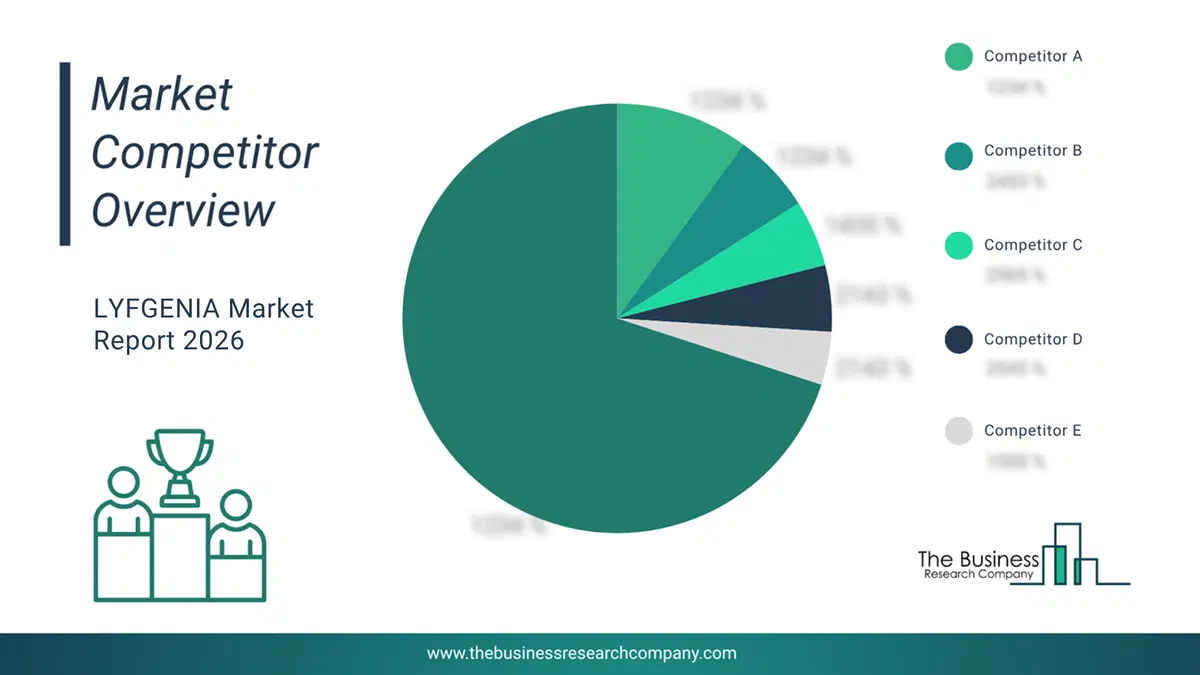
This chart is for illustrative purposes; the full report includes a detailed competitor analysis and comprehensive overview of the top 10 companies in the market.
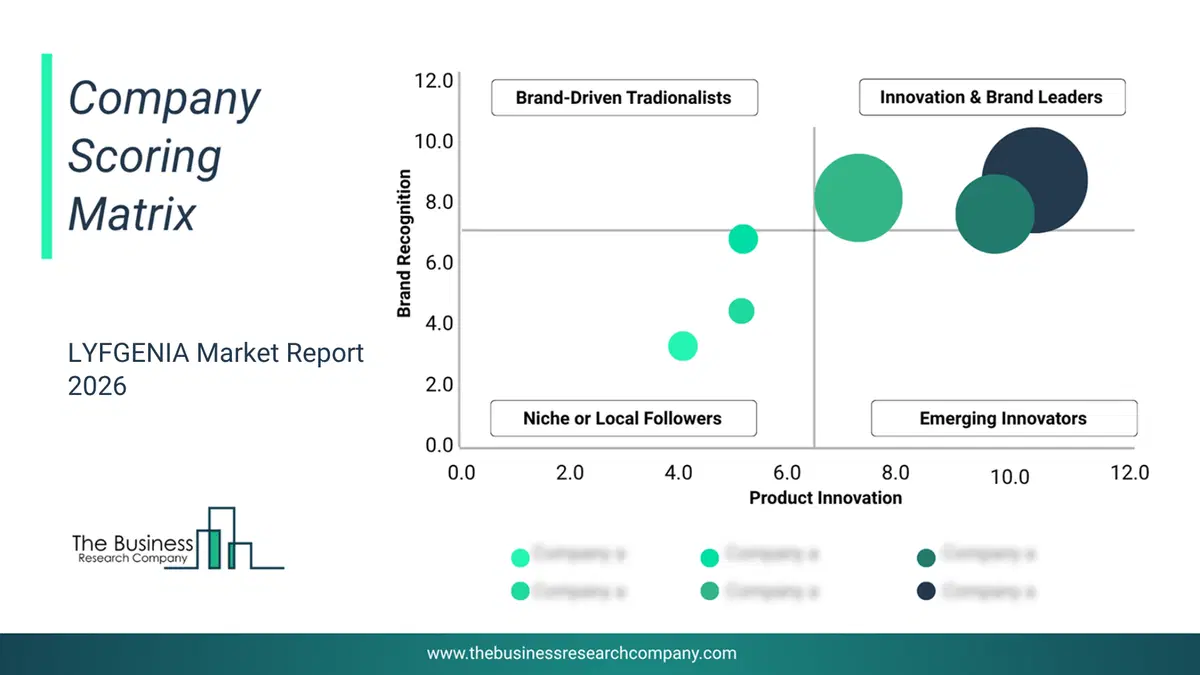
This chart maps companies by product innovation and brand strength, with bubble size indicating relative revenue, helping identify market leaders, challengers, and niche players. This is an illustrative chart; the full report provides a complete and accurate competitive analysis.
Global LYFGENIA Market Trends and Insights
The key trend in the LYFGENIA market are focused on developing innovative therapies such as curative gene therapy to enhance treatment outcomes for sickle cell disease, reduce the frequency of vaso-occlusive events, and provide long-term or potentially permanent solutions for patients by addressing the root cause of the disease at the genetic level. Curative gene therapy refers to a treatment approach that involves modifying a patient's genetic material to correct or replace faulty genes responsible for causing a specific disease. For instance, in December 2023, Bluebird Bio, Inc., a US-based biotechnology company, received approval from the United States Food and Drug Administration for LYFGENIA. LYFGENIA (lovotibeglogene autotemcel) is a one-time gene therapy for treating sickle cell disease in patients aged 12 and older with a history of vaso-occlusive events.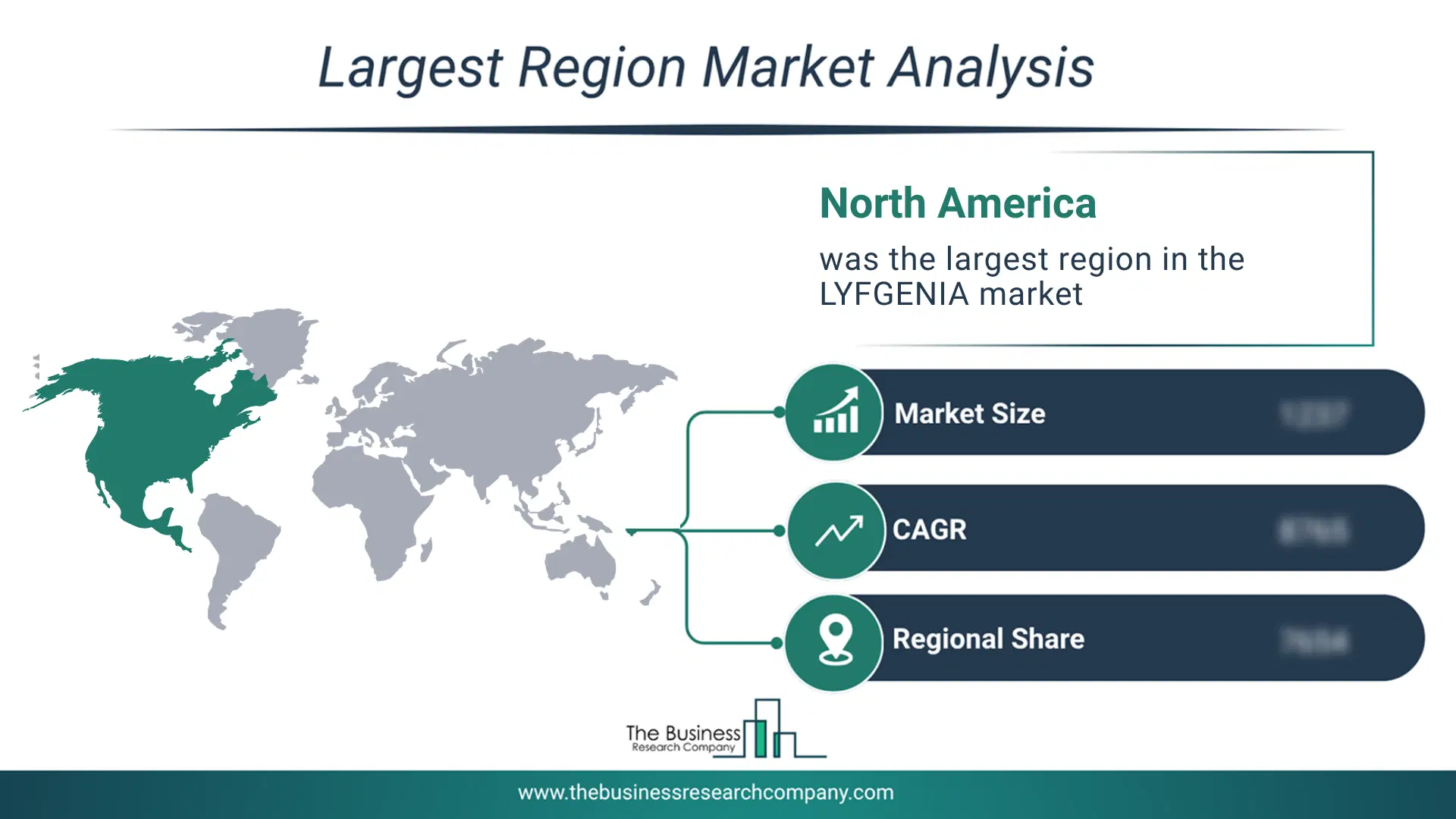
Regional Insights
North America was the largest region in the LYFGENIA market in 2025. The regions covered in this market report are Asia-Pacific, Western Europe, Eastern Europe, North America, South America, Middle East, Africa. The countries covered in this market report are Australia, India, China, South Korea, Japan, UK, France, Germany, USA, Canada.What Defines the LYFGENIA Market?
The LYFGENIA market consists of sales of lovotibeglogene autotemcel and companion products. Values in this market are ‘factory gate’ values, that is, the value of goods sold by the manufacturers or creators of the goods, whether to other entities (including downstream manufacturers, wholesalers, distributors, and retailers) or directly to end customers. The value of goods in this market includes related services sold by the creators of the goods.How is Market Value Defined and Measured?
The market value is defined as the revenues that enterprises gain from the sale of goods and/or services within the specified market and geography through sales, grants, or donations in terms of the currency (in USD unless otherwise specified). The revenues for a specified geography are consumption values that are revenues generated by organizations in the specified geography within the market, irrespective of where they are produced. It does not include revenues from resales along the supply chain, either further along the supply chain or as part of other products.
This chart presents market attractiveness based on a quantitative evaluation of growth, competition, strategic alignment, and risk, offering a clear view of opportunity areas for decision-making. This chart is for illustrative purposes; the full report contains the complete analysis.

This chart highlights the Total Addressable Market (TAM) by estimating the maximum revenue opportunity using an assumption-driven approach, supporting strategic planning and opportunity sizing across markets. The chart is illustrative; the full report provides a more comprehensive analysis.
What Key Data and Analysis Are Included in the LYFGENIA Market Report 2026?
The lyfgenia market research report is one of a series of new reports from The Business Research Company that provides market statistics, including industry global market size, regional shares, competitors with the market share, detailed market segments, market trends and opportunities, and any further data you may need to thrive in the lyfgenia industry. The market research report delivers a complete perspective of everything you need, with an in-depth analysis of the current and future state of the industry.LYFGENIA Market Report Forecast Analysis
| Report Attribute | Details |
|---|---|
| Market Size Value In 2026 | - |
| Revenue Forecast In 2030 | - |
| Growth Rate | - |
| Base Year For Estimation | 2025 |
| Actual Estimates/Historical Data | 2020-2025 |
| Forecast Period | 2026 - 2030 |
| Market Representation | Revenue in USD Billion and CAGR from 2026 to 2030 |
| Segments Covered | Indication, Formulation, Patient Demographics, Distribution Channel, End User |
| Regional Scope | Asia-Pacific, Western Europe, Eastern Europe, North America, South America, Middle East, Africa |
| Country Scope | The countries covered in the report are Australia, Brazil, China, France, Germany, India, Indonesia, Japan, Taiwan, Russia, South Korea, UK, USA, Canada, Italy, Spain. |
| Key Companies Profiled | Bluebird bio Inc. |
| Customization Scope | Request for Customization |
| Pricing And Purchase Options | Explore Purchase Options |