
Lymphocyte Activating Gene 3 (LAG3) Antibody Market Report 2026
Global Outlook – By Type Of Antibodies (Monoclonal Antibody, Polyclonal Antibody, Bispecific Antibodies), By Drug Class (Monotherapy, Combination Therapy), By Mechanism Of Action (Immune Checkpoint Inhibitors, Immunomodulatory Antibodies, Co-Stimulatory Antibodies), By Application (Cancer Immunotherapy, Autoimmune Diseases, Infectious Diseases), By End-User (Pharmaceutical And Biotechnology Companies, Academic Research Institutions, Diagnostic Laboratories) – Market Size, Trends, Strategies, and Forecast to 2030
Lymphocyte Activating Gene 3 (LAG3) Antibody Market Overview
• Lymphocyte Activating Gene 3 (LAG3) Antibody market size has reached to $0.8 billion in 2025 • Expected to grow to $1.53 billion in 2030 at a compound annual growth rate (CAGR) of 13.9% • Growth Driver: Rising Cancer Incidence Fueling The Growth Of The Market Due To Increasing Lifestyle-Related Risk Factors • Market Trend: Advancements In Dual Immunotherapy Drive Expanded Treatment Applications • North America was the largest region in 2025 and Asia-Pacific is the fastest growing region.What Is Covered Under Lymphocyte Activating Gene 3 (LAG3) Antibody Market?
Lymphocyte-activating gene 3 (LAG3) antibody refers to a class of therapeutic monoclonal antibodies that target the LAG-3 protein, an immune checkpoint receptor expressed on activated T cells. These antibodies aim to restore T cell function by blocking LAG-3, and enhance immune responses, making them valuable in cancer immunotherapy and the treatment of chronic infections by overcoming T cell exhaustion. The main types of lymphocyte activating gene 3 (LAG3) antibody are monoclonal antibodies, polyclonal antibodies, and bispecific antibodies. A monoclonal antibody is a laboratory-produced molecule designed to bind specifically to a single target antigen, helping the immune system detect and neutralize harmful pathogens or diseased cells. These antibodies are available in various drug classes, such as monotherapy and combination therapy, and function through different mechanisms of action, including immune checkpoint inhibition, immunomodulatory activity, and co-stimulatory signaling. They are used in various applications, such as cancer immunotherapy, autoimmune diseases, and infectious diseases, with key end users including pharmaceutical and biotechnology companies, academic research institutions, and diagnostic laboratories.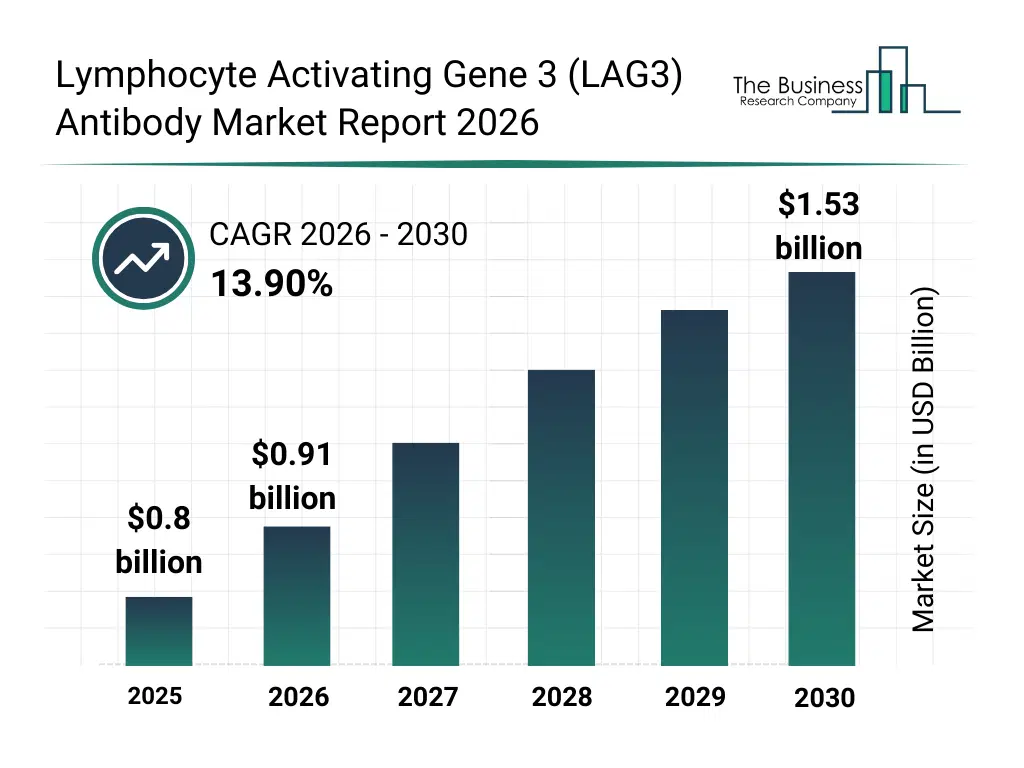
What Is The Lymphocyte Activating Gene 3 (LAG3) Antibody Market Size and Share 2026?
The lymphocyte activating gene 3 (lag3) antibody market size has grown rapidly in recent years. It will grow from $0.8 billion in 2025 to $0.91 billion in 2026 at a compound annual growth rate (CAGR) of 13.8%. The growth in the historic period can be attributed to limited availability of lag3 antibodies, reliance on traditional monoclonal antibody therapies, growing oncology pipeline, increasing academic and clinical research, regulatory approvals for early-stage antibodies.What Is The Lymphocyte Activating Gene 3 (LAG3) Antibody Market Growth Forecast?
The lymphocyte activating gene 3 (lag3) antibody market size is expected to see rapid growth in the next few years. It will grow to $1.53 billion in 2030 at a compound annual growth rate (CAGR) of 13.9%. The growth in the forecast period can be attributed to development of bispecific and tandem scfv antibodies, expansion of combination immunotherapies, increasing adoption in autoimmune and infectious disease treatment, rising investment in clinical trials and r&d, integration with personalized and precision medicine approaches. Major trends in the forecast period include rising adoption of lag3 antibodies in cancer immunotherapy, development of combination therapies with other immune checkpoint inhibitors, increased focus on autoimmune disease applications, expansion of clinical trials for infectious disease treatments, growth in humanized and bispecific antibody platforms.
Global Lymphocyte Activating Gene 3 (LAG3) Antibody Market Segmentation
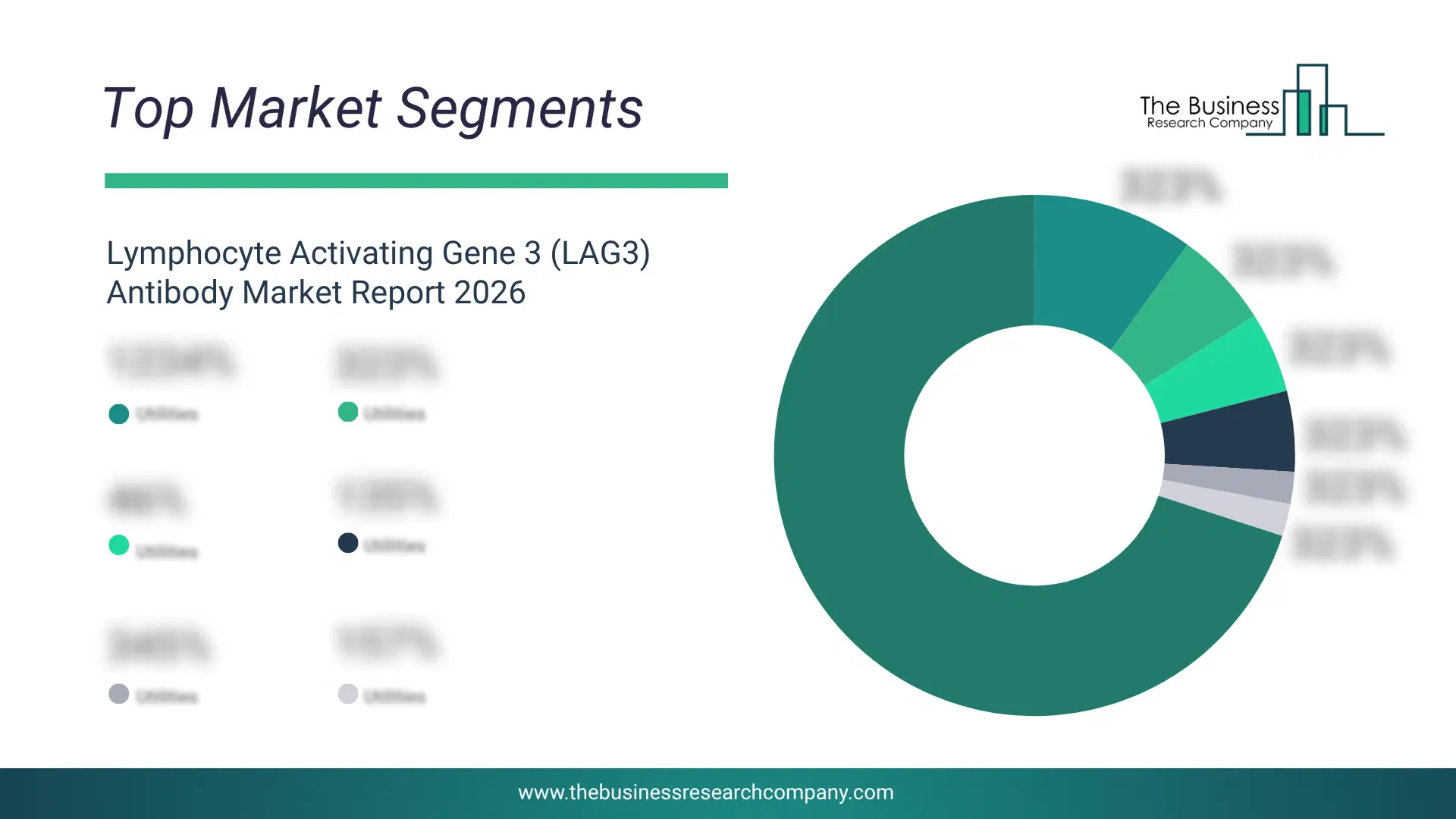
1) By Type Of Antibodies: Monoclonal Antibody, Polyclonal Antibody, Bispecific Antibodies 2) By Drug Class: Monotherapy, Combination Therapy 3) By Mechanism Of Action: Immune Checkpoint Inhibitors, Immunomodulatory Antibodies, Co-Stimulatory Antibodies 4) By Application: Cancer Immunotherapy, Autoimmune Diseases, Infectious Diseases 5) By End-User: Pharmaceutical And Biotechnology Companies, Academic Research Institutions, Diagnostic Laboratories Subsegments: 1) By Monoclonal Antibody: Human Monoclonal Antibody, Humanized Monoclonal Antibody, Chimeric Monoclonal Antibody 2) By Polyclonal Antibody: Rabbit Polyclonal Antibody, Goat Polyclonal Antibody, Mouse Polyclonal Antibody, Donkey Polyclonal Antibody 3) By Bispecific Antibodies: Tandem ScFv Based Bispecific Antibody, Dual Variable Domain Based Bispecific Antibody, Bispecific T Cell Engager, Immunoglobulin G such as Bispecific AntibodyWhat Is The Driver Of The Lymphocyte Activating Gene 3 (LAG3) Antibody Market?
The rising cancer incidence is expected to propel the growth of the lymphocyte activating gene 3 (LAG3) antibody market going forward. Cancer incidence refers to the number of new cancer cases occurring in a specific population during a defined time period. Cancer incidence is increasing due to lifestyle-related risks such as poor diet, smoking, alcohol consumption, and exposure to environmental pollutants, elevating the risk of developing various cancers. Lymphocyte activating gene 3 (LAG3) antibodies aid in cancer treatment by restoring exhausted T cell function, making them effective in enhancing immune system activity against tumors. They improve treatment outcomes by boosting anti-tumor responses, offering new hope for patients with advanced cancers. For instance, in January 2024, according to the American Cancer Society, a US-based nonprofit cancer advocacy organization, the number of cancer cases increased to 2,001,140 compared to 1,958,310 in 2023, reflecting a growth of 2.19%. Therefore, the rising cancer incidence is driving the growth of the lymphocyte activating gene 3 (LAG3) antibody industry.Key Players In The Global Lymphocyte Activating Gene 3 (LAG3) Antibody Market
Major companies operating in the lymphocyte activating gene 3 (lag3) antibody market are F. Hoffmann-La Roche Ltd., Merck & Co. Inc., Novartis AG, Bristol-Myers Squibb Company, Regeneron Pharmaceuticals Inc., Daiichi Sankyo Company Limited, Ono Pharmaceutical Co. Ltd., Xencor Inc., Innovent Biologics Inc., Zai Lab Limited, MacroGenics Inc., Akeso Inc., Agenus Inc., Alphamab Oncology, AnaptysBio Inc., Crescendo Biologics Ltd., EpimAb Biotherapeutics Inc., Shanghai Henlius Biotech Inc., Immutep Limited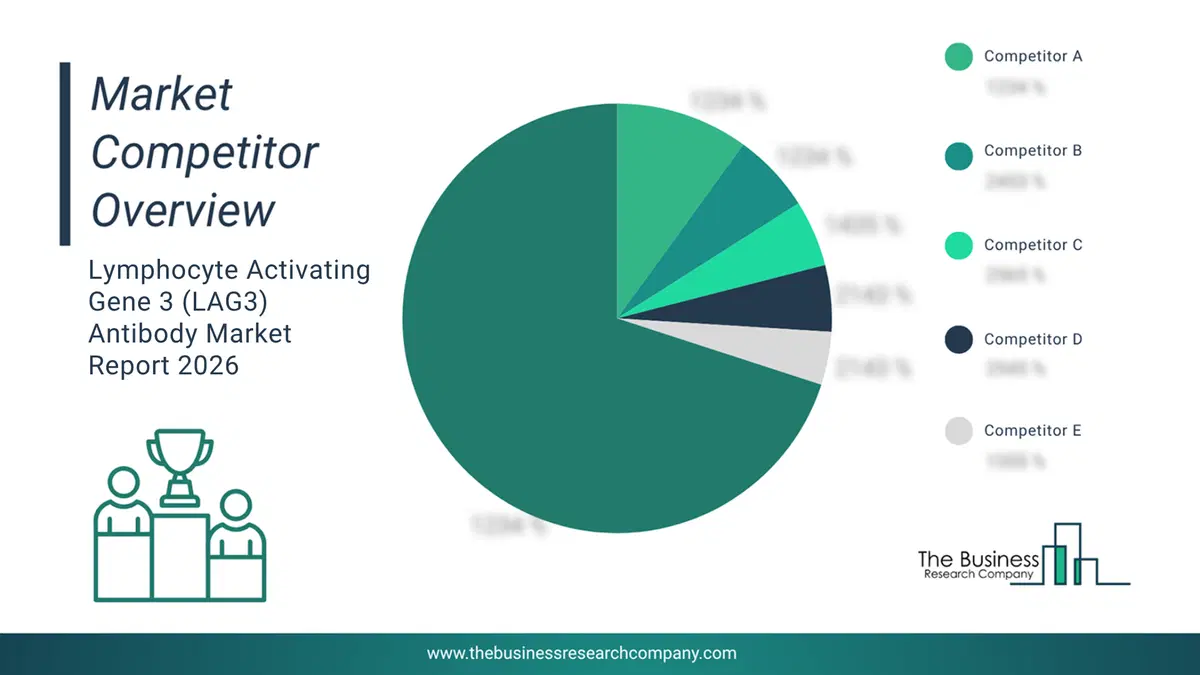
This chart is for illustrative purposes; the full report includes a detailed competitor analysis and comprehensive overview of the top 10 companies in the market.
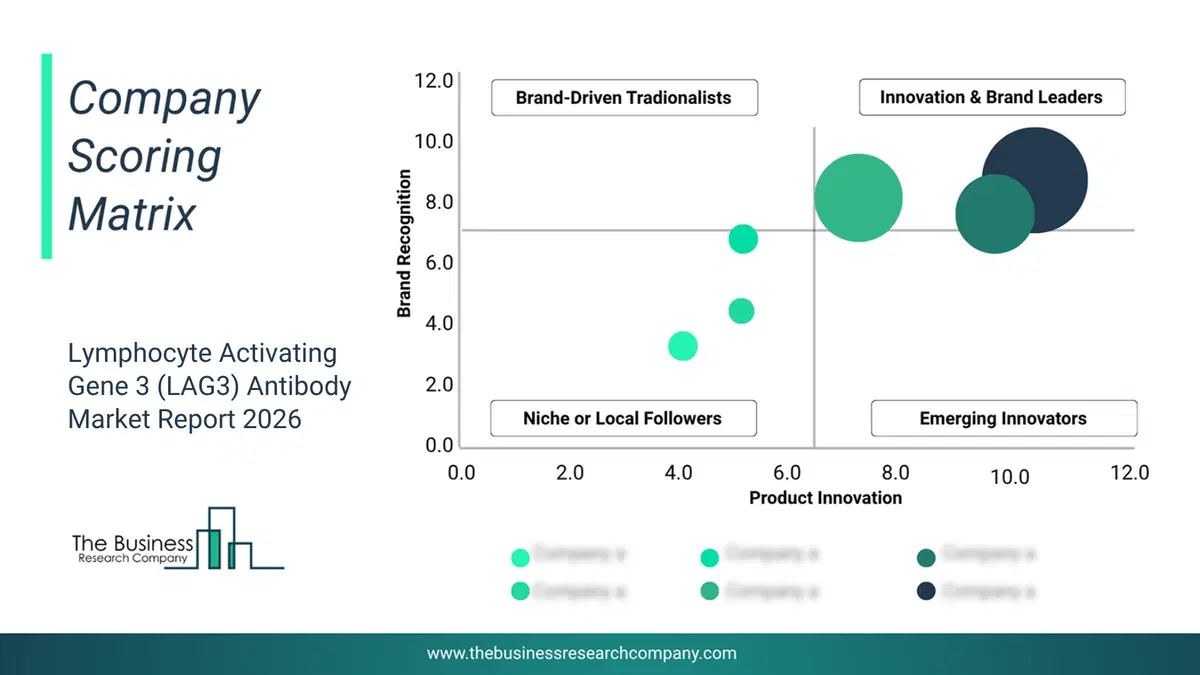
This chart maps companies by product innovation and brand strength, with bubble size indicating relative revenue, helping identify market leaders, challengers, and niche players. This is an illustrative chart; the full report provides a complete and accurate competitive analysis.
Global Lymphocyte Activating Gene 3 (LAG3) Antibody Market Trends and Insights
Major companies operating in the Lymphocyte Activating Gene 3 (LAG3) Antibody market are focusing on conducting clinical trials to develop innovative products such as next-generation monoclonal antibodies to enhance anti-tumor immune activation and overcome resistance to existing immunotherapies. Next-generation monoclonal antibodies are advanced, engineered antibody therapies designed to more precisely bind immune targets such as LAG-3 with higher specificity, stability, and functional potency, helping enhance T-cell activation, improve anti-tumor responses, and address limitations seen with earlier antibody therapies. For instance, in February 2025, Bristol‑Myers Squibb Company, a US‑based biopharmaceutical company, provided an update on its fixed‑dose combination product Opdualag (nivolumab + relatlimab‑rmbw), a first‑in‑class dual immunotherapy including the LAG‑3‑blocking antibody relatlimab and the PD‑1 inhibitor nivolumab. Opdualag is composed of a humanised IgG4 monoclonal LAG‑3 antibody (relatlimab) plus a PD‑1 inhibitor (nivolumab) given intravenously every 4 weeks; its functionality lies in blocking both the LAG‑3–ligand interaction (thereby preventing T‑cell exhaustion) and PD‑1–ligand binding, thereby promoting T‑cell proliferation and cytokine secretion more robustly than PD‑1 monotherapy. Unique features include its fixed‑dose combination format (480 mg nivolumab + 160 mg relatlimab) and its status as the first approved therapy to target LAG‑3 in combination; applications include adult and paediatric (≥12 yrs) patients with unresectable or metastatic melanoma, offering a benefit over traditional PD‑1 inhibitor alone in terms of progression‑free survival.What Are Latest Mergers And Acquisitions In The Lymphocyte Activating Gene 3 (LAG3) Antibody Market?
In June 2023, Chime Biologics Limited, a China-based contract development and manufacturing organization (CDMO), partnered with Leads Biolabs Inc. and BeiGene Ltd. This partnership aims to accelerate the development and manufacturing of innovative biologics, including monoclonal and bispecific antibody therapies, to advance clinical pipelines and expand access to next-generation cancer immunotherapies. Leads Biolabs Inc. is a China-based biotechnology company developing LAG3 antibodies for cancer immunotherapy, while BeiGene Ltd. is a US-based biotechnology company developing LAG3 antibodies to enhance immune checkpoint inhibition.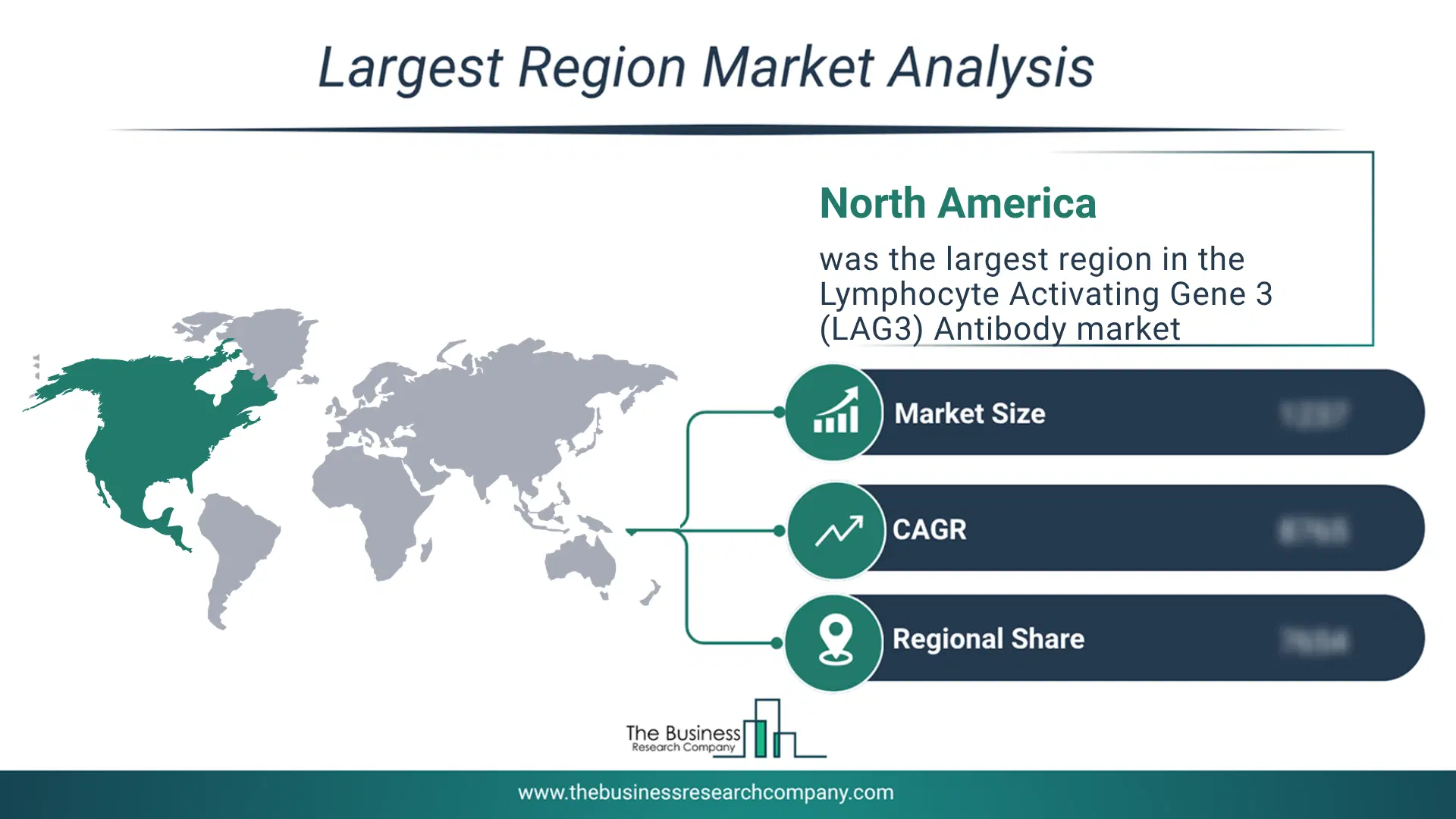
Regional Insights
North America was the largest region in the lymphocyte activating gene 3 (LAG3) antibody market in 2025. Asia-Pacific is expected to be the fastest-growing region in the forecast period. The regions covered in this market report are Asia-Pacific, South East Asia, Western Europe, Eastern Europe, North America, South America, Middle East, Africa. The countries covered in this market report are Australia, Brazil, China, France, Germany, India, Indonesia, Japan, Taiwan, Russia, South Korea, UK, USA, Canada, Italy, Spain.What Defines the Lymphocyte Activating Gene 3 (LAG3) Antibody Market?
The lymphocyte activating gene 3 (LAG3) antibody market consists of sales of relatlimab, favezelimab, eftilagimod alpha, biosimilars, antibody-drug conjugates, and combination therapy products. Values in this market are ‘factory gate’ values, that is, the value of goods sold by the manufacturers or creators of the goods, whether to other entities (including downstream manufacturers, wholesalers, distributors, and retailers) or directly to end customers. The value of goods in this market includes related services sold by the creators of the goods.How is Market Value Defined and Measured?
The market value is defined as the revenues that enterprises gain from the sale of goods and/or services within the specified market and geography through sales, grants, or donations in terms of the currency (in USD unless otherwise specified). The revenues for a specified geography are consumption values that are revenues generated by organizations in the specified geography within the market, irrespective of where they are produced. It does not include revenues from resales along the supply chain, either further along the supply chain or as part of other products.
This chart presents market attractiveness based on a quantitative evaluation of growth, competition, strategic alignment, and risk, offering a clear view of opportunity areas for decision-making. This chart is for illustrative purposes; the full report contains the complete analysis.

This chart highlights the Total Addressable Market (TAM) by estimating the maximum revenue opportunity using an assumption-driven approach, supporting strategic planning and opportunity sizing across markets. The chart is illustrative; the full report provides a more comprehensive analysis.
What Key Data and Analysis Are Included in the Lymphocyte Activating Gene 3 (LAG3) Antibody Market Report 2026?
The lymphocyte activating gene 3 (lag3) antibody market research report is one of a series of new reports from The Business Research Company that provides market statistics, including industry global market size, regional shares, competitors with the market share, detailed market segments, market trends and opportunities, and any further data you may need to thrive in the lymphocyte activating gene 3 (lag3) antibody industry. The market research report delivers a complete perspective of everything you need, with an in-depth analysis of the current and future state of the industry.Lymphocyte Activating Gene 3 (LAG3) Antibody Market Report Forecast Analysis
| Report Attribute | Details |
|---|---|
| Market Size Value In 2026 | $0.91 billion |
| Revenue Forecast In 2030 | $1.53 billion |
| Growth Rate | CAGR of 13.8% from 2026 to 2030 |
| Base Year For Estimation | 2025 |
| Actual Estimates/Historical Data | 2020-2025 |
| Forecast Period | 2026 - 2030 |
| Market Representation | Revenue in USD Billion and CAGR from 2026 to 2030 |
| Segments Covered | Type Of Antibodies, Drug Class, Mechanism Of Action, Application, End-User |
| Regional Scope | Asia-Pacific, Western Europe, Eastern Europe, North America, South America, Middle East, Africa |
| Country Scope | The countries covered in the report are Australia, Brazil, China, France, Germany, India, Indonesia, Japan, Taiwan, Russia, South Korea, UK, USA, Canada, Italy, Spain. |
| Key Companies Profiled | F. Hoffmann-La Roche Ltd., Merck & Co. Inc., Novartis AG, Bristol-Myers Squibb Company, Regeneron Pharmaceuticals Inc., Daiichi Sankyo Company Limited, Ono Pharmaceutical Co. Ltd., Xencor Inc., Innovent Biologics Inc., Zai Lab Limited, MacroGenics Inc., Akeso Inc., Agenus Inc., Alphamab Oncology, AnaptysBio Inc., Crescendo Biologics Ltd., EpimAb Biotherapeutics Inc., Shanghai Henlius Biotech Inc., Immutep Limited |
| Customization Scope | Request for Customization |
| Pricing And Purchase Options | Explore Purchase Options |