
Lysosomal Enzyme Market Report 2026
Global Outlook – By Type (Acid Alpha-Glucosidase, Acid Sphingomyelinase, Beta-Glucocerebrosidase, Hexosaminidase), By Indication (Gaucher Disease, Mucopolysaccharidosis, Pompe Disease, Other Indications), By Source (Recombinant Enzymes, Natural Enzymes, Synthetic Enzymes), By Application (Enzyme Replacement Therapy, Research And Development, Diagnostics, Gene Therapy), By End-Use (Hospitals, Diagnostic Laboratories, Research Institutions, Pharmaceutical Companies) – Market Size, Trends, Strategies, and Forecast to 2030
Lysosomal Enzyme Market Overview
• Lysosomal Enzyme market size has reached to $10.07 billion in 2025 • Expected to grow to $13.49 billion in 2030 at a compound annual growth rate (CAGR) of 6% • Growth Driver: Rising Adoption Of Gene Therapy Fueling The Growth Of The Market Due To Its Role In Complementary Enzyme Replacement Treatments • Market Trend: Strategic Collaboration Advances Biopharmaceutical Innovation For Rare Disease Treatment • North America was the largest region in 2025 and Asia-Pacific is the fastest growing region.What Is Covered Under Lysosomal Enzyme Market?
Lysosomal enzymes are specialized hydrolytic enzymes found within lysosomes, membrane-bound organelles in eukaryotic cells. These enzymes play a critical role in cellular digestion by breaking down various biological macromolecules, including proteins, lipids, carbohydrates, and nucleic acids. Deficiencies or malfunctions in lysosomal enzymes can lead to severe genetic disorders known as lysosomal storage diseases, where undigested materials accumulate within cells, disrupting normal function. The main types of lysosomal enzyme are acid alpha-glucosidase, acid sphingomyelinase, beta-glucocerebrosidase, and hexosaminidase. Acid alpha-glucosidase is an enzyme that helps break down glycogen into glucose within lysosomes. They are used to treat various conditions such as gaucher disease, mucopolysaccharidosis, pompe disease, and others. These enzymes are derived from different sources, including recombinant, natural, and synthetic enzymes and is applied for enzyme replacement therapy, research and development, diagnostics, and gene therapy. These are utilized across a range of settings, including hospitals, diagnostic laboratories, research institutions, and pharmaceutical companies.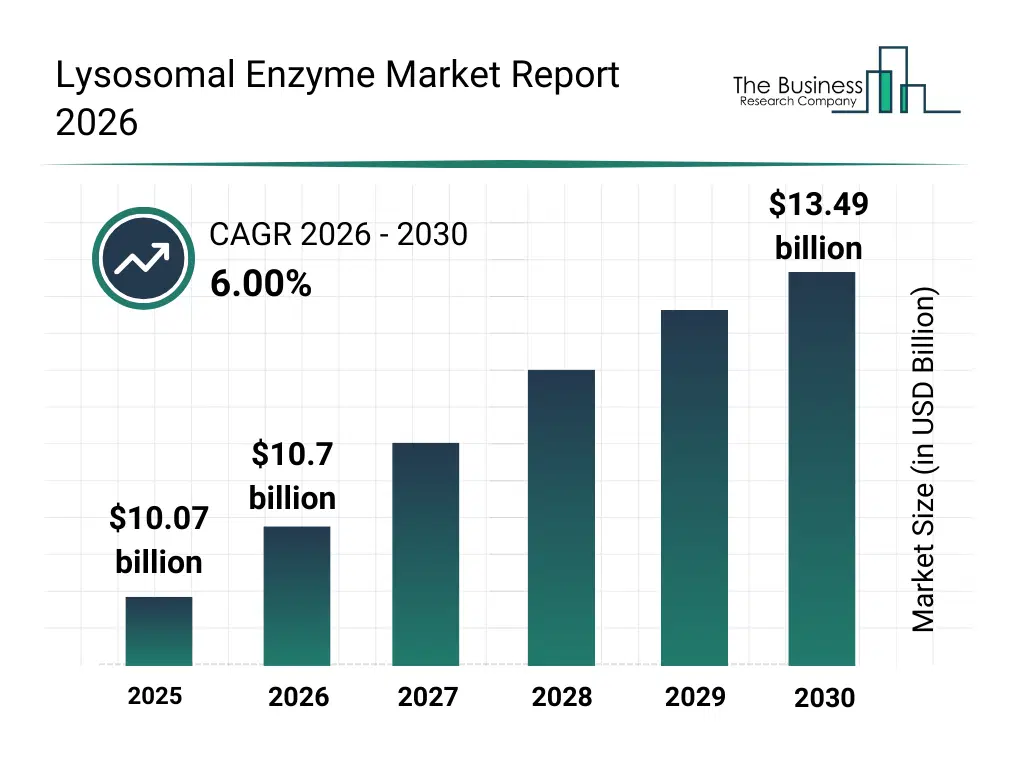
What Is The Lysosomal Enzyme Market Size and Share 2026?
The lysosomal enzyme market size has grown strongly in recent years. It will grow from $10.07 billion in 2025 to $10.7 billion in 2026 at a compound annual growth rate (CAGR) of 6.3%. The growth in the historic period can be attributed to lysosomal storage disease awareness, orphan drug programs, hospital-based genetic treatment, recombinant enzyme development, rare disease research funding.What Is The Lysosomal Enzyme Market Growth Forecast?
The lysosomal enzyme market size is expected to see strong growth in the next few years. It will grow to $13.49 billion in 2030 at a compound annual growth rate (CAGR) of 6.0%. The growth in the forecast period can be attributed to gene therapy integration, newborn screening expansion, personalized enzyme therapies, biopharmaceutical manufacturing scale-up, global rare disease initiatives. Major trends in the forecast period include expansion of enzyme replacement therapies, growing focus on rare genetic disorders, increased investment in recombinant enzymes, advances in gene and enzyme therapy, rising diagnostic rates for lysosomal diseases.
Global Lysosomal Enzyme Market Segmentation
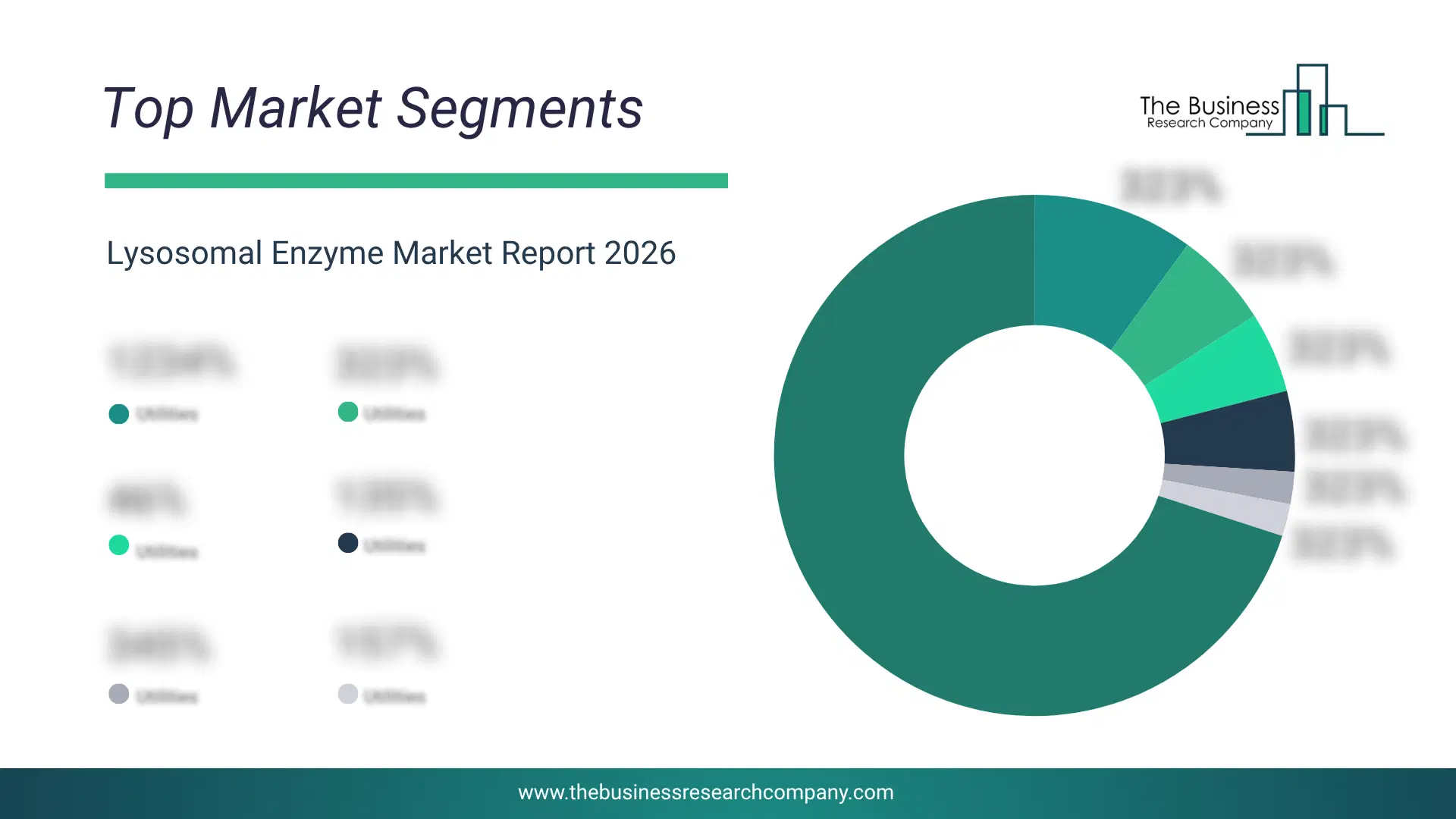
1) By Type: Acid Alpha-Glucosidase, Acid Sphingomyelinase, Beta-Glucocerebrosidase, Hexosaminidase 2) By Indication: Gaucher Disease, Mucopolysaccharidosis, Pompe Disease, Other Indications 3) By Source: Recombinant Enzymes, Natural Enzymes, Synthetic Enzymes 4) By Application: Enzyme Replacement Therapy, Research And Development, Diagnostics, Gene Therapy 5) By End-Use: Hospitals, Diagnostic Laboratories, Research Institutions, Pharmaceutical Companies Subsegments: 1) By Acid Alpha-Glucosidase: Pompe Disease Enzymes, Glycogen Storage Disease Type II Enzymes 2) By Acid Sphingomyelinase: Niemann-Pick Disease Type A, Niemann-Pick Disease Type B 3) By Beta-Glucocerebrosidase: Gaucher Disease Type I, Gaucher Disease Type II, Gaucher Disease Type III 4) By Hexosaminidase: Tay-Sachs Disease Enzymes, Sandhoff Disease EnzymesWhat Is The Driver Of The Lysosomal Enzyme Market?
The increasing adoption of gene therapy is expected to propel the growth of the lysosomal enzymes market going forward. Gene therapy is a medical treatment that involves altering or replacing genes within a person's cells to treat or prevent disease. The adoption of gene therapy is rising as advances in delivery vectors and demonstrated long-term efficacy have made gene therapy a viable, potentially curative option for genetic disorders. Gene therapy often requires initial or complementary enzyme replacement treatments to manage symptoms and stabilize patients, while gene therapy takes effect, sustaining the need for lysosomal enzyme products. For instance, in April 2024, according to the American Society of Gene & Cell Therapy, a US-based non-profit organization, the number of phase III gene therapy clinical trials rose by 10% in 2023, marking the first quarterly increase in 2022. Therefore, the increasing adoption of gene therapy will boost the growth of the lysosomal enzymes industry.Key Players In The Global Lysosomal Enzyme Market
Major companies operating in the lysosomal enzyme market are Sanofi SA, BioMarin Pharmaceutical Inc., Amicus Therapeutics Inc., JCR Pharmaceuticals Co. Ltd., Protalix BioTherapeutics Inc., Takeda Rare Diseases (Shire), Ultragenyx Pharmaceutical Inc., Orchard Therapeutics plc, Sangamo Therapeutics Inc., Avrobio Inc., Greenovation Biotech GmbH, Chiesi Global Rare Diseases, GC Pharma, Pfizer Rare Disease (through Spark & partnered LSD programs), Idorsia Pharmaceuticals Ltd., Abeona Therapeutics Inc., Selecta Biosciences Inc., Denali Therapeutics Inc., Passage Bio Inc., Freeline Therapeutics plc, REGENXBIO Inc., Homology Medicines Inc., LogicBio Therapeutics Inc., Allievex Corporation, Reneo Pharmaceuticals Inc., Lysogene SAS, Sio Gene Therapies Inc., Anika Therapeutics Inc., ArmaGen Inc., PerkinElmer Inc., Thermo Fisher Scientific Inc., Merck KGaA (MilliporeSigma), Agilent Technologies Inc.,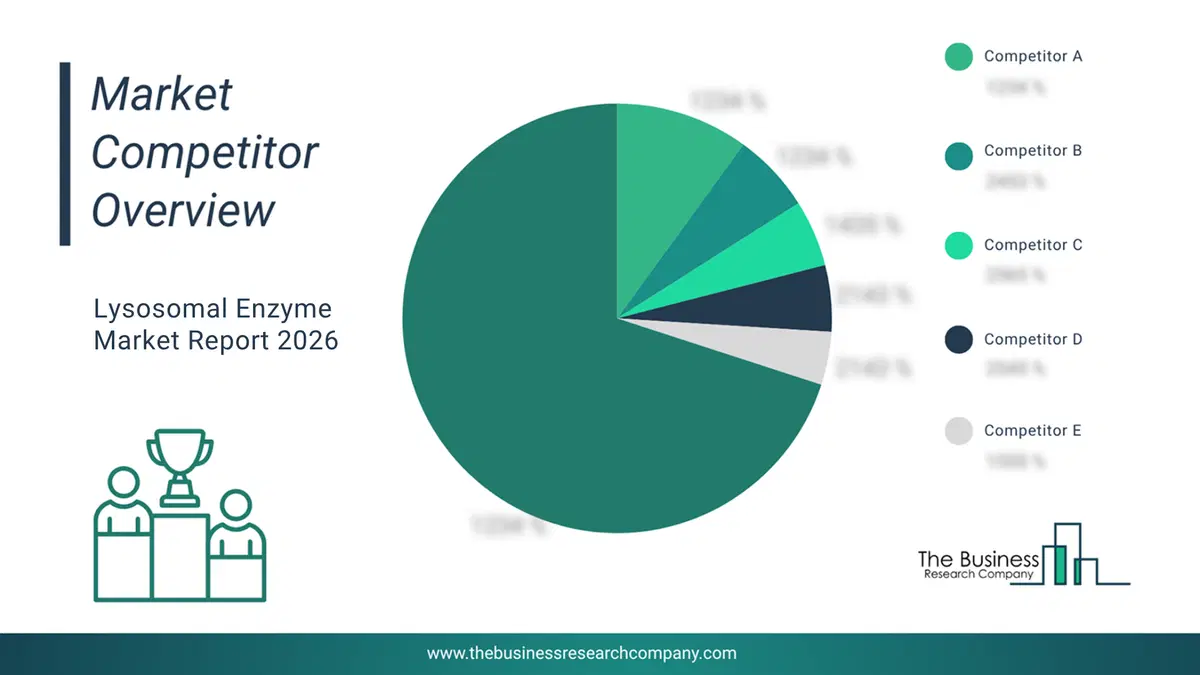
This chart is for illustrative purposes; the full report includes a detailed competitor analysis and comprehensive overview of the top 10 companies in the market.
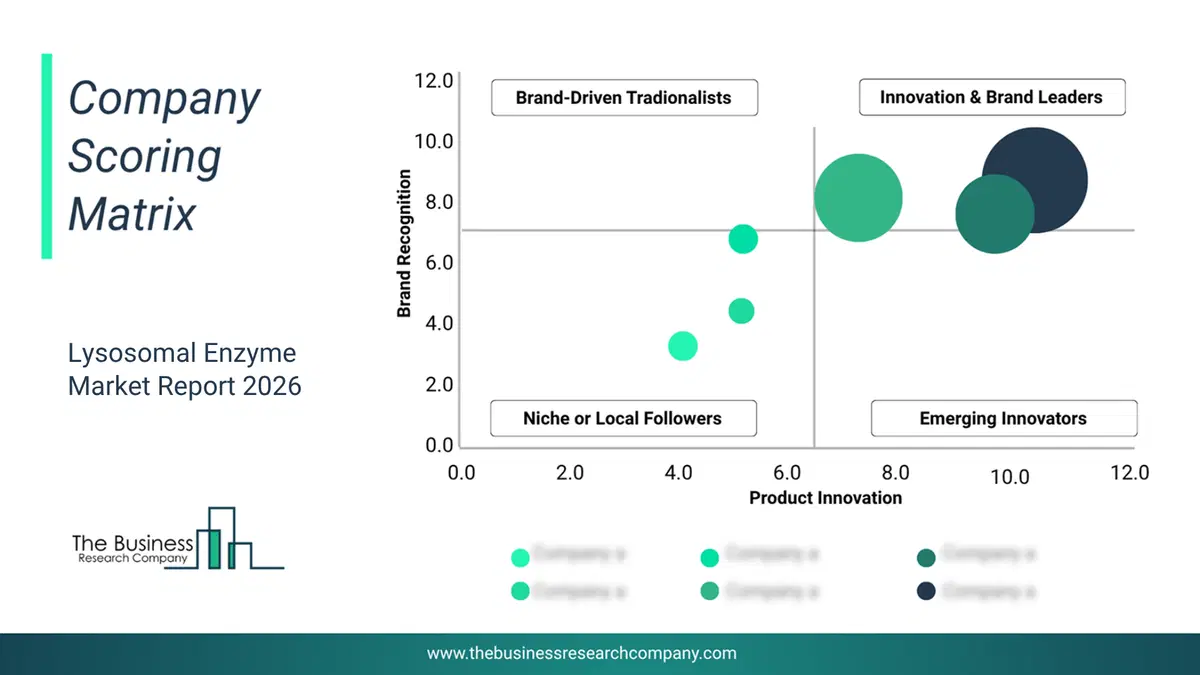
This chart maps companies by product innovation and brand strength, with bubble size indicating relative revenue, helping identify market leaders, challengers, and niche players. This is an illustrative chart; the full report provides a complete and accurate competitive analysis.
Global Lysosomal Enzyme Market Trends and Insights
Major companies operating in the lysosomal enzymes market are focusing on strategic partnerships approach to expand diagnostic capabilities and accelerate the development of novel therapies. Strategic partnerships are collaborative agreements between two or more organizations that combine resources or capabilities to achieve mutual goals and enhance competitive advantage. For instance, in February 2024, a Spain-based biotechnology company partnered with Biosidus, an Argentina-based biotechnology company, to manufacture the active enzyme ingredient Agalsidase Beta. The strategic partnership marks a significant advancement in developing and manufacturing treatments for rare diseases, particularly Fabry disease, caused by lysosomal enzyme deficiency. It marks a regional milestone in rare disease treatment and reinforces companies’ commitment to global health and accessible biopharmaceutical innovation.What Are Latest Mergers And Acquisitions In The Lysosomal Enzyme Market?
In March 2024, CENTOGENE, a Germany-based biotechnology research company, partnered with Takeda Pharmaceutical Company Limited. This partnership boosts global access to rapid, reliable diagnostics for rare lysosomal diseases, helping improve early detection and treatment outcomes, especially in underserved communities. Takeda Pharmaceutical Company Limited is a Japan-based provider of lysosomal enzymes.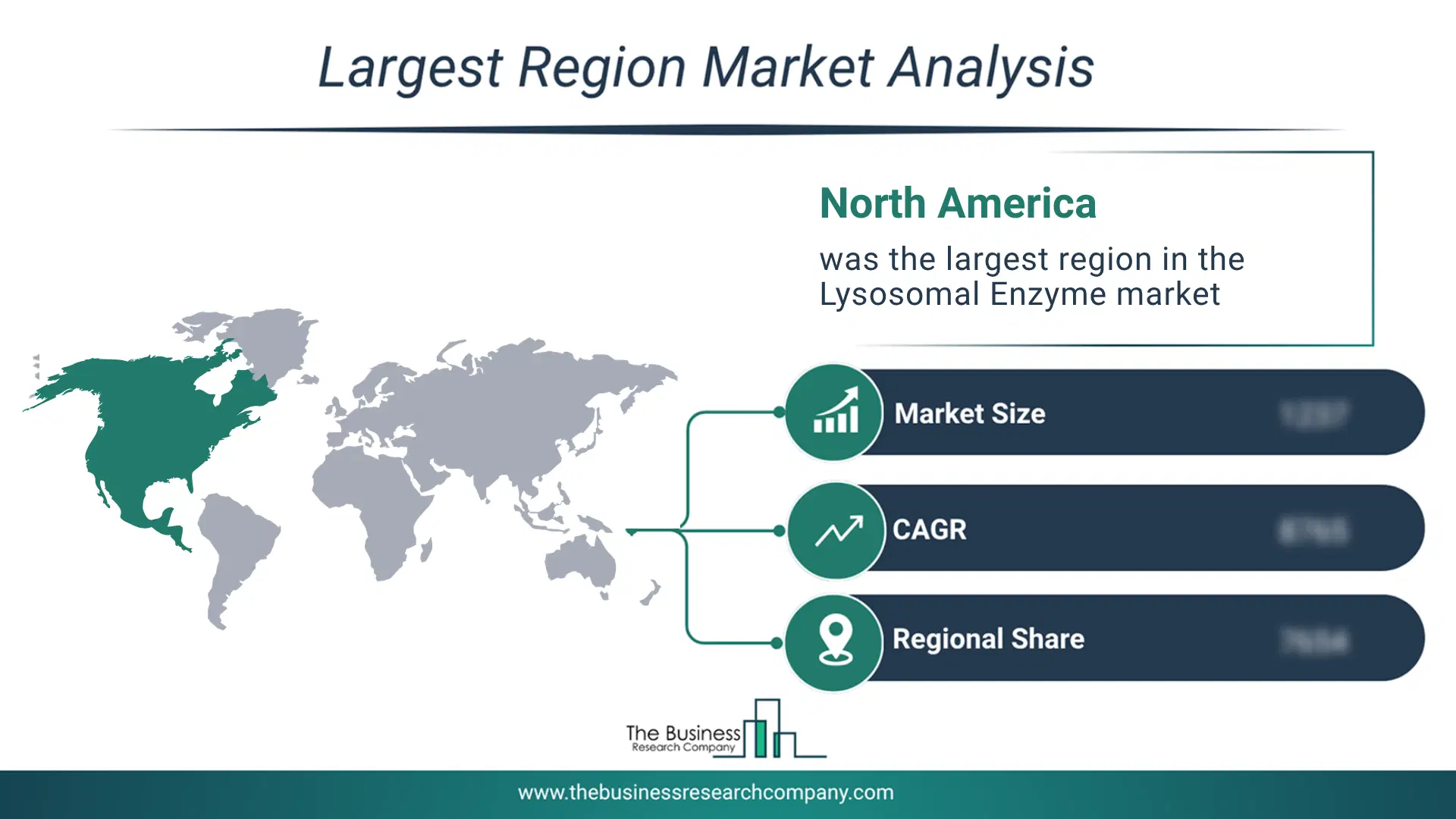
Regional Insights
North America was the largest region in the lysosomal enzymes market in 2025. Asia-Pacific is expected to be the fastest-growing region in the forecast period. The regions covered in this market report are Asia-Pacific, South East Asia, Western Europe, Eastern Europe, North America, South America, Middle East, Africa. The countries covered in this market report are Australia, Brazil, China, France, Germany, India, Indonesia, Japan, Taiwan, Russia, South Korea, UK, USA, Canada, Italy, Spain.What Defines the Lysosomal Enzyme Market?
The lysosomal enzymes market consists of sales of small molecule drugs, diagnostic kits, nutritional supplements, infusion kits, and accessories. Values in this market are ‘factory gate’ values, that is the value of goods sold by the manufacturers or creators of the goods, whether to other entities (including downstream manufacturers, wholesalers, distributors and retailers) or directly to end customers. The value of goods in this market includes related services sold by the creators of the goods.How is Market Value Defined and Measured?
The market value is defined as the revenues that enterprises gain from the sale of goods and/or services within the specified market and geography through sales, grants, or donations in terms of the currency (in USD unless otherwise specified). The revenues for a specified geography are consumption values that are revenues generated by organizations in the specified geography within the market, irrespective of where they are produced. It does not include revenues from resales along the supply chain, either further along the supply chain or as part of other products.
This chart presents market attractiveness based on a quantitative evaluation of growth, competition, strategic alignment, and risk, offering a clear view of opportunity areas for decision-making. This chart is for illustrative purposes; the full report contains the complete analysis.

This chart highlights the Total Addressable Market (TAM) by estimating the maximum revenue opportunity using an assumption-driven approach, supporting strategic planning and opportunity sizing across markets. The chart is illustrative; the full report provides a more comprehensive analysis.
What Key Data and Analysis Are Included in the Lysosomal Enzyme Market Report 2026?
The lysosomal enzyme market research report is one of a series of new reports from The Business Research Company that provides market statistics, including industry global market size, regional shares, competitors with the market share, detailed market segments, market trends and opportunities, and any further data you may need to thrive in the lysosomal enzyme industry. The market research report delivers a complete perspective of everything you need, with an in-depth analysis of the current and future state of the industry.Lysosomal Enzyme Market Report Forecast Analysis
| Report Attribute | Details |
|---|---|
| Market Size Value In 2026 | $10.7 billion |
| Revenue Forecast In 2030 | $13.49 billion |
| Growth Rate | CAGR of 6.3% from 2026 to 2030 |
| Base Year For Estimation | 2025 |
| Actual Estimates/Historical Data | 2020-2025 |
| Forecast Period | 2026 - 2030 |
| Market Representation | Revenue in USD Billion and CAGR from 2026 to 2030 |
| Segments Covered | Type, Indication, Source, Application, End-Use |
| Regional Scope | Asia-Pacific, Western Europe, Eastern Europe, North America, South America, Middle East, Africa |
| Country Scope | The countries covered in the report are Australia, Brazil, China, France, Germany, India, Indonesia, Japan, Taiwan, Russia, South Korea, UK, USA, Canada, Italy, Spain. |
| Key Companies Profiled | Sanofi SA, BioMarin Pharmaceutical Inc., Amicus Therapeutics Inc., JCR Pharmaceuticals Co. Ltd., Protalix BioTherapeutics Inc., Takeda Rare Diseases (Shire), Ultragenyx Pharmaceutical Inc., Orchard Therapeutics plc, Sangamo Therapeutics Inc., Avrobio Inc., Greenovation Biotech GmbH, Chiesi Global Rare Diseases, GC Pharma, Pfizer Rare Disease (through Spark & partnered LSD programs), Idorsia Pharmaceuticals Ltd., Abeona Therapeutics Inc., Selecta Biosciences Inc., Denali Therapeutics Inc., Passage Bio Inc., Freeline Therapeutics plc, REGENXBIO Inc., Homology Medicines Inc., LogicBio Therapeutics Inc., Allievex Corporation, Reneo Pharmaceuticals Inc., Lysogene SAS, Sio Gene Therapies Inc., Anika Therapeutics Inc., ArmaGen Inc., PerkinElmer Inc., Thermo Fisher Scientific Inc., Merck KGaA (MilliporeSigma), Agilent Technologies Inc., |
| Customization Scope | Request for Customization |
| Pricing And Purchase Options | Explore Purchase Options |