
Machine Learning In Travel Market Report 2026
Global Outlook – By Component (Software, Hardware, Services), By Deployment Mode (On-Premises, Cloud), By Application (Personalized Recommendations, Dynamic Pricing, Fraud Detection, Customer Service, Predictive Analytics, Other Applications), By End-User (Travel Agencies, Airlines, Car Rental Companies, Online Travel Platforms, Other End-Users) – Market Size, Trends, Strategies, and Forecast to 2030
Machine Learning In Travel Market Overview
• Machine Learning In Travel market size has reached to $3.78 billion in 2025 • Expected to grow to $8.47 billion in 2030 at a compound annual growth rate (CAGR) of 17.5% • Growth Driver: Surge In Demand For Personalized Customer Experiences Fueling The Growth Of The Market Due To Increasing Customer Expectations For Tailored Interactions • Market Trend: Advancements In Agentic AI Solutions For Travel Automation • North America was the largest region in 2025 and Asia-Pacific is the fastest growing region.What Is Covered Under Machine Learning In Travel Market?
Machine learning in the travel industry refers to the use of advanced algorithms and data-driven models to analyze large volumes of travel-related information, recognize patterns, and make intelligent predictions or decisions without explicit programming. It enables travel companies to understand customer behavior, optimize pricing, forecast demand, enhance operational efficiency, and provide personalized experiences. The main components of machine learning in travel are software, hardware, and services. This technology leverages AI and data analytics to enhance travel operations, customer experiences, and business decision-making. Deployment modes include on-premises and cloud-based solutions. Key applications include personalized recommendations, dynamic pricing, fraud detection, customer service, and predictive analytics. Major end users are travel agencies, airlines, car rental companies, online travel platforms, and others.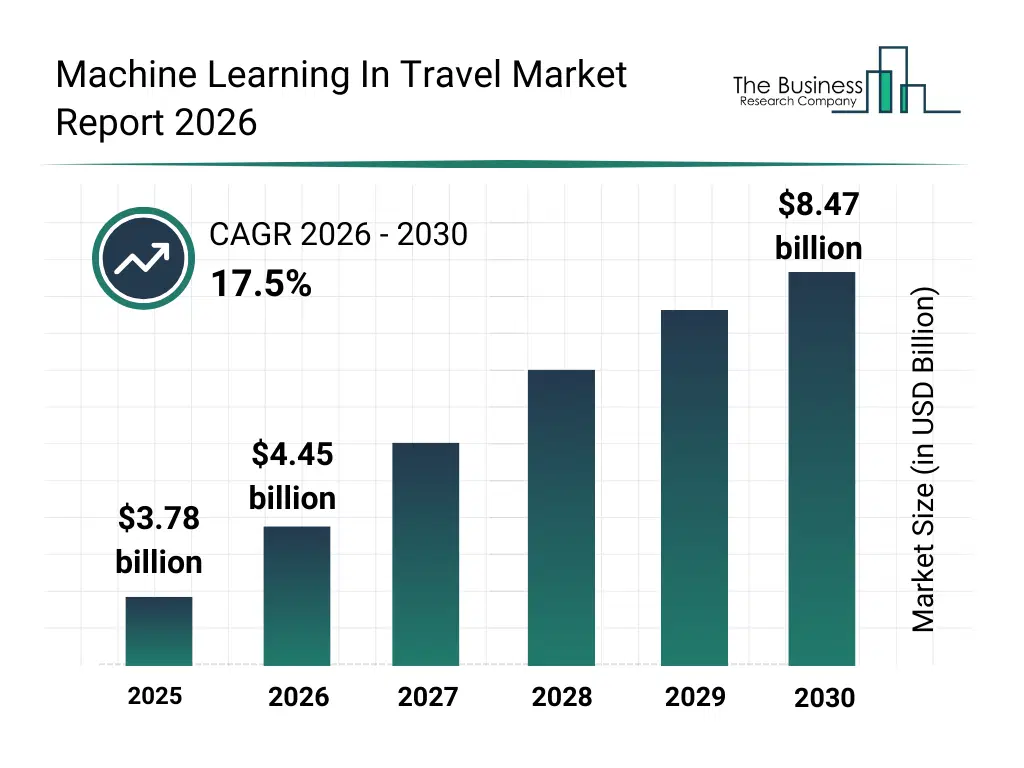
What Is The Machine Learning In Travel Market Size and Share 2026?
The machine learning in travel market size has grown rapidly in recent years. It will grow from $3.78 billion in 2025 to $4.45 billion in 2026 at a compound annual growth rate (CAGR) of 17.7%. The growth in the historic period can be attributed to rise of online travel platforms, growing availability of traveler behavior data, increasing competition driving personalization, need for better revenue management, expansion of digital payments in travel.What Is The Machine Learning In Travel Market Growth Forecast?
The machine learning in travel market size is expected to see rapid growth in the next few years. It will grow to $8.47 billion in 2030 at a compound annual growth rate (CAGR) of 17.5%. The growth in the forecast period can be attributed to AI-driven virtual travel assistants, wider use of real-time demand sensing, integration of multimodal data for personalization, increased adoption of sustainable travel optimization, growth of automated disruption management. Major trends in the forecast period include personalized trip planning and recommendations, dynamic pricing and revenue optimization, fraud detection for bookings and payments, conversational AI for customer support, demand forecasting for capacity planning.
Global Machine Learning In Travel Market Segmentation
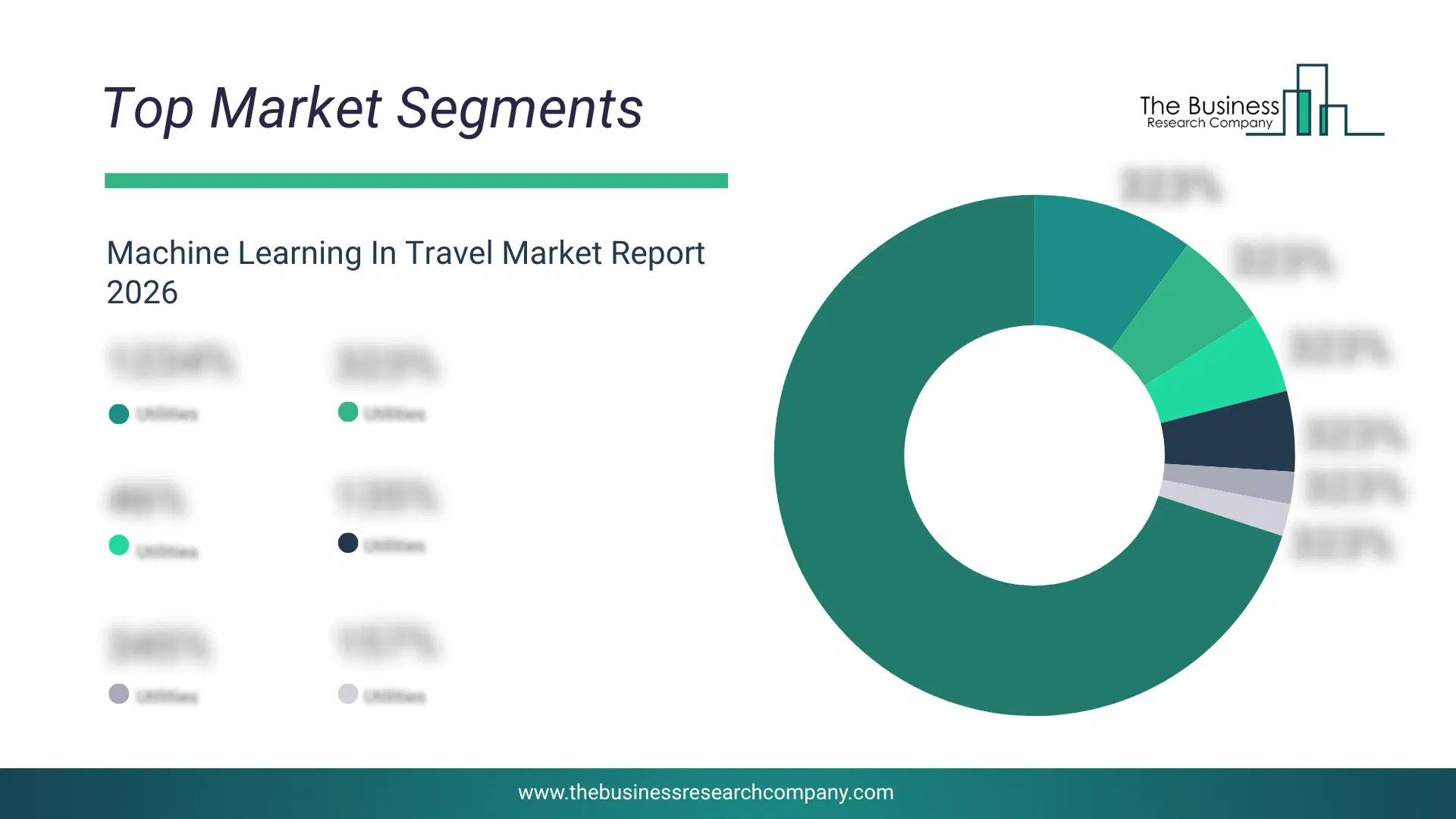
1) By Component: Software, Hardware, Services 2) By Deployment Mode: On-Premises, Cloud 3) By Application: Personalized Recommendations, Dynamic Pricing, Fraud Detection, Customer Service, Predictive Analytics, Other Applications 4) By End-User: Travel Agencies, Airlines, Car Rental Companies, Online Travel Platforms, Other End-Users Subsegments: 1) By Software: Artificial Intelligence Platforms, Predictive Analytics Tools, Data Management Solutions, Machine Learning Frameworks, Natural Language Processing Tools 2) By Hardware: Servers, Storage Devices, Graphics Processing Units, Network Equipment, Edge Computing Devices 3) By Services: Professional Services, Managed Services, Consulting Services, Training And Support Services, System Integration ServicesWhat Is The Driver Of The Machine Learning In Travel Market?
The increasing demand for personalized customer experiences is expected to propel the growth of machine learning in the travel market going forward. Personalized customer experiences refer to the process of tailoring interactions and services to meet individual customer preferences and needs using data-driven insights to deliver relevant and engaging experiences across touchpoints. The increasing demand for personalized customer experiences is rising due to growing customer expectations for relevant and meaningful interactions as consumers become more digitally connected and expect brands to understand their preferences and deliver tailored solutions. Machine learning in travel helps personalize customer experiences by analyzing traveler data and behavior to deliver tailored recommendations, dynamic pricing, and customized services that enhance satisfaction and engagement throughout the journey. For instance, in January 2023, according to a report published by Marketing Tech News, a UK-based publishing company, about 66% of travelers globally prefer receiving personalized offers when booking their trips, and approximately 61% of consumers worldwide are willing to pay extra for tailored travel experiences. Therefore, increasing demand for personalized customer experiences is expected to drive the growth of machine learning in the travel market.Key Players In The Global Machine Learning In Travel Market
Major companies operating in the machine learning in travel market are Amazon.com Inc., Microsoft Corporation, Hitachi Ltd., Accenture plc, International Business Machines Corporation, Oracle Corporation, Salesforce Inc. , SAP SE, Tata Consultancy Services Limited , NEC Corporation, Booking Holdings Inc., Tencent Holdings Limited , Infosys Limited, DXC Technology Company, Expedia Group Inc., Wipro Limited, Trip.com Group Limited, AMADEUS IT GROUP SOCIEDAD ANONIMA, LG CNS Co. Ltd., Sabre Corporation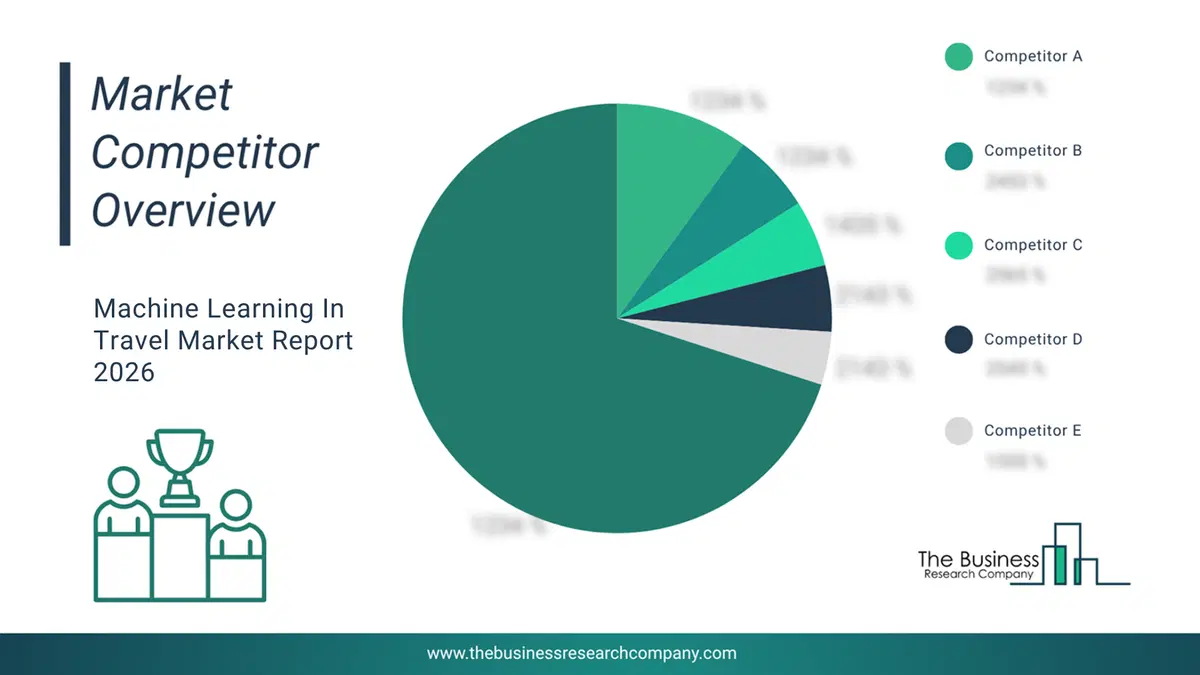
This chart is for illustrative purposes; the full report includes a detailed competitor analysis and comprehensive overview of the top 10 companies in the market.
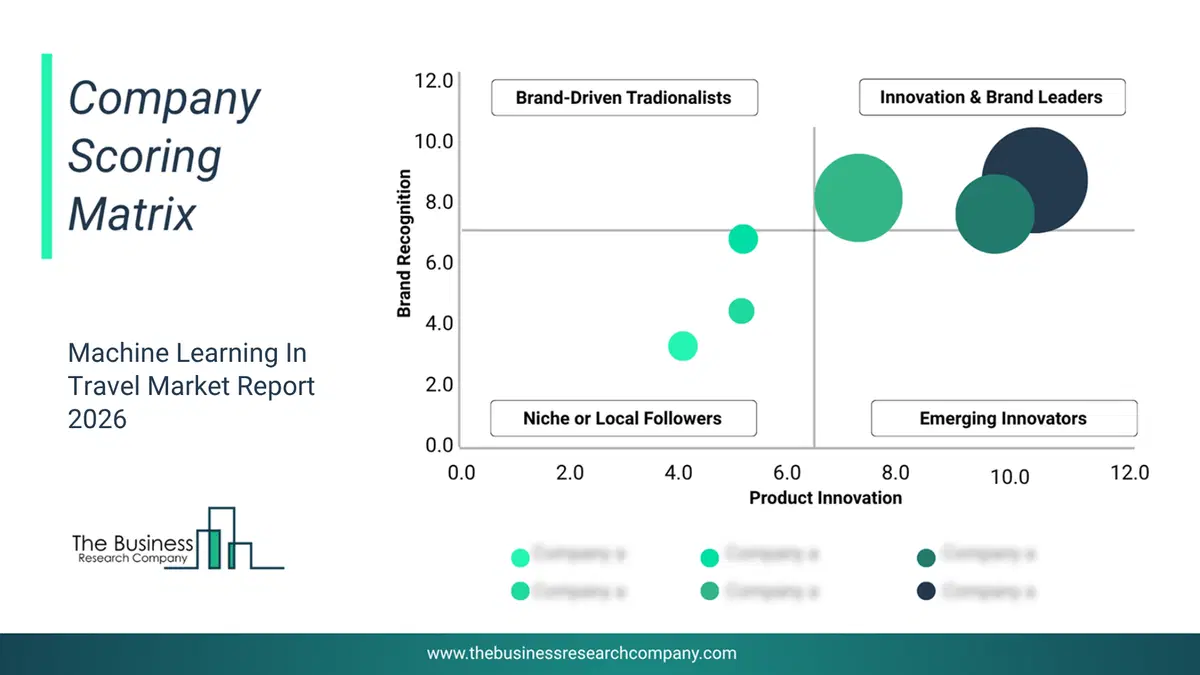
This chart maps companies by product innovation and brand strength, with bubble size indicating relative revenue, helping identify market leaders, challengers, and niche players. This is an illustrative chart; the full report provides a complete and accurate competitive analysis.
Global Machine Learning In Travel Market Trends and Insights
Major companies operating in the machine learning in travel market are focusing on developing innovative solutions such as agentic AI solutions to enhance customer engagement, operational efficiency, and personalized travel experiences. Agentic AI solutions refer to advanced artificial intelligence systems capable of autonomous decision-making and adaptive behavior with minimal human intervention to achieve desired outcomes efficiently. For instance, in September 2025, Sabre Corporation, a US-based technology company, launched a set of agentic AI-ready APIs powered by its proprietary Model Context Protocol (MCP) server. Integrated into the SabreMosaic platform and supported by the Sabre IQ layer which leverages over 50 petabytes of travel data, these APIs enable travel agencies to connect their AI systems for real-time shopping, booking, and post-booking workflows for flights and hotels. This development demonstrates the practical application of agentic AI to automate complex travel tasks and deliver personalized, streamlined experiences for agencies and their clients.What Are Latest Mergers And Acquisitions In The Machine Learning In Travel Market?
In April 2023, Navan, Inc., a US-based technology company, acquired Tripeur for an undisclosed amount. Through this acquisition, Navan, Inc. aims to strengthen its presence in the Indian business travel market by integrating Tripeur’s advanced travel and expense management platform to enhance its localized offerings, leverage Tripeur’s AI-driven automation capabilities, and deliver a seamless end-to-end travel experience tailored for enterprises in the region. Tripeur is an India-based corporate travel management platform that provides machine learning in travel.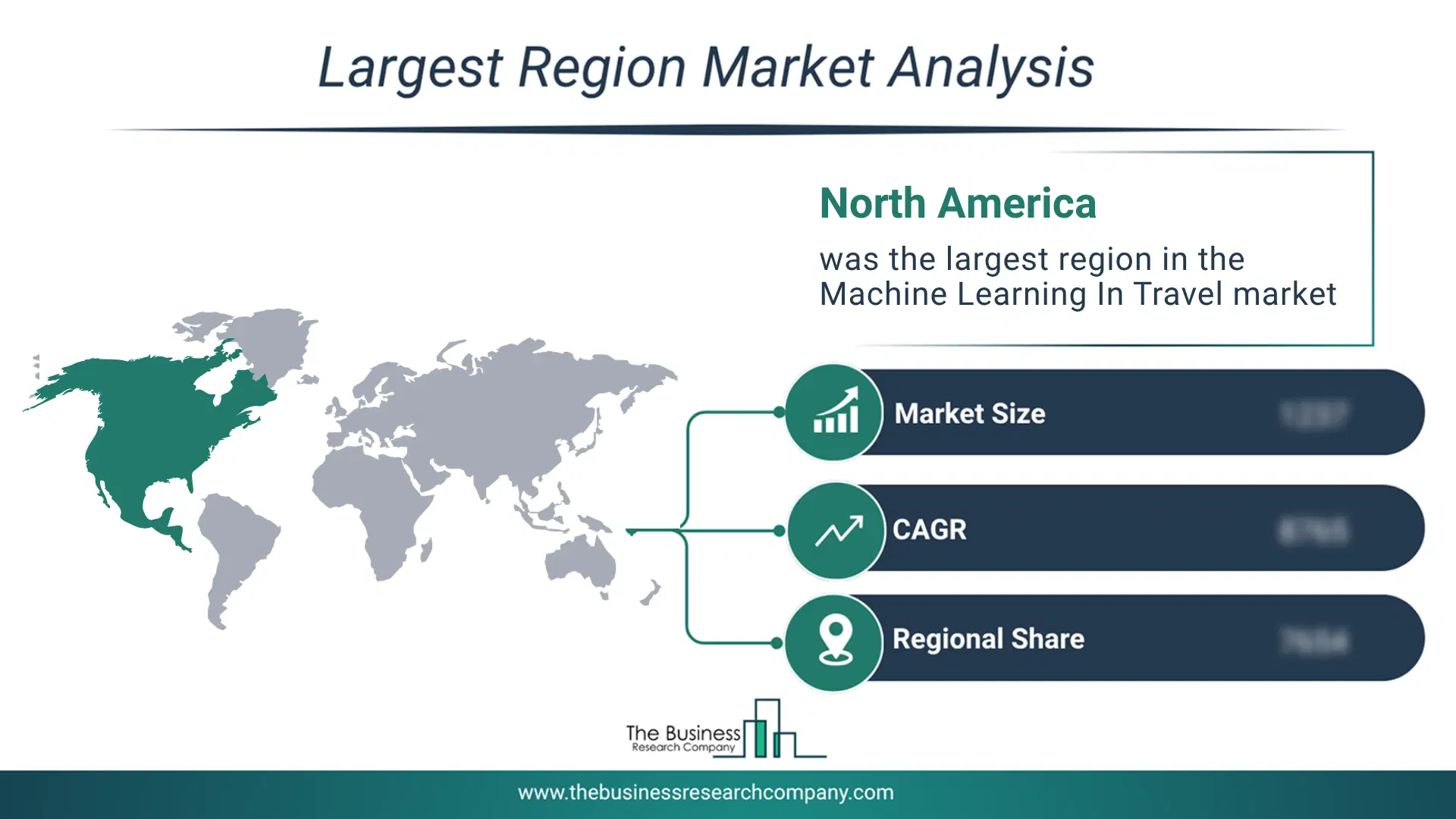
Regional Insights
North America was the largest region in the machine learning in travel market in 2025. Asia-Pacific is expected to be the fastest-growing region in the forecast period. The regions covered in this market report are Asia-Pacific, South East Asia, Western Europe, Eastern Europe, North America, South America, Middle East, Africa. The countries covered in this market report are Australia, Brazil, China, France, Germany, India, Indonesia, Japan, Taiwan, Russia, South Korea, UK, USA, Canada, Italy, Spain.What Defines the Machine Learning In Travel Market?
The machine learning in travel market consists of revenues earned by entities by providing services such as revenue management services, voice and language translation services, automated customer segmentation services, operational efficiency and route optimization services, and automated baggage handling services. The market value includes the value of related goods sold by the service provider or contained within the service offering. The machine learning in the travel market also includes kayak AI platform, mindtrip, sabre travel AI, citymapper, and navan concierge. Values in this market are ‘factory gate’ values; that is, the value of goods sold by the manufacturers or creators of the goods, whether to other entities (including downstream manufacturers, wholesalers, distributors, and retailers) or directly to end customers. The value of goods in this market includes related services sold by the creators of the goods.How is Market Value Defined and Measured?
The market value is defined as the revenues that enterprises gain from the sale of goods and/or services within the specified market and geography through sales, grants, or donations in terms of the currency (in USD unless otherwise specified). The revenues for a specified geography are consumption values that are revenues generated by organizations in the specified geography within the market, irrespective of where they are produced. It does not include revenues from resales along the supply chain, either further along the supply chain or as part of other products.
This chart presents market attractiveness based on a quantitative evaluation of growth, competition, strategic alignment, and risk, offering a clear view of opportunity areas for decision-making. This chart is for illustrative purposes; the full report contains the complete analysis.

This chart highlights the Total Addressable Market (TAM) by estimating the maximum revenue opportunity using an assumption-driven approach, supporting strategic planning and opportunity sizing across markets. The chart is illustrative; the full report provides a more comprehensive analysis.
What Key Data and Analysis Are Included in the Machine Learning In Travel Market Report 2026?
The machine learning in travel market research report is one of a series of new reports from The Business Research Company that provides market statistics, including industry global market size, regional shares, competitors with the market share, detailed market segments, market trends and opportunities, and any further data you may need to thrive in the machine learning in travel industry. The market research report delivers a complete perspective of everything you need, with an in-depth analysis of the current and future state of the industry.Machine Learning In Travel Market Report Forecast Analysis
| Report Attribute | Details |
|---|---|
| Market Size Value In 2026 | $4.45 billion |
| Revenue Forecast In 2030 | $8.47 billion |
| Growth Rate | CAGR of 17.5% from 2026 to 2030 |
| Base Year For Estimation | 2025 |
| Actual Estimates/Historical Data | 2020-2025 |
| Forecast Period | 2026 - 2030 |
| Market Representation | Revenue in USD Billion and CAGR from 2026 to 2030 |
| Segments Covered | Component, Deployment Mode, Application, End-User |
| Regional Scope | Asia-Pacific, Western Europe, Eastern Europe, North America, South America, Middle East, Africa |
| Country Scope | The Countries Covered In This Market Report Are Australia, Brazil, China, France, Germany, India, Indonesia, Japan, Taiwan, Russia, South Korea, Uk, Usa, Canada, Italy, Spain. |
| Key Companies Profiled | Amazon.com Inc., Microsoft Corporation, Hitachi Ltd., Accenture plc, International Business Machines Corporation, Oracle Corporation, Salesforce Inc. , SAP SE, Tata Consultancy Services Limited , NEC Corporation, Booking Holdings Inc., Tencent Holdings Limited , Infosys Limited, DXC Technology Company, Expedia Group Inc., Wipro Limited, Trip.com Group Limited, AMADEUS IT GROUP SOCIEDAD ANONIMA, LG CNS Co. Ltd., Sabre Corporation |
| Customization Scope | Request for Customization |
| Pricing And Purchase Options | Explore Purchase Options |