
Malaria Vaccines Market Report 2026
Global Outlook – By Agent (Plasmodium Falciparum, Plasmodium Vivax), By Vaccine Type (Pre-Erythrocytic, Erythrocytic, Multi-antigen, Other Vaccines), By Route Of Administration (Intramuscular, Subcutaneous, Intradermal, Other Routes Of Administration), By Distribution Channel (Public, Private) - Market Size, Trends, Strategies, and Forecast to 2030
Malaria Vaccines Market Overview
• Malaria Vaccines market size has reached to $6.24 billion in 2025 • Expected to grow to $27.18 billion in 2030 at a compound annual growth rate (CAGR) of 34.3% • Growth Driver: Malaria Vaccine Market Poised For Growth Amidst Rising Mosquito-Related Diseases • Market Trend: Innovative Vaccine Technologies Driving Rapid Growth Amid Rising Global Efforts To Combat Malaria • North America was the largest region in 2025 and Asia-Pacific is the fastest growing region.What Is Covered Under Malaria Vaccines Market?
Malaria vaccines are specific vaccines designed to prevent malaria, a potentially deadly mosquito-borne infectious disease caused by parasites from the Plasmodium genus. These vaccines aim to provide immunity against the plasmodium parasites that cause malaria. The main types of agents involved in malaria vaccines are plasmodium falciparum, plasmodium vivax, and anopheles species. Plasmodium falciparum is a protozoan parasite responsible for the most severe and deadly form of malaria in humans. The various types of vaccines include pre-erythrocytic, erythrocytic, multi-antigen, and others, which can be administered through various routes, such as intramuscular, subcutaneous, intradermal, and others. These are sold through several distribution channels, including public and private.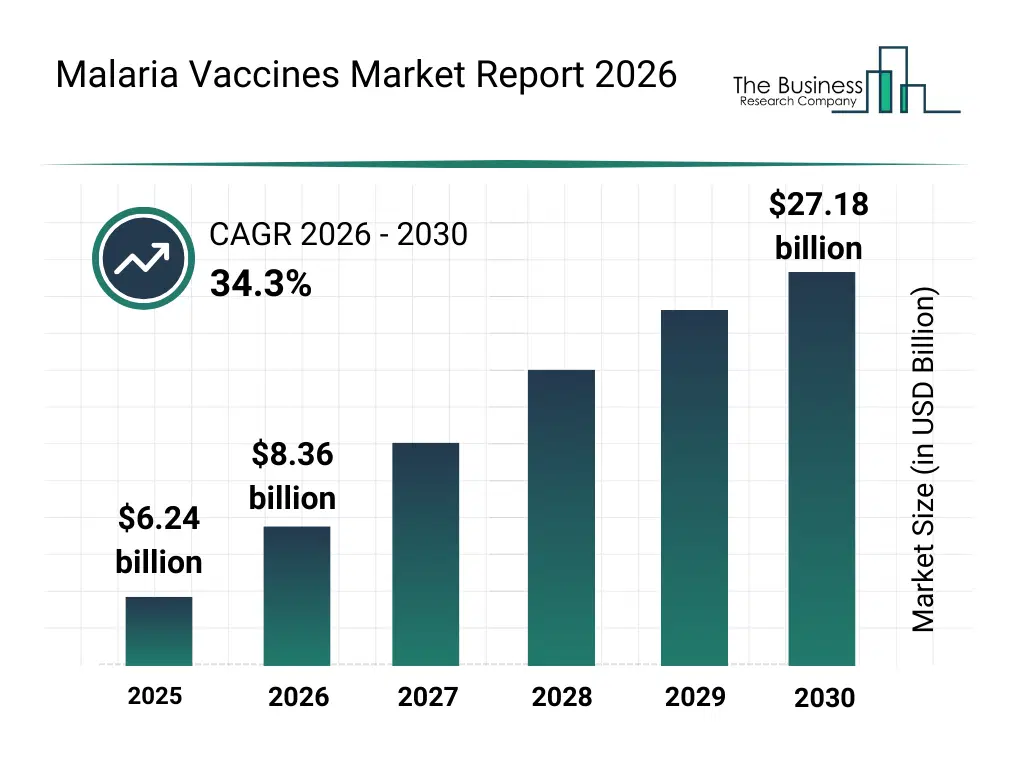
What Is The Malaria Vaccines Market Size and Share 2026?
The malaria vaccines market size has grown exponentially in recent years. It will grow from $6.24 billion in 2025 to $8.36 billion in 2026 at a compound annual growth rate (CAGR) of 33.9%. The growth in the historic period can be attributed to high malaria burden in endemic regions, long-standing global malaria eradication initiatives, funding support from international health organizations, limitations of antimalarial drug resistance, early success of first-generation malaria vaccines.What Is The Malaria Vaccines Market Growth Forecast?
The malaria vaccines market size is expected to see exponential growth in the next few years. It will grow to $27.18 billion in 2030 at a compound annual growth rate (CAGR) of 34.3%. The growth in the forecast period can be attributed to increasing government funding for infectious disease prevention, rising climate-driven expansion of malaria-prone regions, growing demand for long-lasting immunity vaccines, advancements in vaccine research and clinical trials, expansion of immunization coverage in low-income countries. Major trends in the forecast period include expansion of next-generation malaria vaccines, growing focus on pediatric immunization programs, increasing public–private partnerships in vaccine deployment, rising emphasis on multi-antigen and combination vaccines, strengthening of mass vaccination campaigns in endemic regions.
Global Malaria Vaccines Market Segmentation
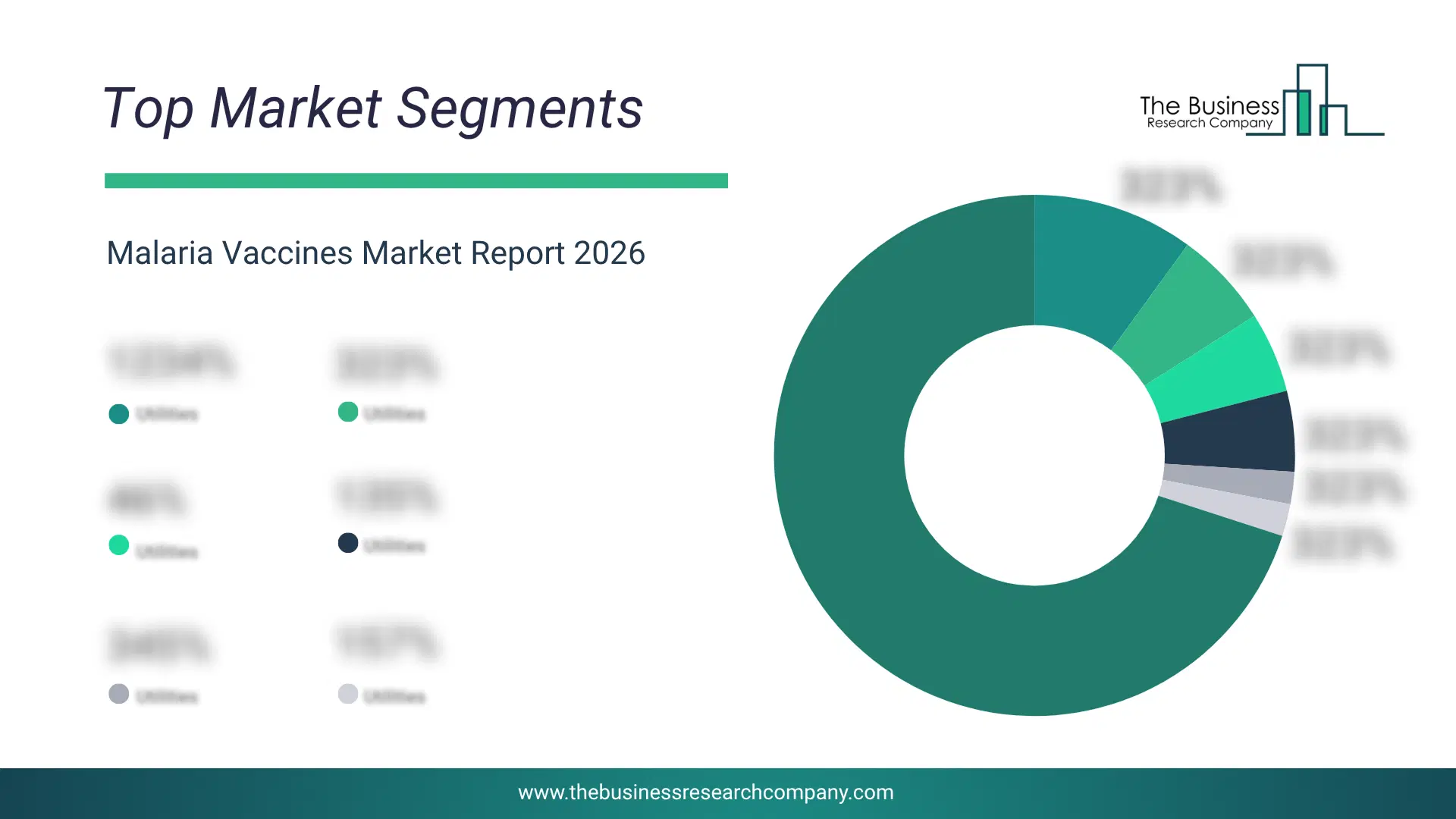
1) By Agent: Plasmodium Falciparum, Plasmodium Vivax 2) By Vaccine Type: Pre-Erythrocytic, Erythrocytic, Multi-antigen, Other Vaccines 3) By Route Of Administration: Intramuscular, Subcutaneous, Intradermal, Other Routes Of Administration 4) By Distribution Channel: Public, Private Subsegments: 1) By Plasmodium Falciparum: RTS,S/AS01 Vaccine, Experimental Vaccines 2) By Plasmodium Vivax: Candidate Vaccines In Development, Combination VaccinesWhat Is The Driver Of The Malaria Vaccines Market?
A rise in the incidence of mosquito-related diseases is expected to propel the growth of the malaria vaccine market going forward. Mosquito-related diseases are a broad category of illnesses spread by the bite of an infected mosquito. The malaria vaccine, particularly the RTS, S/AS01 (RTS, S) vaccine, is used to prevent and reduce the impact of mosquito-borne infectious diseases by training the immune system to recognize and attack the parasite. For instance, in December 2024, according to the UK Health Security Agency (UKHSA), a UK-based government departments, the annual malaria report for 2023 shows that there were 2,106 cases of imported malaria reported in the UK. This is 26% higher than the cases reported in 2022. Therefore, the rise in the incidence of mosquito-related diseases is driving the growth of the malaria vaccine industry.Key Players In The Global Malaria Vaccines Market
Major companies operating in the malaria vaccines market are GlaxoSmithKline Plc, Bharat Biotech International Limited, Serum Institute of India Private Limited, Sanaria Inc, BioNTech SE, Moderna Inc, Pfizer Inc, Novavax Inc, Takeda Pharmaceutical Company Limited, Sanofi SA, Zydus Lifesciences Limited, Valneva SE, GeoVax Labs Inc, Inovio Pharmaceuticals Inc, Vaxart Inc, CanSino Biologics Inc, Sinovac Biotech Ltd, Clover Biopharmaceuticals Inc, Biological E Limited, Emergent BioSolutions Inc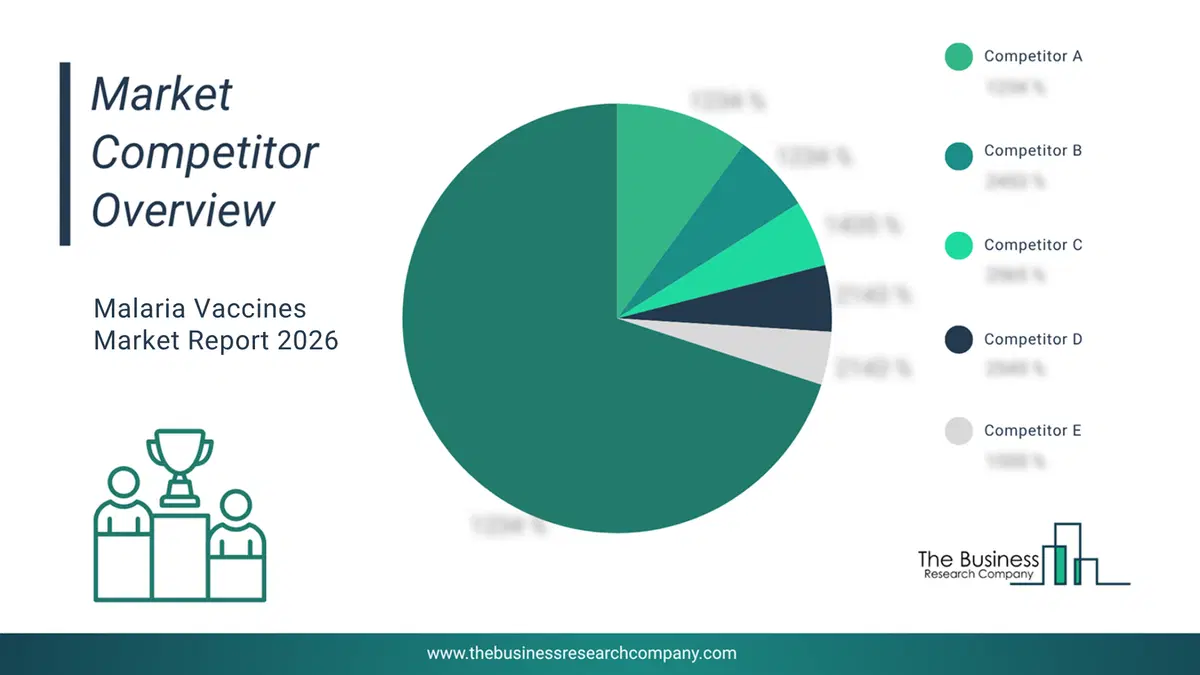
This chart is for illustrative purposes; the full report includes a detailed competitor analysis and comprehensive overview of the top 10 companies in the market.
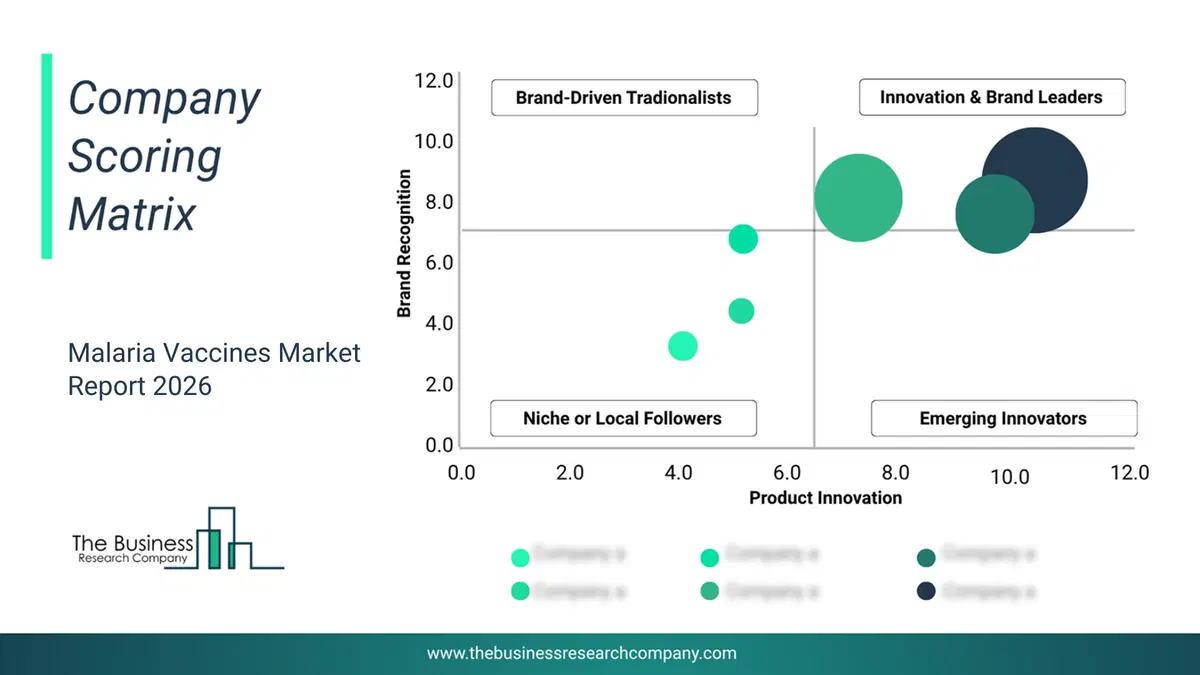
This chart maps companies by product innovation and brand strength, with bubble size indicating relative revenue, helping identify market leaders, challengers, and niche players. This is an illustrative chart; the full report provides a complete and accurate competitive analysis.
Global Malaria Vaccines Market Trends and Insights
Major companies operating in the malaria vaccines market are focusing on developing innovative solutions such as next-generation recombinant vaccines to meet the rising demand driven by increasing malaria prevalence, government support, and expanding immunization programs. Next-generation recombinant vaccines use advanced genetic engineering techniques to target multiple stages of the malaria parasite's life cycle, providing improved immune responses and longer-lasting protection compared to traditional vaccines that often target a single stage and offer limited efficacy. For instance, in October 2025, Government of the Republic of Zambia, launched the malaria vaccine R21/Matrix-M as part of its Expanded Programme on Immunisation. Developed collaboratively by the University of Oxford and the Serum Institute of India, this vaccine leverages a recombinant protein platform combined with the Matrix-M adjuvant to enhance immune response, is administered in a four-dose schedule starting from 6 months of age, and is designed to complement existing anti-malaria measures. The vaccine offers higher efficacy rates and aims to protect children in high and moderate transmission districts across Zambia, contributing significantly to malaria elimination efforts.What Are Latest Mergers And Acquisitions In The Malaria Vaccines Market?
In June 2025, Bharat Biotech International Limited (BBIL), an India-based biotechnology company, partnered with GSK plc, to reduce the price of the world’s first malaria vaccine, RTS,S, for children in endemic countries to less than $5. With this partnership, Bharat Biotech and GSK aim to expand access to life-saving malaria vaccination through process improvements, expanded production capacity, cost-effective manufacturing, and minimal profit margins, ensuring rollout in 12 African countries by the end of 2025 through routine immunisation programs. GSK plc is a UK-based biopharmaceutical company focused on science-driven healthcare solutions.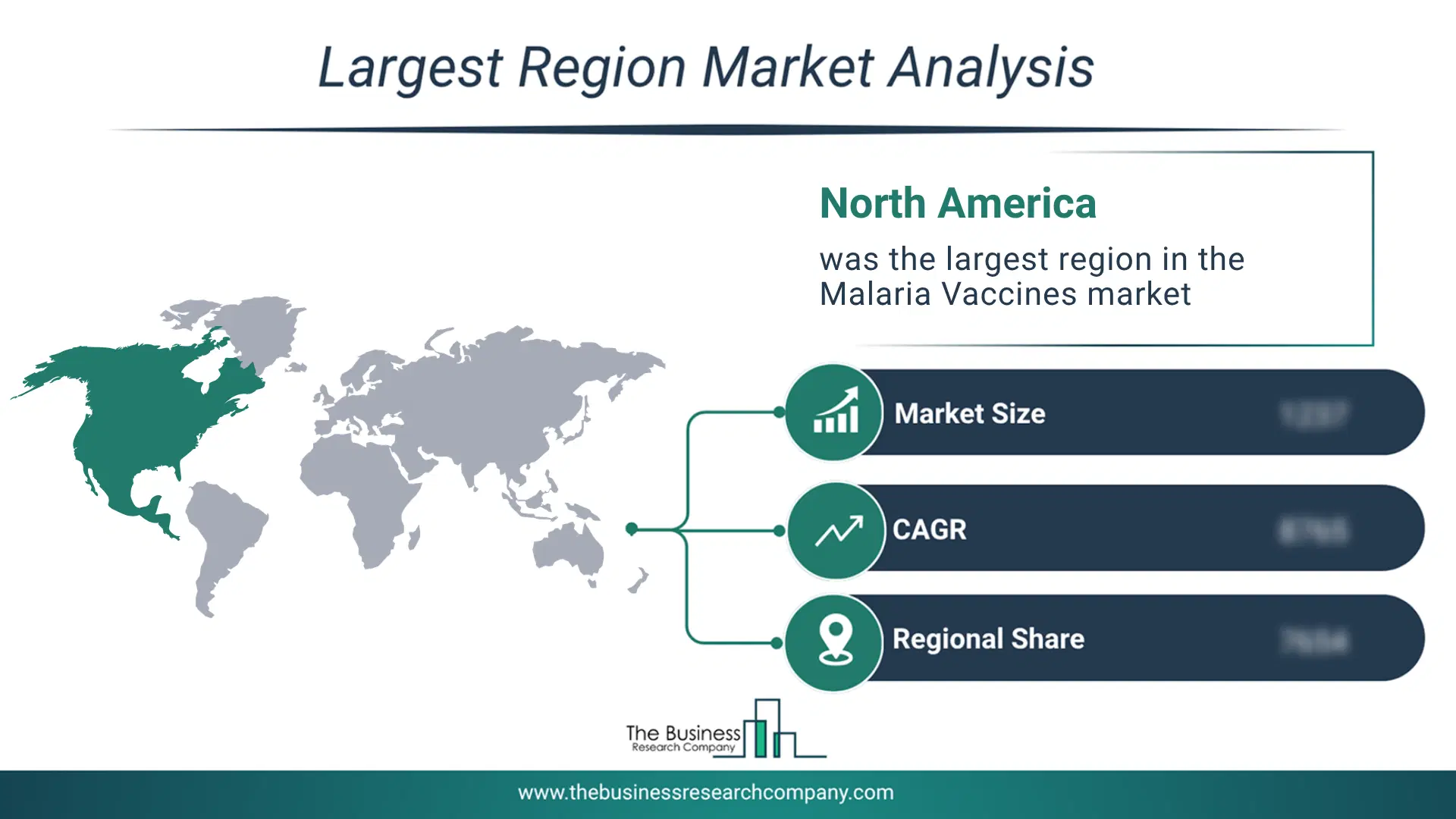
Regional Outlook
North America was the largest region in the malaria vaccines market in 2025. Asia-Pacific is expected to be the fastest growing region in the forecast period. The regions covered in this market report are Asia-Pacific, South East Asia, Western Europe, Eastern Europe, North America, South America, Middle East, Africa. The countries covered in this market report are Australia, Brazil, China, France, Germany, India, Indonesia, Japan, Taiwan, Russia, South Korea, UK, USA, Canada, Italy, Spain.What Defines the Malaria Vaccines Market?
The malaria vaccines market consists of sales of circumsporozoite protein (CSP) antigens, multi-component adjuvants, and circumsporozoite protein. Values in this market are ‘factory gate’ values, that is the value of goods sold by the manufacturers or creators of the goods, whether to other entities (including downstream manufacturers, wholesalers, distributors and retailers) or directly to end customers. The value of goods in this market includes related services sold by the creators of the goods.How is Market Value Defined and Measured?
The market value is defined as the revenues that enterprises gain from the sale of goods and/or services within the specified market and geography through sales, grants, or donations in terms of the currency (in USD unless otherwise specified). The revenues for a specified geography are consumption values that are revenues generated by organizations in the specified geography within the market, irrespective of where they are produced. It does not include revenues from resales along the supply chain, either further along the supply chain or as part of other products.
This chart presents market attractiveness based on a quantitative evaluation of growth, competition, strategic alignment, and risk, offering a clear view of opportunity areas for decision-making. This chart is for illustrative purposes; the full report contains the complete analysis.

This chart highlights the Total Addressable Market (TAM) by estimating the maximum revenue opportunity using an assumption-driven approach, supporting strategic planning and opportunity sizing across markets. The chart is illustrative; the full report provides a more comprehensive analysis.
What Key Data and Analysis Are Included in the Malaria Vaccines Market Report 2026?
The malaria vaccines market research report is one of a series of new reports from The Business Research Company that provides market statistics, including industry global market size, regional shares, competitors with the market share, detailed market segments, market trends and opportunities, and any further data you may need to thrive in the malaria vaccines industry. The market research report delivers a complete perspective of everything you need, with an in-depth analysis of the current and future state of the industry.Malaria Vaccines Market Report Forecast Analysis
| Report Attribute | Details |
|---|---|
| Market Size Value In 2026 | $8.36 billion |
| Revenue Forecast In 2030 | $27.18 billion |
| Growth Rate | CAGR of 34.3% from 2026 to 2030 |
| Base Year For Estimation | 2025 |
| Actual Estimates/Historical Data | 2020-2025 |
| Forecast Period | 2026 - 2030 |
| Market Representation | Revenue in USD Billion and CAGR from 2026 to 2030 |
| Segments Covered | Agent, Vaccine Type, Route Of Administration, Distribution Channel |
| Regional Scope | Asia-Pacific, Western Europe, Eastern Europe, North America, South America, Middle East, Africa |
| Country Scope | The countries covered in the report are Australia, Brazil, China, France, Germany, India, Indonesia, Japan, Taiwan, Russia, South Korea, UK, USA, Canada, Italy, Spain |
| Key Companies Profiled | GlaxoSmithKline Plc, Bharat Biotech International Limited, Serum Institute of India Private Limited, Sanaria Inc, BioNTech SE, Moderna Inc, Pfizer Inc, Novavax Inc, Takeda Pharmaceutical Company Limited, Sanofi SA, Zydus Lifesciences Limited, Valneva SE, GeoVax Labs Inc, Inovio Pharmaceuticals Inc, Vaxart Inc, CanSino Biologics Inc, Sinovac Biotech Ltd, Clover Biopharmaceuticals Inc, Biological E Limited, Emergent BioSolutions Inc |
| Customization Scope | Request for Customization |
| Pricing And Purchase Options | Explore Purchase Options |