
Male Fertility Market Report 2026
Global Outlook – By Test Type (Sperm Agglutination, DNA Fragmentation Technique, Oxidative Stress Analysis, Computer Assisted Semen Analysis, Sperm Penetration Assay, Other Test Types), By Treatment Type (Assisted Reproductive Technology, Varicocele Surgery, Medication), By Supplement (Antioxidants, Vitamins, Minerals, Amino Acids, Enzymes), By End User (Hospitals And Clinics, Fertility Centers, Research Institutes, Other End Users) - Market Size, Trends, Strategies, and Forecast to 2030
Male Fertility Market Overview
• Male Fertility market size has reached to $4.18 billion in 2025 • Expected to grow to $5.12 billion in 2030 at a compound annual growth rate (CAGR) of 4.1% • Growth Driver: Increasing Funding For Fertility Research Spurs Growth In The Male Fertility Market • Market Trend: Innovation In Advanced Male Fertility Diagnostics And Testing Solutions • North America was the largest region in 2025 and Asia-Pacific is the fastest growing region.What Is Covered Under Male Fertility Market?
Male fertility is usually defined as the ability of a man to impregnate his female partner. It is a complex process that depends on the production of healthy sperm, the functionality of the male reproductive organs, and the ability to have an erection and ejaculate so that the sperm can reach the egg. The main types of test types in male fertility are sperm agglutination, DNA fragmentation technique, oxidative stress analysis, computer-assisted semen analysis, sperm penetration assay, and other test types. Sperm agglutination refers to the phenomenon where sperm cells clump together, typically due to the presence of antibodies, either on the surface of the sperm cells themselves or in the surrounding seminal fluid. The primary treatment types involved are assisted reproductive technology, varicocele surgery, and medication, including Udes antioxidants, vitamins, minerals, amino acand enzymes and are used in hospitals and clinics, fertility centers, research insand titutes, and other end users.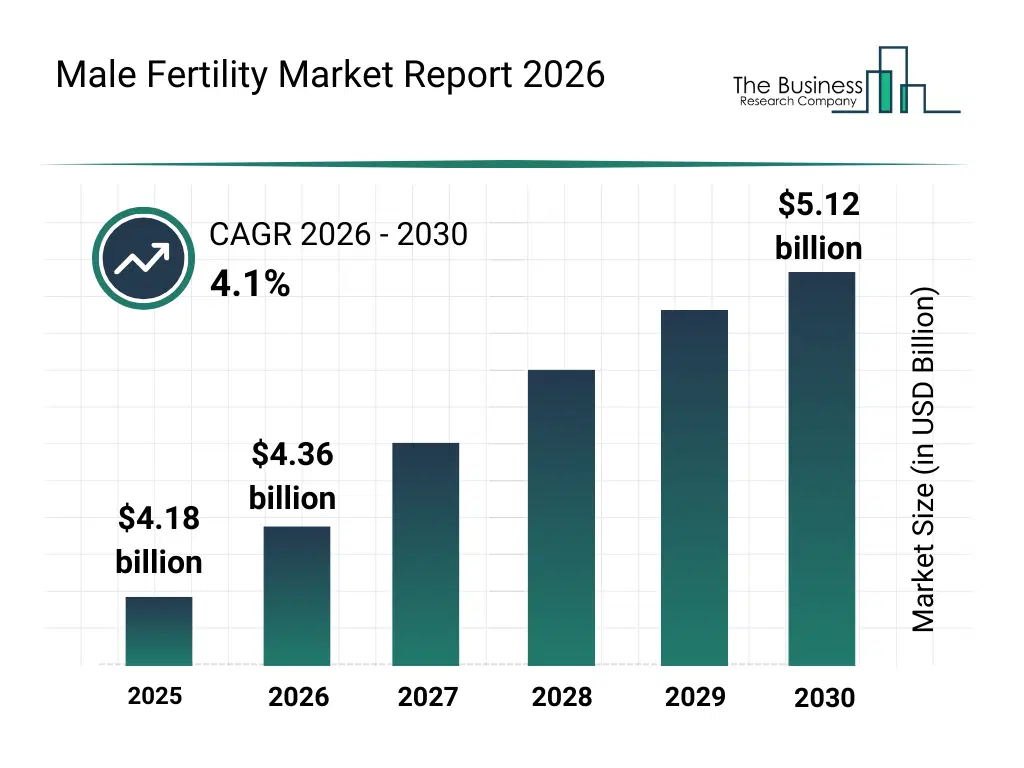
What Is The Male Fertility Market Size and Share 2026?
The male fertility market size has grown steadily in recent years. It will grow from $4.18 billion in 2025 to $4.36 billion in 2026 at a compound annual growth rate (CAGR) of 4.3%. The growth in the historic period can be attributed to delayed parenthood trends, increasing prevalence of lifestyle-related infertility, growing incidence of varicocele and hormonal disorders, early adoption of IVF and ICSI procedures, rising awareness of male reproductive health.What Is The Male Fertility Market Growth Forecast?
The male fertility market size is expected to see steady growth in the next few years. It will grow to $5.12 billion in 2030 at a compound annual growth rate (CAGR) of 4.1%. The growth in the forecast period can be attributed to increasing male infertility diagnosis rates, growing acceptance of fertility testing among men, expansion of fertility services in emerging markets, rising investment in reproductive health research, growing use of preventive fertility supplements. Major trends in the forecast period include rising awareness of male infertility conditions, growing adoption of advanced semen analysis techniques, increasing demand for assisted reproductive technologies, higher consumption of male fertility supplements, expansion of specialized male fertility clinics.
Global Male Fertility Market Segmentation
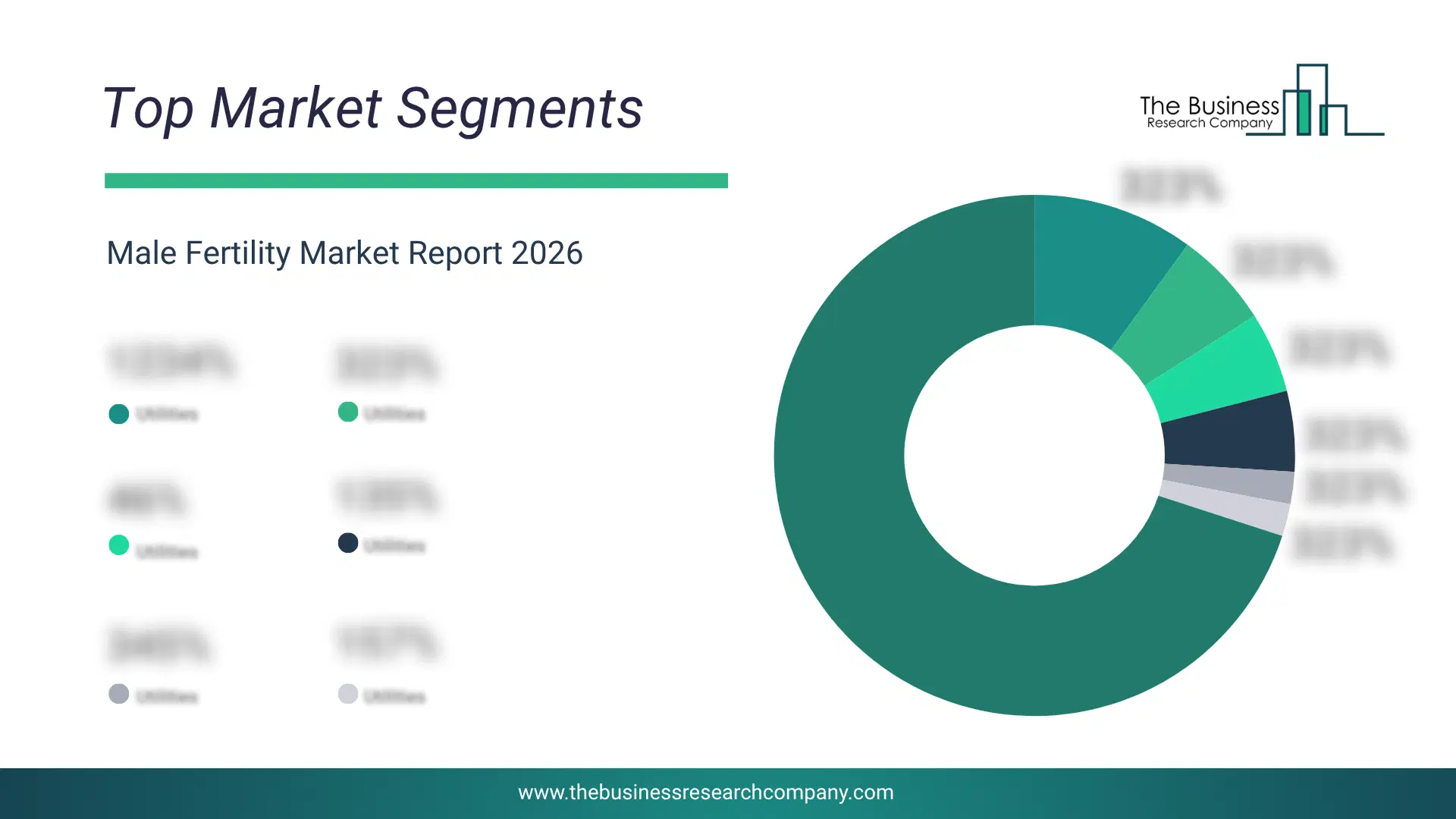
1) By Test Type: Sperm Agglutination, DNA Fragmentation Technique, Oxidative Stress Analysis, Computer Assisted Semen Analysis, Sperm Penetration Assay, Other Test Types 2) By Treatment Type: Assisted Reproductive Technology, Varicocele Surgery, Medication 3) By Supplement: Antioxidants, Vitamins, Minerals, Amino Acids, Enzymes 4) By End User: Hospitals And Clinics, Fertility Centers, Research Institutes, Other End Users Subsegments: 1) By Sperm Agglutination: Seminal Plasma Agglutination Test, Sperm-Bound Antibody Tests 2) By DNA Fragmentation Technique: Sperm DNA Fragmentation Index (DFI) Tests, Comet Assay 3) By Oxidative Stress Analysis: Reactive Oxygen Species (ROS) Measurement, Antioxidant Capacity Tests 4) By Computer Assisted Semen Analysis (CASA): Motility Analysis, Morphology Assessment 5) By Sperm Penetration Assay: Sperm-oocyte Interaction Tests, In Vitro Fertilization (IVF) Models 6) By Other Test Types: Hormonal Tests, Genetic Testing, Semen Culture TestsWhat Is The Driver Of The Male Fertility Market?
The increasing funding for fertility research is expected to propel the growth of the male fertility market going forward. Fertility research encompasses the scientific investigation and study of factors influencing reproductive health, including but not limited to conception, pregnancy, and the optimization of fertility outcomes. Funding for fertility research prioritizes investigations into male fertility to comprehensively understand reproductive health, improve overall fertility outcomes, and address the significant role that male factors play in conception and reproductive success. For instance, in October 2023, according to the Eunice Kennedy Shriver National Institute of Child Health and Human Development, a US-based health department, granted $2.26 million to study fertility-sparing treatments. Therefore, the increasing funding for fertility research is driving the growth of the male fertility industry.Key Players In The Global Male Fertility Market
Major companies operating in the male fertility market are Bayer Healthcare Inc., Sanofi S.A., MERCK KGaA, Essity AB, Laboratory Corporation Of America Holdings, Endo International plc., Cook Medical, Zydus Lifesciences Ltd., Intas Pharmaceuticals Ltd., ASKA Pharmaceutical Co. Ltd, EMD Serono Inc., Dendreon Pharmaceuticals LLC, Vitrolife, CinnaGen Co., Aytu BioScience Inc., Kindbody, Cryos International, AdvaCare Pharma USA, Ferring Pharmaceuticals, Apricus Biosciences, Reprotech Ltd., Vios Fertility Institute, Andrology Solutions, DxNow, INVO Bioscience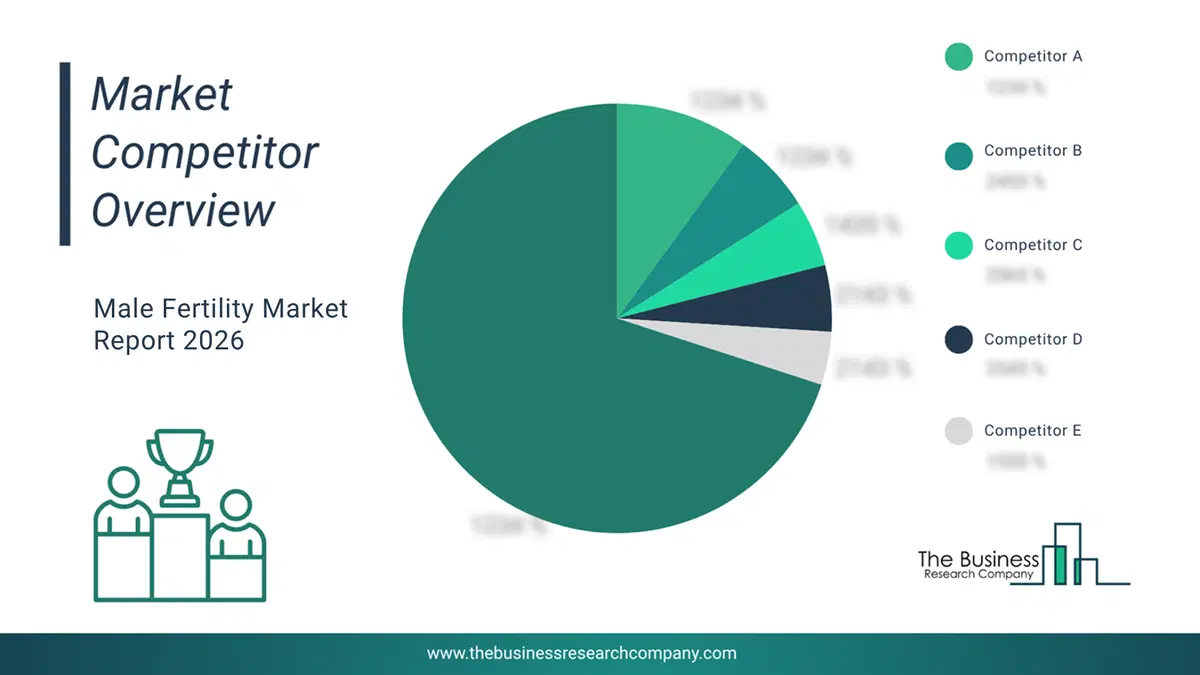
This chart is for illustrative purposes; the full report includes a detailed competitor analysis and comprehensive overview of the top 10 companies in the market.
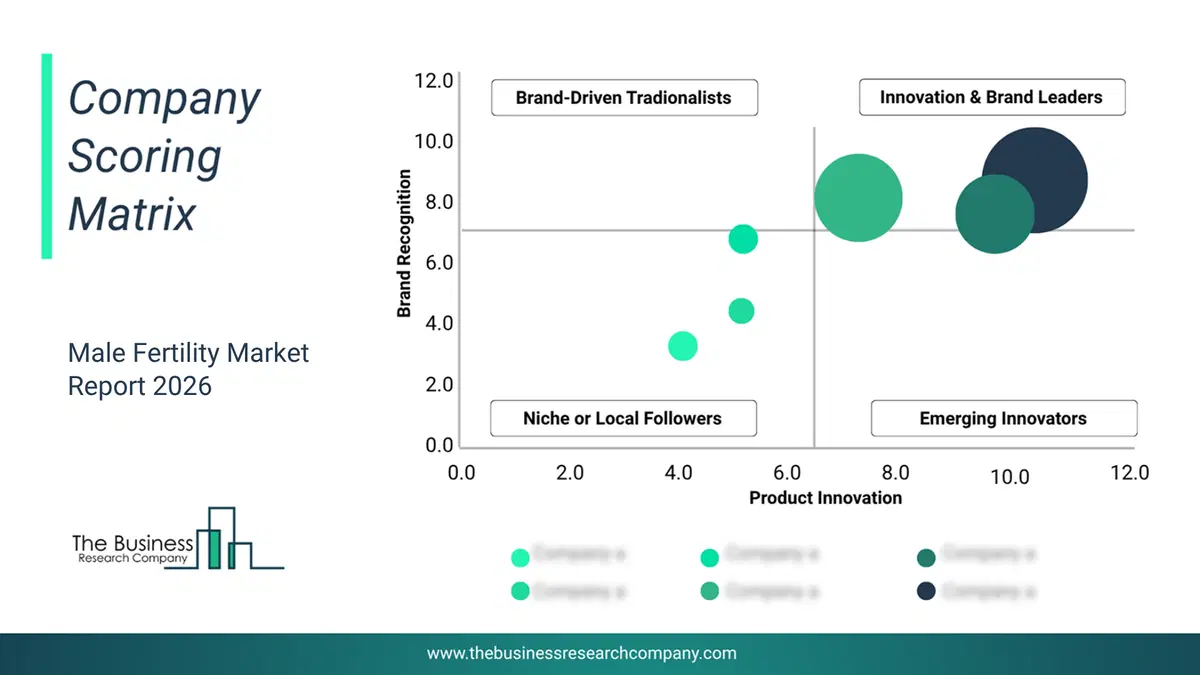
This chart maps companies by product innovation and brand strength, with bubble size indicating relative revenue, helping identify market leaders, challengers, and niche players. This is an illustrative chart; the full report provides a complete and accurate competitive analysis.
Global Male Fertility Market Trends and Insights
Major companies operating in the male fertility market are focusing on developing innovative solutions, such as portable computer-assisted semen analysis (CASA) systems to meet the rising demand driven by delayed parenthood, greater awareness of male-factor infertility, and a push for decentralized, patient-friendly diagnostics. A portable computer-assisted semen analysis (CASA) system is a handheld or mobile device that uses software and imaging technology to automatically evaluate sperm quality, including count, motility, and morphology, helping in quick, accurate, and on-site fertility assessment. For instance, in November 2023, ExSeed Health, a UK-based, privately held medical-device and digital-health company, launched the ExSeed CASA Lite, a compact computer-assisted semen analysis system built for clinics and satellite labs. The ExSeed CASA Lite combines a plug-and-play brightfield microscopy module with high-resolution video capture and cloud-enabled analysis software; it is described as an IVD-class solution intended to measure key parameters (concentration, motility and selected morphology metrics) with automated reporting. The system’s unique features include a large field-of-view high-resolution camera for whole-sample imaging, web-based interface for rapid results and clinic integration, and a small laboratory footprint that makes advanced semen analysis accessible outside major ART centres.What Are Latest Mergers And Acquisitions In The Male Fertility Market?
In June 2024, Ferring Pharmaceuticals Inc., a Switzerland-based biopharmaceutical company, partnered with Posterity Health Inc. to launch a male fertility program. With this partnership, Ferring Pharmaceuticals Inc. aims to expand its reproductive-health patient engagement and digital services by activating and educating men about their fertility to promote earlier, more equitable evaluation alongside female partners. Posterity Health Inc. is a US-based healthcare technology company that specializes in virtual-first male reproductive health, offering a hybrid care model of telehealth and in-person services powered by its Male Management Platform and an online male fertility assessment.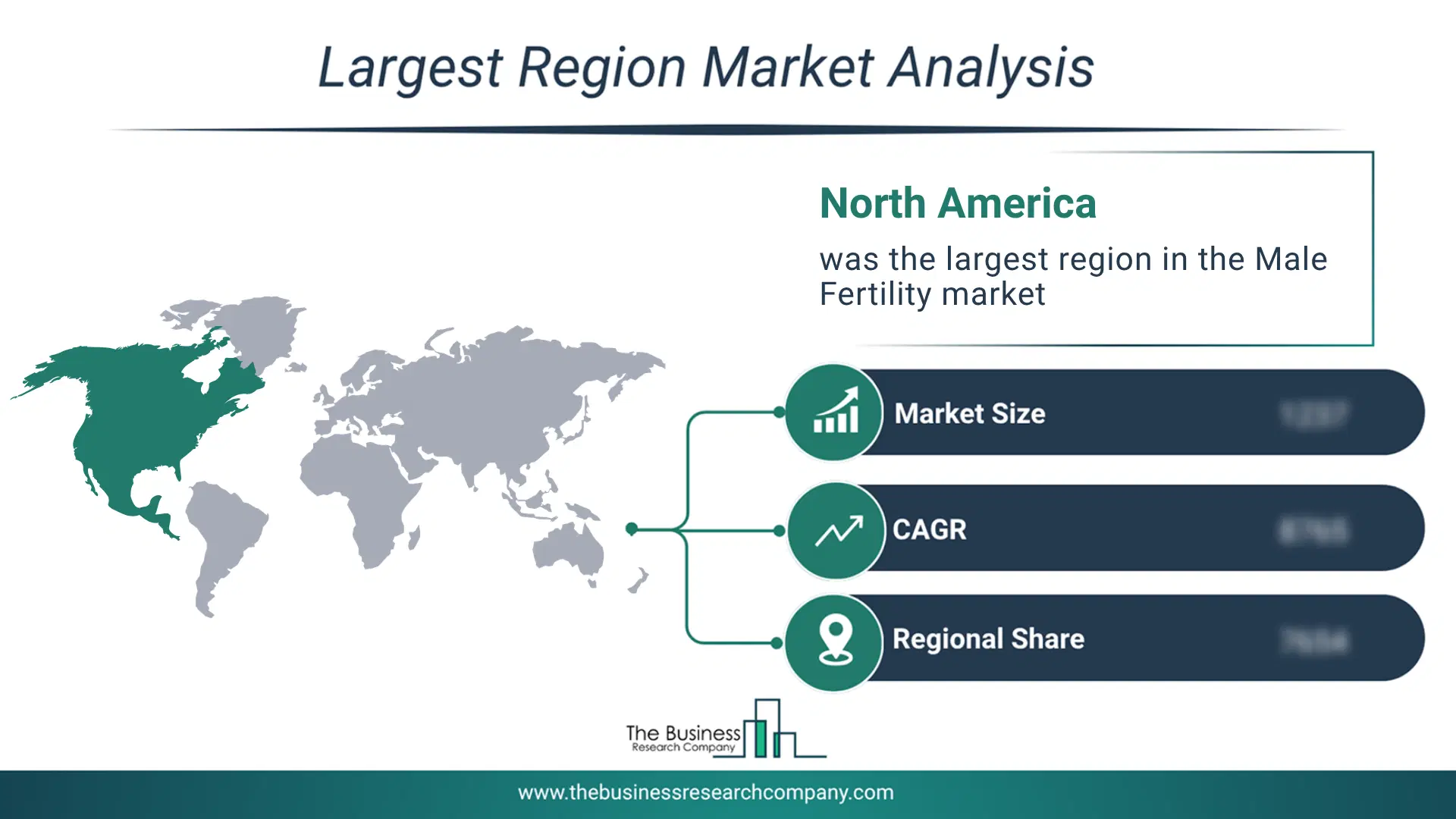
Regional Outlook
North America was the largest region in the male fertility market in 2025. Asia-Pacific is expected to be the fastest-growing region in the forecast period. The regions covered in this market report are Asia-Pacific, South East Asia, Western Europe, Eastern Europe, North America, South America, Middle East, Africa. The countries covered in this market report are Australia, Brazil, China, France, Germany, India, Indonesia, Japan, Taiwan, Russia, South Korea, UK, USA, Canada, Italy, Spain.What Defines the Male Fertility Market?
The male fertility market includes revenues earned by entities by diagnostic testing services, fertility consultations and counselling, fertility treatments and therapies or sperm banking and storage services. The market value includes the value of related goods sold by the service provider or included within the service offering. Only goods and services traded between entities or sold to end consumers are included.How is Market Value Defined and Measured?
The market value is defined as the revenues that enterprises gain from the sale of goods and/or services within the specified market and geography through sales, grants, or donations in terms of the currency (in USD unless otherwise specified). The revenues for a specified geography are consumption values that are revenues generated by organizations in the specified geography within the market, irrespective of where they are produced. It does not include revenues from resales along the supply chain, either further along the supply chain or as part of other products.
This chart presents market attractiveness based on a quantitative evaluation of growth, competition, strategic alignment, and risk, offering a clear view of opportunity areas for decision-making. This chart is for illustrative purposes; the full report contains the complete analysis.

This chart highlights the Total Addressable Market (TAM) by estimating the maximum revenue opportunity using an assumption-driven approach, supporting strategic planning and opportunity sizing across markets. The chart is illustrative; the full report provides a more comprehensive analysis.
What Key Data and Analysis Are Included in the Male Fertility Market Report 2026?
The male fertility market research report is one of a series of new reports from The Business Research Company that provides market statistics, including industry global market size, regional shares, competitors with the market share, detailed market segments, market trends and opportunities, and any further data you may need to thrive in the male fertility industry. The market research report delivers a complete perspective of everything you need, with an in-depth analysis of the current and future state of the industry.Male Fertility Market Report Forecast Analysis
| Report Attribute | Details |
|---|---|
| Market Size Value In 2026 | $4.36 billion |
| Revenue Forecast In 2030 | $5.12 billion |
| Growth Rate | CAGR of 4.1% from 2026 to 2030 |
| Base Year For Estimation | 2025 |
| Actual Estimates/Historical Data | 2020-2025 |
| Forecast Period | 2026 - 2030 |
| Market Representation | Revenue in USD Billion and CAGR from 2026 to 2030 |
| Segments Covered | Test Type, Treatment Type, Supplement, End User |
| Regional Scope | Asia-Pacific, Western Europe, Eastern Europe, North America, South America, Middle East, Africa |
| Country Scope | The countries covered in the report are Australia, Brazil, China, France, Germany, India, Indonesia, Japan, Taiwan, Russia, South Korea, UK, USA, Canada, Italy, Spain |
| Key Companies Profiled | Bayer Healthcare Inc., Sanofi S.A., MERCK KGaA, Essity AB, Laboratory Corporation Of America Holdings, Endo International plc., Cook Medical, Zydus Lifesciences Ltd., Intas Pharmaceuticals Ltd., ASKA Pharmaceutical Co. Ltd, EMD Serono Inc., Dendreon Pharmaceuticals LLC, Vitrolife, CinnaGen Co., Aytu BioScience Inc., Kindbody, Cryos International, AdvaCare Pharma USA, Ferring Pharmaceuticals, Apricus Biosciences, Reprotech Ltd., Vios Fertility Institute, Andrology Solutions, DxNow, INVO Bioscience |
| Customization Scope | Request for Customization |
| Pricing And Purchase Options | Explore Purchase Options |