

Male Hypogonadism Market Report 2026
Global Outlook – By Type (Klinefelters Syndrome, Kallmann Syndrome, Pituitary Disorders, Other Types), By Drug Delivery (Topical Gels, Injectables, Transdermal Patches, Other Drug Deliveries), By Therapy (Testosterone Therapy, Gonadotropin-Releasing Hormone Therapy) – Market Size, Trends, Strategies, and Forecast to 2030
Male Hypogonadism Market Overview
• Male Hypogonadism market size has reached to $3.95 billion in 2025 • Expected to grow to $5.34 billion in 2030 at a compound annual growth rate (CAGR) of 6.4% • Growth Driver: Rising Infertility Rates Fueled Male Hypogonadism Market Growth • Market Trend: Innovative Products Transform Male Hypogonadism Market • North America was the largest region in 2025 and Asia-Pacific is the fastest growing region.What Is Covered Under Male Hypogonadism Market?
Male hypogonadism is a disease in which the body produces insufficient amounts of the hormone testosterone. Testosterone is the primary male sex hormone and is essential for the development and growth of men throughout puberty. The main types of male hypogonadism are klinefelter syndrome, kallmann syndrome, pituitary disorders, and others. Klinefelter syndrome refers to a hereditary disorder that develops in boys when they have an extra copy of the X chromosome at birth. The drugs are delivered through topical gels, injectable, transdermal patches, and others for testosterone therapy, and gonadotropin-releasing hormone therapy.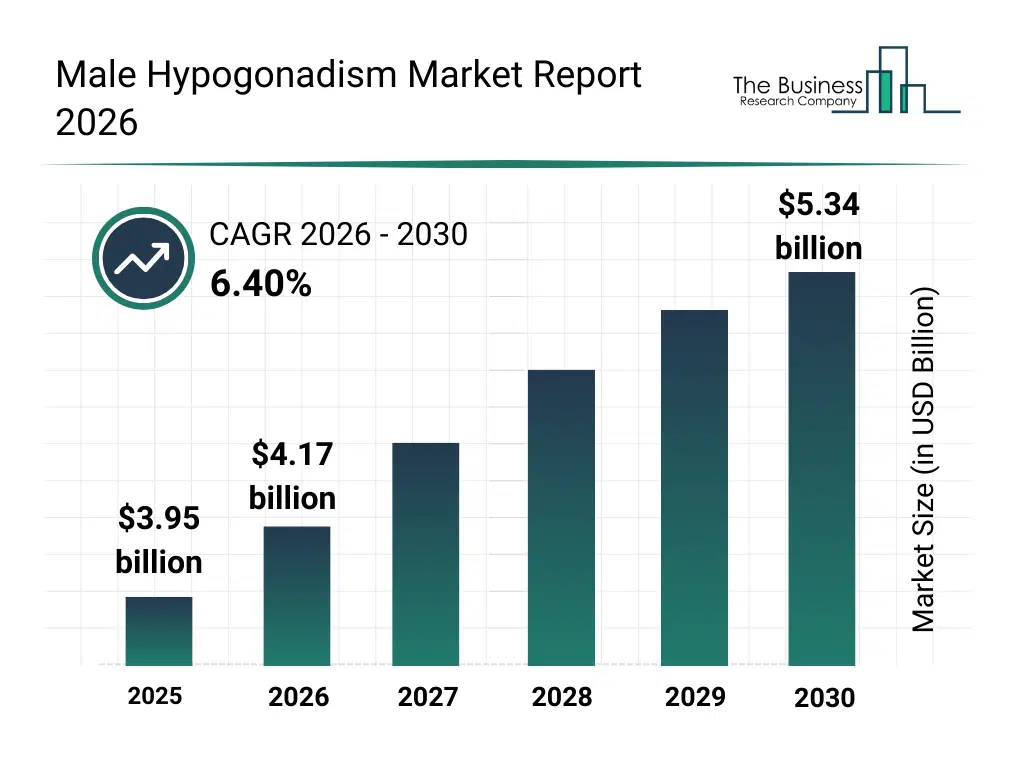
What Is The Male Hypogonadism Market Size and Share 2026?
The male hypogonadism market size has grown strongly in recent years. It will grow from $3.95 billion in 2025 to $4.17 billion in 2026 at a compound annual growth rate (CAGR) of 5.6%. The growth in the historic period can be attributed to increasing prevalence of hypogonadism, rising awareness of testosterone deficiency, growth in aging male population, advancements in hormone replacement therapies, increased physician adoption of diagnostic testing.What Is The Male Hypogonadism Market Growth Forecast?
The male hypogonadism market size is expected to see strong growth in the next few years. It will grow to $5.34 billion in 2030 at a compound annual growth rate (CAGR) of 6.4%. The growth in the forecast period can be attributed to expansion of personalized medicine, integration of ai in diagnosis and treatment, growth in telehealth services, rising adoption of advanced drug delivery systems, increasing investment in male hormonal research. Major trends in the forecast period include personalized testosterone therapy, minimally invasive drug delivery systems, awareness programs for male hormonal health, integration of telemedicine in hormonal treatment, expansion of chronic disease management services.
Global Male Hypogonadism Market Segmentation
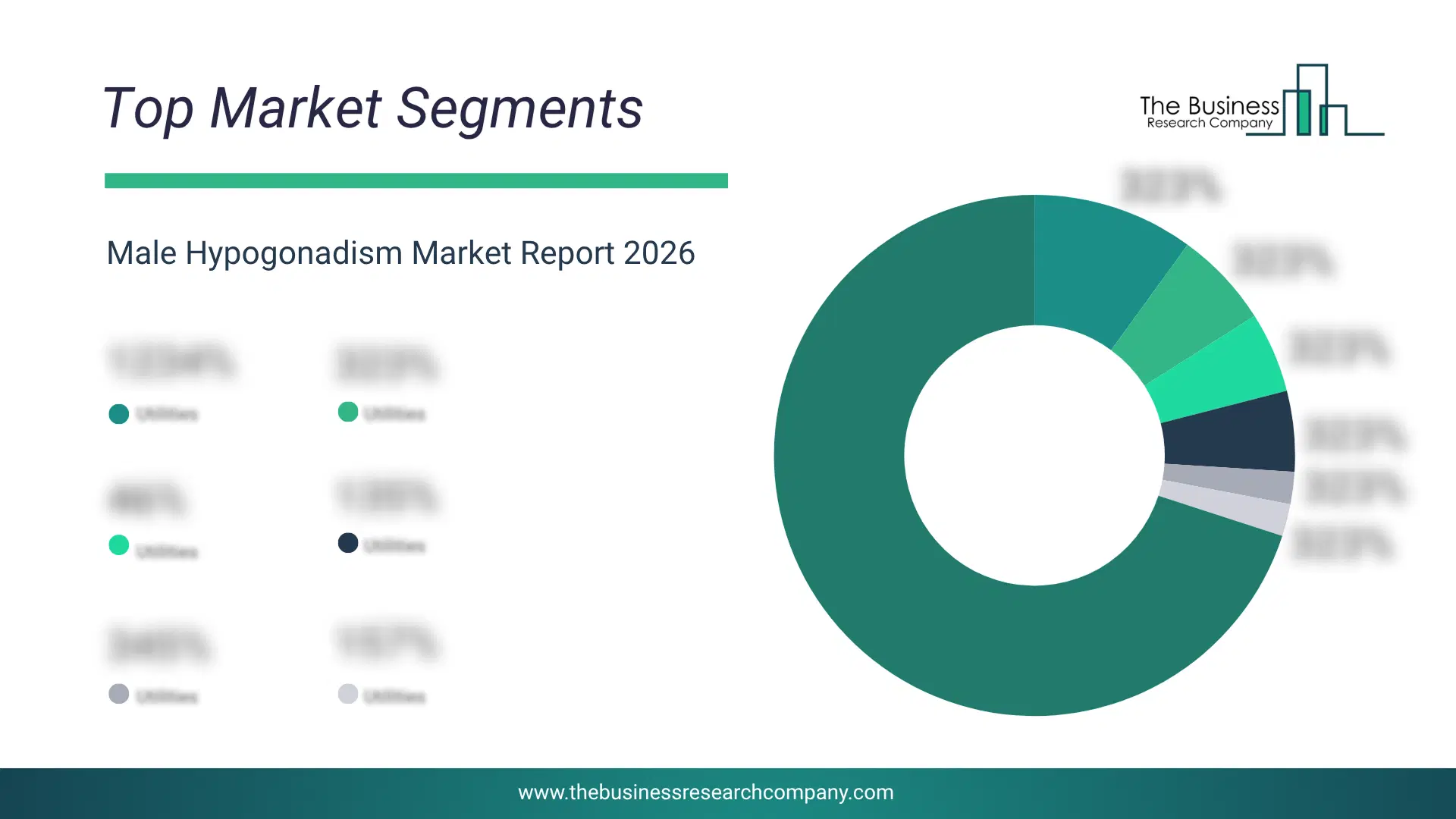
1) By Type: Klinefelters Syndrome, Kallmann Syndrome, Pituitary Disorders, Other Types 2) By Drug Delivery: Topical Gels, Injectables, Transdermal Patches, Other Drug Deliveries 3) By Therapy: Testosterone Therapy, Gonadotropin-Releasing Hormone Therapy Subsegments: 1) By Klinefelter's Syndrome: 47,XXY Syndrome, Other Variants 2) By Kallmann Syndrome: Isolated Kallmann Syndrome, Syndromic Kallmann Syndrome 3) By Pituitary Disorders: Hypopituitarism, Pituitary Tumors, Other Pituitary Disorders 4) By Other Types: Androgen Insensitivity Syndrome, Testicular Dysgenesis Syndrome, Genetic Mutations And DisordersWhat Is The Driver Of The Male Hypogonadism Market?
The increase in infertility rates is expected to propel the growth of the male hypogonadism market going forward. Infertility refers to a condition affecting the male or female reproductive system that is characterized by the inability to conceive after 12 months or longer of frequent, unprotected sexual activity. Male hypogonadism, which can lead to decreased sperm production and infertility, is one of the potential causes of male infertility. As a result, the increasing prevalence of male infertility is expected to drive the growth of the male hypogonadism market. For instance, in February 2023, according to the Office for National Statistics, a UK-based government department, 31.8% of all live births were to non-UK-born mothers in England and Wales, an increase from 30.3% in 2022, and 37.3% of live births were to parents where either one or both were born outside the UK, increasing from 35.8% in 2022. Therefore, an increase in the infertility rate is driving the growth of the male hypogonadism industry.Key Players In The Global Male Hypogonadism Market
Major companies operating in the male hypogonadism market are Pfizer Inc., Bayer AG, Eli Lilly and Company Ltd., Endo International plc., Merck & Co. Inc., Teva Pharmaceutical Industries Ltd., AbbVie Inc., Perrigo Company plc, IBSA Institut Biochimique SA, Sun Pharmaceutical Industries Limited, Antares Pharma Inc., Besins Healthcare Ltd., Clarus Therapeutics Holdings Inc., Lipocine Inc., Myovant Sciences Ltd., Sandoz International GmbH, TherapeuticsMD Inc., Viking Therapeutics Inc., Shionogi & Co. Ltd., Ferring Pharmaceuticals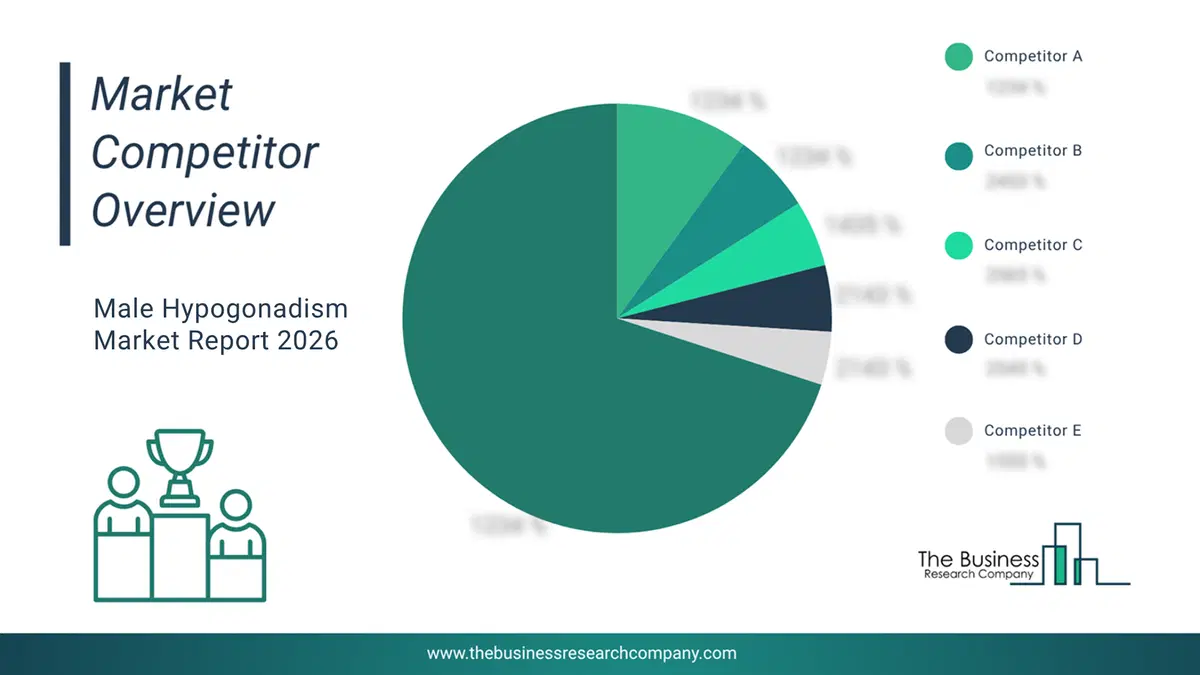
This chart is for illustrative purposes; the full report includes a detailed competitor analysis and comprehensive overview of the top 10 companies in the market.
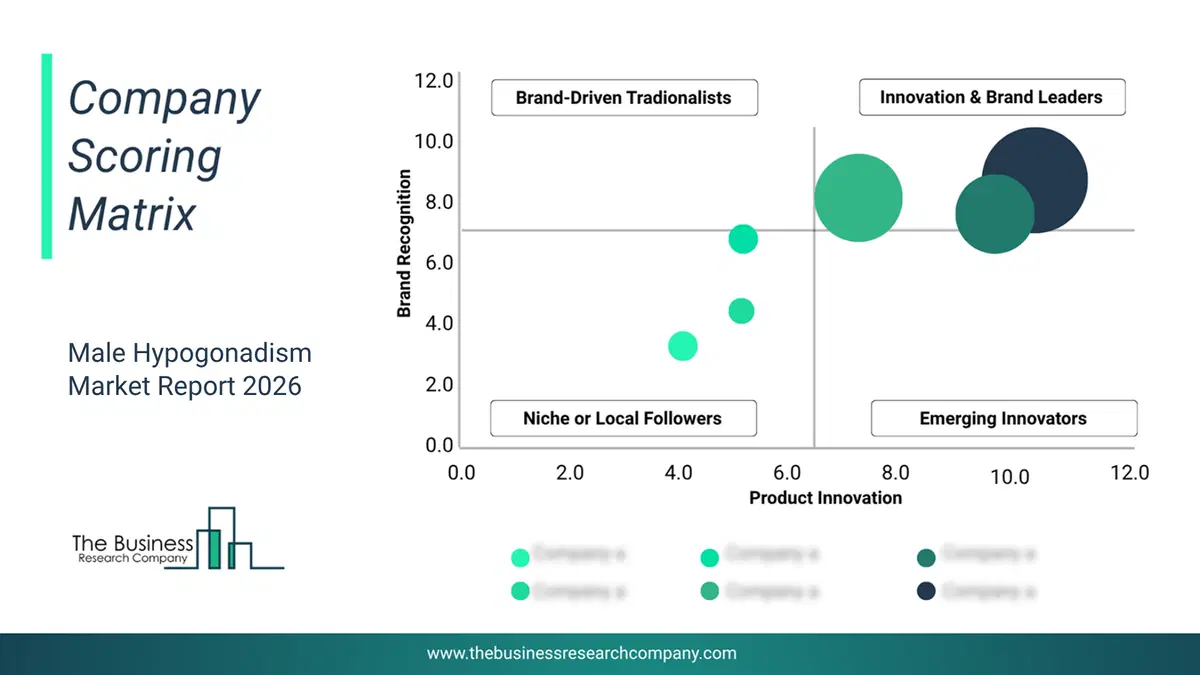
This chart maps companies by product innovation and brand strength, with bubble size indicating relative revenue, helping identify market leaders, challengers, and niche players. This is an illustrative chart; the full report provides a complete and accurate competitive analysis.
Global Male Hypogonadism Market Trends and Insights
Major companies operating in the male hypogonadism market are focusing on developing innovative products such as digital forward platforms to engage patients through telemedicine, offer educational resources, and streamline access to treatments, revolutionizing care for male hypogonadism while enhancing patient support and therapy accessibility. For instance, in October 2024, LifeMD, Inc., a US based provider of virtual primary care services, launched TestoRx, a direct to consumer testosterone replacement therapy telehealth offering under its Rex MD men’s health brand. The program features an initial virtual consultation and requisite blood testing, treatment options including both testosterone replacement and alternative therapies to boost endogenous hormone production, and ongoing telehealth visits with follow up care.What Are Latest Mergers And Acquisitions In The Male Hypogonadism Market?
In October 2023, ADVANZ Pharma, a UK-based developer of specialty and legacy pharmaceutical assets, acquired the global rights to Tostran from Kyowa Kirin for an undisclosed sum. With this acquisition, Advanz aimed to reinforce its men’s health portfolio by gaining a clinically established testosterone gel used in treating male hypogonadism. Kyowa Kirin, a Japan-based pharmaceutical company, specializes in developing innovative biologics and specialty medicines in areas such as oncology, nephrology, immunology, and the central nervous system.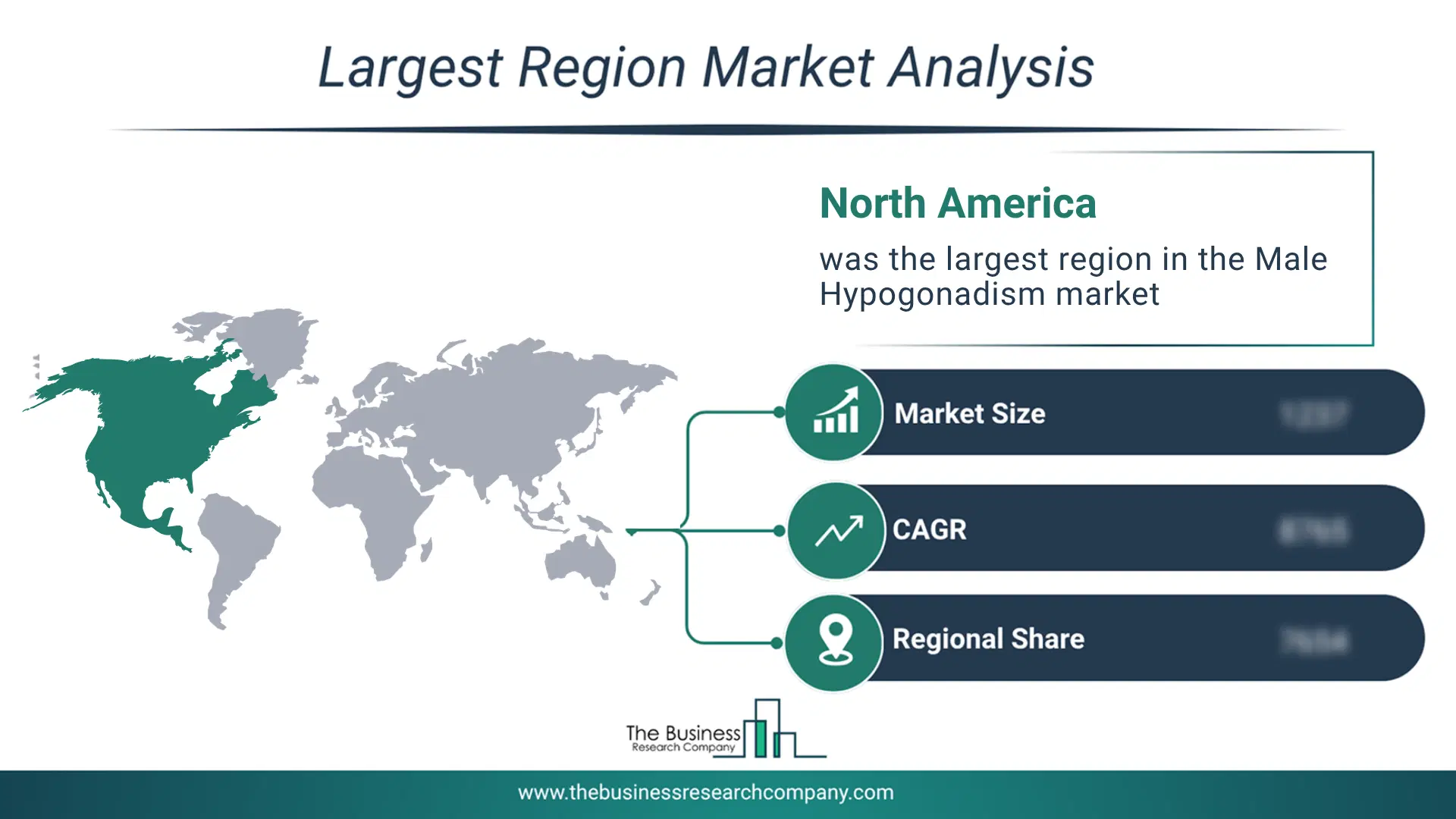
Regional Insights
North America was the largest region in the male hypogonadism market in 2025. Asia-Pacific is expected to be the fastest-growing region in the male hypogonadism market report during the forecast period. The regions covered in this market report are Asia-Pacific, South East Asia, Western Europe, Eastern Europe, North America, South America, Middle East, Africa. The countries covered in this market report are Australia, Brazil, China, France, Germany, India, Indonesia, Japan, Taiwan, Russia, South Korea, UK, USA, Canada, Italy, Spain.What Defines the Male Hypogonadism Market?
The male hypogonadism market includes revenues earned by entities through hormone testing, semen analysis, pituitary imaging, genetic studies, and testicular biopsy. The market value includes the value of related goods sold by the service provider or included within the service offering. Only goods and services traded between entities or sold to end consumers are included.How is Market Value Defined and Measured?
The market value is defined as the revenues that enterprises gain from the sale of goods and/or services within the specified market and geography through sales, grants, or donations in terms of the currency (in USD unless otherwise specified). The revenues for a specified geography are consumption values that are revenues generated by organizations in the specified geography within the market, irrespective of where they are produced. It does not include revenues from resales along the supply chain, either further along the supply chain or as part of other products.
This chart presents market attractiveness based on a quantitative evaluation of growth, competition, strategic alignment, and risk, offering a clear view of opportunity areas for decision-making. This chart is for illustrative purposes; the full report contains the complete analysis.

This chart highlights the Total Addressable Market (TAM) by estimating the maximum revenue opportunity using an assumption-driven approach, supporting strategic planning and opportunity sizing across markets. The chart is illustrative; the full report provides a more comprehensive analysis.
What Key Data and Analysis Are Included in the Male Hypogonadism Market Report 2026?
The male hypogonadism market research report is one of a series of new reports from The Business Research Company that provides market statistics, including industry global market size, regional shares, competitors with the market share, detailed market segments, market trends and opportunities, and any further data you may need to thrive in the male hypogonadism industry. The market research report delivers a complete perspective of everything you need, with an in-depth analysis of the current and future state of the industry.Male Hypogonadism Market Report Forecast Analysis
| Report Attribute | Details |
|---|---|
| Market Size Value In 2026 | $4.17 billion |
| Revenue Forecast In 2030 | $5.34 billion |
| Growth Rate | CAGR of 5.6% from 2026 to 2030 |
| Base Year For Estimation | 2025 |
| Actual Estimates/Historical Data | 2020-2025 |
| Forecast Period | 2026 - 2030 |
| Market Representation | Revenue in USD Billion and CAGR from 2026 to 2030 |
| Segments Covered | Type, Drug Delivery, Therapy |
| Regional Scope | Asia-Pacific, Western Europe, Eastern Europe, North America, South America, Middle East, Africa |
| Country Scope | The countries covered in the report are Australia, Brazil, China, France, Germany, India, Indonesia, Japan, Taiwan, Russia, South Korea, UK, USA, Canada, Italy, Spain. |
| Key Companies Profiled | Pfizer Inc., Bayer AG, Eli Lilly and Company Ltd., Endo International plc., Merck & Co. Inc., Teva Pharmaceutical Industries Ltd., AbbVie Inc., Perrigo Company plc, IBSA Institut Biochimique SA, Sun Pharmaceutical Industries Limited, Antares Pharma Inc., Besins Healthcare Ltd., Clarus Therapeutics Holdings Inc., Lipocine Inc., Myovant Sciences Ltd., Sandoz International GmbH, TherapeuticsMD Inc., Viking Therapeutics Inc., Shionogi & Co. Ltd., Ferring Pharmaceuticals |
| Customization Scope | Request for Customization |
| Pricing And Purchase Options | Explore Purchase Options |