
Malted Wheat Flour Market Report 2026
Global Outlook – By Product Type (Diastatic Malted Wheat Flour, Non-Diastatic Malted Wheat Flour ), By Application (Bakery Products, Confectionery and Baked Snacks, Food Processing Applications, Other Applications), By End-Use Industry (Commercial Bakeries, Industrial Food Manufacturers, Artisanal And Craft Bakeries, Household And Foodservice Use) – Market Size, Trends, Strategies, and Forecast to 2030
Malted Wheat Flour Market Overview
• Malted Wheat Flour market size has reached to $41.99 billion in 2025 • Expected to grow to $55.85 billion in 2030 at a compound annual growth rate (CAGR) of 5.9% • Growth Driver: Consumer Spending Surge In Bakery And Confectionery Items Drives Malted Wheat Flour Market Growth • Market Trend: Innovative Formulations And Ingredient Combinations Transforming The Malted Wheat Flour Market • Western Europe was the largest region in 2025 and Asia-Pacific is the fastest growing region.What Is Covered Under Malted Wheat Flour Market?
Malted wheat flour refers to flour manufactured from wheat grains that have been thoroughly germinated, cleaned, and processed into flour under controlled conditions. Malted wheat flour is used primarily in bread manufacturing and food applications. The malted wheat flour is used in bread to improve the texture of the soft part. The main types of malted wheat flour are diastatic malted wheat flour and non-diastatic malted wheat flour. Diastatic malted wheat flour refers to a grain that has been sprouted, dried, and pounded into a powder, commonly wheat. Diastatic is used by bread bakers to ensure a high rise, excellent texture, and a nice brown crust. The applications of malted wheat flour include food and beverage, bakery and confectionery, the nutrition industry, and other applications.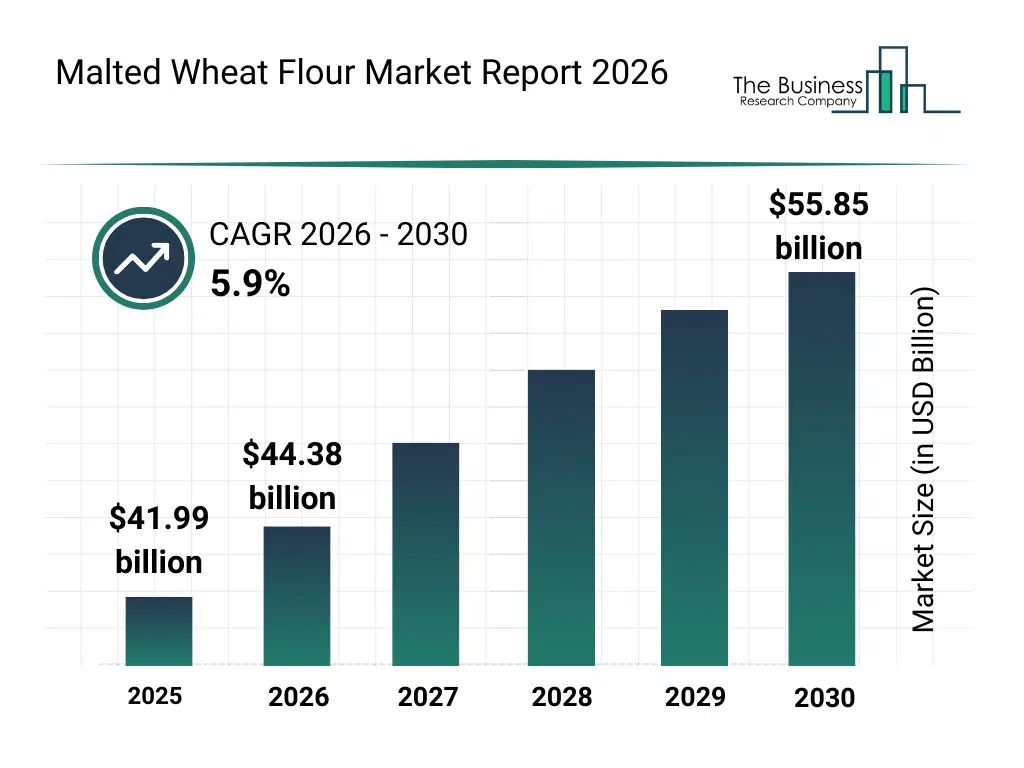
What Is The Malted Wheat Flour Market Size and Share 2026?
The malted wheat flour market size has grown strongly in recent years. It will grow from $41.99 billion in 2025 to $44.38 billion in 2026 at a compound annual growth rate (CAGR) of 5.7%. The growth in the historic period can be attributed to expansion of commercial bakery operations, increasing consumption of bread products, availability of malt processing technologies, growth in packaged bakery foods, rising demand for quality baking ingredients.What Is The Malted Wheat Flour Market Growth Forecast?
The malted wheat flour market size is expected to see strong growth in the next few years. It will grow to $55.85 billion in 2030 at a compound annual growth rate (CAGR) of 5.9%. The growth in the forecast period can be attributed to increasing focus on premium and specialty baked goods, rising demand for clean-label flour products, expansion of industrial baking capacity, growing innovation in enzyme-active flours, increasing demand from foodservice bakeries. Major trends in the forecast period include increasing use of malted wheat flour in artisan baking, rising demand for texture-enhancing baking ingredients, growing application in clean-label bakery products, expansion of premium bread production, enhanced focus on dough performance.
Global Malted Wheat Flour Market Segmentation
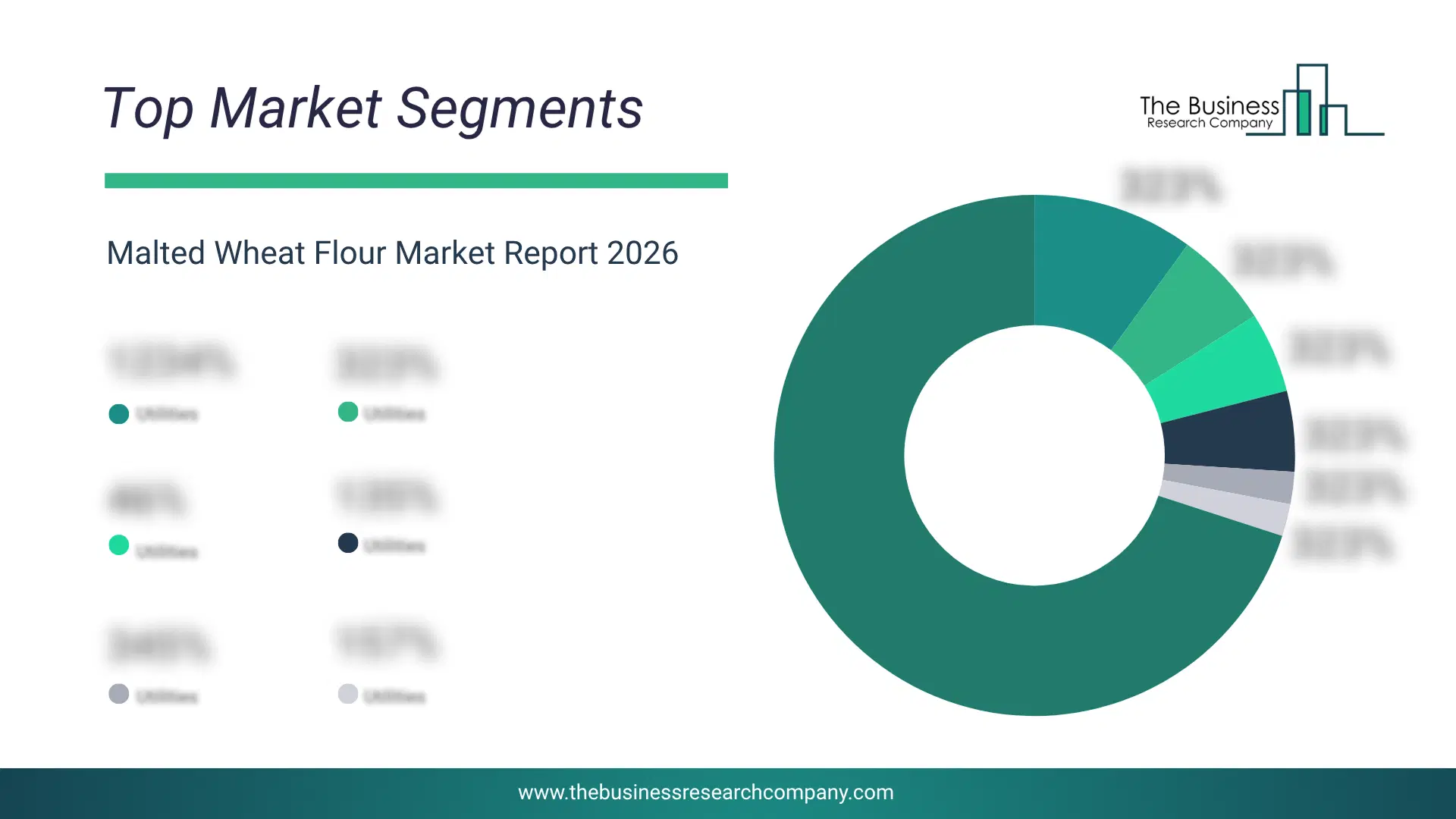
1) By Product Type: Diastatic Malted Wheat Flour, Non-Diastatic Malted Wheat Flour 2) By Application: Bakery Products, Confectionery and Baked Snacks, Food Processing Applications, Other Applications 3) By End-Use Industry: Commercial Bakeries, Industrial Food Manufacturers, Artisanal And Craft Bakeries, Household And Foodservice Use Subsegments: 1) By Diastatic Malted Wheat Flour: Light Diastatic Malted Flour, Dark Diastatic Malted Flour 2) By Non-Diastatic Malted Wheat Flour: Light Non-Diastatic Malted Flour, Dark Non-Diastatic Malted FlourWhat Is The Driver Of The Malted Wheat Flour Market?
An increase in consumer spending on bakery and confectionery items is expected to propel the growth of the malted wheat flour market going forward. Bakery refers to flour-based foods baked in an oven, whereas confectionery refers to sugar-based foods and desserts. Malted wheat flour is used primarily in bread manufacturing and other food applications. For instance, in November 2023, according to the Agriculture and Agri-Food Canada (AAFC), a Canada-based government department, the leading suppliers of baked goods to the U.K. were France, with exports valued at US$548.0 million (15.2% market share) and 157.0 million kilograms, followed by Belgium with exports worth US$475.6 million (13.2% market share) and 137.7 million kilograms. The U.K. ranked as the second-largest global market for baked goods, with imports totaling US$3.6 billion and 1.1 billion kilograms that year. Therefore, an increase in consumer spending on bakery and confectionery items is expected to boost demand for malted wheat flour during the forecast period.Key Players In The Global Malted Wheat Flour Market
Major companies operating in the malted wheat flour market are Malteurop Groupe S.A., Crisp Malting Group, King Arthur Flour Company, Muntons plc, Imperial Malts Ltd., IREKS GmbH, Bairds Malt Ltd., Axereal SCA, Great Western Malting Co., GrainCorp Malt, Viking Malt Americas, Warminster Maltings, Maltexco S.A., Malt Products Corporation, Briess Malt & Ingredients Co., MaltEurop Malting Co., Weyermann Specialty Malts, Malteries Soufflet, Bestmalz, Rahr Malting Co., Thomas Fawcett & Sons, Gambrinus Malting Corporation, The Swaen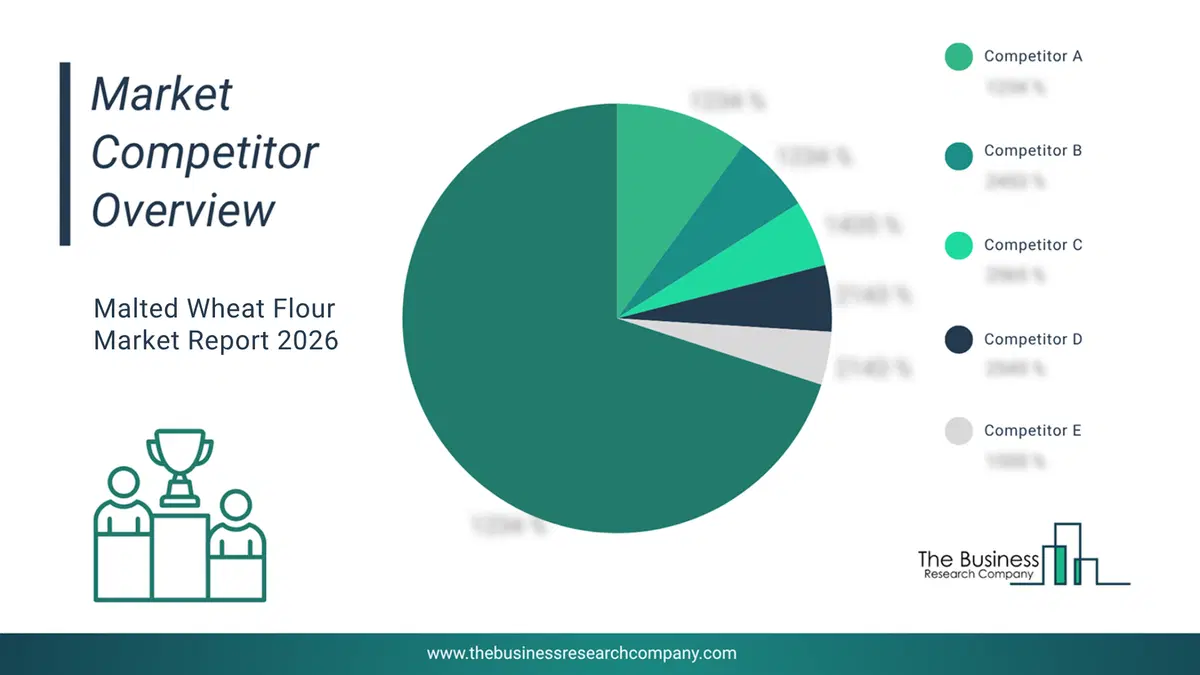
This chart is for illustrative purposes; the full report includes a detailed competitor analysis and comprehensive overview of the top 10 companies in the market.
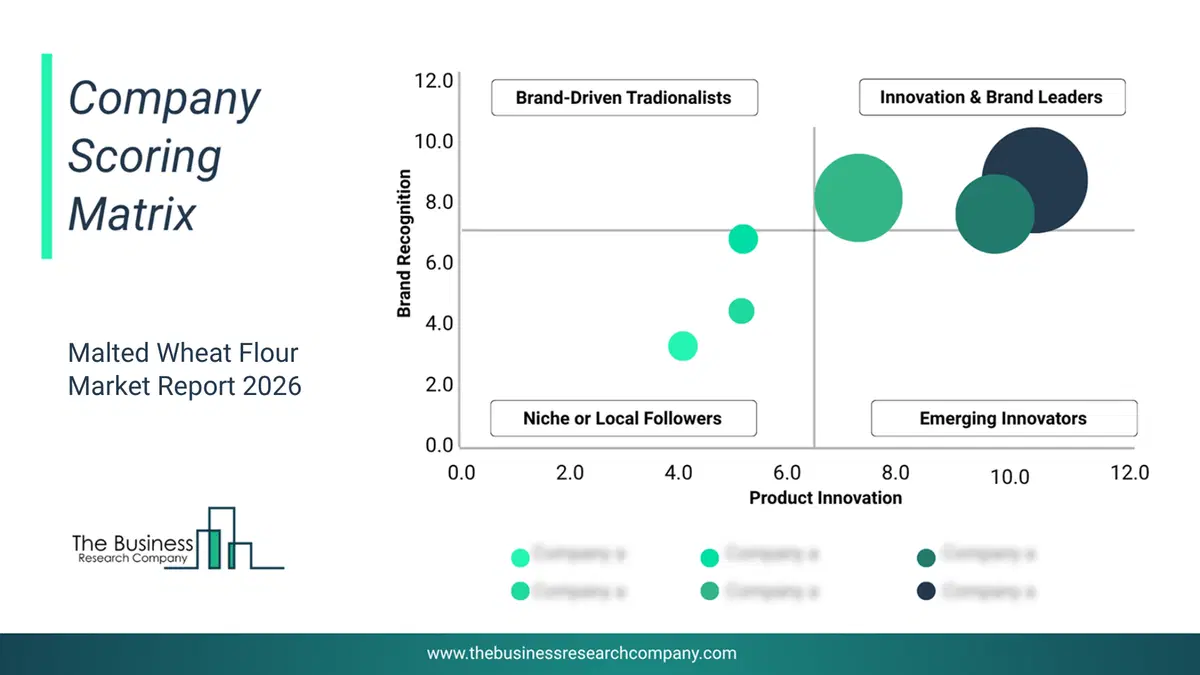
This chart maps companies by product innovation and brand strength, with bubble size indicating relative revenue, helping identify market leaders, challengers, and niche players. This is an illustrative chart; the full report provides a complete and accurate competitive analysis.
Global Malted Wheat Flour Market Trends and Insights
Major companies in the malted wheat flour market are focusing on product development with new formulations and ingredient combinations after 2023 to enhance functionality, flavor, and sustainability and to cater to the growing plant-based and specialty food sectors. For instance, in September 2025, according to Weyermann, a Germany-based specialty malt manufacturing company commissioned its new malt flour mill, enabling the production of finely milled malt flours with tailored functional properties for bakery, confectionery, and plant-based applications. This advanced milling capability allows for customized malted wheat flour blends with improved solubility, enzymatic activity, and flavor profiles, supporting innovation in clean-label and sustainable products. The launch demonstrates the market trend of leveraging technology-driven processes and new formulations to create versatile, high-quality malted wheat flours that enhance taste, texture, color, and nutritional value in modern food manufacturing.What Are Latest Mergers And Acquisitions In The Malted Wheat Flour Market?
In June 2023, Arbor Investments, a US-based private equity firm, acquired Golden Malted and Heartland Waffles for an undisclosed amount. The acquisition presents a substantial opportunity to capitalize on Arbor’s in-house resources and expertise, enabling the company to deepen its reach in the broader foodservice industry and accelerate its growth at a faster pace. Golden Malted and Heartland Waffles is a US-based manufacturer of malted wheat flour.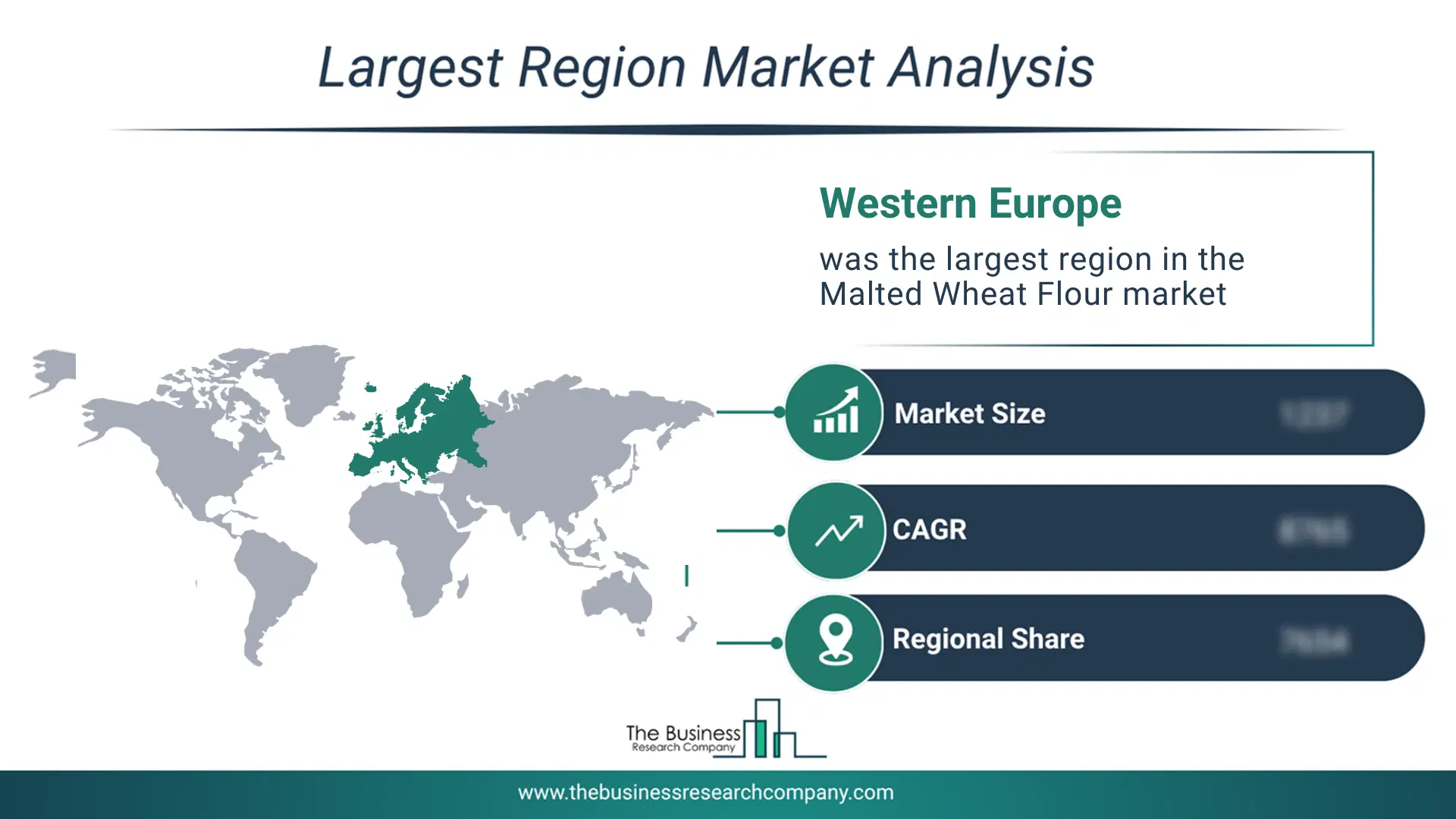
Regional Outlook
Western Europe was the largest region in the malted wheat flour market share in 2025. Asia-Pacific is expected to be the fastest-growing region in the forecast period. The regions covered in this market report are Asia-Pacific, South East Asia, Western Europe, Eastern Europe, North America, South America, Middle East and Africa. The countries covered in this market report are Australia, Brazil, China, France, Germany, India, Indonesia, Japan, Taiwan, Russia, South Korea, UK, USA, Italy, Spain, CanadaWhat Defines the Malted Wheat Flour Market?
The malted wheat flour market consists of sales of crunchy cereals, biscuits, coated cereals, functional flours, premixes, bakery improvers. Values in this market are ‘factory gate’ values, that is the value of goods sold by the manufacturers or creators of the goods, whether to other entities (including downstream manufacturers, wholesalers, distributors and retailers) or directly to end customers. The value of goods in this market includes related services sold by the creators of the goods.How is Market Value Defined and Measured?
The market value is defined as the revenues that enterprises gain from the sale of goods and/or services within the specified market and geography through sales, grants, or donations in terms of the currency (in USD unless otherwise specified). The revenues for a specified geography are consumption values that are revenues generated by organizations in the specified geography within the market, irrespective of where they are produced. It does not include revenues from resales along the supply chain, either further along the supply chain or as part of other products.
This chart presents market attractiveness based on a quantitative evaluation of growth, competition, strategic alignment, and risk, offering a clear view of opportunity areas for decision-making. This chart is for illustrative purposes; the full report contains the complete analysis.

This chart highlights the Total Addressable Market (TAM) by estimating the maximum revenue opportunity using an assumption-driven approach, supporting strategic planning and opportunity sizing across markets. The chart is illustrative; the full report provides a more comprehensive analysis.
What Key Data and Analysis Are Included in the Malted Wheat Flour Market Report 2026?
The malted wheat flour market research report is one of a series of new reports from The Business Research Company that provides market statistics, including industry global market size, regional shares, competitors with the market share, detailed market segments, market trends and opportunities, and any further data you may need to thrive in the malted wheat flour industry. The market research report delivers a complete perspective of everything you need, with an in-depth analysis of the current and future state of the industry.Malted Wheat Flour Market Report Forecast Analysis
| Report Attribute | Details |
|---|---|
| Market Size Value In 2026 | $44.38 billion |
| Revenue Forecast In 2030 | $55.85 billion |
| Growth Rate | CAGR of 5.7% from 2026 to 2030 |
| Base Year For Estimation | 2025 |
| Actual Estimates/Historical Data | 2020-2025 |
| Forecast Period | 2026 - 2030 |
| Market Representation | Revenue in USD Billion and CAGR from 2026 to 2030 |
| Segments Covered | Product Type, Application, End-Use Industry |
| Regional Scope | Asia-Pacific, Western Europe, Eastern Europe, North America, South America, Middle East, Africa |
| Country Scope | The countries covered in the report are Australia, Brazil, China, France, Germany, India, Indonesia, Japan, Taiwan, Russia, South Korea, UK, USA, Canada, Italy, Spain. |
| Key Companies Profiled | Malteurop Groupe S.A., Crisp Malting Group, King Arthur Flour Company, Muntons plc, Imperial Malts Ltd., IREKS GmbH, Bairds Malt Ltd., Axereal SCA, Great Western Malting Co., GrainCorp Malt, Viking Malt Americas, Warminster Maltings, Maltexco S.A., Malt Products Corporation, Briess Malt & Ingredients Co., MaltEurop Malting Co., Weyermann Specialty Malts, Malteries Soufflet, Bestmalz, Rahr Malting Co., Thomas Fawcett & Sons, Gambrinus Malting Corporation, The Swaen |
| Customization Scope | Request for Customization |
| Pricing And Purchase Options | Explore Purchase Options |