
Mammalian Cell Fermentation Technology Market Report 2026
Global Outlook – By Type (Chinese Hamster Ovary Cell Fermentation, Human Embryonic Kidney Cell Fermentation, Baby Hamster Kidney Cell Fermentation, Murine Myeloma Cell Fermentation, Other Types), By Application (Monoclonal Antibodies, Recombinant Proteins, Vaccines, Hormones, Enzymes, Other Applications), By End-Use (Biopharmaceutical Companies, Contract Research Organizations And Contract Development and Manufacturing Organizations, Academic And Research Institutes) - Market Size, Trends, Strategies, and Forecast to 2030
Mammalian Cell Fermentation Technology Market Overview
• Mammalian Cell Fermentation Technology market size has reached to $57.37 billion in 2025 • Expected to grow to $94.89 billion in 2030 at a compound annual growth rate (CAGR) of 10.3% • Growth Driver: Growing Demand For Biologics On Mammalian Cell Fermentation Technology Market • Market Trend: Advancements In Mammalian Cell Fermentation Technology And Market Dynamics • North America was the largest region in 2025 and Asia-Pacific is the fastest growing region.What Is Covered Under Mammalian Cell Fermentation Technology Market?
Mammalian cell fermentation technology refers to the process of cultivating mammalian cells under controlled conditions to produce biopharmaceuticals, vaccines, or other biological products. This technology involves optimizing cell growth and protein expression in bioreactors or fermenters, ensuring the production of high-quality and consistent yields of desired therapeutic proteins or substances. The main types of mammalian cell fermentation technology are chinese hamster ovary cell fermentation, human embryonic kidney cell fermentation, baby hamster kidney cell fermentation, murine myeloma cell fermentation, and other types. Chinese hamster ovary cell fermentation is a biotechnological process used in the production of therapeutic proteins, such as monoclonal antibodies and recombinant proteins. The various applications involved are monoclonal antibodies, recombinant proteins, vaccines, hormones, enzymes, and other applications used by various end-users such as biopharmaceutical companies, contract research organizations and contract development and manufacturing organizations, and academic and research institutes.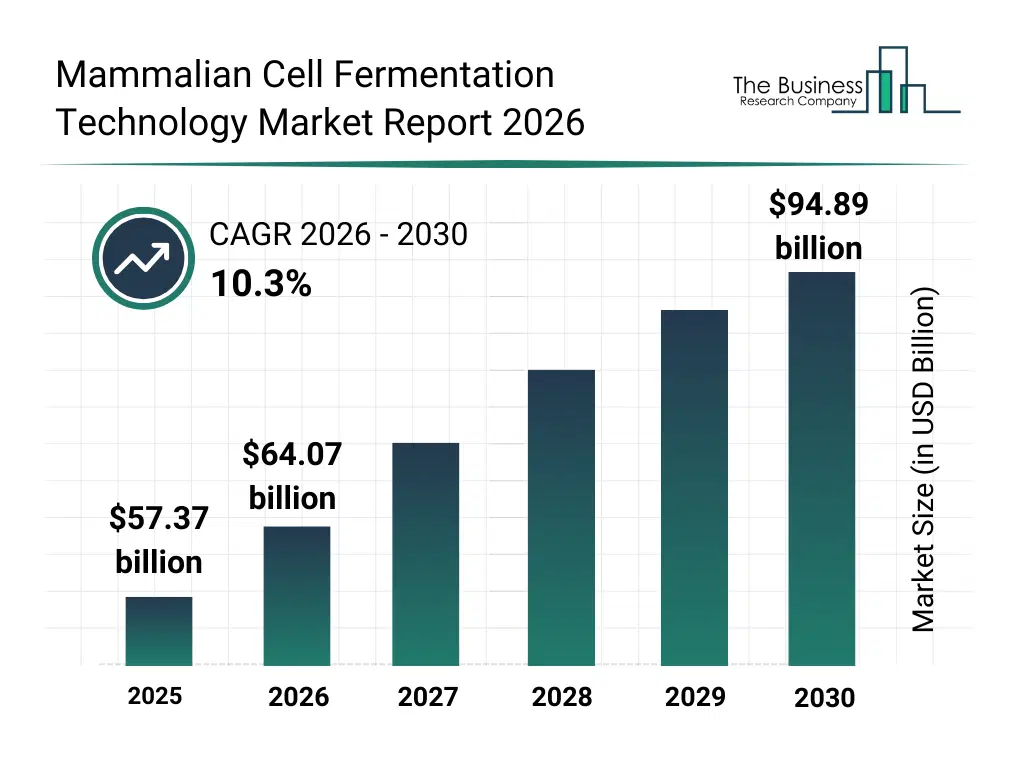
What Is The Mammalian Cell Fermentation Technology Market Size and Share 2026?
The mammalian cell fermentation technology market size has grown rapidly in recent years. It will grow from $57.37 billion in 2025 to $64.07 billion in 2026 at a compound annual growth rate (CAGR) of 11.7%. The growth in the historic period can be attributed to growth of monoclonal antibody therapeutics, early success of mammalian cell expression systems, increasing biopharmaceutical approvals, reliance on batch-based fermentation processes, expansion of academic research in cell culture technologies.What Is The Mammalian Cell Fermentation Technology Market Growth Forecast?
The mammalian cell fermentation technology market size is expected to see rapid growth in the next few years. It will grow to $94.89 billion in 2030 at a compound annual growth rate (CAGR) of 10.3%. The growth in the forecast period can be attributed to rising demand for biologics and biosimilars, increasing investment in cell line engineering, growth of personalized medicine, expanding vaccine development pipelines, increasing biomanufacturing capacity in emerging markets. Major trends in the forecast period include increasing adoption of cho cell-based production platforms, rising demand for high-yield and scalable bioprocessing, growing outsourcing to cdmos for biologic manufacturing, expansion of single-use and modular bioreactor systems, higher focus on process optimization and yield consistency.
Global Mammalian Cell Fermentation Technology Market Segmentation
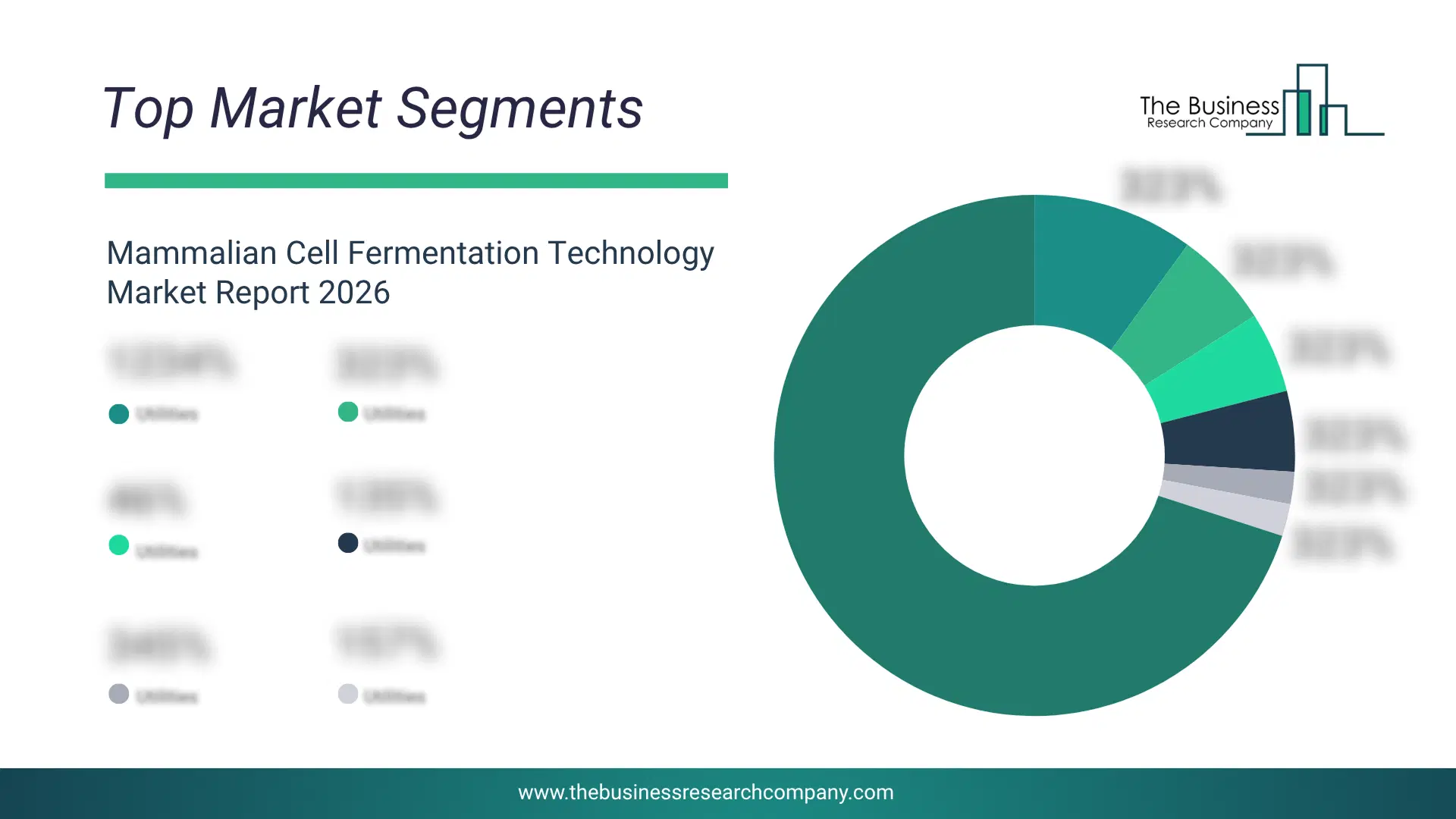
1) By Type: Chinese Hamster Ovary Cell Fermentation, Human Embryonic Kidney Cell Fermentation, Baby Hamster Kidney Cell Fermentation, Murine Myeloma Cell Fermentation, Other Types 2) By Application: Monoclonal Antibodies, Recombinant Proteins, Vaccines, Hormones, Enzymes, Other Applications 3) By End-Use: Biopharmaceutical Companies, Contract Research Organizations And Contract Development and Manufacturing Organizations, Academic And Research Institutes Subsegments: 1) By Chinese Hamster Ovary (CHO) Cell Fermentation: Suspension CHO Cell Lines, Serum-Free CHO Fermentation, High-Yield Recombinant Protein Production 2) By Human Embryonic Kidney (HEK) Cell Fermentation: Transient Transfection-Based Fermentation, Viral Vector Production Systems, Serum-Free HEK Cell Cultures 3) By Baby Hamster Kidney (BHK) Cell Fermentation: Vaccine Antigen Production, Stable Cell Line Fermentation, Suspension BHK Cell Cultures 4) By Murine Myeloma Cell Fermentation: Monoclonal Antibody Production, Hybridoma-Based Fermentation, Serum-Free Antibody Expression Systems 5) By Other Types: Insect Cell Line Fermentation, Stem Cell–Derived Mammalian Cells, Custom Engineered Cell Line FermentationWhat Is The Driver Of The Mammalian Cell Fermentation Technology Market?
The growing demand for biologics is expected to propel the growth of the mammalian cell fermentation technology market going forward. Biologics are medical products derived from living organisms or their components, often used to treat diseases such as cancer, autoimmune disorders, and infectious diseases. The increasing demand for biologics is fueled by advancements in biotechnology and their effectiveness in treating prevalent chronic diseases such as cancer and autoimmune disorders, regulatory approvals, and growing investment in research and development. Mammalian cell fermentation technology efficiently produces complex biologics, meeting the growing demand for personalized and targeted therapeutics. Its scalability, versatility, and ability to produce high-quality proteins drive innovation in the biopharmaceutical industry. For instance, in February 2024, according to the National Library of Medicine, a US-based medical library, in 2023, the Food and Drug Administration (FDA) approved 55 new drugs, including 29 new chemical entities (NCEs) and 25 new biological entities (NBEs), marking a 50% increase compared to the 37 approvals in 2022. Therefore, the growing demand for biologics is driving the growth of the bacterial cell fermentation technology market.Key Players In The Global Mammalian Cell Fermentation Technology Market
Major companies operating in the mammalian cell fermentation technology market are AbbVie Inc., Thermo Fisher Scientific Inc, AstraZeneca PLC, Roche Holdings Inc., Merck KGaA, AGC Group, Lonza Group Ltd., Boehringer Ingelheim GmbH, Catalent Inc., Sartorius AG, Samsung Biologics Co. Ltd., WuXi Biologics, Biocon Limited, Eppendorf AG, KBI Biopharma Inc., Fujifilm Diosynth Biotechnologies, Avid Bioservices Inc., BiOZEEN, Nordmark Pharma GmbH, Scorpius BioManufacturing Inc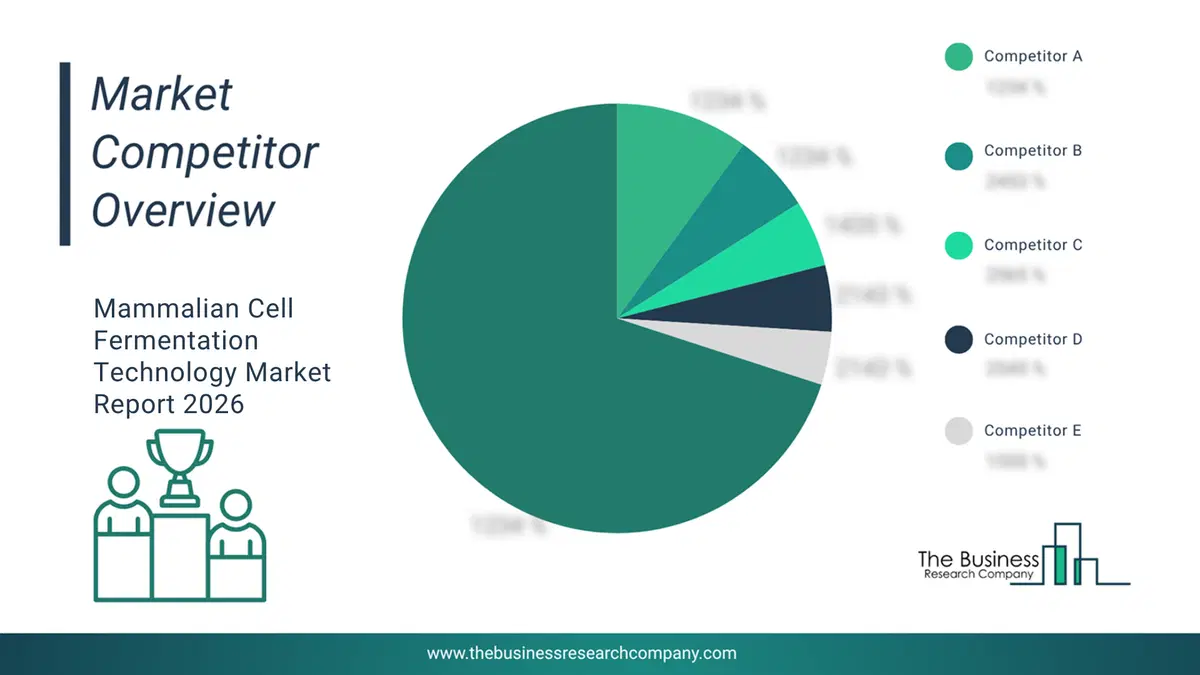
This chart is for illustrative purposes; the full report includes a detailed competitor analysis and comprehensive overview of the top 10 companies in the market.
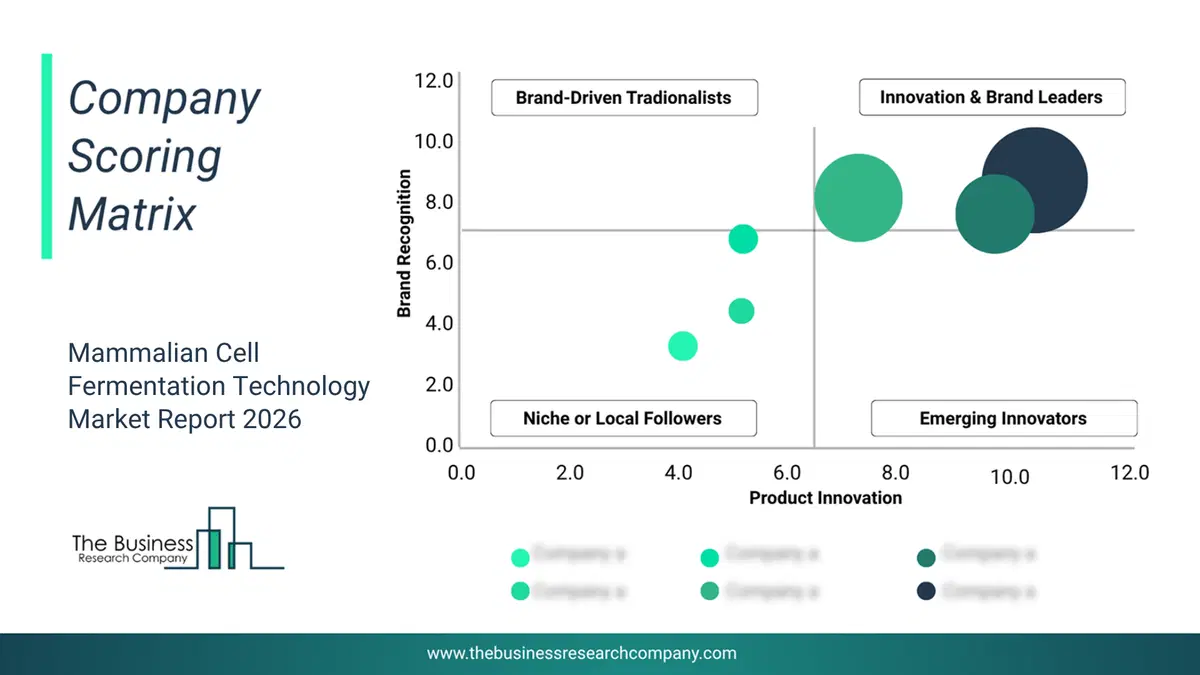
This chart maps companies by product innovation and brand strength, with bubble size indicating relative revenue, helping identify market leaders, challengers, and niche players. This is an illustrative chart; the full report provides a complete and accurate competitive analysis.
Global Mammalian Cell Fermentation Technology Market Trends and Insights
Major companies operating in the mammalian cell fermentation technology market are focusing on developing innovative technologies, such as mammalian cell culture, to strengthen their position in the market. A mammalian cell culture is a crucial tool in various fields, including biomanufacturing, research, and regenerative medicine, as it enables the production of therapeutic proteins, vaccines, and functional cells or tissue analogs. For instance, in June 2024, Syntegon, a Germany-based biotechnology company, launched its new Modular Bioprocessing Platform (MBP) at Achema 2024, designed to tackle the key challenges in biopharmaceutical production. This innovative platform offers a highly flexible, fully integrated, and automated solution suitable for a variety of applications, including microbial and mammalian cell cultures, proteins, peptides, oligonucleotides, plasmid DNA, and recombinant vaccines. The MBP's modular design allows for shorter lead times and reduced costs while maintaining high functionality and quality, adhering to the ""made in Germany"" standard. Its prefabricated cleanroom design places all peripheral technology outside the cleanroom, enhancing efficiency and simplifying maintenance.What Are Latest Mergers And Acquisitions In The Mammalian Cell Fermentation Technology Market?
In February 2024, Chrysea Limited, an Ireland-based biotechnology company, acquired Rodon Biologics from Iberfar Group for an undisclosed amount. With this acquisition, Chrysea aims to strengthen its synthetic biology and biopharmaceutical development capabilities by integrating Rodon Biologics' expertise in protein engineering, cell-line development, precision fermentation, downstream processing, formulation, analytics, and production. Rodon Biologics is a Portugal-based manufacturer of biological products and operates in mammalian cell fertilization technology.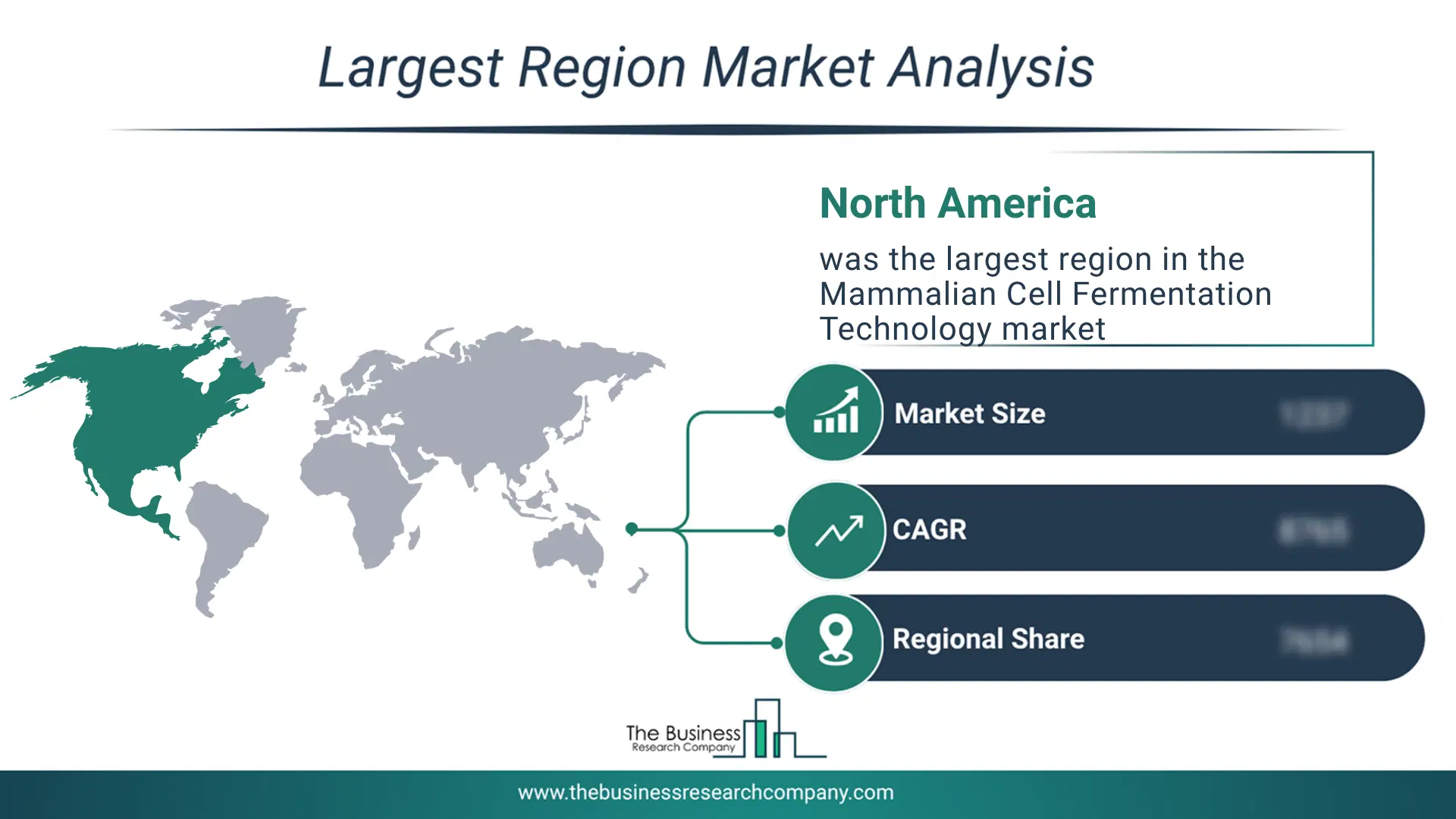
Regional Outlook
North America was the largest region in the mammalian cell fermentation technology market in 2025. Asia-Pacific is expected to be the fastest-growing region in the forecast period. The regions covered in this market report are Asia-Pacific, South East Asia, Western Europe, Eastern Europe, North America, South America, Middle East, Africa. The countries covered in this market report are Australia, Brazil, China, France, Germany, India, Indonesia, Japan, Taiwan, Russia, South Korea, UK, USA, Canada, Italy, Spain.What Defines the Mammalian Cell Fermentation Technology Market?
The mammalian cell fermentation technology market consists revenues earned by entities by providing services such as cell line development, process development, cell culture and fermentation, analytical and quality control services, and formulation and fill-finish services. The market value includes the value of related goods sold by the service provider or included within the service offering. The mammalian cell fermentation technology market also includes of sales of biosimilars, cell and gene therapy products, diagnostic enzymes and proteins, and therapeutic proteins. Values in this market are ‘factory gate’ values, that is the value of goods sold by the manufacturers or creators of the goods, whether to other entities (including downstream manufacturers, wholesalers, distributors and retailers) or directly to end customers. The value of goods in this market includes related services sold by the creators of the goods.How is Market Value Defined and Measured?
The market value is defined as the revenues that enterprises gain from the sale of goods and/or services within the specified market and geography through sales, grants, or donations in terms of the currency (in USD unless otherwise specified). The revenues for a specified geography are consumption values that are revenues generated by organizations in the specified geography within the market, irrespective of where they are produced. It does not include revenues from resales along the supply chain, either further along the supply chain or as part of other products.
This chart presents market attractiveness based on a quantitative evaluation of growth, competition, strategic alignment, and risk, offering a clear view of opportunity areas for decision-making. This chart is for illustrative purposes; the full report contains the complete analysis.

This chart highlights the Total Addressable Market (TAM) by estimating the maximum revenue opportunity using an assumption-driven approach, supporting strategic planning and opportunity sizing across markets. The chart is illustrative; the full report provides a more comprehensive analysis.
What Key Data and Analysis Are Included in the Mammalian Cell Fermentation Technology Market Report 2026?
The mammalian cell fermentation technology market research report is one of a series of new reports from The Business Research Company that provides market statistics, including industry global market size, regional shares, competitors with the market share, detailed market segments, market trends and opportunities, and any further data you may need to thrive in the mammalian cell fermentation technology industry. The market research report delivers a complete perspective of everything you need, with an in-depth analysis of the current and future state of the industry.Mammalian Cell Fermentation Technology Market Report Forecast Analysis
| Report Attribute | Details |
|---|---|
| Market Size Value In 2026 | $64.07 billion |
| Revenue Forecast In 2030 | $94.89 billion |
| Growth Rate | CAGR of 10.3% from 2026 to 2030 |
| Base Year For Estimation | 2025 |
| Actual Estimates/Historical Data | 2020-2025 |
| Forecast Period | 2026 - 2030 |
| Market Representation | Revenue in USD Billion and CAGR from 2026 to 2030 |
| Segments Covered | Type, Application, End-Use |
| Regional Scope | Asia-Pacific, Western Europe, Eastern Europe, North America, South America, Middle East, Africa |
| Country Scope | The countries covered in the report are Australia, Brazil, China, France, Germany, India, Indonesia, Japan, Taiwan, Russia, South Korea, UK, USA, Canada, Italy, Spain |
| Key Companies Profiled | AbbVie Inc., Thermo Fisher Scientific Inc, AstraZeneca PLC, Roche Holdings Inc., Merck KGaA, AGC Group, Lonza Group Ltd., Boehringer Ingelheim GmbH, Catalent Inc., Sartorius AG, Samsung Biologics Co. Ltd., WuXi Biologics, Biocon Limited, Eppendorf AG, KBI Biopharma Inc., Fujifilm Diosynth Biotechnologies, Avid Bioservices Inc., BiOZEEN, Nordmark Pharma GmbH, Scorpius BioManufacturing Inc |
| Customization Scope | Request for Customization |
| Pricing And Purchase Options | Explore Purchase Options |