
Maritime Freight Transport Market Report 2026
Global Outlook – By Maritime Transport Type (Bulk Carriers; Container Ships; General Cargo Ships; Reefer Vessels; Heavy Lift Cargo Vessels; Roll On - Roll Off (Ro-Ro) Vessels), By Application (Short-Distance; Long-Distance), By Industry Type (Food And Beverages; Manufacturing; Oil And Ores; Electrical And Electronics; Other Industries) – Market Size, Trends, Strategies, and Forecast to 2030
Maritime Freight Transport Market Overview
• Maritime Freight Transport market size has reached to $395.17 billion in 2025 • Expected to grow to $524.39 billion in 2030 at a compound annual growth rate (CAGR) of 5.8% • Growth Driver: Rising Seafood Exports Drive Growth in the Maritime Freight Transport Market • Market Trend: Advancements In Maritime Technology Enhance Safety And Efficiency With Fully Automated Navigational Assistants • North America was the largest region in 2025 and Asia-Pacific is the fastest growing region.Market Gains By 2030 – Top Opportunities By Segment
Market Gain identifies the most promising market opportunities by highlighting the segments or products expected to generate the highest incremental revenue growth over the next five years.
What Is Covered Under Maritime Freight Transport Market?
Maritime freight transport refers to the movement of goods and cargo by sea using ships and other vessels. It is a critical component of global trade and logistics, enabling the efficient and cost-effective transportation of large volumes of goods across international waters. Maritime freight transport connects countries and regions, facilitating international trade by allowing goods to be shipped between distant markets. The main types of the maritime transport in the maritime freight transport market are bulk carriers, container ships, general cargo ships, reefer vessels, heavy lift cargo vessels, and roll on - roll off (Ro-Ro) vessels. Bulk carriers are ships specifically designed to transport large volumes of unpackaged bulk cargo such as grains, coal, ore, and cement. The various applications include short-distance and long-distance, and several types of industries includes food and beverages, manufacturing, oil and ores, electrical and electronics, and others.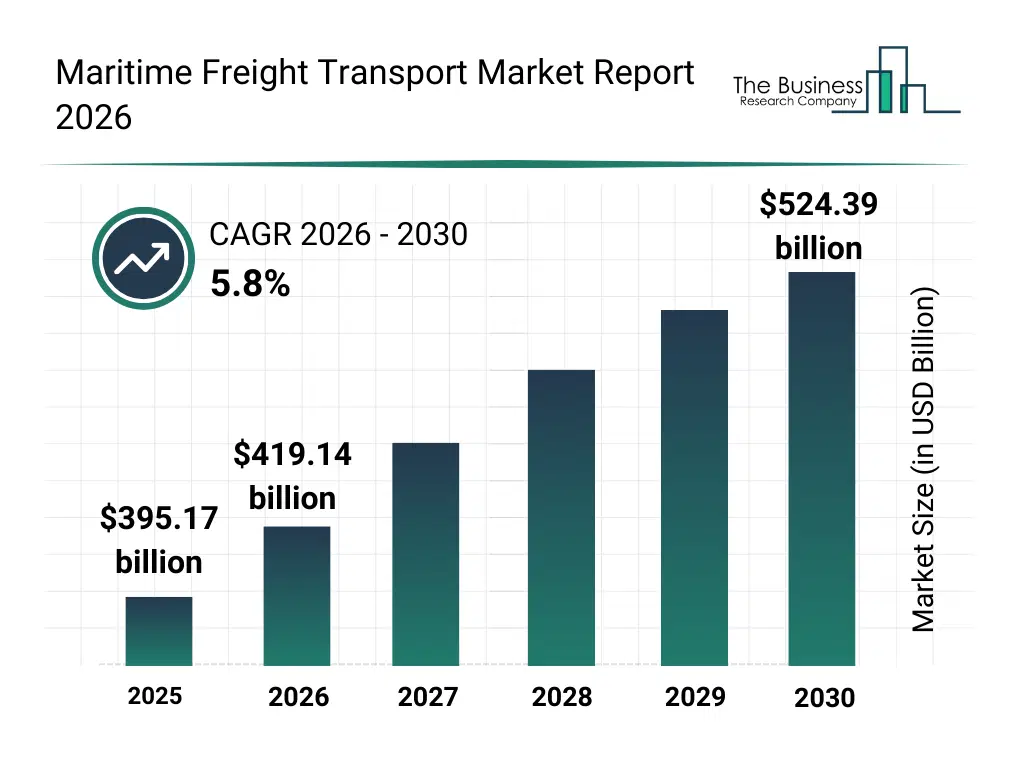
What Is The Maritime Freight Transport Market Size and Share 2026?
The maritime freight transport market size has grown strongly in recent years. It will grow from $395.17 billion in 2025 to $419.14 billion in 2026 at a compound annual growth rate (CAGR) of 6.1%. The growth in the historic period can be attributed to expansion of global trade volumes, growth of containerization in shipping, development of major port infrastructure, rising demand for cost-effective bulk transport, increasing role of maritime logistics.What Is The Maritime Freight Transport Market Growth Forecast?
The maritime freight transport market size is expected to see strong growth in the next few years. It will grow to $524.39 billion in 2030 at a compound annual growth rate (CAGR) of 5.8%. The growth in the forecast period can be attributed to increasing investments in green shipping technologies, rising focus on digital maritime operations, expansion of emerging market trade corridors, growing adoption of alternative marine fuels, increasing demand for resilient global supply chains. Major trends in the forecast period include increasing deployment of fuel-efficient cargo vessels, rising adoption of smart port and fleet management systems, growing demand for containerized freight transport, expansion of long-distance maritime trade routes, enhanced focus on emission reduction compliance.
Global Maritime Freight Transport Market Segmentation
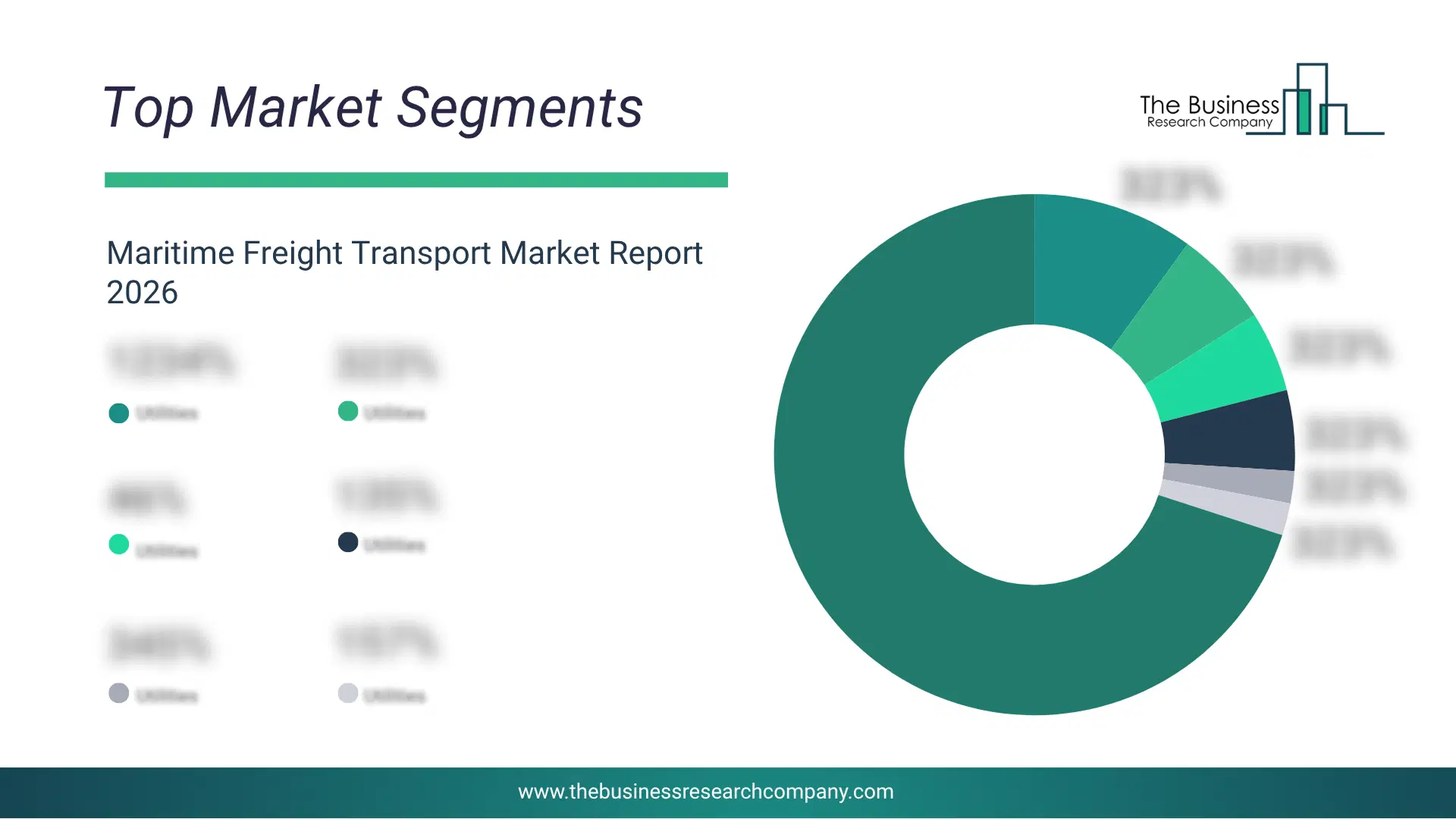
1) By Maritime Transport Type: Bulk Carriers, Container Ships, General Cargo Ships, Reefer Vessels, Heavy Lift Cargo Vessels, Roll On - Roll Off (Ro-Ro) Vessels 2) By Application: Short-Distance, Long-Distance 3) By Industry Type: Food And Beverages, Manufacturing, Oil And Ores, Electrical And Electronics, Other Industries Subsegments: 1) By Bulk Carriers: Dry Bulk Carriers, Liquid Bulk Carriers, Self-Unloading Bulk Carriers, Specialized Bulk Carriers 2) By Container Ships: Feeder Container Ships, Panamax Container Ships, Post-Panamax Container Ships, Ultra Large Container Vessels (ULCVs) 3) By General Cargo Ships: Breakbulk Cargo Ships, Multi-Purpose Cargo Vessels, Conventional General Cargo Ships 4) By Reefer Vessels: Dedicated Reefer Ships, Reefer Container Ships, Refrigerated Cargo Carriers 5) By Heavy Lift Cargo Vessels: Heavy Lift Ships, Semi-Submersible Heavy Lift Vessels, Deck Cargo Barges 6) By Roll On - Roll Off (Ro-Ro) Vessels: Pure Ro-Ro Vessels, Combination Carriers, Ro-Pax Ferries The top segments in the maritime freight transport market will be: • Container Ships will reach $229.46 Billion by 2030. • Bulk Carriers will reach $161.35 Billion by 2030. • General Cargo Ships will reach $46.37 Billion by 2030. • Roll On - Roll Off (Ro-Ro) Vessels will reach $36.08 Billion by 2030. • Reefer Vessels will reach $30.56 Billion by 2030.What Is The Driver Of The Maritime Freight Transport Market?
The expanding seafood export industry is expected to propel the growth of the maritime freight transport market going forward. Seafood export refers to the process of sending seafood products such as fish, shellfish, and other marine life from one country to another for sale in international markets. Seafood export is on the rise due to increasing global demand for seafood, advancements in aquaculture and fishing technologies, and improved cold chain logistics. Maritime freight transport facilitates seafood export by providing a reliable and efficient means of shipping large quantities of perishable seafood products to international markets, ensuring timely delivery, and maintaining product quality through refrigerated shipping containers. For instance, in 2023, according to the United States Department of Agriculture, a US-based federal agency, U.S. seafood exports reached a total value of $5.18 billion with a volume of 1.28 million metric tons, marking a 40% increase compared to previous years and indicating a strong recovery and rising demand. Therefore, the expanding seafood export industry is driving the growth of the maritime freight transport industry.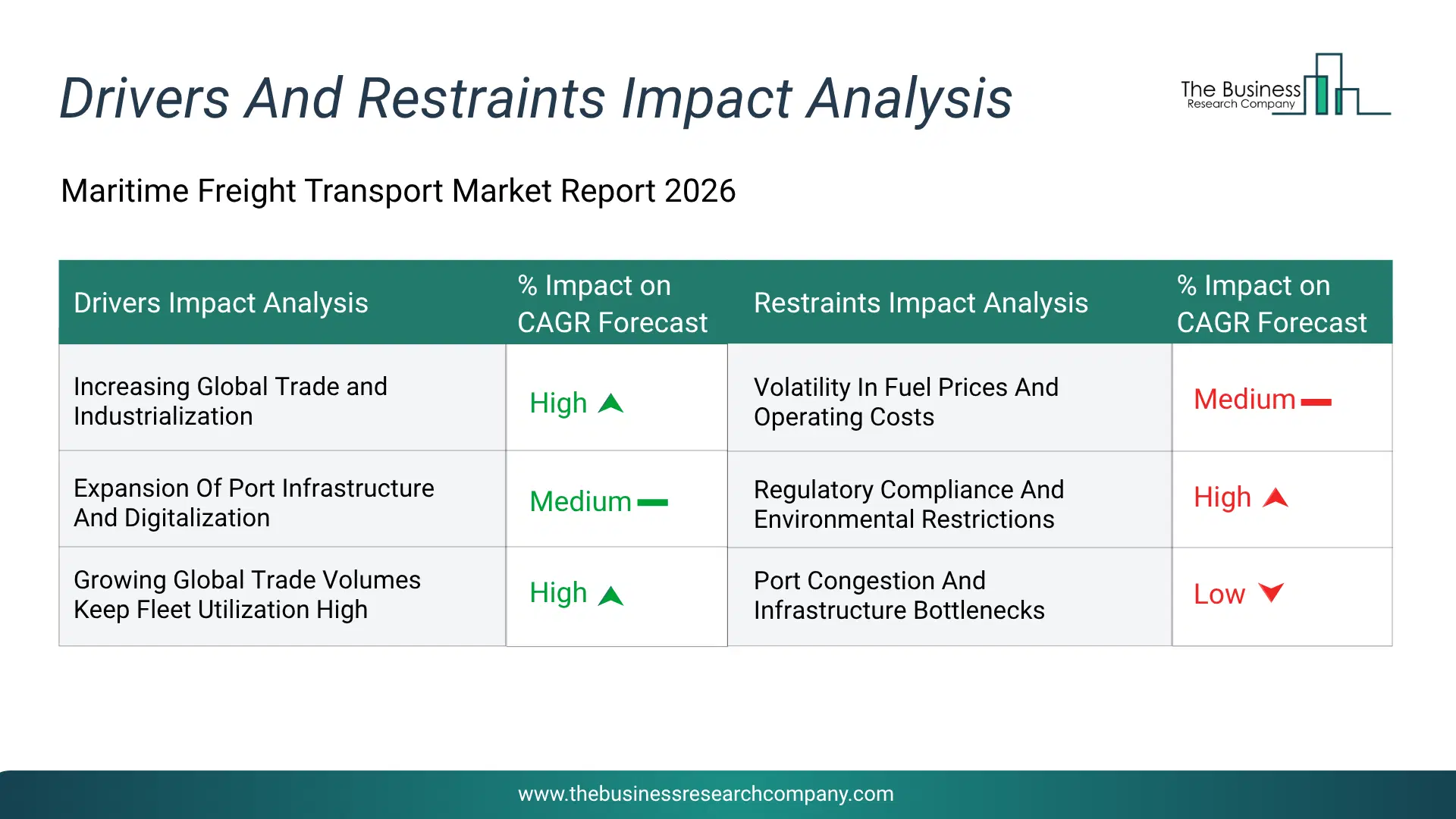
Infographic Chart Showing Key Market Drivers Analysis And Restraints For Maritime Freight Transport Market
The chart presents an impact analysis of key drivers and restraints, quantifying their relative influence on the market's growth rate and helping assess the balance between growth enablers and limiting factors. This chart offers a high-level perspective; the full report contains more detailed insights.
How Will The Drivers Impact Growth In The Global Maritime Freight Transport Market?
• Increasing Global Trade and Industrialization (High) – During the forecast period, the increasing global trade and industrialization is expected to become a key growth driver for the maritime freight transport market by 2030. Increasing global trade and industrialization is a major driver of the Maritime Freight Transport market because expanding international commerce creates a continuous need for the movement of raw materials, intermediate goods, and finished products across regions. As industrial activities grow in both developed and emerging economies, manufacturers increasingly depend on global supply chains that require reliable maritime logistics. Shipping remains the most cost-effective method for transporting large cargo volumes over long distances, making it essential for global trade. Rising exports and imports of industrial products, energy resources, and consumer goods directly increase vessel deployment and cargo throughput. The growth of manufacturing hubs further strengthens demand for maritime freight services. Expanding cross-border trade agreements also contribute to higher shipping activity. • Expansion Of Port Infrastructure And Digitalization (Medium) – During the forecast period, the expansion of port infrastructure and digitalization is expected to emerge as a major factor driving the expansion of the maritime freight transport market by 2030. Expansion of port infrastructure and digitalization significantly drives the Maritime Freight Transport market by improving the efficiency, capacity, and reliability of cargo handling operations. Investments in modern ports, deep-water terminals, automated cranes, and advanced logistics facilities enable faster vessel turnaround and higher cargo throughput. Digital technologies such as real-time tracking, predictive analytics, and smart port management systems enhance operational visibility and reduce delays. Improved infrastructure supports the accommodation of larger vessels and increasing cargo volumes. Digitalization also streamlines documentation, customs procedures, and supply chain coordination. These advancements lower operational costs and improve service quality for shipping companies. • Growing Global Trade Volumes Keep Fleet Utilization High (High) – During the forecast period, the growing global trade volumes keep fleet utilization high is expected to act as a key growth catalyst for the maritime freight transport market by 2030. Growing Global Trade Volumes Keep Fleet Utilization High acts as a strong driver for the Maritime Freight Transport market because rising cargo demand ensures continuous deployment of shipping fleets across international routes. Higher trade volumes increase vessel occupancy rates, improving operational efficiency and profitability for carriers. Strong fleet utilization encourages shipping companies to invest in additional vessels, fleet modernization, and route expansion. Consistent cargo movement also supports stable freight demand across container, bulk, and tanker segments. As global consumption and production continue to rise, shipping networks experience greater traffic and cargo flows. Efficient fleet usage helps optimize transportation costs while supporting supply chain reliability.How Will The Restraints Impact Growth In The Global Maritime Freight Transport Market?
• Volatility In Fuel Prices And Operating Costs (High) – During the forecast period, the volatility in fuel prices and operating costs acts as a significant restraint on the Maritime Freight Transport market because fuel represents one of the largest operating expenses for shipping companies. Sudden increases in bunker fuel prices can substantially raise transportation costs and reduce profit margins. Unpredictable fuel expenses make it difficult for carriers to plan budgets, set competitive freight rates, and manage long-term contracts. Rising operating costs related to maintenance, crew wages, insurance, and vessel repairs further add financial pressure. Smaller operators are particularly vulnerable to these fluctuations, which can affect service reliability and fleet expansion plans. Cost uncertainty may also discourage investments in new vessels and advanced technologies. As a result, fluctuating fuel and operational expenses can limit market growth and profitability. • Regulatory Compliance And Environmental Restrictions (Medium) – During the forecast period, the regulatory compliance and environmental restrictions restrain the Maritime Freight Transport market by increasing operational complexity and compliance-related expenditures for shipping companies. Governments and international regulatory bodies have introduced stricter standards on emissions, fuel quality, ballast water management, and waste disposal to reduce environmental impact. Meeting these requirements often requires costly vessel upgrades, adoption of cleaner fuels, and installation of advanced emission-control technologies. Compliance processes can increase maintenance costs and operational downtime. Shipping companies that fail to meet regulations may face penalties, restrictions, or reputational risks. Frequent regulatory updates also create uncertainty for long-term investment planning. Consequently, growing environmental and regulatory obligations can slow market expansion and increase overall operating costs. • Port Congestion And Infrastructure Bottlenecks (High) – During the forecast period, the port congestion and infrastructure bottlenecks restrain the growth of the maritime freight transport market by causing delays in cargo handling, vessel turnaround, and supply chain operations. Increasing trade volumes often exceed the handling capacity of ports, resulting in longer waiting times and reduced operational efficiency. Inadequate port infrastructure, limited storage facilities, and insufficient intermodal connectivity further contribute to shipment delays. These disruptions increase fuel consumption, labor expenses, and inventory carrying costs for shipping companies and cargo owners. Delayed deliveries can also affect customer satisfaction and disrupt global manufacturing and distribution schedules. Shipping operators may experience reduced fleet utilization and lower profitability due to prolonged port stays. Consequently, port congestion and infrastructure limitations hinder the efficient growth of the maritime freight transport market.Key Players In The Global Maritime Freight Transport Market
Major companies operating in the maritime freight transport market are Maersk Line A/S, CMA CGM Group, COSCO SHIPPING Lines Co. Ltd., Mediterranean Shipping Company S.A., Hapag-Lloyd AG, NYK Line (Nippon Yusen Kabushiki Kaisha), Yang Ming Marine Transport Corporation, ZIM Integrated Shipping Services Ltd., Mitsui O.S.K. Lines Ltd., Seaboard Marine Ltd., Wan Hai Lines Ltd., Evergreen Marine Corporation, HMM Company Limited, Kawasaki Kisen Kaisha Ltd., Ocean Network Express Holdings Ltd., American President Lines LLC, Matson Inc., Crowley Maritime Corporation, National Shipping Company of Saudi Arabia (Bahri), Samskip Holding B.V., Islamic Republic of Iran Shipping Line Group, Pacific International Lines, X-Press Feeders Limited, Eimskip, Ark Shipping Inc.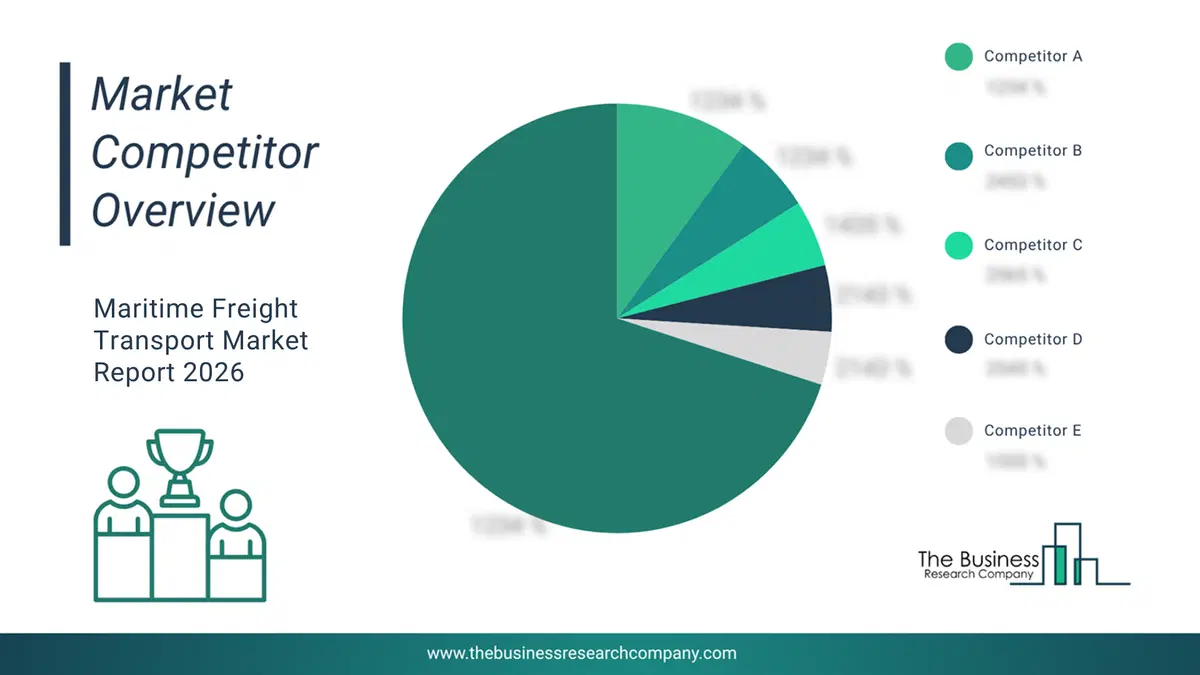
This chart is for illustrative purposes; the full report includes a detailed competitor analysis and comprehensive overview of the top 10 companies in the market.
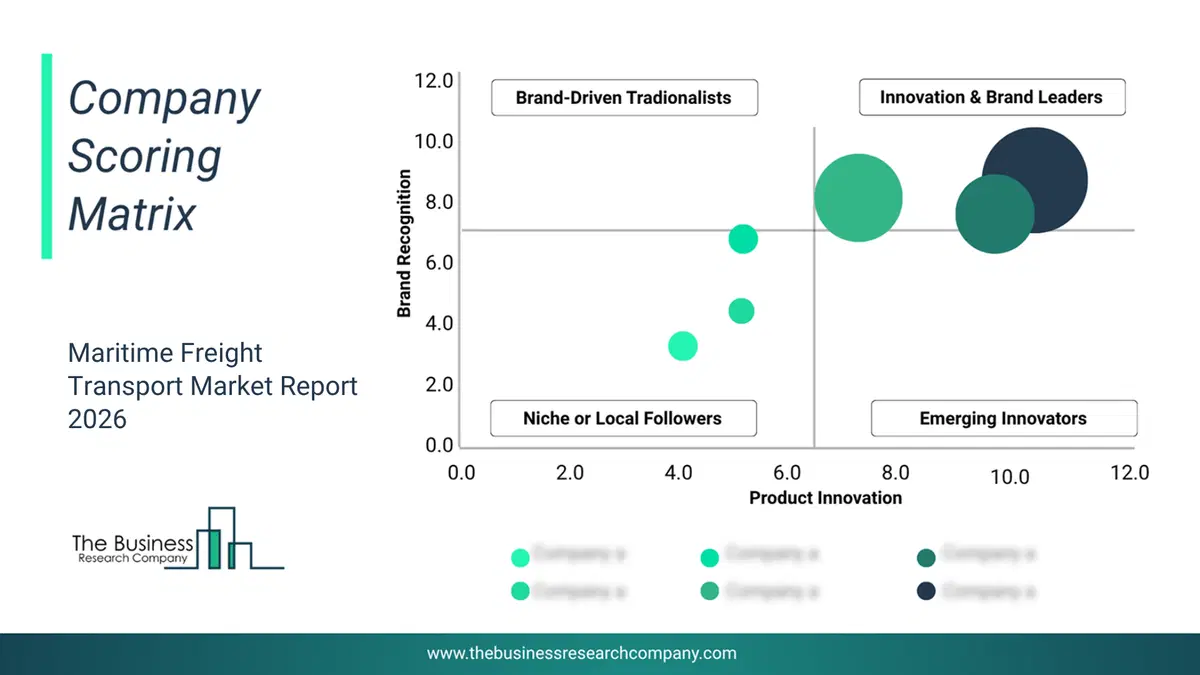
This chart maps companies by product innovation and brand strength, with bubble size indicating relative revenue, helping identify market leaders, challengers, and niche players. This is an illustrative chart; the full report provides a complete and accurate competitive analysis.
Global Maritime Freight Transport Market Trends and Insights
Major companies operating in the maritime freight transport market are developing fully automated navigational assistants to enhance operational efficiency, improve safety, and reduce human error in maritime operations. Fully automated navigational assistants enhance route planning, optimize fuel consumption, and improve overall vessel safety using advanced algorithms and real-time data analysis. For instance, in January 2024, Orca AI, an Israel-based maritime technology company, launched SeaPod. It is a fully automated navigational assistant designed to enhance and mimic human watchkeeping. It operates around the clock, processing multiple sources of information in seconds to assess complex marine traffic situations in real time. This system identifies, tracks, and classifies targets of any size or distance and delivers critical data to a user-friendly interface. Automating all-target detection and risk prioritization dramatically decreases bridge officers' workload and weariness, boosting situational awareness and allowing crews to make more educated decisions faster.What Are Latest Mergers And Acquisitions In The Maritime Freight Transport Market?
In January 2025, ADNOC Logistics and Services plc, a UAE-based maritime logistics and shipping company, acquired Navig8 Group for approximately $1.04 billion. With this acquisition, ADNOC Logistics & Services aims to expand its global maritime freight transport footprint, strengthen its integrated energy logistics capabilities, and enhance scale and efficiency across tanker operations and commercial shipping management. Navig8 Group is a UK-based shipping company that specializes in owning, operating, chartering, and commercially managing tanker vessels across crude oil, refined products, chemical, and gas segments, providing end-to-end maritime freight transport and pool management services worldwide.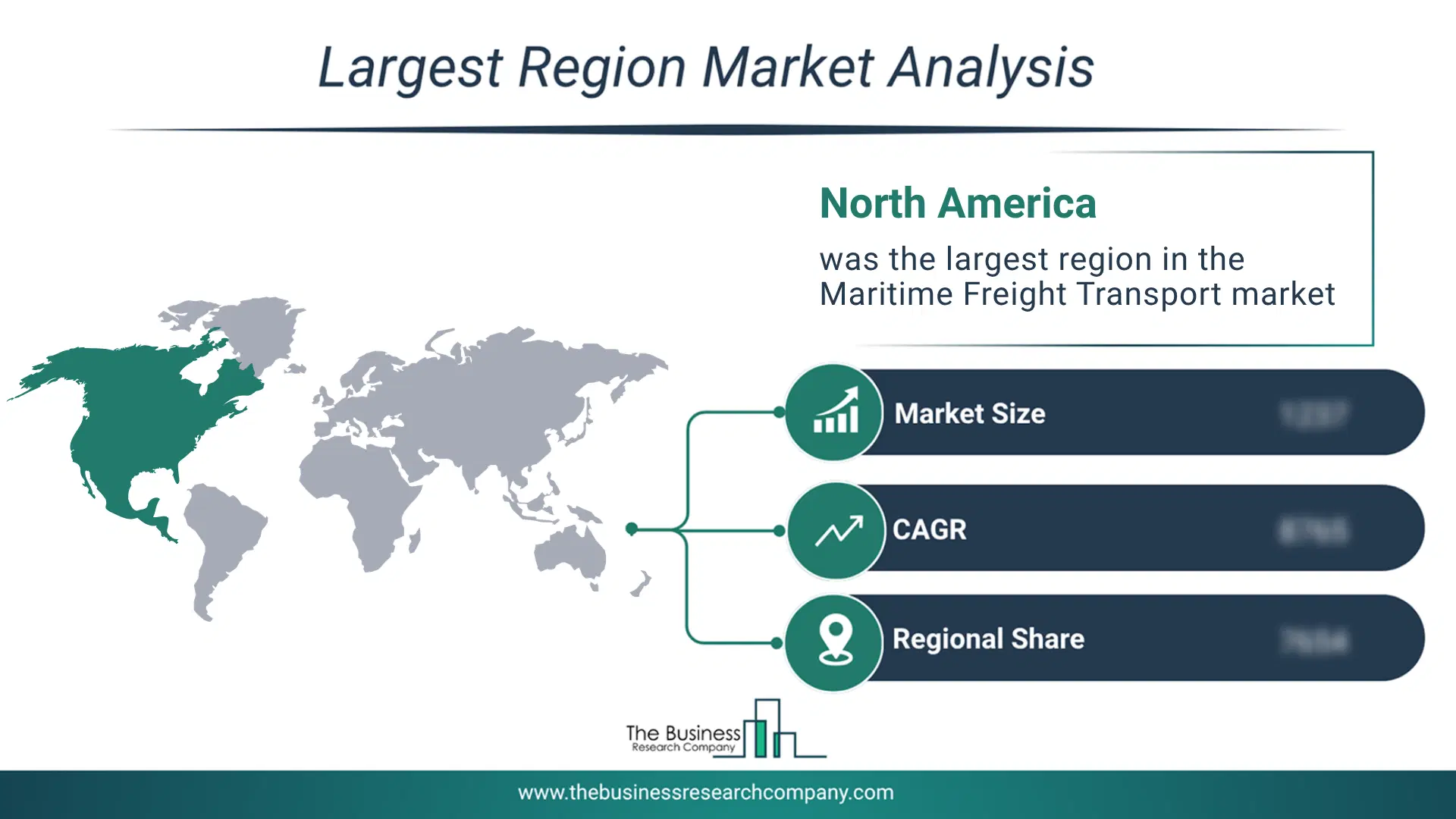
Regional Outlook
North America was the largest region in the maritime freight transport market in 2025. Asia-Pacific is expected to be the fastest-growing region in the forecast period. The regions covered in this market report are Asia-Pacific, South East Asia, Western Europe, Eastern Europe, North America, South America, Middle East, Africa. The countries covered in this market report are Australia; Brazil; China; France; Germany; India; Indonesia; Japan; Taiwan; Russia; South Korea; UK; USA; Canada; Italy; Spain.What Defines the Maritime Freight Transport Market?
The maritime freight transport market includes revenues earned by entities by providing services such as cargo handling, ship chartering, freight forwarding, shipping logistics, customs clearance, and cargo management. The market value includes the value of related goods sold by the service provider or included within the service offering. Only goods and services traded between entities or sold to end consumers are included.How is Market Value Defined and Measured?
The market value is defined as the revenues that enterprises gain from the sale of goods and/or services within the specified market and geography through sales, grants, or donations in terms of the currency (in USD unless otherwise specified). The revenues for a specified geography are consumption values that are revenues generated by organizations in the specified geography within the market, irrespective of where they are produced. It does not include revenues from resales along the supply chain, either further along the supply chain or as part of other products.
This chart presents market attractiveness based on a quantitative evaluation of growth, competition, strategic alignment, and risk, offering a clear view of opportunity areas for decision-making. This chart is for illustrative purposes; the full report contains the complete analysis.

This chart highlights the Total Addressable Market (TAM) by estimating the maximum revenue opportunity using an assumption-driven approach, supporting strategic planning and opportunity sizing across markets. The chart is illustrative; the full report provides a more comprehensive analysis.
What Key Data and Analysis Are Included in the Maritime Freight Transport Market Report 2026?
The maritime freight transport market research report is one of a series of new reports from The Business Research Company that provides market statistics, including Market Report 2026?global market size, regional shares, competitors with the market share, detailed market segments, market trends and opportunities, and any further data you may need to thrive in the maritime freight transport Market Report 2026? The market research report delivers a complete perspective of everything you need, with an in-depth analysis of the current and future state of the Market Report 2026?Maritime Freight Transport Market Report Forecast Analysis
| Report Attribute | Details |
|---|---|
| Market Size Value In 2026 | $419.14 billion |
| Revenue Forecast In 2030 | $524.39 billion |
| Growth Rate | CAGR of 6.1% from 2026 to 2030 |
| Base Year For Estimation | 2025 |
| Actual Estimates/Historical Data | 2020-2025 |
| Forecast Period | 2026 - 2030 |
| Market Representation | Revenue in USD Billion and CAGR from 2026 to 2030 |
| Segments Covered | Maritime Transport Type, Application, Industry Type |
| Regional Scope | Asia-Pacific, Western Europe, Eastern Europe, North America, South America, Middle East, Africa |
| Country Scope | The countries covered in the report are Australia, Brazil, China, France, Germany, India, ... |
| Key Companies Profiled | Maersk Line A/S, CMA CGM Group, COSCO SHIPPING Lines Co. Ltd., Mediterranean Shipping Company S.A., Hapag-Lloyd AG, NYK Line (Nippon Yusen Kabushiki Kaisha), Yang Ming Marine Transport Corporation, ZIM Integrated Shipping Services Ltd., Mitsui O.S.K. Lines Ltd., Seaboard Marine Ltd., Wan Hai Lines Ltd., Evergreen Marine Corporation, HMM Company Limited, Kawasaki Kisen Kaisha Ltd., Ocean Network Express Holdings Ltd., American President Lines LLC, Matson Inc., Crowley Maritime Corporation, National Shipping Company of Saudi Arabia (Bahri), Samskip Holding B.V., Islamic Republic of Iran Shipping Line Group, Pacific International Lines, X-Press Feeders Limited, Eimskip, Ark Shipping Inc. |
| Customization Scope | Request for Customization |
| Pricing And Purchase Options | Explore Purchase Options |