
Maritime Market Report 2026
Global Outlook – By Vessel Type (Cargo Ships, Tankers, Passenger Ships, Fishing Vessels, Offshore Support Vessels ), By Service Type (Shipping Services, Logistics Services, Port Services, Maintenance Services), By Technology (Conventional Propulsion, Hybrid Propulsion, Alternative Fuel Technology, Autonomous Shipping), By End-Use (Commercial, Defense, Research, Tourism) – Market Size, Trends, Strategies, and Forecast to 2030
Maritime Market Overview
• Maritime market size has reached to $2.16 billion in 2025 • Expected to grow to $2.61 billion in 2030 at a compound annual growth rate (CAGR) of 3.8% • Growth Driver: Rising Global Trade Driving The Market Growth Due To Increasing Demand For Efficient Sea Transportation • Market Trend: Advancements In Lifecycle-Based Cybersecurity Solutions Strengthening Maritime Risk Management • North America was the largest region in 2025 and Asia-Pacific is the fastest growing region.What Is Covered Under Maritime Market?
Maritime refers to anything related to the sea, especially navigation, shipping, and ocean-based activities. It encompasses trade, transportation, defense, and resource exploration carried out on or via the sea. The primary purpose of maritime activities is to enable the movement of goods and people across oceans, ensuring global connectivity and economic exchange. Additionally, it supports strategic security, environmental monitoring, and the sustainable use of marine resources. The main vessel types in maritime include cargo ships, tankers, passenger ships, fishing vessels, and offshore support vessels. Cargo ships are vessels specifically designed to transport goods and materials across bodies of water, facilitating international trade and commerce. It offers various services such as shipping services, logistics services, port services, and maintenance services and uses several technologies, including conventional propulsion, hybrid propulsion, alternative fuel technology, and autonomous shipping. It is used for various end-uses such as commercial, defense, research, and tourism.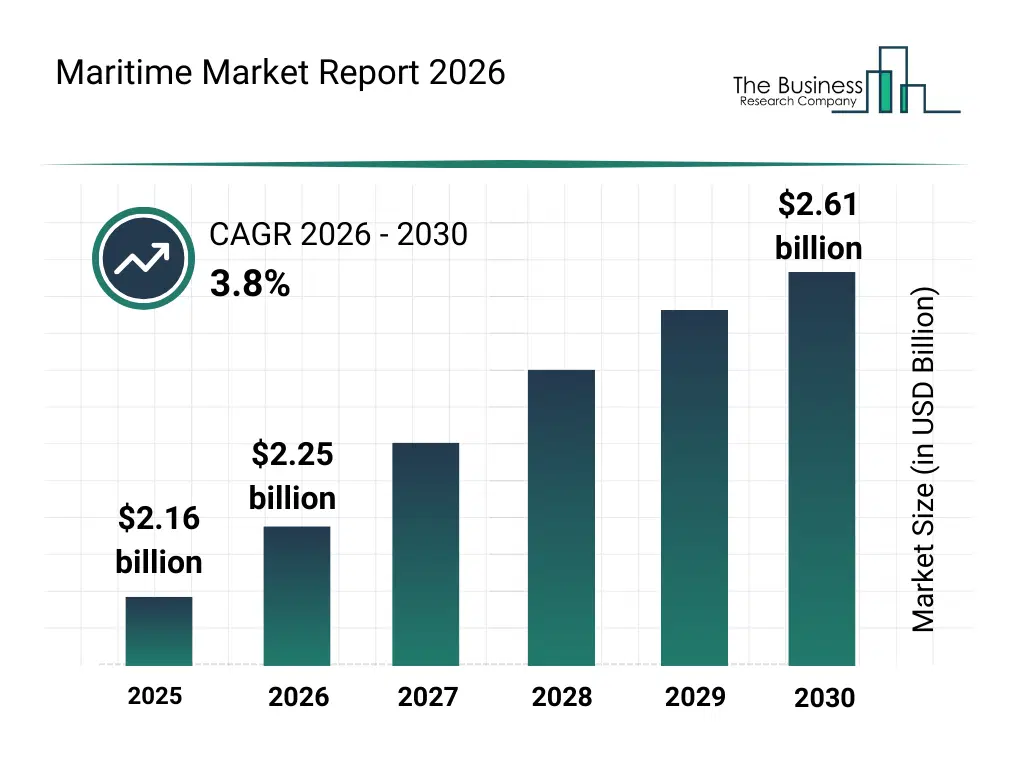
What Is The Maritime Market Size and Share 2026?
The maritime market size has grown steadily in recent years. It will grow from $2.16 billion in 2025 to $2.25 billion in 2026 at a compound annual growth rate (CAGR) of 4.1%. The growth in the historic period can be attributed to increasing global trade and shipping activities, advancements in navigation and marine communication technologies, rising demand for offshore support and logistics services, expansion of environmental monitoring and maritime safety initiatives, growing investment in port and terminal infrastructure.What Is The Maritime Market Growth Forecast?
The maritime market size is expected to see steady growth in the next few years. It will grow to $2.61 billion in 2030 at a compound annual growth rate (CAGR) of 3.8%. The growth in the forecast period can be attributed to development of smart and automated shipping solutions, rising adoption of energy-efficient and low-emission vessels, increasing use of ai and iot for real-time maritime operations and monitoring, expansion in emerging markets with growing maritime trade, integration of advanced safety, survival, and signal systems in vessels and ports. Major trends in the forecast period include rising demand for offshore support services, growth in global maritime trade volume, increasing modernization of port infrastructure, expansion of marine tourism and passenger transport, higher adoption of advanced safety and monitoring systems.
Global Maritime Market Segmentation
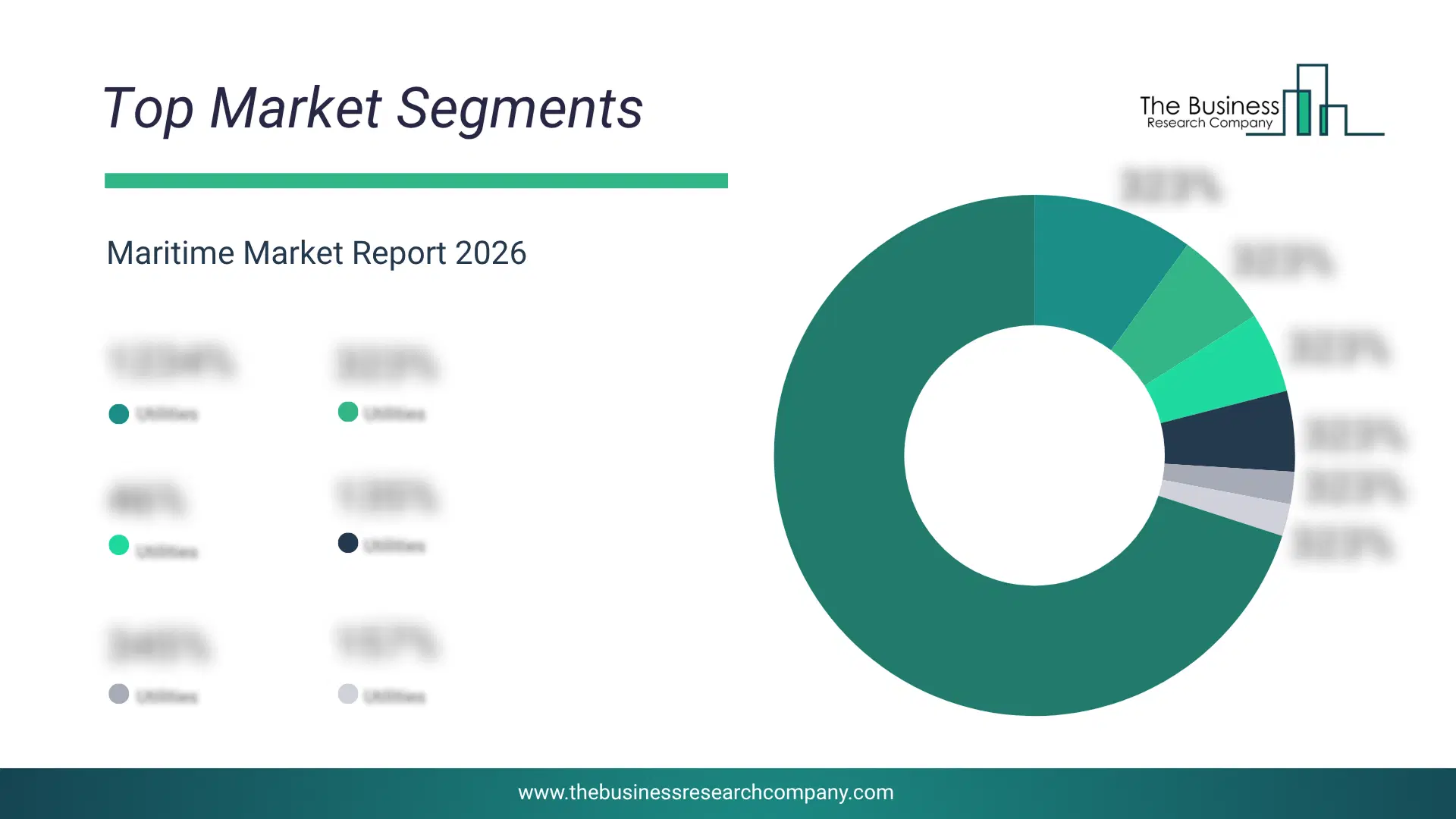
1) By Vessel Type: Cargo Ships, Tankers, Passenger Ships, Fishing Vessels, Offshore Support Vessels 2) By Service Type: Shipping Services, Logistics Services, Port Services, Maintenance Services 3) By Technology: Conventional Propulsion, Hybrid Propulsion, Alternative Fuel Technology, Autonomous Shipping 4) By End-Use: Commercial, Defense, Research, Tourism Subsegments: 1) By Cargo Ships: Container Ships, Bulk Carriers, General Cargo Ships, Roll-On Or Roll-Off (Ro-Ro) Ships, Refrigerated Cargo Ships 2) By Tankers: Crude Oil Tankers, Product Tankers, Chemical Tankers, Liquefied Natural Gas (LNG) Tankers, Liquefied Petroleum Gas (LPG) Tankers 3) By Passenger Ships: Cruise Ships, Ferries, High-Speed Passenger Vessels, River Passenger Ships 4) By Fishing Vessels: Trawlers, Longliners, Purse Seiners, Gillnetters, Factory Ships 5) By Offshore Support Vessels: Platform Supply Vessels (PSVs), Anchor Handling Tug Supply (AHTS) Vessels, Offshore Construction Vessels, Diving Support Vessels, Crew Transfer Vessels (CTVs)What Is Driver Of The Maritime Market?
The increasing volume of trade is anticipated to fuel the growth of the maritime market going forward. Trade is the exchange of goods or services between parties, typically involving a buyer and a seller, to meet mutual needs or economic interests. Trade volume is rising due to globalization, which has expanded international connectivity and encouraged the exchange of goods and services across borders to meet growing consumer and industrial demand. Expanding trade volume supports maritime by increasing the demand for sea-based transportation, which remains the most cost-effective and efficient method for moving large quantities of goods across long distances. For instance, in June 2023, according to a report published by the UN Trade and Development, a Switzerland-based intergovernmental organization, maritime trade was projected to increase by 2.4% in 2023 and maintain growth of over 2% annually from 2024 to 2028. Therefore, the increasing volume of trade will boost the growth of the maritime industry.Key Players In The Global Maritime Market
Major companies operating in the maritime market are Mærsk A/S, CMA CGM Group, Mediterranean Shipping Company SA, COSCO SHIPPING LINES Co. LTD., China State Shipbuilding Corporation, Hapag-Lloyd AG, Mitsubishi Heavy Industries Ltd., JSC United Shipbuilding Corporation, Nippon Yusen Kabushiki Kaisha, Evergreen Marine Corporation, Hyundai Heavy Industries Co. Ltd., Fincantieri S.p.A., Sumitomo Heavy Industries Ltd., YangMing Marine Transport Corporation, Samsung Heavy Industries Co. Ltd., Hanwha Ocean, Ocean Network Express Pte. Ltd., Imabari Shipbuilding Co. Ltd., Orient Overseas Container Line Ltd., Damen Shipyards Group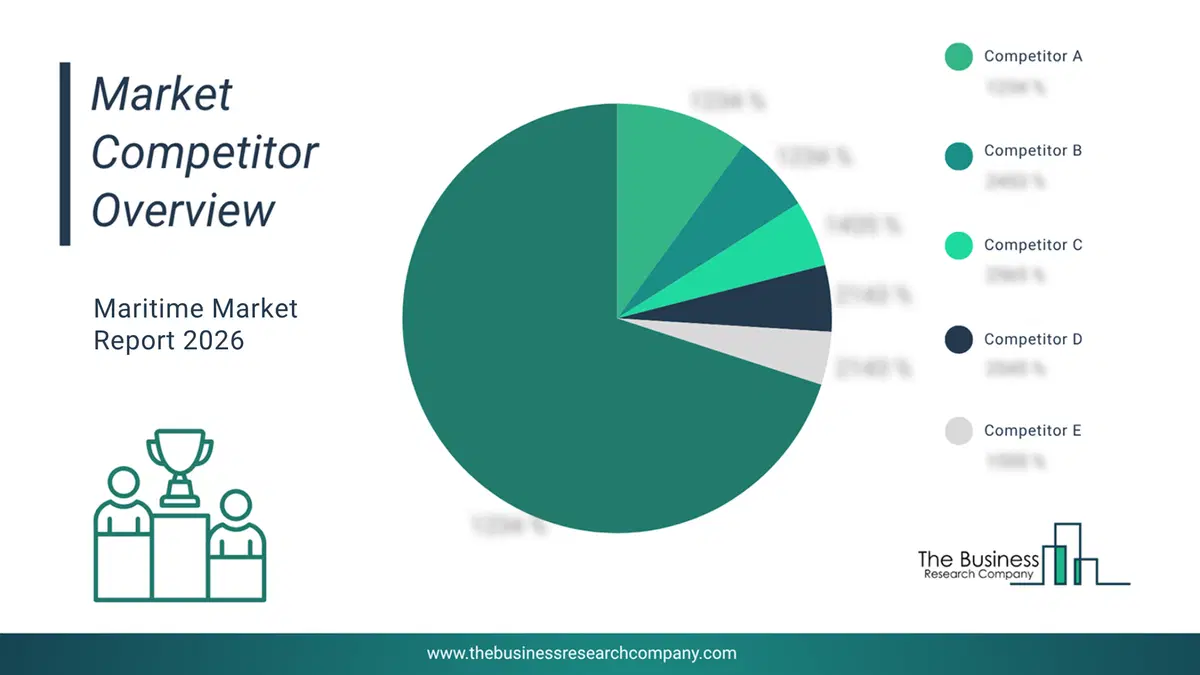
This chart is for illustrative purposes; the full report includes a detailed competitor analysis and comprehensive overview of the top 10 companies in the market.
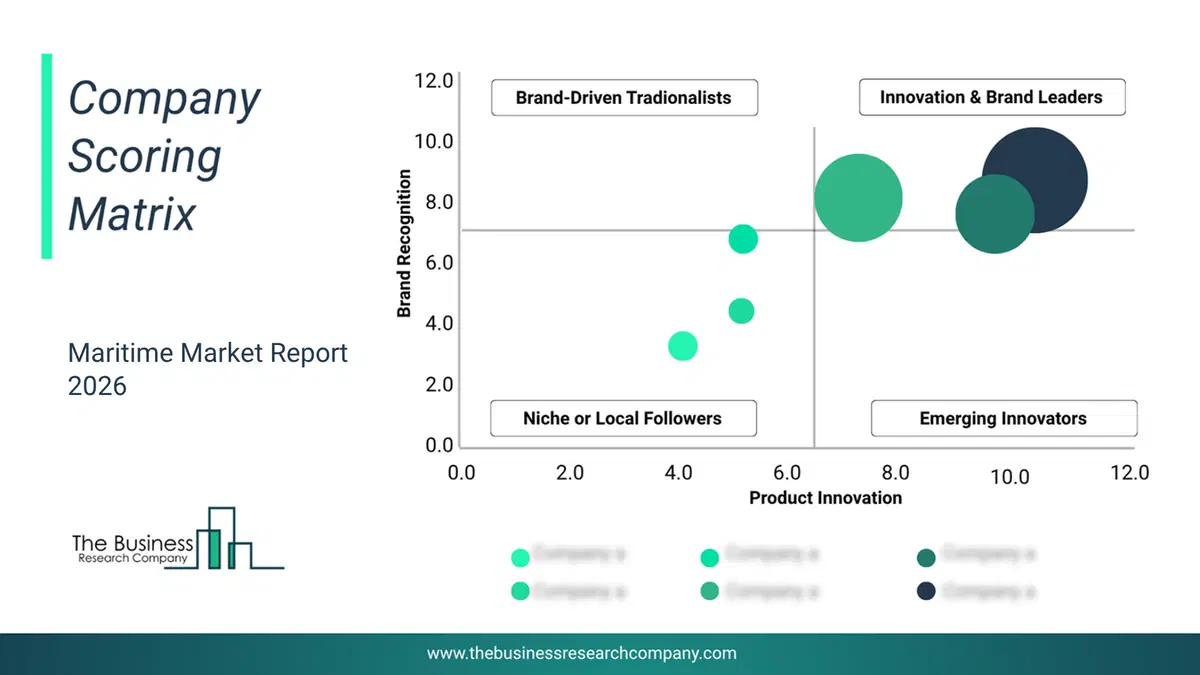
This chart maps companies by product innovation and brand strength, with bubble size indicating relative revenue, helping identify market leaders, challengers, and niche players. This is an illustrative chart; the full report provides a complete and accurate competitive analysis.
Global Maritime Market Trends and Insights
Major companies operating in the maritime market are focusing on developing advanced solutions, such as lifecycle-based cybersecurity solutions, to enable proactive risk management. Lifecycle-based cybersecurity solutions are comprehensive security measures designed to protect digital systems throughout all stages of their existence, from development and deployment to operation and decommissioning. For instance, in December 2024, Rakuten Symphony, a Japan-based technology company, launched Rakuten Maritime, a cybersecurity solution. It stands out by offering a lifecycle-based cybersecurity framework tailored specifically for autonomous and smart ships, covering all phases from design to operation. Their comprehensive solution integrates IoT, cloud, mobile networks, and zero-trust cybersecurity technologies to ensure robust protection against evolving maritime cyber threats. Key tools like Threat Modeler, Threat Intelligence, Threat Analysis, and Risk Manager enable real-time threat prevention, secure data management, and compliance with international maritime security standards. Additionally, their approach optimizes operational efficiency by reducing costs, time, and resource demands while enhancing vessel resilience and safety.What Are Latest Mergers And Acquisitions In The Maritime Market? Noatum Strengthens Mediterranean And Middle East Presence With Safina Acquisition
In August 2024, Noatum, a Spain-based company specializing in maritime, logistics, and port operations, acquired a majority stake in Safina B.V. for an undisclosed amount. The acquisition of Safina marks a major milestone in Noatum Maritime’s expansion throughout the Mediterranean region, complementing its recent office launch in Türkiye. This growth, combined with its established presence in the Middle East, strengthens Noatum’s strategic footprint in key markets, including Egypt. Safina B.V. is an Egypt-based provider of maritime agency and cargo services.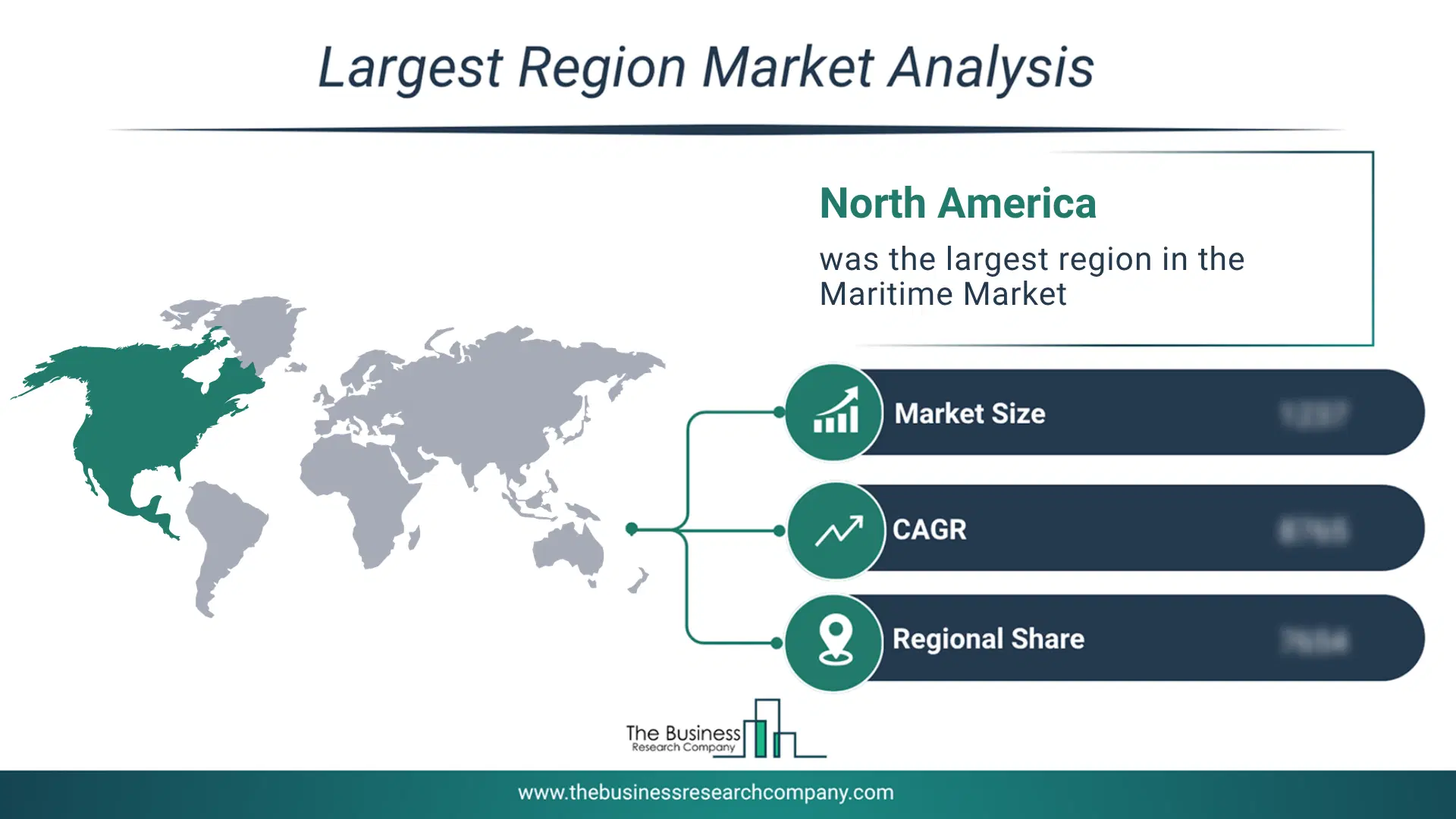
Regional Insights
North America was the largest region in the maritime market in 2025. Asia-Pacific is expected to be the fastest-growing region in the forecast period. The regions covered in this market report are Asia-Pacific, South East Asia, Western Europe, Eastern Europe, North America, South America, Middle East, Africa. The countries covered in this market report are Australia, Brazil, China, France, Germany, India, Indonesia, Japan, Taiwan, Russia, South Korea, UK, USA, Canada, Italy, SpainWhat Defines the Maritime Market?
The maritime market consists of revenues earned by entities by providing services such as freight handling, offshore support operations, environmental monitoring, and terminal management. The market value includes the value of related goods sold by the service provider or included within the service offering. The maritime market also includes sales of marine communication devices, navigation equipment, survival gears, and marine signal systems. Values in this market are ‘factory gate’ values, that is the value of goods sold by the manufacturers or creators of the goods, whether to other entities (including downstream manufacturers, wholesalers, distributors and retailers) or directly to end customers. The value of goods in this market includes related services sold by the creators of the goods.How is Market Value Defined and Measured?
The market value is defined as the revenues that enterprises gain from the sale of goods and/or services within the specified market and geography through sales, grants, or donations in terms of the currency (in USD unless otherwise specified). The revenues for a specified geography are consumption values that are revenues generated by organizations in the specified geography within the market, irrespective of where they are produced. It does not include revenues from resales along the supply chain, either further along the supply chain or as part of other products.
This chart presents market attractiveness based on a quantitative evaluation of growth, competition, strategic alignment, and risk, offering a clear view of opportunity areas for decision-making. This chart is for illustrative purposes; the full report contains the complete analysis.

This chart highlights the Total Addressable Market (TAM) by estimating the maximum revenue opportunity using an assumption-driven approach, supporting strategic planning and opportunity sizing across markets. The chart is illustrative; the full report provides a more comprehensive analysis.
What Key Data and Analysis Are Included in the Maritime Market Report 2026?
The maritime market research report is one of a series of new reports from The Business Research Company that provides market statistics, including industry global market size, regional shares, competitors with the market share, detailed market segments, market trends and opportunities, and any further data you may need to thrive in the maritime industry. The market research report delivers a complete perspective of everything you need, with an in-depth analysis of the current and future state of the industry.Maritime Market Report Forecast Analysis
| Report Attribute | Details |
|---|---|
| Market Size Value In 2026 | $2.25 billion |
| Revenue Forecast In 2030 | $2.61 billion |
| Growth Rate | CAGR of 3.8% from 2026 to 2030 |
| Base Year For Estimation | 2025 |
| Actual Estimates/Historical Data | 2020-2025 |
| Forecast Period | 2026 - 2030 |
| Market Representation | Revenue in USD Billion and CAGR from 2026 to 2030 |
| Segments Covered | Vessel Type, Service Type, Technology, End-Use |
| Regional Scope | Asia-Pacific, Western Europe, Eastern Europe, North America, South America, Middle East, Africa |
| Country Scope | The countries covered in the maritime market report are Australia, Brazil, China, France, Germany, India, Indonesia, Japan, Taiwan, Russia, South Korea, UK, USA, Canada, Italy, Spain |
| Key Companies Profiled | Mærsk A/S, CMA CGM Group, Mediterranean Shipping Company SA, COSCO SHIPPING LINES Co. LTD., China State Shipbuilding Corporation, Hapag-Lloyd AG, Mitsubishi Heavy Industries Ltd., JSC United Shipbuilding Corporation, Nippon Yusen Kabushiki Kaisha, Evergreen Marine Corporation, Hyundai Heavy Industries Co. Ltd., Fincantieri S.p.A., Sumitomo Heavy Industries Ltd., YangMing Marine Transport Corporation, Samsung Heavy Industries Co. Ltd., Hanwha Ocean, Ocean Network Express Pte. Ltd., Imabari Shipbuilding Co. Ltd., Orient Overseas Container Line Ltd., Damen Shipyards Group |
| Customization Scope | Request for Customization |
| Pricing And Purchase Options | Explore Purchase Options |