
Mastocytosis Drug Market Report 2026
Global Outlook – By Drug Type (Antihistamines, Corticosteroids, Mast Cell Stabilizers), By Disease Type (Systemic Mastocytosis, Cutaneous Mastocytosis, Mast Cell Activation Syndrome), By Route Of Administration (Oral, Intravenous, Subcutaneous), By Distribution Channel (Hospital Pharmacy, Online Pharmacy, Retailers, Other Distribution Channels), By End Users (Hospitals, Homecare, Specialty Clinics, Other End Users) – Market Size, Trends, Strategies, and Forecast to 2030
Mastocytosis Drug Market Overview
• Mastocytosis Drug market size has reached to $1.17 billion in 2025 • Expected to grow to $1.84 billion in 2030 at a compound annual growth rate (CAGR) of 9.4% • Growth Driver: The Increasing Investment In Rare Diseases Is Fueling The Market Growth Due To Growing Regulatory Incentives And Financial Support • Market Trend: The Role Of Tyrosine Kinase Inhibitors In Managing Advanced Mast Cell Diseases • North America was the largest region in 2025 and Asia-Pacific is the fastest growing region.What Is Covered Under Mastocytosis Drug Market?
Mastocytosis drugs refer to medications used to treat mastocytosis, a rare condition characterized by an abnormal accumulation of mast cells in the skin, bone marrow, and internal organs. These drugs aim to manage symptoms, reduce mast cell activity, or treat aggressive forms of the disease. The main types of mastocytosis drug are antihistamines, corticosteroids, and mast cell stabilizers. Antihistamines are first-line medications that relieve mastocytosis symptoms by blocking histamine from binding to its receptors during allergic reactions. These drugs are used to treat various conditions such as systemic mastocytosis, cutaneous mastocytosis, and mast cell activation syndrome. They are administered through various routes, including oral, intravenous, and subcutaneous. Distribution channels include hospital pharmacies, online pharmacies, retailers, and other outlets. The primary end users are hospitals, homecare settings, specialty clinics, and other healthcare providers.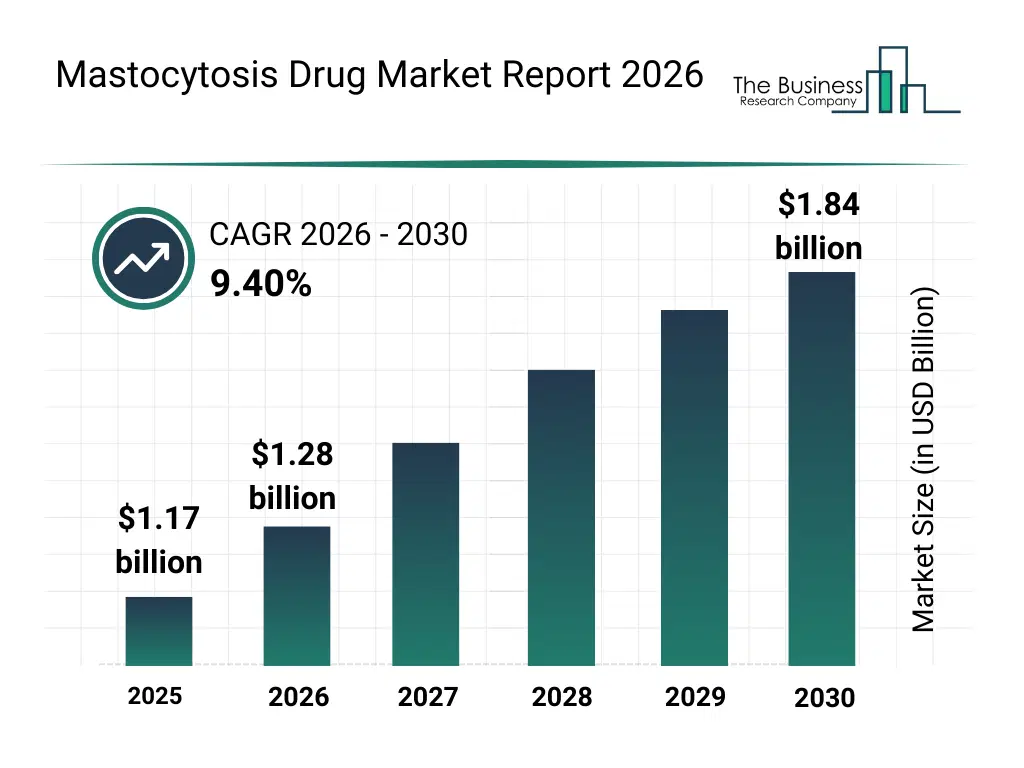
What Is The Mastocytosis Drug Market Size and Share 2026?
The mastocytosis drug market size has grown strongly in recent years. It will grow from $1.17 billion in 2025 to $1.28 billion in 2026 at a compound annual growth rate (CAGR) of 9.7%. The growth in the historic period can be attributed to rare disease recognition, antihistamine-based symptom control, hospital-led diagnosis, limited therapeutic options, specialist-driven care.What Is The Mastocytosis Drug Market Growth Forecast?
The mastocytosis drug market size is expected to see strong growth in the next few years. It will grow to $1.84 billion in 2030 at a compound annual growth rate (CAGR) of 9.4%. The growth in the forecast period can be attributed to targeted drug approvals, orphan drug incentives, genetic mutation profiling, expansion of specialty clinics, improved diagnostic capabilities. Major trends in the forecast period include growing focus on rare mast cell disorders, increased use of targeted therapies, expansion of symptom management drugs, rising awareness of systemic mastocytosis, development of personalized treatment protocols.
Global Mastocytosis Drug Market Segmentation
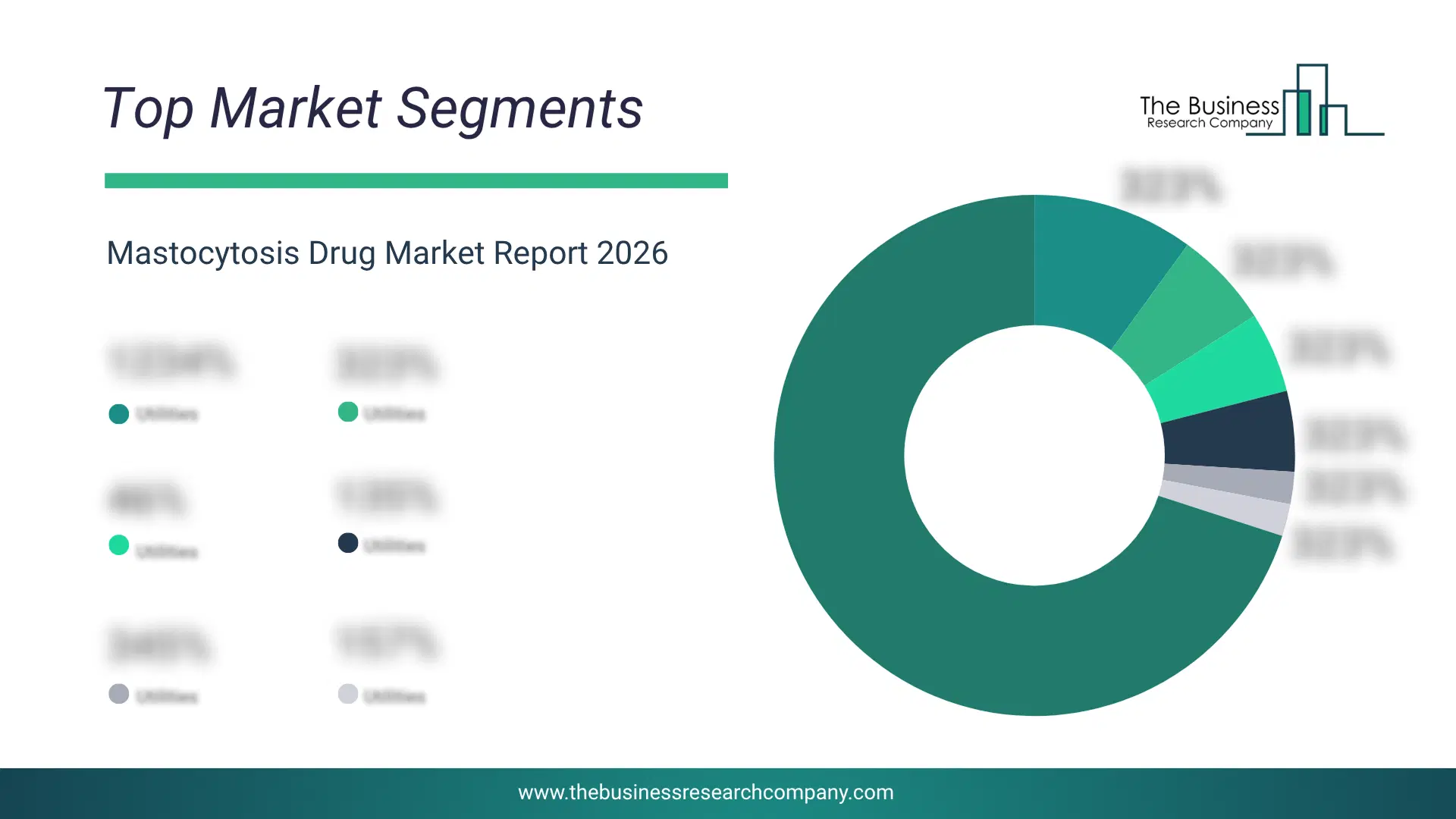
1) By Drug Type: Antihistamines, Corticosteroids, Mast Cell Stabilizers 2) By Disease Type: Systemic Mastocytosis, Cutaneous Mastocytosis, Mast Cell Activation Syndrome 3) By Route Of Administration: Oral, Intravenous, Subcutaneous 4) By Distribution Channel: Hospital Pharmacy, Online Pharmacy, Retailers, Other Distribution Channels 5) By End Users: Hospitals, Homecare, Specialty Clinics, Other End Users Subsegments: 1) By Antihistamines: H1-Receptor Antagonists, H2-Receptor Antagonists 2) By Corticosteroids: Topical Corticosteroids, Oral Corticosteroids, Intravenous Corticosteroids 3) By Mast Cell Stabilizers: Cromolyn sodium, Ketotifen, NedocromilWhat Is The Driver Of The Mastocytosis Drug Market?
The increasing investment in rare diseases is expected to propel the growth of the mastocytosis drug market going forward. Rare diseases refer to medical conditions that affect a small percentage of the population, typically fewer than 200,000 people in the United States or fewer than 1 in 2,000 people in Europe. Increasing investment in rare diseases is primarily driven by growing regulatory incentives, such as orphan drug designations, extended market exclusivity, and tax credits, which reduce development risks and enhance profitability for pharmaceutical companies. Mastocytosis drug offers targeted treatment that not only alleviates symptoms of mastocytosis but also contributes to broader therapeutic advancements for other rare diseases with similar immune and cellular pathways. For instance, in April 2024, according to Global Genes, a US-based nonprofit organization, in the first quarter of 2024, companies developing drugs for rare diseases raised $7.1 billion through public equity and debt financings, representing a 307% surge compared to the $1.8 billion raised during the same period in 2023. Therefore, the increasing investment in rare diseases is driving the growth of the mastocytosis drug industry.Key Players In The Global Mastocytosis Drug Market
Major companies operating in the mastocytosis drug market are Pfizer Inc., Johnson & Johnson, Bayer AG, Sanofi S.A., Novartis AG, GSK plc, Teva Pharmaceutical Industries Limited, Alcon Inc., Bausch Health Companies Inc., Genentech Inc., Lupin Limited, Blueprint Medicines Corporation, Don Valley Pharma (Pvt.) Ltd., Vivan Life Sciences Private Limited, AB Science S.A., Medoz Pharmaceutical Private Limited, Zumax Biocare Private Limited, Hi-Cure Biotech Private Limited, Zenomed Healthcare Private Limited, Biosynth AG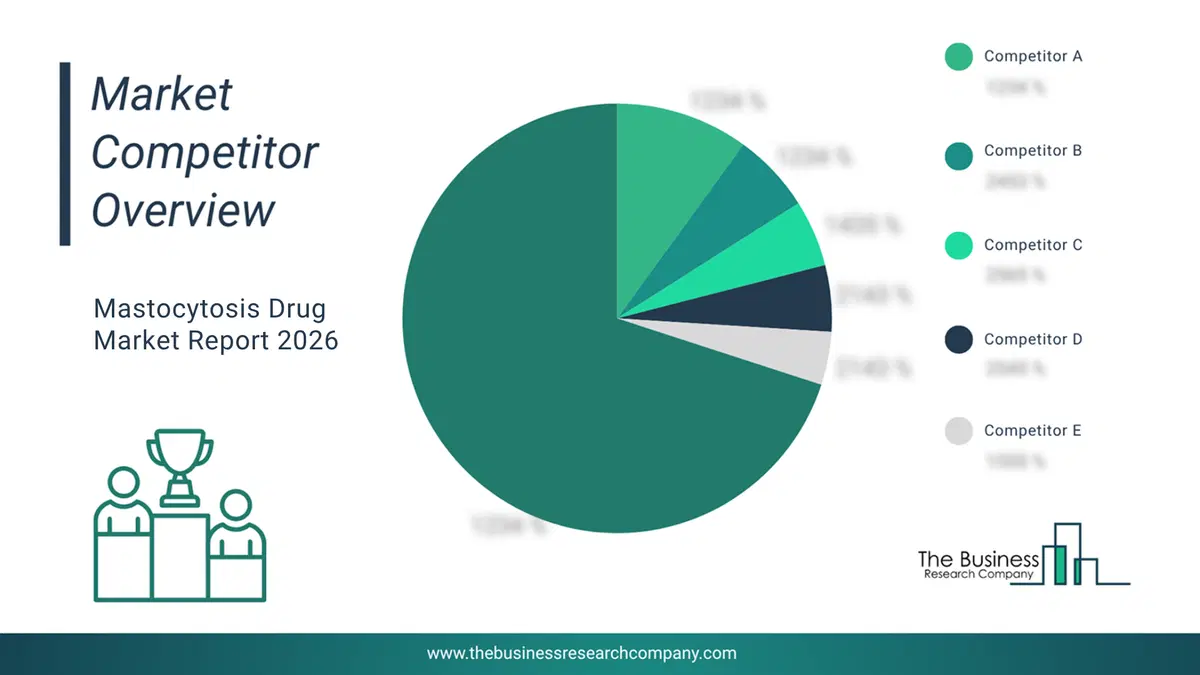
This chart is for illustrative purposes; the full report includes a detailed competitor analysis and comprehensive overview of the top 10 companies in the market.
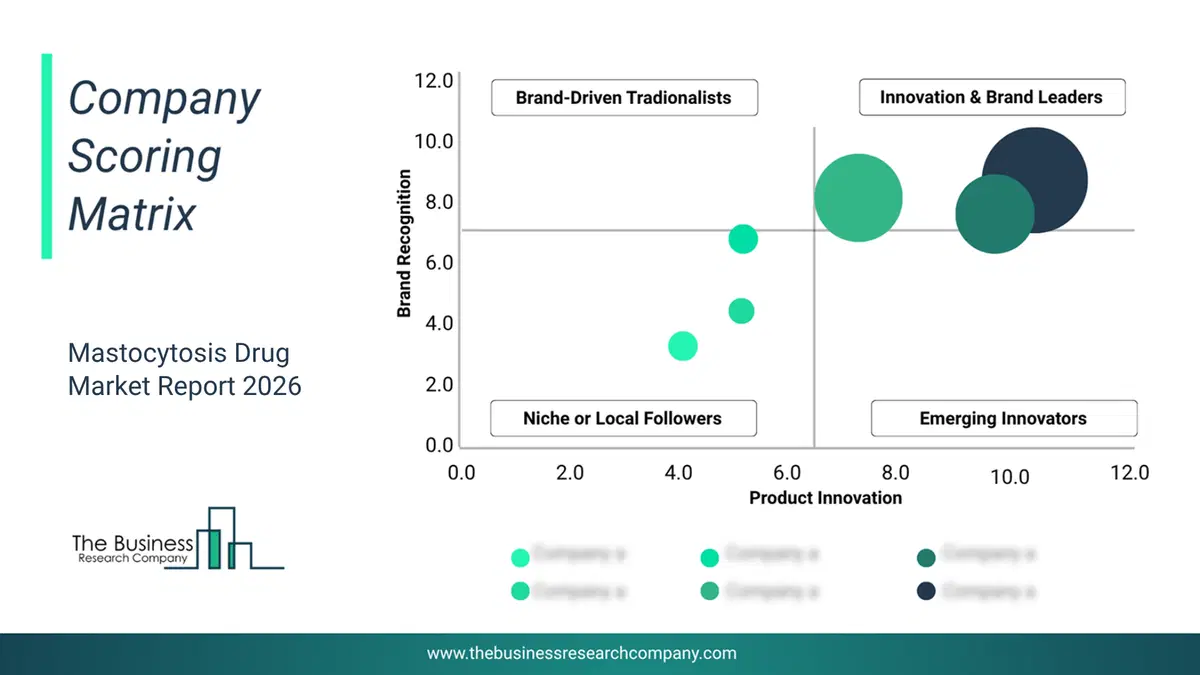
This chart maps companies by product innovation and brand strength, with bubble size indicating relative revenue, helping identify market leaders, challengers, and niche players. This is an illustrative chart; the full report provides a complete and accurate competitive analysis.
Global Mastocytosis Drug Market Trends and Insights
Major companies operating in the mastocytosis drug market are focusing on developing innovative products such as tyrosine kinase inhibitor to improve treatment efficacy and provide targeted therapies for patients with advanced mast cell diseases. A tyrosine kinase inhibitor is a drug that blocks enzymes responsible for abnormal cell growth, and in mastocytosis, it helps by inhibiting the excessive proliferation of mast cells and reducing symptoms such as rashes and inflammation. For instance, in May 2023, Blueprint Medicines Corporation, a US-based biotechnology company, received U.S. Food and Drug Administration approval for Ayvakit (avapritinib) for the treatment of adults with indolent systemic mastocytosis (ISM). This approval marks a significant advancement in the treatment of ISM, a rare and chronic disorder characterized by an overproduction of mast cells. Ayvakit is a selective inhibitor of the KIT D816V mutation, which is commonly present in patients with ISM, offering a targeted treatment option to manage symptoms and diseaseWhat Are Latest Mergers And Acquisitions In The Mastocytosis Drug Market?
In May 2024, Incyte Corporation, a US-based biopharmaceutical company, acquired Escient Pharmaceuticals for approximately $750 million. With this acquisition, Incyte aims to strengthen its Inflammation and Autoimmunity (IAI) pipeline by integrating Escient Pharmaceuticals’ first-in-class oral MRGPR antagonists, enhancing its capacity to develop innovative treatments for severe immune and neuro-immune disorders. Escient Pharmaceuticals is a US-based clinical-stage biotechnology company specializing in developing EP262, a first-in-class oral MRGPRX2 antagonist targeting mast cell-mediated diseases.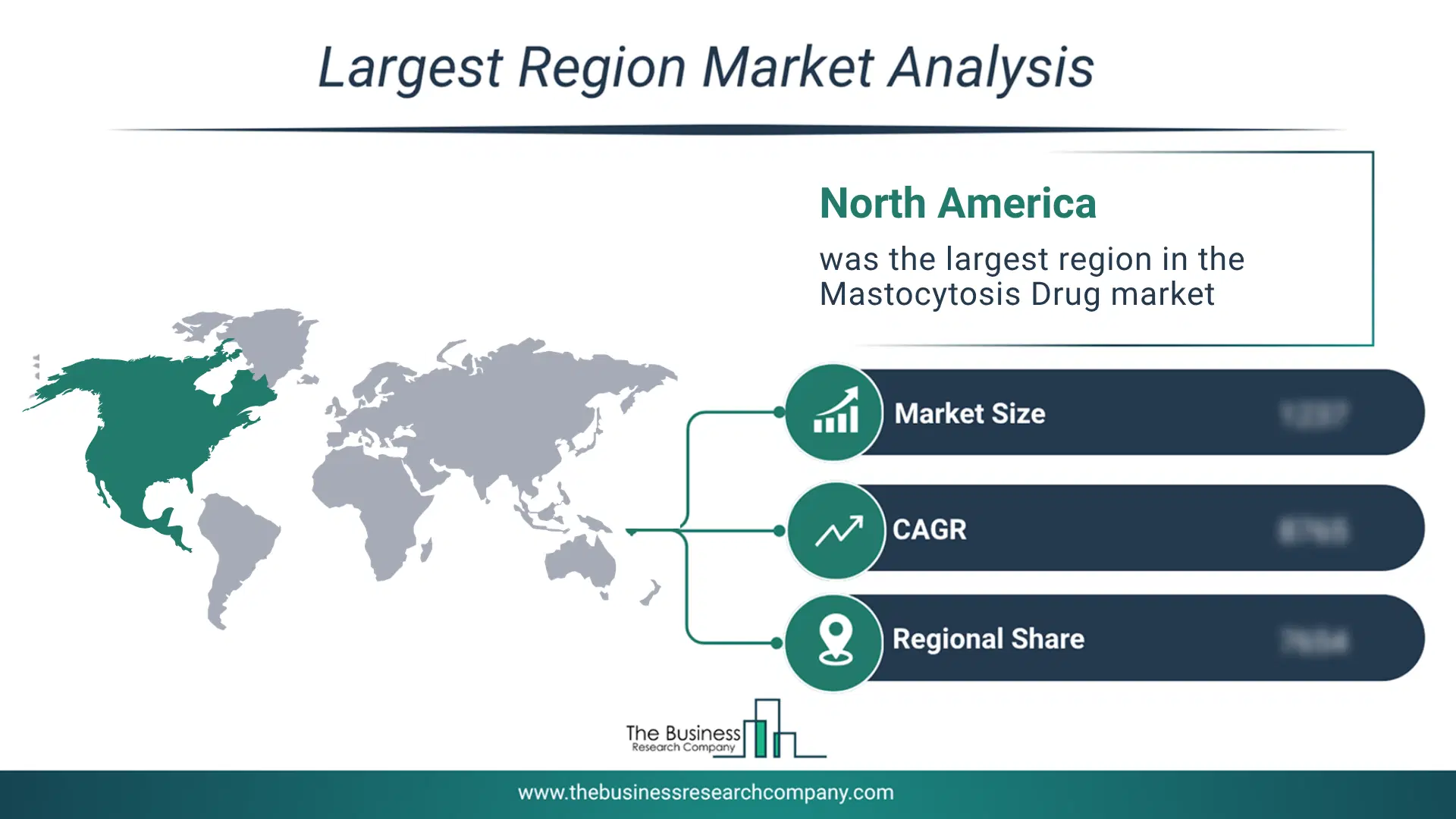
Regional Insights
North America was the largest region in the mastocytosis drug market in 2025. Asia-Pacific is expected to be the fastest-growing region in the forecast period. The regions covered in this market report are Asia-Pacific, South East Asia, Western Europe, Eastern Europe, North America, South America, Middle East, Africa. The countries covered in this market report are Australia, Brazil, China, France, Germany, India, Indonesia, Japan, Taiwan, Russia, South Korea, UK, USA, Canada, Italy, Spain.What Defines the Mastocytosis Drug Market?
The mastocytosis drug market also includes sales of antihistamines, leukotriene receptor antagonists, corticosteroids, tyrosine kinase inhibitors (TKIs), and epinephrine. Values in this market are ‘factory gate’ values, that is the value of goods sold by the manufacturers or creators of the goods, whether to other entities (including downstream manufacturers, wholesalers, distributors and retailers) or directly to end customers. The value of goods in this market includes related services sold by the creators of the goods.How is Market Value Defined and Measured?
The market value is defined as the revenues that enterprises gain from the sale of goods and/or services within the specified market and geography through sales, grants, or donations in terms of the currency (in USD unless otherwise specified). The revenues for a specified geography are consumption values that are revenues generated by organizations in the specified geography within the market, irrespective of where they are produced. It does not include revenues from resales along the supply chain, either further along the supply chain or as part of other products.
This chart presents market attractiveness based on a quantitative evaluation of growth, competition, strategic alignment, and risk, offering a clear view of opportunity areas for decision-making. This chart is for illustrative purposes; the full report contains the complete analysis.

This chart highlights the Total Addressable Market (TAM) by estimating the maximum revenue opportunity using an assumption-driven approach, supporting strategic planning and opportunity sizing across markets. The chart is illustrative; the full report provides a more comprehensive analysis.
What Key Data and Analysis Are Included in the Mastocytosis Drug Market Report 2026?
The mastocytosis drug market research report is one of a series of new reports from The Business Research Company that provides market statistics, including industry global market size, regional shares, competitors with the market share, detailed market segments, market trends and opportunities, and any further data you may need to thrive in the mastocytosis drug industry. The market research report delivers a complete perspective of everything you need, with an in-depth analysis of the current and future state of the industry.Mastocytosis Drug Market Report Forecast Analysis
| Report Attribute | Details |
|---|---|
| Market Size Value In 2026 | $1.28 billion |
| Revenue Forecast In 2030 | $1.84 billion |
| Growth Rate | CAGR of 9.7% from 2026 to 2030 |
| Base Year For Estimation | 2025 |
| Actual Estimates/Historical Data | 2020-2025 |
| Forecast Period | 2026 - 2030 |
| Market Representation | Revenue in USD Billion and CAGR from 2026 to 2030 |
| Segments Covered | Drug Type, Disease Type, Route Of Administration, Distribution Channel, End Users |
| Regional Scope | Asia-Pacific, Western Europe, Eastern Europe, North America, South America, Middle East, Africa |
| Country Scope | The countries covered in the report are Australia, Brazil, China, France, Germany, India, Indonesia, Japan, Taiwan, Russia, South Korea, UK, USA, Canada, Italy, Spain. |
| Key Companies Profiled | Pfizer Inc., Johnson & Johnson, Bayer AG, Sanofi S.A., Novartis AG, GSK plc, Teva Pharmaceutical Industries Limited, Alcon Inc., Bausch Health Companies Inc., Genentech Inc., Lupin Limited, Blueprint Medicines Corporation, Don Valley Pharma (Pvt.) Ltd., Vivan Life Sciences Private Limited, AB Science S.A., Medoz Pharmaceutical Private Limited, Zumax Biocare Private Limited, Hi-Cure Biotech Private Limited, Zenomed Healthcare Private Limited, Biosynth AG |
| Customization Scope | Request for Customization |
| Pricing And Purchase Options | Explore Purchase Options |