
Maternal Infant Care Equipment Market Report 2026
Global Outlook – By Product Type (Infant Incubators, Infant Warmers, Phototherapy Equipment, Suction Devices, Breast Pumps), By Material Type (Plastic, Wood, Fabric, Metal, Organic Materials), By Application (Neonatal Care, Maternal Care, Pediatric Care), By Distribution Channel (Online Stores, Offline Stores), By End-User (Hospitals, Clinics, Home Care, Ambulatory Surgical Centers) – Market Size, Trends, Strategies, and Forecast to 2030
Maternal Infant Care Equipment Market Overview
• Maternal Infant Care Equipment market size has reached to $6.28 billion in 2025 • Expected to grow to $8.82 billion in 2030 at a compound annual growth rate (CAGR) of 7% • Growth Driver: The Rise In Preterm Births Driving The Growth Of The Market Due To Increasing Maternal Age And Associated Complications • Market Trend: Next-Gen Ultrasound Technology Enhances Accuracy In Prenatal Care • North America was the largest region in 2025 and Asia-Pacific is the fastest growing region.What Is Covered Under Maternal Infant Care Equipment Market?
Maternal infant care equipment refers to a range of specialized medical tools designed to support the health and well-being of mothers and newborns during the prenatal, perinatal, and postnatal periods. These devices play a critical role in monitoring, diagnosing, and treating complications to ensure safe delivery and optimal neonatal outcomes. The main product types of maternal infant care equipment are infant incubators, infant warmers, phototherapy equipment, suction devices, and breast pumps. Infant incubators refer to enclosed medical devices designed to provide a controlled and stable environment, including optimal temperature, humidity, and oxygen levels, to support the growth and development of premature or critically ill newborns. These devices are made from various materials such as plastic, wood, fabric, metal, and organic materials. These are used for various applications such as neonatal care, maternal care, pediatric care, and distribution through various channels such as online stores and offline stores. It serves end users such as hospitals, clinics, home care, and ambulatory surgical centers.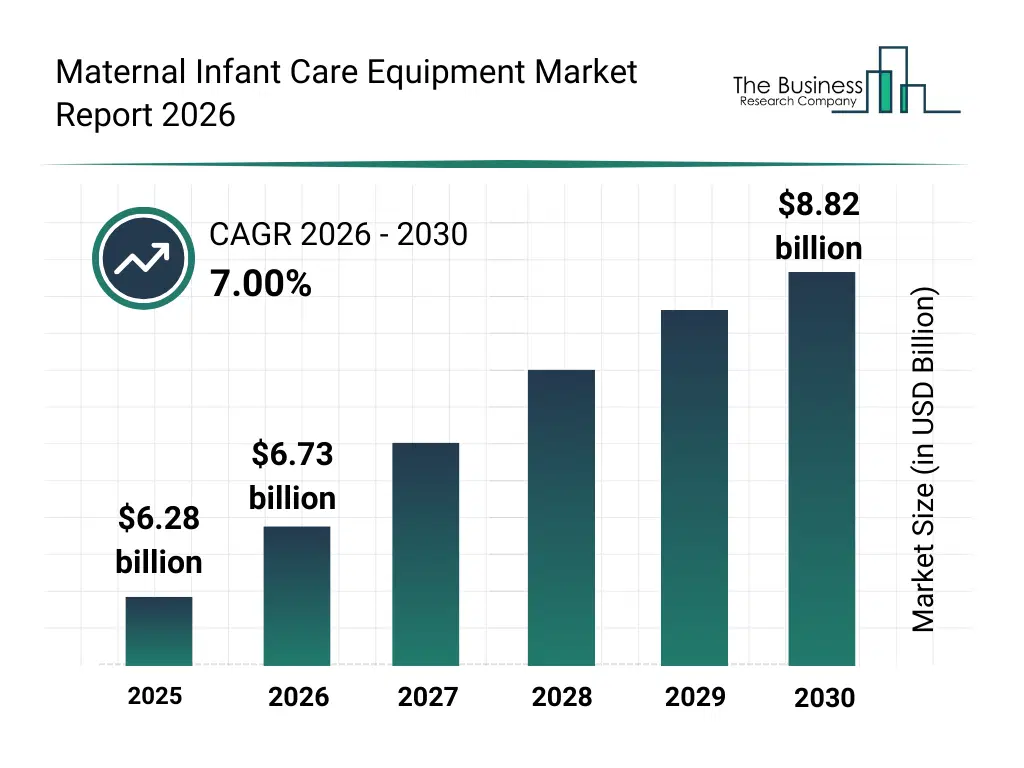
What Is The Maternal Infant Care Equipment Market Size and Share 2026?
The maternal infant care equipment market size has grown strongly in recent years. It will grow from $6.28 billion in 2025 to $6.73 billion in 2026 at a compound annual growth rate (CAGR) of 7.3%. The growth in the historic period can be attributed to limited availability of advanced maternal-infant care equipment, reliance on conventional infant incubators and warmers, growing neonatal patient population, increasing hospital and clinic infrastructure, rising awareness about maternal and neonatal care.What Is The Maternal Infant Care Equipment Market Growth Forecast?
The maternal infant care equipment market size is expected to see strong growth in the next few years. It will grow to $8.82 billion in 2030 at a compound annual growth rate (CAGR) of 7.0%. The growth in the forecast period can be attributed to technological advancements in phototherapy and suction devices, increasing adoption of electric and hospital-grade breast pumps, expansion of home care services, rising healthcare expenditure in emerging economies, integration of smart monitoring and IoT-enabled maternal-infant care systems. Major trends in the forecast period include rising adoption of advanced neonatal monitoring systems, increasing demand for portable and home care maternal-infant devices, focus on energy-efficient and eco-friendly equipment, expansion of maternal and neonatal care services in emerging regions, enhanced training and awareness programs for healthcare providers.
Global Maternal Infant Care Equipment Market Segmentation
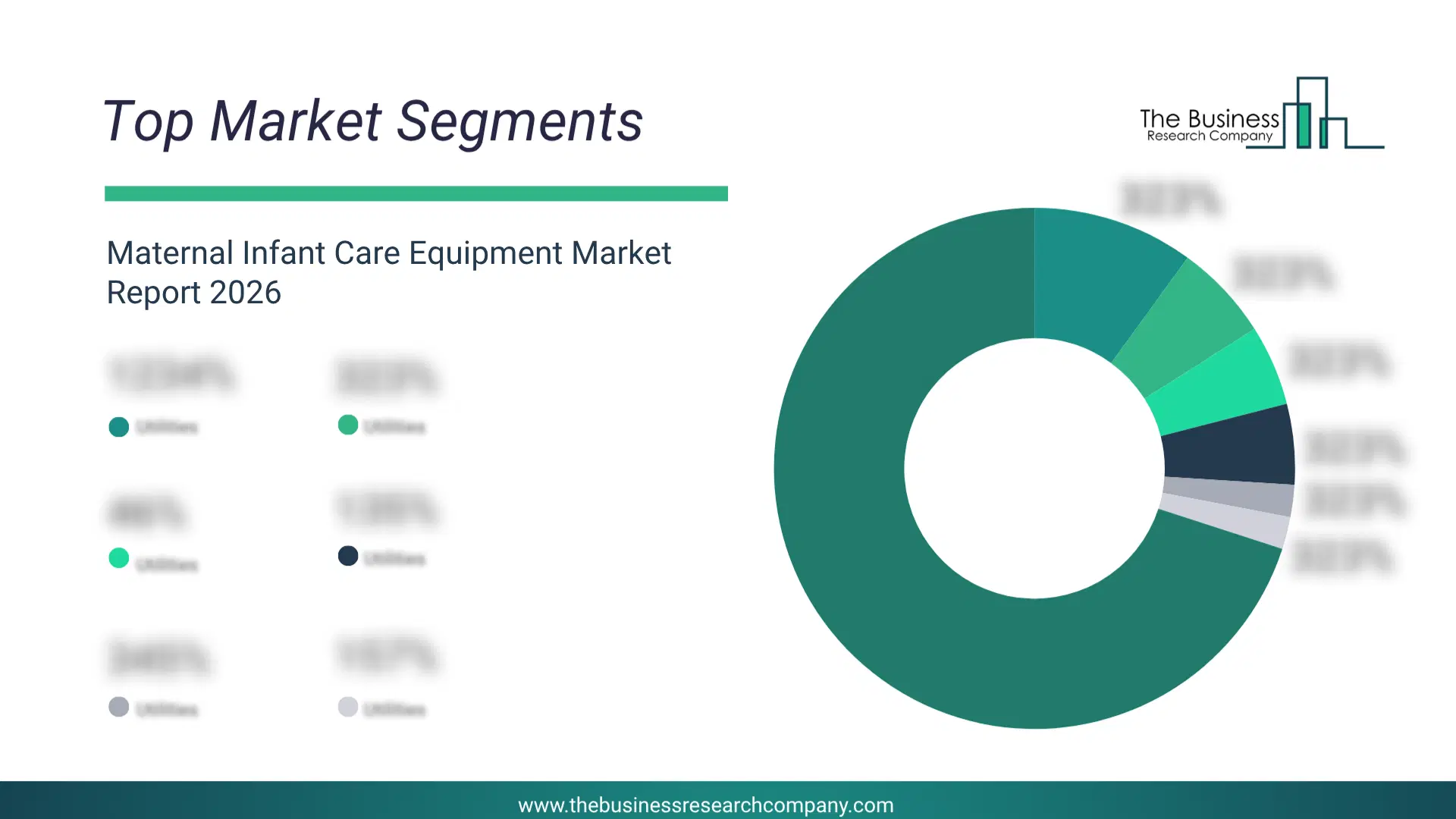
1) By Product Type: Infant Incubators, Infant Warmers, Phototherapy Equipment, Suction Devices, Breast Pumps 2) By Material Type: Plastic, Wood, Fabric, Metal, Organic Materials 3) By Application: Neonatal Care, Maternal Care, Pediatric Care 4) By Distribution Channel: Online Stores, Offline Stores 5) By End-User: Hospitals, Clinics, Home Care, Ambulatory Surgical Centers Subsegments: 1) By Infant Incubators: Closed Incubators, Open Incubators, Transport Incubators 2) By Infant Warmers: Radiant Warmers, Conductive Warmers, Combination Warmers 3) By Phototherapy Equipment: Conventional Phototherapy Units, Fiber-Optic Phototherapy Units, Compact Phototherapy Devices 4) By Suction Devices: Portable Suction Devices, Wall-Mounted Suction Devices, Battery Operated Suction Devices 5) By Breast Pumps: Manual Breast Pumps, Electric Breast Pumps, Hospital Grade Breast PumpsWhat Are The Drivers Of The Maternal Infant Care Equipment Market?
The rising number of preterm births is expected to propel the growth of the maternal infant care equipment market going forward. Preterm births refer to the delivery of a baby before 37 completed weeks of gestation, resulting in a shorter-than-normal pregnancy duration. The number of preterm births is rising due to increasing maternal age, as older mothers face a higher risk of pregnancy complications that can lead to early delivery. Maternal infant care equipment supports preterm births by providing advanced monitoring, respiratory support, and thermal regulation to improve survival and health outcomes for premature infants. For instance, in March 2025, according to the Centers for Disease Control and Prevention (CDC), a US-based government agency, in 2023, singleton preterm births accounted for 8.71%, showing a slight rise from 8.67% in 2022. Therefore, the rising number of preterm births is driving the growth of the maternal infant care equipment industry. The rising healthcare expenditures are expected to propel the growth of the maternal-infant care equipment market going forward. Healthcare expenditures refer to the total amount of money spent on healthcare services and products, including hospital care, physician services, prescription drugs, and preventive care, by individuals, governments, and organizations. Healthcare expenditures are rising due to the aging population, as older individuals typically require more frequent and complex medical care, leading to an increase in demand for healthcare services and resources. Rising healthcare expenditures drive the demand for maternal and infant care equipment by enabling greater investment in advanced technologies and improved neonatal and maternal care services. For instance, in June 2025, according to the Centers for Medicare and Medicaid Services, a US-based federal agency, in 2023, hospital expenditures surged by 10.4% to $1,519.7 billion, marking a significant acceleration compared to the more modest 3.2% growth seen in 2022. Therefore, the rising healthcare expenditures are driving the growth of the maternal-infant care equipment market.Key Players In The Global Maternal Infant Care Equipment Market
Major companies operating in the maternal infant care equipment market are Cardinal Health Inc., Koninklijke Philips N.V, GE Healthcare Technologies Inc., Drägerwerk AG And Co KGaA, Masimo Corporation, Natus Medical Incorporated, Atom Medical Corporation, Edan Instruments Inc., OxygenCare Private Limited, Janitri Innovations Private Limited, Maternova Inc., Spectra Baby USA LLC, Fisher & Paykel Healthcare Corporation Limited, Shenzhen Mindray Bio‑Medical Electronics Co Ltd., Nihon Kohden Corporation, OSI Systems Inc., Contec Medical Systems Co Ltd., Bistos Co Ltd., Fanem Ltd., Phoenix Medical Systems, nice Neotech Medical Systems Pvt Ltd., IndoSurgicals Private Limited, Hosmed‑Inc.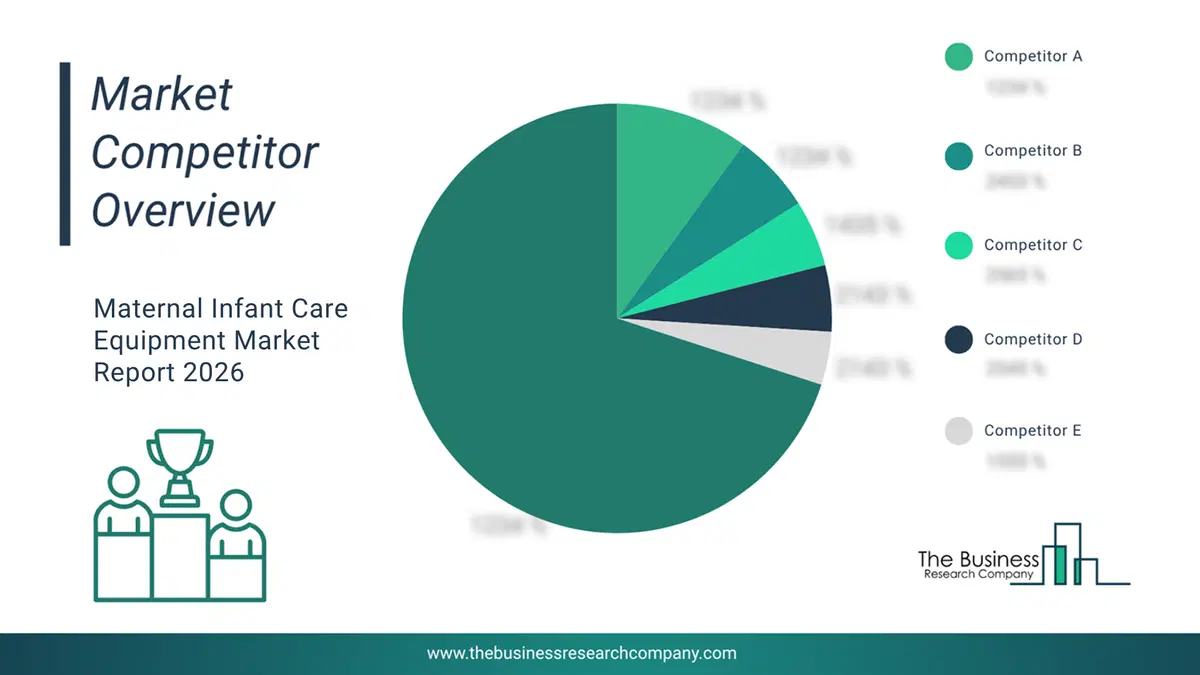
This chart is for illustrative purposes; the full report includes a detailed competitor analysis and comprehensive overview of the top 10 companies in the market.
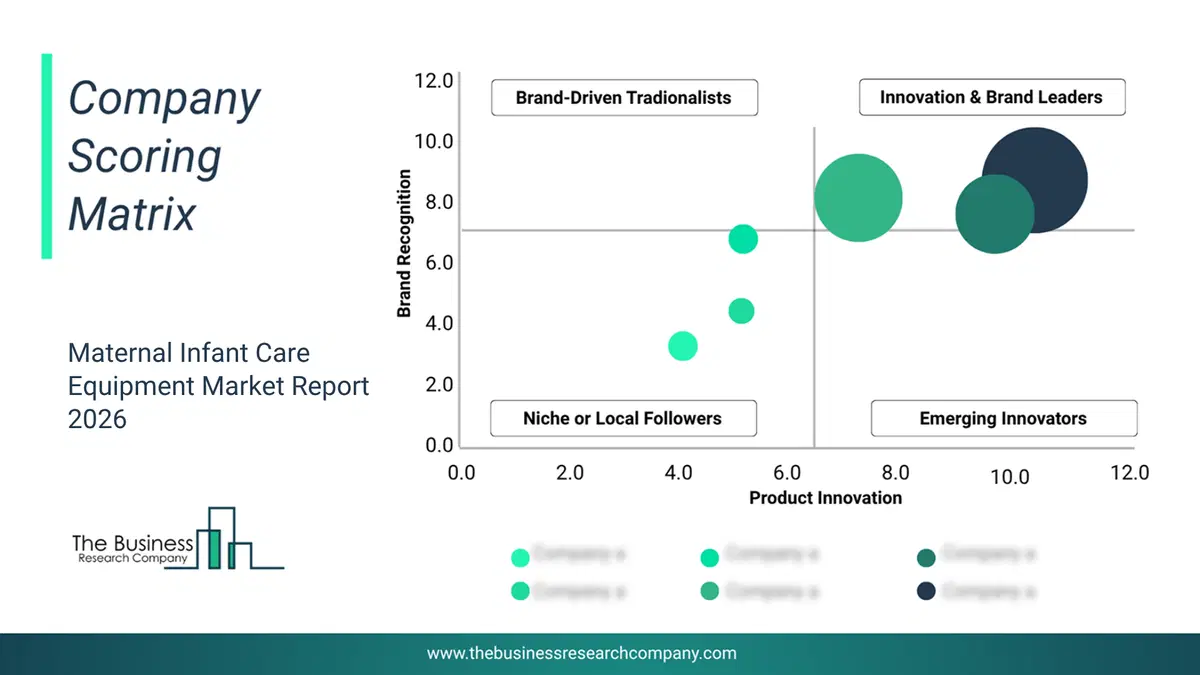
This chart maps companies by product innovation and brand strength, with bubble size indicating relative revenue, helping identify market leaders, challengers, and niche players. This is an illustrative chart; the full report provides a complete and accurate competitive analysis.
Global Maternal Infant Care Equipment Market Trends and Insights
Major companies operating in the maternal infant care equipment market are focusing on technological advancements, such as artificial intelligence-enabled ultrasound systems, to enhance diagnostic accuracy, improve workflow efficiency, and support faster, more confident clinical decision-making in women’s and neonatal health care. Artificial intelligence-enabled ultrasound systems refer to medical imaging devices that use AI algorithms to automate image analysis, enhance diagnostic accuracy, and streamline clinical workflows. For instance, in April 2024, GE Healthcare Technologies Inc., a US-based medical technology company, launched Voluson Signature 20 and 18 ultrasound systems to enhance women’s health imaging. These systems incorporate artificial intelligence to improve image clarity, automate routine tasks, and aid clinical decision-making through tools such as sonolyst and sonobiometry. Featuring an ergonomic design and customizable settings, they also include advanced reporting capabilities and enhanced connectivity for easy integration into clinical workflows. These innovations help healthcare professionals efficiently assess and monitor maternal and fetal health, particularly in high-risk pregnancies.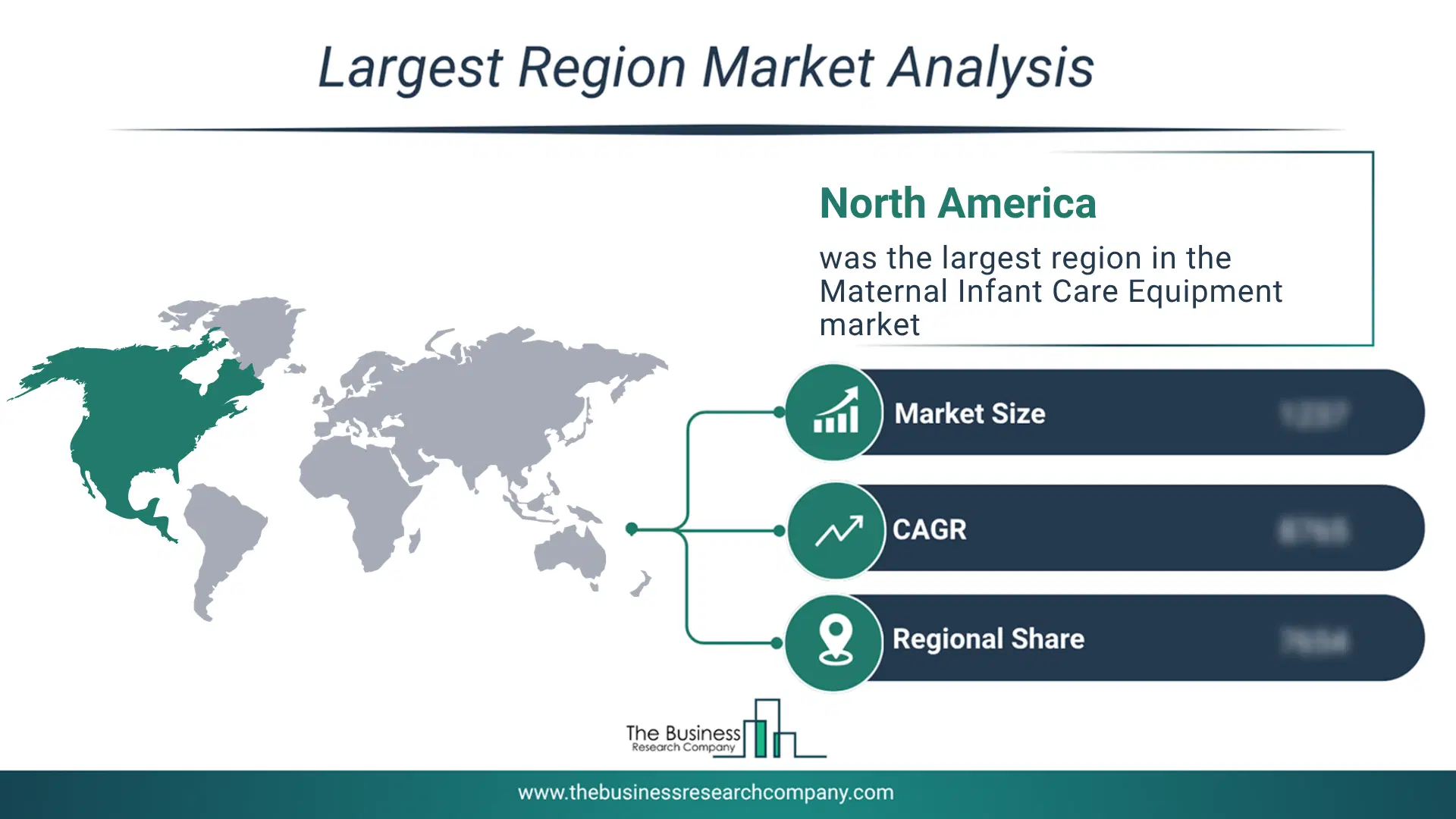
Regional Outlook
North America was the largest region in the maternal infant care equipment market in 2025. Asia-Pacific is expected to be the fastest-growing region in the forecast period. The regions covered in this market report are Asia-Pacific, South East Asia, Western Europe, Eastern Europe, North America, South America, Middle East, Africa. The countries covered in this market report are Australia, Brazil, China, France, Germany, India, Indonesia, Japan, Taiwan, Russia, South Korea, UK, USA, Canada, Italy, SpainWhat Defines the Maternal Infant Care Equipment Market?
The maternal infant care equipment market consists of sales of fetal dopplers, infant resuscitators, umbilical cord clamps, neonatal ventilators, and obstetric delivery beds. Values in this market are ‘factory gate’ values, that is the value of goods sold by the manufacturers or creators of the goods, whether to other entities (including downstream manufacturers, wholesalers, distributors and retailers) or directly to end customers. The value of goods in this market includes related services sold by the creators of the goods.How is Market Value Defined and Measured?
The market value is defined as the revenues that enterprises gain from the sale of goods and/or services within the specified market and geography through sales, grants, or donations in terms of the currency (in USD unless otherwise specified). The revenues for a specified geography are consumption values that are revenues generated by organizations in the specified geography within the market, irrespective of where they are produced. It does not include revenues from resales along the supply chain, either further along the supply chain or as part of other products.
This chart presents market attractiveness based on a quantitative evaluation of growth, competition, strategic alignment, and risk, offering a clear view of opportunity areas for decision-making. This chart is for illustrative purposes; the full report contains the complete analysis.

This chart highlights the Total Addressable Market (TAM) by estimating the maximum revenue opportunity using an assumption-driven approach, supporting strategic planning and opportunity sizing across markets. The chart is illustrative; the full report provides a more comprehensive analysis.
What Key Data and Analysis Are Included in the Maternal Infant Care Equipment Market Report 2026?
The maternal infant care equipment market research report is one of a series of new reports from The Business Research Company that provides market statistics, including industry global market size, regional shares, competitors with the market share, detailed market segments, market trends and opportunities, and any further data you may need to thrive in the maternal infant care equipment industry. The market research report delivers a complete perspective of everything you need, with an in-depth analysis of the current and future state of the industry.Maternal Infant Care Equipment Market Report Forecast Analysis
| Report Attribute | Details |
|---|---|
| Market Size Value In 2026 | $6.73 billion |
| Revenue Forecast In 2030 | $8.82 billion |
| Growth Rate | CAGR of 7% from 2026 to 2030 |
| Base Year For Estimation | 2025 |
| Actual Estimates/Historical Data | 2020-2025 |
| Forecast Period | 2026 - 2030 |
| Market Representation | Revenue in USD Billion and CAGR from 2026 to 2030 |
| Segments Covered | Product Type, Material Type, Application, Distribution Channel, End-User |
| Regional Scope | Asia-Pacific, Western Europe, Eastern Europe, North America, South America, Middle East, Africa |
| Country Scope | The countries covered in the report are Australia, Brazil, China, France, Germany, India, Indonesia, Japan, Taiwan, Russia, South Korea, UK, USA, Canada, Italy, Spain. |
| Key Companies Profiled | Cardinal Health Inc., Koninklijke Philips N.V, GE Healthcare Technologies Inc., Drägerwerk AG And Co KGaA, Masimo Corporation, Natus Medical Incorporated, Atom Medical Corporation, Edan Instruments Inc., OxygenCare Private Limited, Janitri Innovations Private Limited, Maternova Inc., Spectra Baby USA LLC, Fisher & Paykel Healthcare Corporation Limited, Shenzhen Mindray Bio‑Medical Electronics Co Ltd., Nihon Kohden Corporation, OSI Systems Inc., Contec Medical Systems Co Ltd., Bistos Co Ltd., Fanem Ltd., Phoenix Medical Systems, nice Neotech Medical Systems Pvt Ltd., IndoSurgicals Private Limited, Hosmed‑Inc. |
| Customization Scope | Request for Customization |
| Pricing And Purchase Options | Explore Purchase Options |