
Medical Courier Market Report 2026
Global Outlook – By Product Type (Medical Supplies And Equipment, Blood And Organs, Lab Specimens, Medical Notes, Other Product Types), By Service Type (Standard Courier Service, International Services, Rush And On-Demand, Pallet Shipping, Other Service Types), By Destination (Domestic, International), By End Users (Hospital And Clinics, Diagnostic Labs, Blood And Tissue Banks, Pharmacy, In Home Support, Pharmaceutical And Biotechnology Companies, Other End Users) - Market Size, Trends, And Global Forecast 2026-2030
Medical Courier Market Overview
• Medical Courier market size has reached to $7.18 billion in 2025 • Expected to grow to $9.44 billion in 2030 at a compound annual growth rate (CAGR) of 5.6% • Growth Driver: Growing Demand For Medications Is Driving The Growth Of The Medical Courier Market. • Market Trend: Advancements In Medical Courier Services Enhanced Market Growth • North America was the largest region in 2025 and Asia-Pacific is the fastest growing region.Market Gains By 2030 – Top Opportunities By Segment
Market Gain identifies the most promising market opportunities by highlighting the segments or products expected to generate the highest incremental revenue growth over the next five years.
What Is Covered Under Medical Courier Market?
A medical courier is a specialized service provider responsible for the secure, timely, and efficient transportation of medical materials, including biological specimens, pharmaceuticals, medical equipment, and documents, between healthcare facilities, laboratories, and other medical institutions. This role ensures that sensitive medical items are handled according to strict regulatory standards to maintain their integrity and confidentiality. The main product types of medical courier are medical supplies and equipment, blood and organs, lab specimens, medical notes, and others. Medical supplies and equipment refer to products used for diagnosing, treating, and monitoring health conditions, including tools, devices, and consumables essential for patient care. The services offered include standard courier service, international services, rush and on-demand delivery, pallet shipping, and others. Deliveries can be made domestically and internationally. The end users include hospitals and clinics, diagnostic labs, blood and tissue banks, pharmacies, in-home support services, pharmaceutical and biotechnology companies, and others.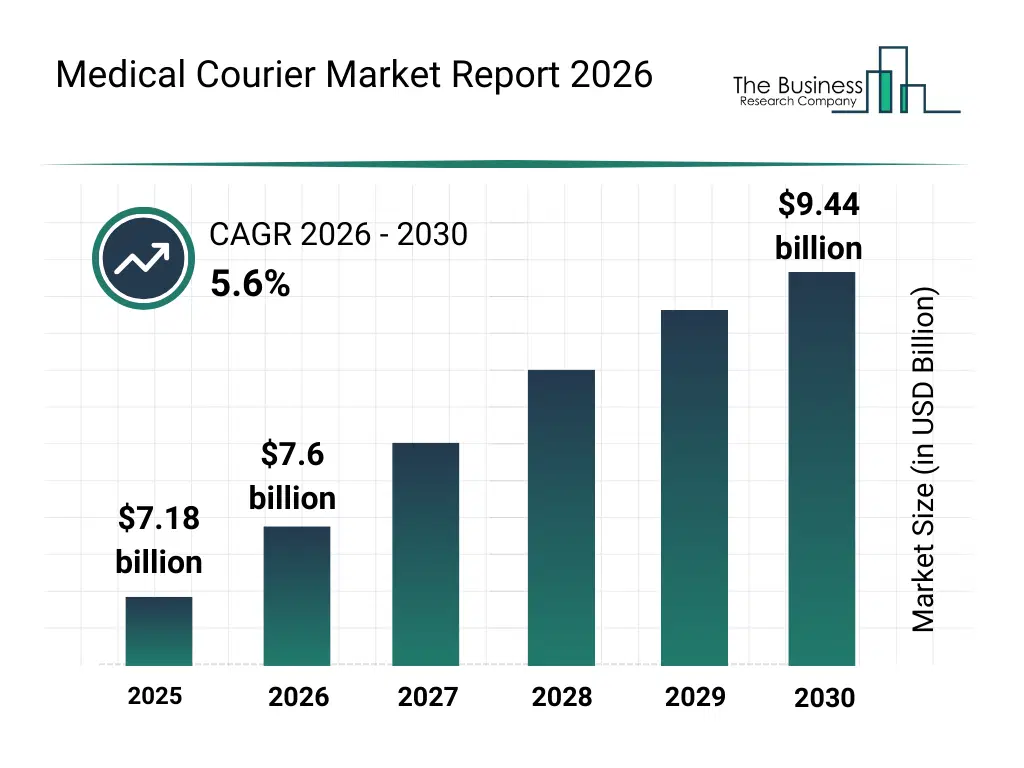
What Is The Medical Courier Market Size and Share 2026?
The medical courier market size has grown strongly in recent years. It will grow from $7.18 billion in 2025 to $7.6 billion in 2026 at a compound annual growth rate (CAGR) of 5.9%. The growth in the historic period can be attributed to growth in diagnostic testing volumes, expansion of hospital networks, increasing pharmaceutical distribution needs, rising use of centralized laboratories, demand for time-sensitive medical transport.What Is The Medical Courier Market Growth Forecast?
The medical courier market size is expected to see strong growth in the next few years. It will grow to $9.44 billion in 2030 at a compound annual growth rate (CAGR) of 5.6%. The growth in the forecast period can be attributed to increasing demand for same-day medical deliveries, rising adoption of electric medical courier fleets, expansion of home healthcare services, growing need for secure data-integrated logistics, increasing regulatory scrutiny on medical transport. Major trends in the forecast period include increasing adoption of temperature-controlled logistics, rising demand for on-demand medical deliveries, growing use of real-time tracking systems, expansion of specialized bio-specimen transport services, enhanced focus on regulatory-compliant handling.
Global Medical Courier Market Segmentation
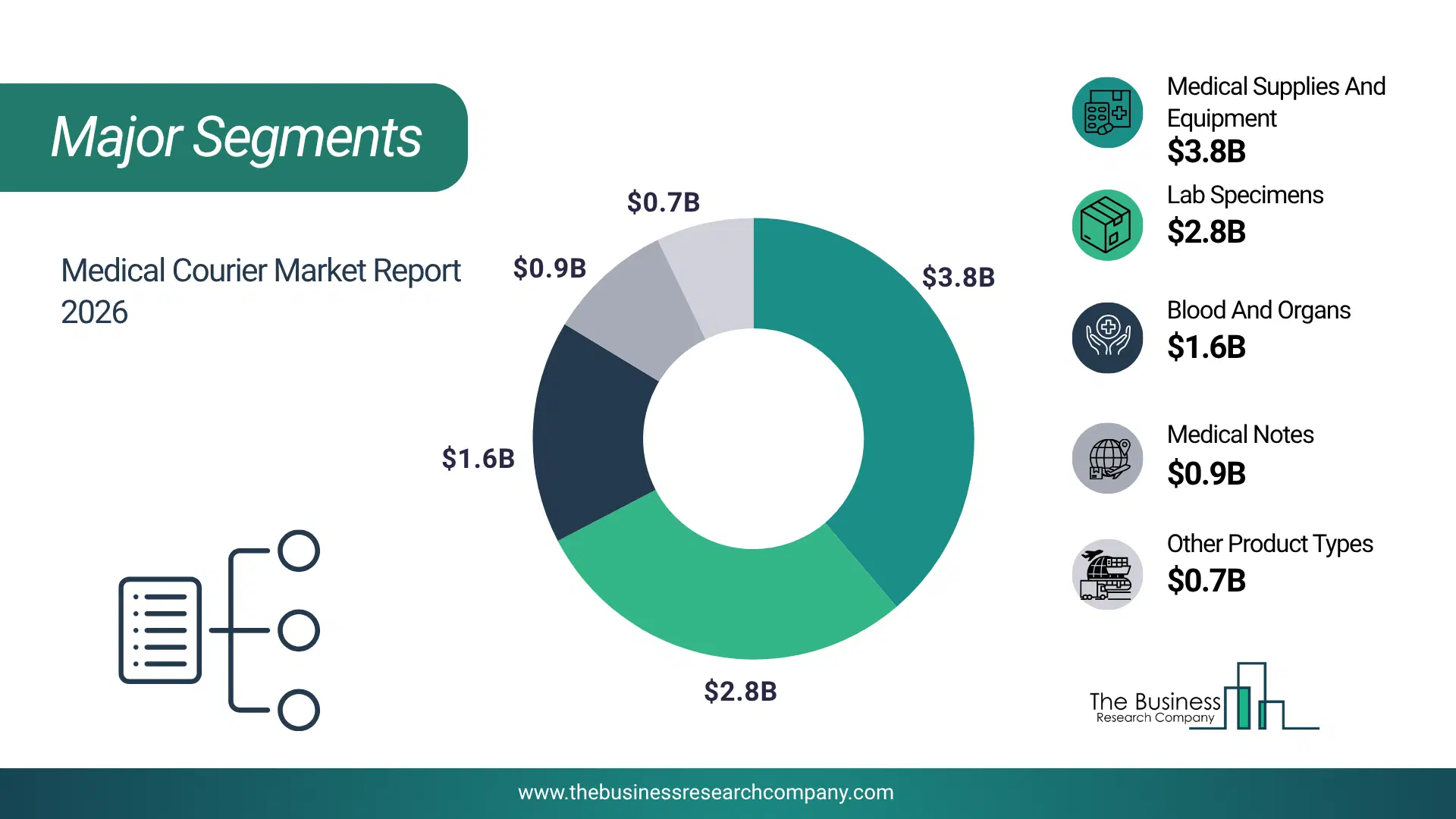
1) By Product Type: Medical Supplies And Equipment, Blood And Organs, Lab Specimens, Medical Notes, Other Product Types 2) By Service Type: Standard Courier Service, International Services, Rush And On-Demand, Pallet Shipping, Other Service Types 3) By Destination: Domestic, International 4) By End Users: Hospital And Clinics, Diagnostic Labs, Blood And Tissue Banks, Pharmacy, In Home Support, Pharmaceutical And Biotechnology Companies, Other End Users Subsegments: 1) By Medical Supplies and Equipment: Pharmaceuticals and Prescription Drugs, Surgical Instruments, Medical Devices, Diagnostic Tools, Personal Protective Equipment (PPE) 2) By Blood and Organs: Blood Samples and Units, Human Organs for Transplant, Plasma and Platelets, Stem Cells and Bone Marrow 3) By Lab Specimens: Blood Samples, Tissue Samples, Urine and Fecal Samples, Biopsy Specimens, Genetic Samples 4) By Medical Notes: Patient Records, Medical Documentation, Confidential Health Information, Prescription Notes 5) By Other Product Types: Medical Waste and Hazardous Materials, Vaccine Shipments, Medical Research Materials, Laboratory Chemicals The top segments in the medical courier market will be: • Domestic will reach $5828.61 Million by 2025. • Medical Supplies And Equipment will reach $3354.12 Million by 2025. • Standard Courier Service will reach $2818.59 Million by 2025. • Hospital And Clinics will reach $2538.65 Million by 2025. • Rush And On-Demand will reach $1772.4 Million by 2025.What Is The Driver Of The Medical Courier Market?
The growing demand for medications is expected to propel the growth of the medical courier market going forward. The growing demand for medications is due to factors such as an increased prevalence of chronic diseases and heightened awareness of health issues, along with the influence of direct-to-consumer advertising and physician prescribing practices. Medical couriers ensure the timely and secure delivery of prescription medications and specialty drugs to healthcare facilities and patients. For instance, in July 2024, according to a report published by the Australian Institute of Health and Welfare, an Australia-based governmental organization, total spending on the pharmaceutical benefits scheme (PBS) and repatriation pharmaceutical benefits scheme (RPBS) medicines rose by 3.9% to $20.4 billion during the 2022–23 period. This increase resulted in 335.8 million prescriptions being dispensed. Consumer contributions also saw a rise, reaching $3.4 billion, which accounted for 17% of the total expenditure. Therefore, the growing demand for medications is driving the growth of the medical courier industry.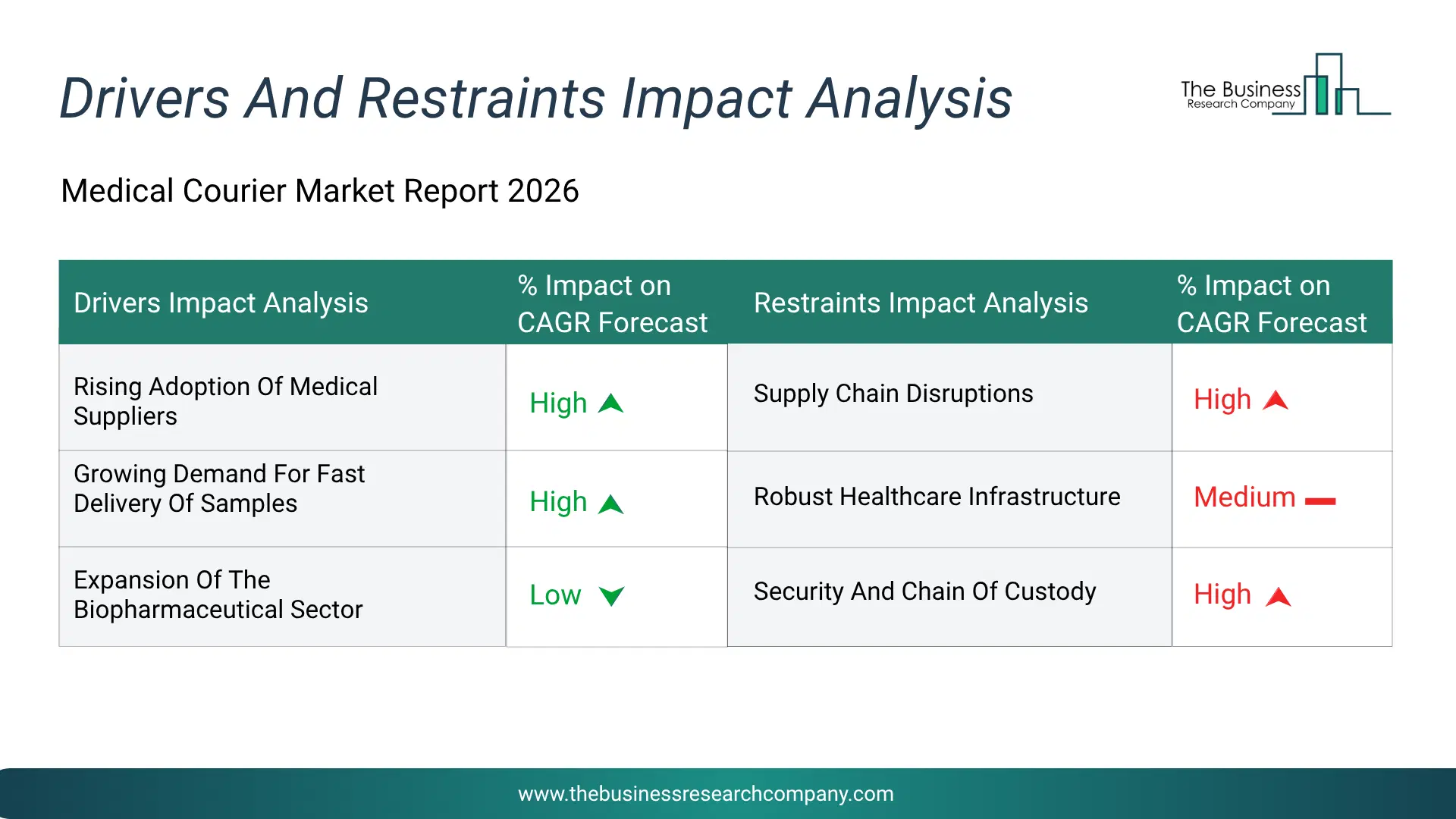
Infographic Chart Showing Key Market Drivers Analysis And Restraints For Medical Courier Market
The chart presents an impact analysis of key drivers and restraints, quantifying their relative influence on the market's growth rate and helping assess the balance between growth enablers and limiting factors. This chart offers a high-level perspective; the full report contains more detailed insights.
How Will The Drivers Impact Growth In The Global Medical Courier Market?
• Pharmaceutical Industry Expansion (Medium) – The pharmaceutical industry expansion will become a key driver of growth in the medical courier market by 2030. As pharmaceutical production grows globally, there is an increased demand for the reliable transportation of medications, particularly temperature-sensitive and specialty drugs. Medical couriers facilitate secure, timely deliveries across the supply chain—from production facilities to end-users. Additionally, the increase in clinical trials and R&D has amplified the need for reliable logistics of biological samples and investigational products, where medical couriers play a key role in preserving integrity and speed. With pharmaceutical firms entering new markets, the volume of cross-border shipments is rising. Medical couriers support this expansion by offering compliant international logistics, including customs navigation and cold chain expertise. As a result, the pharmaceutical industry expansion is anticipated to contributing to a 1.5% annual growth in the market. • Increase in Online Pharmacies and Prescription Delivery Services (Medium) – The increase in online pharmacies and prescription delivery services will emerge as a major factor driving the expansion of the medical courier market by 2030. The growth of e-pharmacies has driven a strong consumer shift toward home delivery services. Medical couriers play a critical role by providing reliable last-mile logistics, enhancing access for elderly, rural, and mobility-impaired patients. As online pharmacy platforms expand, particularly in emerging markets, couriers are essential for efficient distribution across varied regions. Additionally, the shift toward subscription-based models for chronic disease management relies on reliable, recurring deliveries. To meet expectations around speed, safety, and regulatory compliance, e-pharmacies increasingly depend on specialized courier partners offering secure, traceable, and temperature-controlled logistics. Consequently, the increase in online pharmacies and prescription delivery services capabilities is projected to contributing to a 1.2% annual growth in the market. • Growth of Diagnostic Laboratories (Low) – The growth of diagnostic laboratories within digital manufacturing processes will serve as a key growth catalyst for the medical courier market by 2030. The expansion of diagnostic laboratories has significantly increased the volume of biological samples requiring secure and timely transport, driving demand for specialized medical courier services. With many tests being time-sensitive, especially those related to infections and surgeries, reliable logistics are critical to ensuring prompt diagnostics and treatment. As labs extend operations into rural and Tier-2/Tier-3 areas, couriers play a key role in connecting remote collection centers with central testing facilities. Additionally, the rise of home sample collection services has further elevated the importance of couriers in enabling convenient, patient-centric diagnostic models. These trends collectively contribute to the growing relevance and demand for medical courier solutions in the healthcare sector. Therefore, this growth of diagnostic laboratories across digital manufacturing operations is projected to supporting to a 0.5% annual growth in the market. • Favorable Government Initiatives (Low) – The favorable government initiatives will become a significant driver contributing to the growth of the medical courier market by 2030 Governments across the globe are significantly investing in healthcare infrastructure, including hospitals, diagnostic labs, and vaccine distribution systems, which in turn fuels the demand for dependable medical courier services. Parallelly, increased support for cold chain logistics—particularly for biologics and vaccines—is enhancing the infrastructure required for safe, temperature-controlled transportation. The rise of public health initiatives promoting telehealth and home-based care further intensifies the need for timely delivery and collection of medical supplies and diagnostic samples. Additionally, the implementation of robust regulatory frameworks is strengthening standards for the secure transport of medical goods, thereby fostering greater adoption of specialized courier services among healthcare providers. Consequently, the favorable government initiatives strategies is projected to contributing to a 0.2% annual growth in the market.How Will The Restraints Impact Growth In The Global Medical Courier Market?
• High Regulatory and Compliance Burden (Medium) – High Regulatory and Compliance Burden will restrict the growth of the Medical Courier market during the forecast period. Medical courier operations must comply with stringent regulations for transporting pharmaceuticals, biologicals, and medical supplies. Compliance with temperature control, tracking, and documentation requirements adds to operational costs and complexity. Regulatory burden can affect service availability and profitability, limiting market growth. • Limited Reach in Rural and Remote Areas (Low) – Limited Reach in Rural and Remote Areas will restrict the growth of the Medical Courier market during the forecast period. Medical courier services face challenges in reaching rural and remote areas with limited transportation infrastructure. Logistics costs in sparsely populated areas can be prohibitive, limiting service availability. Geographic coverage gaps affect patient access to medical deliveries and constrain market expansion. • Impact of Trade War and Tariff (Low) – Impact of Trade War and Tariff will restrict the growth of the Medical Courier market during the forecast period. Trade tensions and economic uncertainty can affect healthcare spending and logistics investment. Reduced business activity and cost-cutting during trade disputes may limit demand for medical courier services. Trade barriers may also impact the pharmaceutical and medical supply chain, affecting courier operations.Key Players In The Global Medical Courier Market
Major companies operating in the medical courier market are United Parcel Service of America Inc., FedEx Corporation, DHL International GmbH, World Courier Management Inc., Apollo Medical Logistics LLC, CitySprint (UK) Ltd., MNX Global Logistics Inc., Speedy Freight, ERS Transition Ltd., Network Global Logistics Inc., Velox Expres S.A., Medspeed LLC, Matternet Inc., Senpex Logistics Inc., Medical Couriers Inc., Americord Registry LLC, Reliable Couriers Inc., Affordable Courier Solutions Inc, Blaze Express Courier Service, MedLine Express Services Inc., Reliant Couriers & Haulage Ltd., RTD Logistics Inc., IntelliQuick Delivery Inc., California Courier Services Inc.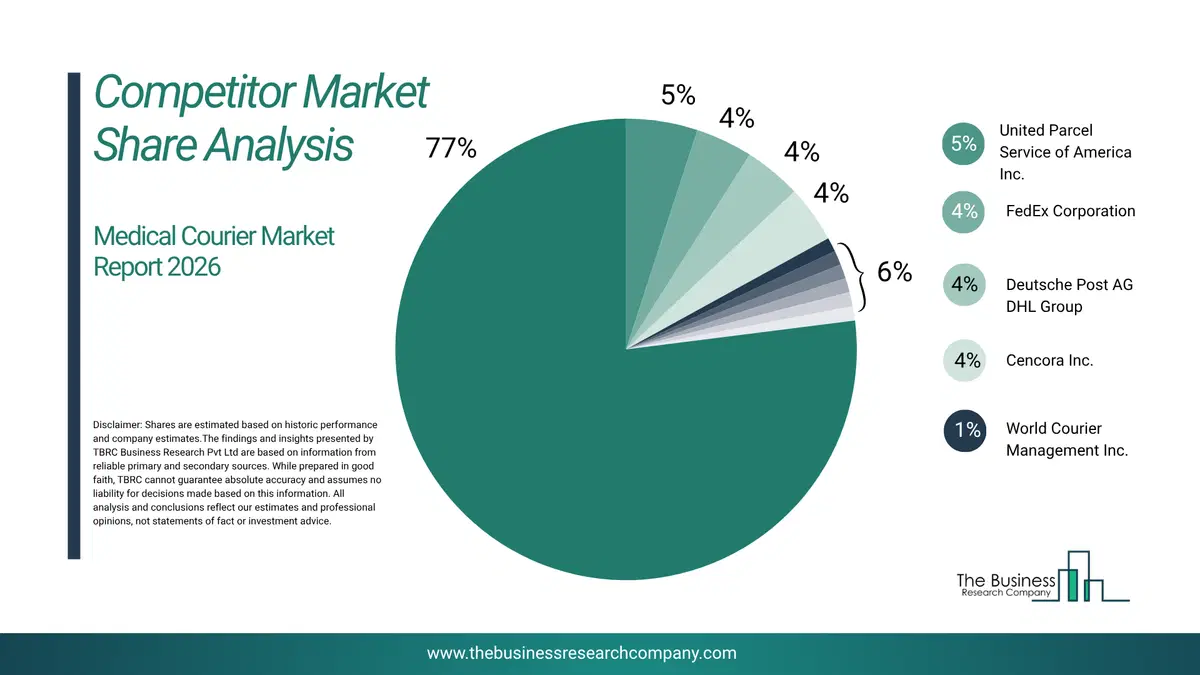
This chart is for illustrative purposes; the full report includes a detailed competitor analysis and comprehensive overview of the top 10 companies in the market.
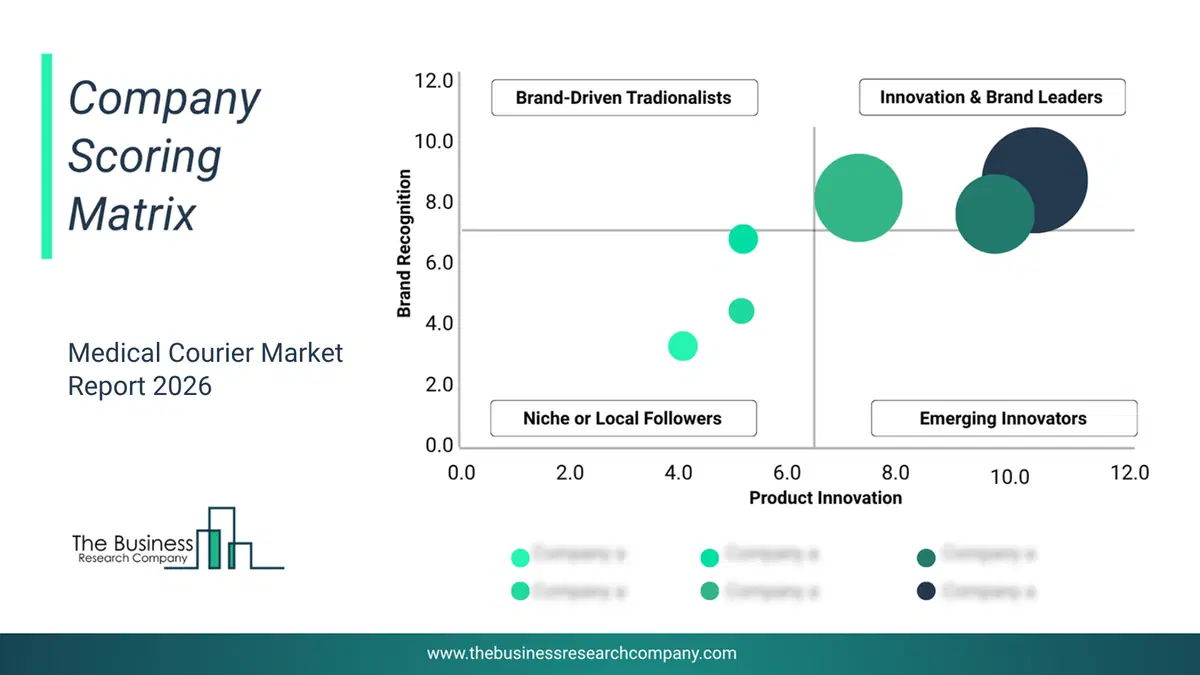
This chart maps companies by product innovation and brand strength, with bubble size indicating relative revenue, helping identify market leaders, challengers, and niche players. This is an illustrative chart; the full report provides a complete and accurate competitive analysis.
Global Medical Courier Market Trends and Insights
Major companies operating in the medical courier market are focusing on developing advanced solutions, such as same-day medicine delivery, to enhance efficiency and accuracy in the delivery of medical supplies. Same-day medicine delivery is a service that ensures prescription medications and other pharmaceutical products are delivered to patients or healthcare facilities within the same day of order, providing timely access to necessary treatments. For instance, in June 2023, Uber Technologies Inc., a US-based transportation company, expanded its healthcare offerings with the launch of a new medical delivery service. The service, which is part of Uber Health, will now include same-day delivery of prescription drugs, over-the-counter medications, and even food-as-medicine prescriptions. The new medical delivery service leverages Uber's existing delivery platform and expertise to facilitate the delivery of essential medications directly to people's homes.What Are Latest Mergers And Acquisitions In The Medical Courier Market?
In January 2024, LIFE COURIERS, a Germany-based logistics company that specializes in healthcare and life science logistics, acquired Optimize Courier for an undisclosed amount. This acquisition enhances LIFE COURIERS' reach and service offerings, establishing the company as a complete solution provider for clients in the pharmaceutical, biotechnology, and healthcare industries. Optimize Courier is a US-based provider of specialty medical courier delivery services.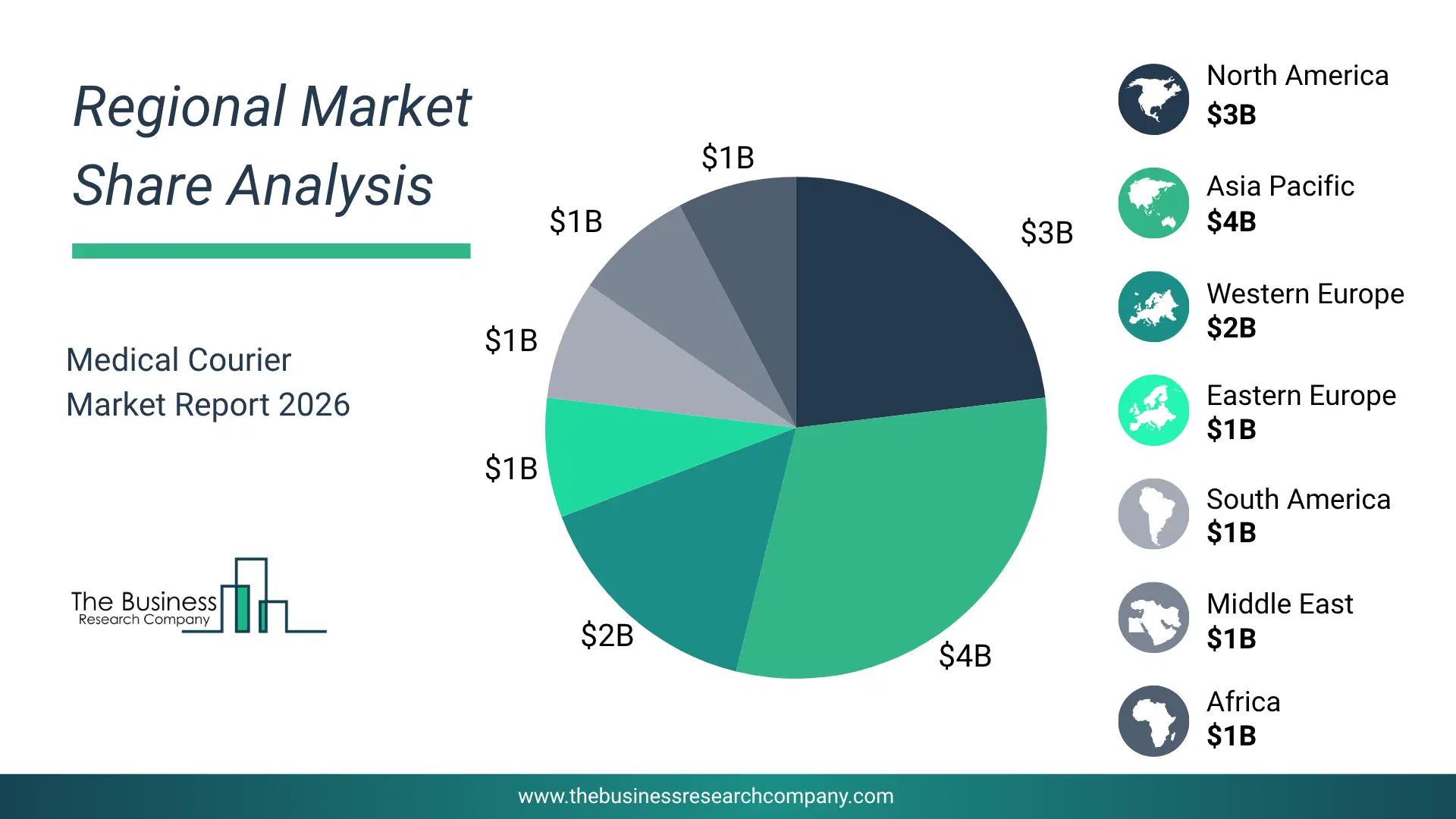
Regional Outlook
North America was the largest region in the medical courier market in 2025. Asia-Pacific is expected to be the fastest-growing region in the forecast period. The regions covered in this market report are Asia-Pacific, South East Asia, Western Europe, Eastern Europe, North America, South America, Middle East, Africa. The countries covered in this market report are Australia, Brazil, China, France, Germany, India, Indonesia, Japan, Taiwan, Russia, South Korea, UK, USA, Canada, Italy, Spain.What Defines the Medical Courier Market?
The medical courier market includes revenues earned by entities by providing services such as specimen transport, pharmaceutical delivery, medical equipment delivery, tracking and reporting, and secure and confidential transport. The market value includes the value of related goods sold by the service provider or included within the service offering. Only goods and services traded between entities or sold to end consumers are included.How is Market Value Defined and Measured?
The market value is defined as the revenues that enterprises gain from the sale of goods and/or services within the specified market and geography through sales, grants, or donations in terms of the currency (in USD unless otherwise specified). The revenues for a specified geography are consumption values that are revenues generated by organizations in the specified geography within the market, irrespective of where they are produced. It does not include revenues from resales along the supply chain, either further along the supply chain or as part of other products.
This chart presents market attractiveness based on a quantitative evaluation of growth, competition, strategic alignment, and risk, offering a clear view of opportunity areas for decision-making. This chart is for illustrative purposes; the full report contains the complete analysis.

This chart highlights the Total Addressable Market (TAM) by estimating the maximum revenue opportunity using an assumption-driven approach, supporting strategic planning and opportunity sizing across markets. The chart is illustrative; the full report provides a more comprehensive analysis.
What Key Data and Analysis Are Included in the Medical Courier Market Report 2026?
The medical courier market research report is one of a series of new reports from The Business Research Company that provides market statistics, including industry global market size, regional shares, competitors with the market share, detailed market segments, market trends and opportunities, and any further data you may need to thrive in the medical courier industry. The market research report delivers a complete perspective of everything you need, with an in-depth analysis of the current and future state of the industry.Medical Courier Market Report Forecast Analysis
| Report Attribute | Details |
|---|---|
| Market Size Value In 2026 | $7.6 billion |
| Revenue Forecast In 2030 | $9.44 billion |
| Growth Rate | CAGR of 5.9% from 2026 to 2030 |
| Base Year For Estimation | 2025 |
| Actual Estimates/Historical Data | 2020-2025 |
| Forecast Period | 2026 - 2030 |
| Market Representation | Revenue in USD Billion and CAGR from 2026 to 2030 |
| Segments Covered | Product Type, Service Type, Destination, End Users |
| Regional Scope | Asia-Pacific, Western Europe, Eastern Europe, North America, South America, Middle East, Africa |
| Country Scope | The countries covered in the report are Australia, Brazil, China, France, Germany, India, Indonesia, Japan, Taiwan, Russia, South Korea, UK, USA, Canada, Italy, Spain. |
| Key Companies Profiled | United Parcel Service of America Inc., FedEx Corporation, DHL International GmbH, World Courier Management Inc., Apollo Medical Logistics LLC, CitySprint (UK) Ltd., MNX Global Logistics Inc., Speedy Freight, ERS Transition Ltd., Network Global Logistics Inc., Velox Expres S.A., Medspeed LLC, Matternet Inc., Senpex Logistics Inc., Medical Couriers Inc., Americord Registry LLC, Reliable Couriers Inc., Affordable Courier Solutions Inc, Blaze Express Courier Service, MedLine Express Services Inc., Reliant Couriers & Haulage Ltd., RTD Logistics Inc., IntelliQuick Delivery Inc., California Courier Services Inc. |
| Customization Scope | Request for Customization |
| Pricing And Purchase Options | Explore Purchase Options |