
Medical Device Technologies Market Report 2026
Global Outlook – By Type (Molecular Diagnostics, Diagnostic Imaging, Non-Invasive Monitoring, Drug Delivery, Mobility Aid Technologies, Micro Fluids And MEMS, Bio-Implants, Biomaterials, Minimal Or Non-Invasive Surgery, Telemedicine), By Application (Cardiology, Orthopedics, Oncology, Neurology, Respiratory, Other Applications), By End-User (Hospitals, Clinics, Ambulatory Surgical Centers, Diagnostics Centers, Research Organizations, Other End Users) - Market Size, Trends, And Global Forecast 2026-2030
Medical Device Technologies Market Overview
• Medical Device Technologies market size has reached to $580.51 billion in 2025 • Expected to grow to $752.99 billion in 2030 at a compound annual growth rate (CAGR) of 5.3% • Growth Driver: Rise In Chronic diseases Fueling Growth In The Medical Device Technologies market • Market Trend: Introduction To Technological Advancements Such As Minimally Invasive Techniques In The Medical Devices Sector • North America was the largest region in 2025.Market Gains By 2030 – Top Opportunities By Segment
Market Gain identifies the most promising market opportunities by highlighting the segments or products expected to generate the highest incremental revenue growth over the next five years.
What Is Covered Under Medical Device Technologies Market?
Medical device technologies refer to a broad category of instruments, equipment, software, and devices designed for use in the diagnosis, treatment, monitoring, and management of medical conditions. These technologies contribute to improved patient outcomes, enhanced diagnostics, and more effective treatments. The main types of medical device technologies are molecular diagnostics, diagnostic imaging, non-invasive monitoring, drug delivery, mobility aid technologies, micro fluids and mems, bio-implants, biomaterials, minimal or non-invasive surgery, and telemedicine. Molecular diagnostics (MDx) is a branch of laboratory medicine or clinical pathology that utilizes techniques of molecular biology to diagnose diseases, detect risks, and decide which therapies will work best for individual patients. These are used in various applications such as cardiology, orthopedics, oncology, neurology, respiratory, and others and are used by end-users such as hospitals, clinics, ambulatory surgical centers, diagnostics centers, research organizations, and others.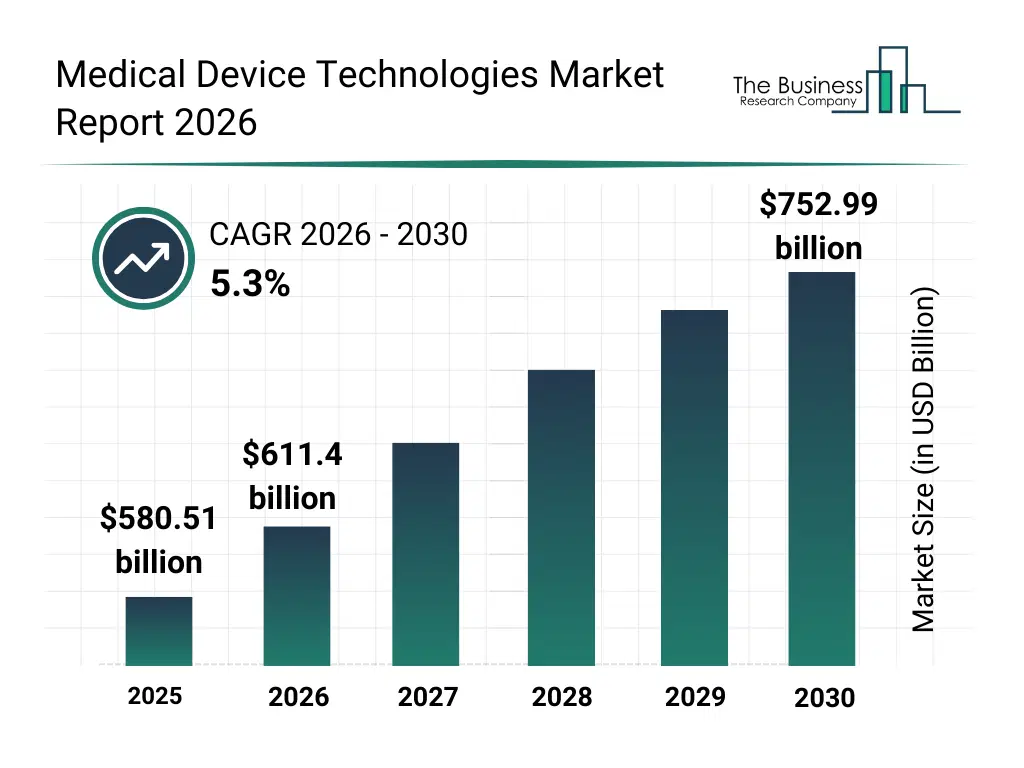
What Is The Medical Device Technologies Market Size and Share 2026?
The medical device technologies market size has grown strongly in recent years. It will grow from $580.51 billion in 2025 to $611.4 billion in 2026 at a compound annual growth rate (CAGR) of 5.3%. The growth in the historic period can be attributed to advancements in diagnostic imaging technologies, rising prevalence of chronic diseases, increased healthcare infrastructure investment, early adoption of implantable medical devices, growing use of electronic medical records.What Is The Medical Device Technologies Market Growth Forecast?
The medical device technologies market size is expected to see strong growth in the next few years. It will grow to $752.99 billion in 2030 at a compound annual growth rate (CAGR) of 5.3%. The growth in the forecast period can be attributed to aging global population, growth of telemedicine and remote monitoring, increasing demand for early disease diagnosis, rising healthcare digitization initiatives, continuous innovation in medical device engineering. Major trends in the forecast period include increasing adoption of non-invasive and minimally invasive technologies, growing integration of connected and smart medical devices, rising demand for home-based and remote care technologies, expansion of personalized and precision medical devices, greater focus on interoperability across medical systems.
Global Medical Device Technologies Market Segmentation
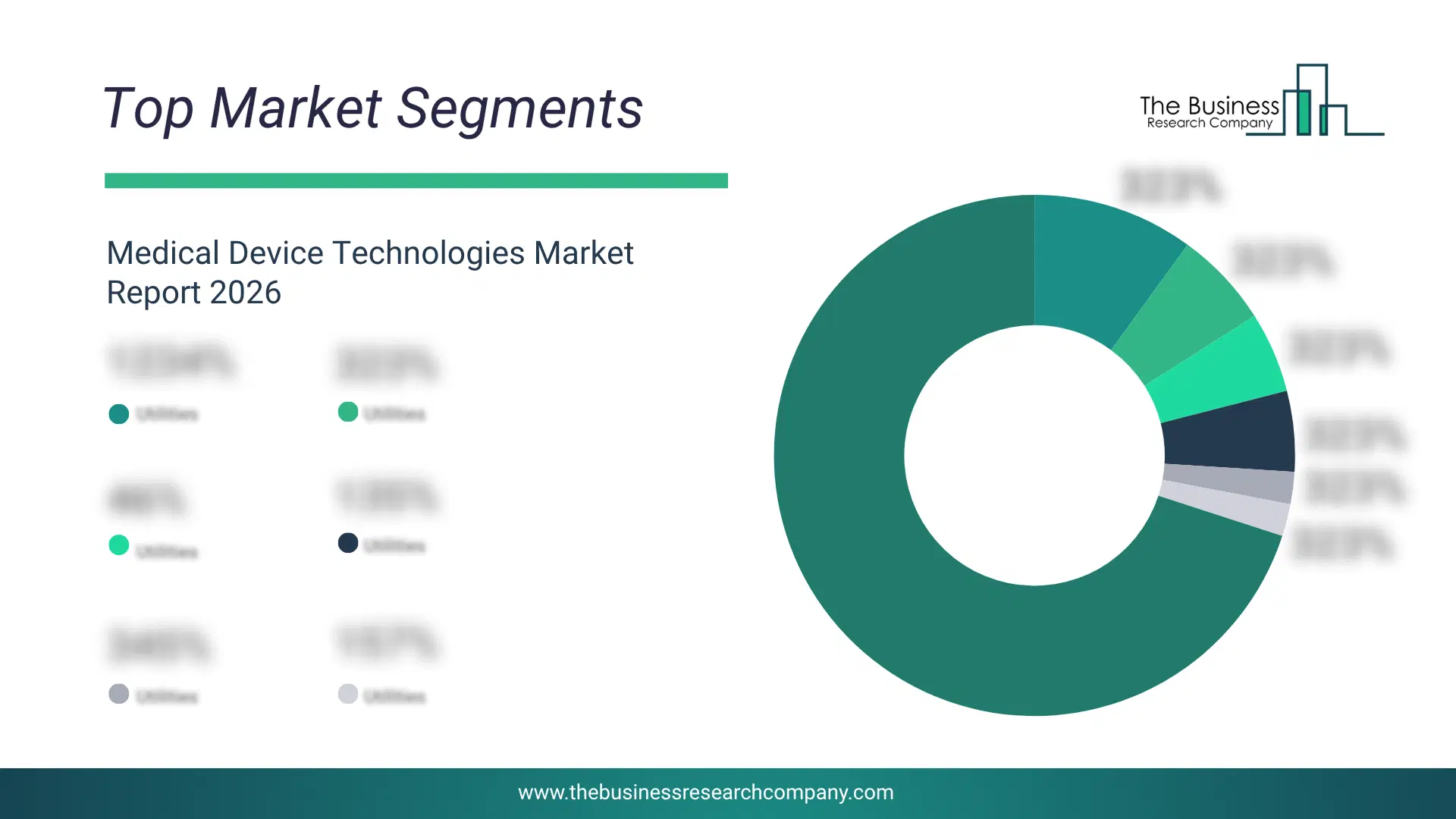
1) By Type: Molecular Diagnostics, Diagnostic Imaging, Non-Invasive Monitoring, Drug Delivery, Mobility Aid Technologies, Micro Fluids And MEMS, Bio-Implants, Biomaterials, Minimal Or Non-Invasive Surgery, Telemedicine 2) By Application: Cardiology, Orthopedics, Oncology, Neurology, Respiratory, Other Applications 3) By End-User: Hospitals, Clinics, Ambulatory Surgical Centers, Diagnostics Centers, Research Organizations, Other End Users Subsegments: 1) By Molecular Diagnostics: PCR-Based Diagnostics, DNA Microarrays, Next-Generation Sequencing (NGS), Isothermal Nucleic Acid Amplification 2) By Diagnostic Imaging: X-Ray Imaging, MRI Systems, Ultrasound Imaging, CT Scanners, Nuclear Imaging (PET, SPECT) 3) By Non-Invasive Monitoring: Blood Glucose Monitors, Cardiac Monitoring Devices, Blood Pressure Monitors, Pulse Oximeters 4) By Drug Delivery: Infusion Pumps, Nebulizers, Inhalers, Transdermal Drug Delivery Patches 5) By Mobility Aid Technologies: Wheelchairs, Walkers and Canes, Prosthetics, Exoskeletons 6) By Micro Fluids and MEMS: Lab-On-A-Chip Devices, Microfluidic Pumps, Microarrays, MEMS Sensors 7) By Bio-Implants: Orthopedic Implants, Cardiovascular Implants, Neurostimulators, Dental Implants 8) By Biomaterials: Polymers, Ceramics, Metals, Composite Biomaterials 9) By Minimal or Non-Invasive Surgery: Laparoscopic Devices, Endoscopic Tools, Laser-Assisted Surgery Devices, Robotic Surgical Systems 10) By Telemedicine: Remote Patient Monitoring Systems, Telehealth Platforms, Video Consultation Systems, Wearable Health Tracking Devices The top segments in the medical device technologies market will be: • Diagnostic Imaging will reach $139.24 Billion by 2030. • Molecular Diagnostics will reach $110.41 Billion by 2030. • Non-Invasive Monitoring will reach $91.74 Billion by 2030. • Bio-Implants will reach $91.74 Billion by 2030. • Minimal Or Non-Invasive Surgery will reach $81.83 Billion by 2030.What Is The Driver Of The Medical Device Technologies Market?
The increasing number of chronic diseases is expected to propel the growth of the medical device technologies market going forward. Chronic diseases refer to long-term health conditions that persist over an extended period and often progress slowly. Medical device technologies are used in chronic diseases for providing timely and personalized interventions, improving patient outcomes, and enhancing the overall healthcare experience. For instance, in February 2024, according to the Centers for Disease Control and Prevention (CDC), a US-based federal public health agency, the agency reported that an estimated 129 million people in the United States have at least one major chronic disease, including conditions such as heart disease, cancer, diabetes, obesity, and hypertension. Therefore, increasing chronic diseases drives the medical device technologies industry.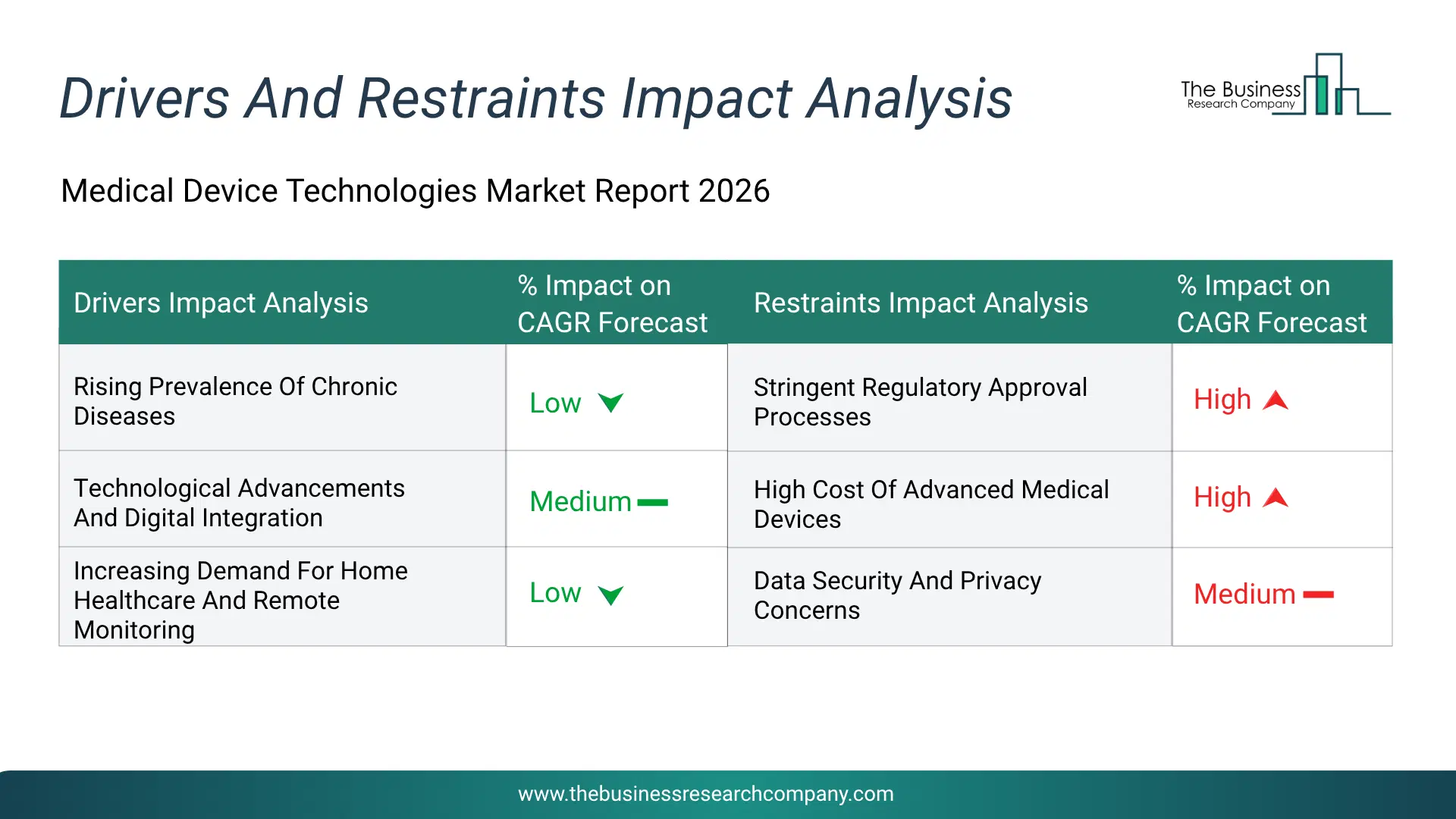
Infographic Chart Showing Key Market Drivers Analysis And Restraints For Medical Device Technologies Market
The chart presents an impact analysis of key drivers and restraints, quantifying their relative influence on the market's growth rate and helping assess the balance between growth enablers and limiting factors. This chart offers a high-level perspective; the full report contains more detailed insights.
How Will The Drivers Impact Growth In The Global Medical Device Technologies Market?
• Rising Prevalence Of Chronic Diseases (Low) – During the forecast period, the rising prevalence of chronic diseases is expected to become a key growth driver for the medical device technologies market by 2030. The growing incidence of chronic conditions such as cardiovascular diseases, diabetes, and respiratory disorders is significantly increasing the demand for medical devices. These diseases require continuous diagnosis, monitoring, and long-term management, which drives the adoption of devices like blood pressure monitors and wearable trackers. Aging populations and sedentary lifestyles are further contributing to higher disease prevalence. Healthcare systems are also focusing more on early detection and preventive care, which increases device utilization. Patients increasingly prefer home-based monitoring solutions, expanding the use of portable medical devices. This continuous need for disease management ensures sustained demand for advanced medical technologies. • Technological Advancements And Digital Integration (Medium) – During the forecast period, the technological advancements and digital integration is expected to emerge as a major factor driving the expansion of the medical device technologies market by 2030. Rapid technological innovations such as artificial intelligence, IoT-enabled devices, and telemedicine are enhancing the capabilities of medical devices. These technologies enable real-time monitoring, improved diagnostics, and better treatment outcomes. Integration with digital health platforms allows seamless data sharing between patients and healthcare providers. Advanced devices also support minimally invasive procedures, reducing recovery times and hospital stays. Continuous research and development efforts are leading to the introduction of more efficient and accurate devices. These innovations improve patient care and operational efficiency, thereby accelerating adoption. Overall, technological progress is a key factor driving growth in this sector. • Increasing Demand For Home Healthcare And Remote Monitoring (Low) – During the forecast period, the increasing demand for home healthcare and remote monitoring is expected to act as a key growth catalyst for the medical device technologies market by 2030. There is a growing preference for home-based healthcare due to convenience and cost-effectiveness. Medical devices such as telemedicine systems, wearable monitors, and portable diagnostic tools support remote patient care. This trend reduces hospital visits and helps in managing long-term conditions efficiently. Healthcare providers are also encouraging remote monitoring to improve patient compliance and reduce readmissions. The expansion of digital infrastructure enables better communication between patients and doctors. Additionally, the shift toward personalized healthcare is boosting demand for home-use medical devices. This transition significantly contributes to the growth of medical device technologies.How Will The Restraints Impact Growth In The Global Medical Device Technologies Market?
• Stringent Regulatory Approval Processes (Low) – During the forecast period, stringent regulatory approval processes are significantly restricting the growth of the medical device technologies market. Complex compliance requirements, lengthy approval timelines, and evolving safety standards are delaying product commercialization and increasing development costs for manufacturers. • High Cost Of Advanced Medical Devices (Medium) – During the forecast period, high cost of advanced medical devices is significantly restricting the growth of the medical device technologies market. Substantial capital investment required for procurement, installation, and maintenance of advanced technologies is limiting adoption, particularly among small healthcare providers and institutions in developing regions. • Data Security And Privacy Concerns (Low) – During the forecast period, data security and privacy concerns are significantly restricting the growth of the medical device technologies market. Increasing connectivity of medical devices and integration with digital health systems are raising risks of cyber threats, data breaches, and regulatory non-compliance, thereby slowing adoption of connected medical technologies.Key Players In The Global Medical Device Technologies Market
Major companies operating in the medical device technologies market are Cardinal Health Inc., Johnson & Johnson, Siemens AG, F. Hoffmann-La Roche Ltd., Novartis AG, Thermo Fischer Scientific Inc., Abbott Laboratories Inc., Zenith Healthcare, 3M Company, Medtronic plc, Becton Dickinson and Company, KONINKLIJKE PHILIPS N.V., Stryker Corporation, GE HealthCare Technologies Inc., Baxter International Inc., Boston Scientific Corporation, Zimmer Biomet Holdings Inc., Agilent Technologies Inc., Olympus Corporation, Intutive Surgical Inc., Terumo Corporation, Edwards Lifesciences Corporation, Smith & Nephew plc, Hologic Inc., BioMerieux Inc., Align Technology Inc., ResMed Inc., Dexcom Inc.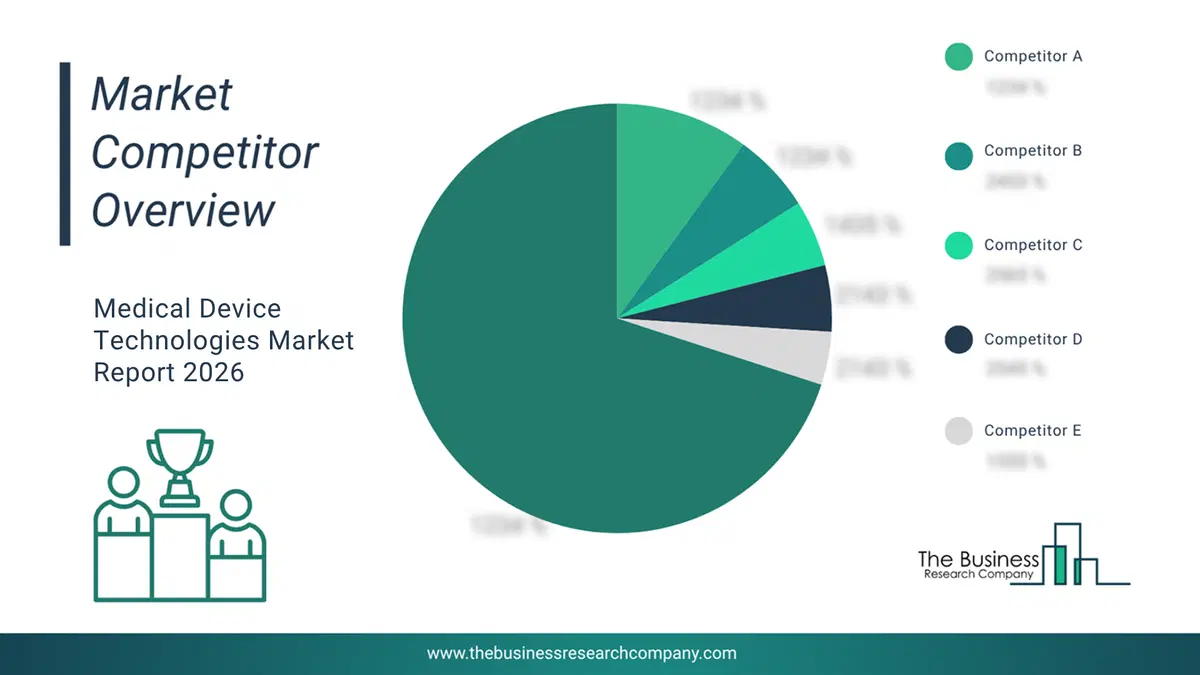
This chart is for illustrative purposes; the full report includes a detailed competitor analysis and comprehensive overview of the top 10 companies in the market.
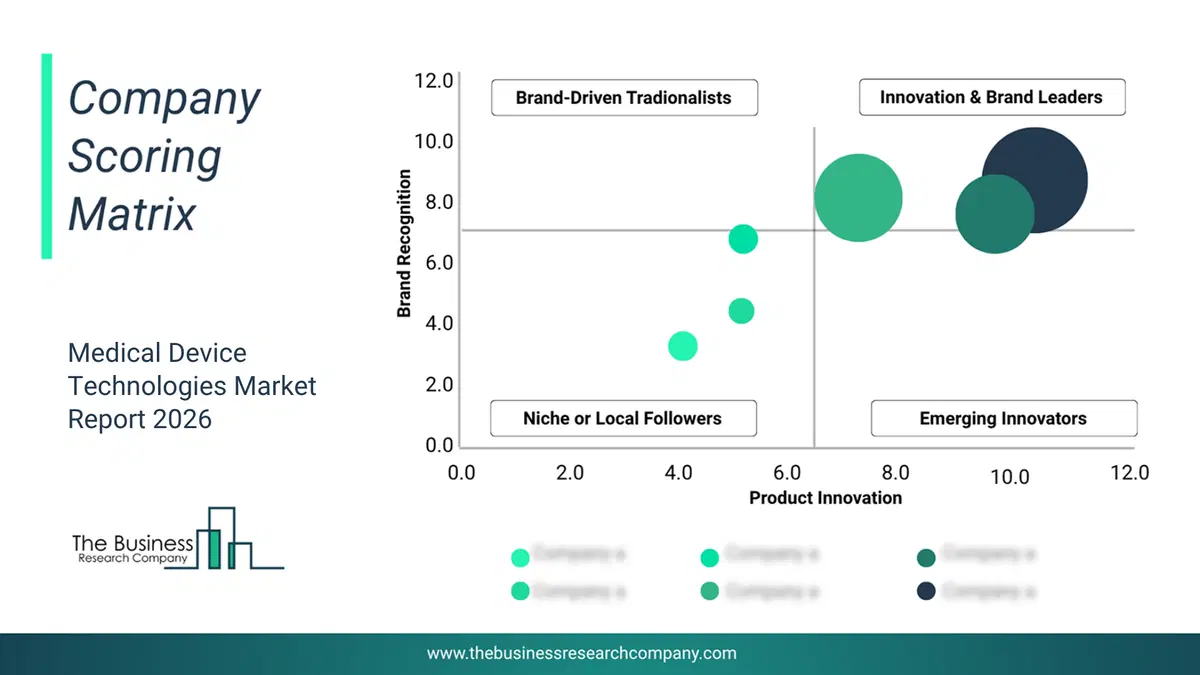
This chart maps companies by product innovation and brand strength, with bubble size indicating relative revenue, helping identify market leaders, challengers, and niche players. This is an illustrative chart; the full report provides a complete and accurate competitive analysis.
Global Medical Device Technologies Market Trends and Insights
Major companies operating in the medical device technologies market are developing medical devices with minimally invasive techniques to gain a competitive edge in the market. Minimally invasive techniques refer to medical procedures that are performed with minimal damage to the body compared to traditional open surgeries. For instance, in November 2023, Medtronic plc, a US-based medical device company, introduced the Symplicity Spyral RDN system, a minimally invasive treatment for hypertension. The Symplicity Spyral RDN system is used during the Symplicity blood pressure procedure, which is the first catheter-based approach using radiofrequency (RF) energy that complements medications and lifestyle modifications to help reduce blood pressure. The system has been approved by the FDA and is available for commercial use in more than 70 countries around the world.What Are Latest Mergers And Acquisitions In The Medical Device Technologies Market?
In May 2024, Johnson & Johnson, a US-based healthcare company, acquired Shockwave Medical Inc., for an undisclosed amount. Through this acquisition, Johnson & Johnson aims to expand its leadership in cardiovascular intervention and bring innovative intravascular lithotripsy (IVL) technology to more patients. Shockwave Medical Inc., is a US-based medical device company providing IVL platforms for treating coronary and peripheral artery disease.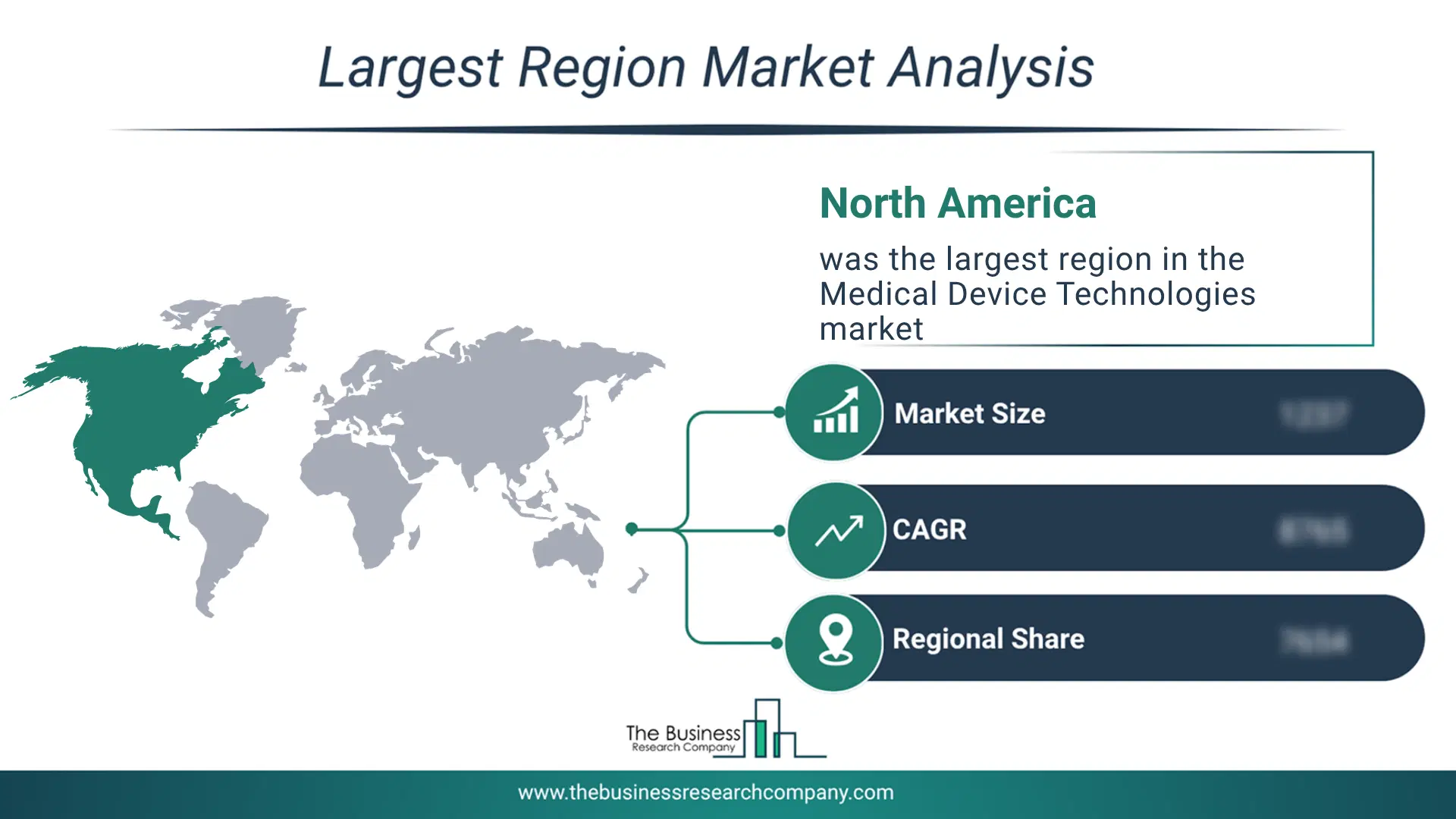
Regional Outlook
North America was the largest region in the medical device technologies market in 2025. The regions covered in this market report are Asia-Pacific, South East Asia, Western Europe, Eastern Europe, North America, South America, Middle East, Africa. The countries covered in this market report are Australia, Brazil, China, France, Germany, India, Indonesia, Japan, Taiwan, Russia, South Korea, UK, USA, Canada, Italy, Spain.What Defines the Medical Device Technologies Market?
The medical device technologies market consists of revenues earned by entities by providing services including diagnostic and therapeutic functions, patient monitoring and care, integration with digital technology, and advancements in medical treatment. The market value includes the value of related goods sold by the service provider or included within the service offering. The medical device technologies market also consists of sales of blood pressure monitors, and telemedicine devices. Values in this market are ‘factory gate’ values, that is the value of goods sold by the manufacturers or creators of the goods, whether to other entities (including downstream manufacturers, wholesalers, distributors, and retailers) or directly to end customers. The value of goods in this market includes related services sold by the creators of the goods.How is Market Value Defined and Measured?
The market value is defined as the revenues that enterprises gain from the sale of goods and/or services within the specified market and geography through sales, grants, or donations in terms of the currency (in USD unless otherwise specified). The revenues for a specified geography are consumption values that are revenues generated by organizations in the specified geography within the market, irrespective of where they are produced. It does not include revenues from resales along the supply chain, either further along the supply chain or as part of other products.
This chart presents market attractiveness based on a quantitative evaluation of growth, competition, strategic alignment, and risk, offering a clear view of opportunity areas for decision-making. This chart is for illustrative purposes; the full report contains the complete analysis.

This chart highlights the Total Addressable Market (TAM) by estimating the maximum revenue opportunity using an assumption-driven approach, supporting strategic planning and opportunity sizing across markets. The chart is illustrative; the full report provides a more comprehensive analysis.
What Key Data and Analysis Are Included in the Medical Device Technologies Market Report 2026?
The medical device technologies market research report is one of a series of new reports from The Business Research Company that provides market statistics, including industry global market size, regional shares, competitors with the market share, detailed market segments, market trends and opportunities, and any further data you may need to thrive in the medical device technologies industry. The market research report delivers a complete perspective of everything you need, with an in-depth analysis of the current and future state of the industry.Medical Device Technologies Market Report Forecast Analysis
| Report Attribute | Details |
|---|---|
| Market Size Value In 2026 | $611.4 billion |
| Revenue Forecast In 2030 | $752.99 billion |
| Growth Rate | CAGR of 5.3% from 2026 to 2030 |
| Base Year For Estimation | 2025 |
| Actual Estimates/Historical Data | 2020-2025 |
| Forecast Period | 2026 - 2030 |
| Market Representation | Revenue in USD Billion and CAGR from 2026 to 2030 |
| Segments Covered | Type, Application, End-User |
| Regional Scope | Asia-Pacific, Western Europe, Eastern Europe, North America, South America, Middle East, Africa |
| Country Scope | The countries covered in the report are Australia, Brazil, China, France, Germany, India, Indonesia, Japan, Taiwan, Russia, South Korea, UK, USA, Canada, Italy, Spain. |
| Key Companies Profiled | Cardinal Health Inc., Johnson & Johnson, Siemens AG, F. Hoffmann-La Roche Ltd., Novartis AG, Thermo Fischer Scientific Inc., Abbott Laboratories Inc., Zenith Healthcare, 3M Company, Medtronic plc, Becton Dickinson and Company, KONINKLIJKE PHILIPS N.V., Stryker Corporation, GE HealthCare Technologies Inc., Baxter International Inc., Boston Scientific Corporation, Zimmer Biomet Holdings Inc., Agilent Technologies Inc., Olympus Corporation, Intutive Surgical Inc., Terumo Corporation, Edwards Lifesciences Corporation, Smith & Nephew plc, Hologic Inc., BioMerieux Inc., Align Technology Inc., ResMed Inc., Dexcom Inc. |
| Customization Scope | Request for Customization |
| Pricing And Purchase Options | Explore Purchase Options |