
Medical Radiation Detection Market Report 2026
Global Outlook – By Product (Personal Dosimeters, Area Process Dosimeters, Surface Contamination Monitors, Other Products), By Detection Technology (Gas Filled Detectors, Scintillators, Solid State), By End User (Hospitals, Clinics, Ambulatory Surgical Centers, Other End Users) – Market Size, Trends, Strategies, and Forecast to 2030
Medical Radiation Detection Market Overview
• Medical Radiation Detection market size has reached to $0.83 billion in 2025 • Expected to grow to $1.18 billion in 2030 at a compound annual growth rate (CAGR) of 7.2% • Growth Driver: The Rise in Cancer Cases Fueling Growth of the Medical Radiation Detection Market • Market Trend: Innovative Solutions Enhancing Safety Monitoring And Real Time Exposure Tracking • North America was the largest region in 2025 and Asia-Pacific is the fastest growing region.What Is Covered Under Medical Radiation Detection Market?
Medical radiation detection refers to the detection and measurement of ionizing radiation used in medical settings. It includes the equipment and devices designed to monitor radiation exposure levels to ensure the safety of patients, healthcare workers, and the general public. The main product types of medical radiation detection are personal dosimeters, area process dosimeters, surface contamination monitors, and other products. Gas filled detectors refer to devices that measure radiation by ionizing gas within a chamber, producing an electric charge that can be measured. The different types are gas-filled detectors, scintillators, and solid-state detectors. They are classified as safety types into aprons, shields, face masks, gloves, full body protection products, face protection products, and other safety types. The various end users include hospitals, clinics, ambulatory surgical centers, non-hospitals, and other end users.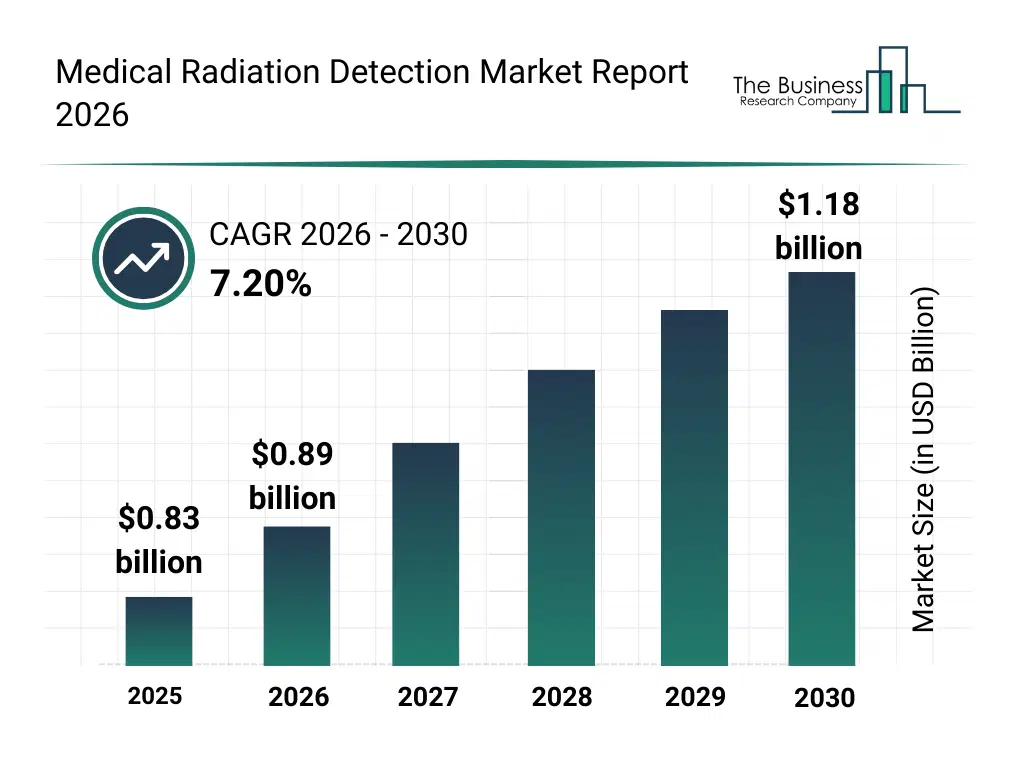
What Is The Medical Radiation Detection Market Size and Share 2026?
The medical radiation detection market size has grown strongly in recent years. It will grow from $0.83 billion in 2025 to $0.89 billion in 2026 at a compound annual growth rate (CAGR) of 8.0%. The growth in the historic period can be attributed to growth in use of diagnostic imaging procedures, increasing awareness of radiation exposure risks, expansion of radiology and nuclear medicine departments, rising regulatory focus on radiation safety, growing adoption of personal protective equipment in healthcare.What Is The Medical Radiation Detection Market Growth Forecast?
The medical radiation detection market size is expected to see strong growth in the next few years. It will grow to $1.18 billion in 2030 at a compound annual growth rate (CAGR) of 7.2%. The growth in the forecast period can be attributed to increasing volume of radiation-based diagnostic and therapeutic procedures, rising emphasis on occupational safety for healthcare workers, expanding adoption of real-time monitoring technologies, growing regulatory enforcement on radiation exposure limits, increasing investments in hospital safety infrastructure. Major trends in the forecast period include rising adoption of radiation monitoring in diagnostic and therapeutic procedures, growing demand for personal dosimeters among healthcare professionals, increasing use of real-time radiation detection systems in hospitals, expansion of radiation safety measures across medical facilities, growing preference for compact and portable radiation detection devices.
Global Medical Radiation Detection Market Segmentation
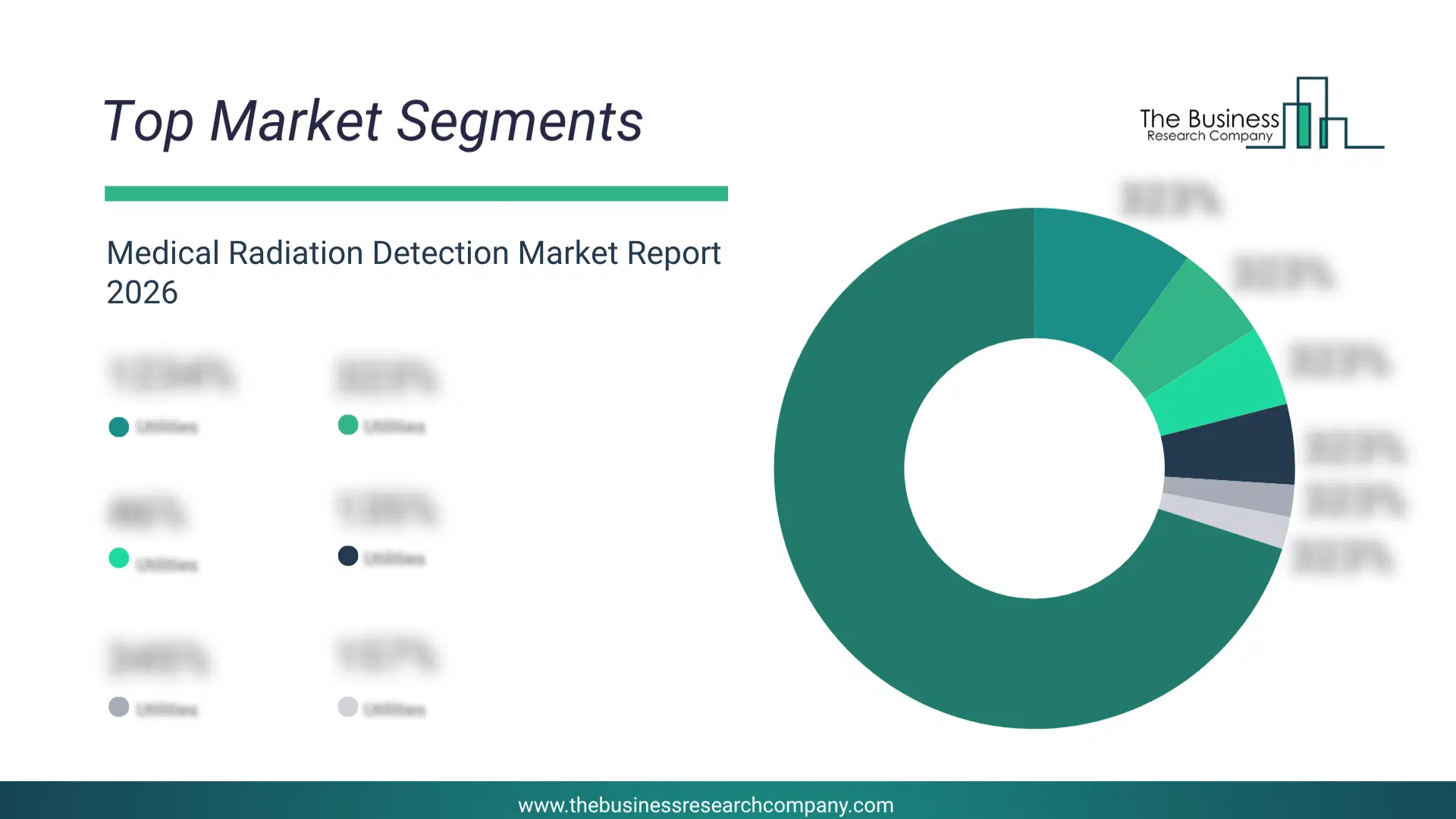
1) By Product: Personal Dosimeters, Area Process Dosimeters, Surface Contamination Monitors, Other Products 2) By Detection Technology: Gas Filled Detectors, Scintillators, Solid State 3) By End User: Hospitals, Clinics, Ambulatory Surgical Centers, Other End Users Subsegments: 1) By Personal Dosimeters: Thermoluminescent Dosimeters (TLD), Optically Stimulated Luminescence Dosimeters (OSLD), Electronic Personal Dosimeters (EPD) 2) By Area Process Dosimeters: Ionization Chamber Dosimeters, Semiconductor Dosimeters, Scintillation Detectors 3) By Surface Contamination Monitors: Gas Proportional Counters, Scintillation Detectors, Alpha and Beta Radiation Monitors 4) By Other Products: Radiation Survey Meters, Gamma and X-ray Radiation DetectorsWhat Is The Driver Of The Medical Radiation Detection Market?
The rise in cancer cases is expected to propel the growth of the medical radiation detection market going forward. Cancer refers to a group of diseases characterized by abnormal cell growth with the potential to invade or spread to other parts of the body. The rise in cancer cases can be attributed to factors such as aging populations, lifestyle factors such as smoking and diet, environmental exposures such as pollution and UV radiation, genetic predisposition, and advancements in cancer detection and screening technologies. Medical radiation detection helps prevent cancer by ensuring accurate and safe exposure levels during diagnostic imaging and therapy, minimizing potential health risks to patients and healthcare providers. For instance, in January 2024, according to the American Cancer Society, a US-based nonprofit cancer advocacy organization, the number of cancer cases increased to 2,001,140 compared to 1,958,310 in 2023, reflecting a growth of 2.19%. Therefore, the rise in cancer cases is driving the growth of the medical radiation detection industry.Key Players In The Global Medical Radiation Detection Market
Major companies operating in the medical radiation detection market are Mirion Technologies Inc, MP Biomedicals LLC, Trivitron Healthcare, Ludlum Measurements Inc, Biodex Medical Systems Inc, ATOMTEX CO, AMETEK ORTEC, Berkeley Nucleonics, IBA Dosimetry GmbH, Centronic Ltd, LND Ltd, Polimaster Inc, Scionix Holland, Alpha Spectra Inc, Bertin Instruments, LANDAUER, Luxium Solutions, Nucleonix Systems, SE International Inc, NUVIATech Instruments, Mi-Net Technology, IBA Group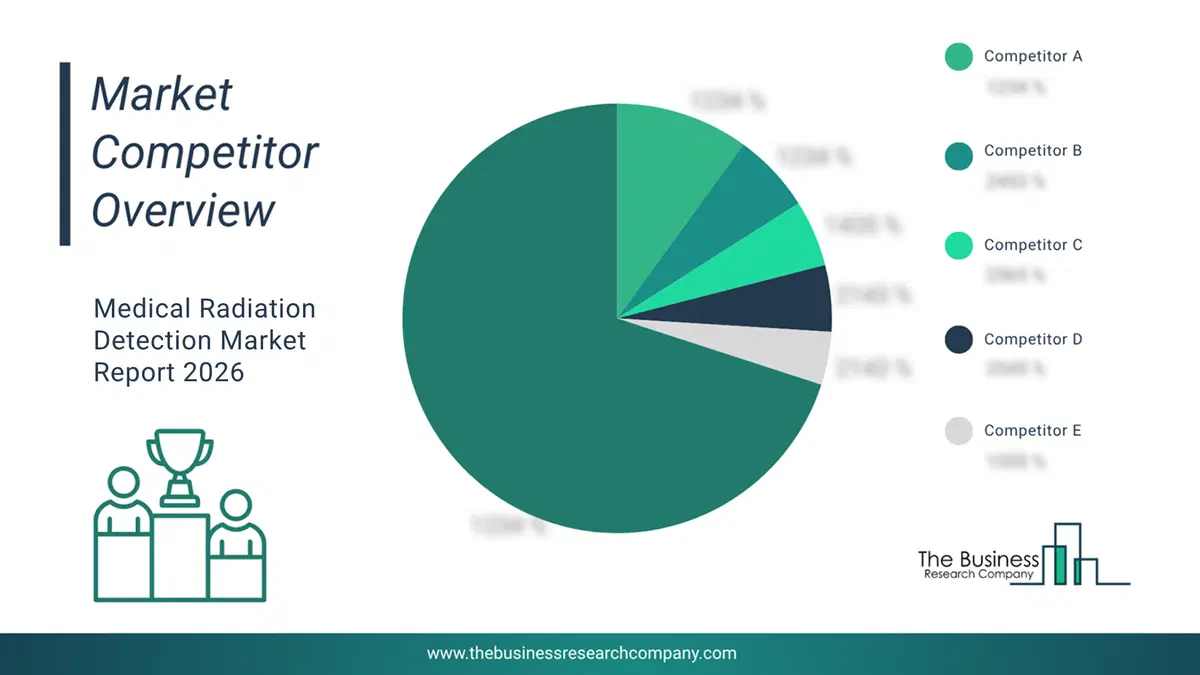
This chart is for illustrative purposes; the full report includes a detailed competitor analysis and comprehensive overview of the top 10 companies in the market.
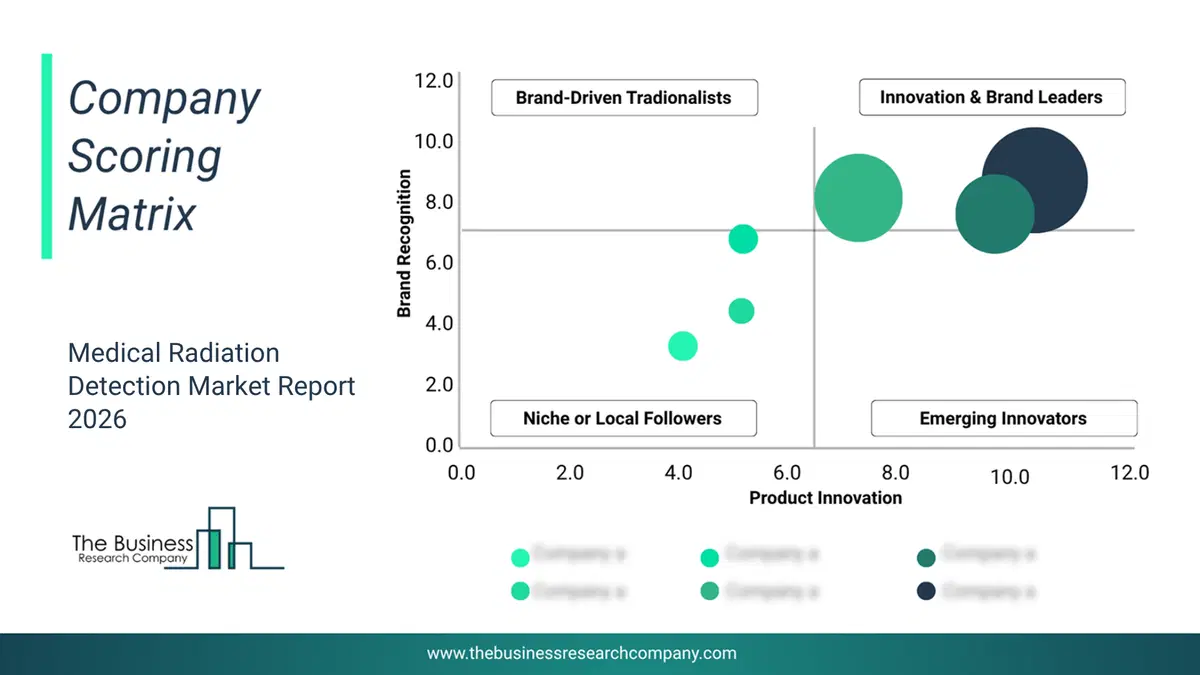
This chart maps companies by product innovation and brand strength, with bubble size indicating relative revenue, helping identify market leaders, challengers, and niche players. This is an illustrative chart; the full report provides a complete and accurate competitive analysis.
Global Medical Radiation Detection Market Trends and Insights
Major companies operating in the medical radiation detection market are focusing on developing advanced personal dosimetry solutions to improve occupational safety, enhance dose tracking, and simplify radiation management. A personal dosimeter refers to a wearable device that measures and records radiation exposure in real time, providing critical data for compliance and safety in medical imaging and nuclear medicine environments. For instance, in November 2023, Mirion Technologies Inc., a US-based medical technology company, introduced the Instadose VUE, an advanced personal dosimeter designed to deliver real-time, on-demand radiation dose readings using Bluetooth Low Energy technology. The device features a display screen for improved user engagement, programmable scheduling for automatic dose reads, and easy integration into diagnostic imaging, nuclear medicine, and occupational dosimetry workflows. Integrated with Mirion’s broader medical portfolio, it offers streamlined dose management, enhances staff safety, and supports compliance with radiation safety regulations.What Are Latest Mergers And Acquisitions In The Medical Radiation Detection Market?
In August 2024, Exosens S.A., a France-based manufacturing company, acquired Centronic Limited for an undisclosed amount. The acquisition aims to strengthen Exosens' position as a European leader in nuclear instrumentation by enhancing its capabilities in high-end radiation detection solutions for the nuclear market. Additionally, it seeks to support the development of the Small Modular Reactor commercial market through advanced monitoring solutions and joint R&D advancements. Centronic Limited is a UK-based mechanical or industrial engineering company that specializes in providing medical radiation detection solutions.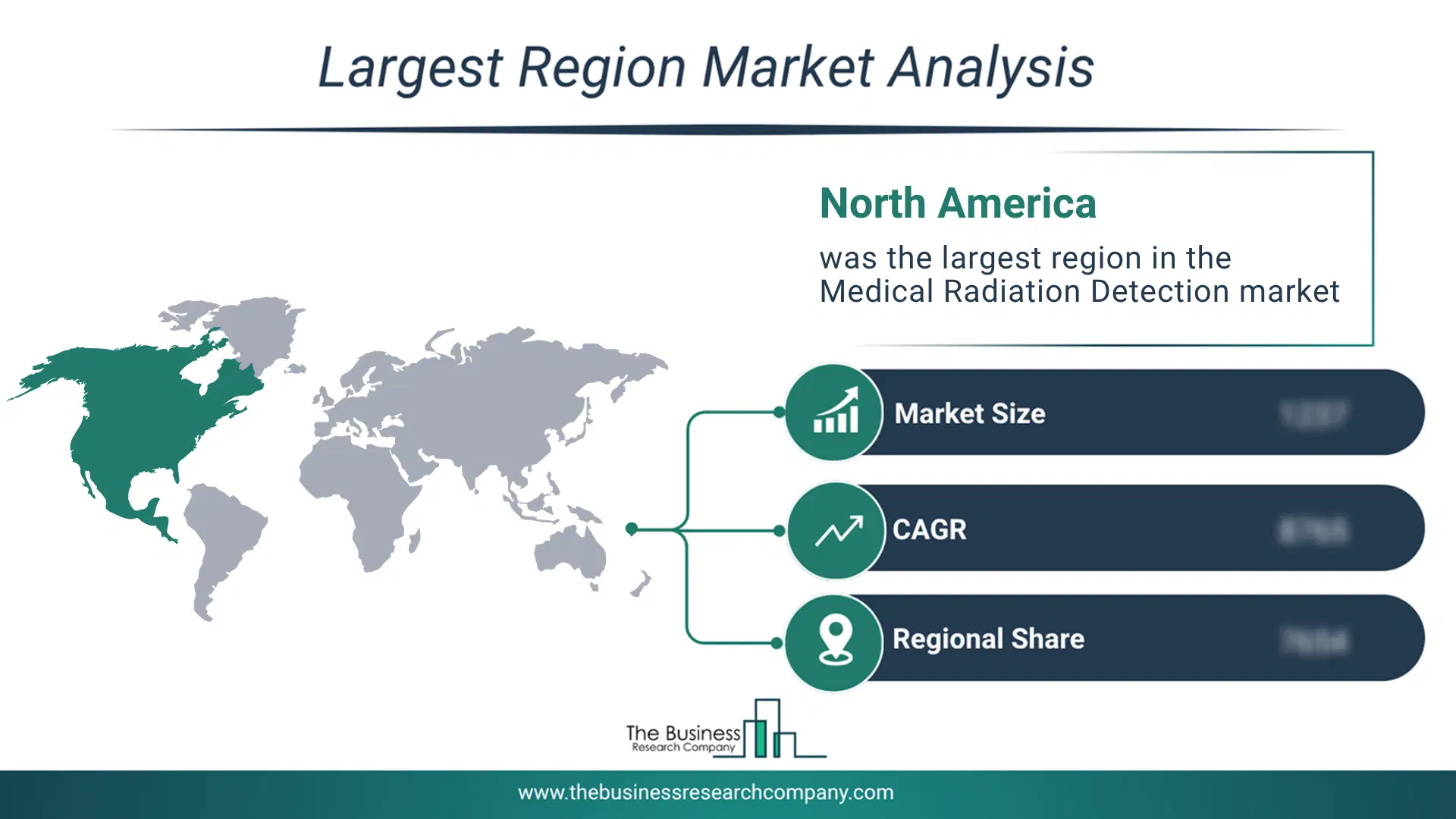
Regional Outlook
North America was the largest region in the medical radiation detection market in 2025. Asia-Pacific is expected to be the fastest-growing region in the forecast period. The regions covered in this market report are Asia-Pacific, South East Asia, Western Europe, Eastern Europe, North America, South America, Middle East, Africa. The countries covered in this market report are Australia, Brazil, China, France, Germany, India, Indonesia, Japan, Taiwan, Russia, South Korea, UK, USA, Canada, Italy, SpainWhat Defines the Medical Radiation Detection Market?
The medical radiation detection market consists of sales of radiation detection instruments, area monitors, environmental radiation monitors, and radioactive material identification devices. Values in this market are ‘factory gate’ values, that is the value of goods sold by the manufacturers or creators of the goods, whether to other entities (including downstream manufacturers, wholesalers, distributors and retailers) or directly to end customers. The value of goods in this market includes related services sold by the creators of the goods.How is Market Value Defined and Measured?
The market value is defined as the revenues that enterprises gain from the sale of goods and/or services within the specified market and geography through sales, grants, or donations in terms of the currency (in USD unless otherwise specified). The revenues for a specified geography are consumption values that are revenues generated by organizations in the specified geography within the market, irrespective of where they are produced. It does not include revenues from resales along the supply chain, either further along the supply chain or as part of other products.
This chart presents market attractiveness based on a quantitative evaluation of growth, competition, strategic alignment, and risk, offering a clear view of opportunity areas for decision-making. This chart is for illustrative purposes; the full report contains the complete analysis.

This chart highlights the Total Addressable Market (TAM) by estimating the maximum revenue opportunity using an assumption-driven approach, supporting strategic planning and opportunity sizing across markets. The chart is illustrative; the full report provides a more comprehensive analysis.
What Key Data and Analysis Are Included in the Medical Radiation Detection Market Report 2026?
The medical radiation detection market research report is one of a series of new reports from The Business Research Company that provides market statistics, including industry global market size, regional shares, competitors with the market share, detailed market segments, market trends and opportunities, and any further data you may need to thrive in the medical radiation detection industry. The market research report delivers a complete perspective of everything you need, with an in-depth analysis of the current and future state of the industry.Medical Radiation Detection Market Report Forecast Analysis
| Report Attribute | Details |
|---|---|
| Market Size Value In 2026 | $0.89 billion |
| Revenue Forecast In 2030 | $1.18 billion |
| Growth Rate | CAGR of 7.2% from 2026 to 2030 |
| Base Year For Estimation | 2025 |
| Actual Estimates/Historical Data | 2020-2025 |
| Forecast Period | 2026 - 2030 |
| Market Representation | Revenue in USD Billion and CAGR from 2026 to 2030 |
| Segments Covered | Product, Detection Technology, End User |
| Regional Scope | Asia-Pacific, Western Europe, Eastern Europe, North America, South America, Middle East, Africa |
| Country Scope | The countries covered in the report are Australia, Brazil, China, France, Germany, India, Indonesia, Japan, Taiwan, Russia, South Korea, UK, USA, Canada, Italy, Spain. |
| Key Companies Profiled | Mirion Technologies Inc, MP Biomedicals LLC, Trivitron Healthcare, Ludlum Measurements Inc, Biodex Medical Systems Inc, ATOMTEX CO, AMETEK ORTEC, Berkeley Nucleonics, IBA Dosimetry GmbH, Centronic Ltd, LND Ltd, Polimaster Inc, Scionix Holland, Alpha Spectra Inc, Bertin Instruments, LANDAUER, Luxium Solutions, Nucleonix Systems, SE International Inc, NUVIATech Instruments, Mi-Net Technology, IBA Group |
| Customization Scope | Request for Customization |
| Pricing And Purchase Options | Explore Purchase Options |