

Menopausal Disorder Treatment Market Report 2026
Global Outlook – By Treatment Type (Hormone Replacement Therapy, Non-Hormonal Treatment, Herbal Supplements, Lifestyle Modifications), By Stages (Menopause, Postmenopause, Perimenopause), By Application (Hot Flashes, Night Sweats, Mood Swings, Vaginal Dryness), By Distribution Channel (Hospital Pharmacy, Retail Pharmacy, Online Pharmacy, Other Distribution Channels), By End-Users (Hospitals, Specialty Clinics, Homecare, Other End-Users) – Market Size, Trends, Strategies, and Forecast to 2030
Menopausal Disorder Treatment Market Overview
• Menopausal Disorder Treatment market size has reached to $11.47 billion in 2025 • Expected to grow to $16.26 billion in 2030 at a compound annual growth rate (CAGR) of 7.2% • Growth Driver: Rising Demand For Hormone Replacement Therapies (HRT) Driving Growth Of Market Due To Increasing Awareness • Market Trend: Advancements In Nonhormonal Therapies For Managing Menopausal Symptoms • North America was the largest region in 2025.What Is Covered Under Menopausal Disorder Treatment Market?
Menopausal disorder treatment refers to the range of medical and therapeutic interventions aimed at alleviating symptoms associated with menopause, such as hot flashes, mood changes, sleep disturbances, and hormonal imbalances, to improve the overall quality of life and well-being of individuals undergoing the menopausal transition. The main treatment types of menopausal disorder treatment are hormone replacement therapy, non-hormonal treatment, herbal supplements, and lifestyle modifications. Hormone replacement therapy (HRT) is a treatment that helps balance hormone levels in women experiencing menopause-related symptoms such as hot flashes, mood swings, and bone density loss. These treatments are applicable across different stages, including menopause, postmenopause, and perimenopause, and are used to manage symptoms such as hot flashes, night sweats, mood swings, and vaginal dryness. They are distributed through hospital pharmacies, retail pharmacies, online pharmacies, and others, and are utilized by end users, including hospitals, specialty clinics, homecare settings, and others.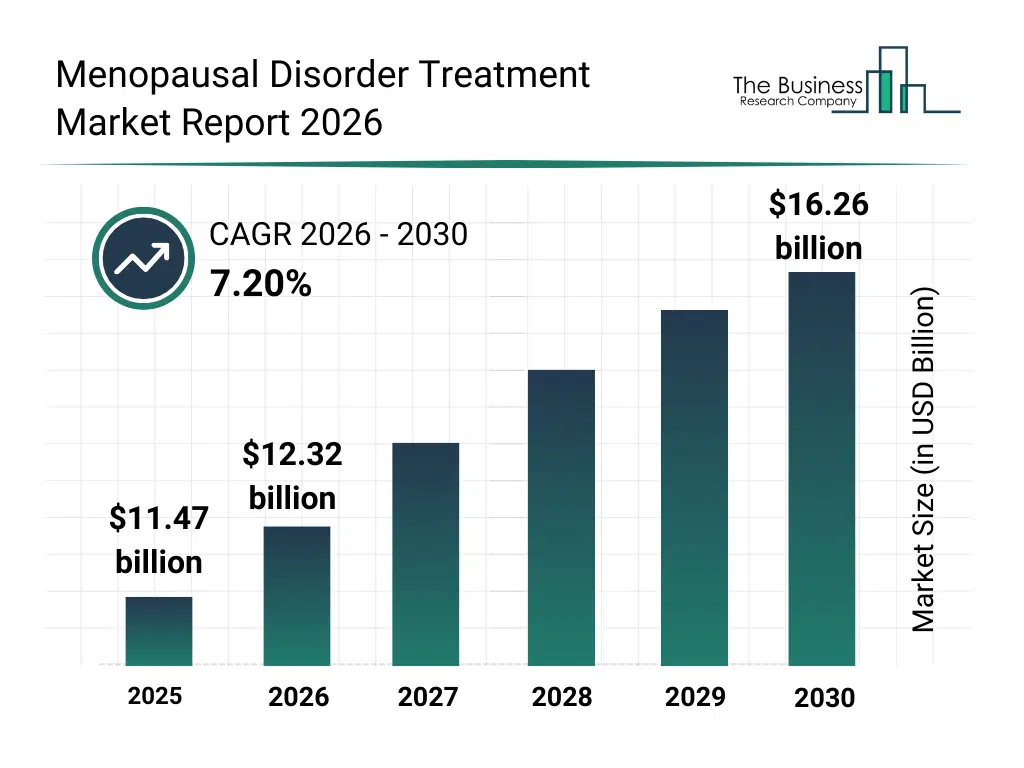
What Is The Menopausal Disorder Treatment Market Size and Share 2026?
The menopausal disorder treatment market size has grown strongly in recent years. It will grow from $11.47 billion in 2025 to $12.32 billion in 2026 at a compound annual growth rate (CAGR) of 7.4%. The growth in the historic period can be attributed to growing aging female population, widespread use of hormone replacement therapy, increased diagnosis of menopausal symptoms, expansion of gynecology care services, rising healthcare access for women.What Is The Menopausal Disorder Treatment Market Growth Forecast?
The menopausal disorder treatment market size is expected to see strong growth in the next few years. It will grow to $16.26 billion in 2030 at a compound annual growth rate (CAGR) of 7.2%. The growth in the forecast period can be attributed to growth in demand for safer menopause treatments, increasing focus on individualized therapy plans, rising awareness of long-term hrt risks, expansion of digital women’s health platforms, growing adoption of preventive women’s healthcare. Major trends in the forecast period include rising preference for non-hormonal menopause therapies, increasing adoption of personalized hormone replacement therapy, growing use of lifestyle and behavioral interventions, expansion of herbal and natural menopause treatments, increasing awareness of menopause symptom managemen.
Global Menopausal Disorder Treatment Market Segmentation
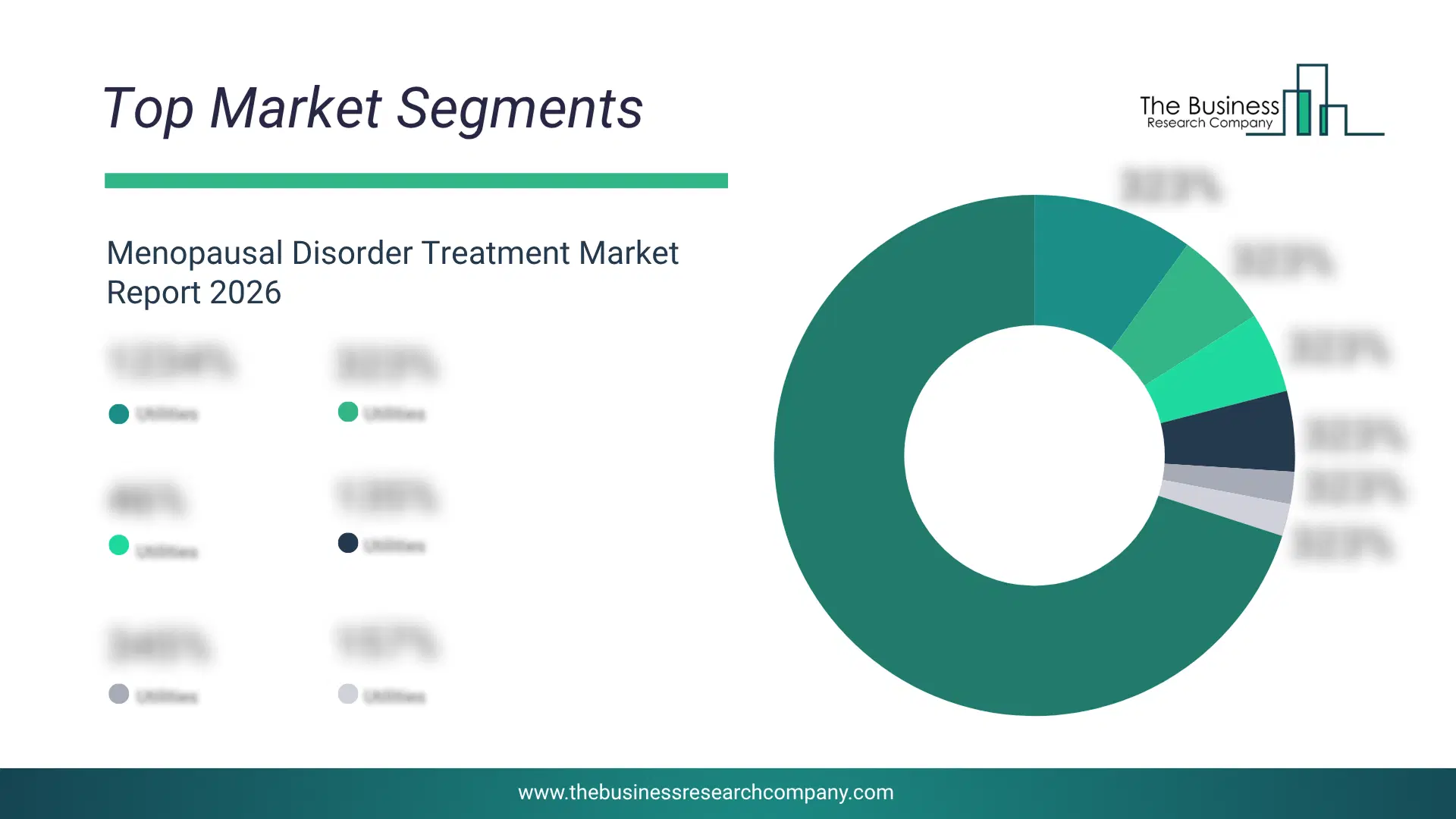
1) By Treatment Type: Hormone Replacement Therapy, Non-Hormonal Treatment, Herbal Supplements, Lifestyle Modifications 2) By Stages: Menopause, Postmenopause, Perimenopause 3) By Application: Hot Flashes, Night Sweats, Mood Swings, Vaginal Dryness 4) By Distribution Channel: Hospital Pharmacy, Retail Pharmacy, Online Pharmacy, Other Distribution Channels 5) By End-Users: Hospitals, Specialty Clinics, Homecare, Other End-Users Subsegments: 1) By Hormone Replacement Therapy (HRT): Estrogen Therapy, Progesterone Therapy, Combination Therapy, Transdermal Patches, Vaginal Estrogen, Oral Tablets 2) By Non-Hormonal Treatment: Selective Estrogen Receptor Modulators (SERMs), Antidepressants, Gabapentin, Clonidine, Bisphosphonates, Calcium And Vitamin D Supplements 3) By Herbal Supplements: Black Cohosh, Red Clover, Dong Quai, Ginseng, Soy Isoflavones, Flaxseed 4) By Lifestyle Modifications: Dietary Changes, Regular Physical Exercise, Stress Management Techniques, Cognitive Behavioral Therapy (CBT), Smoking Cessation, Sleep Hygiene PracticesWhat Is The Driver Of The Menopausal Disorder Treatment Market?
The rising demand for hormone replacement therapies (HRT) is expected to propel the growth of the menopausal disorder treatment market going forward. Hormone replacement therapy (HRT) refers to the medical treatment that involves supplementing or replacing hormones to alleviate symptoms associated with menopause or hormone imbalances. The increase in hormone replacement therapies is driven by growing awareness and demand for effective management of menopausal symptoms and hormone imbalances. Hormone replacement therapy (HRT) treats menopausal disorder by directly replenishing estrogen and progesterone levels, helping to restore hormonal balance and alleviate disruptive symptoms such as hot flashes, night sweats, and mood swings, ultimately improving quality of life. For instance, in October 2024, the NHS Business Services Authority (NHSBSA), a UK-based organization providing a range of support services, reported that the number of HRT items prescribed rose by 22% to 13 million, accompanied by a 12% increase in identified patients from 2.3 million in 2022/23 to 2.6 million in 2023/24. Therefore, the rising demand for hormone replacement therapies is driving the growth of the menopausal disorder treatment industry.Key Players In The Global Menopausal Disorder Treatment Market
Major companies operating in the menopausal disorder treatment market are Pfizer Inc., F. Hoffmann-La Roche Ltd, Merck & Co Inc., Novartis AG, Bayer AG, Bristol-Myers Squibb Company, Sanofi SA, AstraZeneca plc, Eli Lilly and Company, Novo Nordisk A/S, Abbott Laboratories, GlaxoSmithKline plc, Teva Pharmaceutical Industries Ltd., Ipsen SA, Dr. Reddy’s Laboratories Ltd., Theramex, Besins Healthcare, Mithra Pharmaceuticals, Duchesnay USA, Fervent Pharmaceuticals, Joylux Inc., TherapeuticsMD Inc.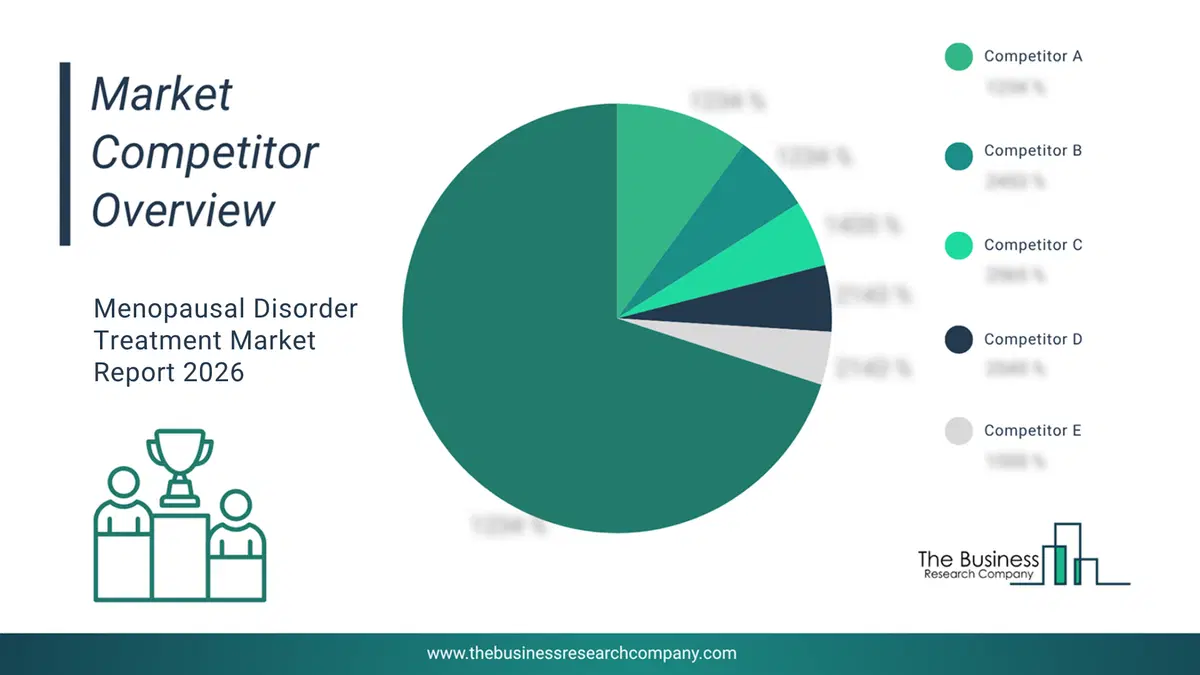
This chart is for illustrative purposes; the full report includes a detailed competitor analysis and comprehensive overview of the top 10 companies in the market.
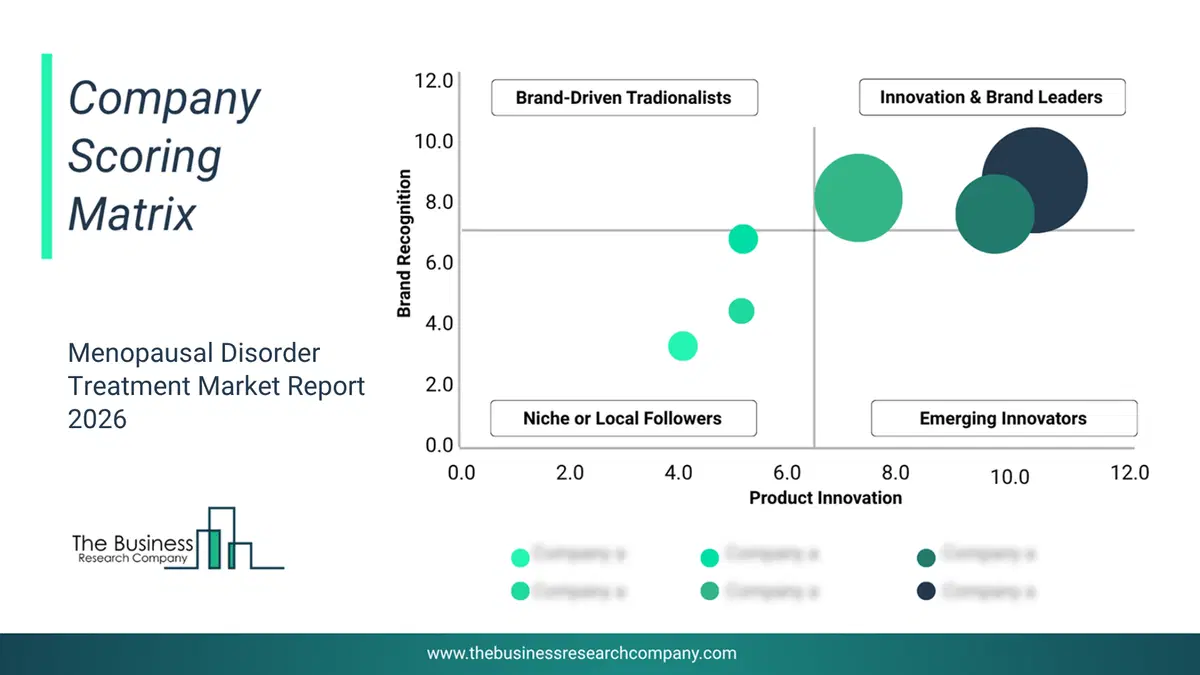
This chart maps companies by product innovation and brand strength, with bubble size indicating relative revenue, helping identify market leaders, challengers, and niche players. This is an illustrative chart; the full report provides a complete and accurate competitive analysis.
Global Menopausal Disorder Treatment Market Trends and Insights
Major companies operating in the menopausal disorder treatment market are developing innovative nonhormonal neurokinin 3 (NK3) receptor antagonist drugs to effectively manage vasomotor symptoms without hormone therapy. Innovative nonhormonal neurokinin 3 (NK3) receptor antagonist therapies are novel therapies that block NK3 receptors to manage menopausal symptoms without using hormones. For instance, in December 2023, Astellas Pharma Inc., a Japan-based pharmaceutical company, received European Commission approval for Veozah (fezolinetant), a non-hormonal NK3 receptor antagonist for treating moderate to severe vasomotor symptoms (VMS) such as hot flashes and night sweats in menopausal women. It works by targeting neurons in the brain’s temperature control center to reduce the frequency and intensity of these symptoms.What Are Latest Mergers And Acquisitions In The Menopausal Disorder Treatment Market?
In February 2025, Cosette Pharmaceuticals, a US-based specialty pharmaceutical company focused on women’s health and dermatology, acquired Mayne Pharma Pty Ltd. (Australia) for US$430 million. With this acquisition, Cosette Pharmaceuticals aims to strengthen its position in the women’s health market by acquiring patented, high-growth menopause therapies and expanding its portfolio of dermatology and specialty products. Mayne Pharma Pty Ltd. is an Australia-based provider of women’s health products, including menopause medications such as Bijuva, Intrarosa, and Imvexxy, along with other specialty and dermatology drugs.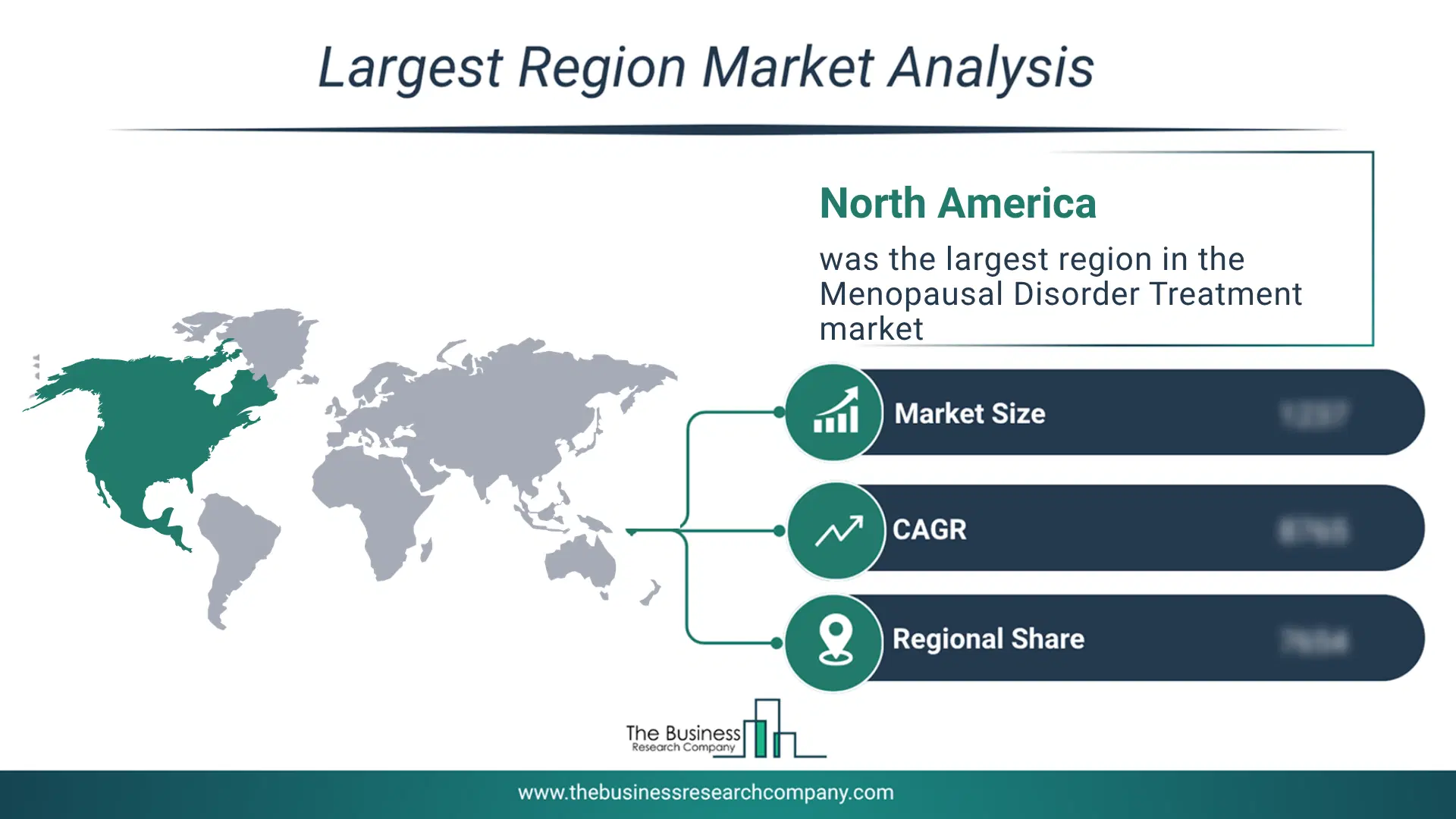
Regional Insights
North America was the largest region in the menopausal disorder treatment market in 2025. The regions covered in this market report are Asia-Pacific, South East Asia, Western Europe, Eastern Europe, North America, South America, Middle East, Africa. The countries covered in this market report are Australia, Brazil, China, France, Germany, India, Indonesia, Japan, Taiwan, Russia, South Korea, UK, USA, Canada, Italy, Spain.What Defines the Menopausal Disorder Treatment Market?
The menopausal disorder treatment market includes revenues earned by entities providing services such as estrogen-only therapy, combined estrogen and progesterone therapy, bone health management, and hormone level testing. The market value includes the value of related goods sold by the service provider or included within the service offering. The menopausal disorder treatment market also includes sales of hormone replacement therapy (HRT) medications, non-hormonal therapies, dietary supplements, and vaginal estrogen products. Values in this market are ‘factory gate’ values, that is the value of goods sold by the manufacturers or creators of the goods, whether to other entities (including downstream manufacturers, wholesalers, distributors and retailers) or directly to end customers. The value of goods in this market includes related services sold by the creators of the goods.How is Market Value Defined and Measured?
The market value is defined as the revenues that enterprises gain from the sale of goods and/or services within the specified market and geography through sales, grants, or donations in terms of the currency (in USD unless otherwise specified). The revenues for a specified geography are consumption values that are revenues generated by organizations in the specified geography within the market, irrespective of where they are produced. It does not include revenues from resales along the supply chain, either further along the supply chain or as part of other products.
This chart presents market attractiveness based on a quantitative evaluation of growth, competition, strategic alignment, and risk, offering a clear view of opportunity areas for decision-making. This chart is for illustrative purposes; the full report contains the complete analysis.

This chart highlights the Total Addressable Market (TAM) by estimating the maximum revenue opportunity using an assumption-driven approach, supporting strategic planning and opportunity sizing across markets. The chart is illustrative; the full report provides a more comprehensive analysis.
What Key Data and Analysis Are Included in the Menopausal Disorder Treatment Market Report 2026?
The menopausal disorder treatment market research report is one of a series of new reports from The Business Research Company that provides market statistics, including industry global market size, regional shares, competitors with the market share, detailed market segments, market trends and opportunities, and any further data you may need to thrive in the menopausal disorder treatment industry. The market research report delivers a complete perspective of everything you need, with an in-depth analysis of the current and future state of the industry.Menopausal Disorder Treatment Market Report Forecast Analysis
| Report Attribute | Details |
|---|---|
| Market Size Value In 2026 | $12.32 billion |
| Revenue Forecast In 2030 | $16.26 billion |
| Growth Rate | CAGR of 7.4% from 2026 to 2030 |
| Base Year For Estimation | 2025 |
| Actual Estimates/Historical Data | 2020-2025 |
| Forecast Period | 2026 - 2030 |
| Market Representation | Revenue in USD Billion and CAGR from 2026 to 2030 |
| Segments Covered | Treatment Type, Stages, Application, Distribution Channel, End-Users |
| Regional Scope | Asia-Pacific, Western Europe, Eastern Europe, North America, South America, Middle East, Africa |
| Country Scope | The countries covered in the report are Australia, Brazil, China, France, Germany, India, Indonesia, Japan, Taiwan, Russia, South Korea, UK, USA, Canada, Italy, Spain. |
| Key Companies Profiled | Pfizer Inc., F. Hoffmann-La Roche Ltd, Merck & Co Inc., Novartis AG, Bayer AG, Bristol-Myers Squibb Company, Sanofi SA, AstraZeneca plc, Eli Lilly and Company, Novo Nordisk A/S, Abbott Laboratories, GlaxoSmithKline plc, Teva Pharmaceutical Industries Ltd., Ipsen SA, Dr. Reddy’s Laboratories Ltd., Theramex, Besins Healthcare, Mithra Pharmaceuticals, Duchesnay USA, Fervent Pharmaceuticals, Joylux Inc., TherapeuticsMD Inc. |
| Customization Scope | Request for Customization |
| Pricing And Purchase Options | Explore Purchase Options |