
Menorrhalgia Market Report 2026
Global Outlook – By Therapeutics (Hormonal Agents, Non-Hormonal Agents), By Route Of Administration (Oral, Vaginal, Transdermal, Intrauterine, Other Routes Of Administration), By Distribution Channel (Retail Pharmacies, Hospital Pharmacies, Online Pharmacies) - Market Size, Trends, Strategies, and Forecast to 2030
Menorrhalgia Market Overview
• Menorrhalgia market size has reached to $21.91 billion in 2025 • Expected to grow to $29.36 billion in 2030 at a compound annual growth rate (CAGR) of 6% • Growth Driver: Rising Incidence Of Hormonal Imbalances Driving The Growth Of The Market Due To Impact On Menstrual Health • North America was the largest region in 2025.What Is Covered Under Menorrhalgia Market?
Menorrhalgia, also called menorrhagia, refers to abnormally heavy or prolonged menstrual bleeding. It is characterized by menstrual periods that last longer than seven days or involve excessive blood loss, typically more than 80 milliliters per cycle. This condition can lead to fatigue, anemia, and discomfort. Menorrhagia may be caused by various factors, including hormonal imbalances, uterine fibroids, polyps, or other underlying health conditions. The main types of therapeutics for menorrhalgia are hormonal agents and non-hormonal agents. Hormonal agents relieve menorrhagia by regulating hormones to reduce uterine contractions, control endometrial growth, and alleviate pain and bleeding. These drugs are administered through various routes, including oral, vaginal, transdermal, intrauterine, and other routes. They are distributed through different channels, such as retail pharmacies, hospital pharmacies, and online pharmacies.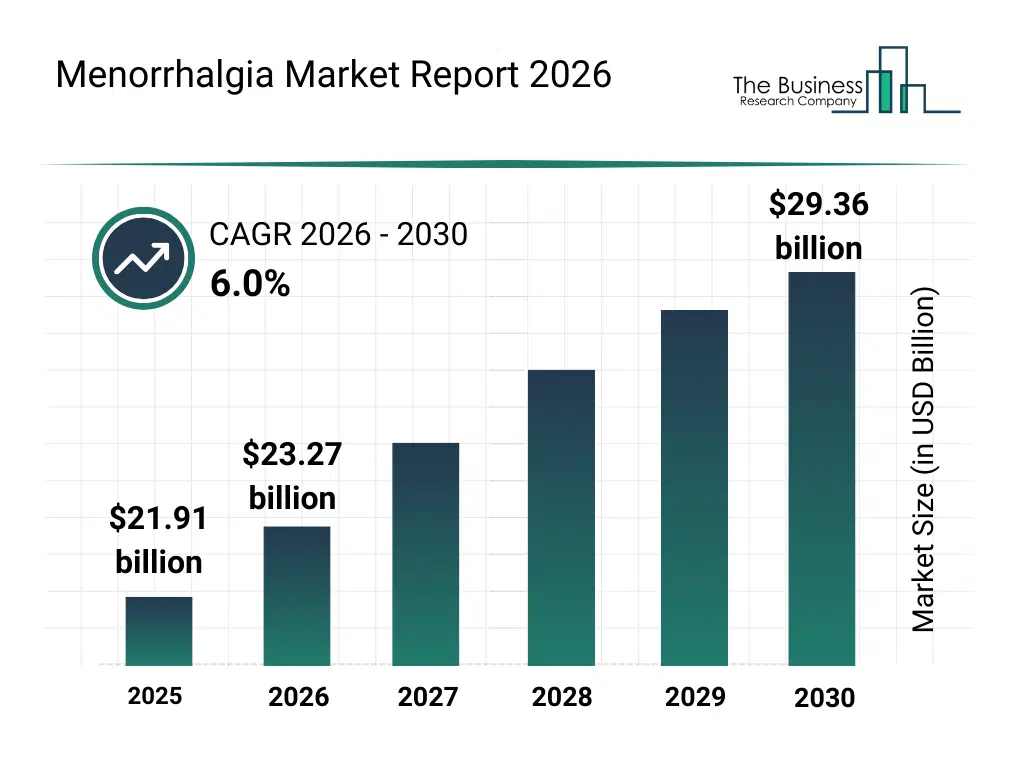
What Is The Menorrhalgia Market Size and Share 2026?
The menorrhalgia market size has grown strongly in recent years. It will grow from $21.91 billion in 2025 to $23.27 billion in 2026 at a compound annual growth rate (CAGR) of 6.2%. The growth in the historic period can be attributed to high prevalence of hormonal imbalances, increased incidence of uterine fibroids and polyps, limited awareness of abnormal menstrual bleeding, widespread use of oral hormonal therapies, expansion of gynecology clinics.What Is The Menorrhalgia Market Growth Forecast?
The menorrhalgia market size is expected to see strong growth in the next few years. It will grow to $29.36 billion in 2030 at a compound annual growth rate (CAGR) of 6.0%. The growth in the forecast period can be attributed to growing demand for fertility-preserving treatments, increasing adoption of long-acting intrauterine systems, rising focus on women’s reproductive health, expansion of access to gynecological care in emerging markets, growing acceptance of non-hormonal therapies. Major trends in the forecast period include rising preference for non-hormonal treatment options, growing awareness and early diagnosis of menorrhagia, increasing use of minimally invasive and intrauterine therapies, expansion of personalized gynecological treatment plans, higher focus on managing anemia and quality of life.
Global Menorrhalgia Market Segmentation
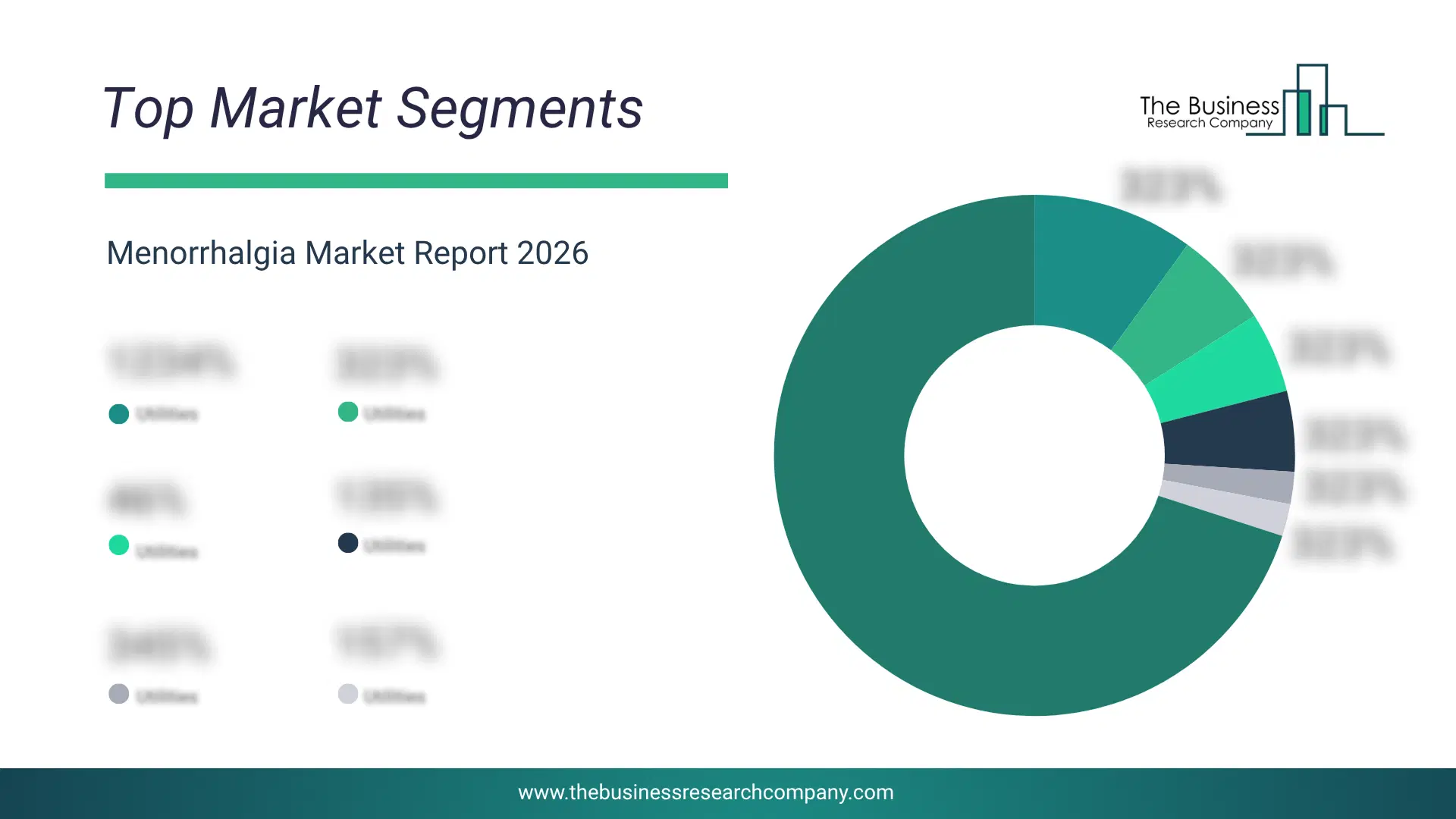
1) By Therapeutics: Hormonal Agents, Non-Hormonal Agents 2) By Route Of Administration: Oral, Vaginal, Transdermal, Intrauterine, Other Routes Of Administration 3) By Distribution Channel: Retail Pharmacies, Hospital Pharmacies, Online Pharmacies Subsegments: 1) By Hormonal Agents: Combined Oral Contraceptives (COCs), Progestins, Gonadotropin-Releasing Hormone (GnRH) Agonists, Levonorgestrel-Releasing Intrauterine Systems (LNG-IUS), Danazol, Selective Estrogen Receptor Modulators (SERMs) 2) By Non-Hormonal Agents: Non-Steroidal Anti-Inflammatory Drugs (NSAIDs), Tranexamic Acid, Antifibrinolytics, Iron Supplements, Herbal And Natural RemediesWhat Are The Drivers Of The Menorrhalgia Market?
The rising incidences of hormonal imbalances are expected to propel the growth of the menorrhalgia market going forward. Hormonal imbalances refer to disruptions in the body's endocrine system, where there is too much or too little of a hormone, leading to various health issues such as weight changes, mood swings, fatigue, or reproductive problems. The rising hormonal imbalances are due to lifestyle factors, environmental influences, and medical conditions. Modern lifestyles, including poor diet, high levels of stress, and lack of physical activity, disrupt hormone production and regulation. Hormonal imbalances can promote menorrhalgia (painful menstruation) by disrupting the normal regulation of the menstrual cycle and affecting the uterine environment. For instance, in January 2025, according to the World Health Organization, a Switzerland-based intergovernmental organization, polycystic ovary syndrome is a significant public health issue and one of the most common hormonal disorders in women of reproductive age, affecting an estimated 6–13% yearly. Therefore, the rising prevalence of hormonal imbalances is driving the growth of the menorrhagia market. The increasing obesity rates are expected to propel the growth of the menorrhalgia market going forward. Obesity rates refer to the proportion of a population that has a body mass index (BMI) of 30 or higher, indicating excessive body fat that may impair health. Increasing obesity rates are primarily due to a sedentary lifestyle, as physical inactivity reduces calorie expenditure, leading to excess fat accumulation in the body. Menorrhagia can contribute to obesity management by regulating hormonal imbalances and menstrual-related metabolic disruptions that often influence weight gain. For instance, in May 2025, according to the Office for Health Improvement and Disparities, a UK-based government body, from 2023 to 2024, an estimated 64.5% of adults aged 18 and over in England were overweight or living with obesity, up from 64.0% in 2022 to 2023. Therefore, the increasing obesity rates is driving the growth of the menorrhagia market.Key Players In The Global Menorrhalgia Market
Major companies operating in the menorrhalgia market are AbbVie Inc., Bayer HealthCare Pharmaceuticals Inc., Boston Scientific Corporation, Johns Hopkins Health System Corporation, Aegea Medical Inc., Emory Healthcare Inc., Hologic Inc., Dr Reddys Laboratories Ltd., Meril Life Sciences Pvt Ltd, ASKA Pharmaceutical Holdings Co Ltd, Ferring Pharmaceuticals Group, Xanodyne Pharmaceuticals Inc., Pregna International Ltd., HLL Lifecare Limited, Actiza Pharmaceutical Pvt Ltd, Wellona Pharma, OCON Healthcare Ltd, Pfizer Inc., Medtronic plc, Myovant Sciences Ltd, Gedeon Richter Plc, Cooper Surgical Inc, Olympus Corporation, Takeda Pharmaceutical Company Limited, Novartis AG.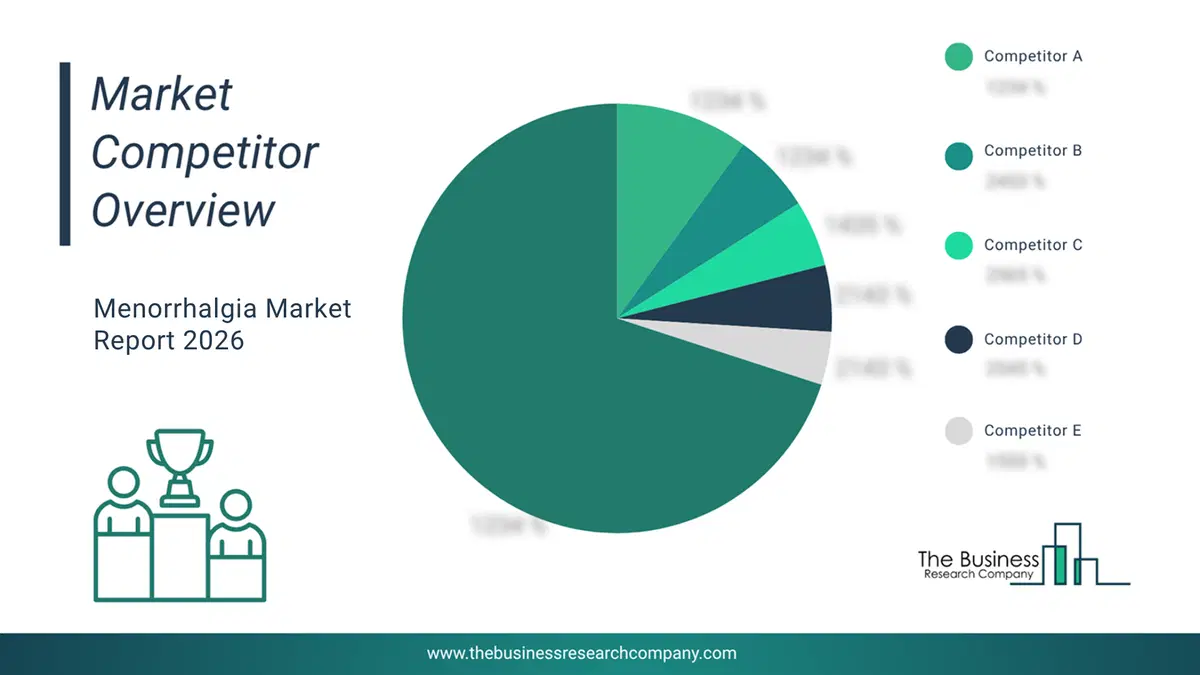
This chart is for illustrative purposes; the full report includes a detailed competitor analysis and comprehensive overview of the top 10 companies in the market.
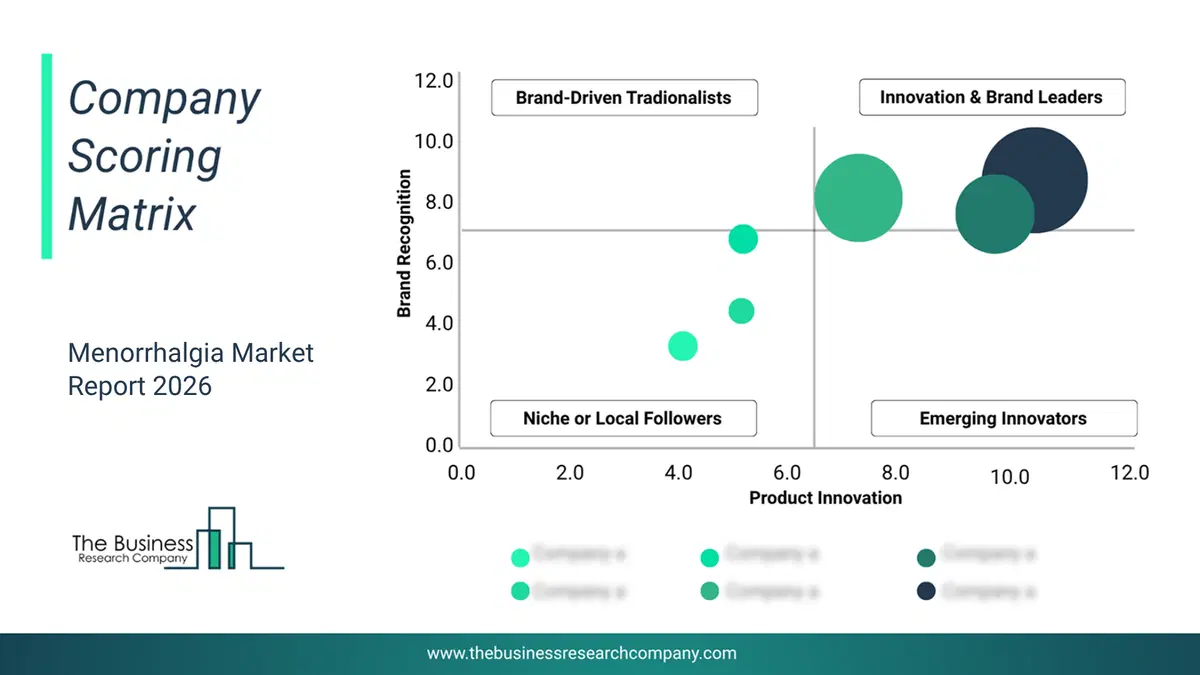
This chart maps companies by product innovation and brand strength, with bubble size indicating relative revenue, helping identify market leaders, challengers, and niche players. This is an illustrative chart; the full report provides a complete and accurate competitive analysis.
What Are Latest Mergers And Acquisitions In The Menorrhalgia Market?
In January 2025, Hologic Inc., a US-based health technology company, acquired Gynesonics Inc. for an undisclosed amount. With this acquisition, Hologic, Inc. aims to enhance its portfolio of minimally invasive solutions for treating uterine fibroids and heavy menstrual bleeding, improving women's healthcare options. Gynesonics, Inc. is a US-based medical device company that provides a System to treat menorrhagia.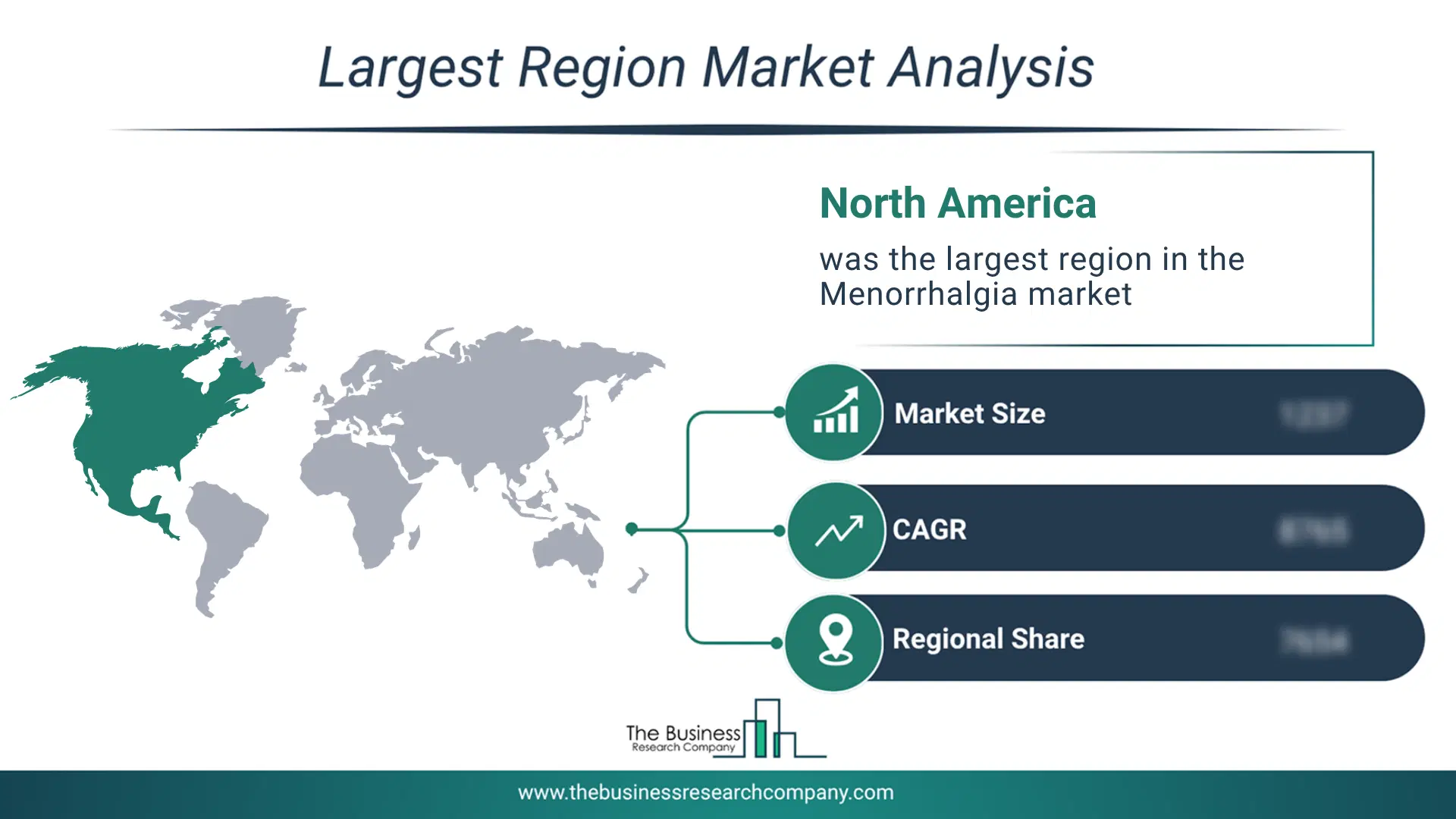
Regional Outlook
North America was the largest region in the menorrhalgia market in 2025. The regions covered in this market report are Asia-Pacific, South East Asia, Western Europe, Eastern Europe, North America, South America, Middle East, Africa. The countries covered in this market report are Australia, Brazil, China, France, Germany, India, Indonesia, Japan, Taiwan, Russia, South Korea, UK, USA, Canada, Italy, Spain.What Defines the Menorrhalgia Market?
The menorrhalgia market consists of revenues earned by entities by providing services such as medical consultation, diagnostic testing, and medication management. The market value includes the value of related goods sold by the service provider or included within the service offering. The menorrhagia market also consists of sales of products including medications, medical devices, and supplements. Values in this market are ‘factory gate’ values, that is, the value of goods sold by the manufacturers or creators of the goods, whether to other entities (including downstream manufacturers, wholesalers, distributors, and retailers) or directly to end customers. The value of goods in this market includes related services sold by the creators of the goods.How is Market Value Defined and Measured?
The market value is defined as the revenues that enterprises gain from the sale of goods and/or services within the specified market and geography through sales, grants, or donations in terms of the currency (in USD unless otherwise specified). The revenues for a specified geography are consumption values that are revenues generated by organizations in the specified geography within the market, irrespective of where they are produced. It does not include revenues from resales along the supply chain, either further along the supply chain or as part of other products.
This chart presents market attractiveness based on a quantitative evaluation of growth, competition, strategic alignment, and risk, offering a clear view of opportunity areas for decision-making. This chart is for illustrative purposes; the full report contains the complete analysis.

This chart highlights the Total Addressable Market (TAM) by estimating the maximum revenue opportunity using an assumption-driven approach, supporting strategic planning and opportunity sizing across markets. The chart is illustrative; the full report provides a more comprehensive analysis.
What Key Data and Analysis Are Included in the Menorrhalgia Market Report 2026?
The menorrhalgia market research report is one of a series of new reports from The Business Research Company that provides market statistics, including industry global market size, regional shares, competitors with the market share, detailed market segments, market trends and opportunities, and any further data you may need to thrive in the menorrhalgia industry. The market research report delivers a complete perspective of everything you need, with an in-depth analysis of the current and future state of the industry.Menorrhalgia Market Report Forecast Analysis
| Report Attribute | Details |
|---|---|
| Market Size Value In 2026 | $23.27 billion |
| Revenue Forecast In 2030 | $29.36 billion |
| Growth Rate | CAGR of 6% from 2026 to 2030 |
| Base Year For Estimation | 2025 |
| Actual Estimates/Historical Data | 2020-2025 |
| Forecast Period | 2026 - 2030 |
| Market Representation | Revenue in USD Billion and CAGR from 2026 to 2030 |
| Segments Covered | Therapeutics, Route Of Administration, Distribution Channel |
| Regional Scope | Asia-Pacific, Western Europe, Eastern Europe, North America, South America, Middle East, Africa |
| Country Scope | The countries covered in the report are Australia, Brazil, China, France, Germany, India, Indonesia, Japan, Taiwan, Russia, South Korea, UK, USA, Canada, Italy, Spain |
| Key Companies Profiled | AbbVie Inc., Bayer HealthCare Pharmaceuticals Inc., Boston Scientific Corporation, Johns Hopkins Health System Corporation, Aegea Medical Inc., Emory Healthcare Inc., Hologic Inc., Dr Reddys Laboratories Ltd., Meril Life Sciences Pvt Ltd, ASKA Pharmaceutical Holdings Co Ltd, Ferring Pharmaceuticals Group, Xanodyne Pharmaceuticals Inc., Pregna International Ltd., HLL Lifecare Limited, Actiza Pharmaceutical Pvt Ltd, Wellona Pharma, OCON Healthcare Ltd, Pfizer Inc., Medtronic plc, Myovant Sciences Ltd, Gedeon Richter Plc, Cooper Surgical Inc, Olympus Corporation, Takeda Pharmaceutical Company Limited, Novartis AG. |
| Customization Scope | Request for Customization |
| Pricing And Purchase Options | Explore Purchase Options |