

Mental Health Tech Market Report 2026
Global Outlook – By Component (Software, Hardware, Services), By Deployment Mode (On-Premises, Cloud), By Application (Teletherapy, Self-Help Apps, Mental Health Assessment Tools, VR Therapy, Other Applications), By End-User (Hospitals, Clinics, Individuals, Other End-Users) – Market Size, Trends, Strategies, and Forecast to 2030
Mental Health Tech Market Overview
• Mental Health Tech market size has reached to $12.36 billion in 2025 • Expected to grow to $30.77 billion in 2030 at a compound annual growth rate (CAGR) of 19.9% • Growth Driver: Surge In Global Awareness Of Mental Health Conditions Fueling Growth Of The Market Through Accessible, Scalable, And Personalized Digital Mental Health Solutions • Market Trend: Expanding Digital Mental Health Access With Platforms Like Tele MANAS For Round-the-Clock Support And Professional Care • North America was the largest region in 2025 and Asia-Pacific is the fastest growing region.Market Gains By 2030 – Top Opportunities By Segment
Market Gain identifies the most promising market opportunities by highlighting the segments or products expected to generate the highest incremental revenue growth over the next five years.
What Is Covered Under Mental Health Tech Market?
Mental health tech refers to digital tools and technologies designed to support emotional well-being, diagnose or monitor mental conditions, and deliver therapeutic interventions. It includes software, platforms, and connected systems that make mental health support more accessible and personalized. This field uses technology to enhance how people understand, track, and improve their mental wellness. The main components of mental health tech include software, hardware, and services. Software encompasses platforms and applications designed to deliver mental health support, including teletherapy solutions, self-help apps, and virtual reality (VR) therapy programs, enabling accessible and personalized care. Different deployment modes include on-premises and cloud-based solutions. Multiple applications are teletherapy, self-help apps, mental health assessment tools, VR therapy, and others, and they are used by several end-users comprise hospitals, clinics, individuals, and others.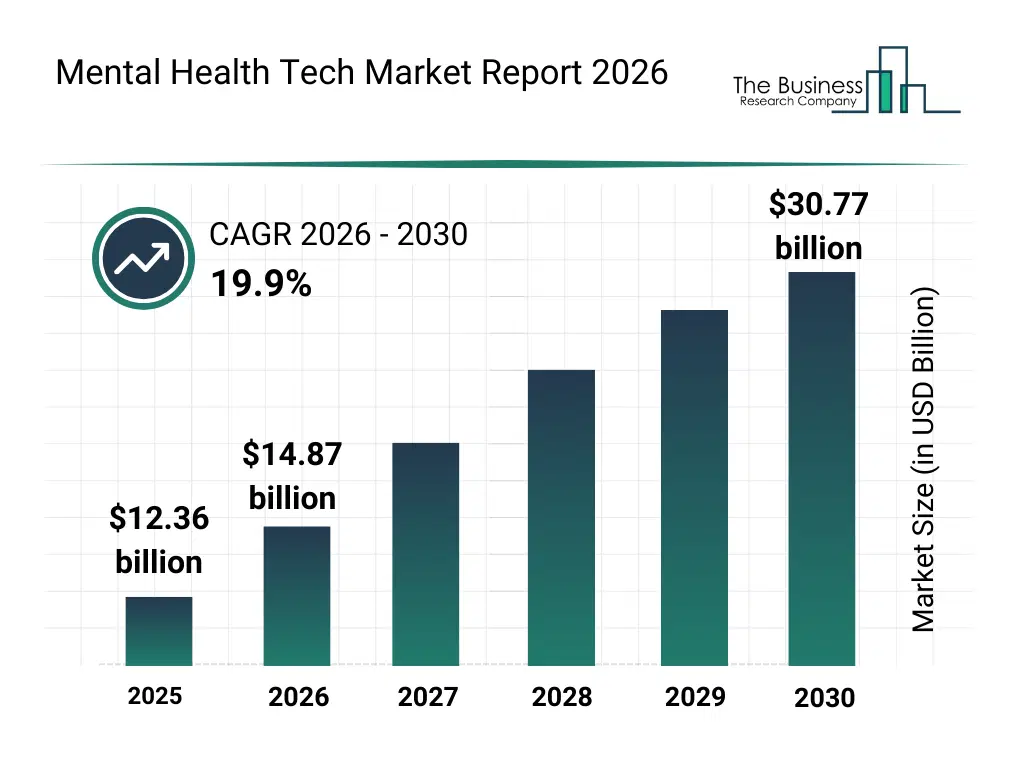
What Is The Mental Health Tech Market Size and Share 2026?
The mental health tech market size has grown exponentially in recent years. It will grow from $12.36 billion in 2025 to $14.87 billion in 2026 at a compound annual growth rate (CAGR) of 20.2%. The growth in the historic period can be attributed to increasing awareness of mental health conditions, growing acceptance of digital therapy solutions, rising investment in health IT infrastructures for behavioral care, expansion of smartphone and internet penetration, and increasing focus on employee wellbeing programs.What Is The Mental Health Tech Market Growth Forecast?
The mental health tech market size is expected to see exponential growth in the next few years. It will grow to $30.77 billion in 2030 at a compound annual growth rate (CAGR) of 19.9%. The growth in the forecast period can be attributed to growing demand for personalized mental health interventions, rising prevalence of stress and anxiety disorders, expansion of insurance coverage for digital mental health services, increasing integration of mental health into primary care, and growing government initiatives supporting e-mental health. Major trends in the forecast period include advancements in AI-powered mental health diagnostics and monitoring, innovations in VR- and AR-based exposure and relaxation therapies, developments in wearable sensors for continuous mood tracking, research and development in digital biomarkers for mental health, and developments in interoperable platforms integrating mental health data across systems.
Global Mental Health Tech Market Segmentation
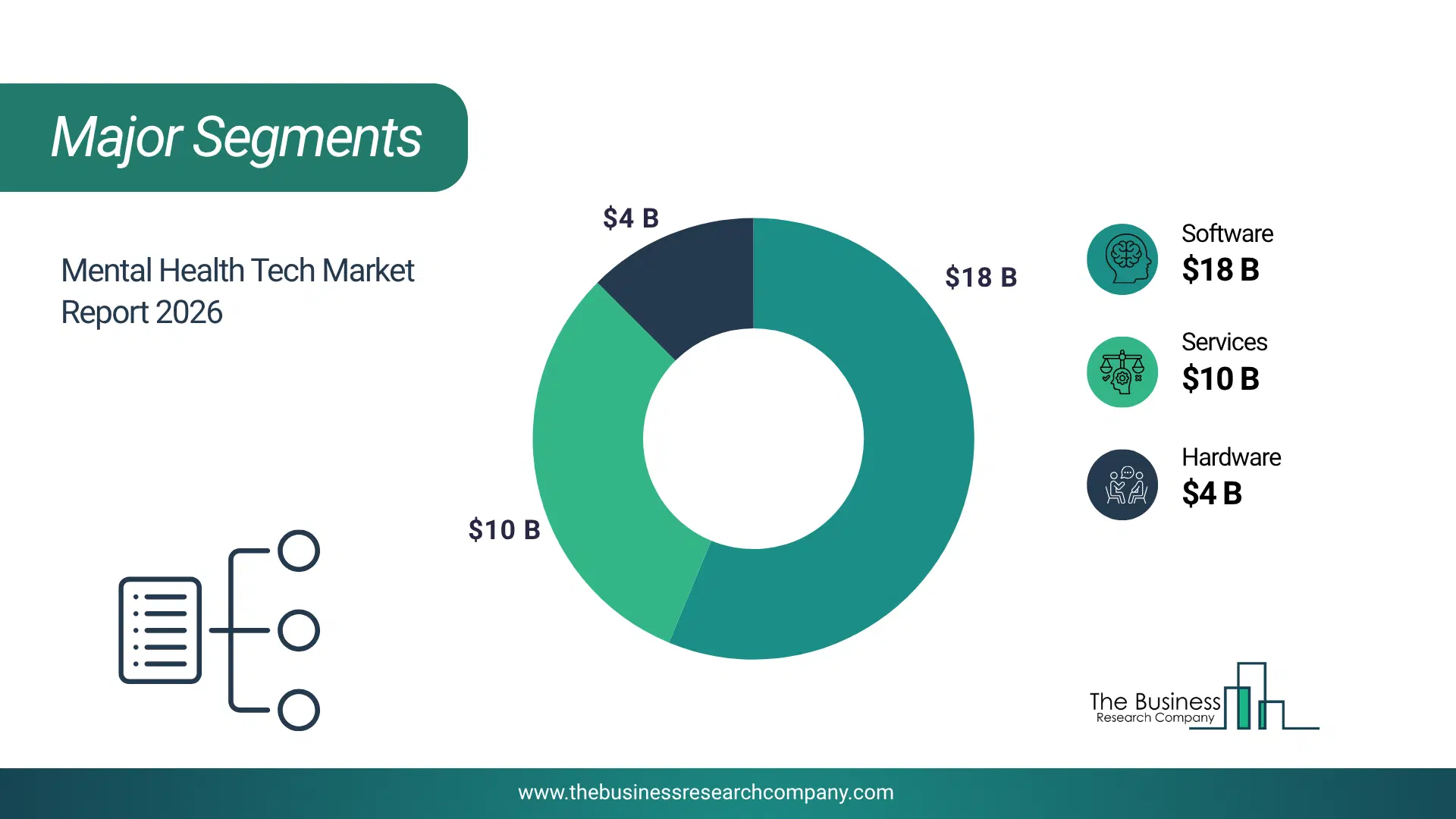
1) By Component: Software, Hardware, Services 2) By Deployment Mode: On-Premises, Cloud 3) By Application: Teletherapy, Self-Help Apps, Mental Health Assessment Tools, VR Therapy, Other Applications 4) By End-User: Hospitals, Clinics, Individuals, Other End-Users Subsegments: 1) By Software: Clinical Information Systems, Non Clinical Information Systems, Artificial Intelligence Platforms, Data Management Tools, Analytics And Reporting Tools, Population Health Management Tools, Clinical Decision Support Systems 2) By Hardware: Processors, Memory Devices, Network Equipment, Storage Devices, Sensors And Monitoring Devices 3) By Services: Integration Services, Deployment Services, Maintenance Services, Managed Services, Training And Consulting Services The top segments in the mental health tech market will be: • Software will reach $17.78 Billion by 2030. • Services will reach $9.89 Billion by 2030. • Hardware will reach $3.75 Billion by 2030.What Is The Driver Of The Mental Health Tech Market?
The increasing awareness of mental health conditions worldwide is expected to contribute significantly to the growth of the mental health tech market in the coming years. Awareness of mental health refers to the extent to which individuals, communities, healthcare systems, and governments recognize the prevalence, impact, and need for timely identification and support for mental health conditions. This growing awareness is driven by expanded public education efforts, global advocacy campaigns, and coordinated observances aimed at reducing stigma and emphasizing mental health as a critical component of overall well-being. The mental health tech market aligns with this trend by providing accessible, scalable, and increasingly personalized digital tools that enable individuals to recognize symptoms, seek early support, and engage with mental health services beyond traditional clinical settings. For instance, in October 2024, according to the World Health Organization, a United Nations agency focused on global public health, World Mental Health Day was observed in more than 150 countries, up from approximately 120 countries in 2023, reflecting a substantial expansion in global participation and institutional engagement in mental health awareness initiatives. Therefore, increasing awareness of mental health conditions worldwide is driving the growth of the mental health tech industry.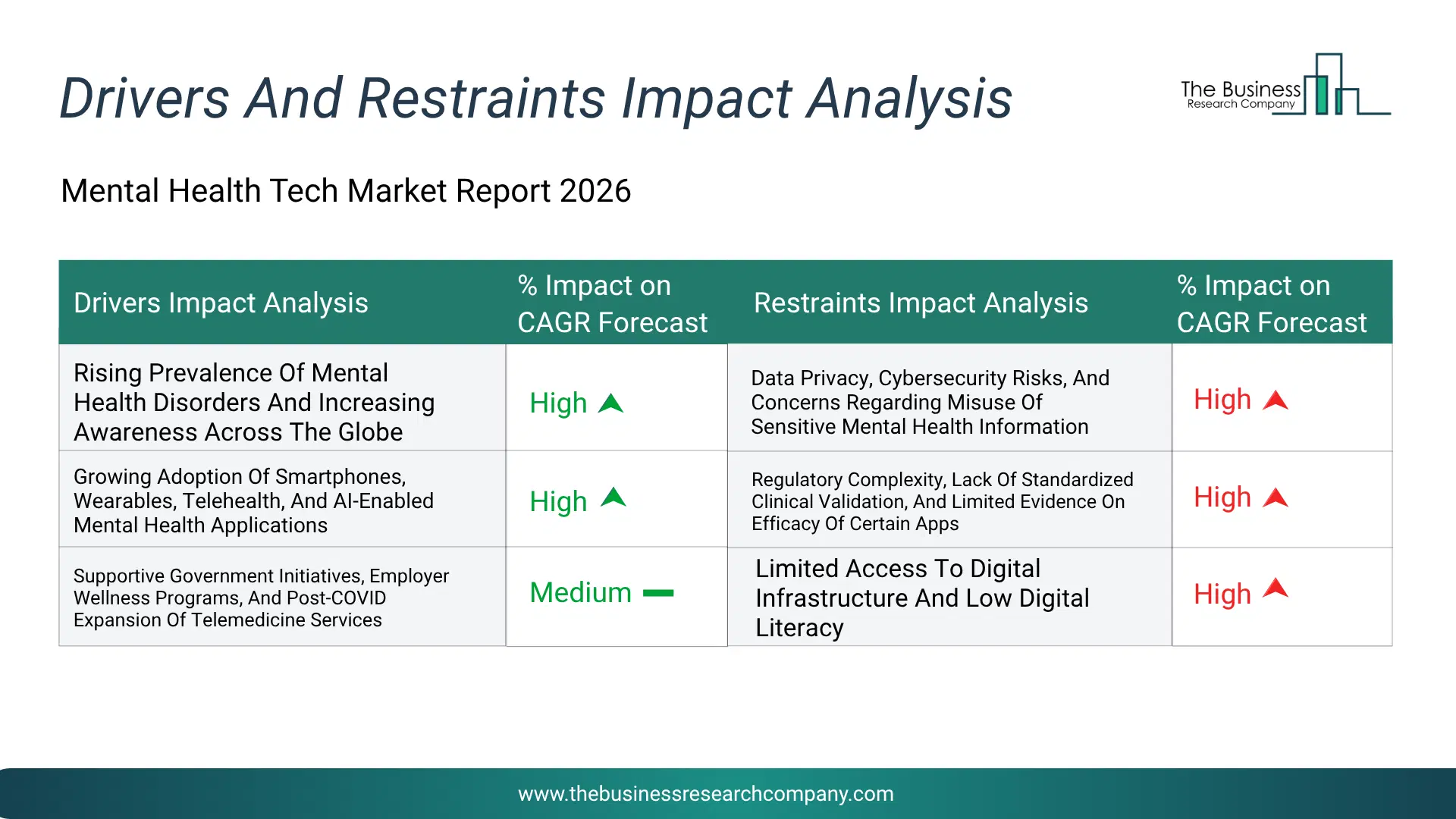
Infographic Chart Showing Key Market Drivers Analysis And Restraints For Mental Health Tech Market
The chart presents an impact analysis of key drivers and restraints, quantifying their relative influence on the market's growth rate and helping assess the balance between growth enablers and limiting factors. This chart offers a high-level perspective; the full report contains more detailed insights.
How Will The Drivers Impact Growth In The Global Mental Health Tech Market?
• Rising Prevalence Of Mental Health Disorders And Increasing Awareness Across The Globe (High) – During the forecast period, the rising prevalence of mental health disorders and increasing awareness across the globe is expected to become a key growth driver for the mental health tech market by 2030. The rising prevalence of mental health disorders such as anxiety, depression, bipolar disorder, and stress-related conditions is significantly driving the growth of the mental health tech market. Increasing urbanization, changing lifestyles, work pressure, social isolation, and economic uncertainty have contributed to higher mental health concerns across all age groups. At the same time, growing public awareness campaigns, educational programs, and social discussions around emotional well-being are reducing the stigma associated with seeking mental healthcare. As more individuals recognize the importance of early diagnosis and continuous psychological support, demand for digital mental health platforms, therapy applications, virtual counselling, and remote monitoring solutions continues to rise. • Growing Adoption Of Smartphones, Wearables, Telehealth, And AI-Enabled Mental Health Applications (High) – During the forecast period, the growing adoption of smartphones, wearables, telehealth, and ai-enabled mental health applications is expected to emerge as a major factor driving the expansion of the mental health tech market by 2030. The growing adoption of smartphones, wearable devices, telehealth platforms, and AI-enabled mental health applications is acting as a major driver for the mental health tech market. Increasing internet penetration and smartphone accessibility have enabled users to access mental health services anytime and from any location. Wearable devices can monitor sleep patterns, stress levels, heart rate, and other behavioral indicators, helping users and healthcare providers track mental well-being more effectively. Telehealth services have simplified virtual consultations, counseling sessions, and therapy programs, reduced geographical barriers and improving healthcare accessibility. Furthermore, AI-powered applications can offer personalized therapy recommendations, mood tracking, chatbot support, and predictive mental health assessments. These technologies support continuous care management and encourage individuals to actively engage in improving their emotional and psychological health. As consumers increasingly prefer digital healthcare solutions for convenience and affordability, demand for advanced mental health technologies is expected to grow steadily. • Supportive Government Initiatives, Employer Wellness Programs, And Post-COVID Expansion Of Telemedicine Services (Medium) – During the forecast period, the supportive government initiatives, employer wellness programs, and post-covid expansion of telemedicine services is expected to act as a key growth catalyst for the mental health tech market by 2030. Supportive government initiatives, employer wellness programs, and the post-COVID expansion of telemedicine services are strongly contributing to the growth of the mental health tech market. Governments across various countries are increasing investments in mental healthcare infrastructure, digital health transformation, and awareness campaigns to improve access to psychological support services. Many organizations are also implementing employee wellness programs focused on stress management, emotional health, and work-life balance to improve workforce productivity and reduce burnout. In addition, the COVID-19 pandemic accelerated the adoption of telemedicine and virtual healthcare platforms due to lockdowns and social distancing measures. This shift normalized remote mental health consultations and increased acceptance of digital therapy services among consumers. Mental health technology platforms now play a critical role in providing counseling, therapy, behavioral monitoring, and medical supervision remotely.How Will The Restraints Impact Growth In The Global Mental Health Tech Market?
• Data Privacy, Cybersecurity Risks, And Concerns Regarding Misuse Of Sensitive Mental Health Information (High) – During the forecast period, the data privacy, cybersecurity risks, and concerns regarding misuse of sensitive mental health information significantly restrain the growth of the mental health tech market. Mental health platforms often collect highly personal and confidential data related to emotional conditions, therapy sessions, behavioral patterns, and medical histories. Any unauthorized access, cyberattack, or data breach can expose sensitive user information and damage consumer trust. Increasing dependence on cloud storage, AI systems, and mobile applications raises concerns about data security vulnerabilities and third-party misuse of information. Many users remain hesitant to adopt digital mental health solutions due to fears of identity theft, privacy violations, or unauthorized sharing of confidential records. In addition, different countries have varying data protection regulations, creating compliance complexities for service providers operating across multiple regions. Companies are required to invest heavily in cybersecurity systems, encryption technologies, and regulatory compliance frameworks to maintain user confidence. These challenges increase operational costs and may discourage both consumers and healthcare organizations from fully adopting mental health technologies. • Regulatory Complexity, Lack Of Standardized Clinical Validation, And Limited Evidence On Efficacy Of Certain Apps (High) – During the forecast period, the regulatory complexity, lack of standardized clinical validation, and limited evidence on efficacy of certain apps present major challenges for the mental health tech market. Digital mental health applications and AI-driven therapy tools must comply with strict healthcare regulations, medical device standards, and patient safety requirements across different countries. However, the absence of universally accepted regulatory frameworks creates uncertainty for developers and healthcare providers. Many mental health applications available in the market lack sufficient clinical testing, scientific validation, or long-term evidence proving their effectiveness in treating psychological conditions. This raises concerns among healthcare professionals regarding the reliability and safety of certain digital solutions. Inconsistent quality standards and limited transparency in algorithm-based recommendations may also reduce user confidence. Furthermore, obtaining regulatory approvals can be time-consuming and expensive, delaying product launches and innovation. Healthcare institutions may hesitate to integrate unverified applications into clinical practice due to legal and ethical concerns. These regulatory and validation-related barriers can restrict market growth and slow the widespread adoption of mental health technologies. • Limited Access To Digital Infrastructure And Low Digital Literacy (Medium) – During the forecast period, the limited access to digital infrastructure and low digital literacy are expected to restrain the growth of the mental health tech market. Many digital mental health solutions depend on reliable internet connectivity, smartphones, wearable devices, and digital platforms to deliver therapy, remote monitoring, and mental wellness services. However, inadequate digital infrastructure in rural and underserved regions, coupled with limited access to connected devices, can restrict the availability of these services. In addition, individuals with low digital literacy, particularly older adults and vulnerable populations, may face difficulties navigating mobile applications, virtual therapy platforms, and AI-enabled mental health tools. These usability challenges can reduce patient engagement, treatment adherence, and the overall effectiveness of digital mental health interventions. Healthcare providers may also encounter barriers when integrating digital mental health technologies into existing clinical workflows due to varying levels of technological readiness. Consequently, limited digital infrastructure and low digital literacy remain significant obstacles to the widespread adoption of mental health technologies.Key Players In The Global Mental Health Tech Market
Major companies operating in the mental health tech market are Lyra Health Inc., Headspace Inc., Charlie Health Inc., Talkspace Inc., Spring Care Inc., BetterUp Inc., Calm Inc., Modern Health Inc., SonderMind Inc., Unmind Ltd., Meru Health Inc., Woebot Labs Inc., KOA Health Digital Solutions Limited, Kaia Health Software Inc., Talkiatry Management Services LLC, Big Health Inc., Mental Fuel Inc., Wysa Ltd., Upheal Inc., Youper Inc.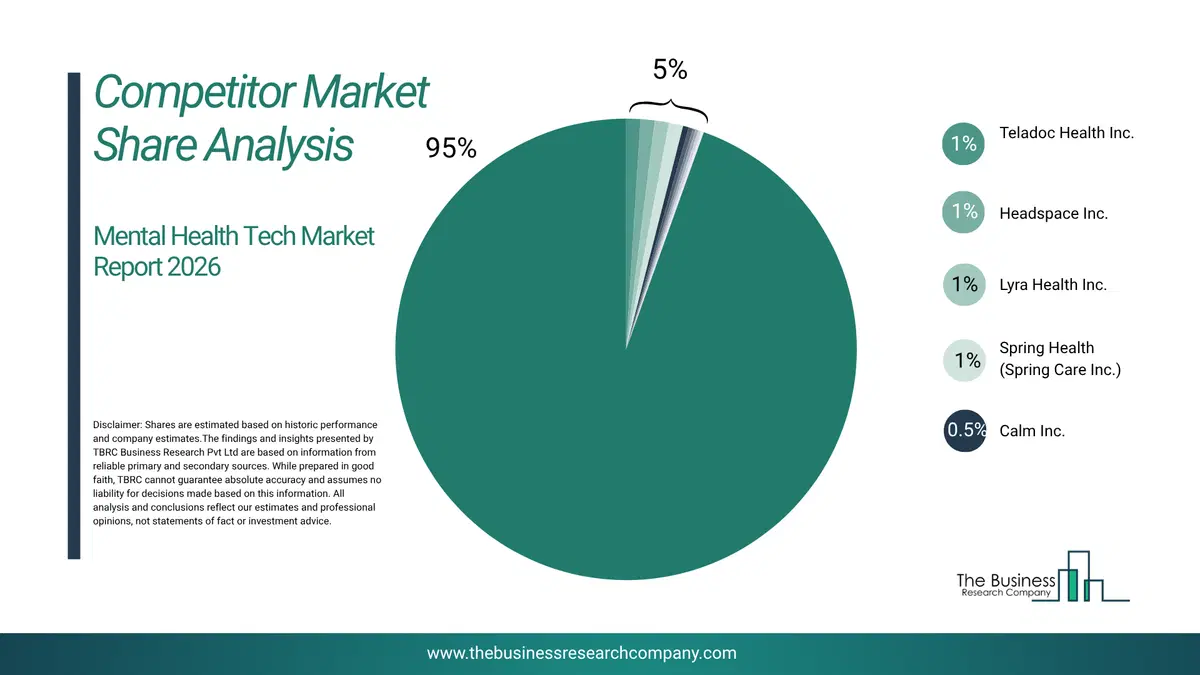
This chart is for illustrative purposes; the full report includes a detailed competitor analysis and comprehensive overview of the top 10 companies in the market.
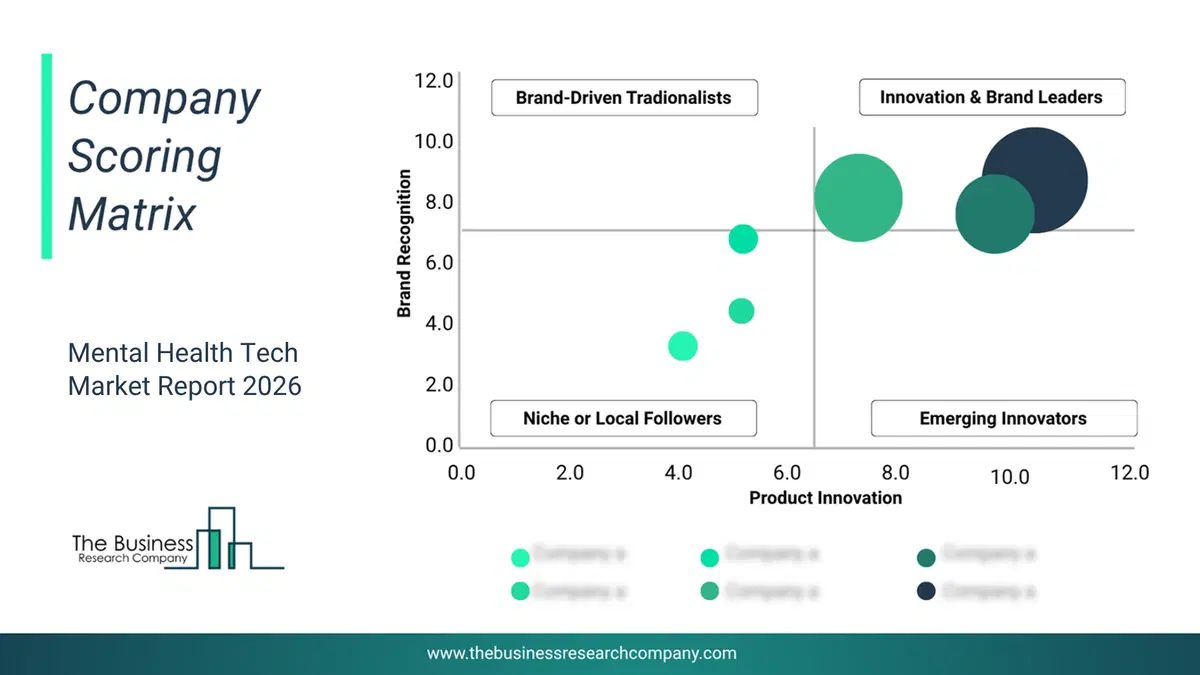
This chart maps companies by product innovation and brand strength, with bubble size indicating relative revenue, helping identify market leaders, challengers, and niche players. This is an illustrative chart; the full report provides a complete and accurate competitive analysis.
Global Mental Health Tech Market Trends and Insights
Major companies operating in the mental health tech market are increasingly focusing on expanding digital mental health access through platforms such as Tele MANAS to deliver 24/7 support, self-care tools, and direct professional consultations via mobile and telephonic channels. Tele MANAS refers to a government-led digital mental health platform designed to provide accessible, confidential, and multilingual support, enabling individuals to connect with trained mental health professionals and access evidence-based stress management and self-care resources. For instance, in October 2024, the Government of India’s Ministry of Health and Family Welfare (MoHFW) launched the Tele MANAS mobile application, which offers self-care strategies, emergency guidance modules, and professional counseling through phone and video-based consultations. The platform supports more than 20 languages and has handled over 1.8 million calls since its inception, underscoring its role in improving mental health service accessibility across underserved and remote populations.What Are Latest Mergers And Acquisitions In The Mental Health Tech Market?
In April 2025, Teladoc Health, Inc., a US-based provider of virtual healthcare services including telemedicine and mental health care through its BetterHelp segment, acquired UpLift Health Technologies, Inc. for $30.0 million. Through this acquisition, Teladoc Health aims to broaden consumer access to virtual mental health therapy, psychiatry, and medication management services by integrating UpLift’s health plan relationships and enhancing coverage benefits through its BetterHelp platform. UpLift Health Technologies, Inc. is a US-based provider of tech-enabled virtual mental health therapy, psychiatric services, and medication management solutions.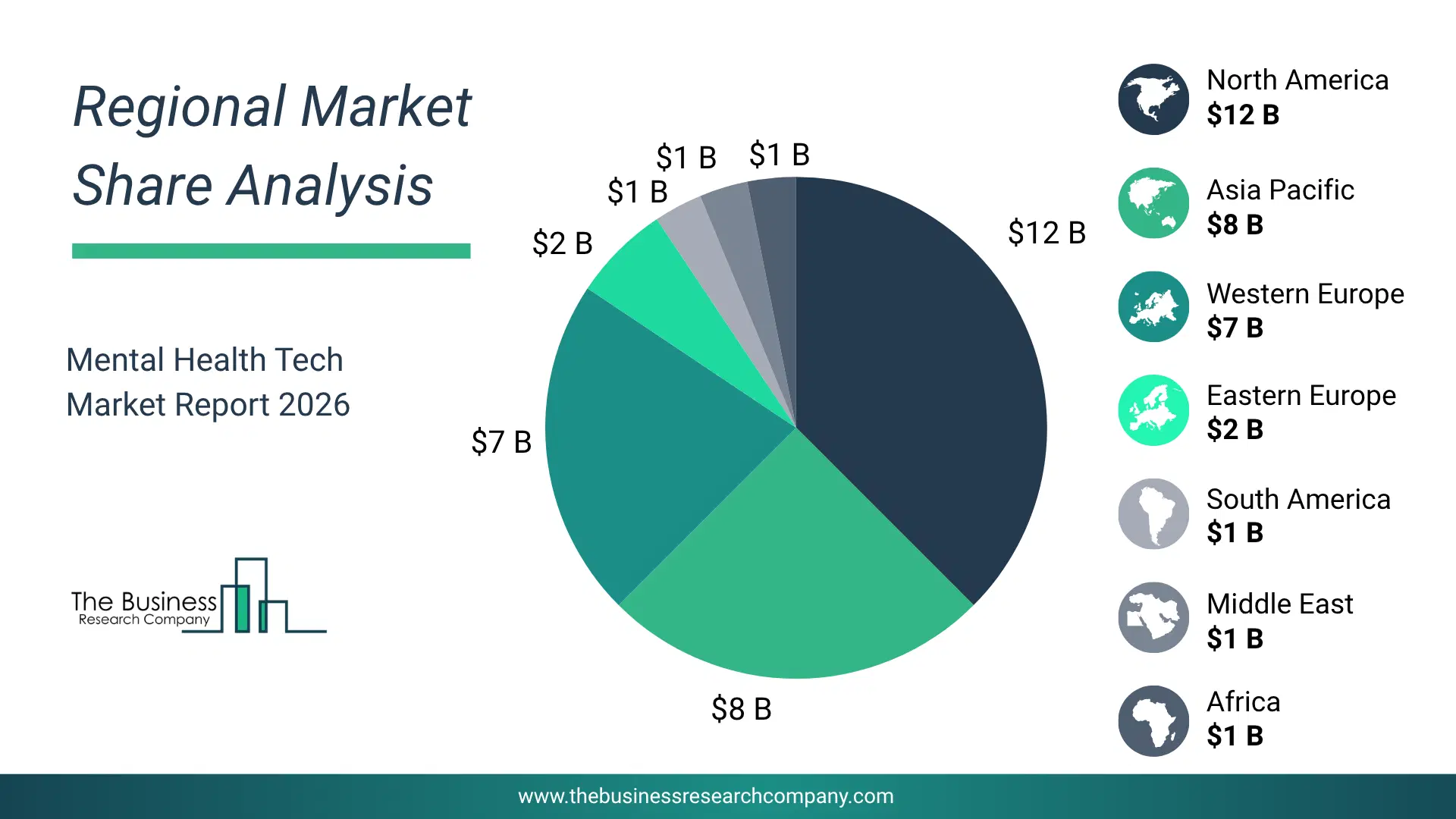
Regional Insights
North America was the largest region in the mental health tech market in 2025. Asia-Pacific is expected to be the fastest-growing region in the forecast period. The regions covered in this market report are Asia-Pacific, South East Asia, Western Europe, Eastern Europe, North America, South America, Middle East, Africa. The countries covered in this market report are Australia, Brazil, China, France, Germany, India, Indonesia, Japan, Taiwan, Russia, South Korea, UK, USA, Canada, Italy, Spain.What Defines the Mental Health Tech Market?
The mental health tech consists of revenues earned by entities by providing services such teletherapy, online counseling, digital therapeutic programs, mental health coaching, remote patient monitoring, crisis support, mindfulness and meditation guidance, cognitive behavioral training, mood tracking assistance. The market value includes the value of related goods sold by the service provider or included within the service offering. Mental health tech also includes sales of wearable stress-tracking devices, biometric sensors, eeg headbands, sleep-monitoring devices, heart-rate variability monitors, smartwatches with mental-health features, light therapy lamps, virtual reality headsets for therapy. Values in this market are ‘factory gate’ values, that is the value of goods sold by the manufacturers or creators of the goods, whether to other entities (including downstream manufacturers, wholesalers, distributors and retailers) or directly to end customers. The value of goods in this market includes related services sold by the creators of the goods.How is Market Value Defined and Measured?
The market value is defined as the revenues that enterprises gain from the sale of goods and/or services within the specified market and geography through sales, grants, or donations in terms of the currency (in USD unless otherwise specified). The revenues for a specified geography are consumption values that are revenues generated by organizations in the specified geography within the market, irrespective of where they are produced. It does not include revenues from resales along the supply chain, either further along the supply chain or as part of other products.
This chart presents market attractiveness based on a quantitative evaluation of growth, competition, strategic alignment, and risk, offering a clear view of opportunity areas for decision-making. This chart is for illustrative purposes; the full report contains the complete analysis.

This chart highlights the Total Addressable Market (TAM) by estimating the maximum revenue opportunity using an assumption-driven approach, supporting strategic planning and opportunity sizing across markets. The chart is illustrative; the full report provides a more comprehensive analysis.
What Key Data and Analysis Are Included in the Mental Health Tech Market Report 2026?
The mental health tech market research report is one of a series of new reports from The Business Research Company that provides market statistics, including industry global market size, regional shares, competitors with the market share, detailed market segments, market trends and opportunities, and any further data you may need to thrive in the mental health tech industry. The market research report delivers a complete perspective of everything you need, with an in-depth analysis of the current and future state of the industry.Mental Health Tech Market Report Forecast Analysis
| Report Attribute | Details |
|---|---|
| Market Size Value In 2026 | $14.87 billion |
| Revenue Forecast In 2030 | $30.77 billion |
| Growth Rate | CAGR of 20.2% from 2026 to 2030 |
| Base Year For Estimation | 2025 |
| Actual Estimates/Historical Data | 2020-2025 |
| Forecast Period | 2026 - 2030 |
| Market Representation | Revenue in USD Billion and CAGR from 2026 to 2030 |
| Segments Covered | Component, Deployment Mode, Application, End-User |
| Regional Scope | Asia-Pacific, Western Europe, Eastern Europe, North America, South America, Middle East, Africa |
| Country Scope | The countries covered in the report are Australia, Brazil, China, France, Germany, India, Indonesia, Japan, Taiwan, Russia, South Korea, UK, USA, Canada, Italy, Spain. |
| Key Companies Profiled | Lyra Health Inc., Headspace Inc., Charlie Health Inc., Talkspace Inc., Spring Care Inc., BetterUp Inc., Calm Inc., Modern Health Inc., SonderMind Inc., Unmind Ltd., Meru Health Inc., Woebot Labs Inc., KOA Health Digital Solutions Limited, Kaia Health Software Inc., Talkiatry Management Services LLC, Big Health Inc., Mental Fuel Inc., Wysa Ltd., Upheal Inc., Youper Inc. |
| Customization Scope | Request for Customization |
| Pricing And Purchase Options | Explore Purchase Options |