

Metabolic Syndrome Market Report 2026
Global Outlook – By Type (Type 1 Metabolic Syndrome, Type 2 Metabolic Syndrome, Type 3 Metabolic Syndrome), By Risk Factors (Obesity, Insulin Resistance, High Blood Pressure, High Cholesterol), By Treatment (Medication, Lifestyle Changes, Other Treatments), By Route Of Administration (Oral, Parenteral, Other Route Of Administrations), By End User (Hospitals, Homecare, Specialty Centres, Other End Users) - Market Size, Trends, Strategies, and Forecast to 2030
Metabolic Syndrome Market Overview
• Metabolic Syndrome market size has reached to $90.34 billion in 2025 • Expected to grow to $127.96 billion in 2030 at a compound annual growth rate (CAGR) of 7.2% • Growth Driver: Increasing Prevalence Of Lifestyle Diseases Is Driving The Market Growth • Market Trend: Technological Innovations In The Probi USA's At Supplyside West 2024 Market • North America was the largest region in 2025 and Asia-Pacific is the fastest growing region.What Is Covered Under Metabolic Syndrome Market?
Metabolic syndrome is a group of risk factors that increase a person’s likelihood of developing heart disease, stroke, and type 2 diabetes. It is often linked to poor lifestyle choices, such as unhealthy eating, lack of physical activity, and obesity. Treatment typically focuses on lifestyle changes, such as diet modification, exercise, and medication to manage individual risk factors. The main types of metabolic syndrome are type 1 metabolic syndrome, type 2 metabolic syndrome, and type 3 metabolic syndrome. Type 1 metabolic syndrome refers to a rare form of metabolic disorder, often associated with genetic or autoimmune factors, that leads to insulin resistance, obesity, and other cardiovascular risk factors. These are used for various risk factors, including obesity, insulin resistance, high blood pressure, and high cholesterol. The various treatments include medication, lifestyle changes, and other treatments. The various treatments include oral, parenteral, and other routes of administration and are used by various end users, such as hospitals, home care, specialty centers, and other end users.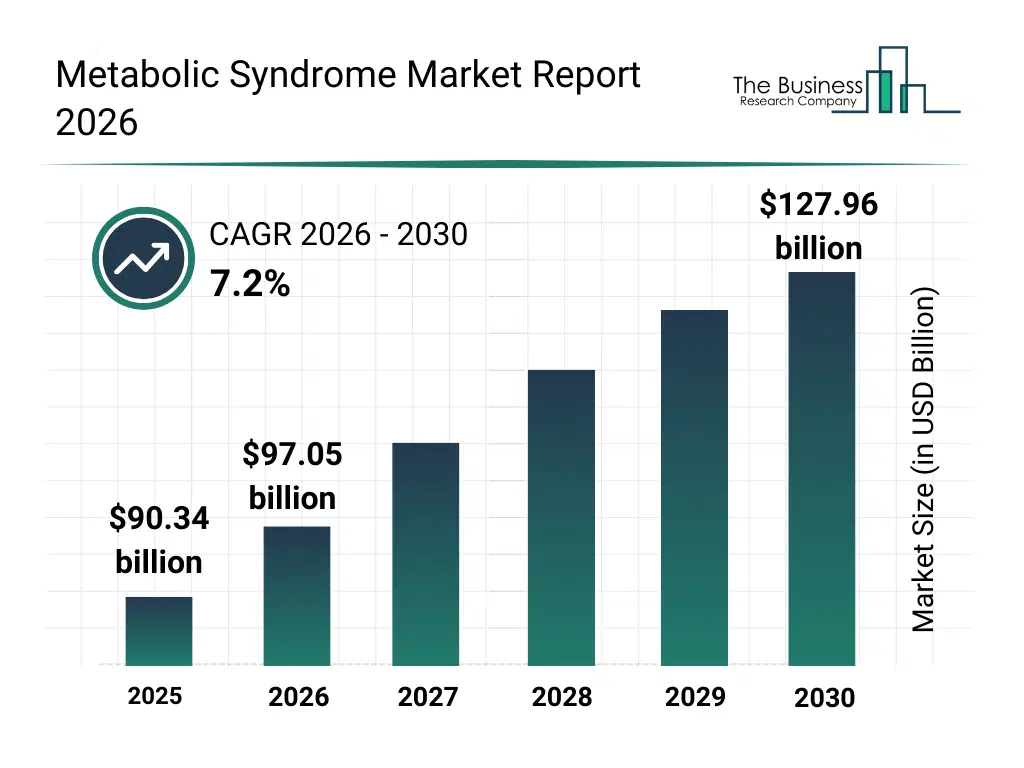
What Is The Metabolic Syndrome Market Size and Share 2026?
The metabolic syndrome market size has grown strongly in recent years. It will grow from $90.34 billion in 2025 to $97.05 billion in 2026 at a compound annual growth rate (CAGR) of 7.4%. The growth in the historic period can be attributed to rising global obesity prevalence, increasing diagnosis rates of insulin resistance, growing awareness of metabolic diseases, expansion of preventive healthcare programs, rising incidence of cardiovascular complications.What Is The Metabolic Syndrome Market Growth Forecast?
The metabolic syndrome market size is expected to see strong growth in the next few years. It will grow to $127.96 billion in 2030 at a compound annual growth rate (CAGR) of 7.2%. The growth in the forecast period can be attributed to growth in digital therapeutic adoption, increasing investment in lifestyle modification platforms, rising use of remote metabolic monitoring, expansion of personalized diet and fitness solutions, increasing integration of ai-based metabolic assessment tools. Major trends in the forecast period include expansion of precision-based metabolic disorder management, AI-driven early risk detection algorithms, cloud-based health monitoring platforms, iot-integrated lifestyle tracking solutions, growth in sustainable metabolic health programs.
Global Metabolic Syndrome Market Segmentation
1) By Type: Type 1 Metabolic Syndrome, Type 2 Metabolic Syndrome, Type 3 Metabolic Syndrome 2) By Risk Factors: Obesity, Insulin Resistance, High Blood Pressure, High Cholesterol 3) By Treatment: Medication, Lifestyle Changes, Other Treatments 4) By Route Of Administration: Oral, Parenteral, Other Route Of Administrations 5) By End User: Hospitals, Homecare, Specialty Centres, Other End Users Subsegments: 1) By Type 1 Metabolic Syndrome: Insulin Resistance Syndrome, Abdominal Obesity Syndrome, Hyperglycemia Syndrome 2) By Type 2 Metabolic Syndrome: Elevated Blood Pressure Syndrome, Dyslipidemia Syndrome, Low HDL Cholesterol Syndrome 3) By Type 3 Metabolic Syndrome: Atherosclerotic Cardiovascular Disease Syndrome, Non-Alcoholic Fatty Liver Disease Syndrome, Chronic Inflammation SyndromeWhat Is The Driver Of The Metabolic Syndrome Market?
The increasing prevalence of lifestyle diseases is expected to drive the metabolic testing market going forward. Lifestyle diseases refer to health conditions primarily caused by unhealthy habits and behaviors rather than genetic or infectious factors. The common types of lifestyle diseases are obesity, cancer, type 2 diabetes, osteoporosis, mental health disorders, and more. The prevalence of lifestyle diseases is due to sedentary lifestyles, unhealthy diets, rising stress levels, and the widespread use of tobacco and alcohol. Metabolic syndrome plays a pivotal role in exacerbating lifestyle diseases by creating a systemic environment that fosters chronic inflammation, impaired metabolic functions, and heightened cardiovascular risks. For instance, in June 2024, according to the National Health Service England, a UK-based government department, the number of individuals diagnosed with non-diabetic hyperglycemia, also known as pre-diabetes in 2023 was 3,615,330, an increase of 18% from 3,065,825 cases recorded in 2022. Therefore, the increasing prevalence of lifestyle diseases will drive the metabolic testing market.Key Players In The Global Metabolic Syndrome Market
Major companies operating in the metabolic syndrome market are Novo Nordisk A/S, Sanofi S.A., Boehringer Ingelheim GmbH, Eli Lilly and Company, AstraZeneca PLC, Biocon Ltd., Bristol‑Myers Squibb Company, Cipla Limited, Herbalife International of America Inc., Abbott Laboratories, Johnson & Johnson Private Limited, Medtronic plc, WW International Inc., Jenny Craig, Takeda Pharmaceutical Company Limited, Pfizer Inc., Novartis AG, F. Hoffmann‑La Roche AG, Merck & Co. Inc., Gilead Sciences, GlaxoSmithKline plc, AbbVie Inc., Regeneron Pharmaceuticals, Sun Pharmaceutical Industries Ltd., Esperion Therapeutics Inc.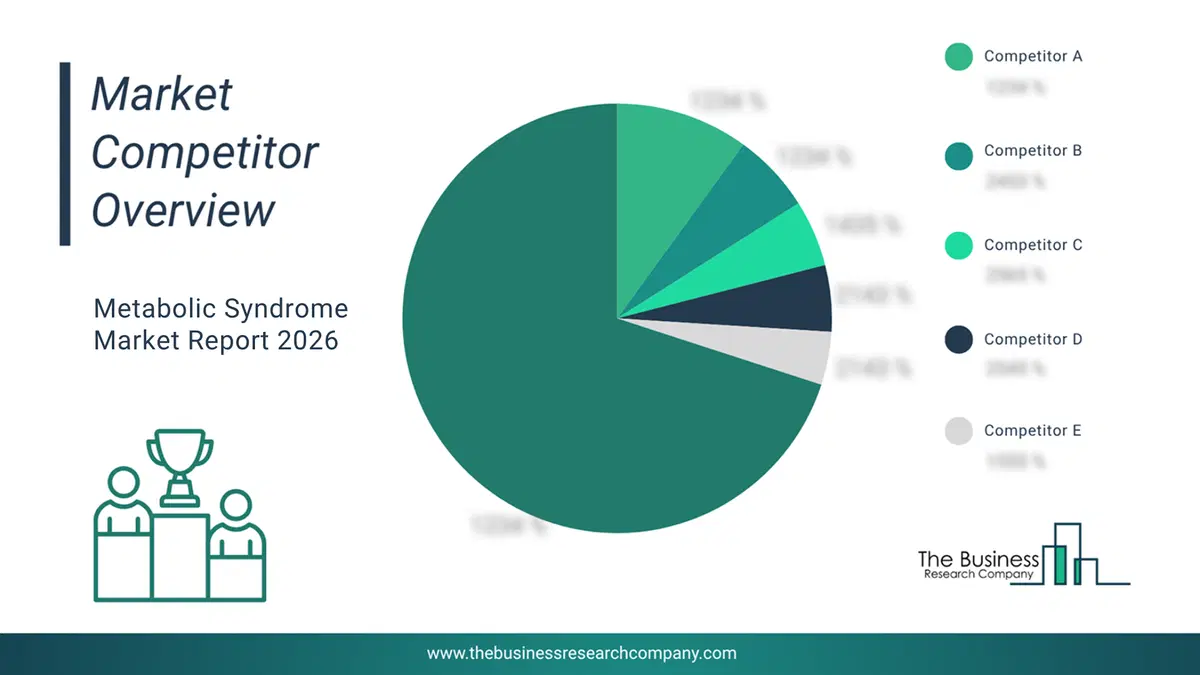
This chart is for illustrative purposes; the full report includes a detailed competitor analysis and comprehensive overview of the top 10 companies in the market.
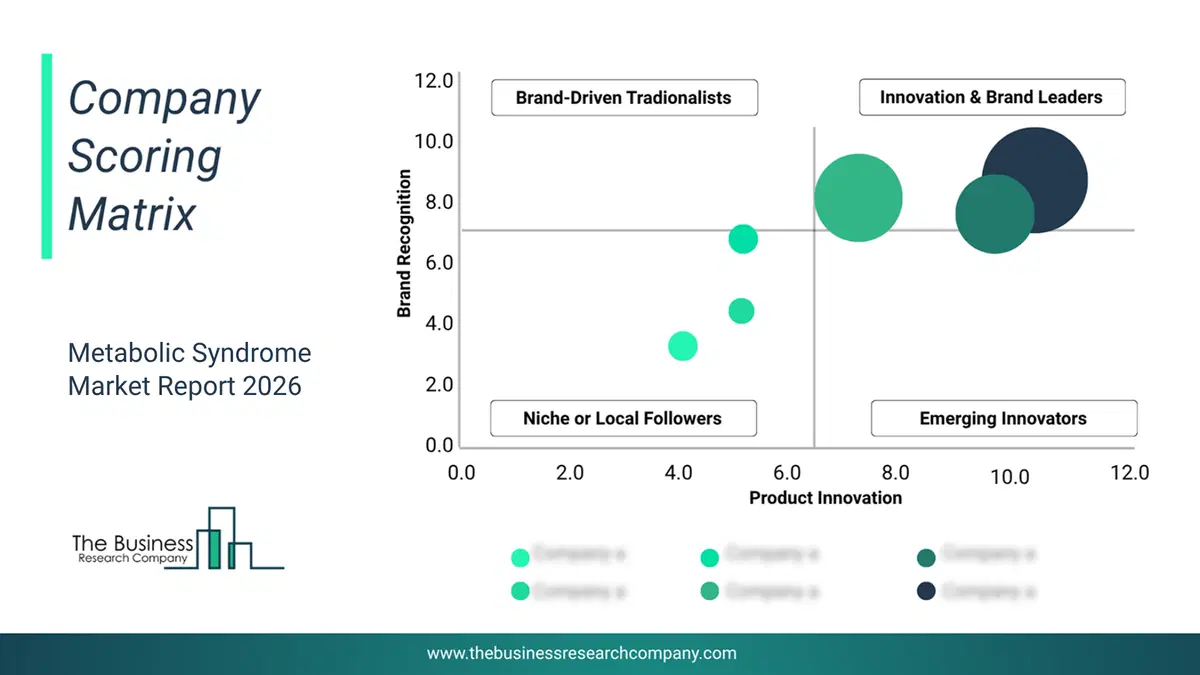
This chart maps companies by product innovation and brand strength, with bubble size indicating relative revenue, helping identify market leaders, challengers, and niche players. This is an illustrative chart; the full report provides a complete and accurate competitive analysis.
Global Metabolic Syndrome Market Trends and Insights
Major companies operating in the metabolic syndrome market are focusing on developing innovative solutions, such as clinically supported probiotic solutions, to enhance the condition's management, treatment, and prevention. A clinically supported probiotic solution is a probiotic product that has undergone rigorous clinical testing to validate its health benefits and safety for human consumption. For instance, in October 2024, Probi USA, a US-based manufacturer of clinically proven biotics, launched metabolic health. This product combines two probiotic strains, Lactiplantibacillus plantarum 299v (LP299V) and Lacticaseibacillus paracasei 8700:2 (L. Paracasei 8700:2). LP299V supports cardiovascular health by improving cholesterol levels, inflammation, and blood vessel function, backed by 230+ publications and eight clinical trials. L. Paracasei 8700:2, with 30+ publications, aids blood pressure regulation, cholesterol management, and weight control.What Are Latest Mergers And Acquisitions In The Metabolic Syndrome Market?
In August 2023, Novo Nordisk A/S, a Denmark-based pharmaceutical company, acquired Inversago Pharma for an undisclosed amount. Through this acquisition, Novo Nordisk aims to enhance its clinical pipeline in obesity and related disorders by investigating Inversago's lead drug, INV-202, as a potential treatment for obesity and its complications. Inversago Pharma Inc. is a Canada-based clinical-stage biopharmaceutical company specializing in developing therapies for metabolic and fibrotic diseases.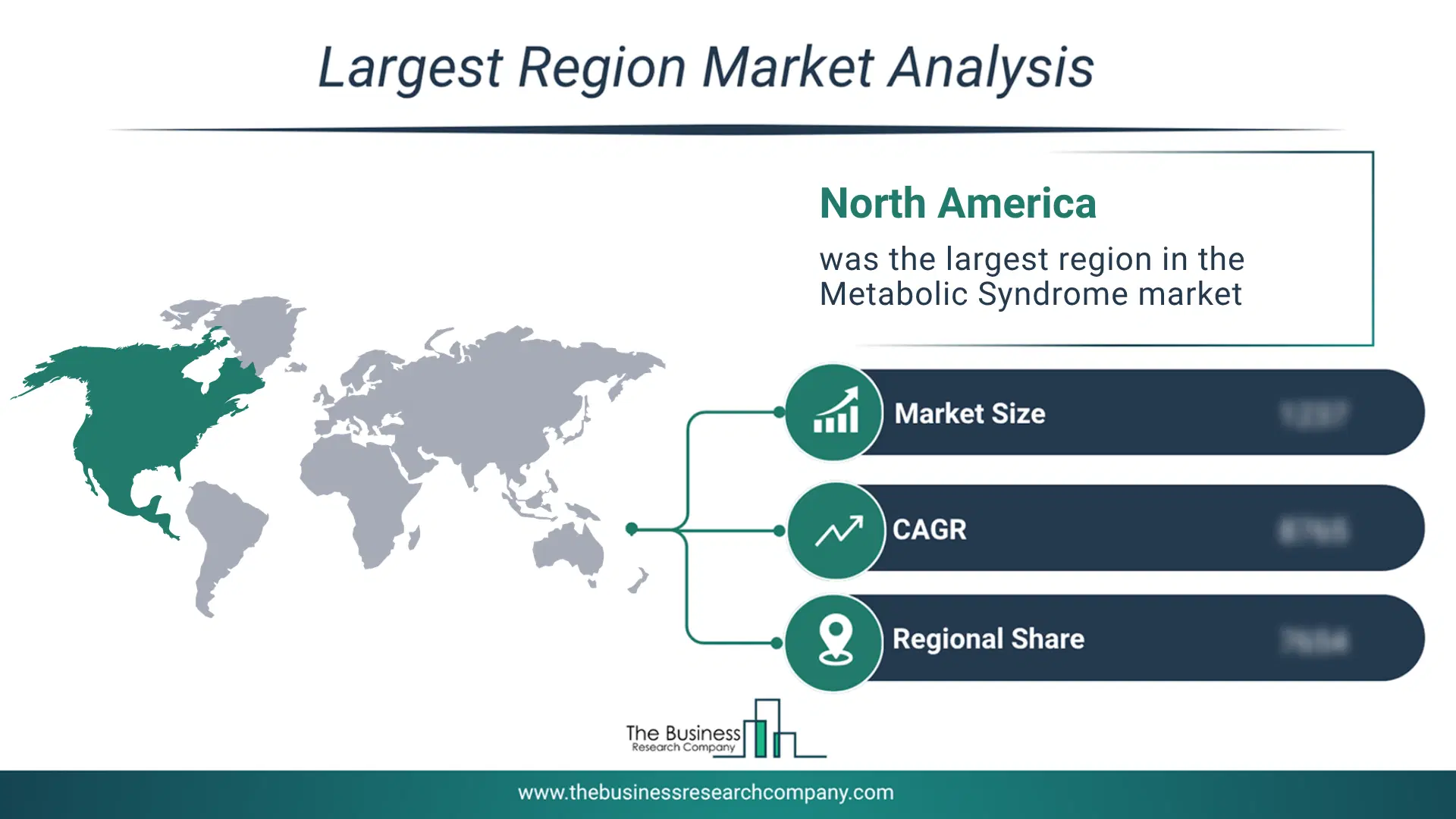
Regional Outlook
North America was the largest region in the metabolic syndrome market in 2025. Asia-Pacific is expected to be the fastest-growing region in the forecast period. The regions covered in this market report are Asia-Pacific, South East Asia, Western Europe, Eastern Europe, North America, South America, Middle East, Africa. The countries covered in this market report are Australia, Brazil, China, France, Germany, India, Indonesia, Japan, Taiwan, Russia, South Korea, UK, USA, Canada, Italy, Spain.What Defines the Metabolic Syndrome Market?
The metabolic syndrome market consists of revenues earned by entities by providing services such medical management, nutrition counseling, physical activity programs, and insulin resistance management. The market value includes the value of related goods sold by the service provider or included within the service offering. The metabolic syndrome market also includes sales of risperidone, olanzapine, lithium and valproate, and fluoxetine or sertraline. Values in this market are ‘factory gate’ values, that is the value of goods sold by the manufacturers or creators of the goods, whether to other entities (including downstream manufacturers, wholesalers, distributors and retailers) or directly to end customers. The value of goods in this market includes related services sold by the creators of the goods.How is Market Value Defined and Measured?
The market value is defined as the revenues that enterprises gain from the sale of goods and/or services within the specified market and geography through sales, grants, or donations in terms of the currency (in USD unless otherwise specified). The revenues for a specified geography are consumption values that are revenues generated by organizations in the specified geography within the market, irrespective of where they are produced. It does not include revenues from resales along the supply chain, either further along the supply chain or as part of other products.
This chart presents market attractiveness based on a quantitative evaluation of growth, competition, strategic alignment, and risk, offering a clear view of opportunity areas for decision-making. This chart is for illustrative purposes; the full report contains the complete analysis.

This chart highlights the Total Addressable Market (TAM) by estimating the maximum revenue opportunity using an assumption-driven approach, supporting strategic planning and opportunity sizing across markets. The chart is illustrative; the full report provides a more comprehensive analysis.
What Key Data and Analysis Are Included in the Metabolic Syndrome Market Report 2026?
The metabolic syndrome market research report is one of a series of new reports from The Business Research Company that provides market statistics, including industry global market size, regional shares, competitors with the market share, detailed market segments, market trends and opportunities, and any further data you may need to thrive in the metabolic syndrome industry. The market research report delivers a complete perspective of everything you need, with an in-depth analysis of the current and future state of the industry.Metabolic Syndrome Market Report Forecast Analysis
| Report Attribute | Details |
|---|---|
| Market Size Value In 2026 | $97.05 billion |
| Revenue Forecast In 2030 | $127.96 billion |
| Growth Rate | CAGR of 7.2% from 2026 to 2030 |
| Base Year For Estimation | 2025 |
| Actual Estimates/Historical Data | 2020-2025 |
| Forecast Period | 2026 - 2030 |
| Market Representation | Revenue in USD Billion and CAGR from 2026 to 2030 |
| Segments Covered | Type, Risk Factors, Treatment, Route Of Administration, End User |
| Regional Scope | Asia-Pacific, Western Europe, Eastern Europe, North America, South America, Middle East, Africa |
| Country Scope | The countries covered in the report are Australia, Brazil, China, France, Germany, India, Indonesia, Japan, Taiwan, Russia, South Korea, UK, USA, Canada, Italy, Spain |
| Key Companies Profiled | Novo Nordisk A/S, Sanofi S.A., Boehringer Ingelheim GmbH, Eli Lilly and Company, AstraZeneca PLC, Biocon Ltd., Bristol‑Myers Squibb Company, Cipla Limited, Herbalife International of America Inc., Abbott Laboratories, Johnson & Johnson Private Limited, Medtronic plc, WW International Inc., Jenny Craig, Takeda Pharmaceutical Company Limited, Pfizer Inc., Novartis AG, F. Hoffmann‑La Roche AG, Merck & Co. Inc., Gilead Sciences, GlaxoSmithKline plc, AbbVie Inc., Regeneron Pharmaceuticals, Sun Pharmaceutical Industries Ltd., Esperion Therapeutics Inc. |
| Customization Scope | Request for Customization |
| Pricing And Purchase Options | Explore Purchase Options |