
Metastatic Lung Adenocarcinoma Treatment Market Report 2026
Global Outlook – By Treatment (Chemotherapy, Targeted Therapy, Immunotherapy, Radiation Therapy), By Route Of Administration (Oral, Intravenous), By End-User (Hospitals, Cancer Research Centers, Specialty Clinics) - Market Size, Trends, Strategies, and Forecast to 2030
Metastatic Lung Adenocarcinoma Treatment Market Overview
• Metastatic Lung Adenocarcinoma Treatment market size has reached to $4.54 billion in 2025 • Expected to grow to $7.21 billion in 2030 at a compound annual growth rate (CAGR) of 9.6% • Growth Driver: Surge In Adoption Of Targeted Therapy Fueling The Growth Of The Market Due To Improving Precision And Patient Outcomes • Market Trend: Chemotherapy-Free Advancements Enhance First-Line Treatment Options For Metastatic Lung Adenocarcinoma • North America was the largest region in 2025 and Asia-Pacific is the fastest growing region.What Is Covered Under Metastatic Lung Adenocarcinoma Treatment Market?
Metastatic lung adenocarcinoma treatment involves medical strategies designed to manage lung cancer that has spread beyond the lungs. The main objectives are to slow tumor progression, alleviate symptoms, and prolong patient survival. As a palliative approach, it focuses on enhancing quality of life while controlling disease advancement. The main types of metastatic lung adenocarcinoma treatment are chemotherapy, targeted therapy, immunotherapy, and radiation therapy. Chemotherapy involves using powerful drugs to kill rapidly growing cancer cells throughout the body. It is often administered intravenously or orally and can be used alone or in combination with other treatments. The main routes of administration are oral and intravenous, and it is used by various end-users, including hospitals, cancer research centers, and specialty clinics.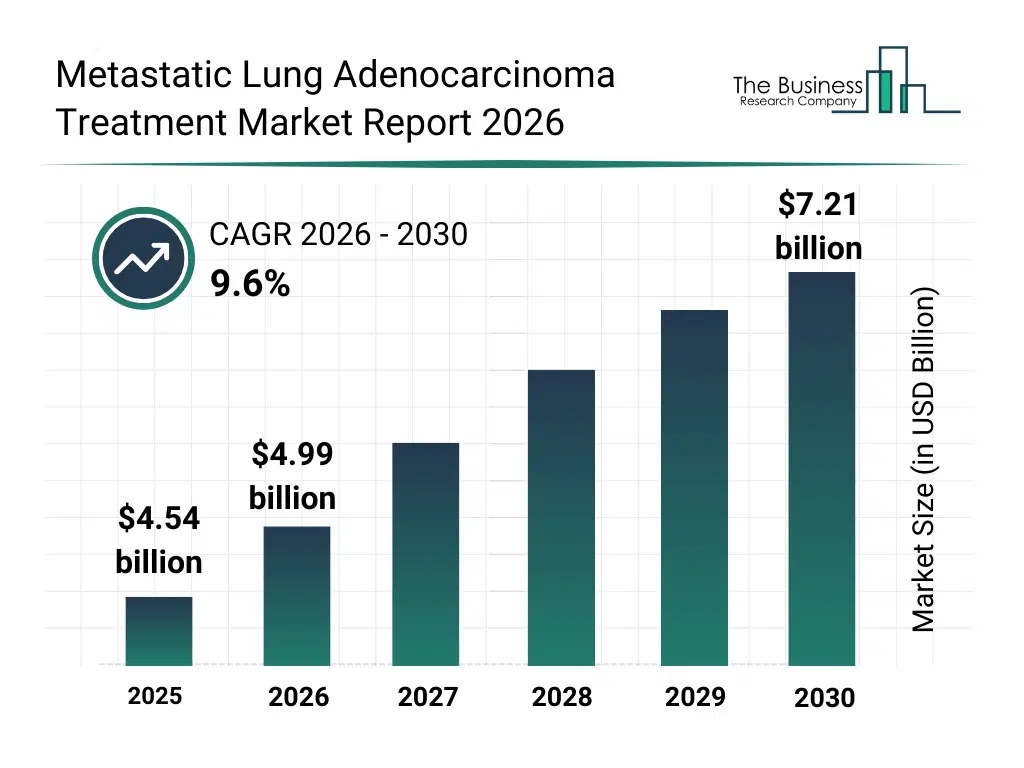
What Is The Metastatic Lung Adenocarcinoma Treatment Market Size and Share 2026?
The metastatic lung adenocarcinoma treatment market size has grown strongly in recent years. It will grow from $4.54 billion in 2025 to $4.99 billion in 2026 at a compound annual growth rate (CAGR) of 9.9%. The growth in the historic period can be attributed to rising lung cancer prevalence, adoption of platinum chemotherapy, early use of egfr inhibitors, increased reliance on radiation therapy, growing diagnostic advancements.What Is The Metastatic Lung Adenocarcinoma Treatment Market Growth Forecast?
The metastatic lung adenocarcinoma treatment market size is expected to see strong growth in the next few years. It will grow to $7.21 billion in 2030 at a compound annual growth rate (CAGR) of 9.6%. The growth in the forecast period can be attributed to expansion of alk and ros1 inhibitors, increasing adoption of immunotherapy combinations, growth in car-t research for lung cancer, advanced imaging enhancement, rising investment in targeted therapy development. Major trends in the forecast period include precision medicine integration in lung adenocarcinoma treatment, AI-based tumor detection and therapy optimization, big data-driven immunotherapy enhancement, virtual simulation platforms for oncology training, automated diagnostics and treatment workflow solutions.
Global Metastatic Lung Adenocarcinoma Treatment Market Segmentation
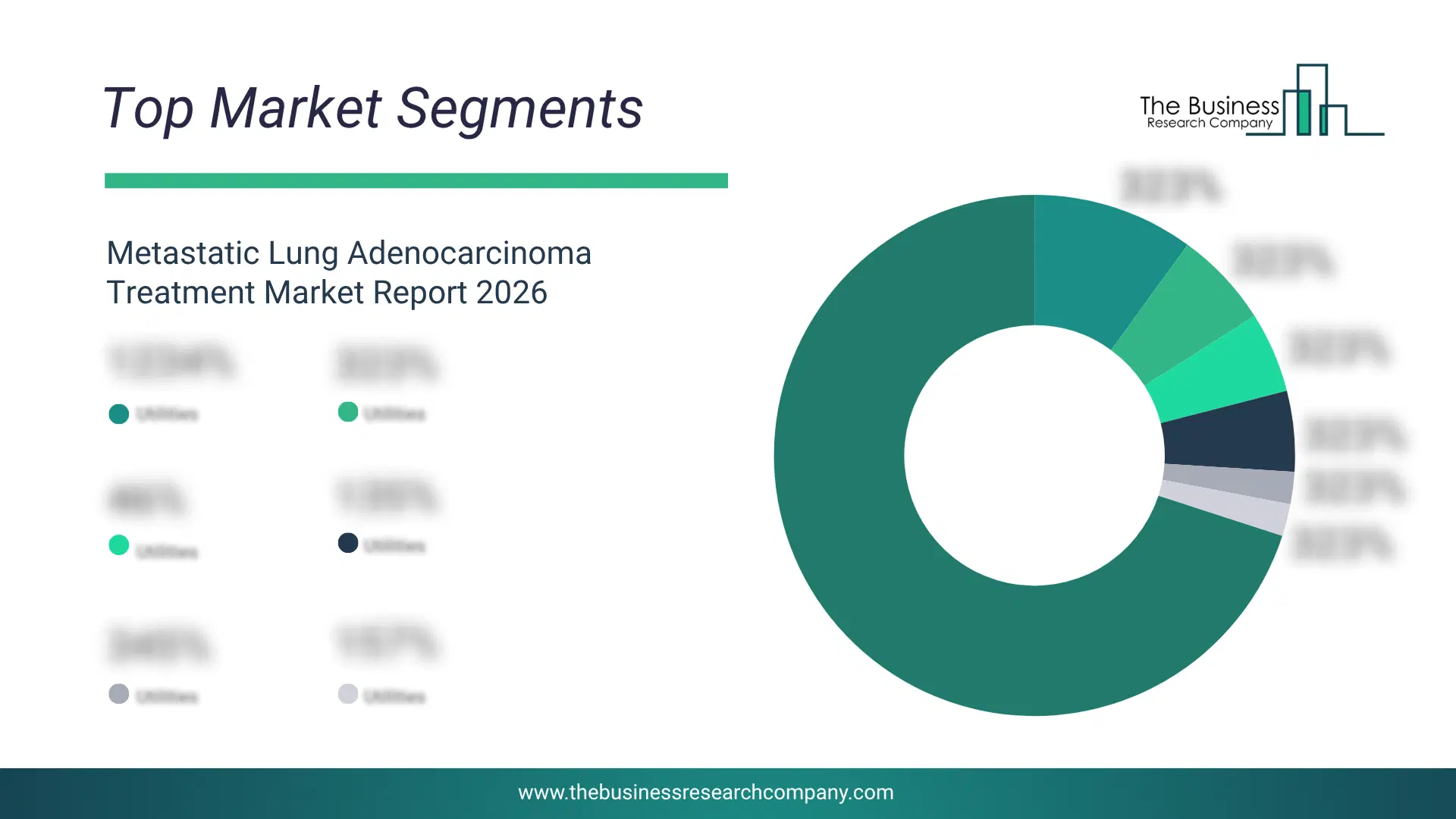
1) By Treatment: Chemotherapy, Targeted Therapy, Immunotherapy, Radiation Therapy 2) By Route Of Administration: Oral, Intravenous 3) By End-User: Hospitals, Cancer Research Centers, Specialty Clinics Subsegments: 1) By Chemotherapy: Platinum-Based Chemotherapy, Non-Platinum Chemotherapy, Combination Therapy, Single-Agent Chemotherapy 2) By Targeted Therapy: Epidermal Growth Factor Receptor Inhibitors, Anaplastic Lymphoma Kinase Inhibitors, C-Ros Oncogene 1 Receptor Tyrosine Kinase Inhibitors, V-Raf Murine Sarcoma Viral Oncogene Homolog B1 Inhibitors, Rearranged During Transfection Inhibitors, Mesenchymal-Epithelial Transition Factor Inhibitors, Neurotrophic Tropomyosin Receptor Kinase Inhibitors 3) By Immunotherapy: PD-1 Inhibitors, PD-L1 Inhibitors, CTLA-4 Inhibitors, Combination Immunotherapy, CAR-T Cell Therapy (Emerging) 4) By Radiation Therapy: External Beam Radiation Therapy (EBRT), Stereotactic Body Radiotherapy (SBRT), Intensity-Modulated Radiation Therapy (IMRT), Proton TherapyWhat Is The Driver Of The Metastatic Lung Adenocarcinoma Treatment Market?
The increasing adoption of targeted therapy is expected to propel the growth of the metastatic lung adenocarcinoma treatment market going forward. Targeted therapy is a cancer treatment that uses drugs to precisely block cancer growth by targeting specific genes or proteins that drive tumor development and spread. Targeted therapy is gaining traction as it precisely addresses specific genetic mutations, resulting in more effective treatment outcomes and reduced side effects compared to conventional methods. Targeted therapy treats metastatic lung adenocarcinoma by blocking specific genetic mutations that drive cancer growth and spread. It offers a more precise approach with fewer side effects and can greatly enhance survival and quality of life in patients with actionable mutations. For instance, in July 2023, according to the American Society of Gene and Cell Therapy (ASGCT), a US-based professional membership organization, and Citeline, a US-based provider of drugs and devices, there were 247 gene therapies in Phase II at the end of the first quarter of 2023, increasing by 5% to 260 by the end of the second quarter. Therefore, the increasing adoption of targeted therapy is driving the growth of the metastatic lung adenocarcinoma treatment industry.Key Players In The Global Metastatic Lung Adenocarcinoma Treatment Market
Major companies operating in the metastatic lung adenocarcinoma treatment market are Pfizer Inc., Johnson & Johnson, F. Hoffmann‑La Roche Ltd, Merck & Co. Inc., Bristol‑Myers Squibb Company, AstraZeneca PLC, Novartis AG, Boehringer Ingelheim International GmbH, BeiGene Ltd., Novocure, Gilead Sciences, Daiichi Sankyo Company Limited, Mirati Therapeutics Inc., Nuvalent Inc., Moderna Therapeutics, Shanghai Henlius Biotech, Duality BioSciences Inc., Arcus Biosciences Inc., NeoImmuneTech Inc., Hutchison Medipharma Limited, Betta Pharma Company Limited, OncoC4 Inc., Xcovery Holding Company, BioNTech SE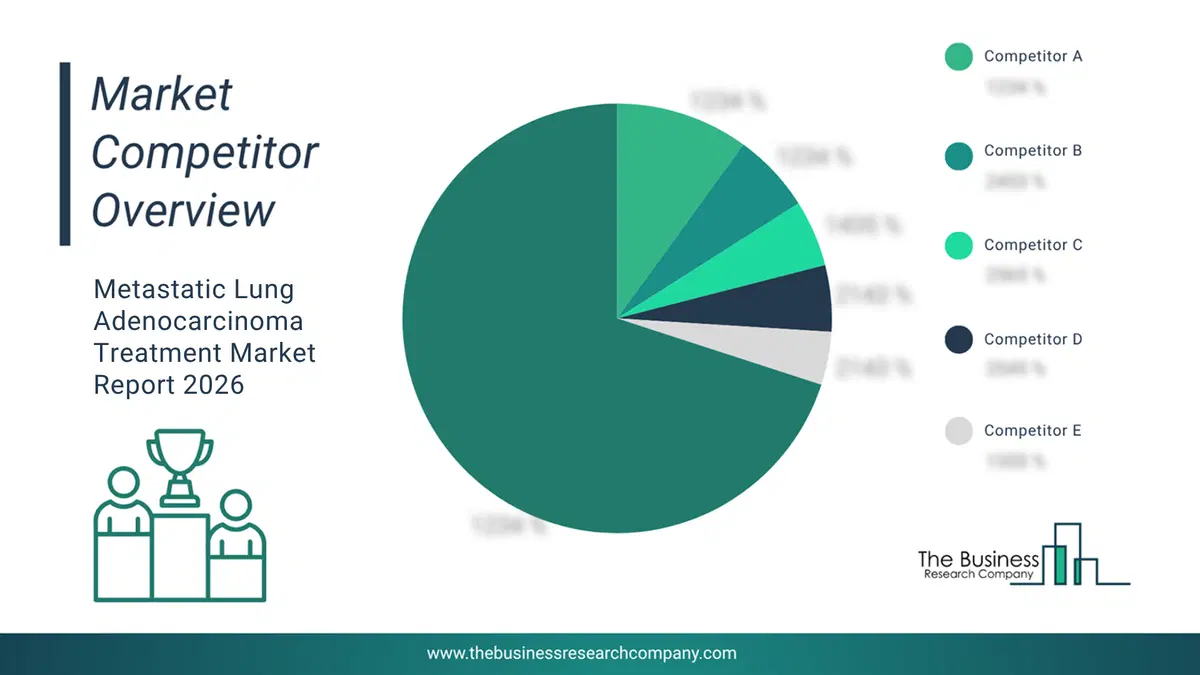
This chart is for illustrative purposes; the full report includes a detailed competitor analysis and comprehensive overview of the top 10 companies in the market.
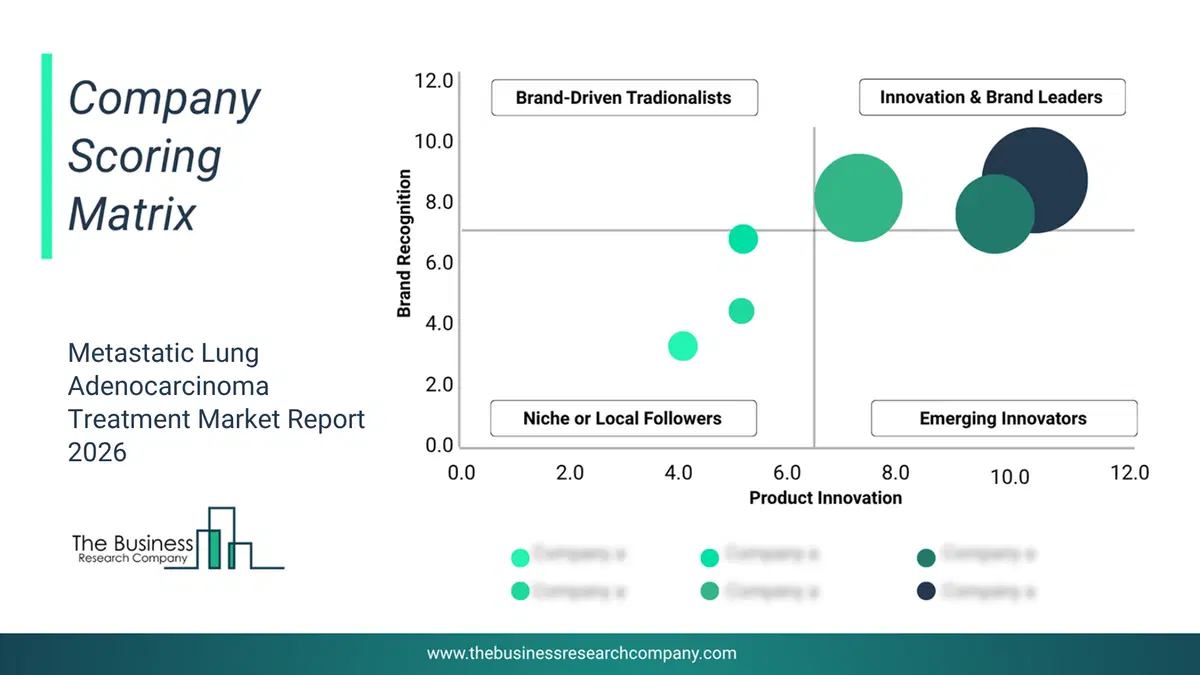
This chart maps companies by product innovation and brand strength, with bubble size indicating relative revenue, helping identify market leaders, challengers, and niche players. This is an illustrative chart; the full report provides a complete and accurate competitive analysis.
Global Metastatic Lung Adenocarcinoma Treatment Market Trends and Insights
Major companies operating in the metastatic lung adenocarcinoma treatment market are focused on developing advanced solutions such as chemotherapy-free treatment to enhance long-term survival rates by targeting specific genetic mutations and improving patient outcomes. Chemotherapy-free treatment refers to cancer therapies that utilize alternatives such as targeted therapy or immunotherapy, aiming to manage cancer effectively while reducing the severe side effects typically linked to traditional chemotherapy. For instance, in August 2024, Johnson & Johnson, a US-based healthcare company, announced that the U.S. Food and Drug Administration (FDA) had approved RYBREVANT (amivantamab-vmjw) in combination with LAZCLUZE (lazertinib) as a first-line, chemotherapy-free treatment for adults with locally advanced or metastatic non-small cell lung cancer (NSCLC) characterized by EGFR exon 19 deletions or exon 21 L858R substitution mutations. The approval was supported by results from the Phase 3 MARIPOSA study, which demonstrated superior progression-free survival compared to osimertinib.What Are Latest Mergers And Acquisitions In The Metastatic Lung Adenocarcinoma Treatment Market?
In January 2024, Bristol Myers Squibb (BMS), a US-based pharmaceutical company, acquired Mirati Therapeutics for $4.8 billion. This strategic move is designed to strengthen BMS’s cancer treatment portfolio, with a focus on targeted therapies for non-small cell lung cancer (NSCLC). It supports the company’s long-term growth strategy by expanding its oncology pipeline and deepening its commitment to addressing unmet needs in cancer care. Mirati Therapeutics is a US-based biopharmaceutical company that provides treatment for KRASG12C-mutated locally advanced or metastatic non-small cell lung cancer.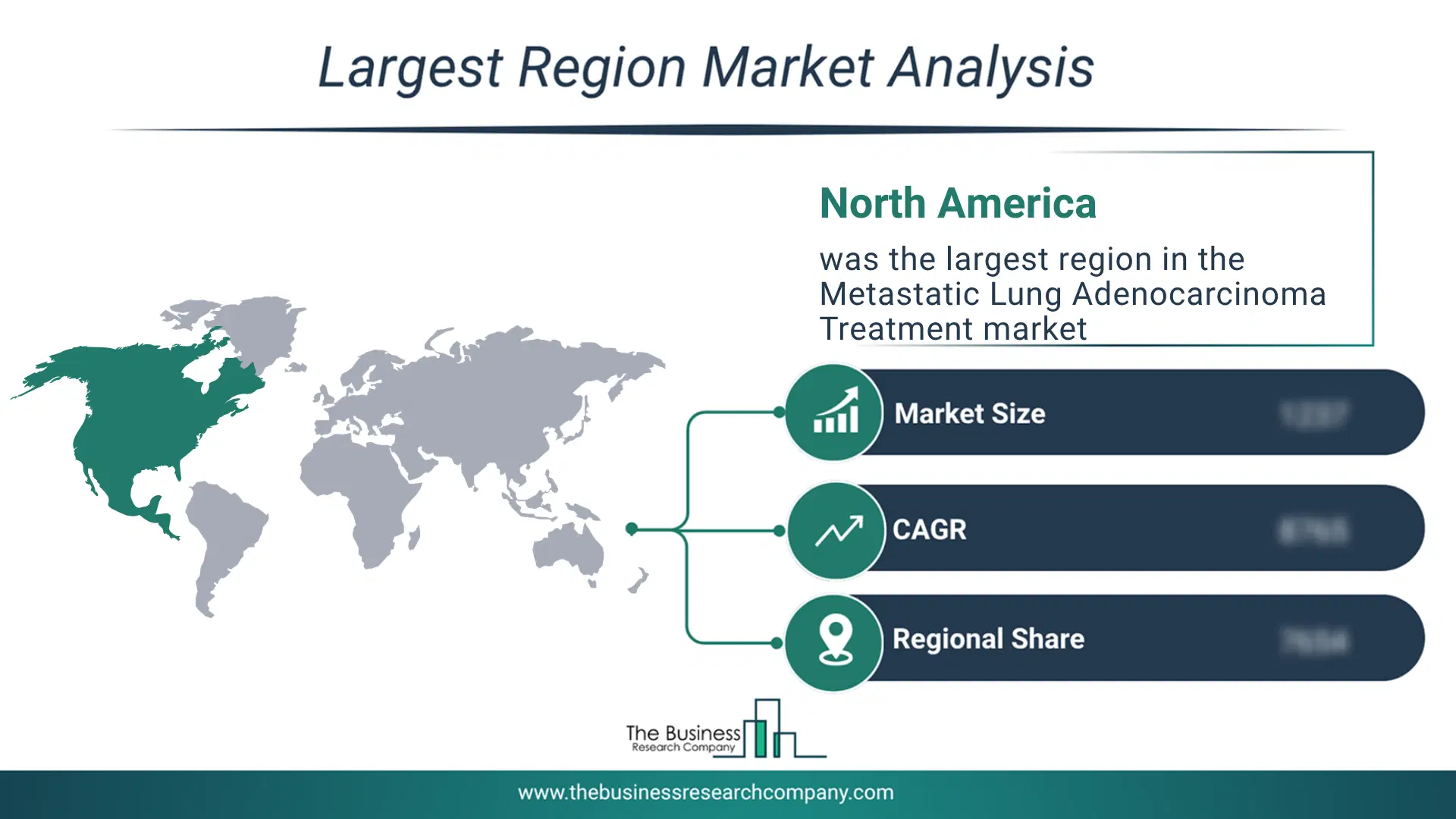
Regional Outlook
North America was the largest region in the metastatic lung adenocarcinoma treatment market in 2025. Asia-Pacific is expected to be the fastest-growing region in the forecast period. The regions covered in this market report are Asia-Pacific, South East Asia, Western Europe, Eastern Europe, North America, South America, Middle East, Africa. The countries covered in this market report are Australia, Brazil, China, France, Germany, India, Indonesia, Japan, Taiwan, Russia, South Korea, UK, USA, Canada, Italy, Spain.What Defines the Metastatic Lung Adenocarcinoma Treatment Market?
The metastatic lung adenocarcinoma treatment market consists of revenues earned by entities by providing services such as palliative and supportive care services, medical oncology services, diagnostic imaging, multidisciplinary team coordination, patient education, and counseling. The market value includes the value of related goods sold by the service provider or included within the service offering. The metastatic lung adenocarcinoma treatment market also includes sales of tumor-targeted radiopharmaceuticals, anti-angiogenic agents, and bispecific antibodies. Values in this market are ‘factory gate’ values, that is, the value of goods sold by the manufacturers or creators of the goods, whether to other entities (including downstream manufacturers, wholesalers, distributors, and retailers) or directly to end customers. The value of goods in this market includes related services sold by the creators of the goods.How is Market Value Defined and Measured?
The market value is defined as the revenues that enterprises gain from the sale of goods and/or services within the specified market and geography through sales, grants, or donations in terms of the currency (in USD unless otherwise specified). The revenues for a specified geography are consumption values that are revenues generated by organizations in the specified geography within the market, irrespective of where they are produced. It does not include revenues from resales along the supply chain, either further along the supply chain or as part of other products.
This chart presents market attractiveness based on a quantitative evaluation of growth, competition, strategic alignment, and risk, offering a clear view of opportunity areas for decision-making. This chart is for illustrative purposes; the full report contains the complete analysis.

This chart highlights the Total Addressable Market (TAM) by estimating the maximum revenue opportunity using an assumption-driven approach, supporting strategic planning and opportunity sizing across markets. The chart is illustrative; the full report provides a more comprehensive analysis.
What Key Data and Analysis Are Included in the Metastatic Lung Adenocarcinoma Treatment Market Report 2026?
The metastatic lung adenocarcinoma treatment market research report is one of a series of new reports from The Business Research Company that provides market statistics, including industry global market size, regional shares, competitors with the market share, detailed market segments, market trends and opportunities, and any further data you may need to thrive in the metastatic lung adenocarcinoma treatment industry. The market research report delivers a complete perspective of everything you need, with an in-depth analysis of the current and future state of the industry.Metastatic Lung Adenocarcinoma Treatment Market Report Forecast Analysis
| Report Attribute | Details |
|---|---|
| Market Size Value In 2026 | $4.99 billion |
| Revenue Forecast In 2030 | $7.21 billion |
| Growth Rate | CAGR of 9.6% from 2026 to 2030 |
| Base Year For Estimation | 2025 |
| Actual Estimates/Historical Data | 2020-2025 |
| Forecast Period | 2026 - 2030 |
| Market Representation | Revenue in USD Billion and CAGR from 2026 to 2030 |
| Segments Covered | Treatment, Route Of Administration, End-User |
| Regional Scope | Asia-Pacific, Western Europe, Eastern Europe, North America, South America, Middle East, Africa |
| Country Scope | The countries covered in the report are Australia, Brazil, China, France, Germany, India, Indonesia, Japan, Taiwan, Russia, South Korea, UK, USA, Canada, Italy, Spain |
| Key Companies Profiled | Pfizer Inc., Johnson & Johnson, F. Hoffmann‑La Roche Ltd, Merck & Co. Inc., Bristol‑Myers Squibb Company, AstraZeneca PLC, Novartis AG, Boehringer Ingelheim International GmbH, BeiGene Ltd., Novocure, Gilead Sciences, Daiichi Sankyo Company Limited, Mirati Therapeutics Inc., Nuvalent Inc., Moderna Therapeutics, Shanghai Henlius Biotech, Duality BioSciences Inc., Arcus Biosciences Inc., NeoImmuneTech Inc., Hutchison Medipharma Limited, Betta Pharma Company Limited, OncoC4 Inc., Xcovery Holding Company, BioNTech SE |
| Customization Scope | Request for Customization |
| Pricing And Purchase Options | Explore Purchase Options |