
Metastatic Urothelial Carcinoma Market Report 2026
Global Outlook – By Treatment (Chemotherapy, Targeted Therapy, Immunotherapy, Radiation Therapy), By Diagnosis (Urine Lab Tests, Cystoscopy, Intravenous Pyelogram (IVP), Biopsy), By End User (Hospital, Oncology Clinics, Research Institutes, Other End Users) - Market Size, Trends, Strategies, and Forecast to 2030
Metastatic Urothelial Carcinoma Market Overview
• Metastatic Urothelial Carcinoma market size has reached to $1.42 billion in 2025 • Expected to grow to $3.46 billion in 2030 at a compound annual growth rate (CAGR) of 19.4% • Growth Driver: Rise In Incidents Of Bladder Cancer Is Driving The Market Growth • Market Trend: Regulatory Approvals Driving Market Expansion For Metastatic Urothelial Carcinoma Treatments • North America was the largest region in 2025 and Asia-Pacific is the fastest growing region.What Is Covered Under Metastatic Urothelial Carcinoma Market?
Metastatic urothelial carcinoma refers to an advanced form of bladder cancer that has spread beyond the urothelium to distant organs or lymph nodes. Metastatic urothelial carcinoma utilizes advanced diagnostic technologies, targeted therapies, and immunotherapies to manage and treat cancer that has spread beyond the bladder or urinary tract. The main types of metastatic urothelial carcinoma are chemotherapy, targeted therapy, immunotherapy, radiation therapy, and intravesical therapy. Chemotherapy is a treatment using drugs to kill cancer cells or stop their growth. These are used for various diagnoses, including urine lab tests, cystoscopy, intravenous pyelogram (IVP), and biopsy. The various treatments include medication, lifestyle changes, and other treatments. The various treatments include oral, parenteral, and other routes of administration and are used by various end users, such as hospitals, oncology clinics, research institutes, and other end users.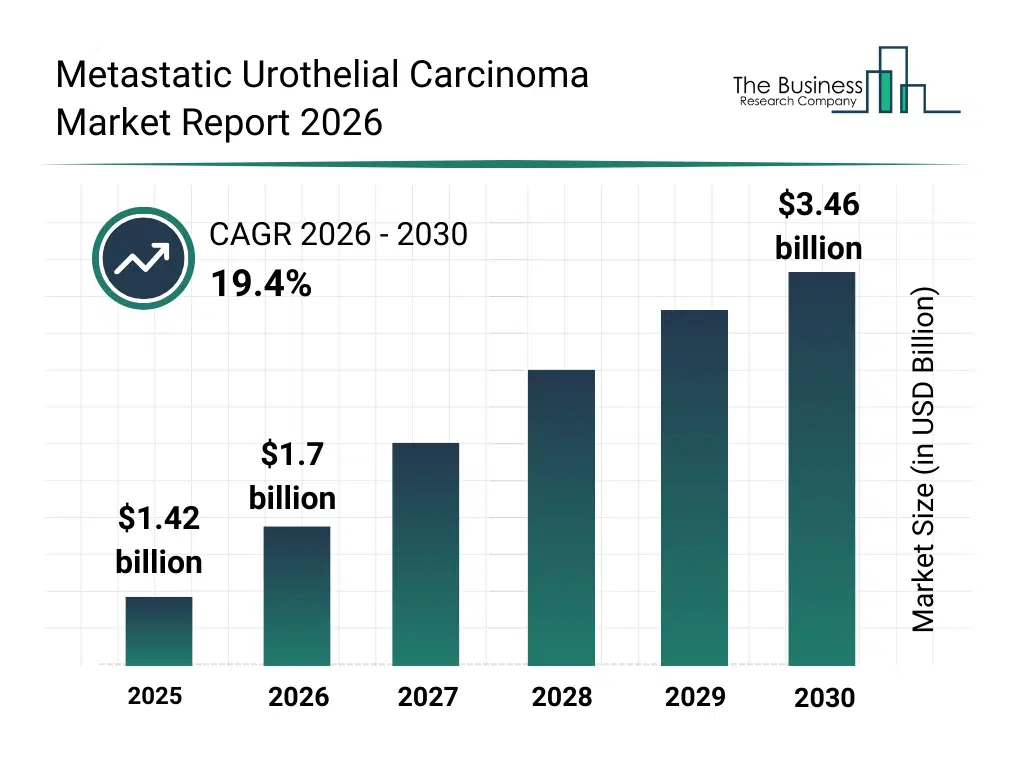
What Is The Metastatic Urothelial Carcinoma Market Size and Share 2026?
The metastatic urothelial carcinoma market size has grown rapidly in recent years. It will grow from $1.42 billion in 2025 to $1.7 billion in 2026 at a compound annual growth rate (CAGR) of 19.9%. The growth in the historic period can be attributed to rising prevalence of bladder cancer, early adoption of chemotherapy regimens, increased use of cystoscopy diagnostics, growing demand for targeted therapy, advancements in immunotherapy research.What Is The Metastatic Urothelial Carcinoma Market Growth Forecast?
The metastatic urothelial carcinoma market size is expected to see rapid growth in the next few years. It will grow to $3.46 billion in 2030 at a compound annual growth rate (CAGR) of 19.4%. The growth in the forecast period can be attributed to expansion of fgfr inhibitors, increasing adoption of combination immunotherapies, technological improvements in biopsy accuracy, rising investment in oncology r&d, growing shift toward personalized treatment. Major trends in the forecast period include precision medicine-driven oncology development, AI-assisted diagnostic enhancement, big data-integrated cancer treatment optimization, virtual imaging and simulation-based assessment, automated oncology workflow solutions.
Global Metastatic Urothelial Carcinoma Market Segmentation
1) By Treatment: Chemotherapy, Targeted Therapy, Immunotherapy, Radiation Therapy 2) By Diagnosis: Urine Lab Tests, Cystoscopy, Intravenous Pyelogram (IVP), Biopsy 3) By End User: Hospital, Oncology Clinics, Research Institutes, Other End Users Subsegments: 1) By Chemotherapy: Platinum-Based Chemotherapy, Gemcitabine-Based Chemotherapy 2) By Targeted Therapy: FGFR Inhibitors, Immune Checkpoint Inhibitors 3) By Immunotherapy: PD-1 Or PD-L1 Inhibitors, CTLA-4 Inhibitors, Combination Immunotherapies 4) By Radiation Therapy: External Beam Radiation Therapy, Stereotactic Body Radiation TherapyWhat Is The Driver Of The Metastatic Urothelial Carcinoma Market?
The rise in prevalence of bladder cancer is expected to propel the growth of the metastatic urothelial carcinoma market going forward. Bladder cancer refers to a disease in which malignant (cancer) cells form in the tissues of the bladder, often starting in the urothelial cells lining the bladder. The rise in bladder cancer cases is due to smoking, chemical exposure, chronic bladder inflammation, and improved detection methods. Metastatic urothelial carcinoma, as an advanced and aggressive stage of bladder cancer, directly highlights the critical need for early detection, improved treatment options, and increased research efforts, ultimately driving innovations and advancements in the management of bladder cancer cases and contributing to better outcomes for patients facing this life-threatening disease. For instance, in February 2023, according to a Cancer Research UK-based charity, the projected number of new bladder cancer cases in the UK is expected to increase from approximately 9,800 cases annually between 2023 and 2025 to around 10,700 cases per year by 2038-2040. Therefore, the rise in prevalence of bladder cancer drives the metastatic urothelial carcinoma industry.Key Players In The Global Metastatic Urothelial Carcinoma Market
Major companies operating in the metastatic urothelial carcinoma market are Pfizer Inc., Johnson & Johnson Services Inc., F. Hoffmann-La Roche Ltd., Merck & Co., Inc., AbbVie Inc., Bayer AG, Bristol-Myers Squibb Company, AstraZeneca PLC, Eli Lilly and Company, Gilead Sciences Inc., Merck KGaA, Astellas Pharma Inc., Genentech Inc., Genentech Inc., Exelixis Inc., EMD Serono, Zymeworks Inc., Mirati Therapeutics Inc., UroGen Pharma Ltd.
This chart is for illustrative purposes; the full report includes a detailed competitor analysis and comprehensive overview of the top 10 companies in the market.
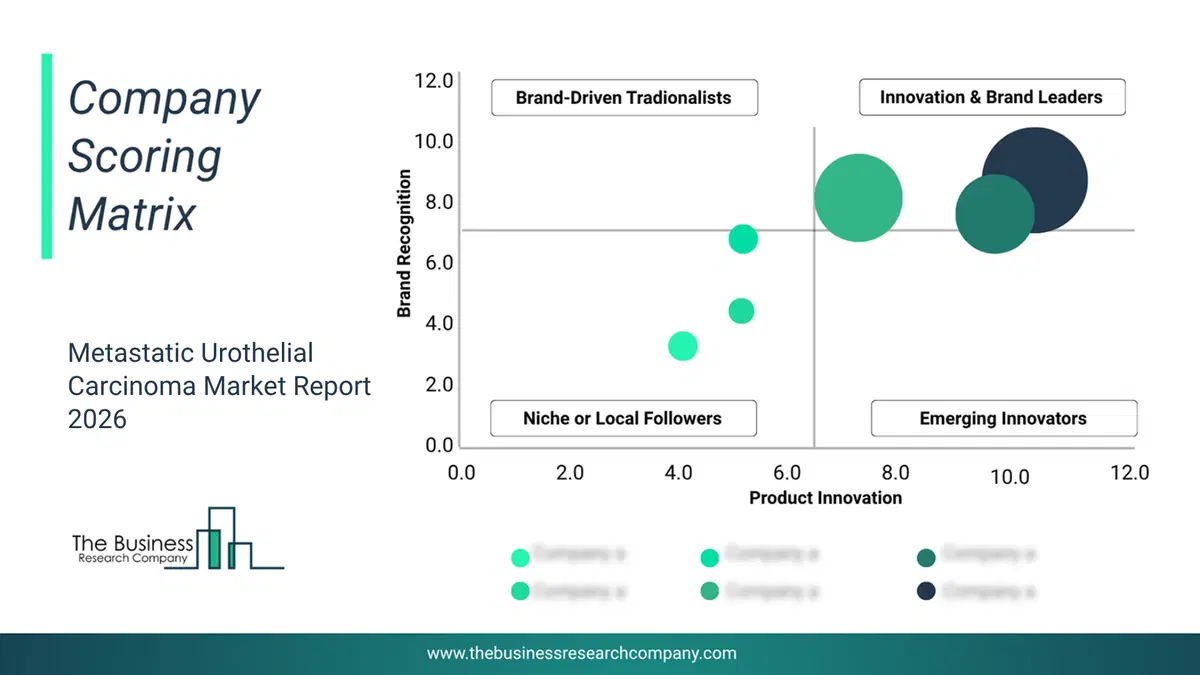
This chart maps companies by product innovation and brand strength, with bubble size indicating relative revenue, helping identify market leaders, challengers, and niche players. This is an illustrative chart; the full report provides a complete and accurate competitive analysis.
Global Metastatic Urothelial Carcinoma Market Trends and Insights
Major companies operating in the metastatic urothelial carcinoma market is obtaining regulatory approvals for drugs to expand its reach and solidify its position in the treatment of adult patients with locally advanced or metastatic urothelial carcinoma (la/mUC). Regulatory approvals refer to the formal authorization granted by governmental or regulatory bodies for a drug, medical device, or treatment to be marketed and used by the public. For instance, in April 2023, Merck & Co. Inc., a US-based pharmaceutical company, received FDA approval for KEYTRUDA (pembrolizumab) for first-line treatment of certain patients with locally advanced or metastatic urothelial cancer. This marks a significant milestone in the treatment of urothelial cancer, as the combination of KEYTRUDA (pembrolizumab) and enfortumab vedotin is now the first anti-PD-1 therapy approved in the U.S. in combination with an antibody-drug conjugate for patients with locally advanced or metastatic urothelial cancer. In the trial, the combination therapy showed a statistically significant improvement in overall survival (OS) and progression-free survival (PFS) when compared to traditional platinum-based chemotherapy (gemcitabine plus cisplatin or carboplatin). This combination offers a new treatment option for these patients who may not have had effective treatments available before.What Are Latest Mergers And Acquisitions In The Metastatic Urothelial Carcinoma Market?
In December 2023, Pfizer Inc., a US-based pharmaceutical company, acquired Seagen Inc. for an undisclosed amount. With this acquisition, Pfizer Inc. aims to strengthen its oncology portfolio by integrating Seagen Inc.'s innovative antibody-drug conjugate (ADC) technology and expanding its capabilities in the development of targeted cancer therapies, thereby accelerating its leadership in cancer treatment and enhancing its pipeline of oncology products. Seagen is a US-based biotechnology company that involves therapies for metastatic urothelial carcinoma.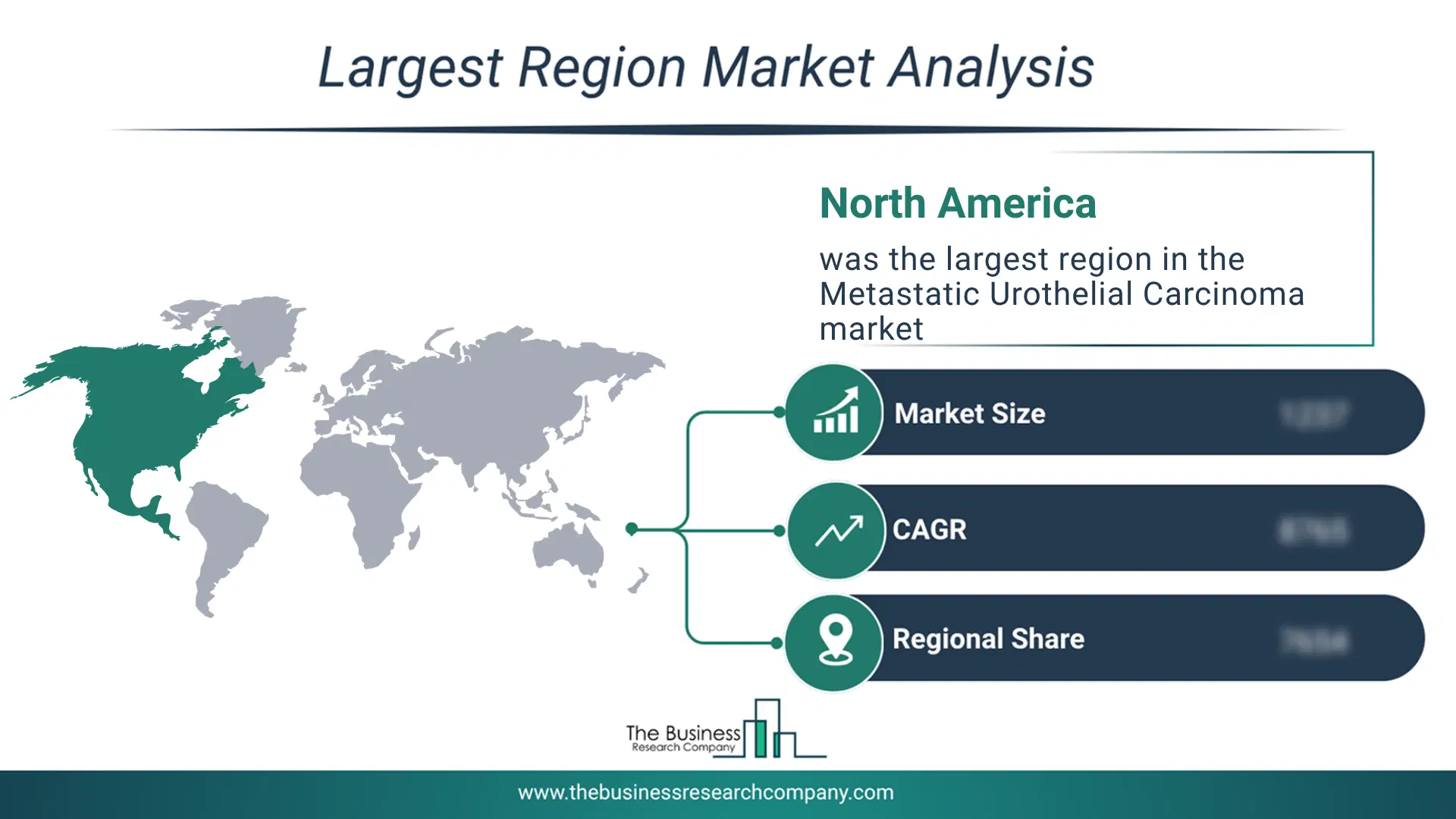
Regional Outlook
North America was the largest region in the metastatic urothelial carcinoma market in 2025. Asia-Pacific is expected to be the fastest-growing region in the forecast period. The regions covered in this market report are Asia-Pacific, South East Asia, Western Europe, Eastern Europe, North America, South America, Middle East, Africa. The countries covered in this market report are Australia, Brazil, China, France, Germany, India, Indonesia, Japan, Taiwan, Russia, South Korea, UK, USA, Canada, Italy, Spain.What Defines the Metastatic Urothelial Carcinoma Market?
The metastatic urothelial carcinoma market consists of revenues earned by entities by providing services such as sales of surgical treatment, combination therapy and supportive care. The market value includes the value of related goods sold by the service provider or included within the service offering. The metastatic urothelial carcinoma market also includes sales of chemotherapy agents, immunotherapy drugs, tyrosine kinase inhibitors, adjuvant treatments, and targeted therapies. Values in this market are ‘factory gate’ values, that is the value of goods sold by the manufacturers or creators of the goods, whether to other entities (including downstream manufacturers, wholesalers, distributors and retailers) or directly to end customers. The value of goods in this market includes related services sold by the creators of the goods.How is Market Value Defined and Measured?
The market value is defined as the revenues that enterprises gain from the sale of goods and/or services within the specified market and geography through sales, grants, or donations in terms of the currency (in USD unless otherwise specified). The revenues for a specified geography are consumption values that are revenues generated by organizations in the specified geography within the market, irrespective of where they are produced. It does not include revenues from resales along the supply chain, either further along the supply chain or as part of other products.
This chart presents market attractiveness based on a quantitative evaluation of growth, competition, strategic alignment, and risk, offering a clear view of opportunity areas for decision-making. This chart is for illustrative purposes; the full report contains the complete analysis.

This chart highlights the Total Addressable Market (TAM) by estimating the maximum revenue opportunity using an assumption-driven approach, supporting strategic planning and opportunity sizing across markets. The chart is illustrative; the full report provides a more comprehensive analysis.
What Key Data and Analysis Are Included in the Metastatic Urothelial Carcinoma Market Report 2026?
The metastatic urothelial carcinoma market research report is one of a series of new reports from The Business Research Company that provides market statistics, including industry global market size, regional shares, competitors with the market share, detailed market segments, market trends and opportunities, and any further data you may need to thrive in the metastatic urothelial carcinoma industry. The market research report delivers a complete perspective of everything you need, with an in-depth analysis of the current and future state of the industry.Metastatic Urothelial Carcinoma Market Report Forecast Analysis
| Report Attribute | Details |
|---|---|
| Market Size Value In 2026 | $1.7 billion |
| Revenue Forecast In 2030 | $3.46 billion |
| Growth Rate | CAGR of 19.4% from 2026 to 2030 |
| Base Year For Estimation | 2025 |
| Actual Estimates/Historical Data | 2020-2025 |
| Forecast Period | 2026 - 2030 |
| Market Representation | Revenue in USD Billion and CAGR from 2026 to 2030 |
| Segments Covered | Treatment, Diagnosis, End User |
| Regional Scope | Asia-Pacific, Western Europe, Eastern Europe, North America, South America, Middle East, Africa |
| Country Scope | The countries covered in the report are Australia, Brazil, China, France, Germany, India, Indonesia, Japan, Taiwan, Russia, South Korea, UK, USA, Canada, Italy, Spain |
| Key Companies Profiled | Pfizer Inc., Johnson & Johnson Services Inc., F. Hoffmann-La Roche Ltd., Merck & Co., Inc., AbbVie Inc., Bayer AG, Bristol-Myers Squibb Company, AstraZeneca PLC, Eli Lilly and Company, Gilead Sciences Inc., Merck KGaA, Astellas Pharma Inc., Genentech Inc., Genentech Inc., Exelixis Inc., EMD Serono, Zymeworks Inc., Mirati Therapeutics Inc., UroGen Pharma Ltd. |
| Customization Scope | Request for Customization |
| Pricing And Purchase Options | Explore Purchase Options |