
Methanol Market Report 2026
Global Outlook – By Feedstock (Natural Gas, Coal, Biomass, Other Feedstocks), By Derivative (Formaldehyde, Acetic Acid, Methyl Tertiary Butyl Ether, Dimethyl Ether, Gasoline Blending, Biodiesel, Solvents, Other Derivatives), By Application (Chemical Feedstock, Fuel, Solvent, Antifreeze, Other Applications), By End Use Industry (Chemicals, Construction, Automotive, Energy And Power, Electronics, Marine And Shipping, Pharmaceuticals) – Market Size, Trends, Strategies, and Forecast to 2030
Methanol Market Overview
• Methanol market size has reached to $37.96 billion in 2025 • Expected to grow to $51.28 billion in 2030 at a compound annual growth rate (CAGR) of 6.1% • Growth Driver: Rising Energy Demand Driving The Methanol Market Growth Due To Increasing Industrial Fuel Switching And Cleaner Energy Requirements • Market Trend: Innovative Green Dual-Fuel Propulsion Systems Driving Maritime Decarbonisation • Asia-Pacific was the largest region and fastest growing region.What Is Covered Under Methanol Market?
Methanol is a light, volatile chemical compound (CH₃OH) produced primarily from natural gas, coal, or biomass through catalytic and thermochemical processes such as steam reforming and gasification. It is a key industrial alcohol used as a basic building block in chemical synthesis and as a clean-burning fuel alternative. Methanol is valued for its versatility, high energy density, and role as an intermediate in various chemical production pathways. The main feedstocks for methanol include natural gas, coal, biomass, and other feedstocks. Natural gas refers to the primary hydrocarbon feedstock used to produce methanol through steam reforming and catalytic synthesis, offering high efficiency and large-scale commercial production. These are processed into derivatives including formaldehyde, acetic acid, methyl tertiary butyl ether, dimethyl ether, gasoline blending components, biodiesel, solvents, and other derivatives. It is used in applications including chemical feedstock, fuel, solvent, antifreeze, and others, serving end-use industries such as chemicals, construction, automotive, energy and power, electronics, marine and shipping, and pharmaceuticals.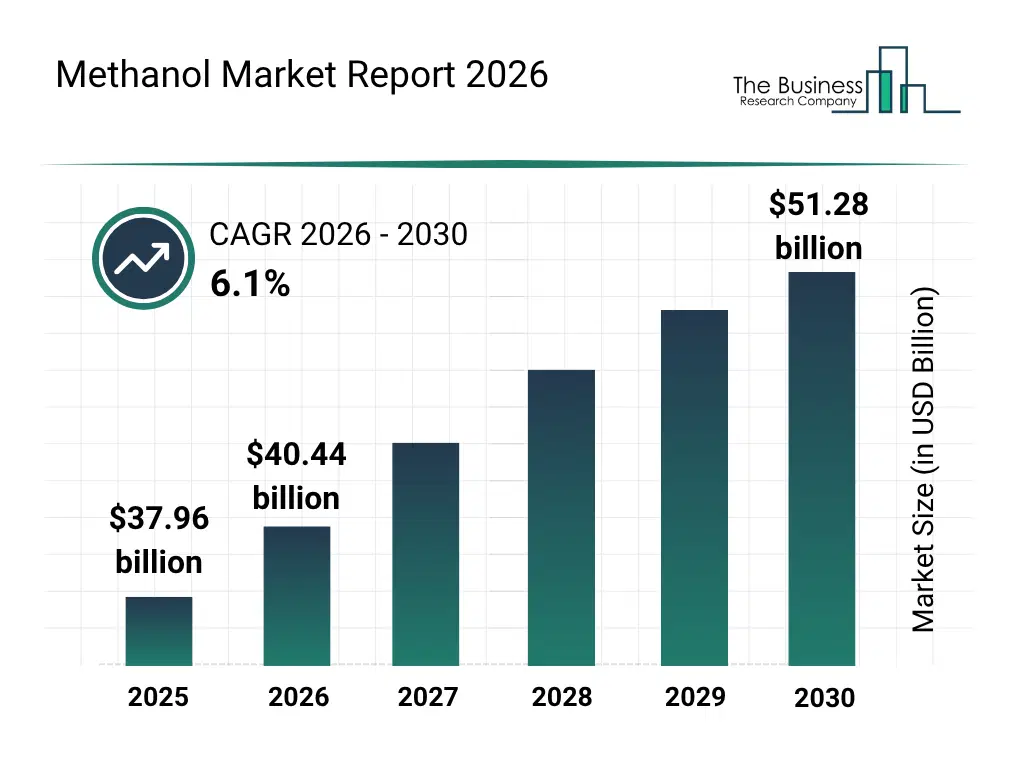
What Is The Methanol Market Size and Share 2026?
The methanol market size has grown strongly in recent years. It will grow from $37.96 billion in 2025 to $40.44 billion in 2026 at a compound annual growth rate (CAGR) of 6.5%. The growth in the historic period can be attributed to growing demand for chemical intermediates, increasing consumption of methanol in formaldehyde production, rising adoption of methanol as an industrial solvent, expanding automotive fuel blending activities, increasing utilization of methanol in construction and manufacturing industries.What Is The Methanol Market Growth Forecast?
The methanol market size is expected to see strong growth in the next few years. It will grow to $51.28 billion in 2030 at a compound annual growth rate (CAGR) of 6.1%. The growth in the forecast period can be attributed to increasing demand for green methanol production, rising adoption of methanol as a marine fuel alternative, growing investments in carbon dioxide based methanol synthesis, increasing focus on renewable energy integration in methanol production, expanding demand for low emission chemical solutions. Major trends in the forecast period include increasing demand for low carbon and renewable methanol production, growing adoption of methanol as an alternative clean fuel, rising utilization of methanol as a chemical building block, increasing development of biomass and waste derived methanol technologies, growing demand for methanol based fuel blending applications.
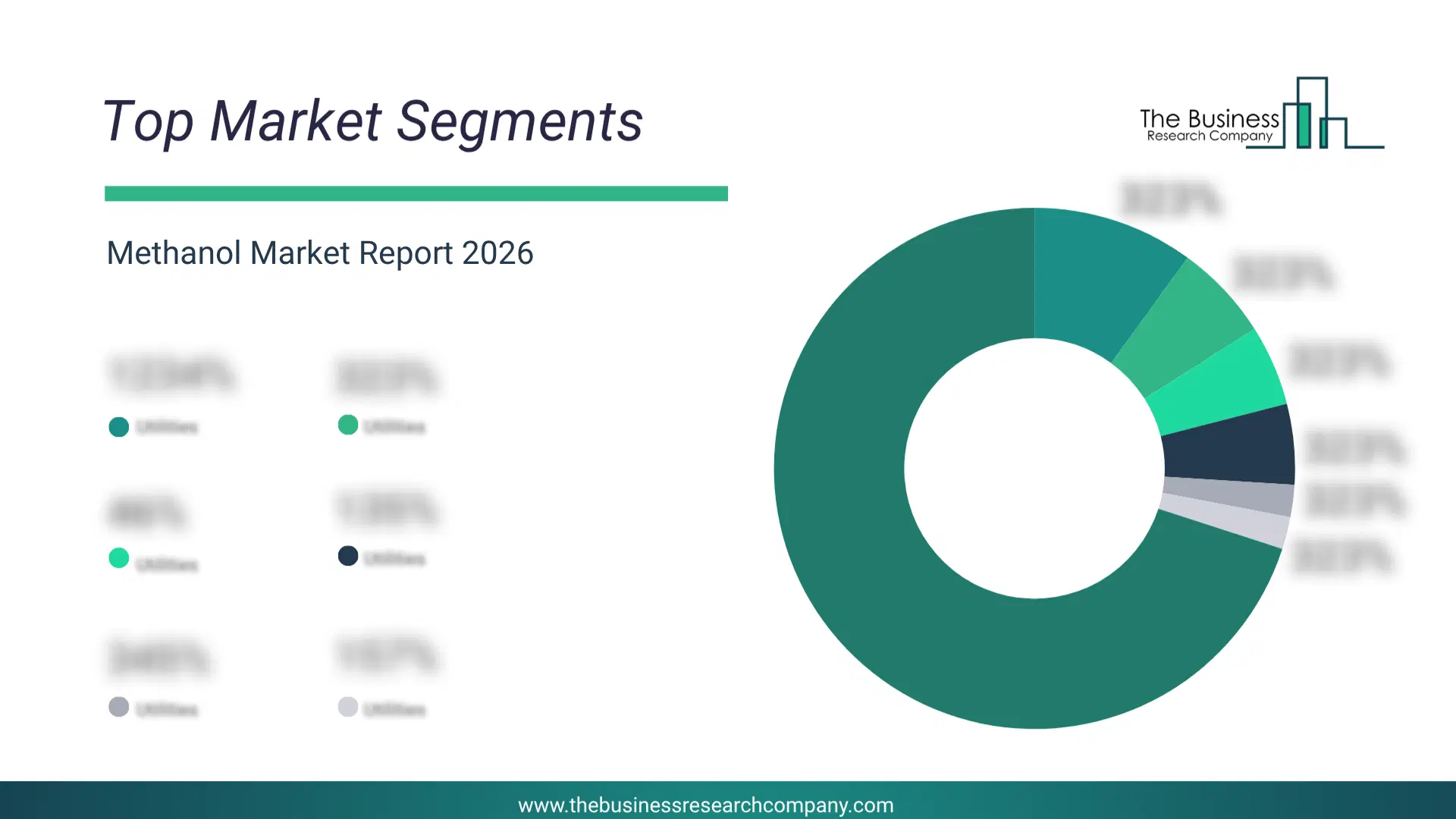
Global Methanol Market Segmentation
2) By Derivative: Formaldehyde, Acetic Acid, Methyl Tertiary Butyl Ether, Dimethyl Ether, Gasoline Blending, Biodiesel, Solvents, Other Derivatives 3) By Application: Chemical Feedstock, Fuel, Solvent, Antifreeze, Other Applications 4) By End Use Industry: Chemicals, Construction, Automotive, Energy And Power, Electronics, Marine And Shipping, Pharmaceuticals Subsegments: 1) By Natural Gas: Steam Methane Reforming Based Methanol Production, Combined Reforming Natural Gas Methanol Production, Low Carbon Natural Gas Derived Methanol, Gas To Methanol Processes 2) By Coal: Coal Gasification Based Methanol Production, Coal To Methanol Processes, High Pressure Coal Gasification Methanol Production, Integrated Coal Chemical Methanol Production 3) By Biomass: Biomass Gasification Based Methanol Production, Bio Methanol From Agricultural Waste, Bio Methanol From Forestry Residues, Renewable Bio Methanol Via Synthesis Gas Conversion 4) By Other Feedstocks: Carbon Dioxide Based Methanol Production, Municipal Solid Waste Derived Methanol, Industrial Waste Gas Based Methanol Production, Power To Methanol Green Hydrogen Based ProductionWhat Is The Driver Of The Methanol Market?
The rising energy demand is expected to propel the growth of the methanol market going forward. Energy demand refers to the total amount of energy required by households, industries, transportation, and other sectors to perform daily activities and support economic growth. Energy demand is increasing due to population growth as more people require greater amounts of energy for basic needs such as electricity, transportation, housing, and industrial production. Rising global energy demand drives methanol by increasing the need for efficient, versatile, and cleaner alternative fuels that can be used across power generation, transportation, and industrial applications to meet growing energy consumption sustainably. For instance, in February 2025, according to the International Energy Agency, a France-based government organization, global electricity demand rose by 4.3% in 2024 and is forecast to continue growing at close to 4% annually through 2027. Therefore, the rising energy demand is driving the growth of the methanol industry.Key Players In The Global Methanol Market
Major companies operating in the methanol market are Methanex Corporation, Zagros Petrochemical Company, Saudi Basic Industries Corporation, BASF SE, Mitsubishi Gas Chemical Company Inc., Proman AG, China Coal Energy Company Limited, Yankuang Energy Group, OCI Global, Celanese Corporation, PETRONAS Chemicals Group Berhad, Deepak Fertilisers and Petrochemicals Corporation Ltd., Gujarat Narmada Valley Fertilizers & Chemicals Ltd., Bushehr Petrochemical Company, Marjan Petrochemical Company, Assam Petro-Chemicals Limited, Sabalan Petrochemical Company, Caribbean Gas Chemical Limited, Fanavaran Petrochemical Company, Shiraz Petrochemical Company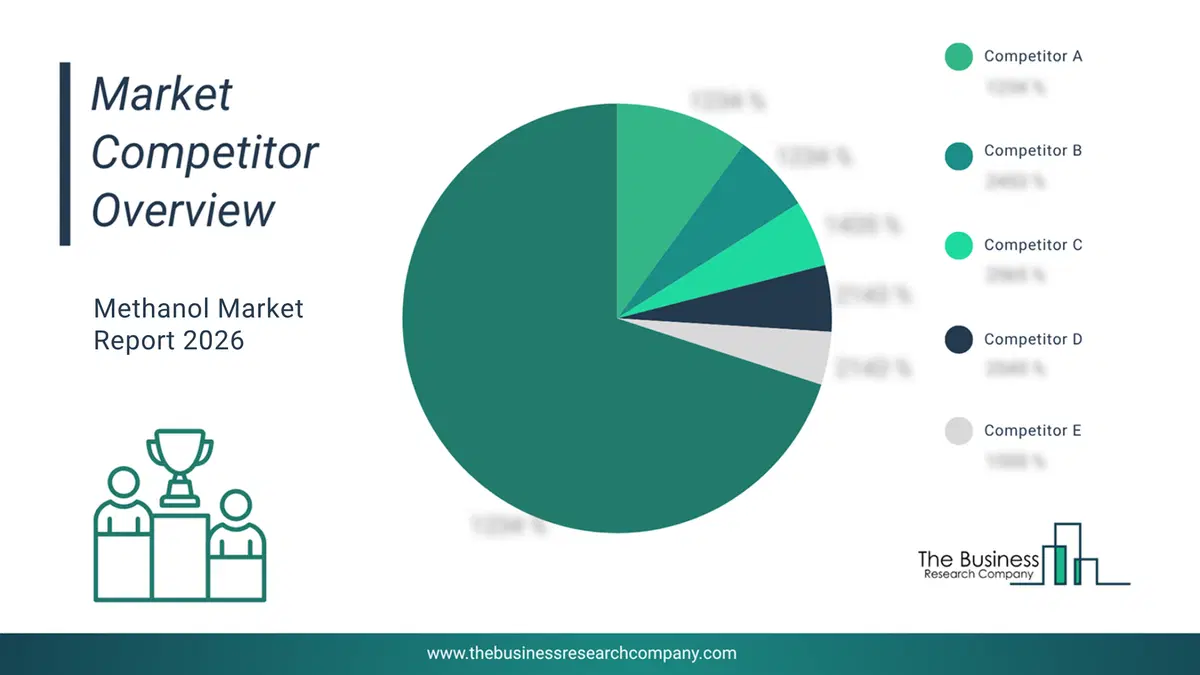
This chart is for illustrative purposes; the full report includes a detailed competitor analysis and comprehensive overview of the top 10 companies in the market.
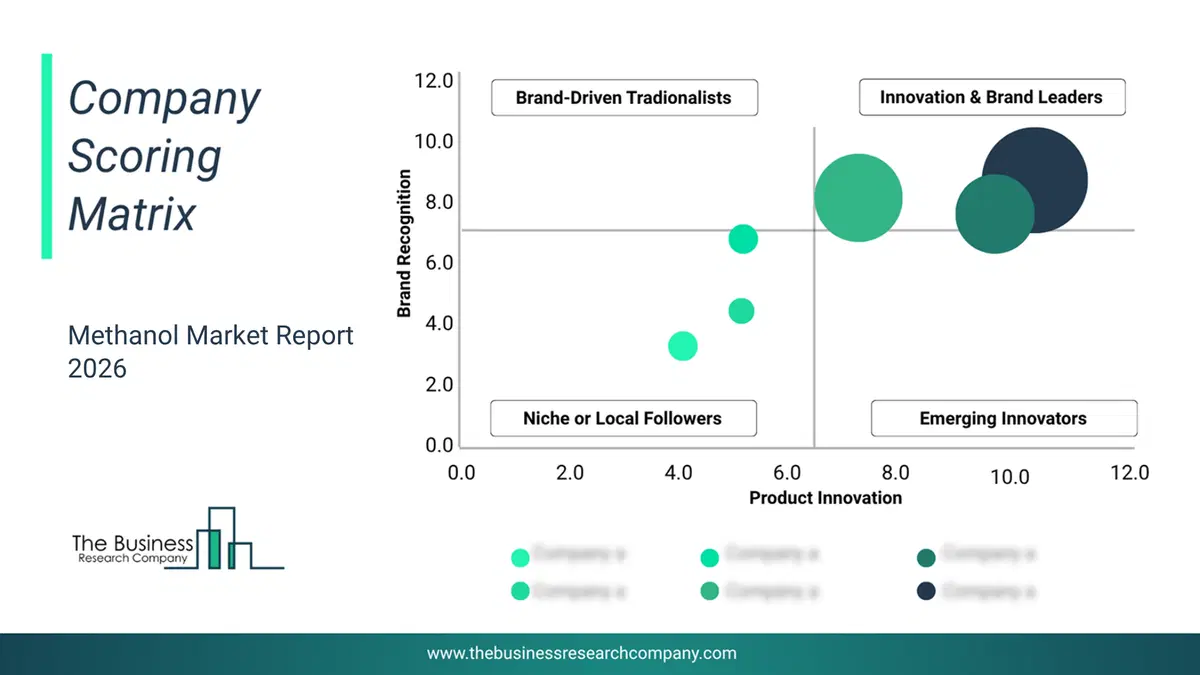
This chart maps companies by product innovation and brand strength, with bubble size indicating relative revenue, helping identify market leaders, challengers, and niche players. This is an illustrative chart; the full report provides a complete and accurate competitive analysis.
Global Methanol Market Trends and Insights
Major companies operating in the methanol market are focusing on developing innovative solutions, such as green methanol dual-fuel propulsion systems, to enhance maritime decarbonisation, fuel flexibility, and reductions in lifecycle greenhouse gas emissions. Green methanol dual-fuel propulsion systems are marine engine technologies that enable ships to operate on both conventional fossil fuels and green methanol, helping reduce greenhouse gas emissions, improve fuel flexibility and energy security, and support a gradual transition to low-carbon shipping without requiring full replacement of existing engine infrastructure. For instance, in January 2026, Cargill Incorporated, a US-based agribusiness commodity trading company, launched Brave Pioneer, a green methanol dual-fuel dry bulk vessel introduced as part of its broader maritime decarbonisation strategy. The vessel is equipped with advanced propulsion technology that allows switching between conventional fuel and green methanol, which can reduce CO₂ emissions by up to 70% compared to traditional fuels, and is being deployed for operational trials across key shipping routes including Singapore bunkering operations to evaluate fuel logistics, carbon accounting, and market readiness for low-carbon freight solutions. This initiative highlights growing industry adoption of scalable alternative fuel technologies aimed at improving sustainability across global shipping supply chains.What Are Latest Mergers And Acquisitions In The Methanol Market?
In June 2025, Methanex Corporation, a Canada-based chemical manufacturing company, acquired OCI Global’s international methanol business for $2.05 billion. With this acquisition, Methanex aimed to significantly expand its global production footprint, strengthen access to low-cost natural gas feedstock in North America, and enhance its position as the world’s largest methanol producer while improving exposure to low-carbon methanol production opportunities. OCI Global is a Netherlands-based diversified chemical and industrial company that specializes in producing and supplying hydrogen-based products, including methanol, ammonia, nitrogen fertilizers, and biofuels.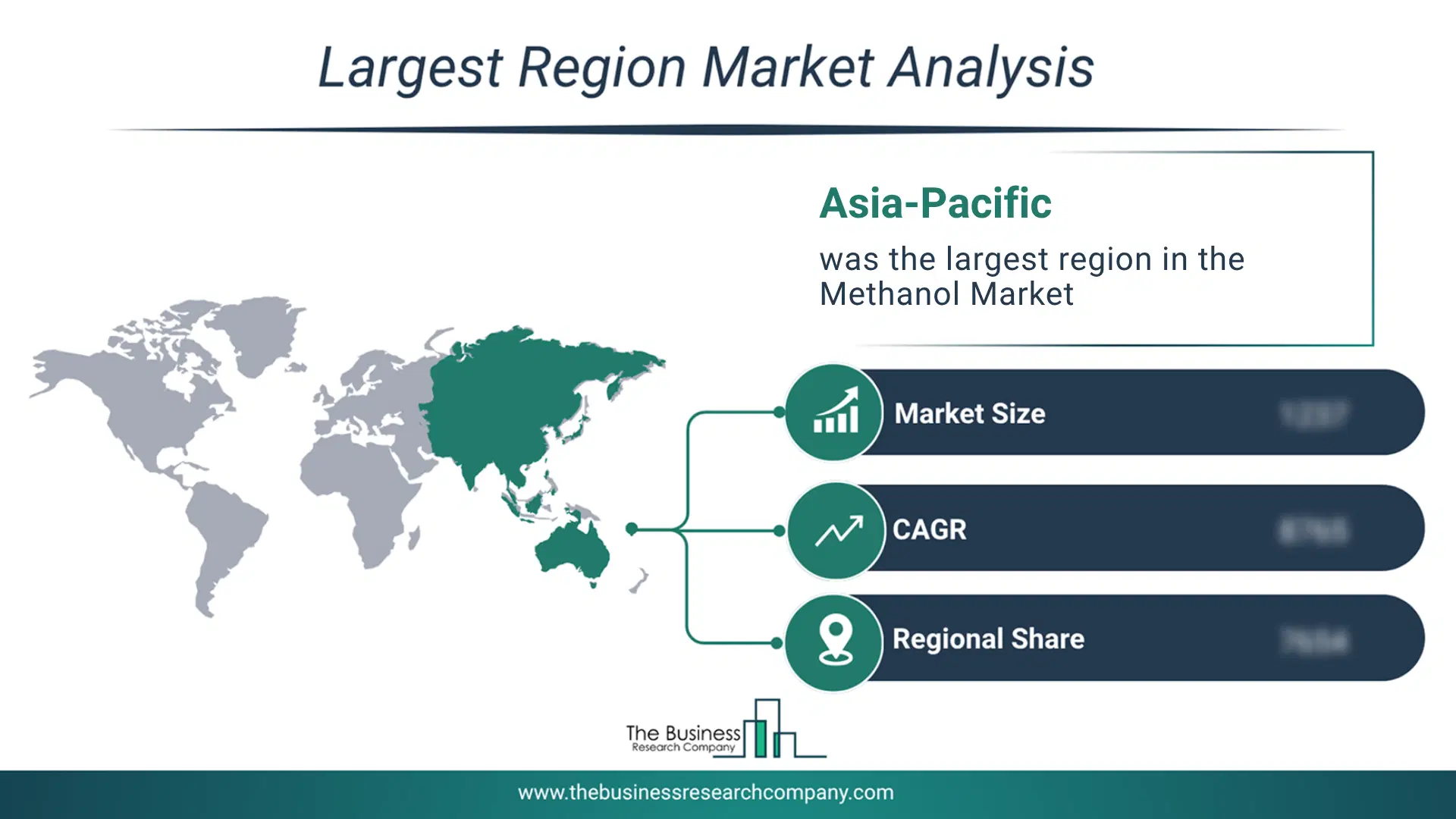
Regional Outlook/Insights
Asia-Pacific was the largest region in the methanol market in 2025. Asia-Pacific is expected to be the fastest-growing region in the forecast period. The regions covered in this market report are Asia-Pacific, South East Asia, Western Europe, Eastern Europe, North America, South America, Middle East, Africa. The countries covered in this market report are Australia, Brazil, China, France, Germany, India, Indonesia, Japan, Taiwan, Russia, South Korea, UK, USA, Canada, Italy, Spain.What Defines the Methanol Market?
The methanol market consists of sales of industrial methanol, fuel-grade methanol, renewable methanol, bio-methanol, methanol used for hydrogen production, methanol used in direct energy applications, and methanol supplied. Values in this market are ‘factory gate’ values, that is, the value of goods sold by the manufacturers or creators of the goods, whether to other entities (including downstream manufacturers, wholesalers, distributors, and retailers) or directly to end customers. The value of goods in this market includes related services sold by the creators of the goods.How is Market Value Defined and Measured?
The market value is defined as the revenues that enterprises gain from the sale of goods and/or services within the specified market and geography through sales, grants, or donations in terms of the currency (in USD unless otherwise specified). The revenues for a specified geography are consumption values that are revenues generated by organizations in the specified geography within the market, irrespective of where they are produced. It does not include revenues from resales along the supply chain, either further along the supply chain or as part of other products.
This chart presents market attractiveness based on a quantitative evaluation of growth, competition, strategic alignment, and risk, offering a clear view of opportunity areas for decision-making. This chart is for illustrative purposes; the full report contains the complete analysis.

This chart highlights the Total Addressable Market (TAM) by estimating the maximum revenue opportunity using an assumption-driven approach, supporting strategic planning and opportunity sizing across markets. The chart is illustrative; the full report provides a more comprehensive analysis.
What Key Data and Analysis Are Included in the Methanol Market Report 2026?
The methanol market research report is one of a series of new reports from The Business Research Company that provides methanol market statistics, including methanol industry global market size, regional shares, competitors with a methanol market share, detailed methanol market segments, market trends and opportunities, and any further data you may need to thrive in the methanol industry. This methanol market research report delivers a complete perspective of everything you need, with an in-depth analysis of the current and future scenario of the industry.Methanol Market Report Forecast Analysis
| Report Attribute | Details |
|---|---|
| Market Size Value In 2026 | $40.44 billion |
| Revenue Forecast In 2030 | $51.28 billion |
| Growth Rate | CAGR of 6.1% from 2026 to 2030 |
| Base Year For Estimation | 2025 |
| Actual Estimates/Historical Data | 2020-2025 |
| Forecast Period | 2026 - 2030 |
| Market Representation | Revenue in USD Billion and CAGR from 2026 to 2030 |
| Segments Covered | Feedstock, Derivative, Application, End Use Industry |
| Regional Scope | Asia-Pacific, Western Europe, Eastern Europe, North America, South America, Middle East, Africa |
| Country Scope | The countries covered in the report are Australia, Brazil, China, France, Germany, India, Indonesia, Japan, Taiwan, Russia, South Korea, UK, USA, Canada, Italy, Spain. |
| Key Companies Profiled | Methanex Corporation, Zagros Petrochemical Company, Saudi Basic Industries Corporation, BASF SE, Mitsubishi Gas Chemical Company Inc., Proman AG, China Coal Energy Company Limited, Yankuang Energy Group, OCI Global, Celanese Corporation, PETRONAS Chemicals Group Berhad, Deepak Fertilisers and Petrochemicals Corporation Ltd., Gujarat Narmada Valley Fertilizers & Chemicals Ltd., Bushehr Petrochemical Company, Marjan Petrochemical Company, Assam Petro-Chemicals Limited, Sabalan Petrochemical Company, Caribbean Gas Chemical Limited, Fanavaran Petrochemical Company, Shiraz Petrochemical Company |
| Customization Scope | Request for Customization |
| Pricing And Purchase Options | Explore Purchase Options |