
Methanol-To-Gasoline Technology Market Report 2026
Global Outlook – By Technology Type (Fixed Bed, Fluidized Bed, Other Technology Types), By Feedstock (Natural Gas, Coal, Biomass, Other Feedstocks ), By Catalyst Type (Zeolite Catalysts, Silicoaluminophosphate (SAPO) Catalysts, Metal Oxide Catalysts, Hybrid Catalysts ), By Application (Transportation Fuel, Industrial Fuel, Power Generation, Other Applications ), By End User (Oil And Gas, Chemicals, Power, Other End Users ) – Market Size, Trends, Strategies, and Forecast to 2030
Methanol-To-Gasoline Technology Market Overview
• Methanol-To-Gasoline Technology market size has reached to $1.26 billion in 2025 • Expected to grow to $1.81 billion in 2030 at a compound annual growth rate (CAGR) of 7.4% • Growth Driver: Increasing Oil Prices Fueling The Growth Of The Market Due To Rising Demand For Cost-effective Alternative Transportation Fuels • Market Trend: Technological Advancements In Power-To-X E-Methanol Production For Low-Carbon Gasoline • North America was the largest region in 2025 and Asia-Pacific is the fastest growing region.What Is Covered Under Methanol-To-Gasoline Technology Market?
Methanol-to-gasoline (MTG) technology is a fuel conversion technology that transforms methanol into gasoline-range hydrocarbons using catalytic chemical processes. It utilizes advanced engineering technologies to convert methanol derived from natural gas, coal, biomass, or renewable sources into high-octane gasoline products. The technology enables efficient fuel production, supports energy diversification, and provides an alternative pathway for producing transportation fuels from non-crude oil feedstocks. The main technology types of methanol-to-gasoline technology include fixed bed, fluidized bed, and other technologies. Fixed bed refers to a catalytic reactor configuration in which methanol passes through a stationary catalyst bed and is converted into gasoline-range hydrocarbons through a controlled chemical conversion process. These technologies use feedstocks including natural gas, coal, biomass, and other feedstocks and employ zeolite catalysts, silicoaluminophosphate (SAPO) catalysts, metal oxide catalysts, and hybrid catalysts. They find application in transportation fuel, industrial fuel, power generation, and others, serving end users including oil and gas, chemicals, power, and others.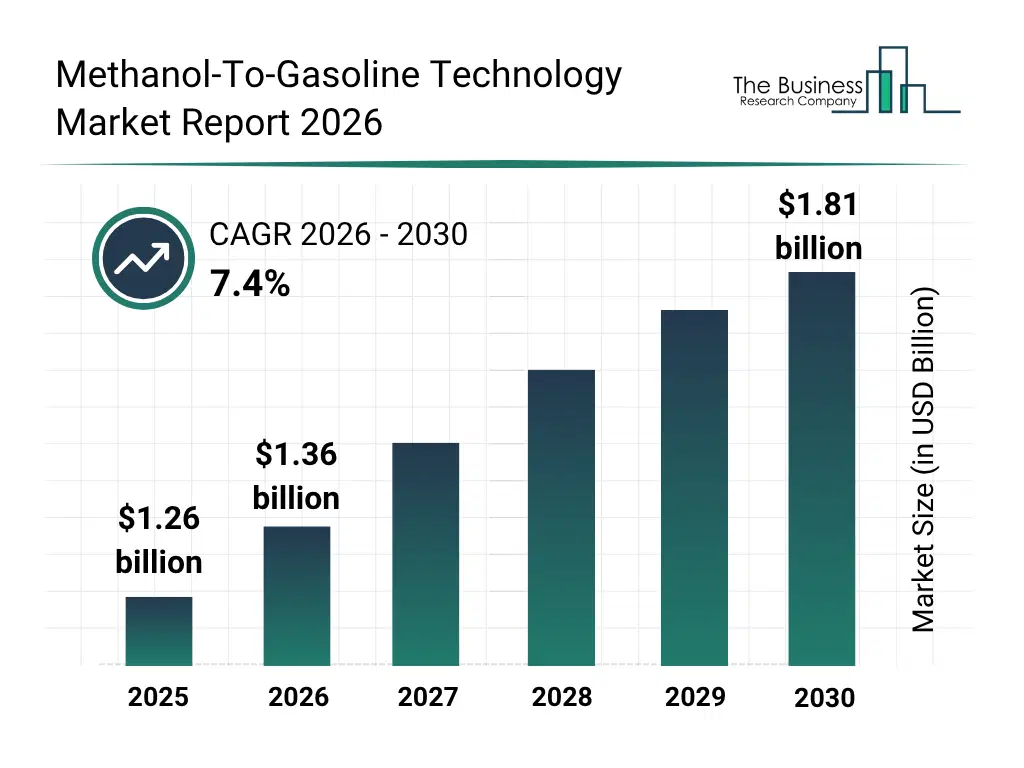
What Is The Methanol-To-Gasoline Technology Market Size and Share 2026?
The methanol-to-gasoline technology market size has grown strongly in recent years. It will grow from $1.26 billion in 2025 to $1.36 billion in 2026 at a compound annual growth rate (CAGR) of 7.9%. The growth in the historic period can be attributed to rising demand for alternative transportation fuels, increasing energy security concerns, growing availability of methanol feedstocks, rising demand for high-octane gasoline, increasing interest in non-crude oil fuel production.What Is The Methanol-To-Gasoline Technology Market Growth Forecast?
The methanol-to-gasoline technology market size is expected to see strong growth in the next few years. It will grow to $1.81 billion in 2030 at a compound annual growth rate (CAGR) of 7.4%. The growth in the forecast period can be attributed to growing adoption of renewable methanol production, increasing demand for low-carbon transportation fuels, rising investment in synthetic fuel infrastructure, growing utilization of biomass and waste-derived feedstocks, increasing development of efficient MTG catalytic processes. Major trends in the forecast period include increasing adoption of natural gas-based methanol-to-gasoline production, growing utilization of biomass-derived methanol for gasoline production, rising development of renewable methanol-to-gasoline pathways, increasing deployment of high-octane synthetic gasoline production, growing adoption of advanced MTG catalyst technologies.
Global Methanol-To-Gasoline Technology Market Segmentation
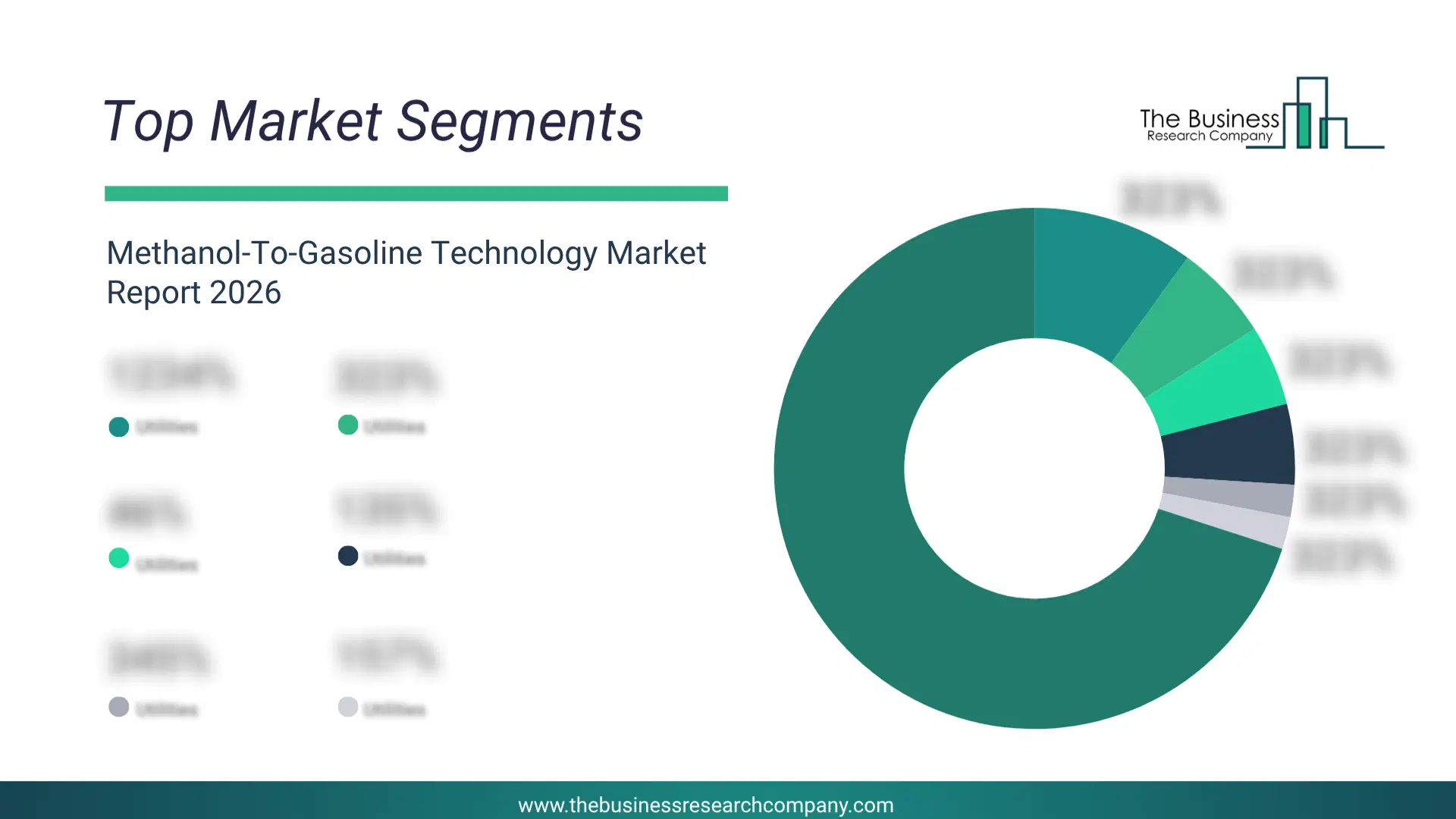
1) By Technology Type: Fixed Bed, Fluidized Bed, Other Technology Types 2) By Feedstock: Natural Gas, Coal, Biomass, Other Feedstocks 3) By Catalyst Type: Zeolite Catalysts, Silicoaluminophosphate (SAPO) Catalysts, Metal Oxide Catalysts, Hybrid Catalysts 4) By Application: Transportation Fuel, Industrial Fuel, Power Generation, Other Applications 5) By End User: Oil And Gas, Chemicals, Power, Other End Users Subsegments: 1) By Fixed Bed: Tubular Fixed Bed Reactors, Multi Bed Fixed Reactors, Adiabatic Fixed Bed Systems, Catalytic Packed Bed Reactors, Radial Flow Fixed Bed Reactors 2) By Fluidized Bed: Bubbling Fluidized Bed Reactors, Circulating Fluidized Bed Reactors, Turbulent Fluidized Bed Systems, Fast Fluidized Bed Reactors, Catalytic Fluidized Conversion Systems 3) By Other Technology Types: Slurry Bed Reactors, Membrane Reactor Systems, Microchannel Reactor Technology, Plasma Assisted Conversion Systems, Hybrid Catalytic Reactor SystemsWhat Is The Driver Of The Methanol-To-Gasoline Technology Market?
The increasing oil prices are expected to propel the growth of the methanol-to-gasoline technology market going forward. Oil prices refer to the market value of crude oil traded globally and represent a key benchmark for transportation fuel production costs. Oil prices are increasing due to production restraints and supply management measures implemented by major oil-producing countries, which have constrained supply amid steady demand, driving prices upward. Oil prices directly influence the economic viability of methanol-to-gasoline (MTG), as higher crude oil prices increase gasoline values, improving the competitiveness, profitability, and investment attractiveness of methanol-derived fuels. For instance, in January 2025, according to the U.S. Energy Information Administration, a US-based government energy statistics organization, benchmark Brent crude oil prices increased from an average of $78 per barrel in December 2023 to $89 per barrel in April 2024, representing an increase of approximately 14.1%. Therefore, the increasing oil prices are driving the growth of the methanol-to-gasoline technology industry.Key Players In The Global Methanol-To-Gasoline Technology Market
Major companies operating in the methanol-to-gasoline technology market are Saudi Arabian Oil Company, Exxon Mobil Corporation, China Energy Investment Corporation Co. Ltd., Jinneng Holding Group Co. Ltd., Mitsui Chemicals Inc., Worley Limited, Johnson Matthey Plc, KBR Inc., Clariant AG, European Energy A/S, Topsoe A/S, Methanex Corporation, Sinopec Engineering (Group) Co. Ltd., Axens S.A., Verde Clean Fuels Inc., Carbon Recycling International, thyssenkrupp Uhde GmbH, NextChem S.p.A., Bharat Heavy Electricals Limited, Aerleum Inc., eFuel GmbH, CAC Engineering GmbH, HAMR Energy Pty Ltd., Essar Energy Transition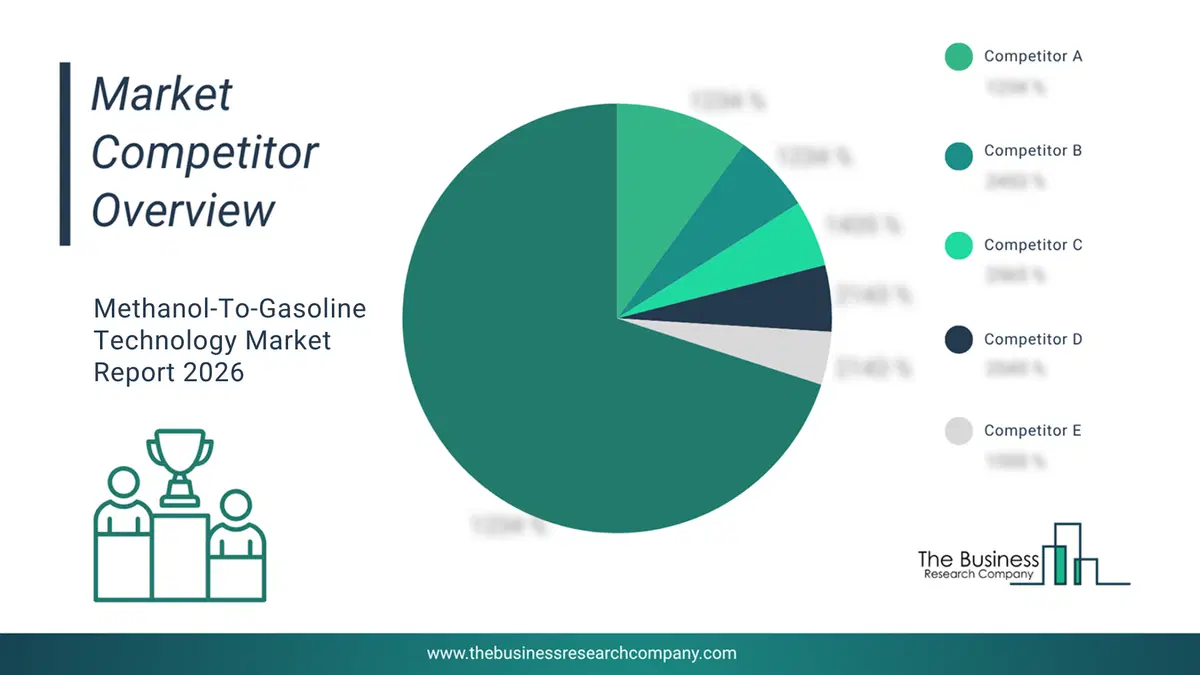
This chart is for illustrative purposes; the full report includes a detailed competitor analysis and comprehensive overview of the top 10 companies in the market.
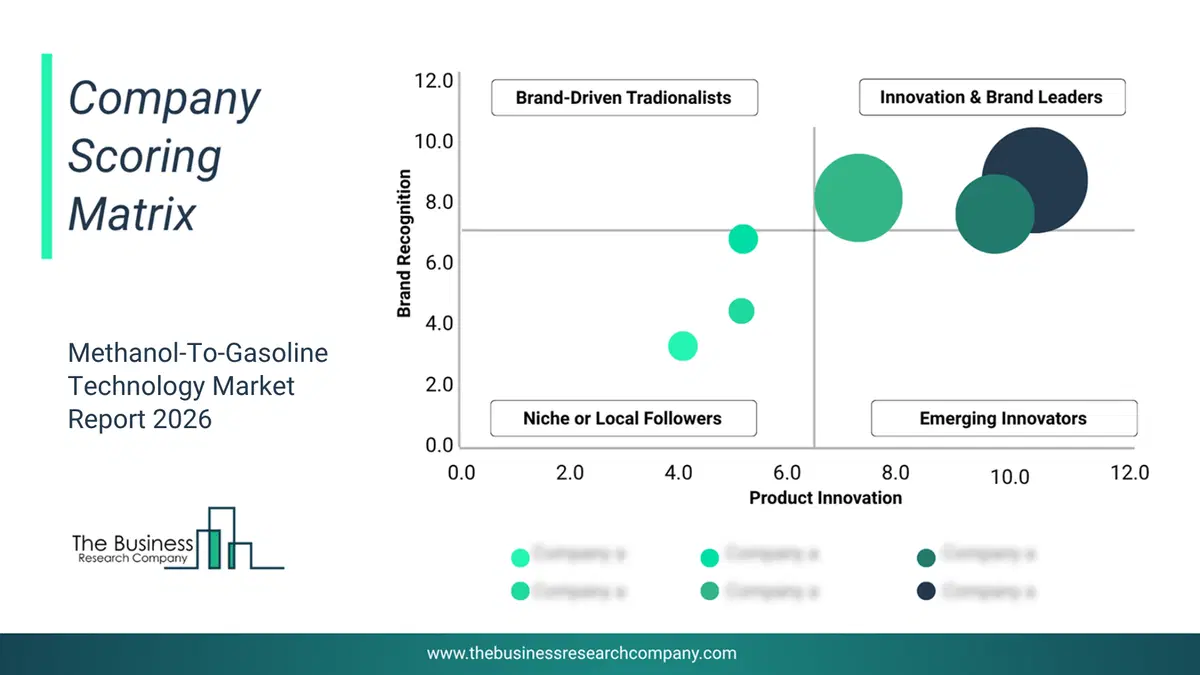
This chart maps companies by product innovation and brand strength, with bubble size indicating relative revenue, helping identify market leaders, challengers, and niche players. This is an illustrative chart; the full report provides a complete and accurate competitive analysis.
Global Methanol-To-Gasoline Technology Market Trends and Insights
Major companies operating in the methanol-to-gasoline technology market are focusing on developing advanced methanol conversion technologies such as, integrated power-to-X e-methanol production systems, to enable low-carbon gasoline production and support the transition to sustainable transportation fuels. Integrated power-to-X e-methanol production systems refer to renewable energy-based production setups that combine green hydrogen generated through electrolysis with captured carbon dioxide to produce e-methanol, which serves as a sustainable feedstock for catalytic gasoline synthesis. For instance, in May 2026, European Energy, a Denmark-based renewable energy company, launched the Kassø Power-to-X facility conversion project in collaboration with Mitsui & Co., a Japan-based trading company. The project converted e-methanol into gasoline-range fuels using CAC METHAFUEL catalytic conversion technology, producing multiple gasoline grades, including RON95 E10, RON98 E10, and RON102, while demonstrating scalable integration of renewable methanol into conventional fuel supply chains.What Are Latest Mergers And Acquisitions In The Methanol-To-Gasoline Technology Market?
In October 2023, Saudi Arabian Oil Company (Aramco), a Saudi Arabia-based integrated energy and chemicals company, partnered with ENOWA, to develop the first-of-its-kind synthetic electro-fuel (e-fuel) demonstration plant in NEOM. With this partnership, Saudi Arabian Oil Company and ENOWA aim to demonstrate the technical and commercial viability of producing low-carbon synthetic gasoline using renewable hydrogen and captured carbon dioxide (CO₂), supporting the advancement of circular carbon economy technologies and accelerating the development of sustainable transportation fuels. ENOWA is a Saudi Arabia-based energy and water company specializing in renewable energy, green hydrogen, water management, and sustainable infrastructure solutions.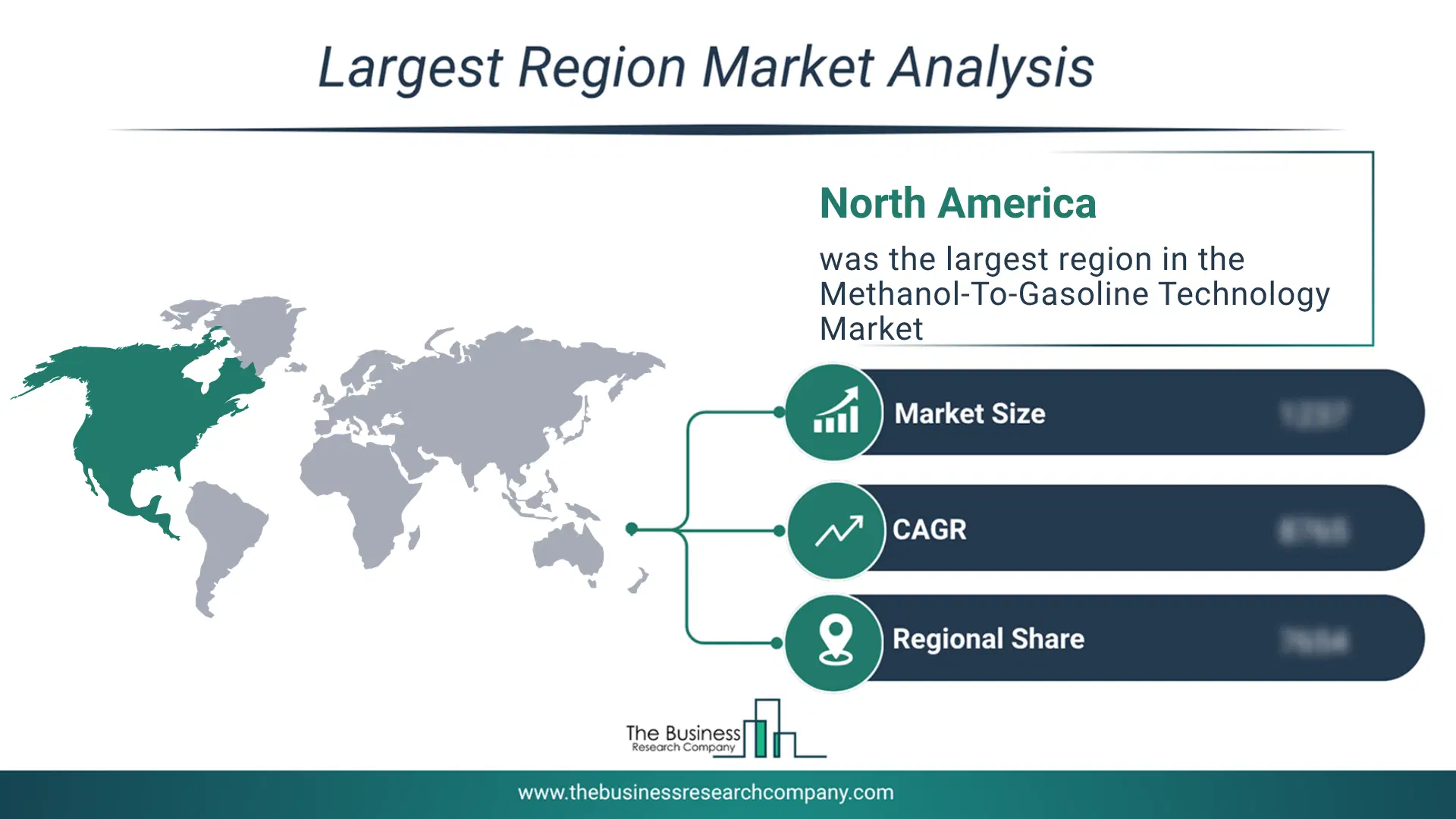
Regional Insights
North America was the largest region in the methanol-to-gasoline technology market in 2025. Asia-Pacific is expected to be the fastest-growing region in the forecast period. The regions covered in this market report are Asia-Pacific, South East Asia, Western Europe, Eastern Europe, North America, South America, Middle East, Africa. The countries covered in this market report are Australia, Brazil, China, France, Germany, India, Indonesia, Japan, Taiwan, Russia, South Korea, UK, USA, Canada, Italy, Spain.What Defines the Methanol-To-Gasoline Technology Market?
The methanol-to-gasoline technology market consists of revenues earned by entities by providing services such as technology licensing services, engineering and design services, catalyst development services, process optimization services, plant construction and integration services, technical consulting services, maintenance and support services, and research and development services. The market value includes the value of related goods sold by the service provider or included within the service offering. The methanol-to-gasoline technology market also includes sales of catalytic reactors, zeolite catalysts, process control systems, gasification units, methanol synthesis units, fuel upgrading systems, heat exchangers, pressure vessels, separation systems, storage tanks, and industrial automation equipment. Values in this market are ‘factory gate’ values, that is the value of goods sold by the manufacturers or creators of the goods, whether to other entities (including downstream manufacturers, wholesalers, distributors and retailers) or directly to end customers. The value of goods in this market includes related services sold by the creators of the goods.How is Market Value Defined and Measured?
The market value is defined as the revenues that enterprises gain from the sale of goods and/or services within the specified market and geography through sales, grants, or donations in terms of the currency (in USD unless otherwise specified). The revenues for a specified geography are consumption values that are revenues generated by organizations in the specified geography within the market, irrespective of where they are produced. It does not include revenues from resales along the supply chain, either further along the supply chain or as part of other products.
This chart presents market attractiveness based on a quantitative evaluation of growth, competition, strategic alignment, and risk, offering a clear view of opportunity areas for decision-making. This chart is for illustrative purposes; the full report contains the complete analysis.

This chart highlights the Total Addressable Market (TAM) by estimating the maximum revenue opportunity using an assumption-driven approach, supporting strategic planning and opportunity sizing across markets. The chart is illustrative; the full report provides a more comprehensive analysis.
What Key Data and Analysis Are Included in the Methanol-To-Gasoline Technology Market Report 2026?
The methanol-to-gasoline technology market research report is one of a series of new reports from The Business Research Company that provides market statistics, including industry global market size, regional shares, competitors with the market share, detailed market segments, market trends and opportunities, and any further data you may need to thrive in the methanol-to-gasoline technology industry. The market research report delivers a complete perspective of everything you need, with an in-depth analysis of the current and future state of the industry.Methanol-To-Gasoline Technology Market Report Forecast Analysis
| Report Attribute | Details |
|---|---|
| Market Size Value In 2026 | $1.36 billion |
| Revenue Forecast In 2030 | $1.81 billion |
| Growth Rate | CAGR of 7.4% from 2026 to 2030 |
| Base Year For Estimation | 2025 |
| Actual Estimates/Historical Data | 2020-2025 |
| Forecast Period | 2026 - 2030 |
| Market Representation | Revenue in USD Billion and CAGR from 2026 to 2030 |
| Segments Covered | Technology Type, Feedstock, Catalyst Type, Application, End User |
| Regional Scope | Asia-Pacific, Western Europe, Eastern Europe, North America, South America, Middle East, Africa |
| Country Scope | The countries covered in the report are Australia, Brazil, China, France, Germany, India, Indonesia, Japan, Taiwan, Russia, South Korea, UK, USA, Canada, Italy, Spain. |
| Key Companies Profiled | Saudi Arabian Oil Company, Exxon Mobil Corporation, China Energy Investment Corporation Co. Ltd., Jinneng Holding Group Co. Ltd., Mitsui Chemicals Inc., Worley Limited, Johnson Matthey Plc, KBR Inc., Clariant AG, European Energy A/S, Topsoe A/S, Methanex Corporation, Sinopec Engineering (Group) Co. Ltd., Axens S.A., Verde Clean Fuels Inc., Carbon Recycling International, thyssenkrupp Uhde GmbH, NextChem S.p.A., Bharat Heavy Electricals Limited, Aerleum Inc., eFuel GmbH, CAC Engineering GmbH, HAMR Energy Pty Ltd., Essar Energy Transition |
| Customization Scope | Request for Customization |
| Pricing And Purchase Options | Explore Purchase Options |