
Methicillin-Resistant Staphylococcus Aureus (MRSA) Drugs Market Report 2026
Global Outlook – By Drug Class (Lipopeptides, Oxazolidinones, Cephalosporin, Tetracycline, Folate Antagonist, Lipoglycopeptide, Other Drug Classes), By Indication (Skin Infections, Bone and Joint Infections, Bacteremia, Animal Infections), By MRSA Type (Hospital-Acquired (HA-MRSA), Community-Acquired (CA-MRSA)), By Route of Administration (Oral Administration, Parenteral Administration), By End User (Hospitals and Clinics, Research and Academic Institutes, Other End-Users) – Market Size, Trends, Strategies, and Forecast to 2030
Methicillin-Resistant Staphylococcus Aureus (MRSA) Drugs Market Overview
• Methicillin-Resistant Staphylococcus Aureus (MRSA) Drugs market size has reached to $2.44 billion in 2025 • Expected to grow to $3.25 billion in 2030 at a compound annual growth rate (CAGR) of 6% • Growth Driver: Rise In Prevalence Of Methicillin-Resistant Staphylococcus Aureus Infections • Market Trend: Innovative Once-Daily Dosing Solutions For Antibiotic Treatment • North America was the largest region in 2025 and Asia-Pacific is the fastest growing region.What Is Covered Under Methicillin-Resistant Staphylococcus Aureus (MRSA) Drugs Market?
Methicillin-resistant Staphylococcus aureus (MRSA) drugs refer to a group of drugs used to treat infections caused by the bacterium Staphylococcus aureus that are resistant to methicillin and other common antibiotics. These drugs are specifically chosen to target and kill MRSA bacteria or inhibit their growth. MRSA is a source of staph infections that is challenging to treat due to antibiotic resistance. The main types of methicillin-resistant Staphylococcus aureus (MRSA) drugs are lipopeptides, oxazolidinones, cephalosporins, tetracyclines, folate antagonists, lipoglycopeptides, and others. Lipopeptides are a class of antibiotics that contain both lipid and peptide components and exhibit therapeutic intervention by disrupting the bacterial cell membrane, leading to membrane depolarization and inhibition of cell wall synthesis. Various types of indications include skin infections, bone and joint infections, bacteremia, and animal infections. The several types of methicillin-resistant Staphylococcus aureus (MRSA) involved are hospital-acquired (HA-MRSA) and community-acquired (CA-MRSA). These drugs are administered by oral and parenteral routes of administration and are used by various end users, such as hospitals and clinics, research and academic institutes, and others.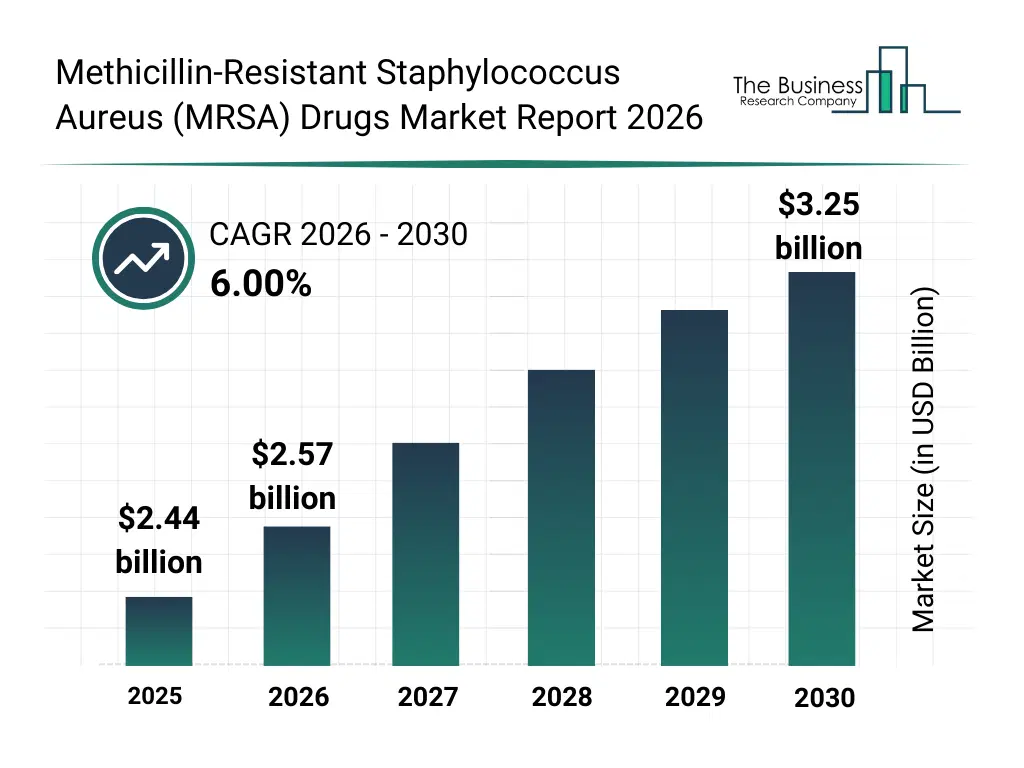
What Is The Methicillin-Resistant Staphylococcus Aureus (MRSA) Drugs Market Size and Share 2026?
The methicillin-resistant staphylococcus aureus (mrsa) drugs market size has grown strongly in recent years. It will grow from $2.44 billion in 2025 to $2.57 billion in 2026 at a compound annual growth rate (CAGR) of 5.1%. The growth in the historic period can be attributed to widespread use of broad-spectrum antibiotics, increasing hospital-acquired infections, emergence of community-acquired mrsa, limited availability of targeted antibiotics, rising awareness of staphylococcus aureus infections.What Is The Methicillin-Resistant Staphylococcus Aureus (MRSA) Drugs Market Growth Forecast?
The methicillin-resistant staphylococcus aureus (mrsa) drugs market size is expected to see strong growth in the next few years. It will grow to $3.25 billion in 2030 at a compound annual growth rate (CAGR) of 6.0%. The growth in the forecast period can be attributed to advancements in genomics-based drug development, growing demand for precision medicine, expansion of healthcare infrastructure in emerging markets, rising prevalence of chronic and immunocompromised conditions, increasing veterinary applications of mrsa drugs. Major trends in the forecast period include rising antibiotic resistance among mrsa strains, development of novel mrsa drug classes, increasing hospital-acquired infection rates, growth in pediatric and geriatric patient populations, expansion of mrsa treatment in veterinary medicine.
Global Methicillin-Resistant Staphylococcus Aureus (MRSA) Drugs Market Segmentation
1) By Drug Class: Lipopeptides, Oxazolidinones, Cephalosporin, Tetracycline, Folate Antagonist, Lipoglycopeptide, Other Drug Classes 2) By Indication: Skin Infections, Bone and Joint Infections, Bacteremia, Animal Infections 3) By MRSA Type: Hospital-Acquired (HA-MRSA), Community-Acquired (CA-MRSA) 4) By Route of Administration: Oral Administration, Parenteral Administration 5) By End User: Hospitals and Clinics, Research and Academic Institutes, Other End-UsersWhat Is The Driver Of The Methicillin-Resistant Staphylococcus Aureus (MRSA) Drugs Market?
Rising Hospital Acquired Infections (HAIs) expected to boost the growth of the methicillin-resistant Staphylococcus aureus drugs market going forward. Hospital-acquired infections (HAIs) are infections that patients develop while receiving treatment in a healthcare facility, occurring 48 hours or more after admission. Hospital-acquired infections (HAIs) are attributed to factors such as contaminated medical equipment, poor hand hygiene among healthcare staff, overuse of antibiotics, prolonged hospital stays, and weakened immune systems of patients. Methicillin-resistant Staphylococcus aureus (MRSA) drugs help treat hospital-acquired infections by targeting and eliminating MRSA strains that are resistant to standard antibiotics, reducing the spread and severity of these infections in healthcare settings. For instance, in 2023, the World Health Organization, a Switzerland-based Intergovernmental organization, reported that an estimated 136 million cases of health care-associated antibiotic-resistant infections occur worldwide every year. Therefore, the increase in the prevalence of methicillin-resistant Staphylococcus aureus infections is driving the growth of the methicillin-resistant Staphylococcus aureus drug market.Key Players In The Global Methicillin-Resistant Staphylococcus Aureus (MRSA) Drugs Market
Major companies operating in the methicillin-resistant staphylococcus aureus (mrsa) drugs market are Basilea Pharmaceutica Ltd., Merck & Co Inc., Pfizer Inc., Cumberland Pharmaceuticals Inc., Innovation Pharmaceuticals Inc., Melinta Therapeutics Inc., Nabriva Therapeutics plc, Paratek Pharmaceuticals Inc., GlaxoSmithKline plc, Johnson & Johnson, Theravance Biopharma Inc., AstraZeneca plc, AmpliPhi Biosciences Corporation, Debiopharm International S.A., AbbVie Inc., Seagen Inc., Astellas Pharma Inc., Eisai Co. Ltd., Exelixis Inc., Zymeworks Inc.
This chart is for illustrative purposes; the full report includes a detailed competitor analysis and comprehensive overview of the top 10 companies in the market.
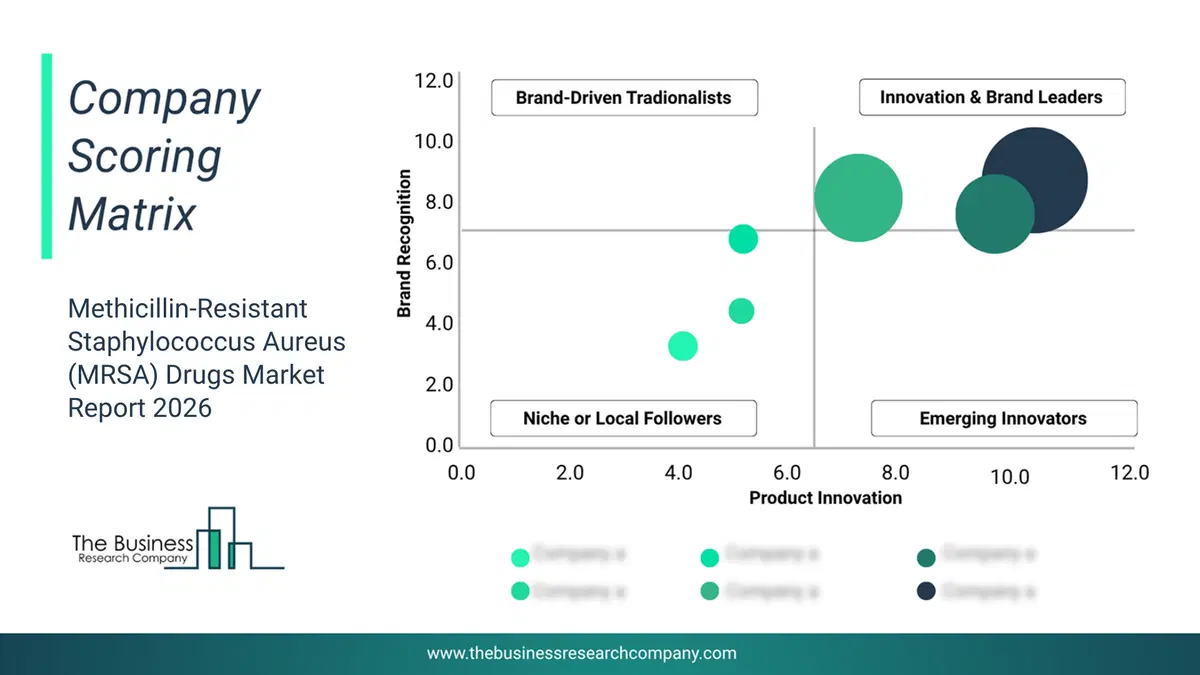
This chart maps companies by product innovation and brand strength, with bubble size indicating relative revenue, helping identify market leaders, challengers, and niche players. This is an illustrative chart; the full report provides a complete and accurate competitive analysis.
Global Methicillin-Resistant Staphylococcus Aureus (MRSA) Drugs Market Trends and Insights
Major companies involved in the Methicillin-Resistant Staphylococcus Aureus (MRSA) drug market are focused on once-daily dosing regimens to improve patient adherence to treatment, reduce the complexity of medication schedules, and enhance the overall effectiveness of therapies aimed at combating MRSA infections. Once-daily dosing regimens are medication administration schedules in which a drug is taken or administered just one time per day. For example, in August 2024, Sun Pharma, an India-based biotechnology company, launched Tedizolid Phosphate tablets 200 mg, which offers a convenient once-daily dosing option for patients with acute bacterial skin and skin structure infections, including those caused by MRSA, thereby supporting better treatment adherence and outcomes.What Are Latest Mergers And Acquisitions In The Methicillin-Resistant Staphylococcus Aureus (MRSA) Drugs Market?
In June 2023, Brii Biosciences, a China-based company, acquired Qpex Biopharma’s Exclusive Global Rights for BRII-693 for an undisclosed amount. The acquisition aims to strengthen its portfolio of innovative therapeutics targeting infectious diseases, particularly those caused by multidrug-resistant pathogens, enhancing its position in the global biopharmaceutical market and expanding its capacity to address critical unmet medical needs. Qpex Biopharma, a US-based Company manufactures Methicillin-resistant Staphylococcus aureus (MRSA) drugs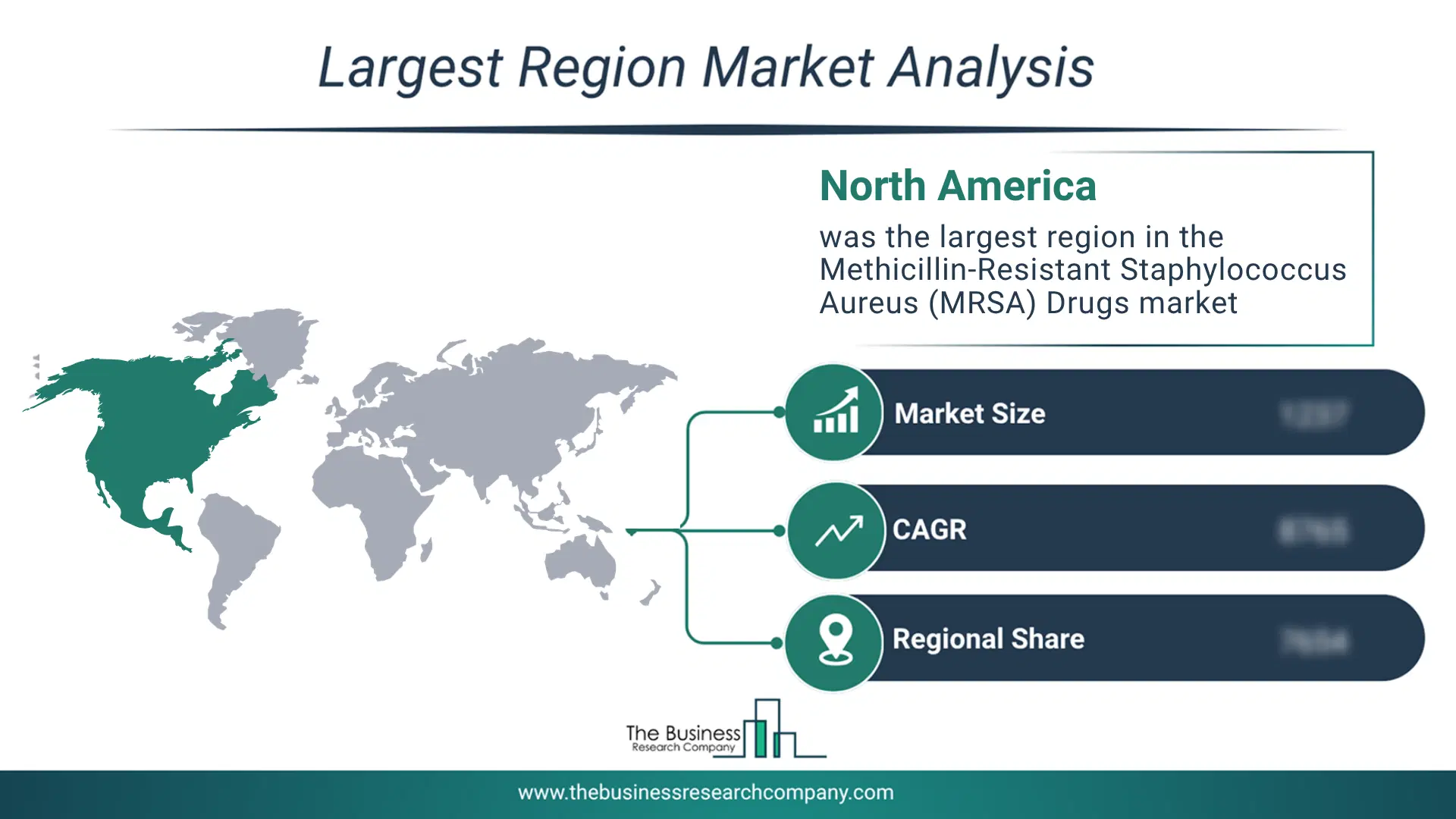
Regional Insights
North America was the largest region in the global methicillin-resistant staphylococcus aureus drugs market in 2025. Asia-Pacific is expected to be the fastest-growing region in the forecast period. The regions covered in this market report are Asia-Pacific, South East Asia, Western Europe, Eastern Europe, North America, South America, Middle East, Africa. The countries covered in this market report are Australia, Brazil, China, France, Germany, India, Indonesia, Japan, Taiwan, Russia, South Korea, UK, USA, Canada, Italy, Spain.What Defines the Methicillin-Resistant Staphylococcus Aureus (MRSA) Drugs Market?
The methicillin-resistant Staphylococcus aureus (MRSA) drug market consists of sales of vancomycin, daptomycin, linezolid, ceftaroline, tedizolid, and clindamycin. Values in this market are ‘factory gate’ values, that is, the value of goods sold by the manufacturers or creators of the goods, whether to other entities (including downstream manufacturers, wholesalers, distributors, and retailers) or directly to end customers. The value of goods in this market includes related services sold by the creators of the goods.How is Market Value Defined and Measured?
The market value is defined as the revenues that enterprises gain from the sale of goods and/or services within the specified market and geography through sales, grants, or donations in terms of the currency (in USD unless otherwise specified). The revenues for a specified geography are consumption values that are revenues generated by organizations in the specified geography within the market, irrespective of where they are produced. It does not include revenues from resales along the supply chain, either further along the supply chain or as part of other products.
This chart presents market attractiveness based on a quantitative evaluation of growth, competition, strategic alignment, and risk, offering a clear view of opportunity areas for decision-making. This chart is for illustrative purposes; the full report contains the complete analysis.

This chart highlights the Total Addressable Market (TAM) by estimating the maximum revenue opportunity using an assumption-driven approach, supporting strategic planning and opportunity sizing across markets. The chart is illustrative; the full report provides a more comprehensive analysis.
What Key Data and Analysis Are Included in the Methicillin-Resistant Staphylococcus Aureus (MRSA) Drugs Market Report 2026?
The methicillin-resistant staphylococcus aureus (mrsa) drugs market research report is one of a series of new reports from The Business Research Company that provides market statistics, including industry global market size, regional shares, competitors with the market share, detailed market segments, market trends and opportunities, and any further data you may need to thrive in the methicillin-resistant staphylococcus aureus (mrsa) drugs industry. The market research report delivers a complete perspective of everything you need, with an in-depth analysis of the current and future state of the industry.Methicillin-Resistant Staphylococcus Aureus (MRSA) Drugs Market Report Forecast Analysis
| Report Attribute | Details |
|---|---|
| Market Size Value In 2026 | $2.57 billion |
| Revenue Forecast In 2030 | $3.25 billion |
| Growth Rate | CAGR of 5.1% from 2026 to 2030 |
| Base Year For Estimation | 2025 |
| Actual Estimates/Historical Data | 2020-2025 |
| Forecast Period | 2026 - 2030 |
| Market Representation | Revenue in USD Billion and CAGR from 2026 to 2030 |
| Segments Covered | Drug Class, Indication, MRSA Type, Route of Administration, End User |
| Regional Scope | Asia-Pacific, Western Europe, Eastern Europe, North America, South America, Middle East, Africa |
| Country Scope | The countries covered in the report are Australia, Brazil, China, France, Germany, India, Indonesia, Japan, Taiwan, Russia, South Korea, UK, USA, Canada, Italy, Spain. |
| Key Companies Profiled | Basilea Pharmaceutica Ltd., Merck & Co Inc., Pfizer Inc., Cumberland Pharmaceuticals Inc., Innovation Pharmaceuticals Inc., Melinta Therapeutics Inc., Nabriva Therapeutics plc, Paratek Pharmaceuticals Inc., GlaxoSmithKline plc, Johnson & Johnson, Theravance Biopharma Inc., AstraZeneca plc, AmpliPhi Biosciences Corporation, Debiopharm International S.A., AbbVie Inc., Seagen Inc., Astellas Pharma Inc., Eisai Co. Ltd., Exelixis Inc., Zymeworks Inc. |
| Customization Scope | Request for Customization |
| Pricing And Purchase Options | Explore Purchase Options |