
Methylmalonic Acidemia (MMA) Market Report 2026
Global Outlook – By Treatment Type (Dietary Management And Supplementation, Enzyme Replacement Therapy, Gene Therapy, Transplantation), By Disorder Type (Isolated Methylmalonic Aciduria, Combined Methylmalonic Aciduria, Homocystinuria), By Patient Age Group (Infant, Pediatric, Adult), By Route of Administration (Oral, Intravenous), By End User (Hospitals, Specialty Clinics, Homecare, Other End Users) - Market Size, Trends, Strategies, and Forecast to 2030
Methylmalonic Acidemia (MMA) Market Overview
• Methylmalonic Acidemia (MMA) market size has reached to $9.94 billion in 2025 • Expected to grow to $13.06 billion in 2030 at a compound annual growth rate (CAGR) of 5.6% • Growth Driver: Rising Incidence Of Metabolic Disorders And Vitamin Deficiencies Driving The Growth Of The Market Due To Impaired Vitamin B12 Metabolism • Market Trend: Innovative mRNA-Based Therapies Pave The Way For Advanced Treatments • North America was the largest region in 2025 and Asia-Pacific is the fastest growing region.What Is Covered Under Methylmalonic Acidemia (MMA) Market?
Methylmalonic acidemia (MMA) is a rare, inherited metabolic disorder in which the body is unable to properly break down specific proteins and fats due to a deficiency in the enzyme methylmalonyl-CoA mutase or a related coenzyme, vitamin B12. The symptoms of MMA can vary in severity but often include vomiting, lethargy, poor feeding, developmental delay, seizures, and failure to thrive. The main indication types of methylmalonic acidemia (MMA) are acidosis, ketosis, hyperammonemia, hypoglycemia, hyperglycemia, neutropenia, and other indications. Acidosis is a condition in which there is an excess of acid in the blood, leading to a lower-than-normal pH level. There are different disorder types, like homocystinuria, isolated methylmalonic acidurias, and combined methylmalonic aciduria. It is through various distribution channels, such as hospitals, pharmacies, clinics, and other distribution channels.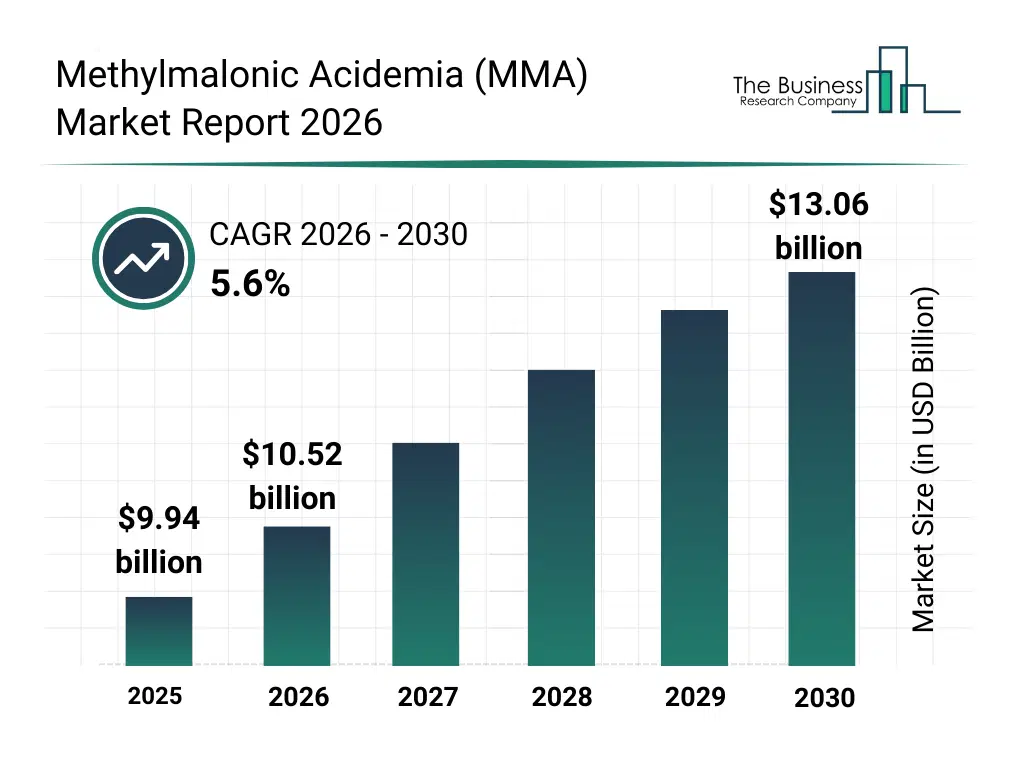
What Is The Methylmalonic Acidemia (MMA) Market Size and Share 2026?
The methylmalonic acidemia (mma) market size has grown strongly in recent years. It will grow from $9.94 billion in 2025 to $10.52 billion in 2026 at a compound annual growth rate (CAGR) of 5.8%. The growth in the historic period can be attributed to increase in rare disease awareness, rise in newborn screening programs, expansion of metabolic disorder research, improved diagnostic technologies, early genetic testing adoption.What Is The Methylmalonic Acidemia (MMA) Market Growth Forecast?
The methylmalonic acidemia (mma) market size is expected to see strong growth in the next few years. It will grow to $13.06 billion in 2030 at a compound annual growth rate (CAGR) of 5.6%. The growth in the forecast period can be attributed to growth in precision therapeutics, advancement in gene and enzyme replacement therapies, rising investment in rare disease drug pipelines, expanding telehealth-based metabolic monitoring, increasing focus on personalized nutrition management. Major trends in the forecast period include precision medicine-based therapy development, AI-assisted diagnosis and monitoring, cloud-based rare disease data integration, automated biomanufacturing for enzyme therapies, immersive medical training for metabolic disorders.
Global Methylmalonic Acidemia (MMA) Market Segmentation
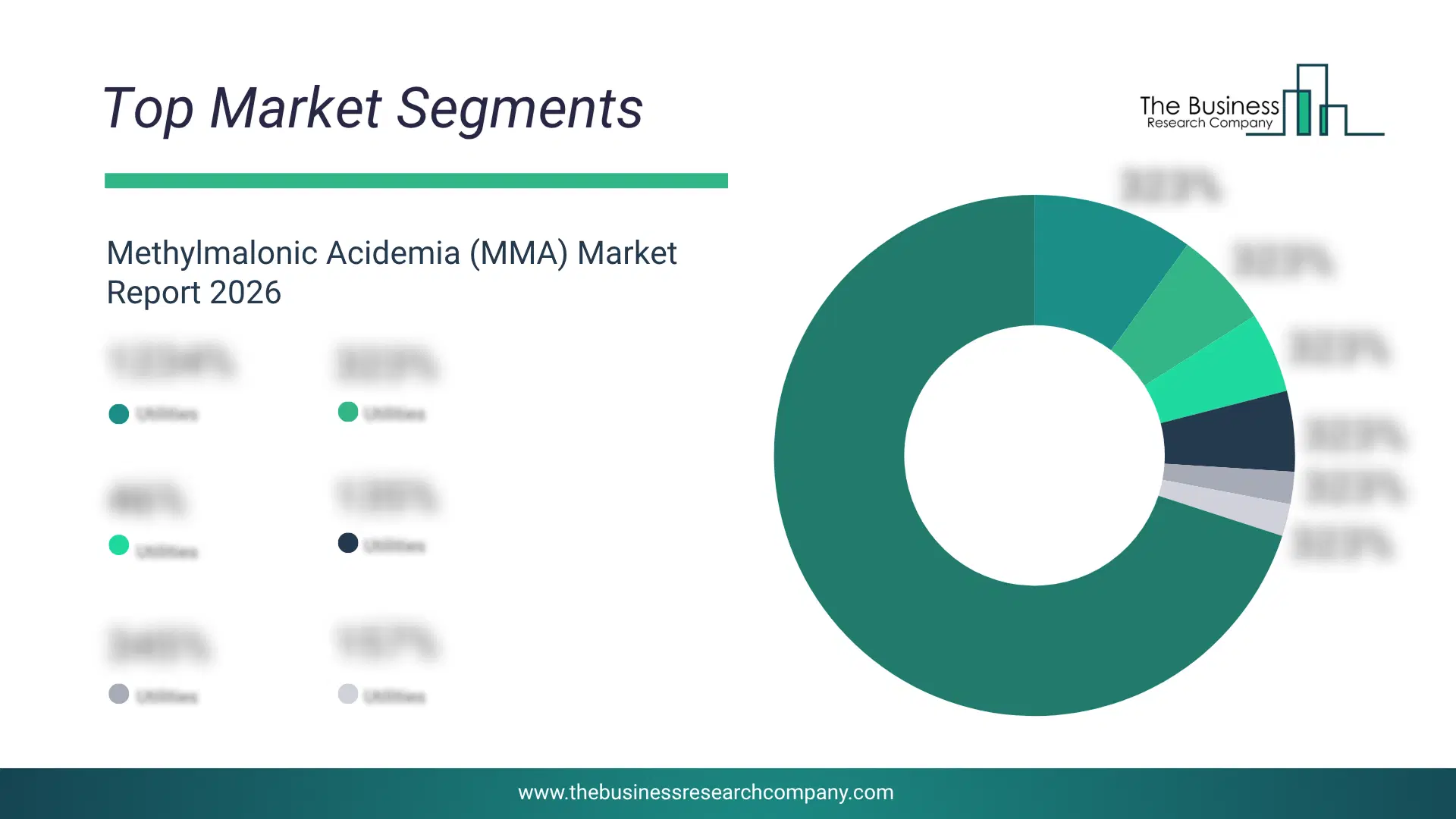
1) By Treatment Type: Dietary Management And Supplementation, Enzyme Replacement Therapy, Gene Therapy, Transplantation 2) By Disorder Type: Isolated Methylmalonic Aciduria, Combined Methylmalonic Aciduria, Homocystinuria 3) By Patient Age Group: Infant, Pediatric, Adult 4) By Route of Administration: Oral, Intravenous 5) By End User: Hospitals, Specialty Clinics, Homecare, Other End Users Subsegments: 1) By Dietary Management And Supplementation: Vitamin B12 Supplementation, L-Carnitine Supplementation, Low-Protein Medical Diets 2) By Enzyme Replacement Therapy: Recombinant Enzyme Therapies, Investigational Enzymes 3) By Gene Therapy: AAV-Based Gene Therapy, Other Viral Vector-Based Therapies 4) By Transplantation: Liver Transplantation, Combined Liver–Kidney TransplantationWhat Are The Drivers Of The Methylmalonic Acidemia (MMA) Market?
The increasing incidence of metabolic disorders and vitamin deficiencies is expected to propel the growth of the methylmalonic acidemia (MMA) market going forward. Metabolic disorders are a group of conditions in which the body has trouble processing certain nutrients, producing energy, or regulating chemical reactions within cells. Vitamin deficiencies occur when the body lacks enough specific vitamins to perform normal functions. The rise in metabolic disorders and vitamin deficiencies is due to unhealthy diets, sedentary lifestyles, and increased stress levels. Modern diets are often high in processed foods, sugars, and unhealthy fats while low in essential nutrients, leading to deficiencies in vitamins and minerals. Metabolic disorders and vitamin deficiencies, particularly vitamin B12 deficiency, impair methylmalonyl-CoA metabolism, accumulating methylmalonic acid and exacerbating methylmalonic acidemia (MMA). For instance, in November 2024, according to the National Institutes of Health, a US-based government agency, the prevalence of vitamin B12 deficiency increased from 4.6% to 5.2%, representing an additional 507 cases between the third and fourth quarters of 2023. Therefore, the increasing incidence of metabolic disorders and vitamin deficiencies drives the growth of the methylmalonic acidemia (MMA) industry. The increasing neonatal and pediatric population is expected to propel the growth of the methylmalonic acidemia market going forward. The neonatal and pediatric population refers to newborns within the first 28 days of life and children under the age of 18 years. The rising neonatal and pediatric population is largely driven by improved maternal healthcare and neonatal care services, which have increased survival rates and reduced infant mortality in developed nations. The growing neonatal and pediatric population boosts demand for early diagnosis and treatment of metabolic disorders through expanded newborn screening programs. For instance, in October 2025, according to the Australian Bureau of Statistics, an Australia-based government agency, in 2024, a total of 292,318 births were registered, reflecting a 1.9% rise (an additional 5,320 births) compared to 2023, with 150,299 male and 142,019 female babies. Therefore, the increasing neonatal and pediatric population is driving the growth of the methylmalonic acidemia market.Key Players In The Global Methylmalonic Acidemia (MMA) Market
Major companies operating in the methylmalonic acidemia (mma) market are Alexion Pharmaceuticals Inc., PTC Therapeutics Inc., Asklepios BioPharmaceutical Inc AskBio, Selecta Biosciences Inc, BridgeBio Pharma Inc., VectivBio Holding AG, Recordati Rare Diseases Inc., Agios Pharmaceuticals Inc., LogicBio Therapeutics Inc., Moderna Inc., Wockhardt Limited, Supriya Lifescience Ltd., HemoShear Therapeutics LLC, Deccan Nutraceuticals Pvt Ltd, Genespire, Bluebird Bio Inc, Takeda Pharmaceutical Company Limited, Sanofi, Orphan Technologies Ltd, Ultragenyx Pharmaceutical Inc, HemoShear Therapeutics LLC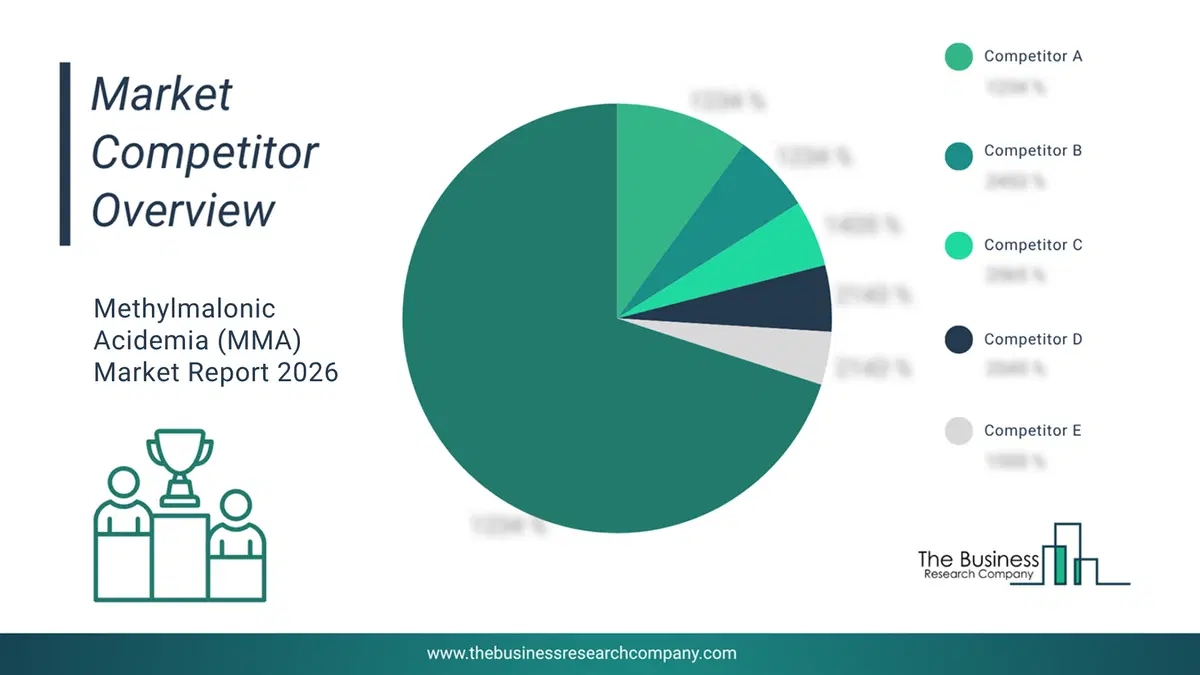
This chart is for illustrative purposes; the full report includes a detailed competitor analysis and comprehensive overview of the top 10 companies in the market.
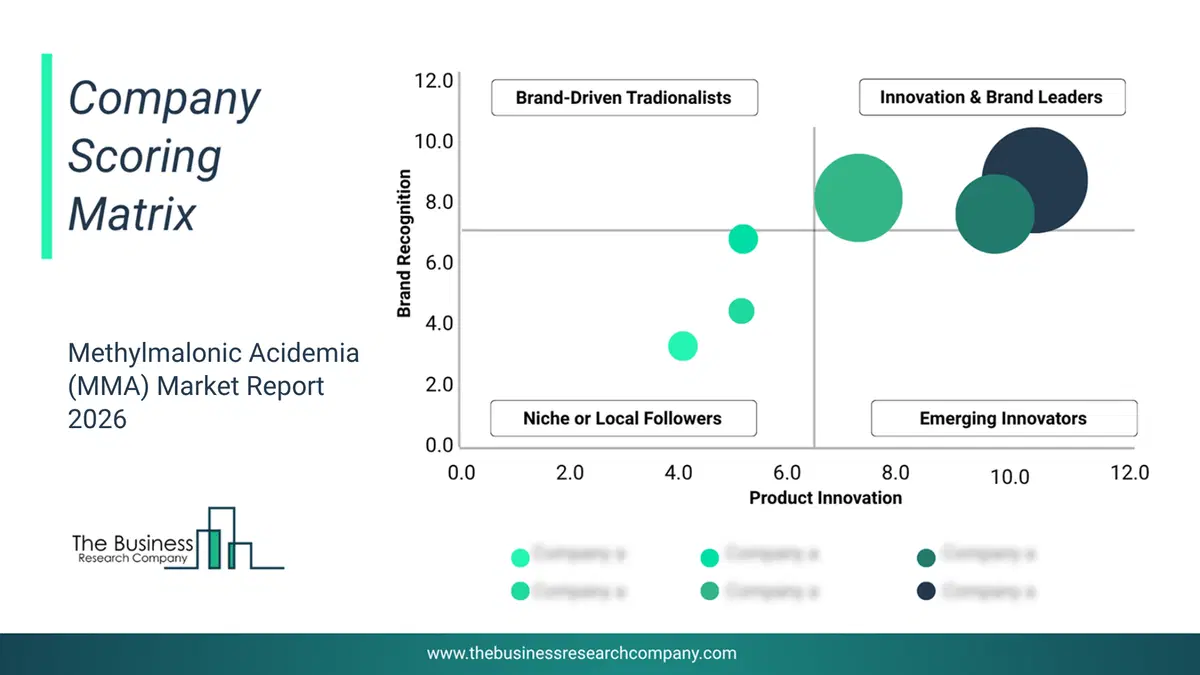
This chart maps companies by product innovation and brand strength, with bubble size indicating relative revenue, helping identify market leaders, challengers, and niche players. This is an illustrative chart; the full report provides a complete and accurate competitive analysis.
Global Methylmalonic Acidemia (MMA) Market Trends and Insights
Major companies operating in the methylmalonic acidemia (MMA) market are focusing on developing innovative solutions, such as mRNA-based therapies, to improve treatment outcomes by targeting the underlying genetic causes of MMA and enhancing enzyme function to reduce the accumulation of toxic metabolites in affected individuals. mRNA-based therapies are a type of treatment that uses messenger RNA to instruct cells to produce specific proteins that can help prevent or treat diseases, such as genetic disorders or infections. For instance, in June 2024, Moderna, Inc., a US-based pharmaceutical and biotechnology company, received U.S. Food and Drug Administration (FDA) approval for including mRNA-3705 in the START pilot program, marking a significant step in advancing treatments for rare diseases. mRNA-3705 is an investigational therapy for methylmalonic acidemia (MMA) caused by MUT deficiency, designed to restore the missing enzyme using mRNA technology. The therapy leverages Moderna's proprietary lipid nanoparticle (LNP) system, also utilized in the mRNA-3927 program for propionic acidemia. The FDA has granted mRNA-3705 orphan drugs, fast track, and rare pediatric disease designations, facilitating its accelerated development and clinical progress.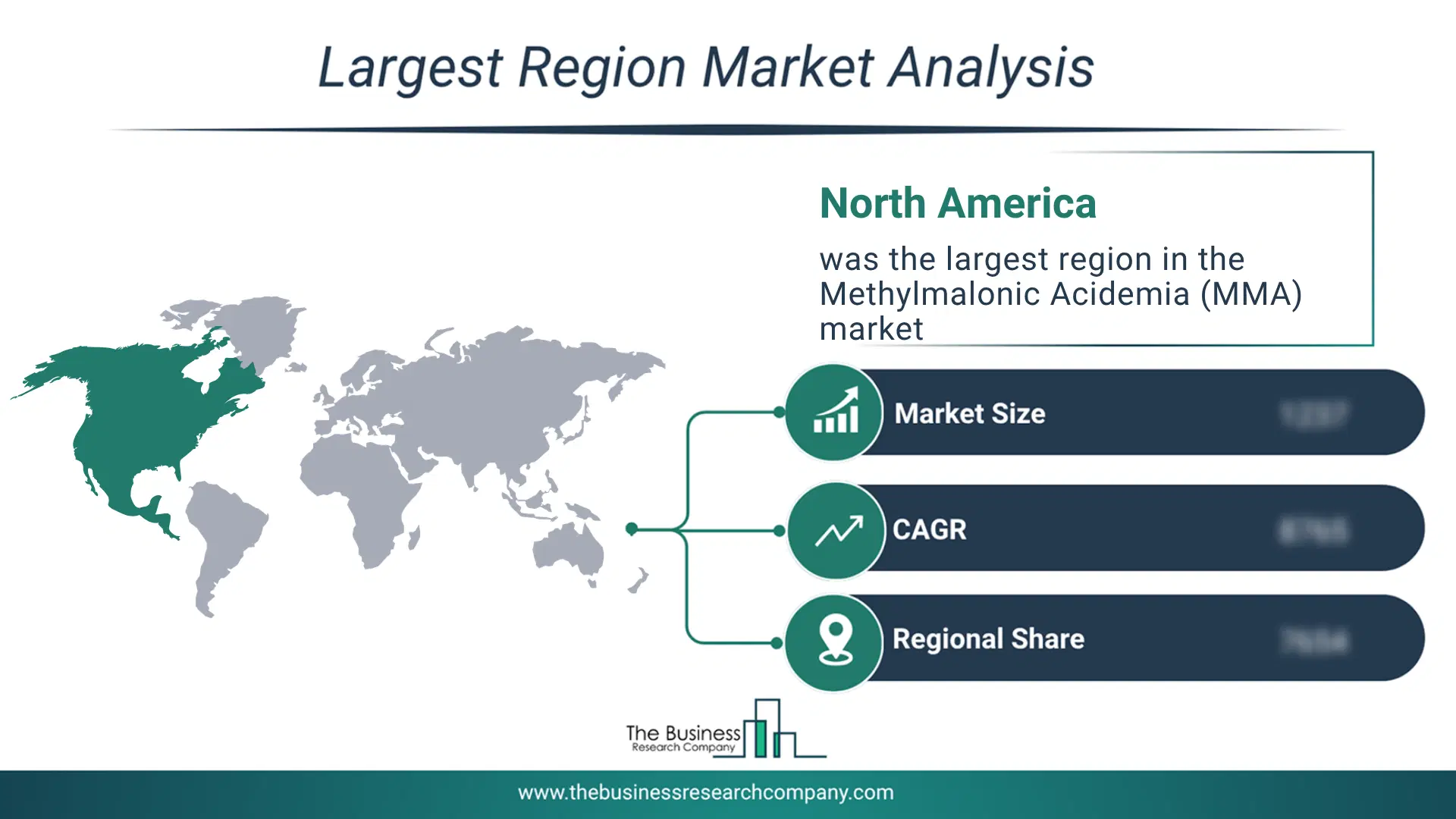
Regional Outlook
North America was the largest region in the methylmalonic acidemia (MMA) market in 2025. Asia-Pacific is expected to be the fastest-growing region in the forecast period. The regions covered in this market report are Asia-Pacific, South East Asia, Western Europe, Eastern Europe, North America, South America, Middle East, Africa. The countries covered in this market report are Australia, Brazil, China, France, Germany, India, Indonesia, Japan, Taiwan, Russia, South Korea, UK, USA, Canada, Italy, Spain.What Defines the Methylmalonic Acidemia (MMA) Market?
The methylmalonic acidemia (MMA) market consists of revenues earned by entities by providing services such as medical management, dietary support, and vitamin and medication therapy. The market value includes the value of related goods sold by the service provider or included within the service offering. The methylmalonic acidemia market includes sales of hydroxocobalamin, vitamin B12 tablets, other pharmaceutical and therapeutic products, dietary products, and diagnostic tools. Values in this market are ‘factory gate’ values, that is, the value of goods sold by the manufacturers or creators of the goods, whether to other entities (including downstream manufacturers, wholesalers, distributors, and retailers) or directly to end customers. The value of goods in this market includes related services sold by the creators of the goods.How is Market Value Defined and Measured?
The market value is defined as the revenues that enterprises gain from the sale of goods and/or services within the specified market and geography through sales, grants, or donations in terms of the currency (in USD unless otherwise specified). The revenues for a specified geography are consumption values that are revenues generated by organizations in the specified geography within the market, irrespective of where they are produced. It does not include revenues from resales along the supply chain, either further along the supply chain or as part of other products.
This chart presents market attractiveness based on a quantitative evaluation of growth, competition, strategic alignment, and risk, offering a clear view of opportunity areas for decision-making. This chart is for illustrative purposes; the full report contains the complete analysis.

This chart highlights the Total Addressable Market (TAM) by estimating the maximum revenue opportunity using an assumption-driven approach, supporting strategic planning and opportunity sizing across markets. The chart is illustrative; the full report provides a more comprehensive analysis.
What Key Data and Analysis Are Included in the Methylmalonic Acidemia (MMA) Market Report 2026?
The methylmalonic acidemia (mma) market research report is one of a series of new reports from The Business Research Company that provides market statistics, including industry global market size, regional shares, competitors with the market share, detailed market segments, market trends and opportunities, and any further data you may need to thrive in the methylmalonic acidemia (mma) industry. The market research report delivers a complete perspective of everything you need, with an in-depth analysis of the current and future state of the industry.Methylmalonic Acidemia (MMA) Market Report Forecast Analysis
| Report Attribute | Details |
|---|---|
| Market Size Value In 2026 | $10.52 billion |
| Revenue Forecast In 2030 | $13.06 billion |
| Growth Rate | CAGR of 5.6% from 2026 to 2030 |
| Base Year For Estimation | 2025 |
| Actual Estimates/Historical Data | 2020-2025 |
| Forecast Period | 2026 - 2030 |
| Market Representation | Revenue in USD Billion and CAGR from 2026 to 2030 |
| Segments Covered | Treatment Type, Disorder Type, Patient Age Group, Route of Administration, End User |
| Regional Scope | Asia-Pacific, Western Europe, Eastern Europe, North America, South America, Middle East, Africa |
| Country Scope | The countries covered in the report are Australia, Brazil, China, France, Germany, India, Indonesia, Japan, Taiwan, Russia, South Korea, UK, USA, Canada, Italy, Spain |
| Key Companies Profiled | Alexion Pharmaceuticals Inc., PTC Therapeutics Inc., Asklepios BioPharmaceutical Inc AskBio, Selecta Biosciences Inc, BridgeBio Pharma Inc., VectivBio Holding AG, Recordati Rare Diseases Inc., Agios Pharmaceuticals Inc., LogicBio Therapeutics Inc., Moderna Inc., Wockhardt Limited, Supriya Lifescience Ltd., HemoShear Therapeutics LLC, Deccan Nutraceuticals Pvt Ltd, Genespire, Bluebird Bio Inc, Takeda Pharmaceutical Company Limited, Sanofi, Orphan Technologies Ltd, Ultragenyx Pharmaceutical Inc, HemoShear Therapeutics LLC |
| Customization Scope | Request for Customization |
| Pricing And Purchase Options | Explore Purchase Options |