
Micro Electric Vehicle Market Report 2026
Global Outlook – By Vehicle Type (Two-Wheelers, Three-Wheelers, Four-Wheelers, Bicycles, Scooters), By Battery Type (Lithium-Ion Batteries, Lead-Acid Batteries, Solid-State Batteries, Ultracapacitors), By Charging Infrastructure (Home Charging Stations, Public Charging Stations, Workplace Charging Solutions, Fast Charging Networks), By Application (Personal Transportation, Commercial Use, Public Transportation, Delivery Services) – Market Size, Trends, Strategies, and Forecast to 2030
Micro Electric Vehicle Market Overview
• Micro Electric Vehicle market size has reached to $8.87 billion in 2025 • Expected to grow to $15.93 billion in 2030 at a compound annual growth rate (CAGR) of 12.4% • Growth Driver: Surge In Charging Infrastructure Improvements Fueling The Growth Of The Market Due To Rising Adoption Of Electric Vehicles • Market Trend: Launch Of Removable Battery Systems Enhancing Urban Mobility And Sustainability • North America was the largest region in 2025 and Asia-Pacific is the fastest growing region.What Is Covered Under Micro Electric Vehicle Market?
A micro electric vehicle (micro-EV) is a compact and lightweight electric car designed for short trips in cities. It usually seats one or two people, runs on electric motors powered by batteries, and is built for easy maneuvering, low speeds (typically below 60–80 km/h), and high energy efficiency. These vehicles are known for their small size, low speed, and zero tailpipe emissions. The main vehicle types of micro electric vehicles comprise two-wheelers, three-wheelers, four-wheelers, bicycles, and scooters. Two-wheelers refer to compact electric vehicles such as e-bikes and e-scooters designed for short-distance travel, offering high energy efficiency, low emissions, and cost-effective mobility solutions. These vehicles are powered by various battery types, including lithium-ion batteries, lead-acid batteries, solid-state batteries, and ultracapacitors, and utilize different charging infrastructures, such as home charging stations, public charging stations, workplace charging solutions, and fast charging networks. The key applications include personal transportation, commercial use, public transportation, and delivery services.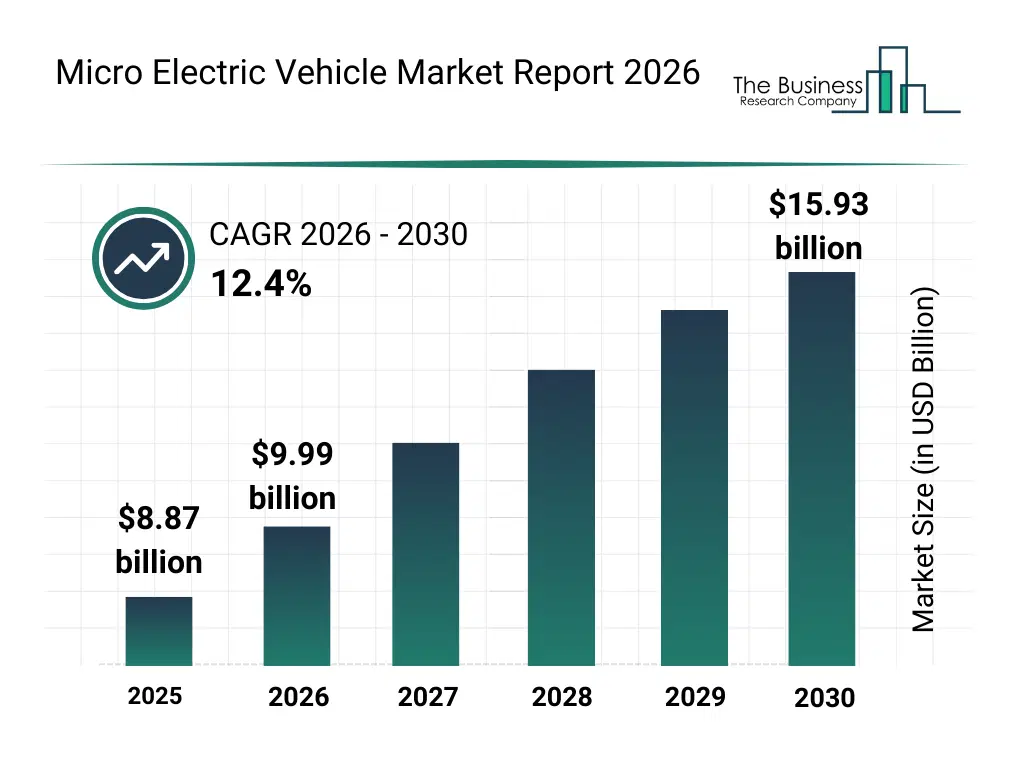
What Is The Micro Electric Vehicle Market Size and Share 2026?
The micro electric vehicle market size has grown rapidly in recent years. It will grow from $8.87 billion in 2025 to $9.99 billion in 2026 at a compound annual growth rate (CAGR) of 12.7%. The growth in the historic period can be attributed to urban congestion, rise of electric scooters and small evs, government ev incentives, demand for short-distance mobility, fuel cost volatility.What Is The Micro Electric Vehicle Market Growth Forecast?
The micro electric vehicle market size is expected to see rapid growth in the next few years. It will grow to $15.93 billion in 2030 at a compound annual growth rate (CAGR) of 12.4%. The growth in the forecast period can be attributed to zero-emission city policies, battery cost reduction, shared mobility growth, expansion of charging infrastructure, demand for smart urban transport. Major trends in the forecast period include growth of urban micro-mobility, expansion of last-mile delivery vehicles, adoption of compact electric platforms, integration of smart connectivity features, demand for affordable evs.
Global Micro Electric Vehicle Market Segmentation
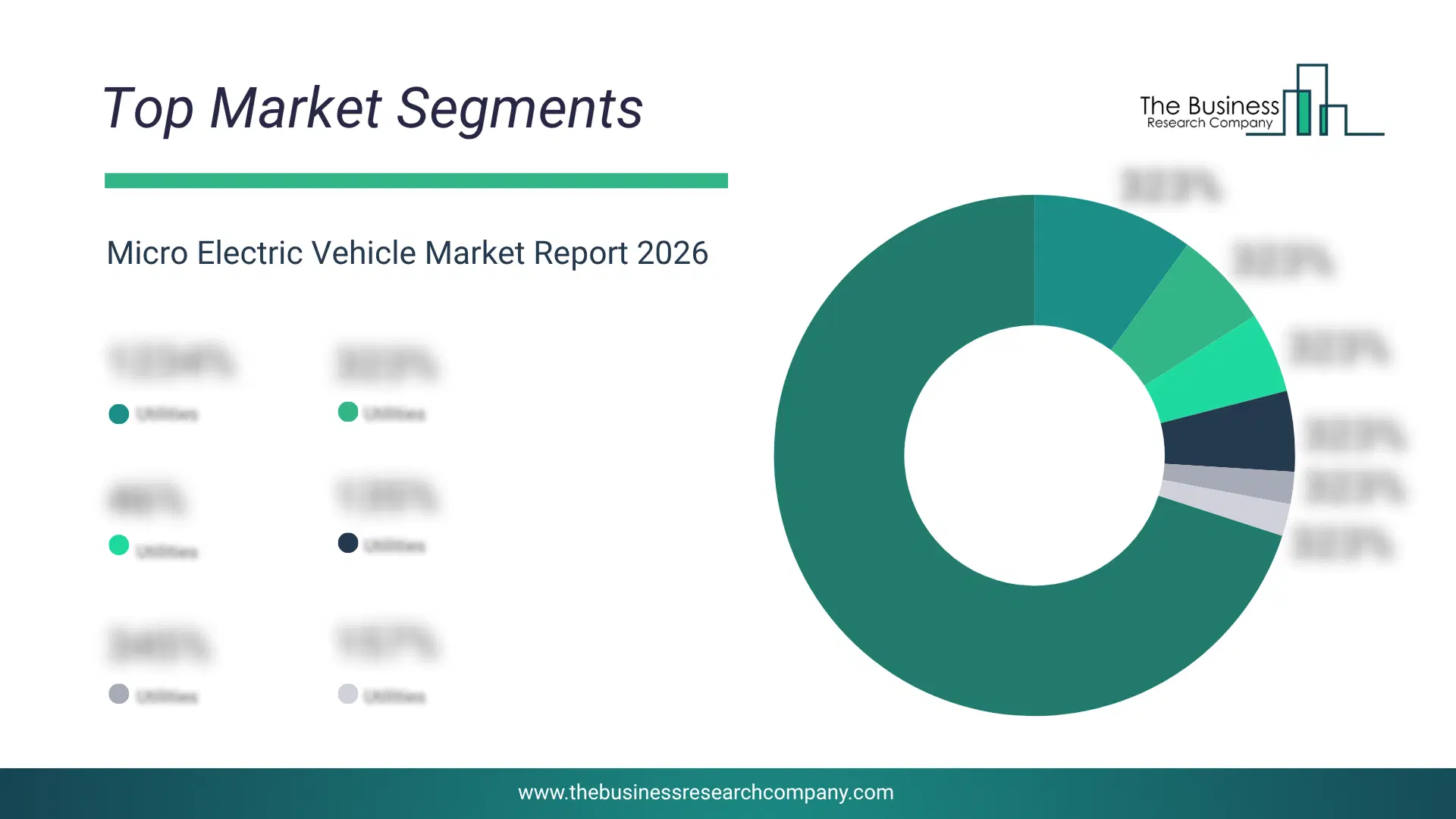
1) By Vehicle Type: Two-Wheelers, Three-Wheelers, Four-Wheelers, Bicycles, Scooters 2) By Battery Type: Lithium-Ion Batteries, Lead-Acid Batteries, Solid-State Batteries, Ultracapacitors 3) By Charging Infrastructure: Home Charging Stations, Public Charging Stations, Workplace Charging Solutions, Fast Charging Networks 4) By Application: Personal Transportation, Commercial Use, Public Transportation, Delivery Services Subsegments: 1) By Two-Wheelers: Electric Motorcycles, Electric Mopeds 2) By Three-Wheelers: Passenger Three-Wheelers, Cargo Three-Wheelers 3) By Four-Wheelers: Compact Electric Cars, Micro Electric Cars, Utility Electric Vehicles 4) By Bicycles: Electric Mountain Bicycles, Electric Road Bicycles, Electric Hybrid Bicycles, Electric Cargo Bicycles 5) By Scooters: Electric Kick Scooters, Electric Moped Scooters, Foldable Electric Scooters, Standing Electric ScootersWhat Is The Driver Of The Micro Electric Vehicle Market?
The rising improvements in charging infrastructure are expected to propel the growth of the micro electric vehicle market going forward. Charging infrastructure (or electric vehicle charging infrastructure) refers to the network of physical equipment, systems, and supporting components that enable electric vehicles (EVs) or plug‑in hybrids to replenish their battery energy. Charging infrastructure is increasing due to the rising adoption of electric vehicles (EVs). The availability of efficient charging infrastructure accelerates micro electric vehicle adoption by reducing range anxiety and ensuring convenient, accessible energy refueling for users. For instance, in April 2024, according to a Bloomberg Green analysis of federal data, a US-based global newsroom, the United States gained nearly 600 public fast-charging electric vehicle (EV) stations in the first three months of 2024, a 7.6% increase over the end of 2023. Therefore, the rising improvements in charging infrastructure are driving the growth of the micro electric vehicle industry.Key Players In The Global Micro Electric Vehicle Market
Major companies operating in the micro electric vehicle market report include Stellantis NV., Honda Motor Co. Ltd., Renault Group, Yamaha Motor Co. Ltd., Textron Inc., Eli Electric Vehicles Inc., Club Car LLC., Gogoro Inc., Suzhou Eagle Electric Vehicle Manufacturing Co. Ltd., Pedego Electric Bikes, Zero Motorcycles Inc., Alke Srl., Yamaha Golf-Car Company, Micro Mobility Systems AG, Italcar Industrial Srl., Cricket Mini Golf Carts Inc., Luvly AB, PMV Electric Pvt. Ltd., Global Electric Motorcars, Dongguan Excar Electric Vehicle Co. Ltd.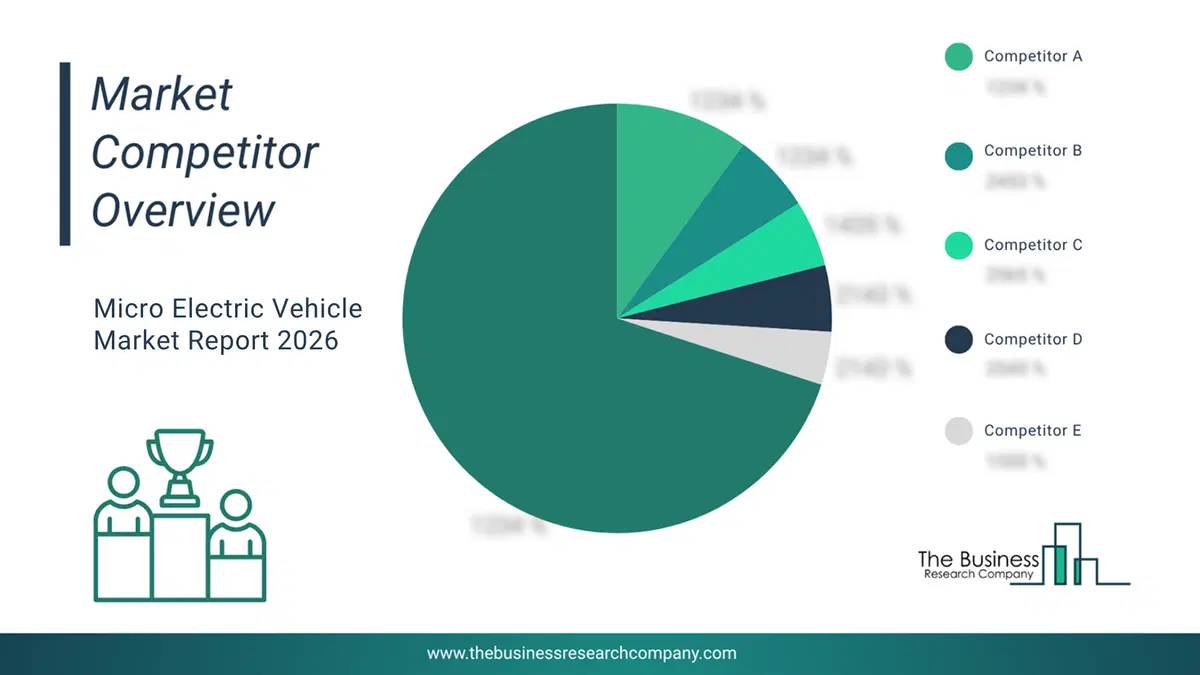
This chart is for illustrative purposes; the full report includes a detailed competitor analysis and comprehensive overview of the top 10 companies in the market.
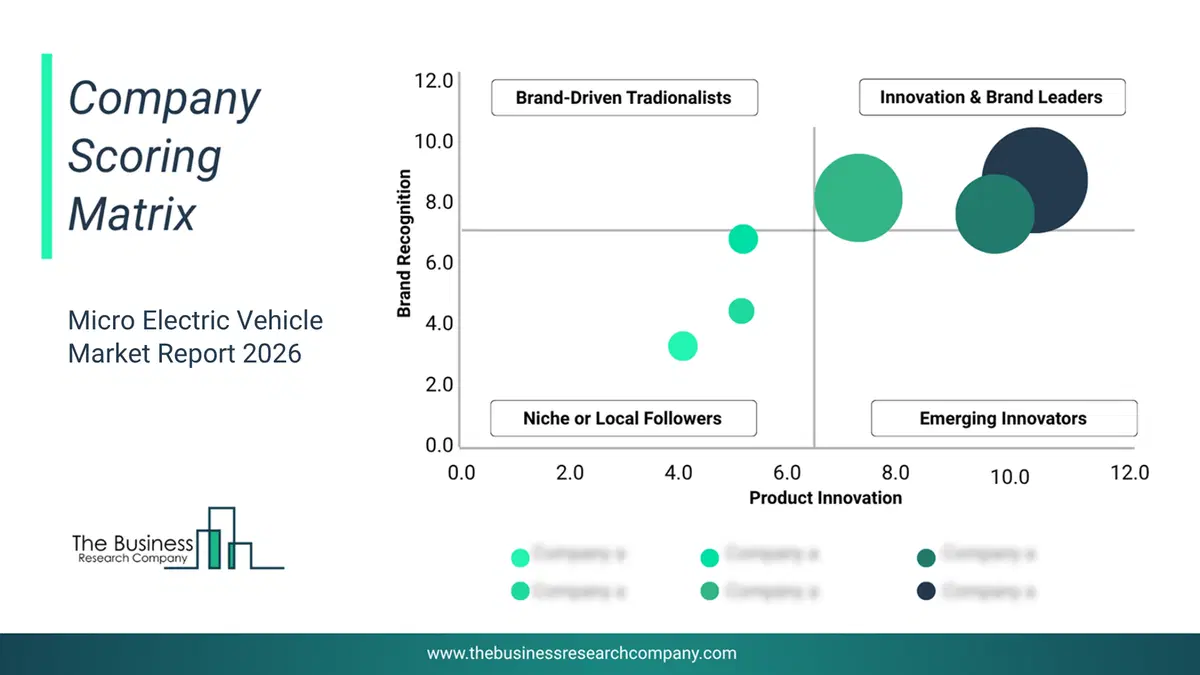
This chart maps companies by product innovation and brand strength, with bubble size indicating relative revenue, helping identify market leaders, challengers, and niche players. This is an illustrative chart; the full report provides a complete and accurate competitive analysis.
Global Micro Electric Vehicle Market Trends and Insights
Major companies operating in the micro electric vehicle market are focusing on developing advanced solutions, such as removable battery systems, to enhance vehicle convenience and sustainability. A removable battery system refers to a modular energy solution that allows users to easily detach, swap, or recharge batteries without requiring fixed charging infrastructure, thereby improving flexibility and reducing downtime. For instance, in July 2024, ACCIONA, a Spain-based renewable energy and sustainable mobility company, launched the Silence S04 NanoCar, its first electric urban vehicle with removable batteries. This innovation enables drivers to replace discharged batteries with fully charged ones in minutes through dedicated battery exchange stations, eliminating long charging times and promoting efficient urban mobility. Designed for short-distance city travel, the NanoCar features compact dimensions, lightweight construction, and zero emissions, aligning with sustainable transportation goals. By integrating advanced battery-swapping technology, ACCIONA enhances user convenience, supports eco-friendly transportation, and strengthens its position in the growing micro electric vehicle market.What Are Latest Mergers And Acquisitions In The Micro Electric Vehicle Market?
In March 2025, Luvly AB, a Sweden-based automotive company, partnered with Stellantis to evaluate the use of its patented lightweight and energy-absorbing vehicle platform in Stellantis’s upcoming micro and urban electric vehicles, with the goal of improving energy efficiency, safety, and cost-effectiveness for sustainable urban mobility. Stellantis is a Netherlands-based automotive manufacturing company.
Regional Outlook
North America was the largest region in the micro electric vehicle market in 2025. Asia-Pacific is expected to be the fastest-growing region in the forecast period. The regions covered in this market report include Asia-Pacific, South East Asia, Western Europe, Eastern Europe, North America, South America, Middle East, Africa. The countries covered in this market report include Australia, Brazil, China, France, Germany, India, Indonesia, Japan, Taiwan, Russia, South Korea, UK, USA, Canada, Italy, SpainWhat Defines the Micro Electric Vehicle Market?
The micro electric vehicle market consists of sales of electric microcars, electric mopeds, electric trikes, neighborhood electric vehicles, and compact delivery vehicles. Values in this market are ‘factory gate’ values, that is the value of goods sold by the manufacturers or creators of the goods, whether to other entities (including downstream manufacturers, wholesalers, distributors, and retailers) or directly to end customers. The value of goods in this market includes related services sold by the creators of the goods.How is Market Value Defined and Measured?
The market value is defined as the revenues that enterprises gain from the sale of goods and/or services within the specified market and geography through sales, grants, or donations in terms of the currency (in USD unless otherwise specified). The revenues for a specified geography are consumption values that are revenues generated by organizations in the specified geography within the market, irrespective of where they are produced. It does not include revenues from resales along the supply chain, either further along the supply chain or as part of other products.
This chart presents market attractiveness based on a quantitative evaluation of growth, competition, strategic alignment, and risk, offering a clear view of opportunity areas for decision-making. This chart is for illustrative purposes; the full report contains the complete analysis.

This chart highlights the Total Addressable Market (TAM) by estimating the maximum revenue opportunity using an assumption-driven approach, supporting strategic planning and opportunity sizing across markets. The chart is illustrative; the full report provides a more comprehensive analysis.
What Key Data and Analysis Are Included in the Micro Electric Vehicle Market Report 2026?
The micro electric vehicle market research report is one of a series of new reports from The Business Research Company that provides market statistics, including industry global market size, regional shares, competitors with the market share, detailed market segments, market trends and opportunities, and any further data you may need to thrive in the micro electric vehicle industry. The market research report delivers a complete perspective of everything you need, with an in-depth analysis of the current and future state of the industry.Micro Electric Vehicle Market Report Forecast Analysis
| Report Attribute | Details |
|---|---|
| Market Size Value In 2026 | $9.99 billion |
| Revenue Forecast In 2030 | $15.93 billion |
| Growth Rate | CAGR of 12.7% from 2026 to 2030 |
| Base Year For Estimation | 2025 |
| Actual Estimates/Historical Data | 2020-2025 |
| Forecast Period | 2026 - 2030 - 2030 |
| Market Representation | Revenue in USD Billion and CAGR from 2026 to 2030 |
| Segments Covered | Vehicle Type, Battery Type, Charging Infrastructure, Application |
| Regional Scope | Asia-Pacific, Western Europe, Eastern Europe, North America, South America, Middle East, Africa |
| Country Scope | The countries covered in the report are Australia, Brazil, China, France, Germany, India, Indonesia, Japan, Taiwan, Russia, South Korea, UK, USA, Canada, Italy, Spain. |
| Key Companies Profiled | Stellantis NV., Honda Motor Co. Ltd., Renault Group, Yamaha Motor Co. Ltd., Textron Inc., Eli Electric Vehicles Inc., Club Car LLC., Gogoro Inc., Suzhou Eagle Electric Vehicle Manufacturing Co. Ltd., Pedego Electric Bikes, Zero Motorcycles Inc., Alke Srl., Yamaha Golf-Car Company, Micro Mobility Systems AG, Italcar Industrial Srl., Cricket Mini Golf Carts Inc., Luvly AB, PMV Electric Pvt. Ltd., Global Electric Motorcars, Dongguan Excar Electric Vehicle Co. Ltd. |
| Customization Scope | Request for Customization |
| Pricing And Purchase Options | Explore Purchase Options |