

Micro Pellets Fish Food Market Report 2026
Global Outlook – By Product Type (Floating Micro Pellets, Sinking Micro Pellets, Slow-Sinking Micro Pellets), By Fish Type (Tropical Freshwater Fish, Marine Fish, Goldfish, Cichlids, Other Fish Types), By Distribution Channel (Online Stores, Supermarkets Or Hypermarkets, Specialty Pet Stores, Other Channels), By Application (Larval Feed, Juvenile Feed, Grower Feed, Breeder Feed), By End User (Commercial Aquaculture, Household Aquariums, Research Institutes, Other End Users) – Market Size, Trends, Strategies, and Forecast to 2030
Micro Pellets Fish Food Market Overview
• Micro Pellets Fish Food market size has reached to $1.27 billion in 2025 • Expected to grow to $1.89 billion in 2030 at a compound annual growth rate (CAGR) of 8.2% • Growth Driver: Rising Aquaculture Production Driving Demand For The Market Due To Increasing Seafood Demand • Market Trend: Formulation Of Functional Ingredients Strengthens Fish Resilience And Reduces Reliance On Antibiotics • Asia-Pacific was the largest region and fastest growing region.What Is Covered Under Micro Pellets Fish Food Market?
Micro pellet fish foods are small, nutritionally balanced formulated feed pellets manufactured with a precise blend of proteins, lipids, vitamins, minerals, and other essential nutrients to support optimal fish nutrition. They are produced in uniform particle sizes with controlled physical properties to ensure high feed quality, stability in water, and efficient nutrient delivery. The main product types of micro pellets fish food include floating micro pellets, sinking micro pellets, and slow-sinking micro pellets. Floating micro pellets refer to small-sized fish feed pellets designed to remain on the water surface for a period, allowing fish to consume the feed efficiently and reducing waste. These products are formulated for tropical fish, marine fish, goldfish, cichlids, and other types and are distributed through online stores, supermarkets or hypermarkets, specialty pet stores, and other channels. The various applications involved are larval feed, juvenile feed, grower feed, and breeder feed, and they are used by several end users such as commercial aquaculture, household aquariums, research institutes, and others.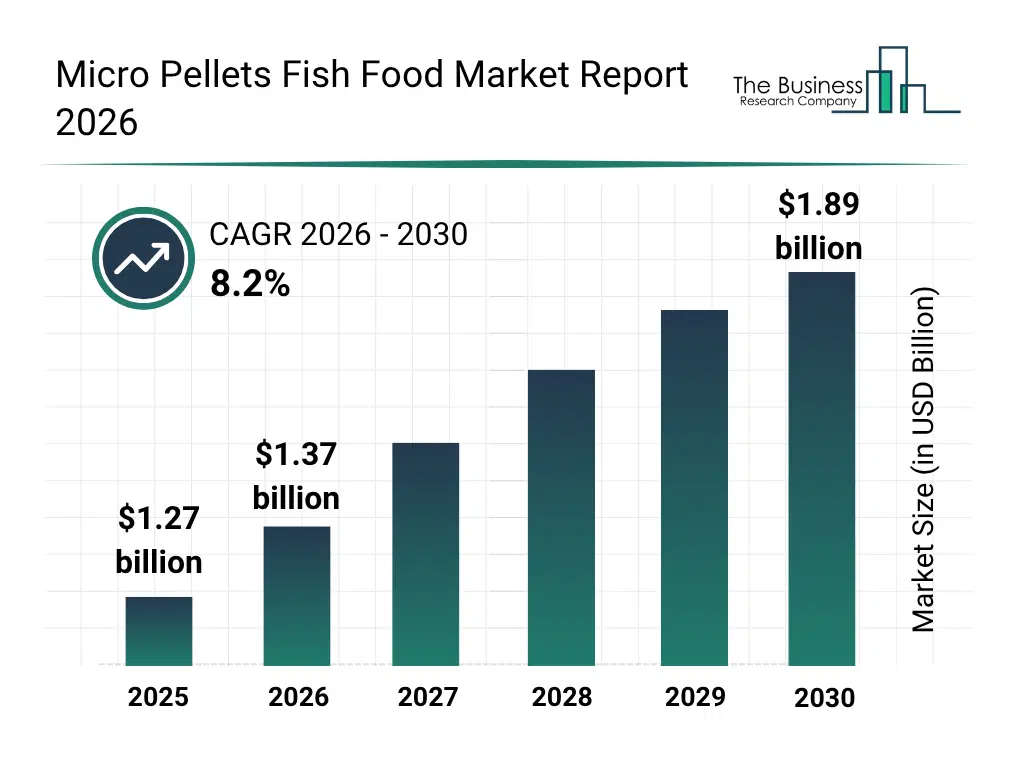
What Is The Micro Pellets Fish Food Market Size and Share 2026?
The micro pellets fish food market size has grown strongly in recent years. It will grow from $1.27 billion in 2025 to $1.37 billion in 2026 at a compound annual growth rate (CAGR) of 8.7%. The growth in the historic period can be attributed to growing adoption of commercial aquaculture, increasing ornamental fish ownership, rising demand for specialized fish nutrition, growing awareness of balanced aquatic feed, increasing demand for convenient formulated fish foods.What Is The Micro Pellets Fish Food Market Growth Forecast?
The micro pellets fish food market size is expected to see strong growth in the next few years. It will grow to $1.89 billion in 2030 at a compound annual growth rate (CAGR) of 8.2%. The growth in the forecast period can be attributed to rising aquaculture production, increasing demand for species-specific micro pellet feeds, growing adoption of high-protein formulations, increasing demand for nutrient-enriched larval feeds, expanding consumption of premium aquarium fish foods. Major trends in the forecast period include increasing demand for nutritionally balanced micro pellet formulations, rising adoption of precise pellet size control, growing demand for high-water-stability fish feed, increasing use of protein-enriched micro pellets, rising demand for improved nutrient digestibility.
Global Micro Pellets Fish Food Market Segmentation
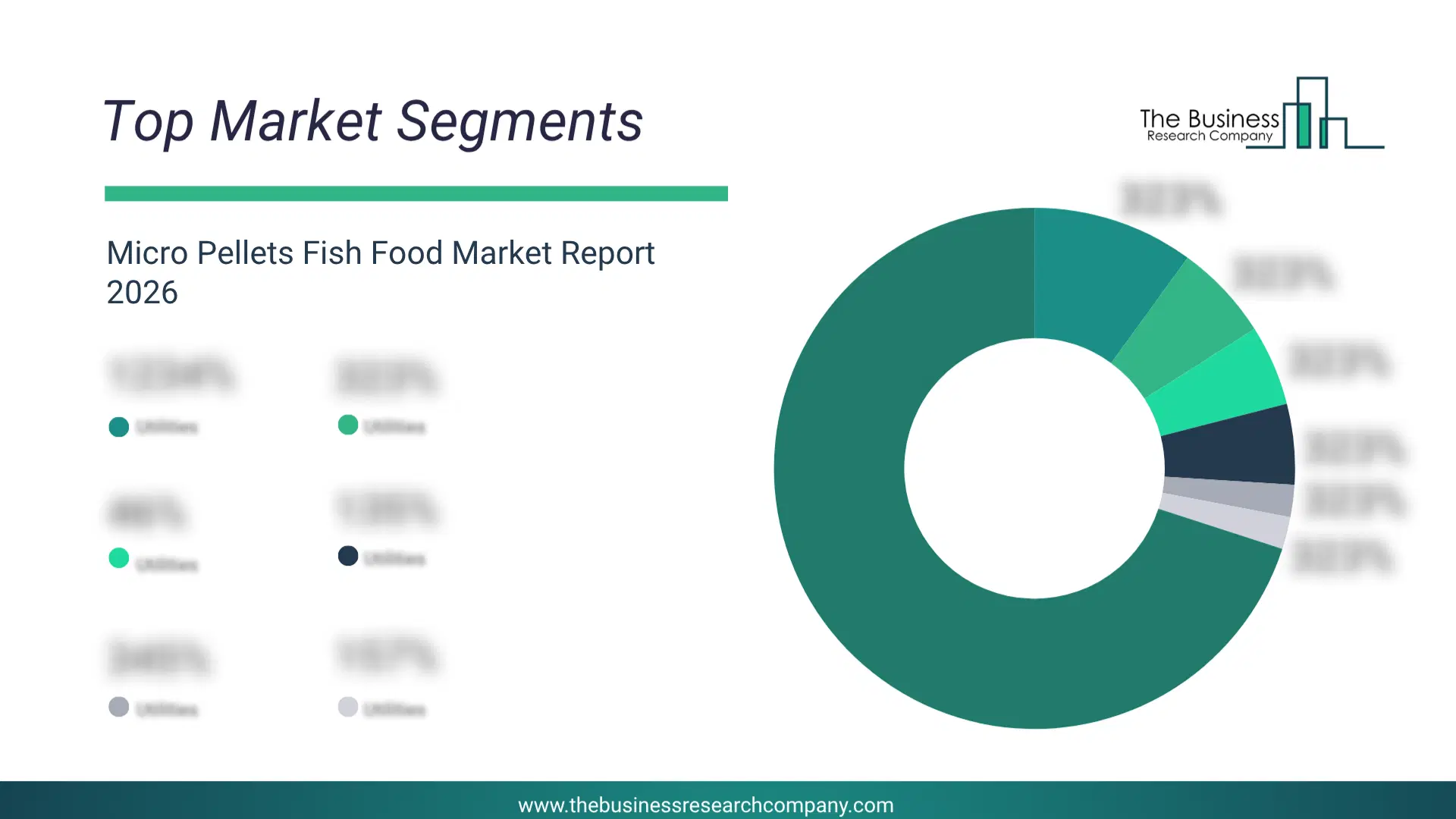
1) By Product Type: Floating Micro Pellets, Sinking Micro Pellets, Slow-Sinking Micro Pellets 2) By Fish Type: Tropical Freshwater Fish, Marine Fish, Goldfish, Cichlids, Other Fish Types 3) By Distribution Channel: Online Stores, Supermarkets Or Hypermarkets, Specialty Pet Stores, Other Channels 4) By Application: Larval Feed, Juvenile Feed, Grower Feed, Breeder Feed 5) By End User: Commercial Aquaculture, Household Aquariums, Research Institutes, Other End Users Subsegments: 1) By Floating Micro Pellets: Standard Floating Micro Pellets, High-Buoyancy Floating Micro Pellets, Small-Particle Floating Micro Pellets, High-Protein Floating Micro Pellets, Nutrient-Enriched Floating Micro Pellets 2) By Sinking Micro Pellets: Standard Sinking Micro Pellets, Rapid-Sinking Micro Pellets, Small-Particle Sinking Micro Pellets, High-Protein Sinking Micro Pellets, Nutrient-Enriched Sinking Micro Pellets 3) By Slow-Sinking Micro Pellets: Standard Slow-Sinking Micro Pellets, Controlled-Sinking Micro Pellets, Small-Particle Slow-Sinking Micro Pellets, High-Protein Slow-Sinking Micro Pellets, Nutrient-Enriched Slow-Sinking Micro PelletsWhat Are The Drivers Of The Micro Pellets Fish Food Market?
The rising aquaculture production is expected to propel the growth of the micro pellet fish food market going forward. Aquaculture production is the cultivation and harvesting of aquatic species in managed freshwater, brackish water, or marine environments to produce food and other aquatic products. Aquaculture production is increasing due to rising global seafood demand, as population growth and the need for sustainable protein sources drive the expansion of fish and aquatic species farming. Micro pellet fish food helps aquaculture production by providing balanced nutrition in small, easily digestible particles that improve feed efficiency, support healthy growth, and enhance survival rates of farmed aquatic species. For instance, in March 2025, according to Statistics Iceland, an Iceland-based central government agency, aquaculture production in Iceland reached nearly 54,800 tonnes in 2024, representing a 10% increase compared to 2023. Therefore, rising aquaculture production is driving the growth of the micro pellet fish food market. The increasing seafood consumption is expected to propel the growth of the micro pellet fish food market going forward. Seafood consumption is the practice of consuming fish and other aquatic organisms as food to obtain essential nutrients and support dietary needs. Seafood consumption is increasing due to rising awareness of health benefits, as consumers are choosing fish and other seafood products as sources of high-quality protein, omega-3 fatty acids, vitamins, and minerals that support a healthy diet. Micro pellet fish food helps support seafood consumption by improving aquaculture productivity through providing balanced nutrition to farmed fish, which promotes healthy growth, better survival rates, and increased seafood production to meet rising consumer demand. For instance, in 2024, according to the NSW government, an Australia-based administrative authority, Australia’s fisheries exports recorded a slight increase of 2.4%, totaling $1.34 billion in 2023–24. Therefore, increasing seafood consumption is driving the growth of the micro-pellet fish food market.Key Players In The Global Micro Pellets Fish Food Market
Major companies operating in the micro pellets fish food market are Cargill Incorporated, Archer Daniels Midland Company, Marubeni Nisshin Feed Co. Ltd., Uni-President Enterprises Corporation, Charoen Pokphand Foods Public Company Limited, Tongwei Co. Ltd., PT Japfa Comfeed Indonesia Tbk, De Heus Animal Nutrition B.V., Skretting AS, Godrej Agrovet Limited, Ridley Corporation Limited, Purina Animal Nutrition LLC, Aller Aqua A/S, IFB Agro Industries Limited, Trouw Nutrition International B.V., Higashimaru Co. Ltd., IB Group, Thai Union Feedmill Public Company Limited, Zeigler Bros Inc., BioMar Group A/S, Growel Feeds Private Limited, Guangdong Yuehai Feed Group Co. Ltd., Dibaq Aquaculture S.L., UNO Feeds Private Limited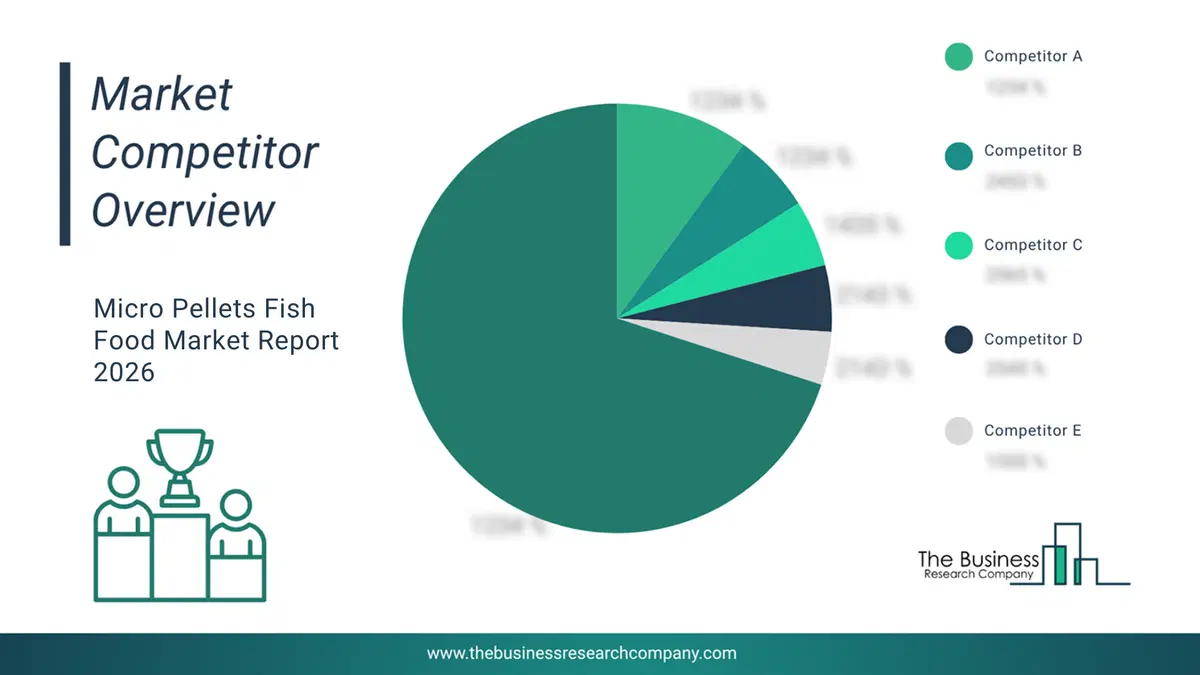
This chart is for illustrative purposes; the full report includes a detailed competitor analysis and comprehensive overview of the top 10 companies in the market.
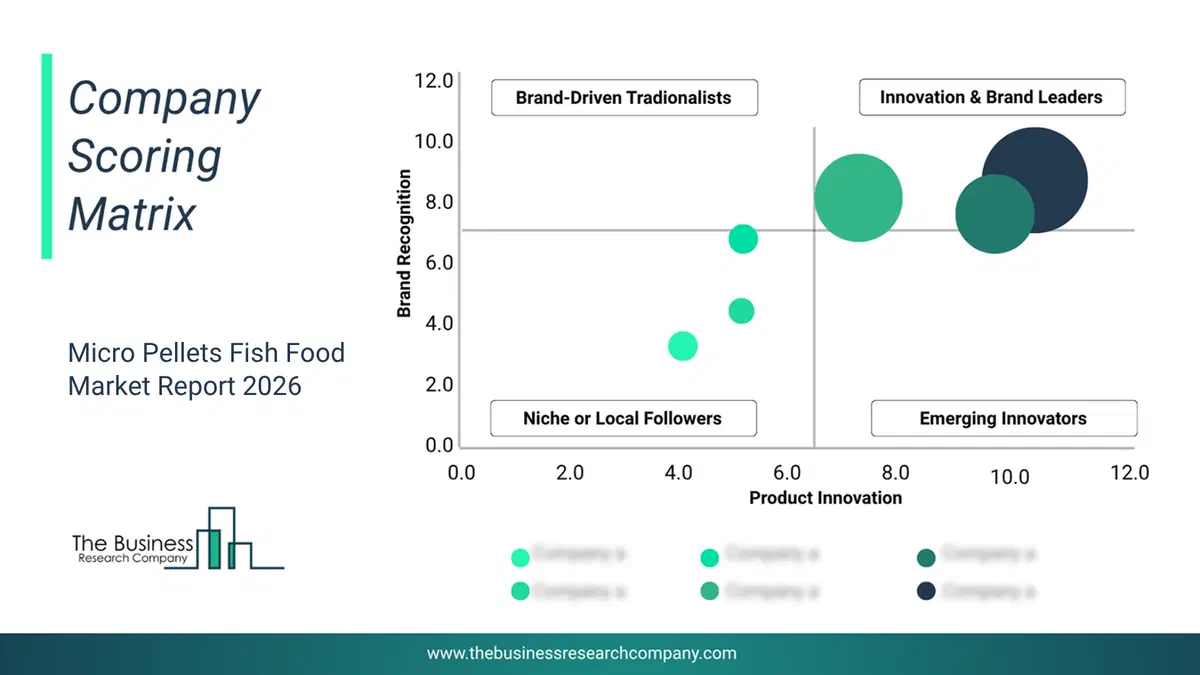
This chart maps companies by product innovation and brand strength, with bubble size indicating relative revenue, helping identify market leaders, challengers, and niche players. This is an illustrative chart; the full report provides a complete and accurate competitive analysis.
Global Micro Pellets Fish Food Market Trends and Insights
Major companies operating in the micro pellet fish food market are focusing on functional feed formulations, such as plant-derived complexes, to help fish farmers reduce disease-related losses and support fish health without relying solely on chemical treatments. Plant-derived complexes refer to concentrated blends of specially cultivated plant compounds added to feed formulations to support fish immune function and stress tolerance under the day-to-day pressures of farming. For instance, in October 2025, Skretting AS, a Norway-based animal nutrition company, launched Necto, a functional health diet built on proprietary PhytoComplexes that enhance fish resilience against stress, infection, and environmental pressures. The feed helps fish resist environmental and biological stressors, adapt to changing farm conditions while maintaining growth performance, and recover survival rates that independent studies linked to higher resilience across several fish species.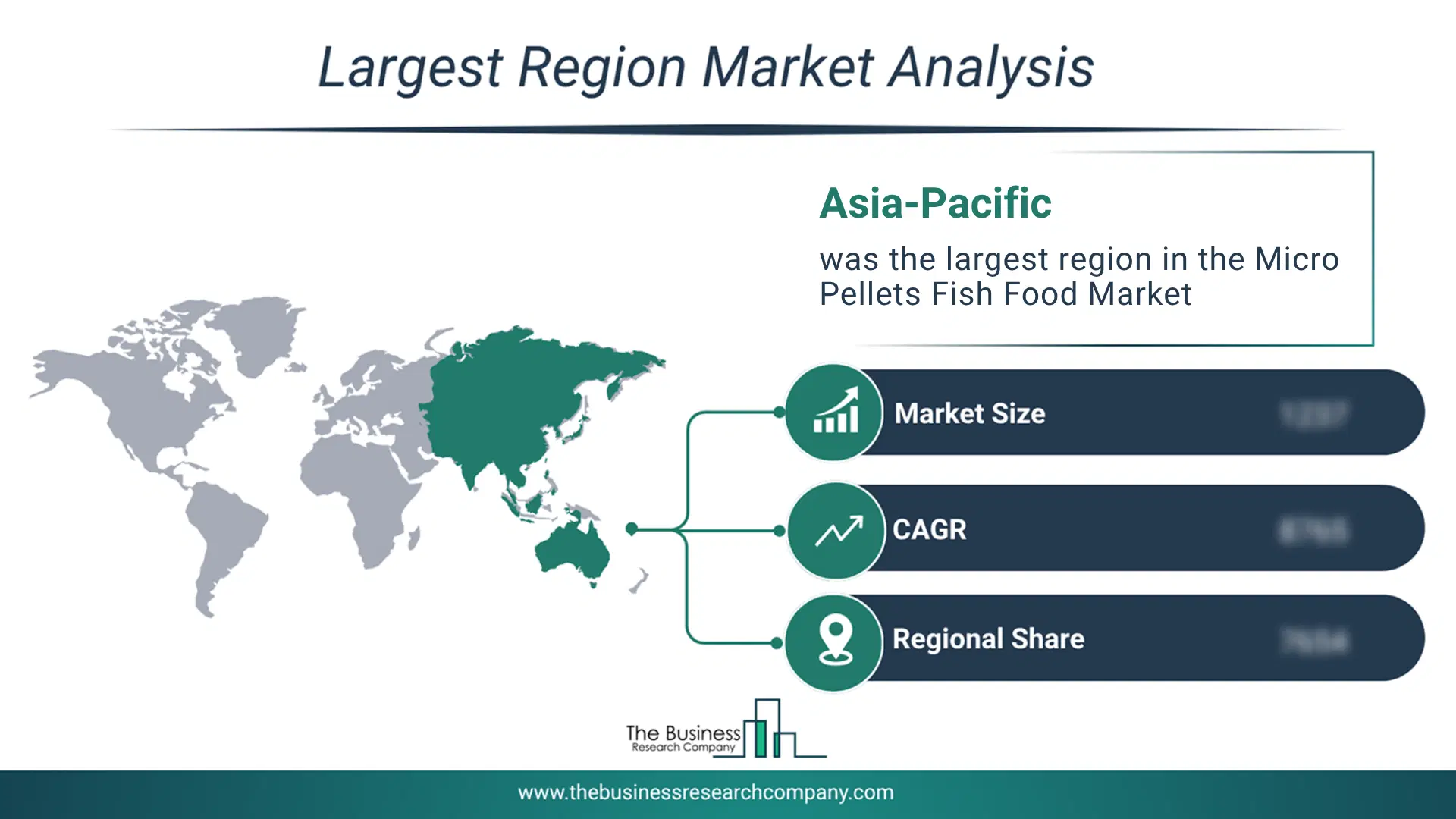
Regional Insights
Asia-Pacific was the largest region in the micro pellets fish food market in 2025. Asia-Pacific is expected to be the fastest-growing region in the forecast period. The regions covered in this market report are Asia-Pacific, South East Asia, Western Europe, Eastern Europe, North America, South America, Middle East, Africa. The countries covered in this market report are Australia, Brazil, China, France, Germany, India, Indonesia, Japan, Taiwan, Russia, South Korea, UK, USA, Canada, Italy, Spain.What Defines the Micro Pellets Fish Food Market?
The micro pellet fish food market consists of sales of starter micro pellets, nursery micro pellets, grower micro pellets, and high-protein micro pellets. Values in this market are ‘factory gate’ values, that is, the value of goods sold by the manufacturers or creators of the goods, whether to other entities (including downstream manufacturers, wholesalers, distributors, and retailers) or directly to end customers. The value of goods in this market includes related services sold by the creators of the goods.How is Market Value Defined and Measured?
The market value is defined as the revenues that enterprises gain from the sale of goods and/or services within the specified market and geography through sales, grants, or donations in terms of the currency (in USD unless otherwise specified). The revenues for a specified geography are consumption values that are revenues generated by organizations in the specified geography within the market, irrespective of where they are produced. It does not include revenues from resales along the supply chain, either further along the supply chain or as part of other products.
This chart presents market attractiveness based on a quantitative evaluation of growth, competition, strategic alignment, and risk, offering a clear view of opportunity areas for decision-making. This chart is for illustrative purposes; the full report contains the complete analysis.

This chart highlights the Total Addressable Market (TAM) by estimating the maximum revenue opportunity using an assumption-driven approach, supporting strategic planning and opportunity sizing across markets. The chart is illustrative; the full report provides a more comprehensive analysis.
What Key Data and Analysis Are Included in the Micro Pellets Fish Food Market Report 2026?
The micro pellets fish food market research report is one of a series of new reports from The Business Research Company that provides market statistics, including industry global market size, regional shares, competitors with the market share, detailed market segments, market trends and opportunities, and any further data you may need to thrive in the micro pellets fish food industry. The market research report delivers a complete perspective of everything you need, with an in-depth analysis of the current and future state of the industry.Micro Pellets Fish Food Market Report Forecast Analysis
| Report Attribute | Details |
|---|---|
| Market Size Value In 2026 | $1.37 billion |
| Revenue Forecast In 2030 | $1.89 billion |
| Growth Rate | CAGR of 8.2% from 2026 to 2030 |
| Base Year For Estimation | 2025 |
| Actual Estimates/Historical Data | 2020-2025 |
| Forecast Period | 2026 - 2030 |
| Market Representation | Revenue in USD Billion and CAGR from 2026 to 2030 |
| Segments Covered | Product Type, Fish Type, Distribution Channel, Application, End User |
| Regional Scope | Asia-Pacific, Western Europe, Eastern Europe, North America, South America, Middle East, Africa |
| Country Scope | The countries covered in the report are Australia, Brazil, China, France, Germany, India, Indonesia, Japan, Taiwan, Russia, South Korea, UK, USA, Canada, Italy, Spain. |
| Key Companies Profiled | Cargill Incorporated, Archer Daniels Midland Company, Marubeni Nisshin Feed Co. Ltd., Uni-President Enterprises Corporation, Charoen Pokphand Foods Public Company Limited, Tongwei Co. Ltd., PT Japfa Comfeed Indonesia Tbk, De Heus Animal Nutrition B.V., Skretting AS, Godrej Agrovet Limited, Ridley Corporation Limited, Purina Animal Nutrition LLC, Aller Aqua A/S, IFB Agro Industries Limited, Trouw Nutrition International B.V., Higashimaru Co. Ltd., IB Group, Thai Union Feedmill Public Company Limited, Zeigler Bros Inc., BioMar Group A/S, Growel Feeds Private Limited, Guangdong Yuehai Feed Group Co. Ltd., Dibaq Aquaculture S.L., UNO Feeds Private Limited |
| Customization Scope | Request for Customization |
| Pricing And Purchase Options | Explore Purchase Options |