
Microbial Agricultural Inoculants Market Report 2026
Global Outlook – By Type (Plant Growth-Promoting Microorganisms, Biocontrol Agents, Stimulants), By Source (Fungal Inoculants, Bacterial Inoculants), By Crop Type (Oilseeds And Pulses, Fruits And Vegetables, Cereals And Grains), By Application (Soil Inoculation, Seed Inoculation) – Market Size, Trends, Strategies, and Forecast to 2030
Microbial Agricultural Inoculants Market Overview
• Microbial Agricultural Inoculants market size has reached to $4.93 billion in 2025 • Expected to grow to $8.43 billion in 2030 at a compound annual growth rate (CAGR) of 11.2% • Growth Driver: Rising Popularity Of Organic Farming Propelling Growth In The Market Due To Natural Sustainable Solutions • Market Trend: Concentrated Biological Inoculants To Boost Soybean Productivity In Brazil • North America was the largest region in 2025.What Is Covered Under Microbial Agricultural Inoculants Market?
Microbial agricultural inoculants are formulations containing beneficial microorganisms, such as bacteria, fungi, or other microbes, that are applied to soil, seeds, or plant surfaces to improve plant growth, enhance nutrient availability, and promote soil health. These inoculants help in nitrogen fixation, phosphorus solubilization, disease suppression, and overall plant resilience. The main types of microbial agricultural inoculants are plant growth-promoting microorganisms, biocontrol agents, and stimulants. Plant growth-promoting microorganisms help improve plant growth by enhancing nutrient availability or protecting plants from diseases and naturally benefit the soil environment and promote overall plant health. The source includes fungal inoculants, bacterial inoculants for crop types such as oilseeds and pulses, fruits and vegetables, cereals and grains used in applications such as soil inoculation and seed inoculation.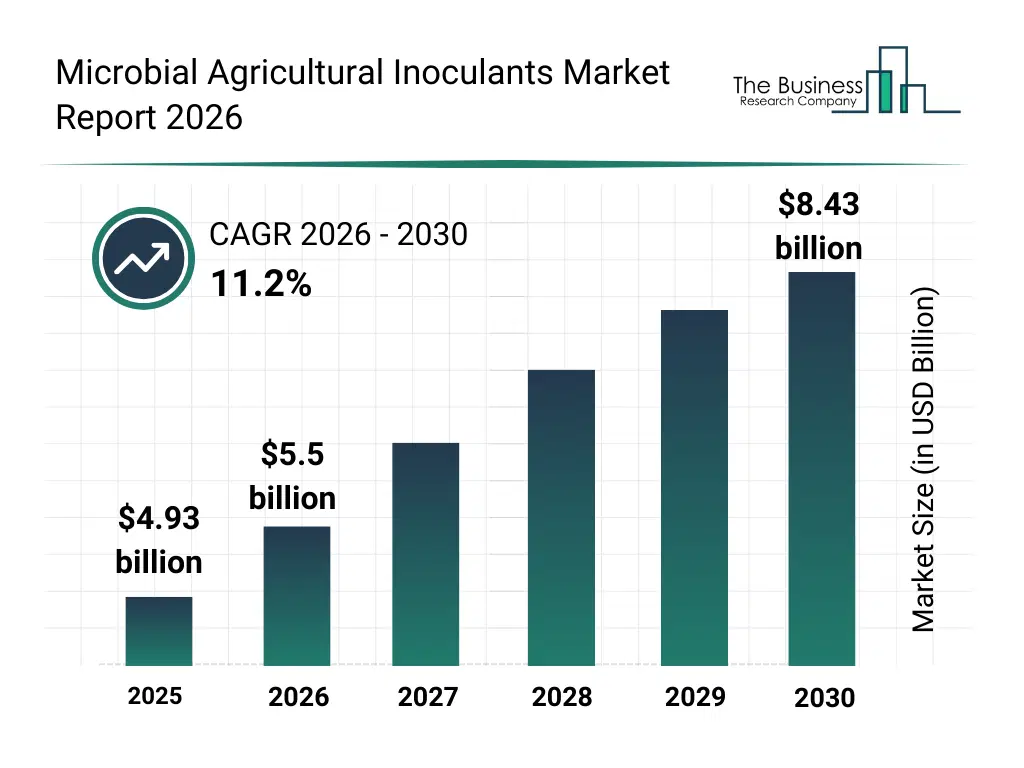
What Is The Microbial Agricultural Inoculants Market Size and Share 2026?
The microbial agricultural inoculants market size has grown rapidly in recent years. It will grow from $4.93 billion in 2025 to $5.5 billion in 2026 at a compound annual growth rate (CAGR) of 11.6%. The growth in the historic period can be attributed to growing awareness of soil degradation issues, rising demand for eco-friendly fertilizers, early adoption of inoculants in organic farming, increasing crop production pressures, expanding use of biological pest control.What Is The Microbial Agricultural Inoculants Market Growth Forecast?
The microbial agricultural inoculants market size is expected to see rapid growth in the next few years. It will grow to $8.43 billion in 2030 at a compound annual growth rate (CAGR) of 11.2%. The growth in the forecast period can be attributed to increasing shift toward regenerative agriculture, rising use of biofertilizers in mainstream farming, higher investment in microbial product r&d, expanding demand for residue-free crop inputs, growing adoption of microbial solutions in high-value crops. Major trends in the forecast period include increasing demand for natural growth-enhancing solutions, rising adoption of microbial inoculants in sustainable farming, expansion of microbial formulations for diverse crop types, growing use of soil-health-oriented agricultural inputs, greater focus on disease-resistant crop management practices.
Global Microbial Agricultural Inoculants Market Segmentation
1) By Type: Plant Growth-Promoting Microorganisms, Biocontrol Agents, Stimulants 2) By Source: Fungal Inoculants, Bacterial Inoculants 3) By Crop Type: Oilseeds And Pulses, Fruits And Vegetables, Cereals And Grains 4) By Application: Soil Inoculation, Seed Inoculation Subsegments: 1) By Plant Growth-Promoting Microorganisms: Nitrogen-Fixing Bacteria, Phosphate-Solubilizing Bacteria, Potassium-Solubilizing Bacteria, Mycorrhizal Fungi 2) By Biocontrol Agents: Bacterial Biocontrol Agents, Fungal Biocontrol Agents, Viral Biocontrol Agents 3) By Stimulants: Biofertilizers, Biostimulants, Soil ConditionersWhat Is Driver Of The Microbial Agricultural Inoculants Market?
The rising popularity of organic farming is expected to propel the growth of the microbial agricultural inoculants market going forward. Organic farming refers to a method of agriculture that avoids using synthetic pesticides, herbicides, fertilizers, and genetically modified organisms (GMOs). The popularity of organic farming is driven by increasing consumer demand for healthier, environmentally sustainable, and ethically produced food, alongside growing awareness of the adverse effects of conventional farming practices. The microbial agricultural inoculants support the popularity of organic farming by providing natural solutions to enhance soil fertility, promote plant growth, and protect crops from pests and diseases, reducing the need for synthetic fertilizers and pesticides while aligning with organic farming principles. For instance, according to IFOAM Organics Europe, a Europe-based nonprofit organization, organic farmland in the EU expanded to 17.7 million hectares in 2023, while the number of organic producers rose by 4% from 2022 to 434,577. Therefore, the rising popularity of organic farming is driving the growth of the microbial agricultural inoculants industry.Key Players In The Global Microbial Agricultural Inoculants Market
Major companies operating in the microbial agricultural inoculants market are BASF SE, Bayer AG, Nutrien Ltd., Syngenta International AG, Sumitomo Chemical Co. Ltd., Corteva Inc., UPL Ltd., FMC Corporation, Novozymes A/S, Kemin Industries Inc., Bioceres Crop Solutions Corp., BioWorks Inc., Chr. Hansen Holding A/S, Lallemand Plant Care, Valent BioSciences LLC, Verdesian Life Sciences, Pivot Bio, Rizobacter Argentina, Agrinos AS, Ginkgo Bioworks BioAg, Indigo Ag Inc., Marrone Bio Innovations, T.Stanes & Company, TerraMax Inc., Mycorrhizal Applications LLC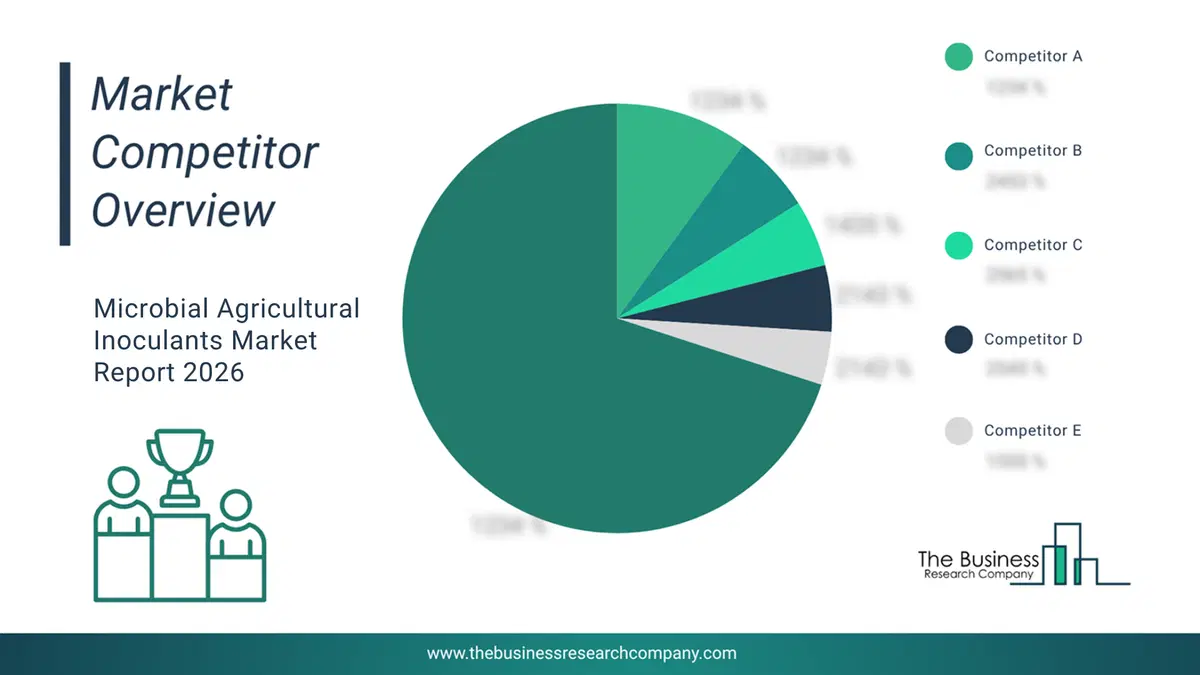
This chart is for illustrative purposes; the full report includes a detailed competitor analysis and comprehensive overview of the top 10 companies in the market.
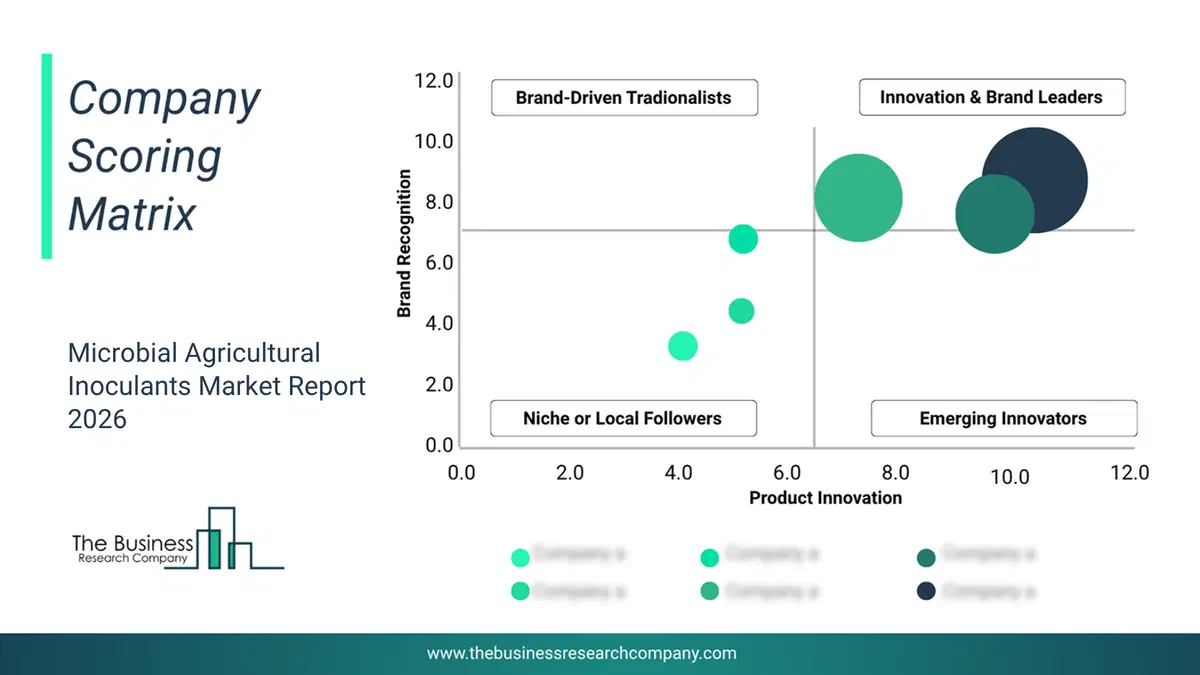
This chart maps companies by product innovation and brand strength, with bubble size indicating relative revenue, helping identify market leaders, challengers, and niche players. This is an illustrative chart; the full report provides a complete and accurate competitive analysis.
Global Microbial Agricultural Inoculants Market Trends and Insights
Major companies operating in the microbial agricultural inoculants market are focusing on developing novel solutions, such as a concentrated biological inoculant, to gain a competitive advantage. Concentrated biological inoculant aims to enhance soybean productivity by improving nitrogen fixation, which is crucial for plant growth. For instance, in July 2024, Novonesis, a Denmark-based biotechnology company, launched LeguMax Plus, a biological inoculant based on Bradyrhizobium japonicum, containing up to five billion CFU/ml. The product enhances biological nitrogen fixation (BNF) and offers a more concentrated solution, reducing transport and application volumes. It is stable for 12 months and requires a 60 ml/ha dosage per 50 kg of seeds. Compared to traditional products containing 1-3 billion CFU/ml, LeguMax Plus optimizes logistics and provides better germination when used for in-furrow inoculation. Care is needed to avoid mixing with chemicals to ensure the survival of beneficial bacteria. The product should be applied the same day it’s prepared for maximum efficiency.What Are Latest Mergers And Acquisitions In The Microbial Agricultural Inoculants Market? Corteva Acquires Symborg And Stoller To Advance Sustainable Farming Solutions
In March 2023, Corteva Inc., a US-based agricultural chemical and seed company, acquired Symborg and Stoller for an undisclosed amount. With these acquisitions, Corteva aims to accelerate growth within the rapidly expanding biologicals sector by integrating Symborg and Stoller's expertise with its innovation capabilities. Symborg is a Spain-based provider of microbiological technologies that offer agricultural inoculants. Stoller is a US-based biological provider offering microbial agricultural inoculants.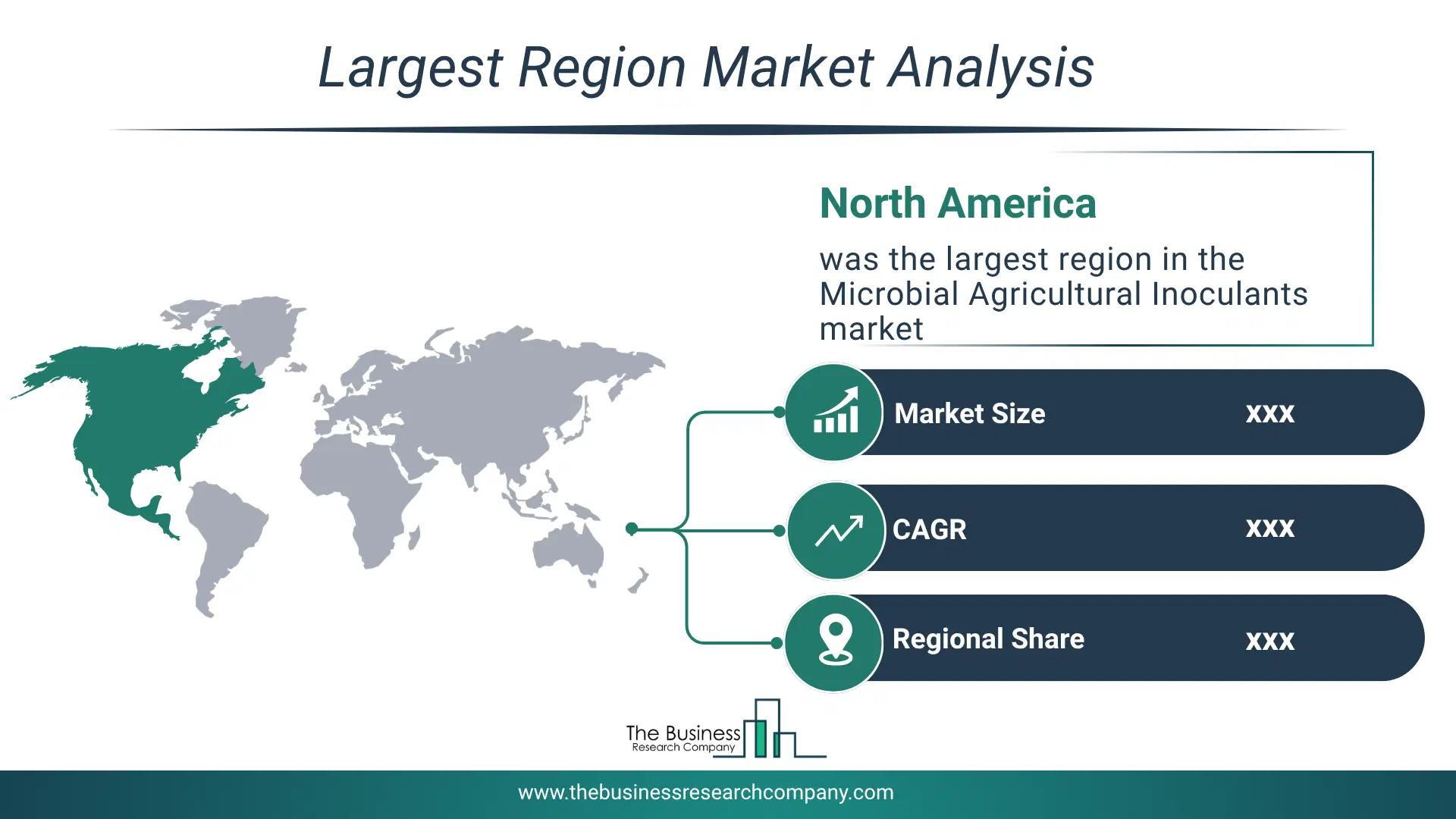
Regional Outlook
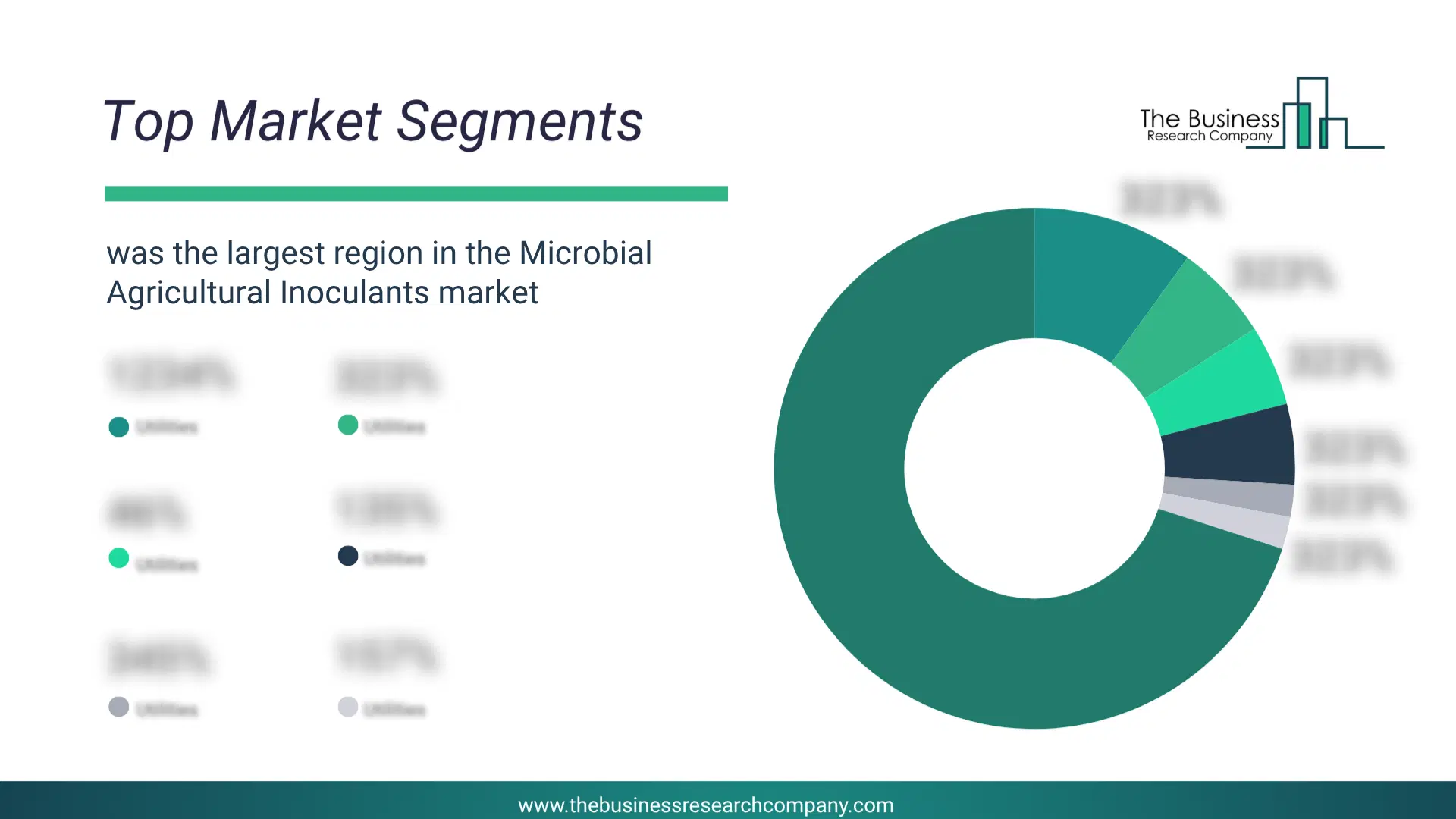
North America was the largest region in the microbial agricultural inoculants market in 2025. The regions covered in this market report are Asia-Pacific, South East Asia, Western Europe, Eastern Europe, North America, South America, Middle East, Africa. The countries covered in this market report are Australia, Brazil, China, France, Germany, India, Indonesia, Japan, Taiwan, Russia, South Korea, UK, USA, Canada, Italy, SpainWhat Defines the Microbial Agricultural Inoculants Market?
The microbial agricultural inoculants market consists of sales of symbiotic inoculants, phosphate-solubilizing microorganisms, soil conditioners, seed treatment products, and composting products. Values in this market are ‘factory gate’ values, that is, the value of goods sold by the manufacturers or creators of the goods, whether to other entities (including downstream manufacturers, wholesalers, distributors, and retailers) or directly to end customers. The value of goods in this market includes related services sold by the creators of the goodsHow is Market Value Defined and Measured?
The market value is defined as the revenues that enterprises gain from the sale of goods and/or services within the specified market and geography through sales, grants, or donations in terms of the currency (in USD unless otherwise specified). The revenues for a specified geography are consumption values that are revenues generated by organizations in the specified geography within the market, irrespective of where they are produced. It does not include revenues from resales along the supply chain, either further along the supply chain or as part of other products.
This chart presents market attractiveness based on a quantitative evaluation of growth, competition, strategic alignment, and risk, offering a clear view of opportunity areas for decision-making. This chart is for illustrative purposes; the full report contains the complete analysis.

This chart highlights the Total Addressable Market (TAM) by estimating the maximum revenue opportunity using an assumption-driven approach, supporting strategic planning and opportunity sizing across markets. The chart is illustrative; the full report provides a more comprehensive analysis.
What Key Data and Analysis Are Included in the Microbial Agricultural Inoculants Market Report 2026?
The microbial agricultural inoculants market research report is one of a series of new reports from The Business Research Company that provides market statistics, including industry global market size, regional shares, competitors with the market share, detailed market segments, market trends and opportunities, and any further data you may need to thrive in the microbial agricultural inoculants industry. The market research report delivers a complete perspective of everything you need, with an in-depth analysis of the current and future state of the industry.Microbial Agricultural Inoculants Market Report Forecast Analysis
| Report Attribute | Details |
|---|---|
| Market Size Value In 2026 | $5.5 billion |
| Revenue Forecast In 2030 | $8.43 billion |
| Growth Rate | CAGR of 11.2% from 2026 to 2030 |
| Base Year For Estimation | 2025 |
| Actual Estimates/Historical Data | 2020-2025 |
| Forecast Period | 2026 - 2030 |
| Market Representation | Revenue in USD Billion and CAGR from 2026 to 2030 |
| Segments Covered | Type, Source, Crop Type, Application |
| Regional Scope | Asia-Pacific, Western Europe, Eastern Europe, North America, South America, Middle East, Africa |
| Country Scope | The countries covered in the report are Australia, Brazil, China, France, Germany, India, Indonesia, Japan, Taiwan, Russia, South Korea, UK, USA, Canada, Italy, Spain |
| Key Companies Profiled | BASF SE, Bayer AG, Nutrien Ltd., Syngenta International AG, Sumitomo Chemical Co. Ltd., Corteva Inc., UPL Ltd., FMC Corporation, Novozymes A/S, Kemin Industries Inc., Bioceres Crop Solutions Corp., BioWorks Inc., Chr. Hansen Holding A/S, Lallemand Plant Care, Valent BioSciences LLC, Verdesian Life Sciences, Pivot Bio, Rizobacter Argentina, Agrinos AS, Ginkgo Bioworks BioAg, Indigo Ag Inc., Marrone Bio Innovations, T.Stanes & Company, TerraMax Inc., Mycorrhizal Applications LLC |
| Customization Scope | Request for Customization |
| Pricing And Purchase Options | Explore Purchase Options |