

Microbial Bio-Surfactants Market Report 2026
Global Outlook – By Ionic Character (Anionic Biosurfactants, Cationic Biosurfactants, Non Ionic Biosurfactants, Amphoteric Biosurfactants), By Product (Methyl Ethyl Sulfonates, Alkyl Polyglucosides, Sorbitan Esters, Sophorolipids, Rhamnolipids, Sucrose Esters, Lipopeptides), By Source (Plant Based, Microbial Based, Genetically Engineered Microbial Sources), By Applications (Household Detergents, Agricultural Chemicals, Industrial Cleaners, Food Processing, Oilfield Chemicals, Personal Care, Textiles) - Market Size, Trends, Strategies, and Forecast to 2030
Microbial Bio-Surfactants Market Overview
• Microbial Bio-Surfactants market size has reached to $0.86 billion in 2025 • Expected to grow to $1.71 billion in 2030 at a compound annual growth rate (CAGR) of 14.6% • Growth Driver: The Rise In Demand For Sustainable Products Driving The Growth Of The Market Due To Increasing Environmental Awareness And Consumer Preference For Eco-Friendly Alternatives • Market Trend: Innovative Waste-Based Solutions Drive Eco-Friendly Cleansing And Cleaning Products • North America was the largest region in 2025 and Asia-Pacific is the fastest growing region.What Is Covered Under Microbial Bio-Surfactants Market?
Microbial bio-surfactants are surface-active substances produced by microorganisms such as bacteria, fungi, and yeast. They reduce surface and interfacial tension between liquids, solids, and gases, making them useful in environmental, industrial, and medical applications. The main types of microbial biosurfactants are anionic biosurfactants, cationic biosurfactants, nonionic biosurfactants, and amphoteric biosurfactants. Anionic biosurfactants are surface-active compounds produced by microorganisms that carry a negative charge, enabling them to reduce surface and interfacial tension in aqueous solutions. Key product types in this category include methyl ethyl sulfonates, alkyl polyglucosides, sorbitan esters, sophorolipids, rhamnolipids, sucrose esters, and lipopeptides. These biosurfactants are derived from various sources, including plant-based, microbial-based, and animal-based origins. They are widely used in applications such as household detergents, agricultural chemicals, industrial cleaners, food processing, oilfield chemicals, personal care products, and textiles.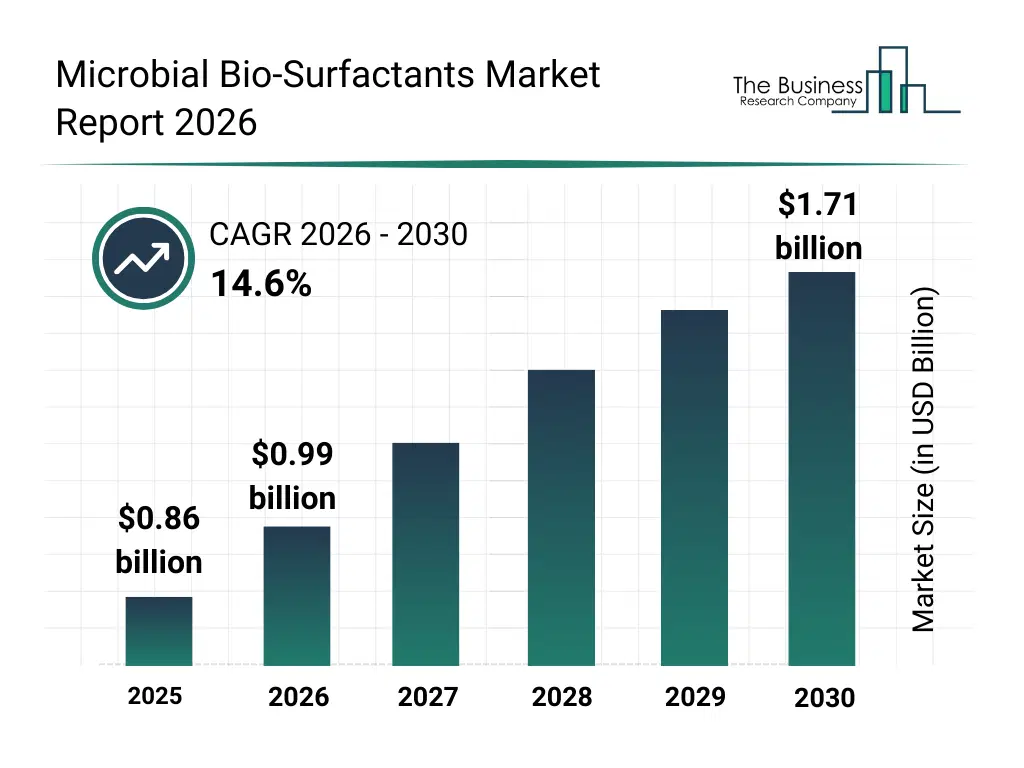
What Is The Microbial Bio-Surfactants Market Size and Share 2026?
The microbial bio-surfactants market size has grown rapidly in recent years. It will grow from $0.86 billion in 2025 to $0.99 billion in 2026 at a compound annual growth rate (CAGR) of 14.9%. The growth in the historic period can be attributed to increasing environmental regulations on synthetic surfactants, early adoption in oilfield and remediation applications, advancements in microbial fermentation, rising industrial cleaning demand, growing research in green chemistry.What Is The Microbial Bio-Surfactants Market Growth Forecast?
The microbial bio-surfactants market size is expected to see rapid growth in the next few years. It will grow to $1.71 billion in 2030 at a compound annual growth rate (CAGR) of 14.6%. The growth in the forecast period can be attributed to increasing demand for sustainable chemicals, expansion of bio-based product portfolios, rising investments in industrial biotechnology, growing adoption in personal care and food processing, increasing focus on circular economy practices. Major trends in the forecast period include increasing adoption of bio-based surface active agents, rising demand for eco-friendly formulations, growing use in industrial and agricultural applications, expansion of fermentation-based production processes, enhanced focus on biodegradability.
Global Microbial Bio-Surfactants Market Segmentation
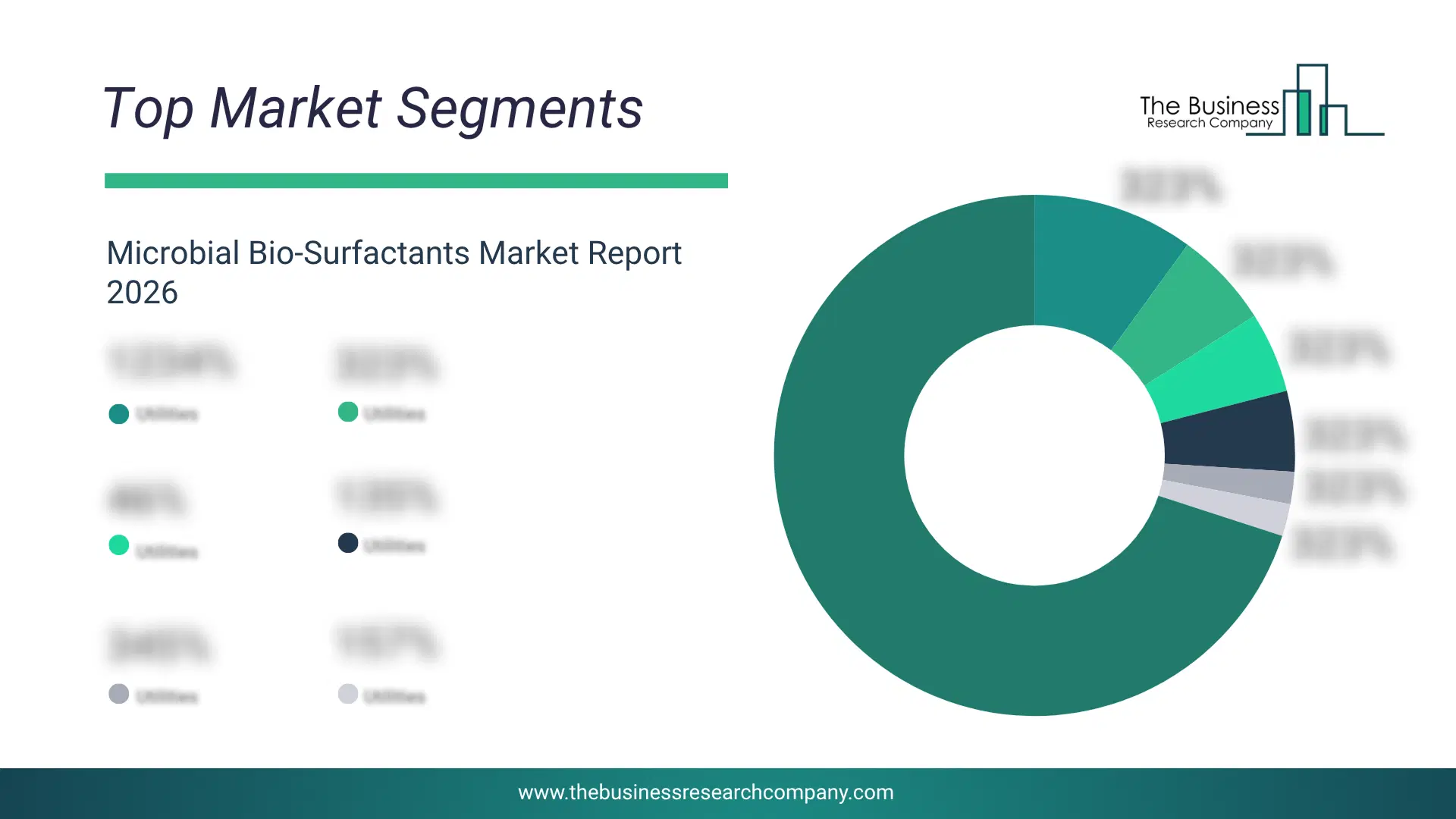
1) By Ionic Character: Anionic Biosurfactants, Cationic Biosurfactants, Non Ionic Biosurfactants, Amphoteric Biosurfactants 2) By Product: Methyl Ethyl Sulfonates, Alkyl Polyglucosides, Sorbitan Esters, Sophorolipids, Rhamnolipids, Sucrose Esters, Lipopeptides 3) By Source: Plant Based, Microbial Based, Genetically Engineered Microbial Sources 4) By Applications: Household Detergents, Agricultural Chemicals, Industrial Cleaners, Food Processing, Oilfield Chemicals, Personal Care, Textiles Subsegments: 1) By Anionic Biosurfactants: Surfactin, Lichenysin, Fatty Acid Salts 2) By Cationic Biosurfactants: Amino Acid-Based Biosurfactants, Peptide-Lipid Conjugates 3) By Non-Ionic Biosurfactants: Trehalose Lipids, Mannosylerythritol Lipids, Polyol Lipids 4) By Amphoteric Biosurfactants: Zwitterionic Glycolipids, Zwitterionic LipopeptidesWhat Is The Driver Of The Microbial Bio-Surfactants Market?
The growing demand for sustainable products is expected to propel the growth of the microbial biosurfactants market going forward. Sustainable products are goods designed, produced, and used in ways that minimize environmental impact, conserve resources, and support social and economic well-being throughout their lifecycle. The growing demand for sustainable products is primarily driven by increasing environmental awareness, as consumers become more conscious of the ecological impact of their purchases and seek alternatives that minimize harm to the planet. Microbial biosurfactants promote sustainable products by offering eco-friendly, biodegradable alternatives that reduce reliance on synthetic chemicals and minimize environmental impact. For instance, In April 2024, according to the National Association of Convenience Stores, a US-based trade association representing the convenience and fuel retailing industry, the 2024 survey results indicate that 80% of consumers are concerned about the environmental impact of their purchases, an increase from 68% in 2023 and 66% in 2022. Therefore, the growing demand for sustainable products is driving the microbial biosurfactants market.Key Players In The Global Microbial Bio-Surfactants Market
Major companies operating in the microbial bio-surfactants market are Kaneka Corporation, BASF SE, Evonik Industries AG, Solvay S.A., Givaudan SA, Clariant International AG, Stepan Company, Croda International Plc, AmphiStar BV, Jeneil Biotech Inc., BiOWiSH Technologies Inc., Geocon Products Inc., Holiferm Limited, AGAE Technologies LLC, Biotensidon GmbH, GlycoSurf Inc., Tensiogreen LLC, Locus Performance Ingredients LLC, Toyobo Corporation Ltd., Shaanxi Deguan Biotechnology Co. Ltd.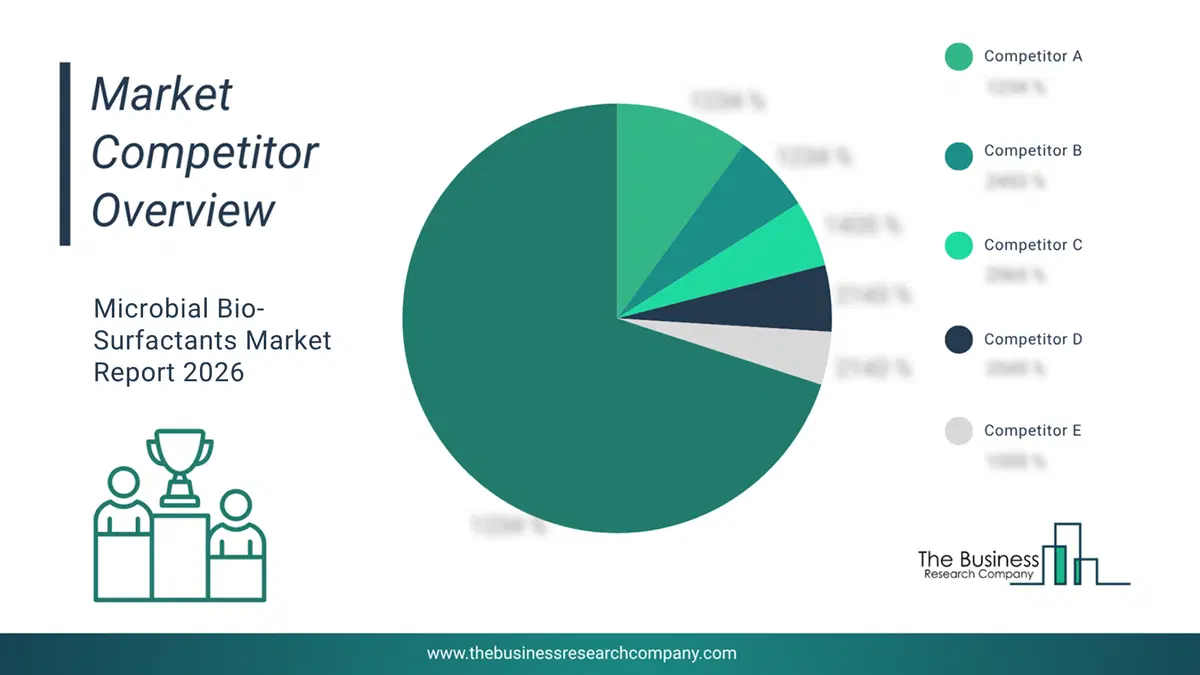
This chart is for illustrative purposes; the full report includes a detailed competitor analysis and comprehensive overview of the top 10 companies in the market.
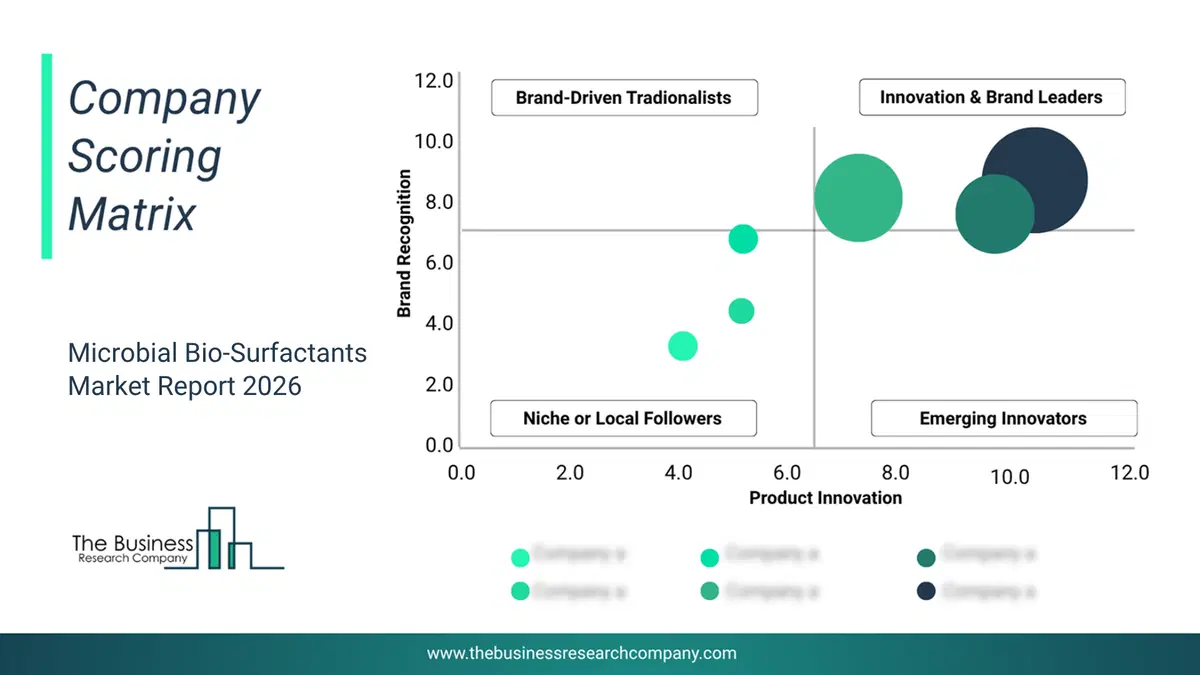
This chart maps companies by product innovation and brand strength, with bubble size indicating relative revenue, helping identify market leaders, challengers, and niche players. This is an illustrative chart; the full report provides a complete and accurate competitive analysis.
Global Microbial Bio-Surfactants Market Trends and Insights
Major companies operating in the microbial biosurfactants market are focusing on developing sustainable solutions such as waste-based biosurfactants to reduce environmental impact and lower production costs. Waste-based biosurfactants refer to surface-active compounds produced by microbes using waste materials as raw inputs, promoting eco-friendly and cost-effective production. For instance, in October 2024, AmphiStar BV, a Belgium-based biotechnology company, introduced two new waste-based biosurfactants, AmphiCare and AmphiClean, aimed at the personal care and home care. AmphiCare provides high-performance, gentle, and skin-friendly cleansing for personal care products, made entirely from upcycled bio-waste. It is free from sulfates, palm oil, and fossil-based ingredients, significantly reducing its environmental impact. AmphiClean offers powerful, biodegradable cleaning solutions for home care, utilizing only food and agricultural waste streams. It effectively removes grease and dirt while remaining palm-free, fossil-free, and safe for ecosystems.What Are Latest Mergers And Acquisitions In The Microbial Bio-Surfactants Market?
In May 2025, AmphiStar NV, a Belgium-based biotechnology company, partnered with Kensing LLC to introduce upcycled biosurfactants to the North American personal care market. With this partnership, AmphiStar NV and Kensing LLC aim to deliver sustainable, next-generation biosurfactant solutions by combining AmphiStar’s proprietary upcycling and fermentation technologies with Kensing’s strong market presence, formulation capabilities, and distribution network. Kensing LLC is a US-based specialty ingredient manufacturer that focuses on plant-based and environmentally responsible ingredients for personal care and consumer applications.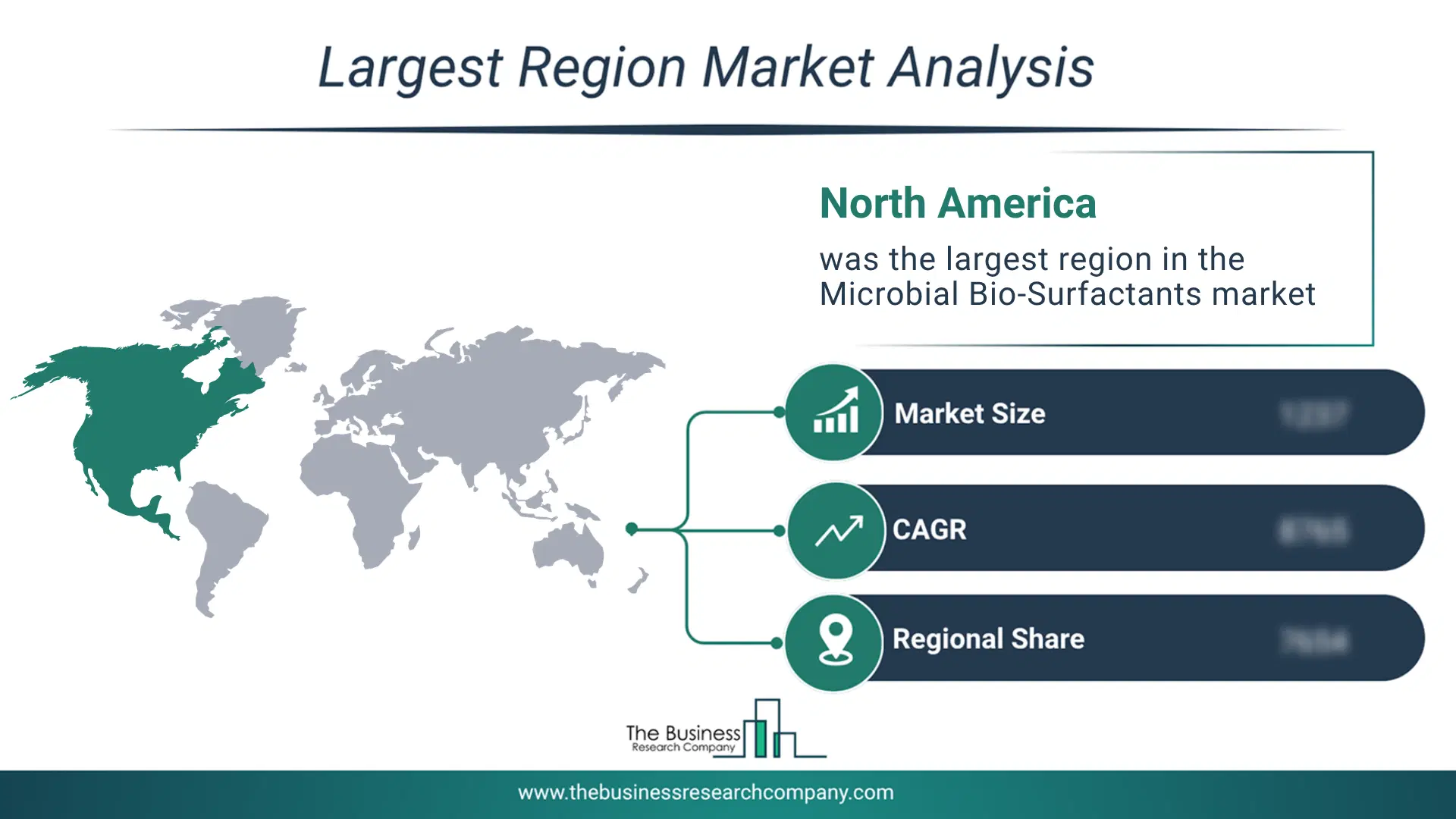
Regional Outlook
North America was the largest region in the microbial bio-surfactants market in 2025. Asia-Pacific is expected to be the fastest-growing region in the forecast period. The regions covered in this market report are Asia-Pacific, South East Asia, Western Europe, Eastern Europe, North America, South America, Middle East, Africa. The countries covered in this market report are Australia, Brazil, China, France, Germany, India, Indonesia, Japan, Taiwan, Russia, South Korea, UK, USA, Canada, Italy, Spain.What Defines the Microbial Bio-Surfactants Market?
The microbial biosurfactants market consists of sales of trehalose lipids, mannosylerythritol lipids, glycolipids, phospholipids, and fatty acids. Values in this market are ‘factory gate’ values, that is, the value of goods sold by the manufacturers or creators of the goods, whether to other entities (including downstream manufacturers, wholesalers, distributors, and retailers) or directly to end customers. The value of goods in this market includes related services sold by the creators of the goods.How is Market Value Defined and Measured?
The market value is defined as the revenues that enterprises gain from the sale of goods and/or services within the specified market and geography through sales, grants, or donations in terms of the currency (in USD unless otherwise specified). The revenues for a specified geography are consumption values that are revenues generated by organizations in the specified geography within the market, irrespective of where they are produced. It does not include revenues from resales along the supply chain, either further along the supply chain or as part of other products.
This chart presents market attractiveness based on a quantitative evaluation of growth, competition, strategic alignment, and risk, offering a clear view of opportunity areas for decision-making. This chart is for illustrative purposes; the full report contains the complete analysis.

This chart highlights the Total Addressable Market (TAM) by estimating the maximum revenue opportunity using an assumption-driven approach, supporting strategic planning and opportunity sizing across markets. The chart is illustrative; the full report provides a more comprehensive analysis.
What Key Data and Analysis Are Included in the Microbial Bio-Surfactants Market Report 2026?
The microbial bio-surfactants market research report is one of a series of new reports from The Business Research Company that provides market statistics, including industry global market size, regional shares, competitors with the market share, detailed market segments, market trends and opportunities, and any further data you may need to thrive in the microbial bio-surfactants industry. The market research report delivers a complete perspective of everything you need, with an in-depth analysis of the current and future state of the industry.Microbial Bio-Surfactants Market Report Forecast Analysis
| Report Attribute | Details |
|---|---|
| Market Size Value In 2026 | $0.99 billion |
| Revenue Forecast In 2030 | $1.71 billion |
| Growth Rate | CAGR of 14.6% from 2026 to 2030 |
| Base Year For Estimation | 2025 |
| Actual Estimates/Historical Data | 2020-2025 |
| Forecast Period | 2026 - 2030 |
| Market Representation | Revenue in USD Billion and CAGR from 2026 to 2030 |
| Segments Covered | Ionic Character, Product, Source, Applications |
| Regional Scope | Asia-Pacific, Western Europe, Eastern Europe, North America, South America, Middle East, Africa |
| Country Scope | The countries covered in the report are Australia, Brazil, China, France, Germany, India, Indonesia, Japan, Taiwan, Russia, South Korea, UK, USA, Canada, Italy, Spain |
| Key Companies Profiled | Kaneka Corporation, BASF SE, Evonik Industries AG, Solvay S.A., Givaudan SA, Clariant International AG, Stepan Company, Croda International Plc, AmphiStar BV, Jeneil Biotech Inc., BiOWiSH Technologies Inc., Geocon Products Inc., Holiferm Limited, AGAE Technologies LLC, Biotensidon GmbH, GlycoSurf Inc., Tensiogreen LLC, Locus Performance Ingredients LLC, Toyobo Corporation Ltd., Shaanxi Deguan Biotechnology Co. Ltd. |
| Customization Scope | Request for Customization |
| Pricing And Purchase Options | Explore Purchase Options |