
Microbial Identification Methods Market Report 2026
Global Outlook – By Method (Genotypic, Phenotypic, Proteotypic), By Type (Bacterial Identification System, Microbial Enumeration System, Bacterial Resistance Identification Systems, Microbiology Analyzer, Other Types), By End User (Pharmaceutical And Biotechnology Companies, Hospitals And Diagnostic Laboratories, Food Testing Laboratories, Other End-Users) - Market Size, Trends, Strategies, and Forecast to 2030
Microbial Identification Methods Market Overview
• Microbial Identification Methods market size has reached to $5.49 billion in 2025 • Expected to grow to $7.67 billion in 2030 at a compound annual growth rate (CAGR) of 6.8% • Growth Driver: The Role Of Increasing Infectious Diseases Is Fueling The Microbial Identification Methods Market • Market Trend: Bruker Corporation Launches Advanced MALDI Biotyper IVD Solutions For Enhanced Mycobacteria And Fungi Identification • North America was the largest region in 2025.What Is Covered Under Microbial Identification Methods Market?
Microbial identification methods are systematic approaches and laboratory techniques employed to determine the identity and characteristics of microorganisms by analyzing their phenotypic (observable traits) and genotypic (genetic) properties. These methods are crucial for diagnosing infectious diseases, monitoring food and water safety, studying microbial ecology, and developing effective treatments or preventive measures against pathogenic microorganisms. The main methods of microbial identification methods market are genotypic, phenotypic, and proteotypic. Genotypic methods involve the identification of microorganisms based on their genetic makeup, such as DNA or RNA sequences. The various types include bacterial identification systems, microbial enumeration systems, bacterial resistance identification systems, microbiology analyzers, and other types used by various end users such as pharmaceutical and biotechnology companies, hospitals and diagnostic laboratories, food testing laboratories, and other end-users.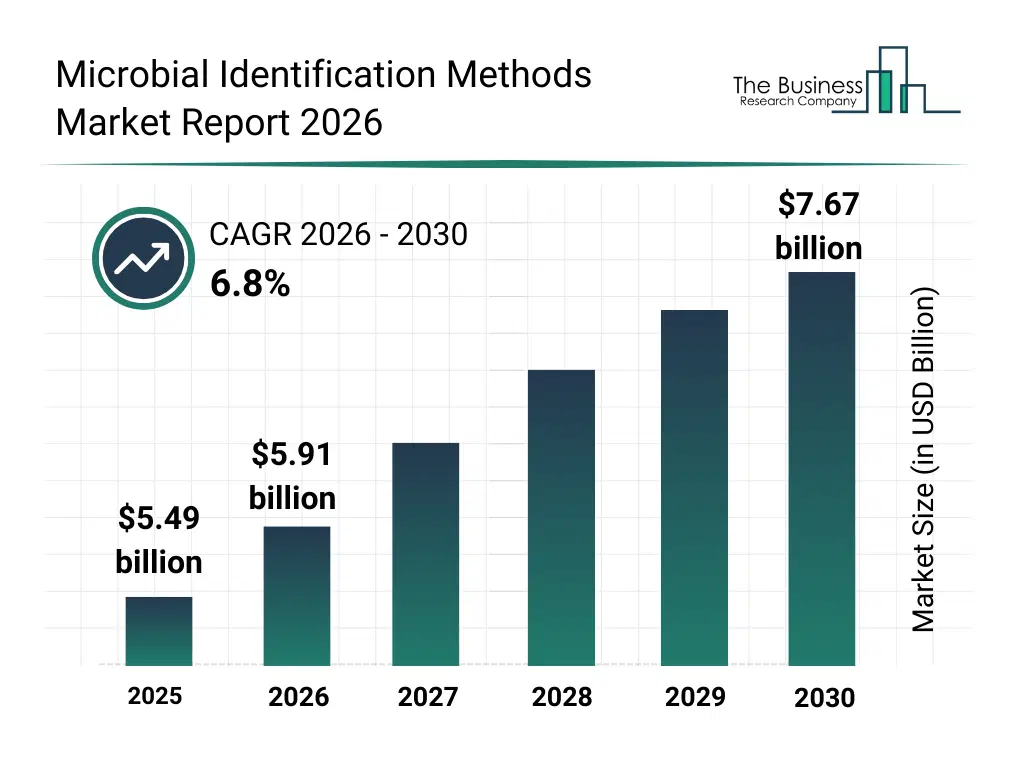
What Is The Microbial Identification Methods Market Size and Share 2026?
The microbial identification methods market size has grown strongly in recent years. It will grow from $5.49 billion in 2025 to $5.91 billion in 2026 at a compound annual growth rate (CAGR) of 7.7%. The growth in the historic period can be attributed to increasing infectious disease outbreaks, reliance on culture-based identification, growth in food safety testing, regulatory focus on contamination control, expansion of clinical diagnostic microbiology.What Is The Microbial Identification Methods Market Growth Forecast?
The microbial identification methods market size is expected to see strong growth in the next few years. It will grow to $7.67 billion in 2030 at a compound annual growth rate (CAGR) of 6.8%. The growth in the forecast period can be attributed to rising adoption of genomic sequencing tests, demand for automation in identification workflows, growth of rapid microbial testing technologies, increasing integration of digital lab infrastructure, rising investments in precision microbiology. Major trends in the forecast period include genomic sequencing integration in microbial identification, cloud-based microbial data analytics, AI-assisted microbial classification, automated identification platforms in industrial labs, iot-enabled contamination monitoring solutions.
Global Microbial Identification Methods Market Segmentation
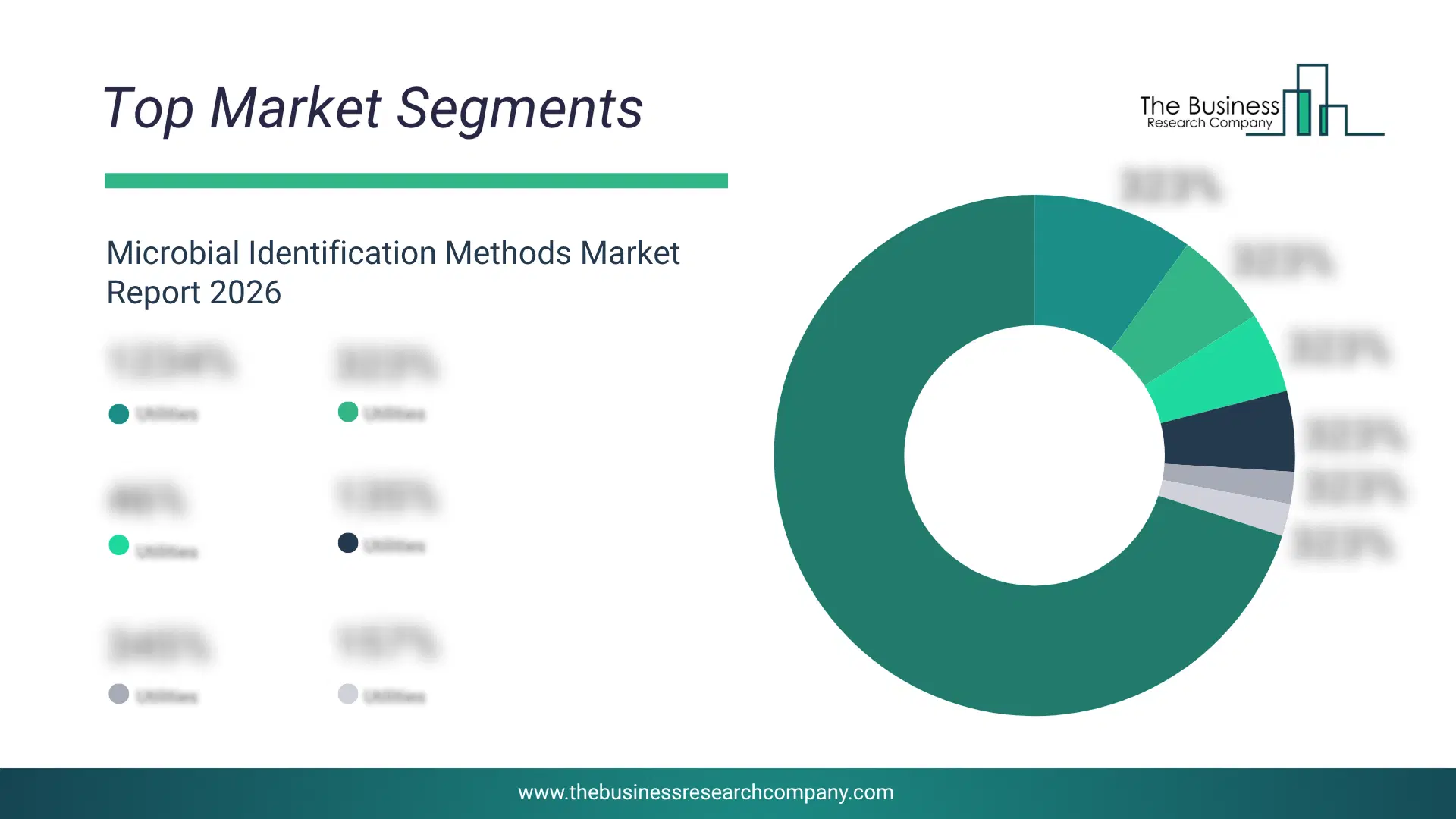
1) By Method: Genotypic, Phenotypic, Proteotypic 2) By Type: Bacterial Identification System, Microbial Enumeration System, Bacterial Resistance Identification Systems, Microbiology Analyzer, Other Types 3) By End User: Pharmaceutical And Biotechnology Companies, Hospitals And Diagnostic Laboratories, Food Testing Laboratories, Other End-Users Subsegments: 1) By Genotypic: Polymerase Chain Reaction (PCR), 16S rRNA Sequencing, DNA Microarrays, Next-Generation Sequencing (NGS), Whole Genome Sequencing (WGS), Ribotyping, Fluorescence In Situ Hybridization (FISH), Random Amplified Polymorphic DNA (RAPD) Analysis 2) By Phenotypic: Culture-Based Methods, Biochemical Testing, Microscopic Examination, Gram Staining, Antibiotic Susceptibility Testing (AST), Growth Pattern Identification, Colony Morphology Characterization 3) By Proteotypic: Mass Spectrometry (MALDI-TOF MS), Western Blotting, Protein Profiling, Immunoassays (ELISA), Two-Dimensional Gel ElectrophoresisWhat Is The Driver Of The Microbial Identification Methods Market?
The increasing prevalence of infectious diseases is expected to propel the growth of the microbial identification methods market going forward. Infectious diseases are illnesses caused by harmful agents (pathogens) entering the body, such as viruses, bacteria, fungi, and parasites. The major infectious diseases are HIV/AIDS (human immunodeficiency virus/acquired immunodeficiency syndrome), tuberculosis, malaria, and more. The increasing prevalence of infectious diseases can be attributed to antimicrobial resistance, climate change, and population growth. Microbial identification methods are crucial for diagnosing, treating, and preventing infectious diseases by providing detailed information about the pathogens causing an infection, enabling healthcare professionals to make informed decisions regarding patient care. For instance, in January 2023, according to the report published by the Government of Canada, a Canada-based federal authority, there were 135 rabies samples submitted in October 2022 and 159 rabies samples submitted in November 2022. Therefore, the increasing prevalence of infectious diseases drives the growth of the microbial identification methods industry.Key Players In The Global Microbial Identification Methods Market
Major companies operating in the microbial identification methods market are Merck KGaA, Thermo Fisher Scientific Inc., Abbott Laboratories, Becton Dickinson and Company, GE Healthcare, Avantor Inc., Eurofins Scientific SE, Lonza Group AG, Sartorius AG, Charles River Laboratories International Inc., bioMerieux SA, Shimadzu Corporation, Waters Corporation, Bio-Rad Laboratories Inc., Bruker Corporation, Qiagen N.V., Beckman Coulter Inc., HiMedia Laboratories, Hardy Diagnostics, LuminUltra Technologies Ltd., Biolog Inc.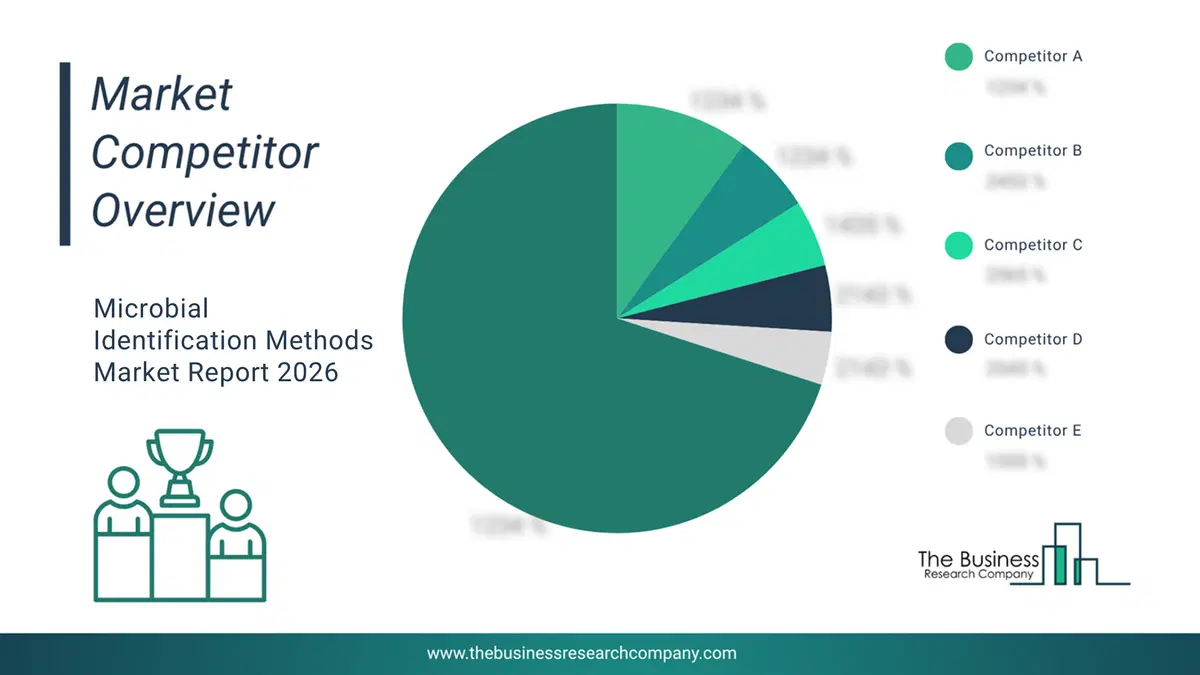
This chart is for illustrative purposes; the full report includes a detailed competitor analysis and comprehensive overview of the top 10 companies in the market.
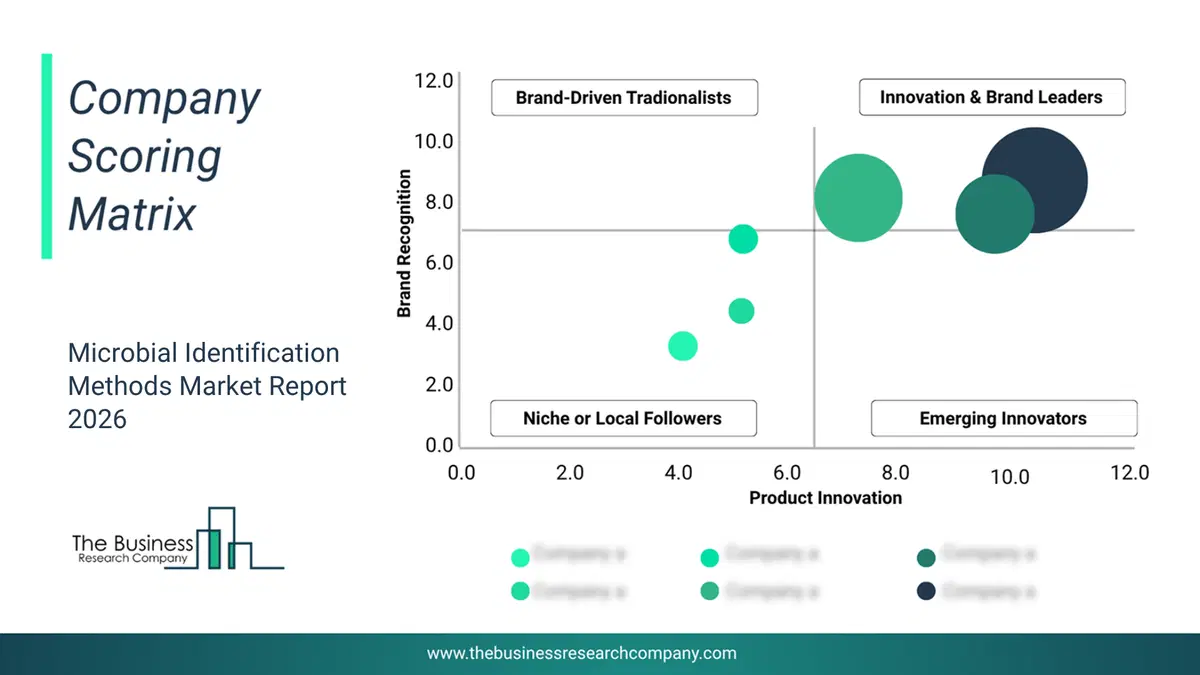
This chart maps companies by product innovation and brand strength, with bubble size indicating relative revenue, helping identify market leaders, challengers, and niche players. This is an illustrative chart; the full report provides a complete and accurate competitive analysis.
Global Microbial Identification Methods Market Trends and Insights
Major companies operating in the microbial identification methods market focus on developing innovative solutions, such as mycobacteria and fungi IVD solutions, to strengthen their position in the market. Mycobacteria and fungi in vitro diagnostic (IVD) solutions refer to a range of products and technologies designed to detect, identify, and characterize mycobacterial and fungal pathogens in clinical specimens. For instance, in April 2023, Bruker Corporation, a US-based manufacturer of scientific instruments for molecular and materials research, launched MALDI Biotyper IVD software, a new mycobacteria and fungi IVD solution. The unique features include enhanced accuracy and speed in microbial identification, leveraging MALDI-TOF (matrix-assisted laser desorption/ionization-time of flight) mass spectrometry technology. This platform provides rapid identification of mycobacteria and fungi from cultured samples within minutes, significantly reducing the time required compared to traditional methods. The new solutions also offer expanded databases and robust software algorithms for improved specificity and sensitivity, enabling precise identification of a broader range of mycobacterial and fungal species.What Are Latest Mergers And Acquisitions In The Microbial Identification Methods Market?
In January 2023, Biolog Inc., a US-based biotechnology company, acquired MIDI Labs and MIDI, Inc. for an undisclosed amount. With this acquisition, Biolog aims to enhance its microbial identification and characterization capabilities by integrating MIDI’s advanced fatty acid methyl ester (FAME) analysis technology with its existing phenotype-based systems, creating a more comprehensive suite of diagnostic tools. MIDI Labs is a US-based innovator in microbial identification that offers contract laboratory services for microbial identification and enumeration.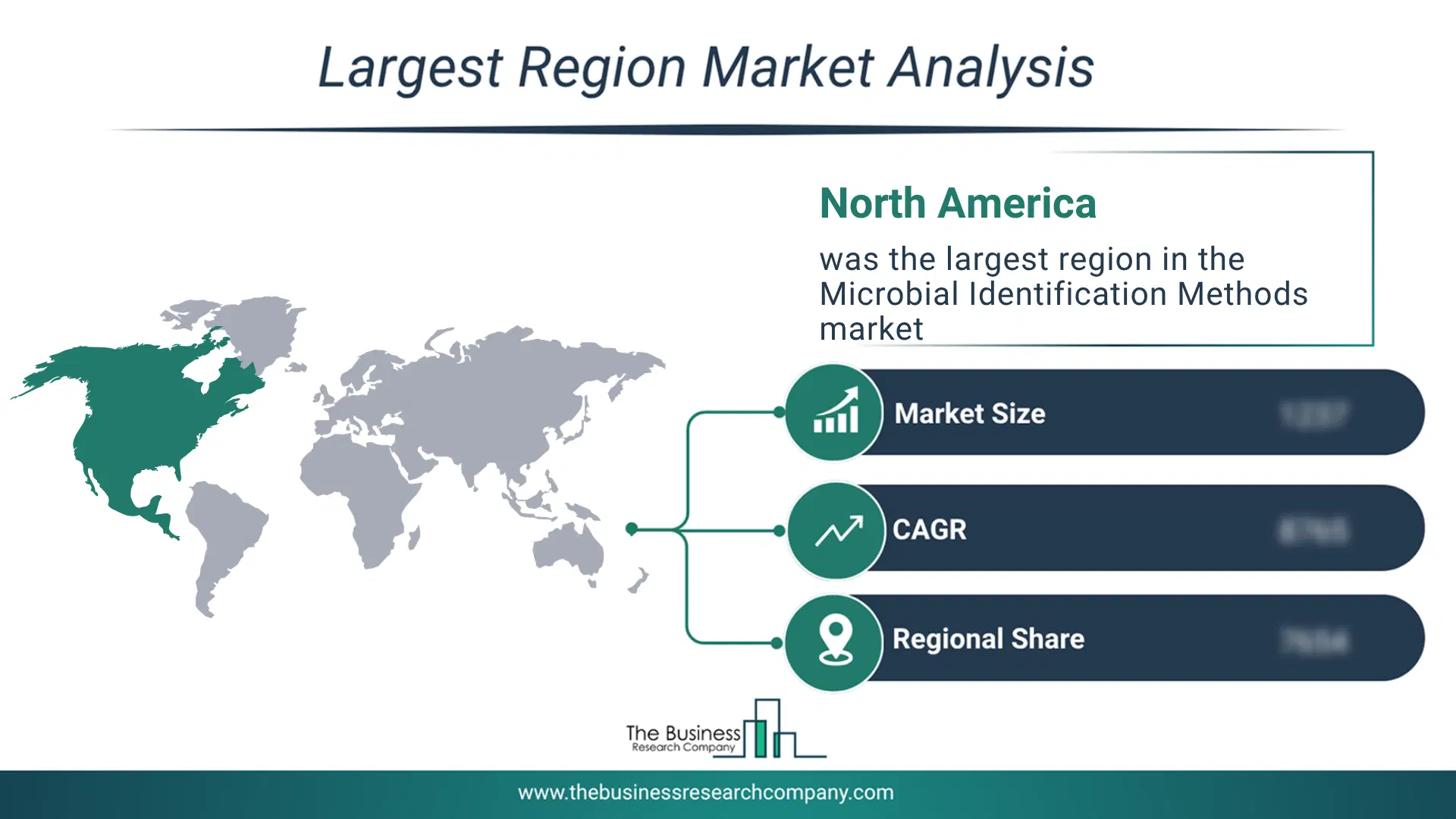
Regional Outlook
North America was the largest region in the microbial identification methods market in 2025. The regions covered in this market report are Asia-Pacific, South East Asia, Western Europe, Eastern Europe, North America, South America, Middle East, Africa. The countries covered in this market report are Australia, Brazil, China, France, Germany, India, Indonesia, Japan, Taiwan, Russia, South Korea, UK, USA, Canada, Italy, Spain.What Defines the Microbial Identification Methods Market?
The microbial identification methods market consists of revenues earned by entities by providing services such as fatty acid analysis, biochemical testing, antimicrobial susceptibility testing (AST), and mass spectrometry (MS). The market value includes the value of related goods sold by the service provider or included within the service offering. The microbial identification method market also includes sales of microbial identification systems, mass spectrometry instruments, sequencing platforms, culture media and kits, and antimicrobial susceptibility testing (AST) systems. Values in this market are ‘factory gate’ values, that is the value of goods sold by the manufacturers or creators of the goods, whether to other entities (including downstream manufacturers, wholesalers, distributors and retailers) or directly to end customers. The value of goods in this market includes related services sold by the creators of the goods.How is Market Value Defined and Measured?
The market value is defined as the revenues that enterprises gain from the sale of goods and/or services within the specified market and geography through sales, grants, or donations in terms of the currency (in USD unless otherwise specified). The revenues for a specified geography are consumption values that are revenues generated by organizations in the specified geography within the market, irrespective of where they are produced. It does not include revenues from resales along the supply chain, either further along the supply chain or as part of other products.
This chart presents market attractiveness based on a quantitative evaluation of growth, competition, strategic alignment, and risk, offering a clear view of opportunity areas for decision-making. This chart is for illustrative purposes; the full report contains the complete analysis.

This chart highlights the Total Addressable Market (TAM) by estimating the maximum revenue opportunity using an assumption-driven approach, supporting strategic planning and opportunity sizing across markets. The chart is illustrative; the full report provides a more comprehensive analysis.
What Key Data and Analysis Are Included in the Microbial Identification Methods Market Report 2026?
The microbial identification methods market research report is one of a series of new reports from The Business Research Company that provides market statistics, including industry global market size, regional shares, competitors with the market share, detailed market segments, market trends and opportunities, and any further data you may need to thrive in the microbial identification methods industry. The market research report delivers a complete perspective of everything you need, with an in-depth analysis of the current and future state of the industry.Microbial Identification Methods Market Report Forecast Analysis
| Report Attribute | Details |
|---|---|
| Market Size Value In 2026 | $5.91 billion |
| Revenue Forecast In 2030 | $7.67 billion |
| Growth Rate | CAGR of 6.8% from 2026 to 2030 |
| Base Year For Estimation | 2025 |
| Actual Estimates/Historical Data | 2020-2025 |
| Forecast Period | 2026 - 2030 |
| Market Representation | Revenue in USD Billion and CAGR from 2026 to 2030 |
| Segments Covered | Method, Type, End User |
| Regional Scope | Asia-Pacific, Western Europe, Eastern Europe, North America, South America, Middle East, Africa |
| Country Scope | The countries covered in the report are Australia, Brazil, China, France, Germany, India, Indonesia, Japan, Taiwan, Russia, South Korea, UK, USA, Canada, Italy, Spain |
| Key Companies Profiled | Merck KGaA, Thermo Fisher Scientific Inc., Abbott Laboratories, Becton Dickinson and Company, GE Healthcare, Avantor Inc., Eurofins Scientific SE, Lonza Group AG, Sartorius AG, Charles River Laboratories International Inc., bioMerieux SA, Shimadzu Corporation, Waters Corporation, Bio-Rad Laboratories Inc., Bruker Corporation, Qiagen N.V., Beckman Coulter Inc., HiMedia Laboratories, Hardy Diagnostics, LuminUltra Technologies Ltd., Biolog Inc. |
| Customization Scope | Request for Customization |
| Pricing And Purchase Options | Explore Purchase Options |