

Microcarrier Beads Market Report 2026
Global Outlook – By Type (Cytodex Microcarriers, Cultispher Microcarriers, Microcarriers MC10, Microcarriers MC3T3, Microcarriers MC3T3-E1), By Size (Small Microcarriers, Medium Microcarriers, Large Microcarriers), By Distribution Channel (Direct Sales, Distributors Or Resellers, Online Platforms, Catalogs And Magazines), By Application (Cell Culture Expansion, Vaccine Production, Gene Therapy, Tissue Engineering, Protein Production), By End-User (Biotechnology Companies, Pharmaceutical Companies, Academic And Research Institutions, Contract Research Organizations (CROs), Other End Users) – Market Size, Trends, Strategies, and Forecast to 2030
Microcarrier Beads Market Overview
• Microcarrier Beads market size has reached to $3.22 billion in 2025 • Expected to grow to $4.95 billion in 2030 at a compound annual growth rate (CAGR) of 8.9% • Growth Driver: Rising Adoption Of Personalized Medicine Accelerates Demand For The Market Due To Increasing Need For Scalable Cell Cultivation Platforms • Market Trend: Technological Innovations Advancing Scalable And Efficient 3D Cell Culture Solutions For Regenerative Medicine Applications • North America was the largest region in 2025 and Asia-Pacific is the fastest growing region.What Is Covered Under Microcarrier Beads Market?
Microcarrier beads refer to microscale spheres used in cell culture systems to support the growth of adherent cells in a stirred or suspension environment. They facilitate efficient scale-up of cell production by offering a high surface area-to-volume ratio for cell attachment and proliferation. The main types of microcarrier beads are cytodex microcarriers, cultispher microcarriers, microcarriers MC10, microcarriers MC3T3, and microcarriers MC3T3-E1. Cytodex microcarriers are dextran-based beads used for growing adherent cells in suspension cultures, commonly employed in biopharmaceutical production and cell therapy applications. These are categorized by size into small, medium, and large and are distributed through channels such as direct sales, distributors or resellers, online platforms, and catalogs or magazines. These are used across diverse applications such as cell culture expansion, vaccine production, gene therapy, tissue engineering, protein production, and diagnostics, serving end users including biotechnology and pharmaceutical companies, academic and research institutions, contract research organizations (CROs), and others.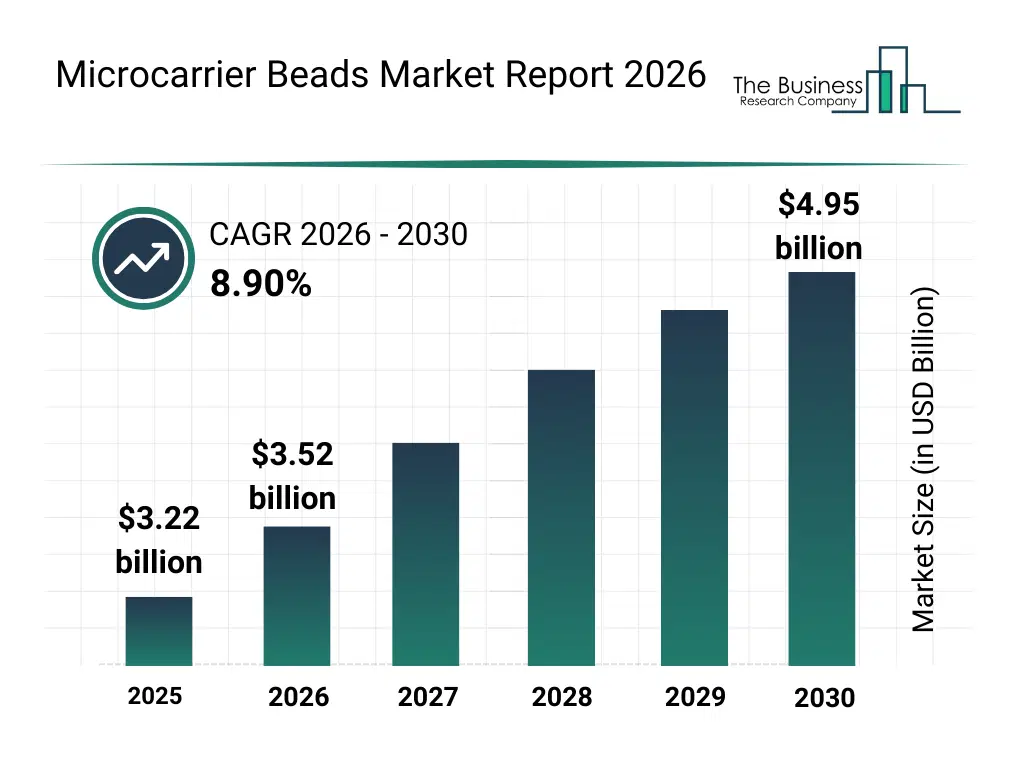
What Is The Microcarrier Beads Market Size and Share 2026?
The microcarrier beads market size has grown strongly in recent years. It will grow from $3.22 billion in 2025 to $3.52 billion in 2026 at a compound annual growth rate (CAGR) of 9.2%. The growth in the historic period can be attributed to limited availability of standardized microcarriers, reliance on small-scale cell culture techniques, growing demand for vaccine production, increasing biopharmaceutical R&D, adoption of basic tissue engineering methods.What Is The Microcarrier Beads Market Growth Forecast?
The microcarrier beads market size is expected to see strong growth in the next few years. It will grow to $4.95 billion in 2030 at a compound annual growth rate (CAGR) of 8.9%. The growth in the forecast period can be attributed to development of advanced and modified microcarriers, expansion of gene therapy and regenerative medicine, increasing adoption of scalable bioreactor systems, rising biotechnology investments, growth in personalized medicine and protein therapeutics. Major trends in the forecast period include rising demand for large-scale cell culture expansion, growth in vaccine and gene therapy production, increasing use of microcarriers in tissue engineering and protein production, adoption of custom and modified microcarrier beads, expansion of academic and research applications for cell-based studies.
Global Microcarrier Beads Market Segmentation
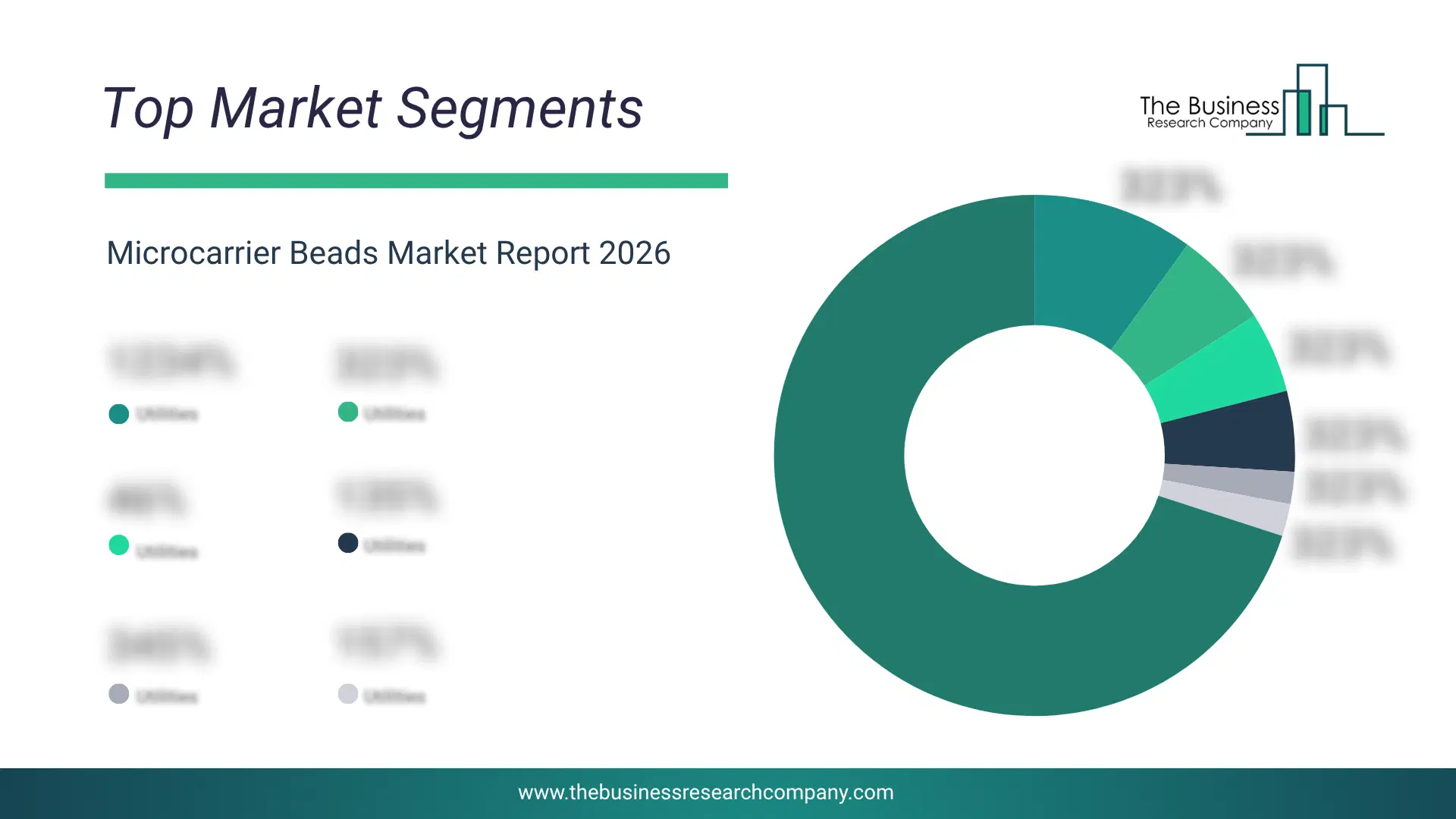
1) By Type: Cytodex Microcarriers, Cultispher Microcarriers, Microcarriers MC10, Microcarriers MC3T3, Microcarriers MC3T3-E1 2) By Size: Small Microcarriers, Medium Microcarriers, Large Microcarriers 3) By Distribution Channel: Direct Sales, Distributors Or Resellers, Online Platforms, Catalogs And Magazines 4) By Application: Cell Culture Expansion, Vaccine Production, Gene Therapy, Tissue Engineering, Protein Production 5) By End-User: Biotechnology Companies, Pharmaceutical Companies, Academic And Research Institutions, Contract Research Organizations (CROs), Other End Users Subsegments: 1) By Cytodex Microcarriers: Cytodex 1, Cytodex 3, Cytodex 4 2) By CultiSpher Microcarriers: CultiSpher-S, CultiSpher-G, CultiSpher-GM 3) By Microcarriers MC10: MC10 Standard, MC10 Modified 4) By Microcarriers MC3T3: MC3T3 Alpha, MC3T3 Beta 5) By Microcarriers MC3T3-E1: MC3T3-E1 Standard, MC3T3-E1 EnhancedWhat Is The Driver Of The Microcarrier Beads Market?
The growing trend of personalized medicine is expected to propel the growth of the microcarrier beads market going forward. Personalized medicine involves customizing healthcare decisions and treatments based on the individual characteristics of each patient, such as their genetic profile and biological markers. This personalized medicine is gaining momentum due to advancements in genomic technologies that enable rapid and cost-efficient analysis of individual genetic data to inform targeted therapies. Microcarrier beads support personalized medicine by offering a scalable system for cultivating patient-specific cells required for individualized treatments. For instance, in February 2024, according to the Personalized Medicine Coalition, a US-based non-profit organization, in 2023, the FDA approved 16 new personalized treatments for rare disease patients, compared to 6 in 2022. The 2023 approvals also included seven cancer therapies and three for other medical conditions. Therefore, the growing trend of personalized medicine is driving the growth of the microcarrier beads industry.Key Players In The Global Microcarrier Beads Market
Major companies operating in the microcarrier beads market are Thermo Fisher Scientific Inc., Merck KGaA, Asahi Kasei Corporation, Corning Incorporated, Lonza Corporation, Cytiva Life Sciences, KURARAY CO. LTD., Sartorius AG, Bio-Techne Corporation, Pall Corporation, Ilex Life Sciences Ltd., ReproCELL Inc., HiMedia Laboratories Pvt. Ltd., Synthecon Inc., Beaver Biomedical Engineering Co. Ltd., Percell Biolytica.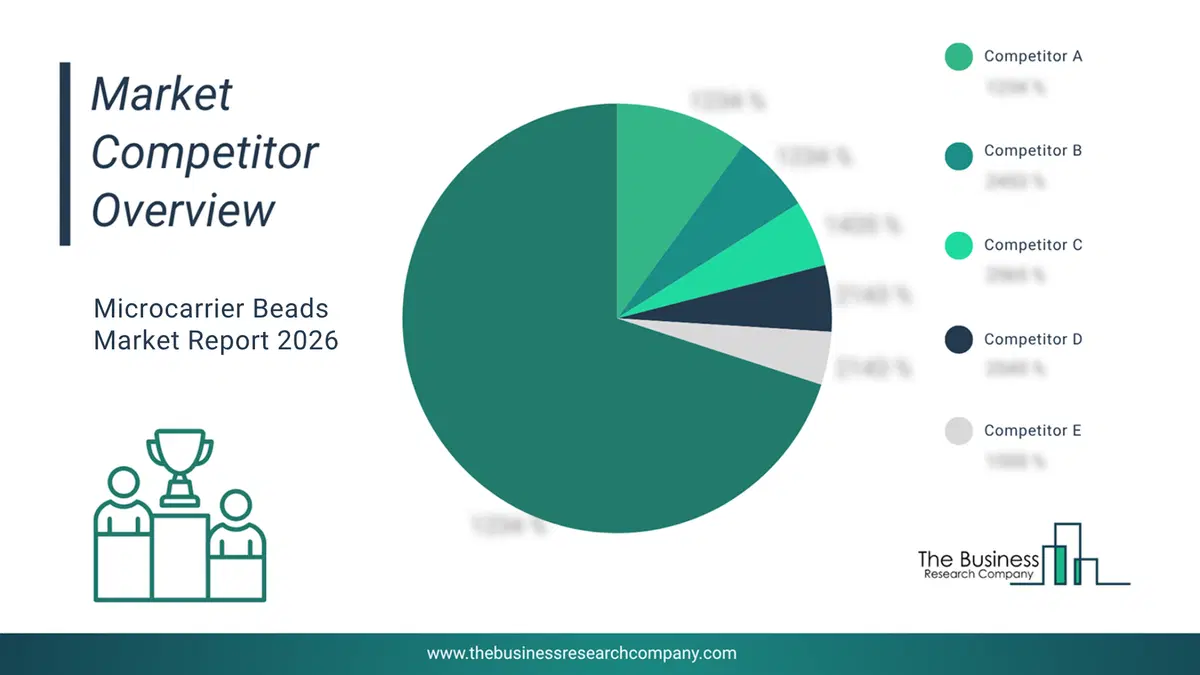
This chart is for illustrative purposes; the full report includes a detailed competitor analysis and comprehensive overview of the top 10 companies in the market.
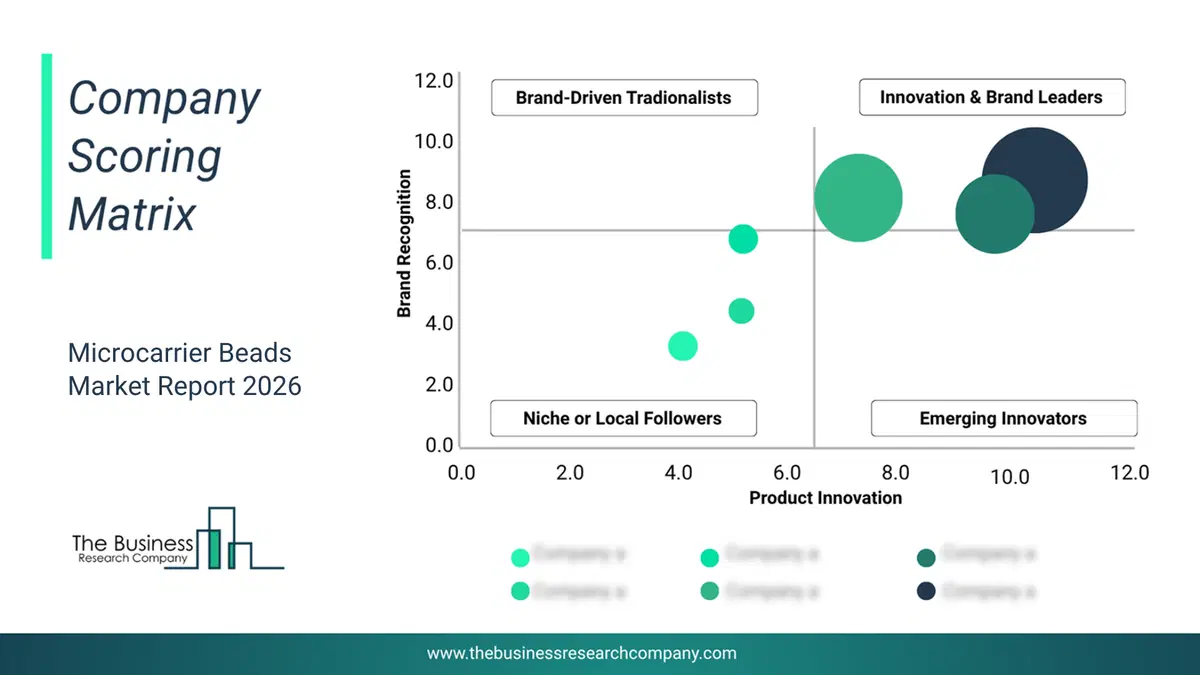
This chart maps companies by product innovation and brand strength, with bubble size indicating relative revenue, helping identify market leaders, challengers, and niche players. This is an illustrative chart; the full report provides a complete and accurate competitive analysis.
Global Microcarrier Beads Market Trends and Insights
Major companies operating in the microcarrier beads market are focusing on developing advanced solutions, such as hydrophilic polymer-based beads, to enhance cell attachment, proliferation, and scalability in bioreactor-based cell culture systems. Hydrophilic polymer-based beads refer to microcarrier beads composed of polymers that readily absorb water, creating a hydrated environment that mimics natural cellular conditions, thereby improving cell viability, proliferation, and functionality during large-scale cell culture processes. For instance, in April 2024, Kuraray Co. Ltd., a Japan-based chemical manufacturing company, launched PVA (polyvinyl alcohol) hydrogel microcarriers for cell culture applications, particularly targeted at regenerative medicine. These are highly elastic, damage-resistant bead-like scaffolds that enable efficient, large-scale 3D cell culture with easy cell recovery, improved proliferation, and safety for regenerative medicine. Their swelling property increases surface area, thereby reducing microcarrier use and allowing clear microscopic observation of cells during culture.What Are Latest Mergers And Acquisitions In The Microcarrier Beads Market?
In July 2025, Kuraray Co. Ltd., a Japan-based chemical manufacturing company that offers microcarrier beads, partnered with CellulaREvolution Ltd. to enhance scalable and consistent cell culture systems for regenerative medicine by integrating Kuraray’s SCAPOVA microcarrier beads with CellRev’s AggreGuard media additive to improve cell viability and productivity while reducing bioprocess complexity. CellulaREvolution Ltd. is a UK-based biotechnology company dedicated to advancing cell culture processes for cell-based therapies and vaccines.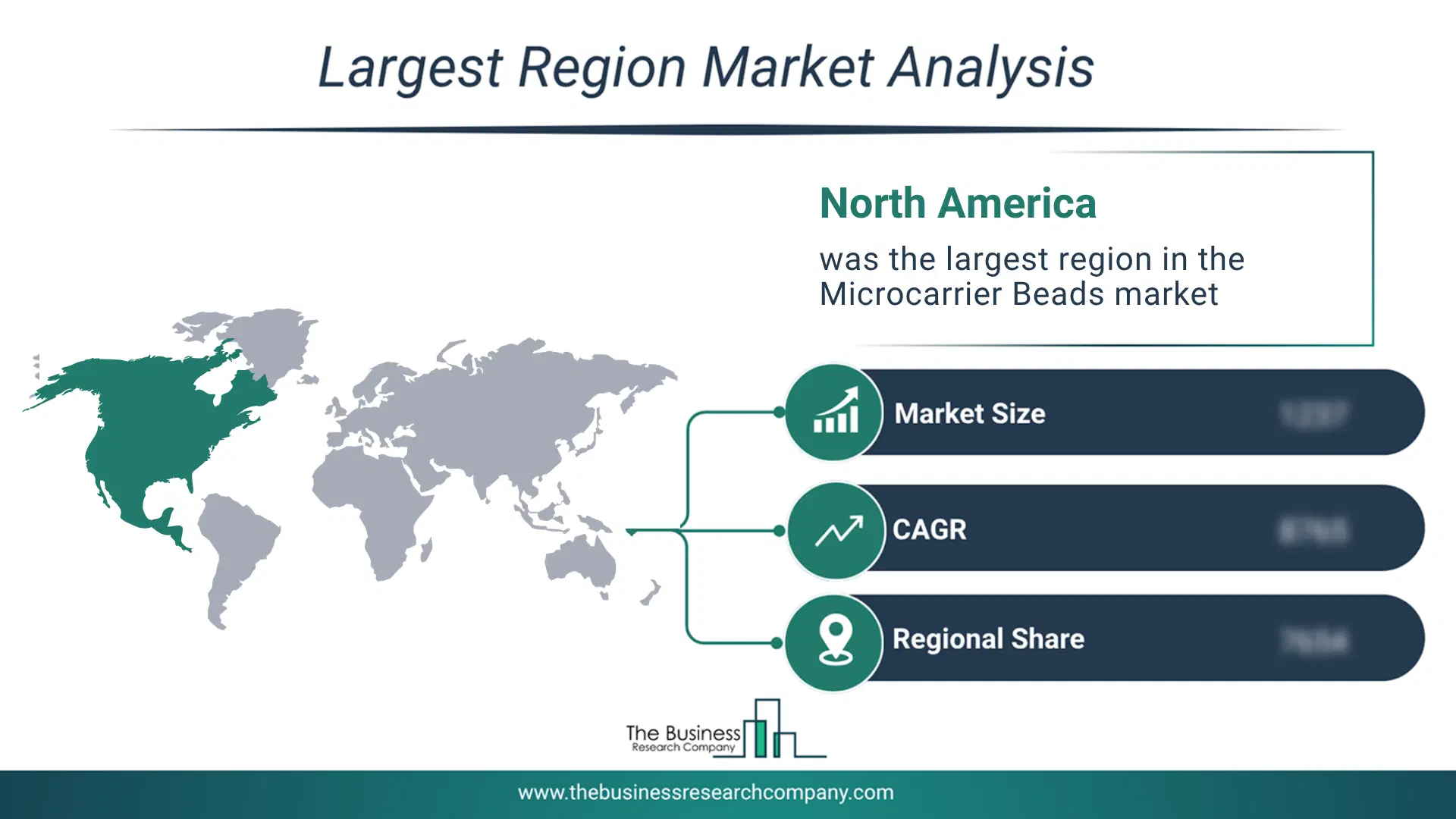
Regional Insights
North America was the largest region in the microcarrier beads market in 2025. Asia-Pacific is expected to be the fastest-growing region in the forecast period. The regions covered in this market report are Asia-Pacific, South East Asia, Western Europe, Eastern Europe, North America, South America, Middle East, Africa. The countries covered in this market report are Australia, Brazil, China, France, Germany, India, Indonesia, Japan, Taiwan, Russia, South Korea, UK, USA, Canada, Italy, Spain.What Defines the Microcarrier Beads Market?
The microcarrier beads market consists of sales of gelatin microcarriers, coated microcarrier beads, porous microcarriers and magnetic microcarriers. Values in this market are ‘factory gate’ values, that is, the value of goods sold by the manufacturers or creators of the goods, whether to other entities (including downstream manufacturers, wholesalers, distributors, and retailers) or directly to end customers. The value of goods in this market includes related services sold by the creators of the goods.How is Market Value Defined and Measured?
The market value is defined as the revenues that enterprises gain from the sale of goods and/or services within the specified market and geography through sales, grants, or donations in terms of the currency (in USD unless otherwise specified). The revenues for a specified geography are consumption values that are revenues generated by organizations in the specified geography within the market, irrespective of where they are produced. It does not include revenues from resales along the supply chain, either further along the supply chain or as part of other products.
This chart presents market attractiveness based on a quantitative evaluation of growth, competition, strategic alignment, and risk, offering a clear view of opportunity areas for decision-making. This chart is for illustrative purposes; the full report contains the complete analysis.

This chart highlights the Total Addressable Market (TAM) by estimating the maximum revenue opportunity using an assumption-driven approach, supporting strategic planning and opportunity sizing across markets. The chart is illustrative; the full report provides a more comprehensive analysis.
What Key Data and Analysis Are Included in the Microcarrier Beads Market Report 2026?
The microcarrier beads market research report is one of a series of new reports from The Business Research Company that provides market statistics, including industry global market size, regional shares, competitors with the market share, detailed market segments, market trends and opportunities, and any further data you may need to thrive in the microcarrier beads industry. The market research report delivers a complete perspective of everything you need, with an in-depth analysis of the current and future state of the industry.Microcarrier Beads Market Report Forecast Analysis
| Report Attribute | Details |
|---|---|
| Market Size Value In 2026 | $3.52 billion |
| Revenue Forecast In 2030 | $4.95 billion |
| Growth Rate | CAGR of 9.2% from 2026 to 2030 |
| Base Year For Estimation | 2025 |
| Actual Estimates/Historical Data | 2020-2025 |
| Forecast Period | 2026 - 2030 |
| Market Representation | Revenue in USD Billion and CAGR from 2026 to 2030 |
| Segments Covered | Type, Size, Distribution Channel, Application, End-User |
| Regional Scope | Asia-Pacific, Western Europe, Eastern Europe, North America, South America, Middle East, Africa |
| Country Scope | The countries covered in the report are Australia, Brazil, China, France, Germany, India, Indonesia, Japan, Taiwan, Russia, South Korea, UK, USA, Canada, Italy, Spain. |
| Key Companies Profiled | Thermo Fisher Scientific Inc., Merck KGaA, Asahi Kasei Corporation, Corning Incorporated, Lonza Corporation, Cytiva Life Sciences, KURARAY CO. LTD., Sartorius AG, Bio-Techne Corporation, Pall Corporation, Ilex Life Sciences Ltd., ReproCELL Inc., HiMedia Laboratories Pvt. Ltd., Synthecon Inc., Beaver Biomedical Engineering Co. Ltd., Percell Biolytica. |
| Customization Scope | Request for Customization |
| Pricing And Purchase Options | Explore Purchase Options |