
Microencapsulation Market Report 2026
Global Outlook – By Material (Agricultural Inputs, Food Additives, Pharmaceutical And Healthcare Drugs, Fragrances, Phase Change Material, Other Core Materials), By Shell Material (Polymers, Gums And Resins, Lipids, Carbohydrates, Protein), By Technology (Spray Technology, Dripping Technology, Emulsion Technology, Other Technologies), By Application (Pharmaceutical And Healthcare Products, Food And Beverages, Household And Personal Care Products, Agrochemicals, Construction Material, Textiles, Other Applications) – Market Size, Trends, Strategies, and Forecast to 2030
Microencapsulation Market Overview
• Microencapsulation market size has reached to $12.98 billion in 2025 • Expected to grow to $21.91 billion in 2030 at a compound annual growth rate (CAGR) of 11% • Growth Driver: Consumer Appetite For Functional Foods Ignites Growth In The Microencapsulation Market • Market Trend: AB Biotek Launches AdiDAO Microencapsulated To Enhance Diamine Oxidase Delivery And Health Outcomes • North America was the largest region in 2025 and Asia-Pacific is the fastest growing region.Market Gains By 2030 – Top Opportunities By Segment
Market Gain identifies the most promising market opportunities by highlighting the segments or products expected to generate the highest incremental revenue growth over the next five years.
What Is Covered Under Microencapsulation Market?
Microencapsulation is a technology that encapsulates solid, liquid, or gas materials into microparticles with diameters ranging from 1 to 1000 µm, using a polymeric or non-polymeric material to protect the contents from processing conditions and allowing controlled release under specific conditions. It is used to preserve and distribute functional constituents in various industries. The main materials of microencapsulation are agricultural inputs, food additives, pharmaceutical and healthcare drugs, fragrances, phase change material, and others. Agricultural input describes the supplies and tools needed in agricultural production, including energy, seeds, fertilizers, and pesticides. The various shell materials include polymers, gums and resins, lipids, carbohydrates, and protein that use spray technology, dripping technology, emulsion technology, and others. Microencapsulation finds its application in pharmaceutical and healthcare products, food and beverages, household and personal care products, agrochemicals, construction materials, textiles, and others.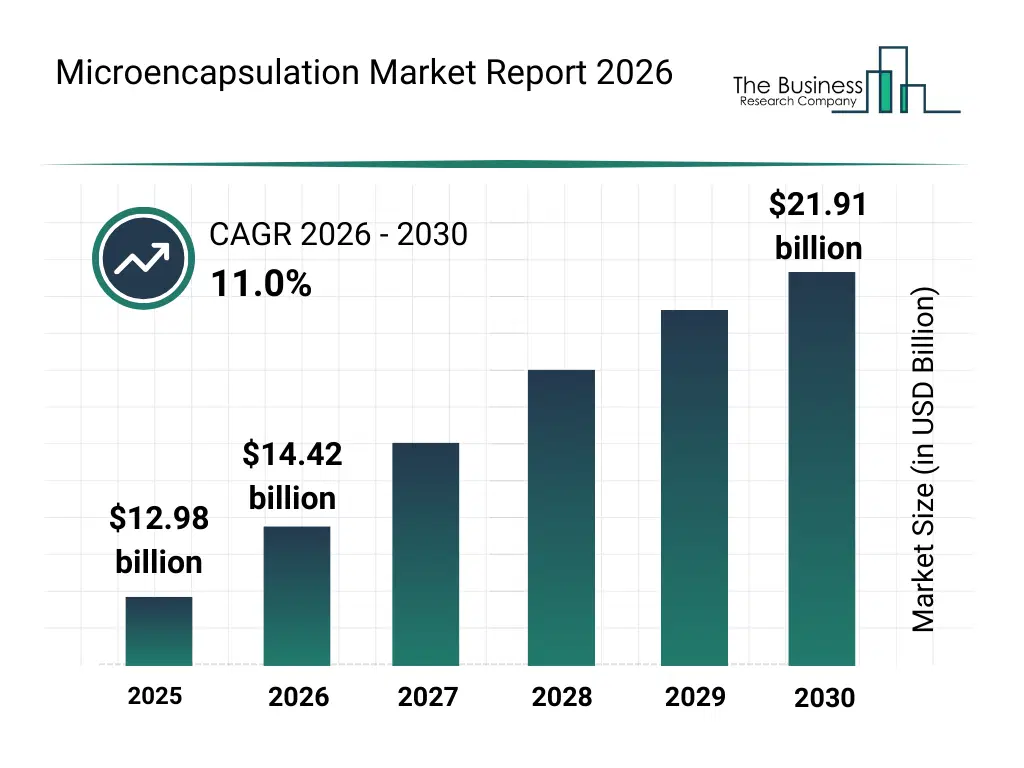
What Is The Microencapsulation Market Size and Share 2026?
The microencapsulation market size has grown rapidly in recent years. It will grow from $12.98 billion in 2025 to $14.42 billion in 2026 at a compound annual growth rate (CAGR) of 11.1%. The growth in the historic period can be attributed to growth of pharmaceutical manufacturing, rising demand for functional foods, expansion of agrochemical formulations, increasing use of encapsulated fragrances, advancements in encapsulation techniques.What Is The Microencapsulation Market Growth Forecast?
The microencapsulation market size is expected to see rapid growth in the next few years. It will grow to $21.91 billion in 2030 at a compound annual growth rate (CAGR) of 11.0%. The growth in the forecast period can be attributed to increasing adoption of precision drug delivery systems, rising focus on sustainable encapsulation materials, expansion of personalized nutrition products, growing use in thermal energy storage, increasing investments in advanced formulation technologies. Major trends in the forecast period include growing use of controlled release technologies, rising adoption in pharmaceutical and nutraceutical products, expansion of microencapsulation in food fortification, increasing demand for functional ingredient protection, enhanced stability of sensitive active compounds.
Global Microencapsulation Market Segmentation
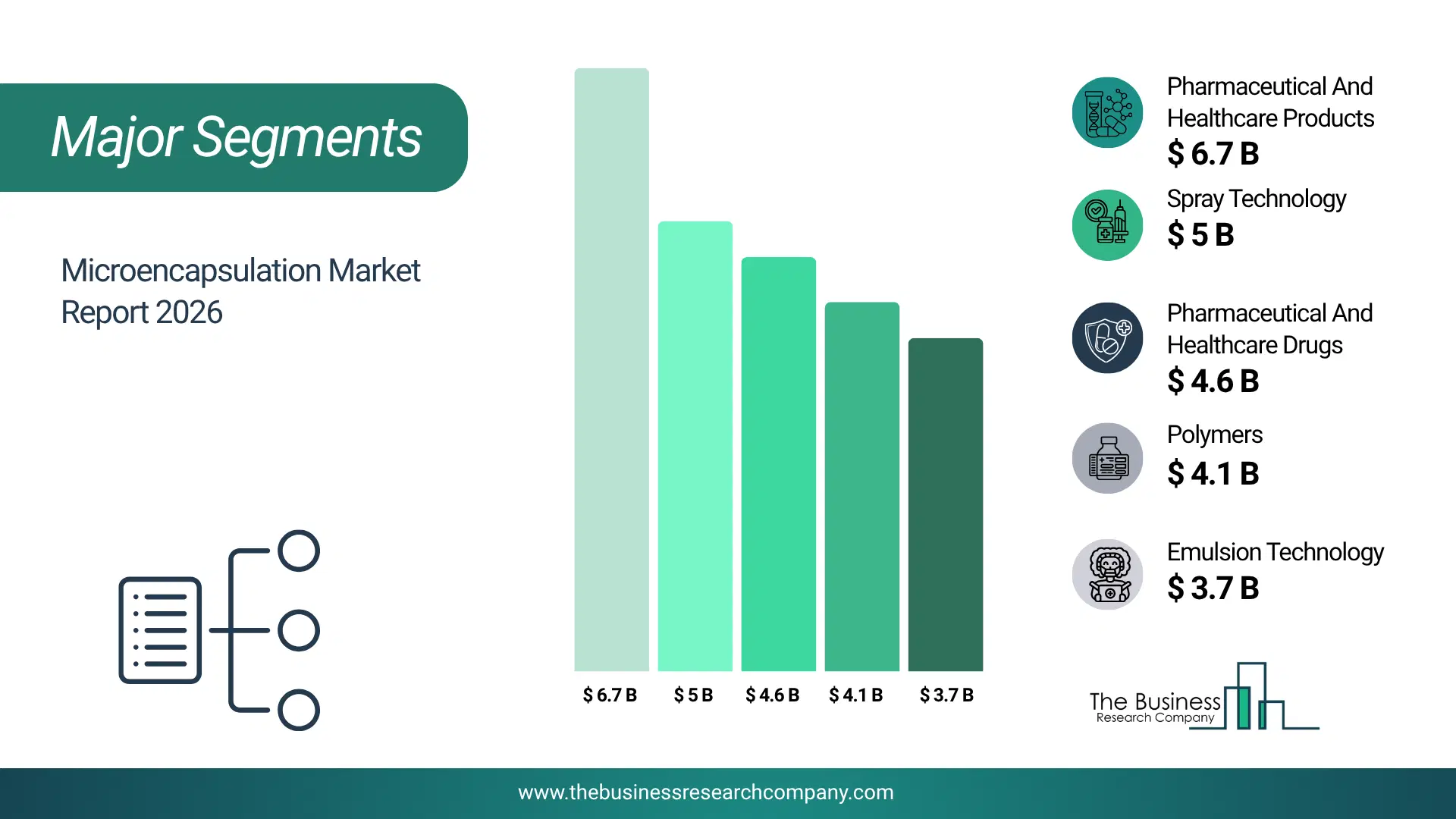
1) By Material: Agricultural Inputs, Food Additives, Pharmaceutical And Healthcare Drugs, Fragrances, Phase Change Material, Other Core Materials 2) By Shell Material: Polymers, Gums And Resins, Lipids, Carbohydrates, Protein 3) By Technology: Spray Technology, Dripping Technology, Emulsion Technology, Other Technologies 4) By Application: Pharmaceutical And Healthcare Products, Food And Beverages, Household And Personal Care Products, Agrochemicals, Construction Material, Textiles, Other Applications Subsegments: 1) By Agricultural Inputs: Pesticides, Herbicides, Fertilizers, Insecticides 2) By Food Additives: Flavoring Agents, Nutraceuticals, Preservatives, Coloring Agents 3) By Pharmaceutical and Healthcare Drugs: Active Pharmaceutical Ingredients (APIs), Vitamins And Supplements, Vaccines, Pain Management Drugs 4) By Fragrances: Essential Oils, Perfume Ingredients, Aroma Compounds 5) By Phase Change Material: Organic Phase Change Materials, Inorganic Phase Change Materials, Eutectic Phase Change Materials 6) By Other Core Materials: Cosmetics Ingredients, Cleaning Agents, Industrial Chemicals The top segments in the microencapsulation market will be: • Pharmaceutical And Healthcare Products will reach $6783.99 Million by 2025. • Spray Technology will reach $5063.61 Million by 2025. • Pharmaceutical And Healthcare Drugs will reach $4642.06 Million by 2025. • Polymers will reach $4168.25 Million by 2025. • Emulsion Technology will reach $3771.19 Million by 2025.What Is The Driver Of The Microencapsulation Market?
Rising consumer demand for functional food is expected to propel the growth of the microencapsulation market going forward. Functional foods are defined as processed foods that give medical or health advantages as well as illness risk reduction. Microencapsulation is a method that aid in the improvement of functional meals. This process entails coating functional ingredients with food-grade and biodegradable materials to protect them from degradation and improve their bioavailability and stability. It is also used to overcome drawbacks associated with the use of certain ingredients in food fortification, such as phytosterols. Additionally, changing consumer preferences have also boosted the demand for functional foods. For instance, in July 2025, according to the Foodmanufacture.co.uk is a UK-based, website and media platform for the UK's food and drink manufacturing industry, health considerations have significantly influenced the soft drinks, with growth mainly driven by functional beverages such as kombucha, which saw a 30% year-on-year increase, and health shots such as ginger and turmeric, which surged by 92% year-on-year for the week ending 22 February 2025. Therefore, the rising consumer demand for functional food is driving the growth of the microencapsulation industry.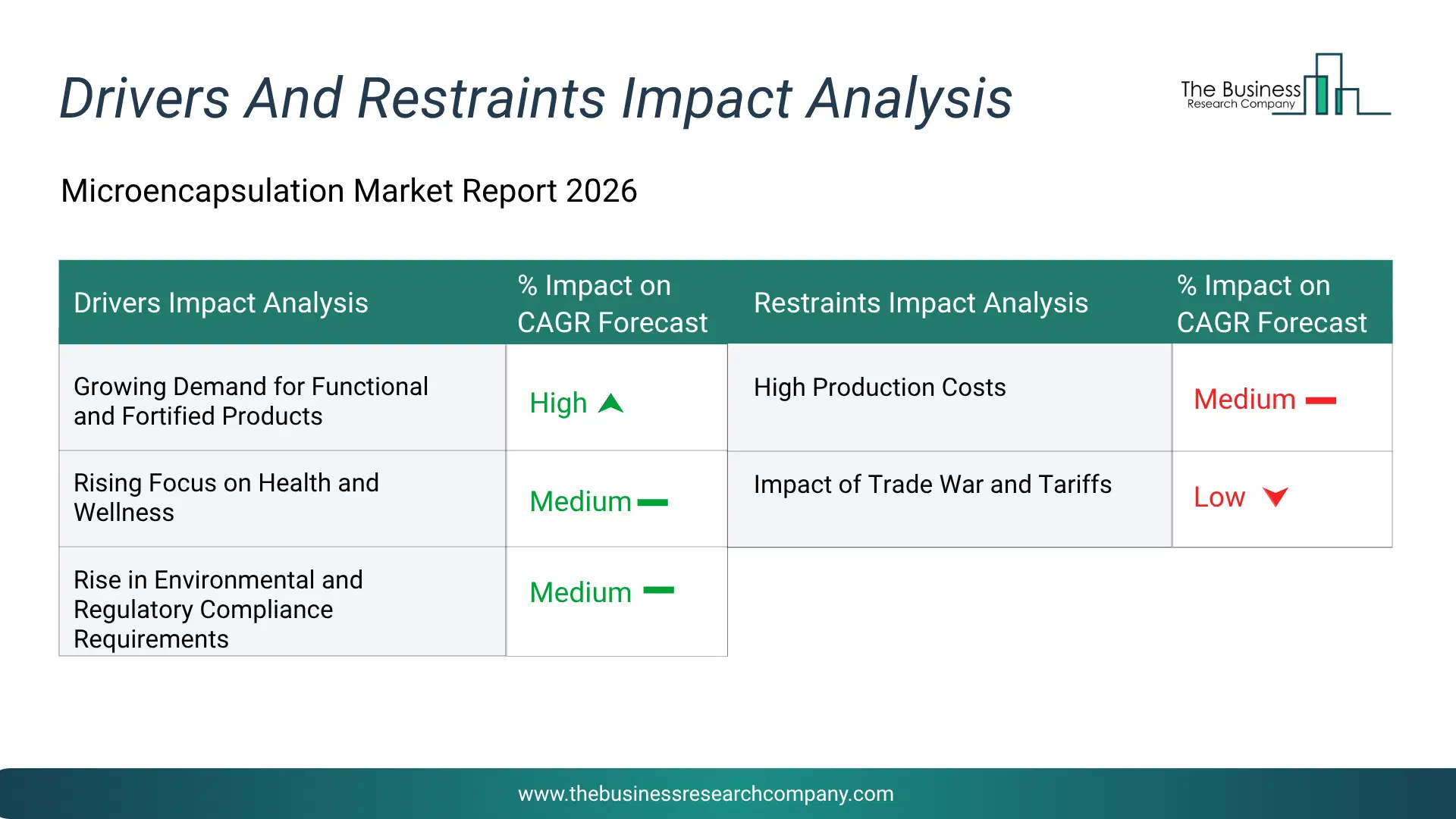
Infographic Chart Showing Key Market Drivers Analysis And Restraints For Microencapsulation Market
The chart presents an impact analysis of key drivers and restraints, quantifying their relative influence on the market's growth rate and helping assess the balance between growth enablers and limiting factors. This chart offers a high-level perspective; the full report contains more detailed insights.
How Will The Drivers Impact Growth In The Global Microencapsulation Market?
• Growing Demand for Functional and Fortified Products (High) – The growing demand for functional and fortified products will become a key driver of growth in the microencapsulation market by 2030. Functional products often include sensitive ingredients such as vitamins, minerals, omega-3 fatty acids and probiotics that are prone to degradation. Microencapsulation safeguards these compounds from environmental factors like heat, light and oxygen, ensuring their stability and effectiveness through shelf life. Many fortified ingredients carry undesirable tastes or odors, such as the metallic notes of iron or the fishy flavor of omega-3 oils. Microencapsulation helps mask these characteristics, enhancing the sensory profile of functional foods and beverages to increase consumer acceptance. As a result, the growing demand for functional and fortified products is anticipated to contributing to a 2.0% annual growth in the market. • Rising Focus on Health and Wellness (Medium) – The rising focus on health and wellness will emerge as a major factor driving the expansion of the microencapsulation market by 2030. Microencapsulation plays a vital role in enhancing the absorption and stability of health-promoting compounds by protecting them from degradation and enabling controlled release, particularly in dietary supplements and nutraceuticals. It also supports the growing demand for clean-label and natural products by allowing the stable inclusion of natural flavors, essential oils and bio actives without synthetic additives. As consumers increasingly seek personalized nutrition and preventive healthcare, microencapsulation enables precise nutrient delivery through customized formats like capsules, powders and functional beverages, aligning with evolving wellness trends. Consequently, the rising focus on health and wellness is projected to contributing to a 1.5% annual growth in the market. • Rise in Environmental and Regulatory Compliance Requirements (Medium) – The rise in environmental and regulatory compliance requirements within digital manufacturing processes will serve as a key growth catalyst for the microencapsulation market by 2030, stricter environmental regulations are driving industries to adopt cleaner processes, and microencapsulation supports this by enabling controlled release and minimizing chemical waste. It enhances safety by encapsulating toxic or irritant substances, reducing risks during handling and storage. In food and cosmetics, it aligns with clean-label and natural product trends by protecting bioactive ingredients without synthetic additives. Additionally, it aids in meeting global regulatory standards through improved stability and traceability, facilitating smoother approvals and international market access. Therefore, this rise in environmental and regulatory compliance requirements is projected to supporting to a 1.0% annual growth in the market. • Favorable Government Initiatives (Low) – The favorable government initiatives will become a significant driver contributing to the growth of the microencapsulation market by 2030. Governments are increasingly investing in R&D initiatives targeting advanced drug delivery systems, sustainable agriculture and food fortification. These efforts drive the adoption of microencapsulation technologies across pharmaceuticals, food processing and agrochemical industries. Public health and nutrition initiatives further support the development of fortified foods and supplements, where microencapsulation ensures stable and targeted delivery of nutrients like vitamin A, iron and folic acid. Additionally, growing emphasis on eco-friendly practices and stricter environmental regulations are encouraging the use of microencapsulated agrochemicals, offering controlled release and reduced environmental impact. These combined efforts reflect a broader push toward innovation, sustainability and public health improvement. Consequently, the favorable government initiatives is projected to contributing to a 0.8% annual growth in the market.How Will The Restraints Impact Growth In The Global Microencapsulation Market?
• Complex Manufacturing Processes (Medium) – Complex Manufacturing Processes will restrict the growth of the Microencapsulation market during the forecast period. Microencapsulation involves complex manufacturing processes requiring specialized equipment and expertise. Process complexity affects production efficiency, scalability, and product consistency. Manufacturing challenges can lead to high production costs and limit the economic viability of microencapsulation for certain applications. • High Production Costs (Medium) – High Production Costs will restrict the growth of the Microencapsulation market during the forecast period. Microencapsulation involves significant costs for raw materials, equipment, and processing that increase product pricing. High production costs create financial barriers for manufacturers and can affect product affordability. Cost constraints can limit market penetration and adoption, particularly in price-sensitive applications. • Impact of Trade War and Tariffs (Low) – Impact of Trade War and Tariffs will restrict the growth of the Microencapsulation market during the forecast period. Microencapsulation materials and equipment are often sourced internationally, making them vulnerable to trade tariffs. Trade barriers can increase production costs and affect the availability of key materials. Trade tensions may also impact international collaboration and technology transfer in microencapsulation.Key Players In The Global Microencapsulation Market
Major companies operating in the microencapsulation market are BASF SE, Givaudan SA, Firmenich SA, International Flavors & Fragrances Inc., Symrise AG, Sensient Technologies Corporation, Kerry Group plc, Evonik Industries AG, Dow Inc., DSM-Firmenich AG, Roquette Frères, Ingredion Incorporated, Capsugel Belgium NV, Lonza Group AG, Cargill, Incorporated, Lubrizol Corporation, Ashland Global Holdings Inc., Croda International Plc, Corbion N.V., Tate & Lyle PLC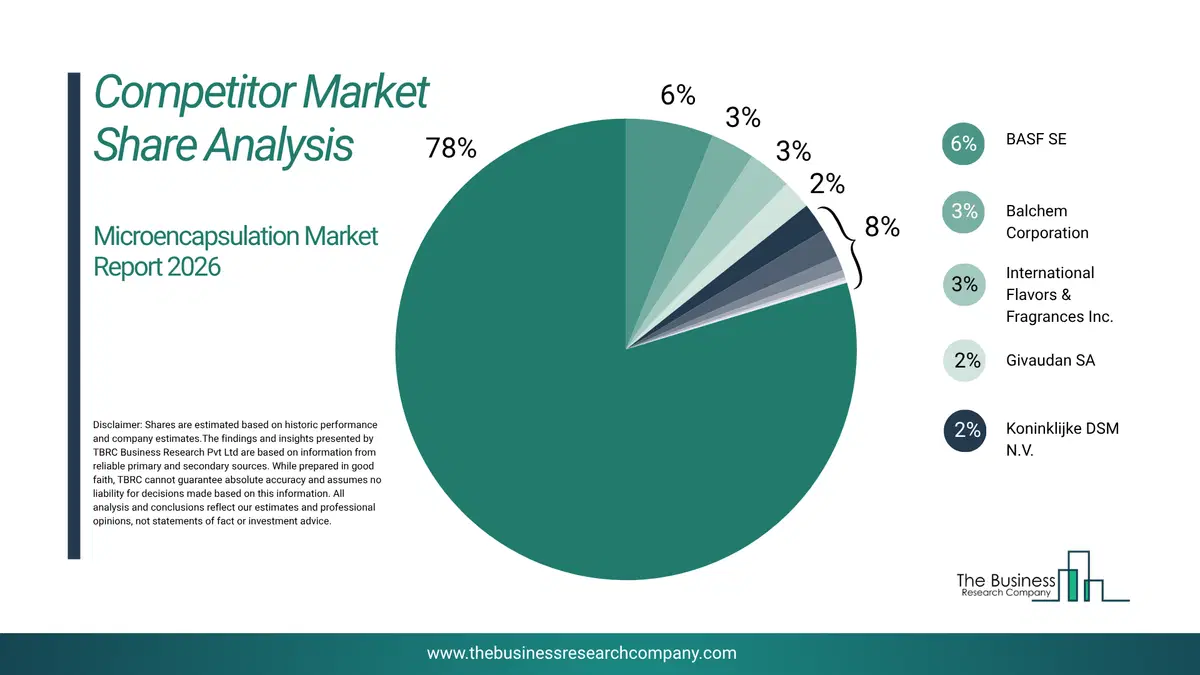
This chart is for illustrative purposes; the full report includes a detailed competitor analysis and comprehensive overview of the top 10 companies in the market.
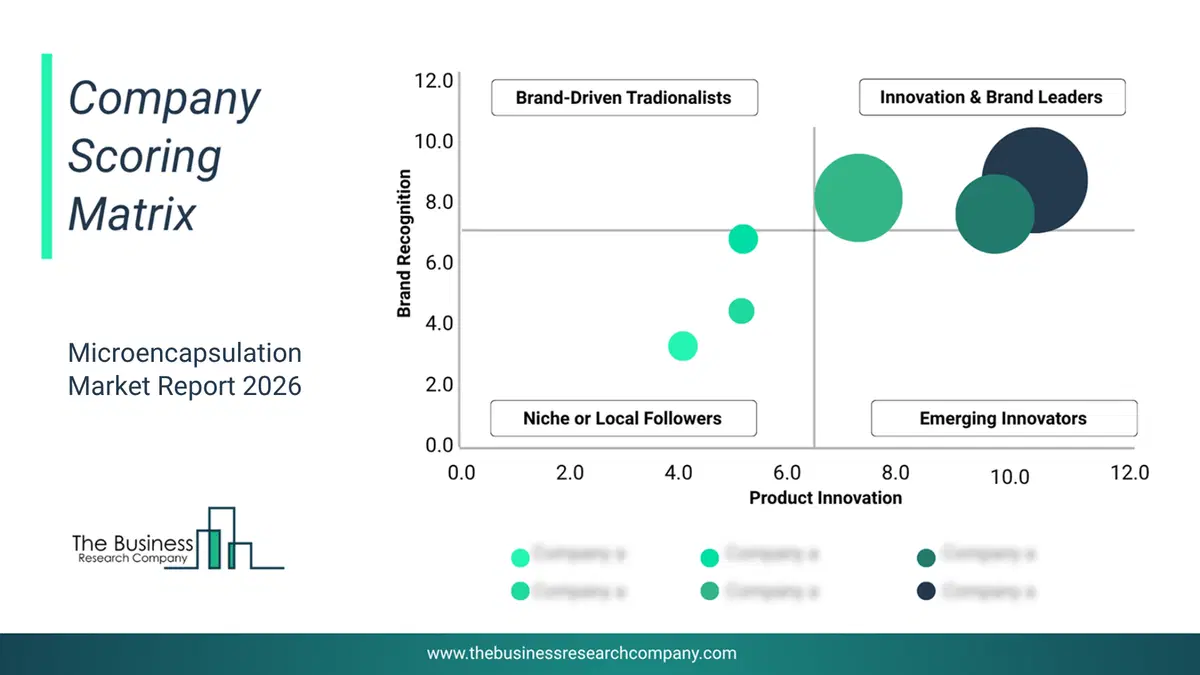
This chart maps companies by product innovation and brand strength, with bubble size indicating relative revenue, helping identify market leaders, challengers, and niche players. This is an illustrative chart; the full report provides a complete and accurate competitive analysis.
Global Microencapsulation Market Trends and Insights
Major companies in the microencapsulation market are increasingly focusing on developing advanced technologies, such as diamine oxidase (DAO) microencapsulation, to enhance the stability and targeted delivery of active ingredients across various applications. These innovations improve the bioavailability of sensitive compounds, facilitating their safe passage through harsh environments like the stomach. For instance, in April 2024, AB Biotek, a UK-based biotechnology research company, launched adiDAO Microencapsulated, a groundbreaking ingredient designed to enhance the delivery of DAO, an enzyme essential for breaking down dietary histamine. This new microencapsulated format addresses critical challenges associated with DAO, particularly its sensitivity to stomach pH and its potential negative interactions with other bioactive ingredients. adiDAO Microencapsulated marks a significant advancement in managing DAO deficiency. By optimizing the delivery of this vital enzyme and enabling its combination with other active ingredients, AB Biotek is paving the way for innovative treatments that could improve health outcomes for individuals affected by histamine-related disorders.What Are Latest Mergers And Acquisitions In The Microencapsulation Market?
In March 2023, Surtec, a US-based company acquired Omnitechnik Microencapsulation for an undisclosed sum. SurTec's acquisition of Omnitechnik Microencapsulation aims to strengthen its position in specialized chemical surface technologies. Omnitechnik, a Germany-based company, specializes in developing and producing advanced coatings for fasteners.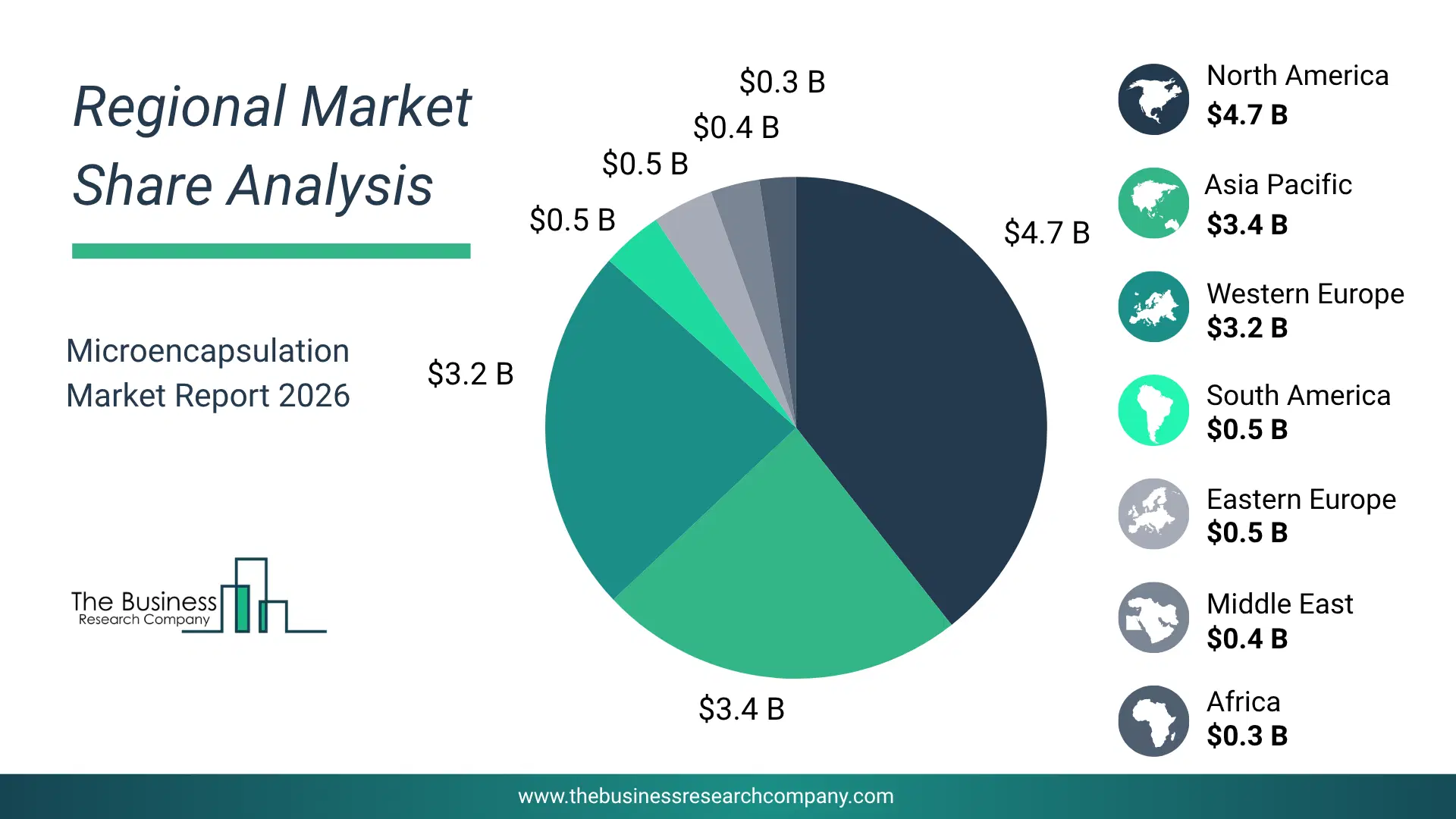
Regional Insights
North America was the largest region in the encapsulation market in 2025. Asia-Pacific is expected to be the fastest-growing region in the global microencapsulation market during the forecast period. The regions covered in this market report are Asia-Pacific, South East Asia, Western Europe, Eastern Europe, North America, South America, Middle East, Africa The countries covered in this market report are Australia, Brazil, China, France, Germany, India, Indonesia, Japan, Taiwan, Russia, South Korea, UK, USA, Canada, Italy, SpainWhat Defines the Microencapsulation Market?
The microencapsulation market consists of revenues earned by entities by providing chemical, physicochemical, and coatings technologies. The market value includes the value of related goods sold by the service provider or included within the service offering. The microencapsulation market also includes sales of polymeric or nonpolymeric materials like cellulose, ethylene glycol, gelatin, collagen, fibrin, and polyphosphazene which are used in microencapsulation. Values in this market are ‘factory gate’ values, that is the value of goods sold by the manufacturers or creators of the goods, whether to other entities (including downstream manufacturers, wholesalers, distributors, and retailers) or directly to end customers. The value of goods in this market includes related services sold by the creators of the goods.How is Market Value Defined and Measured?
The market value is defined as the revenues that enterprises gain from the sale of goods and/or services within the specified market and geography through sales, grants, or donations in terms of the currency (in USD unless otherwise specified). The revenues for a specified geography are consumption values that are revenues generated by organizations in the specified geography within the market, irrespective of where they are produced. It does not include revenues from resales along the supply chain, either further along the supply chain or as part of other products.
This chart presents market attractiveness based on a quantitative evaluation of growth, competition, strategic alignment, and risk, offering a clear view of opportunity areas for decision-making. This chart is for illustrative purposes; the full report contains the complete analysis.

This chart highlights the Total Addressable Market (TAM) by estimating the maximum revenue opportunity using an assumption-driven approach, supporting strategic planning and opportunity sizing across markets. The chart is illustrative; the full report provides a more comprehensive analysis.
What Key Data and Analysis Are Included in the Microencapsulation Market Report 2026?
The microencapsulation market research report is one of a series of new reports from The Business Research Company that provides market statistics, including industry global market size, regional shares, competitors with the market share, detailed market segments, market trends and opportunities, and any further data you may need to thrive in the microencapsulation industry. The market research report delivers a complete perspective of everything you need, with an in-depth analysis of the current and future state of the industry.Microencapsulation Market Report Forecast Analysis
| Report Attribute | Details |
|---|---|
| Market Size Value In 2026 | $14.42 billion |
| Revenue Forecast In 2030 | $21.91 billion |
| Growth Rate | CAGR of 11.1% from 2026 to 2030 |
| Base Year For Estimation | 2025 |
| Actual Estimates/Historical Data | 2020-2025 |
| Forecast Period | 2026 - 2030 |
| Market Representation | Revenue in USD Billion and CAGR from 2026 to 2030 |
| Segments Covered | Material, Shell Material, Technology, Application |
| Regional Scope | Asia-Pacific, Western Europe, Eastern Europe, North America, South America, Middle East, Africa |
| Country Scope | The countries covered in the report are Australia, Brazil, China, France, Germany, India, Indonesia, Japan, Taiwan, Russia, South Korea, UK, USA, Canada, Italy, Spain. |
| Key Companies Profiled | BASF SE, Givaudan SA, Firmenich SA, International Flavors & Fragrances Inc., Symrise AG, Sensient Technologies Corporation, Kerry Group plc, Evonik Industries AG, Dow Inc., DSM-Firmenich AG, Roquette Frères, Ingredion Incorporated, Capsugel Belgium NV, Lonza Group AG, Cargill, Incorporated, Lubrizol Corporation, Ashland Global Holdings Inc., Croda International Plc, Corbion N.V., Tate & Lyle PLC |
| Customization Scope | Request for Customization |
| Pricing And Purchase Options | Explore Purchase Options |