
Microgreens Market Report 2026
Global Outlook – By Type (Broccoli, Cabbage, Cauliflower, Arugula, Peas, Basil, Radish, Cress, Other Types), By Category (Organic, Conventional), By Farming Method (Indoor Vertical Farming, Commercial Greenhouse), By End User (Retail, Food Service, Other End-users) – Market Size, Trends, Strategies, and Forecast to 2030
Microgreens Market Overview
• Microgreens market size has reached to $2.39 billion in 2025 • Expected to grow to $4.4 billion in 2030 at a compound annual growth rate (CAGR) of 13.1% • Growth Driver: Increasing Demand For Organic Food Fuels Growth In The Microgreens Market • Market Trend: Revolutionizing Nutrition With Regenerative Organic Certified Broccoli Microgreens Powder • North America was the largest region in 2025.What Is Covered Under Microgreens Market?
Microgreens refer to small plants between sprouts and baby greens in height, standing 1-3 inches (2.5-7.5 cm) tall. Microgreens can be grown from various seeds and are particularly convenient to grow because they can be grown anywhere, including outside, in greenhouses, and even on your windowsill. They come in various colors and textures, fragrant flavor, and contain concentrated nutrients. Compared to their more developed counterparts, they frequently have higher levels of vitamins, minerals, and antioxidants. The stems and leaves of microgreens are the only edible parts, making them more comparable to baby greens. Microgreens are used in various cold and warm recipes and are consumed raw, juiced, or blended. The main types of crops of microgreens are broccoli, cabbage, cauliflower, arugula, peas, basil, radish, cress, and other types. Broccoli refers to baby broccoli plants that are 1-2 inches tall at the time of harvest and are easy to grow. They are rich in nutrients including vitamin A, B, C, E, and K, macro elements such as calcium, magnesium, and phosphorous, and micro-elements that include iron, copper, and zinc. The main categories of microgreens include organic and conventional and they are grown in different platforms including indoor vertical farming, commercial greenhouse, and other farming methods. The end-users of microgreens include retail, food service, and others.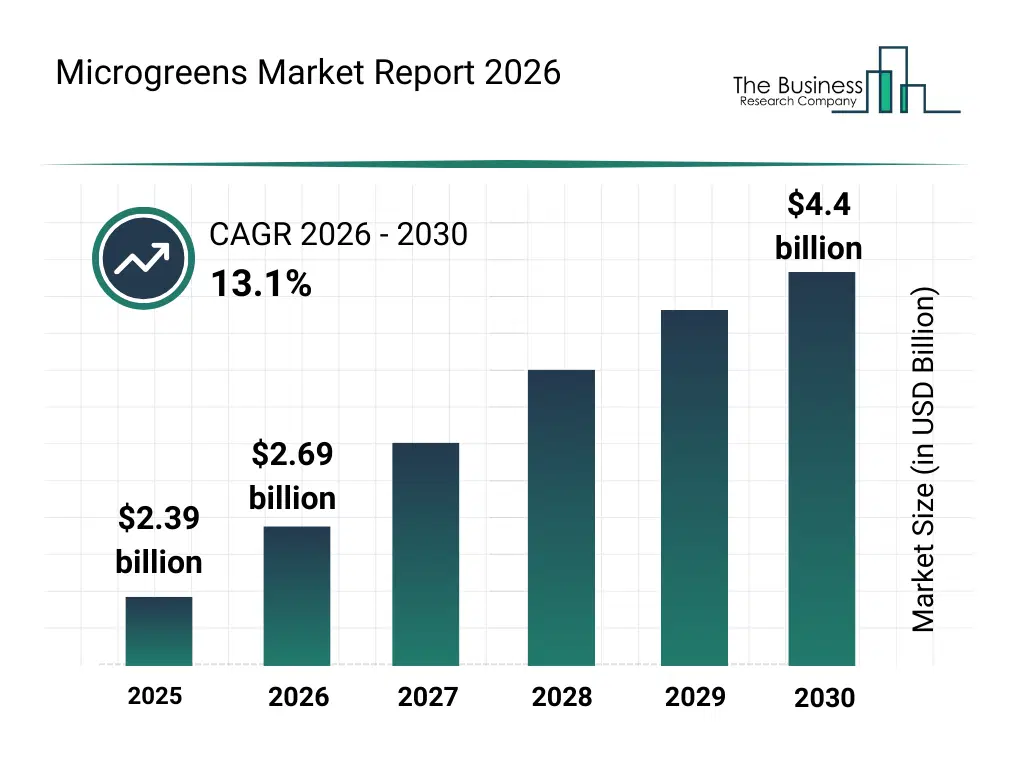
What Is The Microgreens Market Size and Share 2026?
The microgreens market size has grown rapidly in recent years. It will grow from $2.39 billion in 2025 to $2.69 billion in 2026 at a compound annual growth rate (CAGR) of 12.8%. The growth in the historic period can be attributed to increasing consumer awareness of healthy diets, growth of specialty food markets, expansion of urban farming practices, rising use in culinary applications, availability of diverse seed varieties.What Is The Microgreens Market Growth Forecast?
The microgreens market size is expected to see rapid growth in the next few years. It will grow to $4.4 billion in 2030 at a compound annual growth rate (CAGR) of 13.1%. The growth in the forecast period can be attributed to growing demand for functional foods, expansion of controlled environment agriculture, rising adoption of sustainable farming methods, increasing retail penetration of fresh microgreens, innovation in indoor farming systems. Major trends in the forecast period include increasing demand for nutrient-dense fresh produce, rising adoption of indoor and vertical farming, growing popularity in gourmet cuisine, expansion of organic microgreen cultivation, enhanced focus on local food production.
Global Microgreens Market Segmentation
1) By Type: Broccoli, Cabbage, Cauliflower, Arugula, Peas, Basil, Radish, Cress, Other Types 2) By Category: Organic, Conventional 3) By Farming Method: Indoor Vertical Farming, Commercial Greenhouse 4) By End User: Retail, Food Service, Other End-users Subsegments: 1) By Broccoli: Sprouting Broccoli Microgreens, Green Sprouting Microgreens 2) By Cabbage: Red Cabbage Microgreens, Green Cabbage Microgreens 3) By Cauliflower: White Cauliflower Microgreens, Purple Cauliflower Microgreens 4) By Arugula: Wild Arugula Microgreens, Cultivated Arugula Microgreens 5) By Peas: Pea Shoots, Snow Peas Microgreens 6) By Basil: Genovese Basil Microgreens, Thai Basil Microgreens 7) By Radish: Red Radish Microgreens, Daikon Radish Microgreens 8) By Cress: Garden Cress, Watercress 9) By Other Types: Beet Microgreens, Sunflower Microgreens, Mustard Microgreens, Chard MicrogreensWhat Is The Driver Of The Microgreens Market?
The increasing demand for organic food is anticipated to propel the growth of microgreens going forward. "Organic food" refers to agricultural and food items that are produced by specific organic farming practices that prioritize environmentally sustainable and natural methods of farming by minimizing the use of synthetic chemicals. Microgreens are grown using organic farming methods with the use of organic soil and natural fertilizers and by avoiding synthetic pesticides and chemicals for the production of organic food. For instance, in May 2024, according to the Organic Trade Association, a US-based organic industry, in 2023, U.S. sales of certified organic products reached a new high, nearing $70 billion. The total dollar sales for the American organic market amounted to $69.7 billion, reflecting a 3.4 percent increase compared to the previous year. Therefore, the increasing demand for organic food is driving the growth of the microgreens industry.Key Players In The Global Microgreens Market
Major companies operating in the microgreens market are AeroFarms LLC, Goodleaf Farms, Living Earth Farm, Fresh Origins, Gotham Greens, Bowery Farming Inc., Charlie’s Produce (Farmbox Greens LLC), Madar Farms, Metro Microgreens, The Chef's Garden Inc., Koppert Cress USA, Pacific Coast Greens, Great Lakes Growers, Florida Microgreens, Farm.One, BrightFarms, Plenty, Edenworks, Green Sense Farms, Local Roots Farms, Lufa Farms, Square Roots, Urban Oasis, Urban Produce, Vertical Harvest, Infinite Harvest, Harvest Urban Farms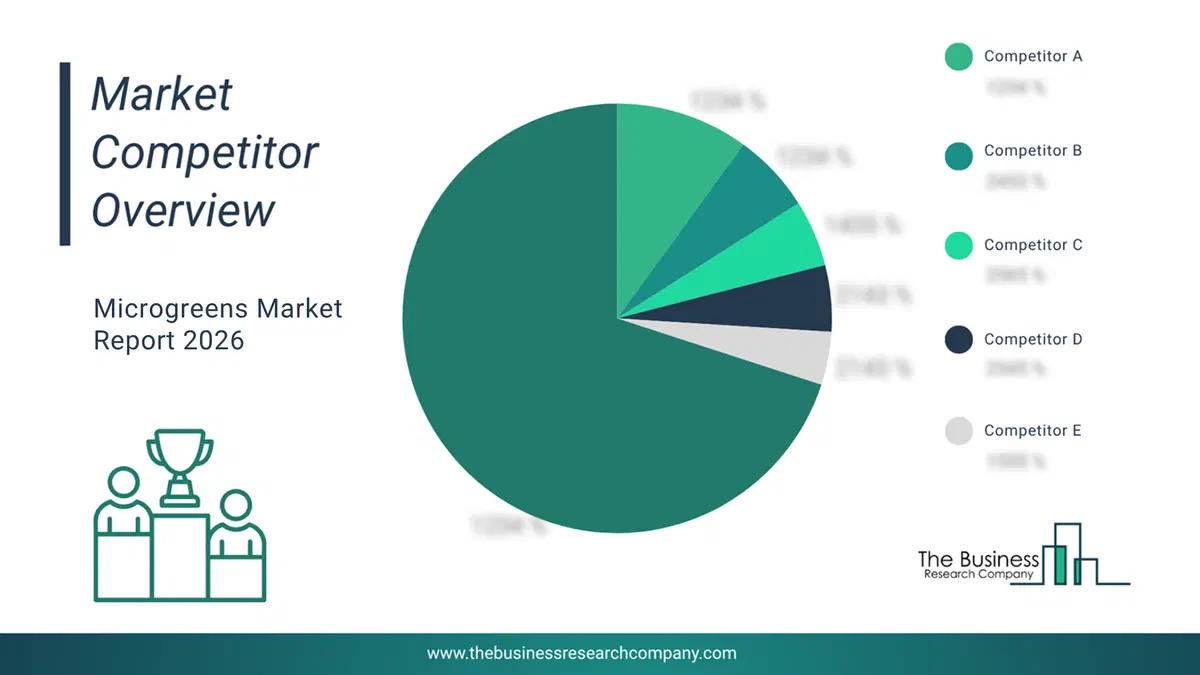
This chart is for illustrative purposes; the full report includes a detailed competitor analysis and comprehensive overview of the top 10 companies in the market.
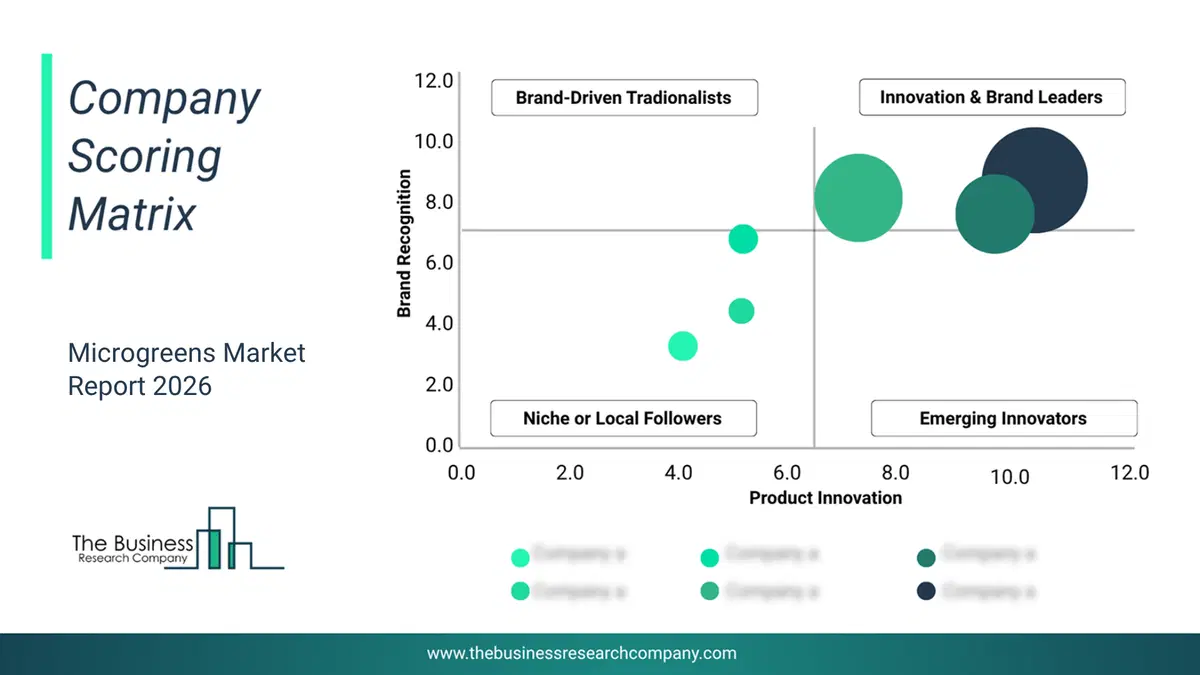
This chart maps companies by product innovation and brand strength, with bubble size indicating relative revenue, helping identify market leaders, challengers, and niche players. This is an illustrative chart; the full report provides a complete and accurate competitive analysis.
Global Microgreens Market Trends and Insights
Major companies operating in microgreens are focusing on innovating products, such as Broccoli Microgreens Superfood Powder, to provide reliable services to customers. Broccoli Microgreens Superfood Powder is used as microgreens powder to improve the health of people and the planet through nutrient-dense products. For instance, in February 2023, True Grace Health, a US-based nutritional supplement company, launched Broccoli Microgreens Superfood Powder. Broccoli Microgreens Superfood Powder is the first microgreen powder certified by the Regenerative Organic Alliance, a US-based non-profit organization, as Regenerative Organic Certified (ROC) microgreen powder. It is suitable for adults and children aged four years and older. It is made from freeze-dried broccoli microgreens that are grown on American soil.What Are Latest Mergers And Acquisitions In The Microgreens Market?
In January 2023, Sun Capital Partners Inc., a US-based private equity firm, acquired Sun Marcos for an undisclosed amount. This acquisition aimed at leveraging the company's strengths to capitalize on growth opportunities in the expanding market for microgreens and edible flowers. Sun Marcos is a US-based producer of microgreens.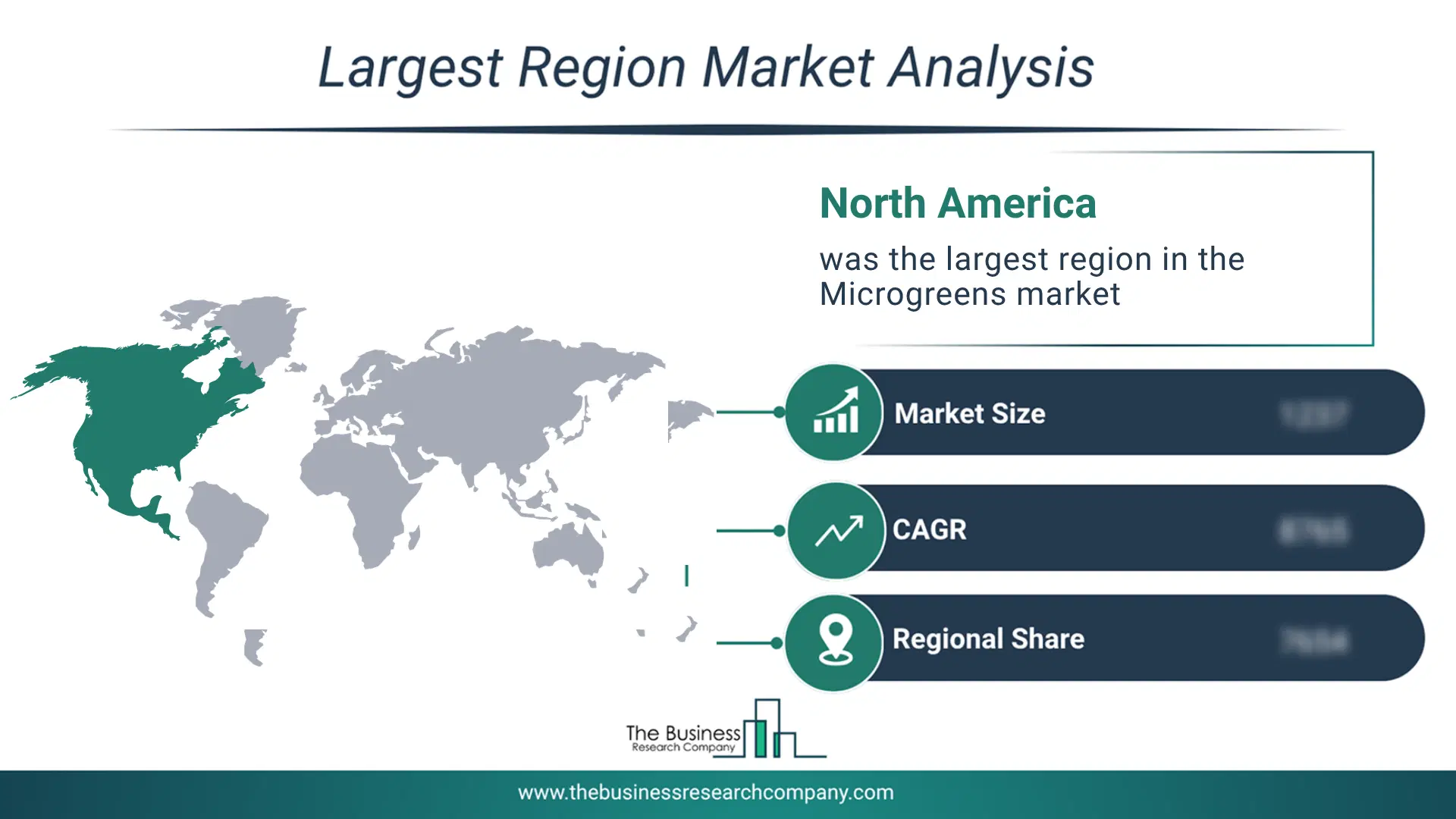
Regional Outlook
North America was the largest region in the microgreens market in 2025. The regions covered in this market report are Asia-Pacific, South East Asia, Western Europe, Eastern Europe, North America, South America, Middle East and Africa. The countries covered in this market report are Australia, Brazil, China, France, Germany, India, Indonesia, Japan, Taiwan, Russia, South Korea, UK, USA, Italy, Spain, CanadaWhat Defines the Microgreens Market?
The microgreens market consists of sales of beets, Swiss chard, cucumber, sweet pea, endive, savoy, brussels sprouts, mustards, cauliflower, tatsois. Values in this market are ‘factory gate’ values, that is the value of goods sold by the manufacturers or creators of the goods, whether to other entities (including downstream manufacturers, wholesalers, distributors and retailers) or directly to end customers. The value of goods in this market includes related services sold by the creators of the goods.How is Market Value Defined and Measured?
The market value is defined as the revenues that enterprises gain from the sale of goods and/or services within the specified market and geography through sales, grants, or donations in terms of the currency (in USD unless otherwise specified). The revenues for a specified geography are consumption values that are revenues generated by organizations in the specified geography within the market, irrespective of where they are produced. It does not include revenues from resales along the supply chain, either further along the supply chain or as part of other products.
This chart presents market attractiveness based on a quantitative evaluation of growth, competition, strategic alignment, and risk, offering a clear view of opportunity areas for decision-making. This chart is for illustrative purposes; the full report contains the complete analysis.

This chart highlights the Total Addressable Market (TAM) by estimating the maximum revenue opportunity using an assumption-driven approach, supporting strategic planning and opportunity sizing across markets. The chart is illustrative; the full report provides a more comprehensive analysis.
What Key Data and Analysis Are Included in the Microgreens Market Report 2026?
The microgreens market research report is one of a series of new reports from The Business Research Company that provides market statistics, including industry global market size, regional shares, competitors with the market share, detailed market segments, market trends and opportunities, and any further data you may need to thrive in the microgreens industry. The market research report delivers a complete perspective of everything you need, with an in-depth analysis of the current and future state of the industry.Microgreens Market Report Forecast Analysis
| Report Attribute | Details |
|---|---|
| Market Size Value In 2026 | $2.69 billion |
| Revenue Forecast In 2030 | $4.4 billion |
| Growth Rate | CAGR of 12.8% from 2026 to 2030 |
| Base Year For Estimation | 2025 |
| Actual Estimates/Historical Data | 2020-2025 |
| Forecast Period | 2026 - 2030 |
| Market Representation | Revenue in USD Billion and CAGR from 2026 to 2030 |
| Segments Covered | Type, Category, Farming Method, End User |
| Regional Scope | Asia-Pacific, Western Europe, Eastern Europe, North America, South America, Middle East, Africa |
| Country Scope | The countries covered in the report are Australia, Brazil, China, France, Germany, India, Indonesia, Japan, Taiwan, Russia, South Korea, UK, USA, Canada, Italy, Spain. |
| Key Companies Profiled | AeroFarms LLC, Goodleaf Farms, Living Earth Farm, Fresh Origins, Gotham Greens, Bowery Farming Inc., Charlie’s Produce (Farmbox Greens LLC), Madar Farms, Metro Microgreens, The Chef's Garden Inc., Koppert Cress USA, Pacific Coast Greens, Great Lakes Growers, Florida Microgreens, Farm.One, BrightFarms, Plenty, Edenworks, Green Sense Farms, Local Roots Farms, Lufa Farms, Square Roots, Urban Oasis, Urban Produce, Vertical Harvest, Infinite Harvest, Harvest Urban Farms |
| Customization Scope | Request for Customization |
| Pricing And Purchase Options | Explore Purchase Options |