

Microinjector Market Report 2026
Global Outlook – By Product Type (Manual Microinjectors, Automatic Microinjectors, Electronic Microinjectors, Hydraulic Microinjectors, Pneumatic Microinjectors, Piezoelectric Microinjectors), By Target (Cells, Tissues, Embryos, Deoxyribonucleic Acid, Ribonucleic Acid, Proteins, Drugs), By Application (Cell Research, In Vitro Fertilization, Transgenics, Other Applications), By End User (Research Laboratories, Biotechnology Companies, Academic Institutions, Pharmaceutical Companies, Fertility Clinics, Contract Research Organizations, Hospitals And Diagnostic Centers, Other End Users) – Market Size, Trends, Strategies, and Forecast to 2030
Microinjector Market Overview
• Microinjector market size has reached to $1.9 billion in 2025 • Expected to grow to $3.49 billion in 2030 at a compound annual growth rate (CAGR) of 12.9% • Growth Driver: Increasing Prevalence Of Infertility Driving The Market Growth Due To Rising Rates Of Delayed Childbearing And Age-Related Fertility Decline • Market Trend: Automated Robotic Systems Transform Genetic Research With High-Precision, High-Speed Embryo Injection Technology • North America was the largest region in 2025 and Asia-Pacific is the fastest growing region.What Is Covered Under Microinjector Market?
A microinjector is a precision laboratory device used to deliver extremely small, controlled volumes of liquid into a cell or microscopic target. It is commonly used in micromanipulation techniques to ensure accurate injection of substances such as genetic material or reagents under a microscope. The main product types of microinjectors include manual microinjectors, automatic microinjectors, electronic microinjectors, hydraulic microinjectors, pneumatic microinjectors, and piezoelectric microinjectors. Manual microinjectors refer to precision laboratory instruments that enable researchers to manually control the delivery of minute volumes of substances into biological samples for experimental and clinical applications. These microinjectors are designed to target cells, tissues, embryos, deoxyribonucleic acid, ribonucleic acid, proteins, and drugs. The various applications involved are cell research, in vitro fertilization, transgenics, and others and they are utilized by end users including research laboratories, biotechnology companies, academic institutions, pharmaceutical companies, fertility clinics, contract research organizations, hospitals and diagnostic centers, and others.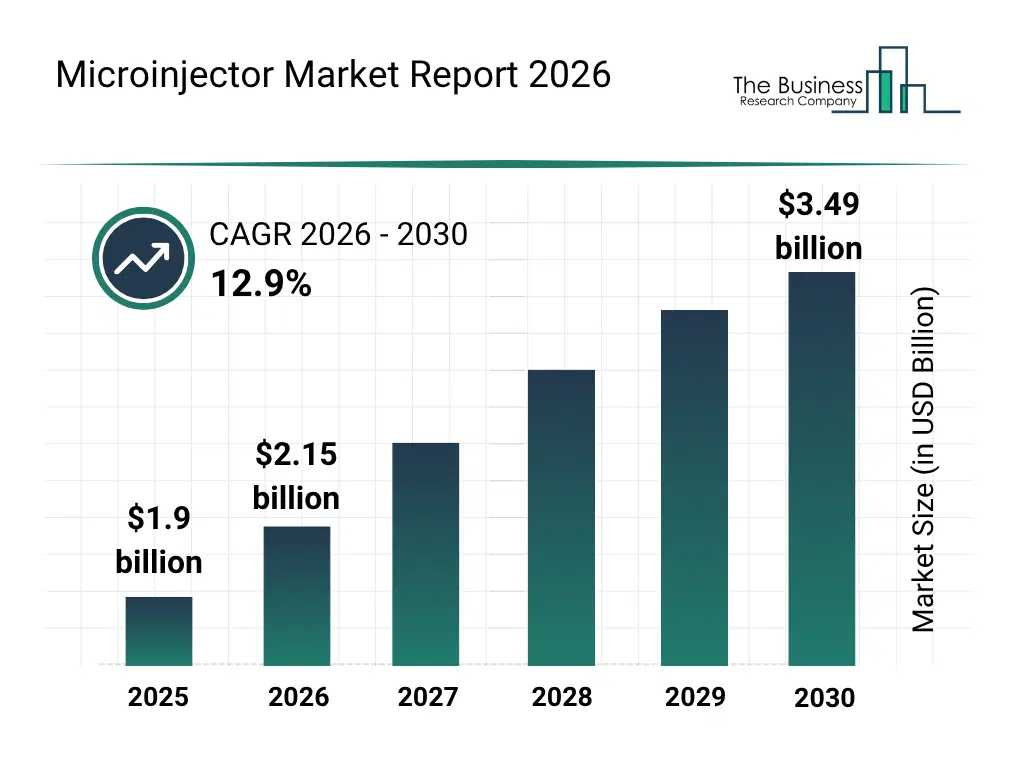
What Is The Microinjector Market Size and Share 2026?
The microinjector market size has grown rapidly in recent years. It will grow from $1.9 billion in 2025 to $2.15 billion in 2026 at a compound annual growth rate (CAGR) of 13.3%. The growth in the historic period can be attributed to growing demand for cell biology research, increasing use of in vitro fertilization procedures, expansion of genetic engineering research, rising investment in life science laboratories, increasing adoption of micromanipulation techniques.What Is The Microinjector Market Growth Forecast?
The microinjector market size is expected to see rapid growth in the next few years. It will grow to $3.49 billion in 2030 at a compound annual growth rate (CAGR) of 12.9%. The growth in the forecast period can be attributed to growing demand for gene editing applications, increasing investment in precision medicine research, rising adoption of advanced laboratory automation, expanding biotechnology research activities, increasing development of regenerative medicine. Major trends in the forecast period include increasing adoption of high-precision microinjection systems, growing demand for automated micromanipulation workflows, rising development of multi-function microinjectors, expansion of high-throughput laboratory injection platforms, increasing focus on enhanced injection accuracy and reproducibility.
Global Microinjector Market Segmentation
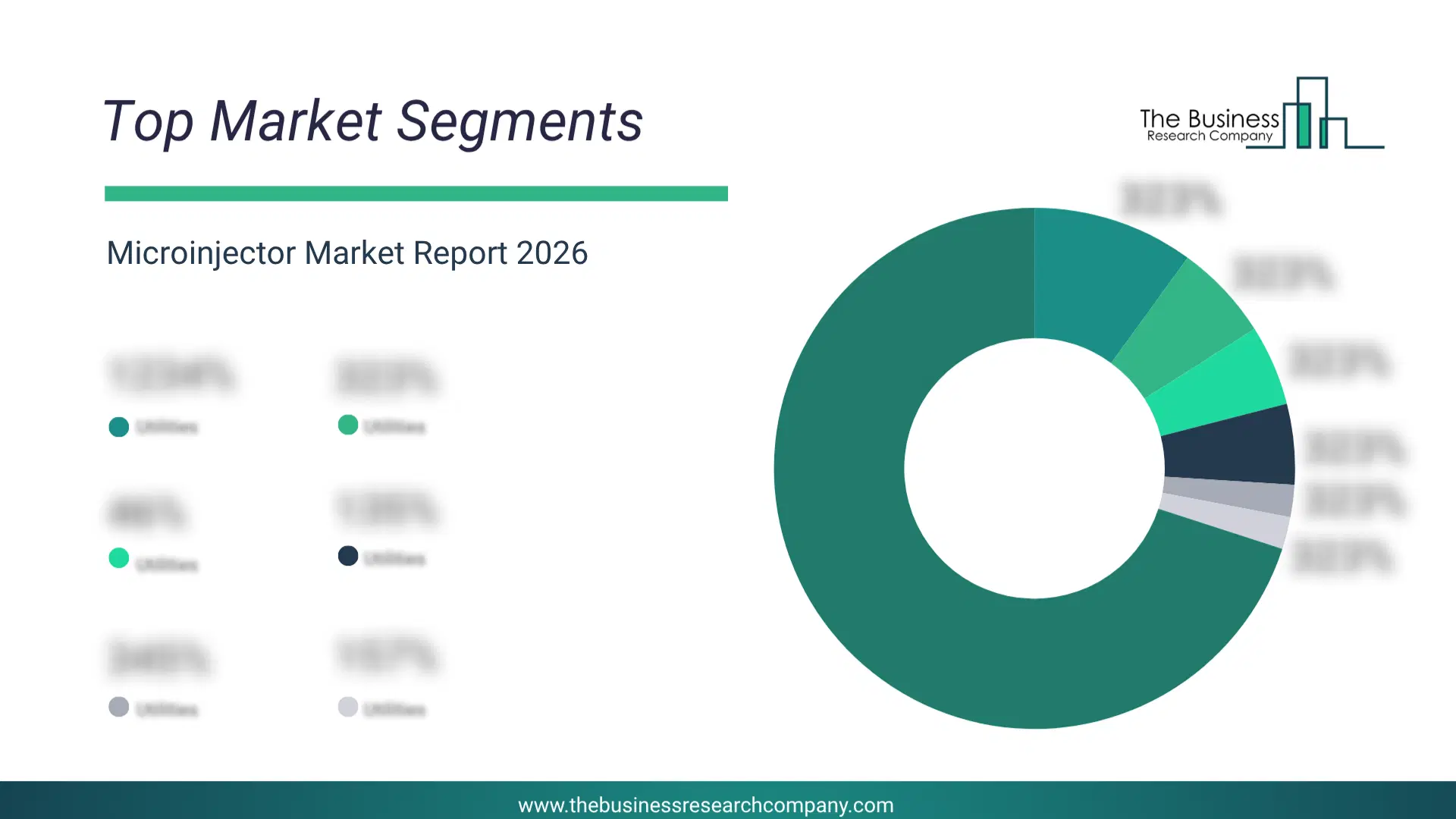
2) By Target: Cells, Tissues, Embryos, Deoxyribonucleic Acid, Ribonucleic Acid, Proteins, Drugs 3) By Application: Cell Research, In Vitro Fertilization, Transgenics, Other Applications 4) By End User: Research Laboratories, Biotechnology Companies, Academic Institutions, Pharmaceutical Companies, Fertility Clinics, Contract Research Organizations, Hospitals And Diagnostic Centers, Other End Users Subsegments: 1) By Manual Microinjectors: Mechanical Pressure Microinjectors, Hand Operated Syringe Microinjectors, Screw Driven Microinjectors, Lever Controlled Microinjectors, Precision Manual Microinjectors 2) By Automatic Microinjectors: Programmable Automatic Microinjectors, High Throughput Automatic Microinjectors, Timed Injection Microinjectors, Robotic Assisted Microinjectors, Computer Controlled Automatic Microinjectors 3) By Electronic Microinjectors: Digital Pressure Microinjectors, Touchscreen Controlled Microinjectors, Pulse Controlled Electronic Microinjectors, Precision Volume Electronic Microinjectors, Multi Function Electronic Microinjectors 4) By Hydraulic Microinjectors: Single Stage Hydraulic Microinjectors, Dual Stage Hydraulic Microinjectors, High Precision Hydraulic Microinjectors, Oil Filled Hydraulic Microinjectors, Fluid Displacement Hydraulic Microinjectors 5) By Pneumatic Microinjectors: Air Pressure Pneumatic Microinjectors, Gas Driven Pneumatic Microinjectors, Pulse Pressure Pneumatic Microinjectors, Continuous Flow Pneumatic Microinjectors, Adjustable Pressure Pneumatic Microinjectors 6) By Piezoelectric Microinjectors: Piezo Assisted Embryo Microinjectors, Piezo Assisted Cell Microinjectors, High Frequency Piezoelectric Microinjectors, Precision Penetration Piezoelectric Microinjectors, Automated Piezoelectric MicroinjectorsWhat Is The Driver Of The Microinjector Market?
The increasing prevalence of infertility is expected to propel the growth of the microinjector market going forward. Infertility is a medical condition characterized by the inability to achieve pregnancy after 12 months of regular unprotected intercourse, or physical difficulties in conceiving or carrying a pregnancy to live birth. The prevalence of infertility is increasing due to delayed childbearing trends, as more individuals postpone family planning until later reproductive years, when age-related declines in egg quality, ovarian reserve, and sperm parameters significantly reduce conception success rates. Microinjector facilitates infertility treatment by enabling precise injection of a single sperm directly into an egg during assisted reproductive procedures such as IVF, thereby improving fertilization success in cases of severe male factor infertility. For instance, in April 2023, according to the World Health Organization (WHO), a Switzerland-based intergovernmental organization, approximately 17.5% of the adult population, or about 1 in 6 people globally, face infertility, highlighting the pressing need to improve access to affordable, high-quality fertility care for those affected. Therefore, the increasing prevalence of infertility is driving the growth of the microinjector industry.Key Players In The Global Microinjector Market
Major companies operating in the microinjector market are Thermo Fisher Scientific Inc., Sutter Instrument Company, Vitrolife AB, Harvard Bioscience Inc., Drummond Scientific Company, Applied Scientific Instrumentation (ASI), NEPA GENE Co Ltd., Prime Tech Ltd., World Precision Instruments, ALA Scientific Instruments Inc., Cook Medical LLC, LabSmith Inc., Luigs And Neumann GmbH, MicroData Instrument Inc., NPI Electronic GmbH, RWD Life Science Co Ltd., Sensapex Oy., Tritech Research Inc., Narishige Group, Eppendorf SE, Eppendorf Microdissection GmbH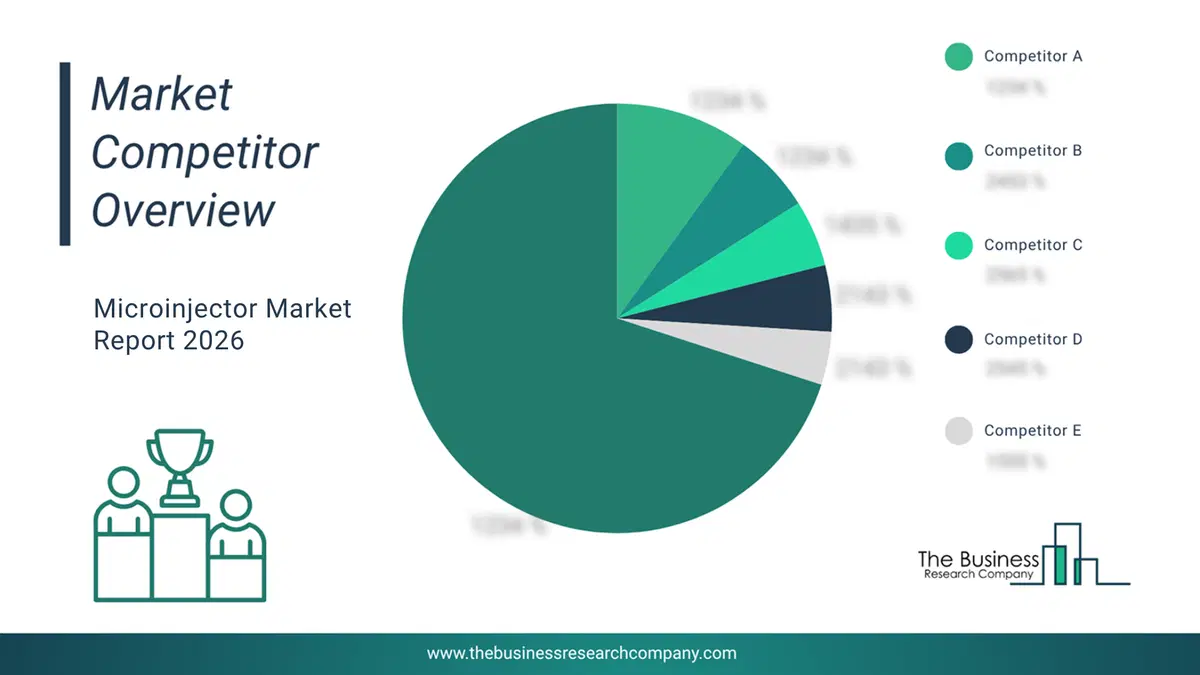
This chart is for illustrative purposes; the full report includes a detailed competitor analysis and comprehensive overview of the top 10 companies in the market.
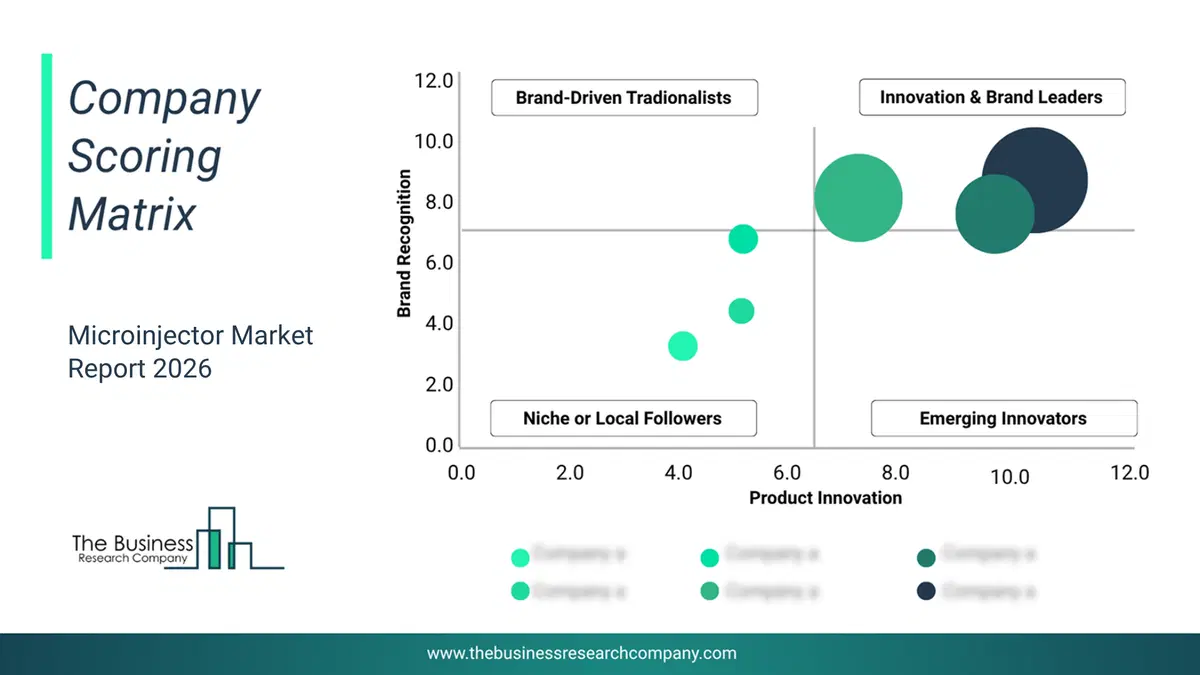
This chart maps companies by product innovation and brand strength, with bubble size indicating relative revenue, helping identify market leaders, challengers, and niche players. This is an illustrative chart; the full report provides a complete and accurate competitive analysis.
Global Microinjector Market Trends and Insights
Major companies operating in the microinjector market are focusing on developing innovative solutions, such as automated robotic systems to enhance precision, improve efficiency, and reduce manual intervention in genetic research applications. Automated robotic systems are computer-controlled machines designed to perform tasks automatically with high precision and minimal human intervention. For instance, in June 2025, Objective Biotechnology LLC, a US-based developer of next-generation laboratory automation tools, partnered with the University of Minnesota, a US-based premier public research university, and launched the Autoinjector, the first fully automated robotic system for microinjection in genetic research. This platform uses computer vision and machine learning to perform high-precision embryo injections up to four times faster than manual methods while significantly reducing technician training time. Additionally, it enables large-scale genetic experiments, demonstrated by its ability to inject over 20,000 uniquely barcoded DNA plasmids into Drosophila embryos within two days, producing hundreds of transgenic lines and improving vitrification and post-thaw survival rates in zebrafish compared to conventional methods.What Are Latest Mergers And Acquisitions In The Microinjector Market?
In November 2023, BioCryst Pharmaceuticals Inc., a US-based biopharmaceutical company, partnered with Clearside Biomedical to develop avoralstat for the treatment of diabetic macular edema using Clearside’s proprietary SCS Microinjector. With this partnership, BioCryst Pharmaceuticals, Inc. and Clearside Biomedical aim to combine a novel plasma kallikrein inhibitor therapy with a targeted suprachoroidal drug delivery system to improve treatment precision, enhance drug localization in the retina, and potentially offer an alternative therapeutic option for patients with diabetic macular edema who respond poorly to existing anti-VEGF therapies. Clearside Biomedical Inc. is a US-based company that provides the proprietary SCS Microinjectors.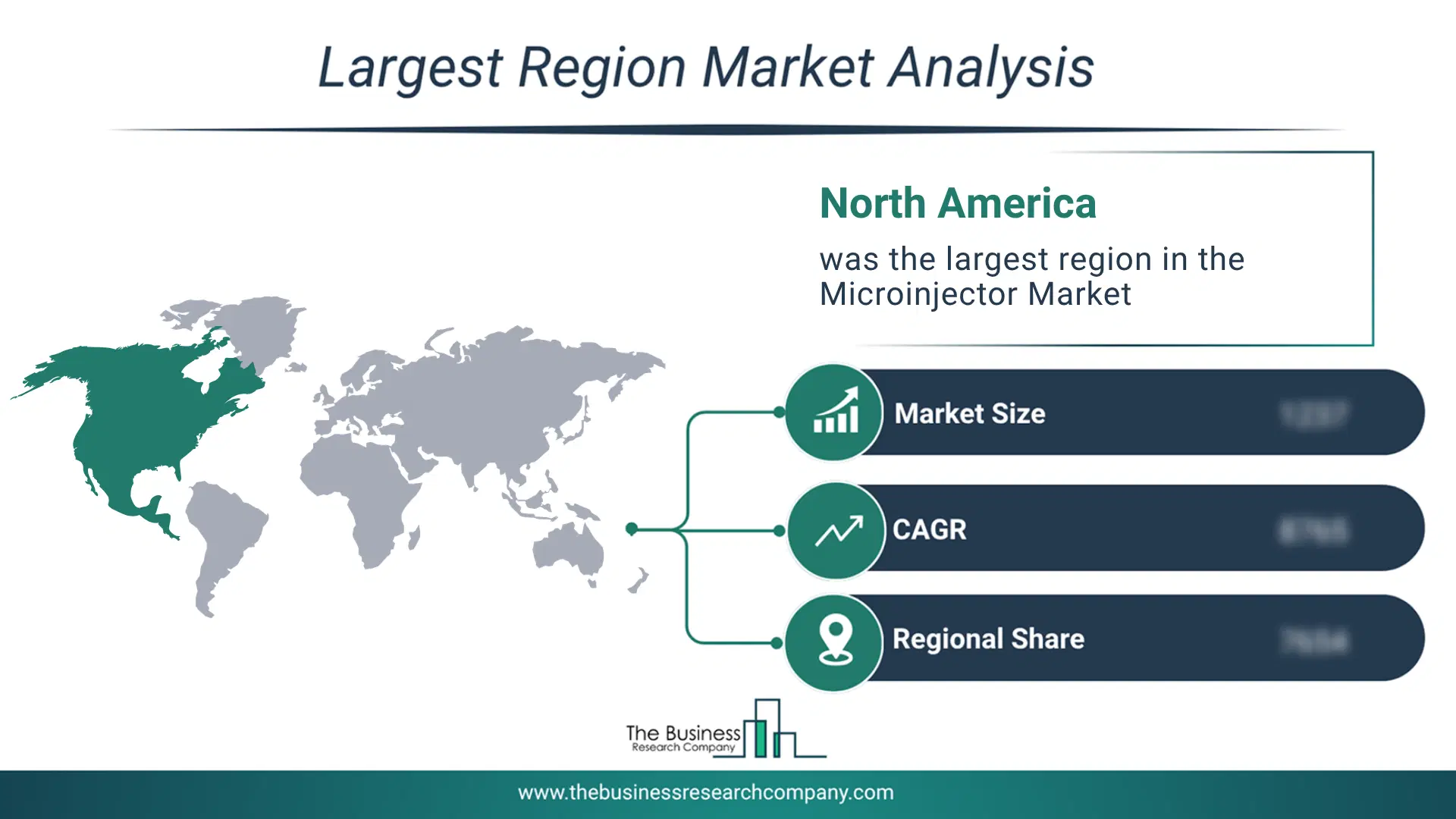
Regional Outlook/Insights
North America was the largest region in the microinjector market in 2025. Asia-Pacific is expected to be the fastest-growing region in the forecast period. The regions covered in this market report are Asia-Pacific, South East Asia, Western Europe, Eastern Europe, North America, South America, Middle East, Africa. The countries covered in this market report are Australia, Brazil, China, France, Germany, India, Indonesia, Japan, Taiwan, Russia, South Korea, UK, USA, Canada, Italy, Spain.What Defines the Microinjector Market?
The microinjector market consists of sales of recision cell injection systems, microliter injection systems, laboratory microdispensing devices, microsyringe-based injection systems, and automated micromanipulation injectors. Values in this market are ‘factory gate’ values, that is, the value of goods sold by the manufacturers or creators of the goods, whether to other entities (including downstream manufacturers, wholesalers, distributors, and retailers) or directly to end customers. The value of goods in this market includes related services sold by the creators of the goods.How is Market Value Defined and Measured?
The market value is defined as the revenues that enterprises gain from the sale of goods and/or services within the specified market and geography through sales, grants, or donations in terms of the currency (in USD unless otherwise specified). The revenues for a specified geography are consumption values that are revenues generated by organizations in the specified geography within the market, irrespective of where they are produced. It does not include revenues from resales along the supply chain, either further along the supply chain or as part of other products.
This chart presents market attractiveness based on a quantitative evaluation of growth, competition, strategic alignment, and risk, offering a clear view of opportunity areas for decision-making. This chart is for illustrative purposes; the full report contains the complete analysis.

This chart highlights the Total Addressable Market (TAM) by estimating the maximum revenue opportunity using an assumption-driven approach, supporting strategic planning and opportunity sizing across markets. The chart is illustrative; the full report provides a more comprehensive analysis.
What Key Data and Analysis Are Included in the Microinjector Market Report 2026?
The microinjector market research report is one of a series of new reports from The Business Research Company that provides microinjector market statistics, including microinjector industry global market size, regional shares, competitors with a microinjector market share, detailed microinjector market segments, market trends and opportunities, and any further data you may need to thrive in the microinjector industry. This microinjector market research report delivers a complete perspective of everything you need, with an in-depth analysis of the current and future scenario of the industry.Microinjector Market Report Forecast Analysis
| Report Attribute | Details |
|---|---|
| Market Size Value In 2026 | $2.15 billion |
| Revenue Forecast In 2030 | $3.49 billion |
| Growth Rate | CAGR of 12.9% from 2026 to 2030 |
| Base Year For Estimation | 2025 |
| Actual Estimates/Historical Data | 2020-2025 |
| Forecast Period | 2026 - 2030 |
| Market Representation | Revenue in USD Billion and CAGR from 2026 to 2030 |
| Segments Covered | Product Type, Target, Application, End User |
| Regional Scope | Asia-Pacific, Western Europe, Eastern Europe, North America, South America, Middle East, Africa |
| Country Scope | The countries covered in the report are Australia, Brazil, China, France, Germany, India, Indonesia, Japan, Taiwan, Russia, South Korea, UK, USA, Canada, Italy, Spain. |
| Key Companies Profiled | Thermo Fisher Scientific Inc., Sutter Instrument Company, Vitrolife AB, Harvard Bioscience Inc., Drummond Scientific Company, Applied Scientific Instrumentation (ASI), NEPA GENE Co Ltd., Prime Tech Ltd., World Precision Instruments, ALA Scientific Instruments Inc., Cook Medical LLC, LabSmith Inc., Luigs And Neumann GmbH, MicroData Instrument Inc., NPI Electronic GmbH, RWD Life Science Co Ltd., Sensapex Oy., Tritech Research Inc., Narishige Group, Eppendorf SE, Eppendorf Microdissection GmbH |
| Customization Scope | Request for Customization |
| Pricing And Purchase Options | Explore Purchase Options |