
Micronutrient Fertilizer Market Report 2026
Global Outlook – By Type (Zinc (Zn), Boron (Bo), Iron (Fe), Manganese (Mn), Copper (Cu), Molybdenum (Mo), Silicon (Si), Nickel (Ni), Cobalt (Co), Other Types), By Form (Chelated, Non Chelated), By Crop Type (Grains And Cereals, Pulses And Oilseeds, Commercial Crops, Fruits And Vegetables, Other Crop Types), By Application Methods (Soil Application, Foliar Application, Fertigation, Other Applications) – Market Size, Trends, Strategies, and Forecast to 2030
Micronutrient Fertilizer Market Overview
• Micronutrient Fertilizer market size has reached to $4.63 billion in 2025 • Expected to grow to $6.41 billion in 2030 at a compound annual growth rate (CAGR) of 6.7% • Growth Driver: Increasing Soil Degradation Drives Growth In Micronutrient Fertilizer Market • Market Trend: Innovative Water-Soluble Fertilizers Revolutionize Crop Nutrition • North America was the largest region in 2025 and Asia-Pacific is the fastest growing region.What Is Covered Under Micronutrient Fertilizer Market?
Micronutrient fertilizers are specialized fertilizers that supply essential trace elements required in small quantities for plant growth, such as zinc, copper, iron, and manganese. They enhance soil fertility and improve plant health by addressing micronutrient deficiencies. These fertilizers are crucial for optimizing crop yields and ensuring balanced nutrition. The main types of micronutrient fertilizer are zinc (Zn), boron (Bo), iron (Fe), manganese (Mn), copper (Cu), molybdenum (Mo), silicon (Si), nickel (Ni), cobalt (Co), and others. Zinc is an essential trace element that supports plant enzyme function, growth, and disease resistance. Its deficiency can lead to poor crop development and reduced yield. Micronutrient fertilizers come in chelated and non-chelated forms and are used for various crop types such as grains and cereals, pulses and oilseeds, commercial crops, fruits and vegetables, and others. Applications include soil application, foliar application, fertigation, and others.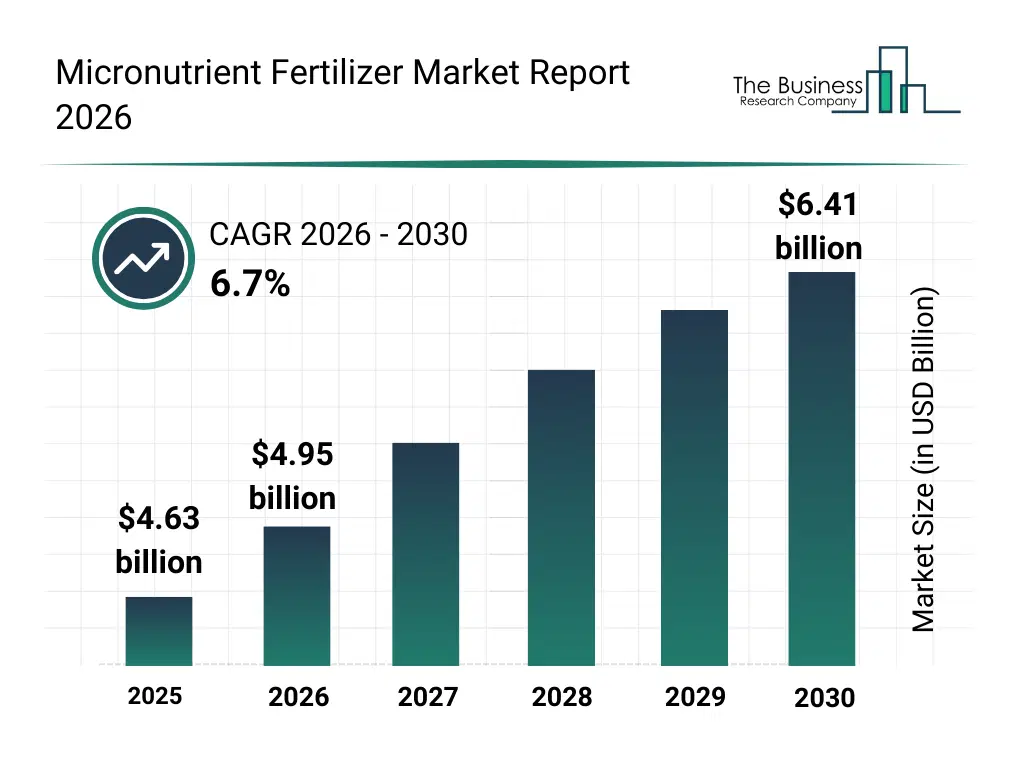
What Is The Micronutrient Fertilizer Market Size and Share 2026?
The micronutrient fertilizer market size has grown strongly in recent years. It will grow from $4.63 billion in 2025 to $4.95 billion in 2026 at a compound annual growth rate (CAGR) of 7.0%. The growth in the historic period can be attributed to soil micronutrient depletion, yield improvement needs, fertilizer awareness programs, agricultural intensification, population driven food demand.What Is The Micronutrient Fertilizer Market Growth Forecast?
The micronutrient fertilizer market size is expected to see strong growth in the next few years. It will grow to $6.41 billion in 2030 at a compound annual growth rate (CAGR) of 6.7%. The growth in the forecast period can be attributed to precision farming adoption, micronutrient deficiency mapping, sustainable agriculture practices, high value crop expansion, government support for soil health. Major trends in the forecast period include rising demand for balanced crop nutrition, growing adoption of chelated micronutrients, expansion of precision agriculture practices, increased use in high value crops, focus on soil health and yield optimization.
Global Micronutrient Fertilizer Market Segmentation
1) By Type: Zinc (Zn), Boron (Bo), Iron (Fe), Manganese (Mn), Copper (Cu), Molybdenum (Mo), Silicon (Si), Nickel (Ni), Cobalt (Co), Other Types 2) By Form: Chelated, Non Chelated 3) By Crop Type: Grains And Cereals, Pulses And Oilseeds, Commercial Crops, Fruits And Vegetables, Other Crop Types 4) By Application Methods: Soil Application, Foliar Application, Fertigation, Other Applications Subsegments: 1) By Zinc (Zn): Zinc Sulfate, Zinc Oxide, Zinc Chelates, Zinc Nitrate 2) By Boron (Bo): Borax, Boric Acid, Sodium Borate, Boron Chelates 3) By Iron (Fe): Iron Sulfate, Iron Chelates, Iron Oxide, Iron EDTA 4) By Manganese (Mn): Manganese Sulfate, Manganese Chelates, Manganese Oxide 5) By Copper (Cu): Copper Sulfate, Copper Chelates, Copper Oxide 6) By Molybdenum (Mo): Ammonium Molybdate, Sodium Molybdate, Molybdenum Oxide 7) By Silicon (Si): Calcium Silicate, Potassium Silicate, Sodium Metasilicate 8) By Nickel (Ni): Nickel Sulfate, Nickel Nitrate, Nickel Chelates 9) By Cobalt (Co): Cobalt Sulfate, Cobalt Nitrate, Cobalt Chloride 10) By Other Types: Selenium Fertilizers, Chlorine Fertilizers, Vanadium FertilizersWhat Is The Driver Of The Micronutrient Fertilizer Market?
The increasing degradation of soil is expected to propel the growth of the micronutrient fertilizer market going forward. Soil degradation is the decline in soil quality and productivity caused by various factors, leading to reduced agricultural output and environmental health. Soil degradation is primarily caused by unsustainable agricultural practices, deforestation, and industrial activities, leading to erosion, nutrient depletion, and the loss of organic matter. Climate change and overgrazing further exacerbate the decline in soil health. Micronutrient fertilizers help combat soil degradation by replenishing essential nutrients, enhancing soil fertility, and promoting sustainable crop growth. For instance, in November 2025, according to the Food and Agriculture Organization of the United Nations (FAO), an Italy-based intergovernmental agency, about 1.7 billion people worldwide live in areas where crop yields are at least 10% lower due to human‑induced land degradation. Therefore, increasing soil degradation is driving the growth of the micronutrient fertilizer industry.Key Players In The Global Micronutrient Fertilizer Market
Major companies operating in the micronutrient fertilizer market are Koch Industries Inc., BASF SE, Nutrien Ltd., Yara International ASA, The Mosaic Company, Corteva Inc., Akzo Nobel N.V., Israel Chemicals Ltd., K+S AG, FMC Corporation, Nouryon Specialty Chemicals B.V., Coromandel International Limited, Nufarm Limited, Compass Minerals International Inc., Haifa Negev Technologies Ltd., Aries Agro Ltd., AgroLiquid, Kugler Company, Van Iperen International B.V., Graco Fertilizer Company, Solufeed Ltd., Western Nutrients Corporation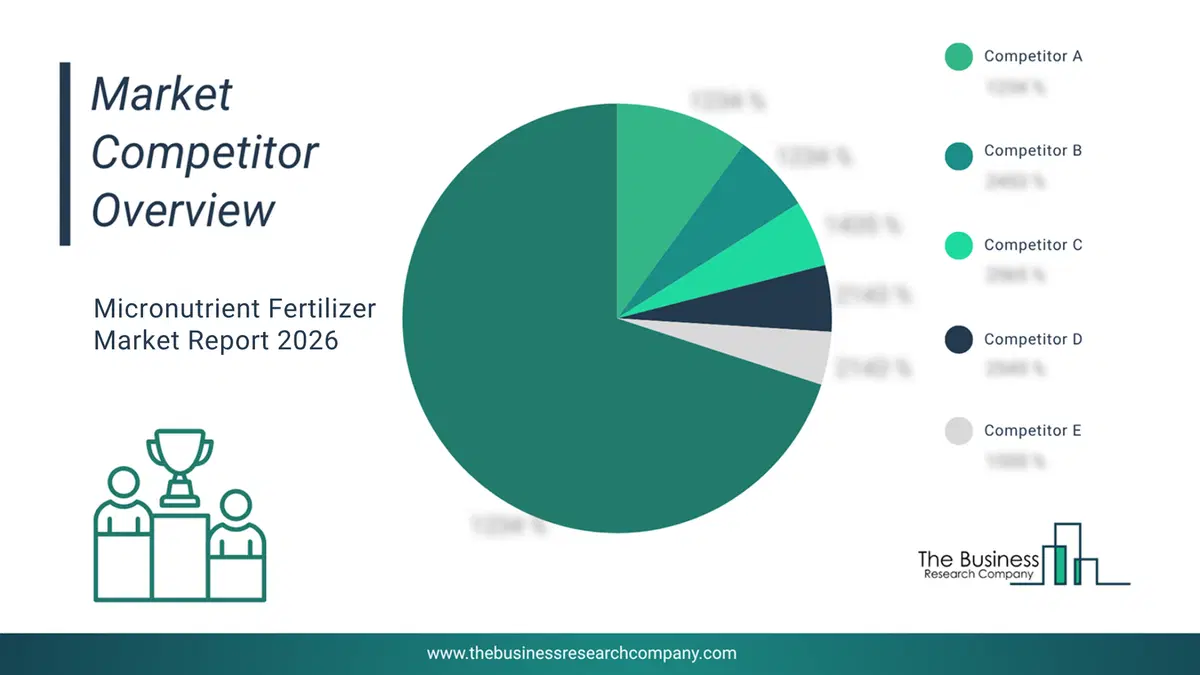
This chart is for illustrative purposes; the full report includes a detailed competitor analysis and comprehensive overview of the top 10 companies in the market.
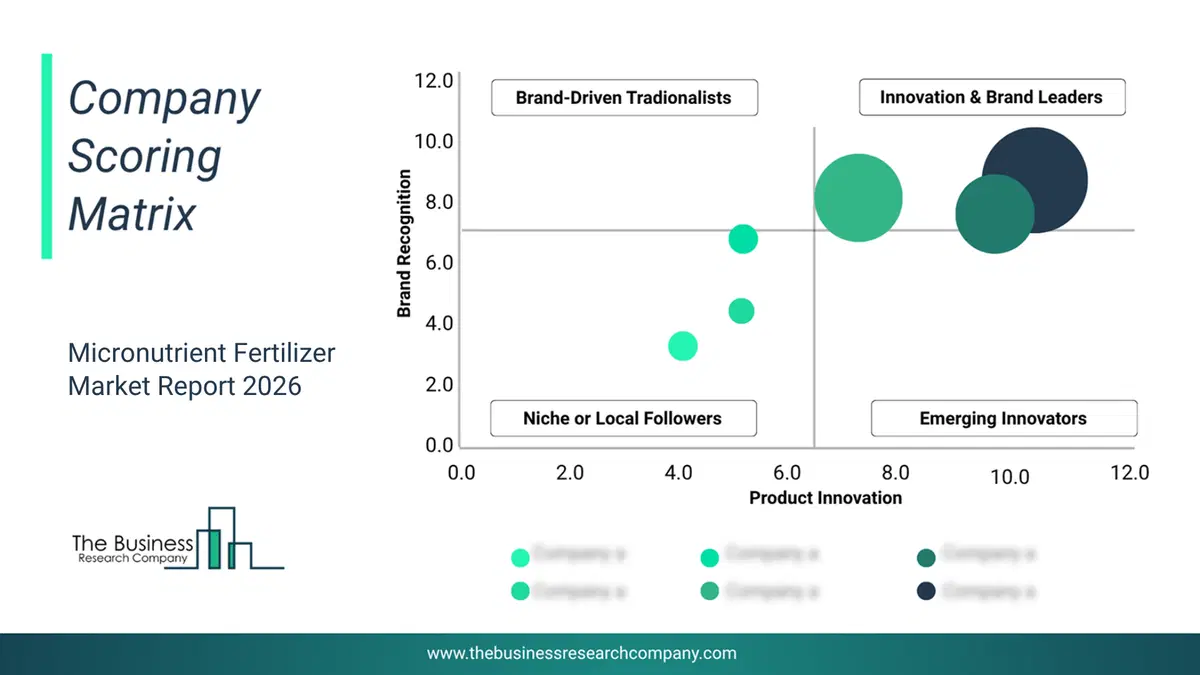
This chart maps companies by product innovation and brand strength, with bubble size indicating relative revenue, helping identify market leaders, challengers, and niche players. This is an illustrative chart; the full report provides a complete and accurate competitive analysis.
Global Micronutrient Fertilizer Market Trends and Insights
Major companies operating in the micronutrient fertilizer market are focusing on developing innovative solutions, such as water-soluble fertilizers, to enhance nutrient availability and improve crop yields. Water-soluble fertilizers refer to fertilizers that completely dissolve in water, allowing for efficient nutrient delivery directly to plants through irrigation systems. For instance, in June 2023, ICL Group Ltd., an Israel-based chemical manufacturing company, launched a new line of water-soluble micronutrient and N-P-K fertilizers in North America, targeting improved crop nutrition through advanced foliar and fertigation methods. This range features flagship products such as Nova FINISH, Nova PULSE, Nova ELEVATE, and Nova FLOW, all designed to offer high-purity, water-soluble nutrients tailored to specific crop needs, ensuring optimal solubility and compatibility with a variety of herbicides and crop protectants.What Are Latest Mergers And Acquisitions In The Micronutrient Fertilizer Market?
In January 2023, Nouryon Specialty Chemicals B.V., a Netherlands-based chemical manufacturing company, acquired ADOB Fertilizers for an undisclosed amount. The acquisition aims to strengthen Nouryon's offerings in chelated micronutrients, expand its portfolio in crop nutrition, and enhance its specialty agricultural solutions. ADOB Fertilizers is a Poland-based micronutrient fertilizer and inorganic chemical manufacturing company.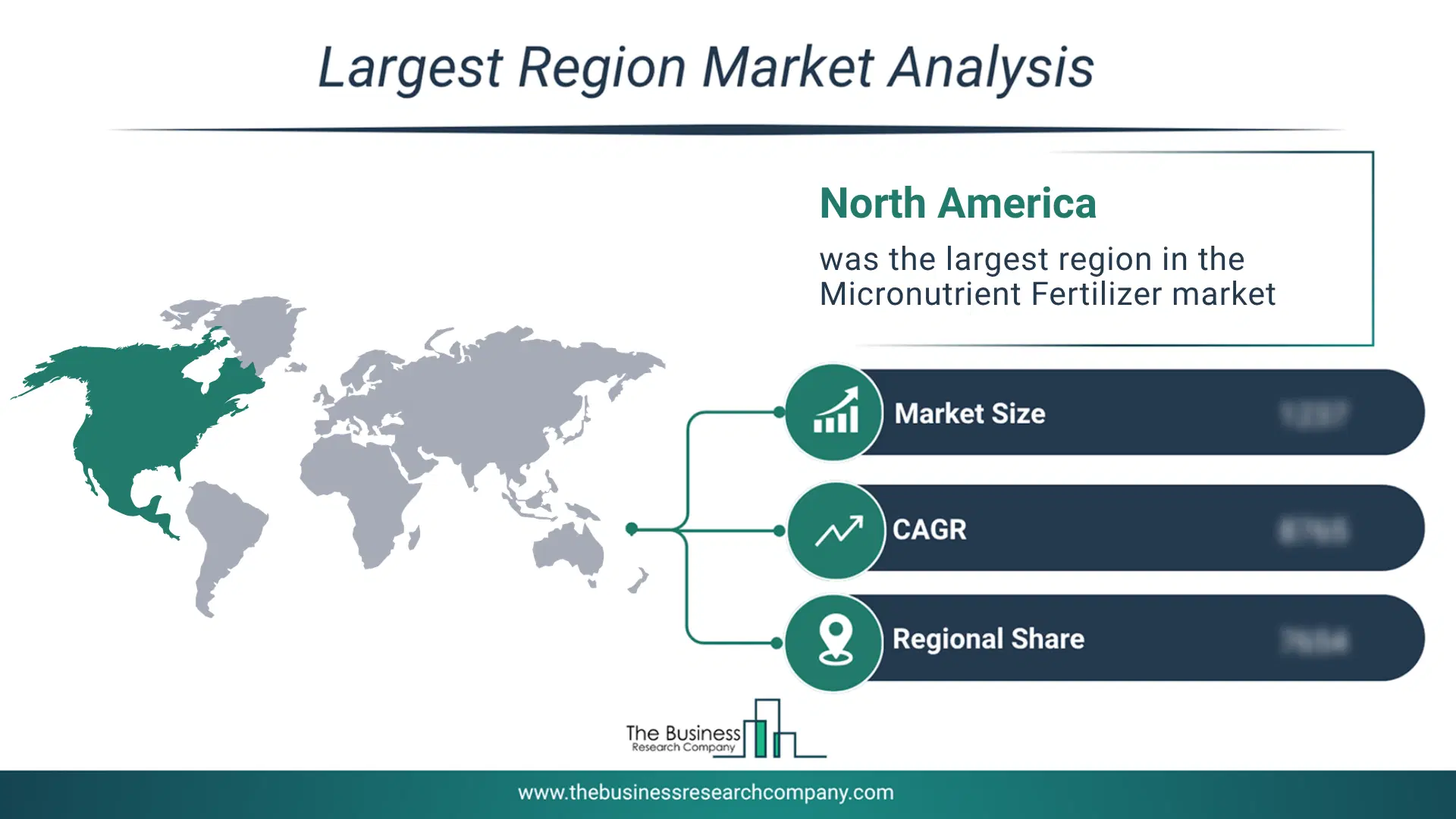
Regional Insights
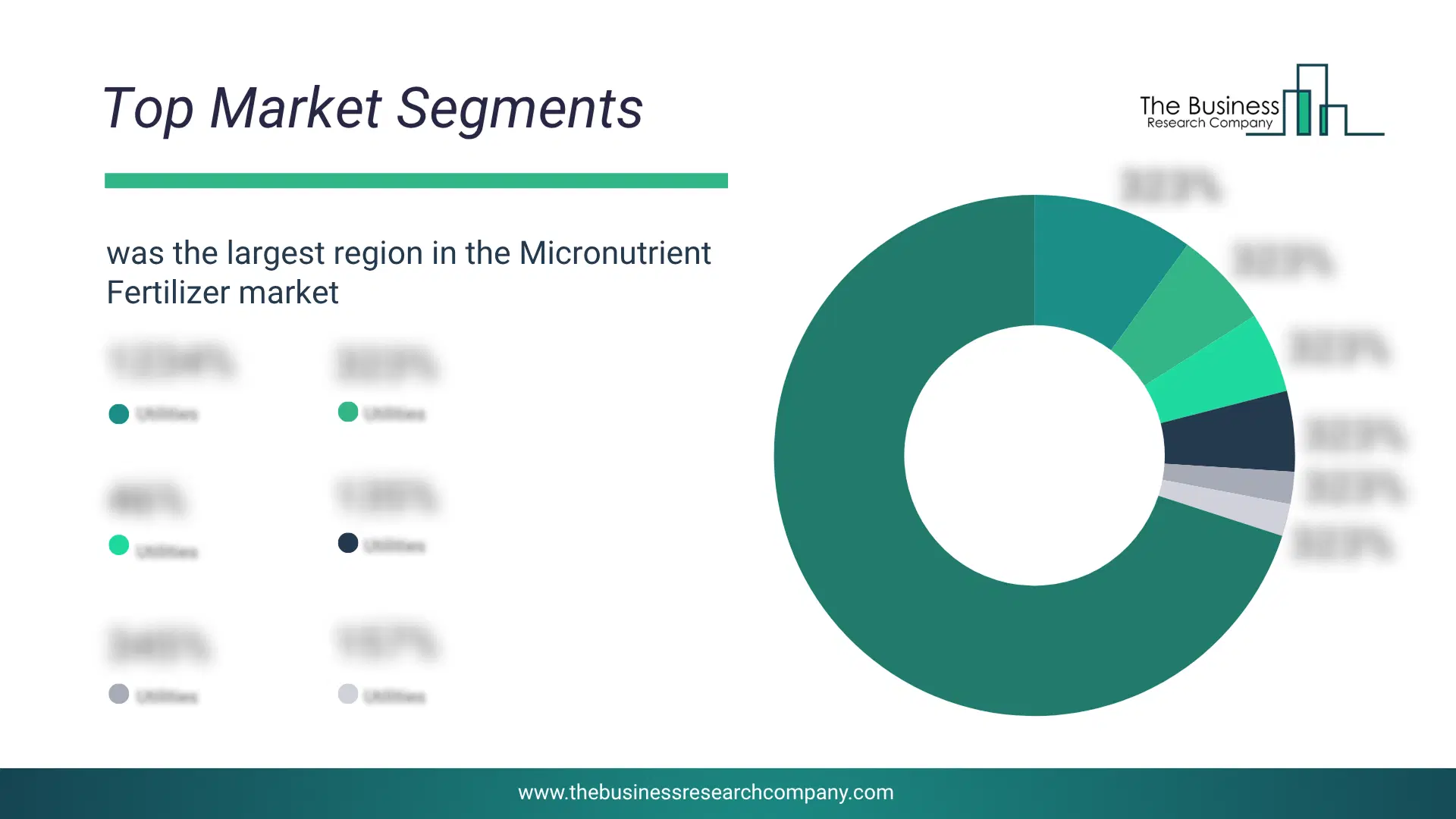
North America was the largest region in the micronutrient fertilizer market in 2025. Asia-Pacific is expected to be the fastest-growing region in the forecast period. The regions covered in this market report are Asia-Pacific, South East Asia, Western Europe, Eastern Europe, North America, South America, Middle East, Africa The countries covered in this market report are Australia, Brazil, China, France, Germany, India, Indonesia, Japan, Taiwan, Russia, South Korea, UK, USA, Canada, Italy, SpainWhat Defines the Micronutrient Fertilizer Market?
The micronutrient fertilizer market consists of sales of calcium nitrate, magnesium sulfate, sodium molybdate, and ferric chloride. Values in this market are ‘factory gate’ values, that is the value of goods sold by the manufacturers or creators of the goods, whether to other entities (including downstream manufacturers, wholesalers, distributors and retailers) or directly to end customers. The value of goods in this market includes related services sold by the creators of the goods.How is Market Value Defined and Measured?
The market value is defined as the revenues that enterprises gain from the sale of goods and/or services within the specified market and geography through sales, grants, or donations in terms of the currency (in USD unless otherwise specified). The revenues for a specified geography are consumption values that are revenues generated by organizations in the specified geography within the market, irrespective of where they are produced. It does not include revenues from resales along the supply chain, either further along the supply chain or as part of other products.
This chart presents market attractiveness based on a quantitative evaluation of growth, competition, strategic alignment, and risk, offering a clear view of opportunity areas for decision-making. This chart is for illustrative purposes; the full report contains the complete analysis.

This chart highlights the Total Addressable Market (TAM) by estimating the maximum revenue opportunity using an assumption-driven approach, supporting strategic planning and opportunity sizing across markets. The chart is illustrative; the full report provides a more comprehensive analysis.
What Key Data and Analysis Are Included in the Micronutrient Fertilizer Market Report 2026?
The micronutrient fertilizer market research report is one of a series of new reports from The Business Research Company that provides market statistics, including industry global market size, regional shares, competitors with the market share, detailed market segments, market trends and opportunities, and any further data you may need to thrive in the micronutrient fertilizer industry. The market research report delivers a complete perspective of everything you need, with an in-depth analysis of the current and future state of the industry.Micronutrient Fertilizer Market Report Forecast Analysis
| Report Attribute | Details |
|---|---|
| Market Size Value In 2026 | $4.95 billion |
| Revenue Forecast In 2030 | $6.41 billion |
| Growth Rate | CAGR of 7.0% from 2026 to 2030 |
| Base Year For Estimation | 2025 |
| Actual Estimates/Historical Data | 2020-2025 |
| Forecast Period | 2026 - 2030 |
| Market Representation | Revenue in USD Billion and CAGR from 2026 to 2030 |
| Segments Covered | Type, Form, Crop Type, Application Methods |
| Regional Scope | Asia-Pacific, Western Europe, Eastern Europe, North America, South America, Middle East, Africa |
| Country Scope | The countries covered in this market report are Australia, Brazil, China, France, Germany, India, Indonesia, Japan, Taiwan, Russia, South Korea, UK, USA, Canada, Italy, Spain |
| Key Companies Profiled | Koch Industries Inc., BASF SE, Nutrien Ltd., Yara International ASA, The Mosaic Company, Corteva Inc., Akzo Nobel N.V., Israel Chemicals Ltd., K+S AG, FMC Corporation, Nouryon Specialty Chemicals B.V., Coromandel International Limited, Nufarm Limited, Compass Minerals International Inc., Haifa Negev Technologies Ltd., Aries Agro Ltd., AgroLiquid, Kugler Company, Van Iperen International B.V., Graco Fertilizer Company, Solufeed Ltd., Western Nutrients Corporation |
| Customization Scope | Request for Customization |
| Pricing And Purchase Options | Explore Purchase Options |