

Microtubule Inhibitor Chemotherapy Drugs Market Report 2026
Global Outlook – By Drug Type (Vinca Alkaloids, Taxanes, Epothilones, Other Drug Types), By Mechanism Of Action (Spindle Poisoning Agents, Microtubule Stabilizers, Microtubule Destabilizers, Dual-Action Inhibitors), By Administration Route (Intravenous (IV), Oral, Subcutaneous, Intraperitoneal), By Patient Demographics (Pediatric Patients, Adult Patients, Geriatric Patients, Gender-Specific Considerations), By Application Area (Breast Cancer, Lung Cancer, Ovarian Cancer, Lymphomas, Other Application Areas) – Market Size, Trends, Strategies, and Forecast to 2030
Microtubule Inhibitor Chemotherapy Drugs Market Overview
• Microtubule Inhibitor Chemotherapy Drugs market size has reached to $5.45 billion in 2025 • Expected to grow to $7.23 billion in 2030 at a compound annual growth rate (CAGR) of 5.8% • Growth Driver: Rising Cancer Incidence Fueling The Growth Of The Market Due To Aging Population And Increasing Mutation Risk • Market Trend: Advancements In Drug Delivery Technologies Driving Microtubule Inhibitor Development • North America was the largest region in 2025 and Asia-Pacific is the fastest growing region.What Is Covered Under Microtubule Inhibitor Chemotherapy Drugs Market?
Microtubule inhibitor chemotherapy drugs are anticancer agents that interfere with the function of microtubules, which are essential for cell division. These drugs prevent cancer cells from successfully dividing by disrupting the normal formation and breakdown of microtubules during mitosis. The main microtubule inhibitor chemotherapy drug types include vinca alkaloids, taxanes, epothilones, and others. Vinca alkaloids are chemotherapy drugs derived from the periwinkle plant. They work by binding to tubulin, a protein that forms microtubules, and preventing their assembly. It offers various mechanisms of action, such as spindle poisoning agents, microtubule stabilizers, microtubule destabilizers, and dual-action inhibitors, and can be administered through intravenous (iv), oral, subcutaneous, and intraperitoneal routes. It is used for pediatric patients, adult patients, geriatric patients, and gender-specific considerations and is applied for breast cancer, lung cancer, ovarian cancer, lymphomas, and others.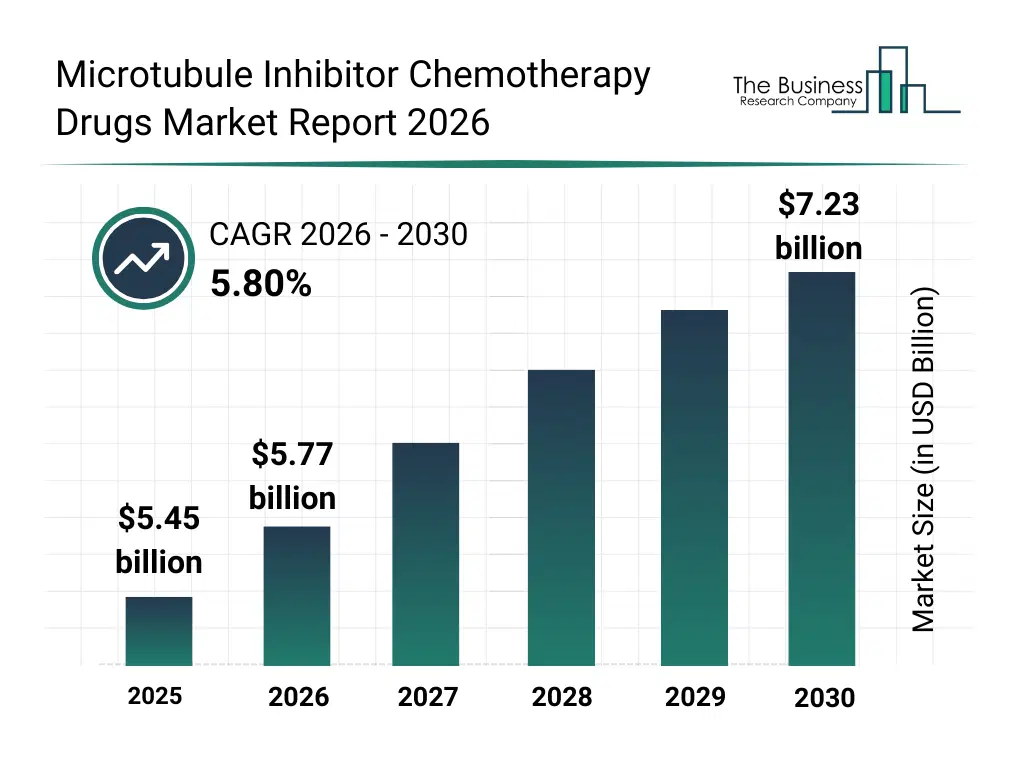
What Is The Microtubule Inhibitor Chemotherapy Drugs Market Size and Share 2026?
The microtubule inhibitor chemotherapy drugs market size has grown strongly in recent years. It will grow from $5.45 billion in 2025 to $5.77 billion in 2026 at a compound annual growth rate (CAGR) of 5.8%. The growth in the historic period can be attributed to widespread use of taxanes and vinca alkaloids, rising global cancer incidence, established effectiveness of microtubule inhibitors, expansion of oncology treatment infrastructure, increased clinical oncology research.What Is The Microtubule Inhibitor Chemotherapy Drugs Market Growth Forecast?
The microtubule inhibitor chemotherapy drugs market size is expected to see strong growth in the next few years. It will grow to $7.23 billion in 2030 at a compound annual growth rate (CAGR) of 5.8%. The growth in the forecast period can be attributed to growth in cancer prevalence worldwide, increasing demand for combination oncology therapies, advancements in drug delivery systems, rising investment in oncology drug development, expansion of personalized cancer treatment strategies. Major trends in the forecast period include increasing use of microtubule inhibitors in combination therapies, growing development of novel synthetic microtubule inhibitors, rising adoption of targeted chemotherapy regimens, expansion of indications across multiple cancer types, increasing focus on reducing chemotherapy toxicity.
Global Microtubule Inhibitor Chemotherapy Drugs Market Segmentation
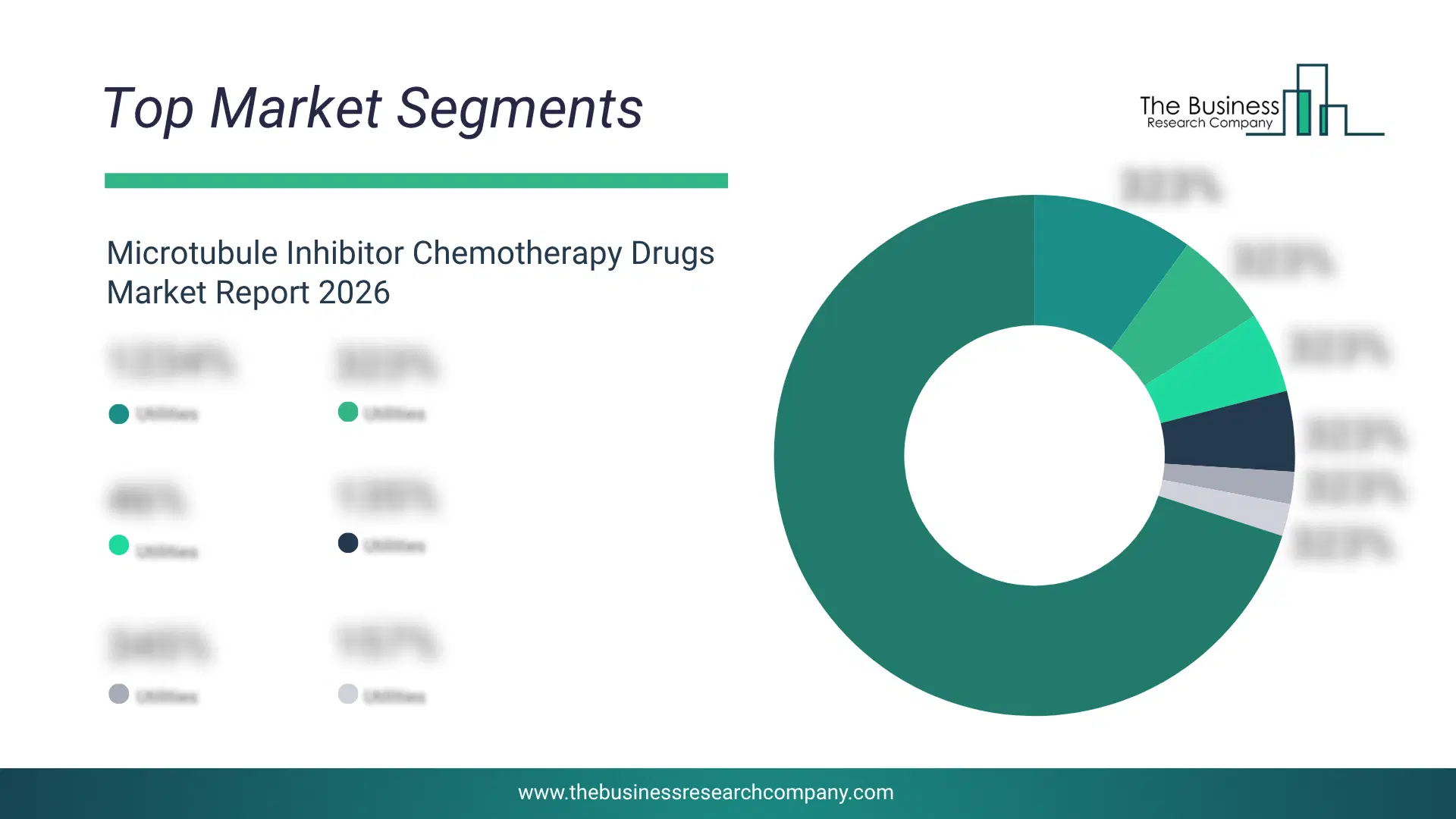
1) By Drug Type: Vinca Alkaloids, Taxanes, Epothilones, Other Drug Types 2) By Mechanism Of Action: Spindle Poisoning Agents, Microtubule Stabilizers, Microtubule Destabilizers, Dual-Action Inhibitors 3) By Administration Route: Intravenous (IV), Oral, Subcutaneous, Intraperitoneal 4) By Patient Demographics: Pediatric Patients, Adult Patients, Geriatric Patients, Gender-Specific Considerations 5) By Application Area: Breast Cancer, Lung Cancer, Ovarian Cancer, Lymphomas, Other Application Areas Subsegments: 1) By Vinca Alkaloids: Vincristine, Vinblastine, Vinorelbine, Vindesine 2) By Taxanes: Paclitaxel, Docetaxel, Cabazitaxel, Nab-paclitaxel 3) By Epothilones: Ixabepilone, Epothilone B 4) By Other Drug Types: Eribulin, Estramustine, Novel Synthetic Microtubule InhibitorsWhat Is The Driver Of The Microtubule Inhibitor Chemotherapy Drugs Market?
The increasing prevalence of cancer is anticipated to fuel the growth of the microtubule inhibitor chemotherapy drugs market going forward. Cancer refers to a collection of diseases marked by abnormal cell growth that has the potential to invade surrounding tissues or spread to other areas of the body. The aging population is contributing to the rise in cancer cases, as older individuals are more likely to accumulate genetic mutations and experience long-term exposure to carcinogens, increasing their susceptibility to cancer. Microtubule inhibitor chemotherapy drugs are used for cancer treatment to disrupt cell division by targeting the microtubules essential for mitosis, effectively stopping the rapid proliferation of cancer cells. For instance, in February 2024, according to the World Health Organization, a Switzerland-based intergovernmental organization, cancer cases are expected to rise significantly, from 20 million in 2022 to over 35 million more by 2050. Therefore, the increasing prevalence of cancer is driving the growth of the microtubule inhibitor chemotherapy drugs industry.Key Players In The Global Microtubule Inhibitor Chemotherapy Drugs Market
Major companies operating in the microtubule inhibitor chemotherapy drugs market are Pfizer Inc., Sanofi S.A., Bristol-Myers Squibb Company, Fresenius Kabi AG, Eli Lilly and Company, Teva Pharmaceutical Industries Ltd., Intas Pharmaceuticals Ltd., Sun Pharmaceutical Industries Limited, Eisai Co. Ltd., Aurobindo Pharma Limited, Dr. Reddy’s Laboratories Ltd., Cipla Limited, Hikma Pharmaceuticals PLC, Zydus Lifesciences Limited, Gland Pharma Limited, Natco Pharma Limited, Minakem, Selleck Chemicals LLC, Accord Healthcare Ltd., Focus Biomolecules LLC
This chart is for illustrative purposes; the full report includes a detailed competitor analysis and comprehensive overview of the top 10 companies in the market.
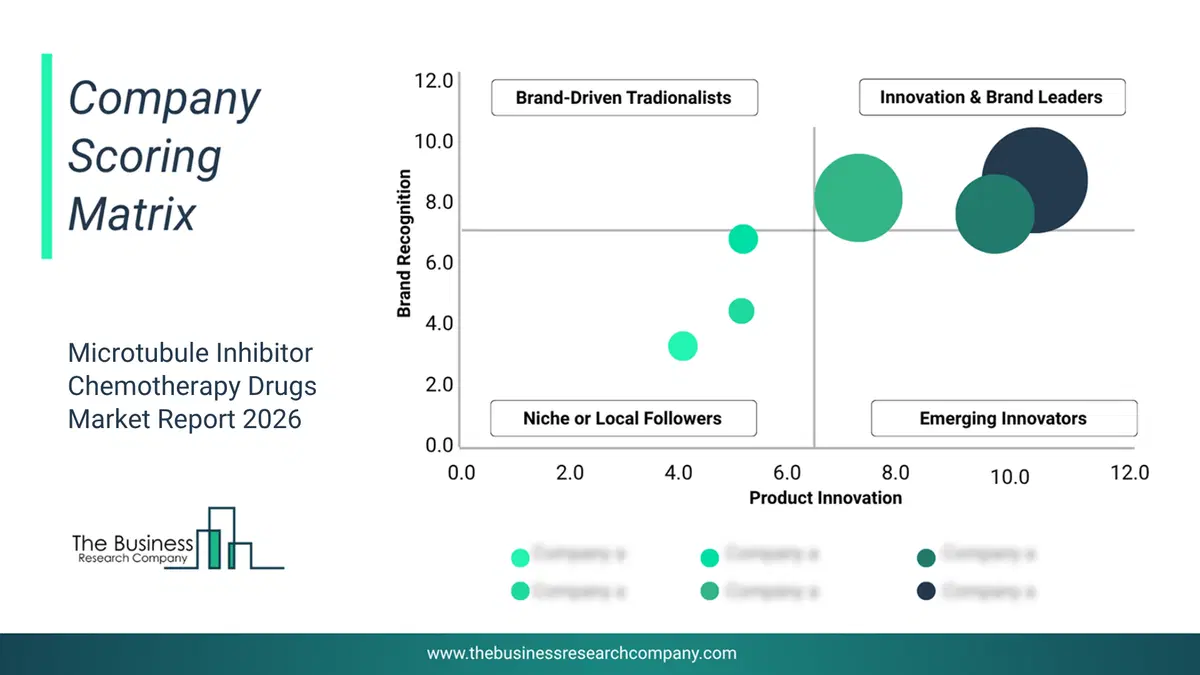
This chart maps companies by product innovation and brand strength, with bubble size indicating relative revenue, helping identify market leaders, challengers, and niche players. This is an illustrative chart; the full report provides a complete and accurate competitive analysis.
Global Microtubule Inhibitor Chemotherapy Drugs Market Trends and Insights
Major companies operating in the microtubule inhibitor chemotherapy drugs market are focusing on developing advanced solutions, such as albumin-bound formulations, to enhance drug delivery to tumors. Albumin-bound formulations refer to drug formulations with the active pharmaceutical ingredient attached to albumin, a protein that helps improve drug solubility, stability, and targeted delivery to cancer cells. For instance, in October 2024, Sandoz AG, a Switzerland-based pharmaceutical company, announced the U.S. launch of its generic version of paclitaxel. The newly launched formulation is a lyophilized powder for injection in a single-dose 100 mg vial. Paclitaxel protein-bound particles for injectable suspension (albumin-bound), a microtubule inhibitor, is advised for the treatment of metastatic breast cancer in patients who have not responded to combination chemotherapy for metastatic disease or have experienced a relapse within six months following adjuvant chemotherapy.What Are Latest Mergers And Acquisitions In The Microtubule Inhibitor Chemotherapy Drugs Market?
In March 2024, Johnson & Johnson, a US-based pharmaceutical company, acquired Ambrx Biopharma Inc. for $2.0 billion. The acquisition advances the development of ARX517, a promising PSMA-targeting ADC that has the potential to be a first- and best-in-class treatment for metastatic castration-resistant prostate cancer. Ambrx Biopharma Inc. is a US-based company specializing in developing antibody-drug conjugates (ADCs) that deliver potent chemotherapeutic payloads, including microtubule inhibitors.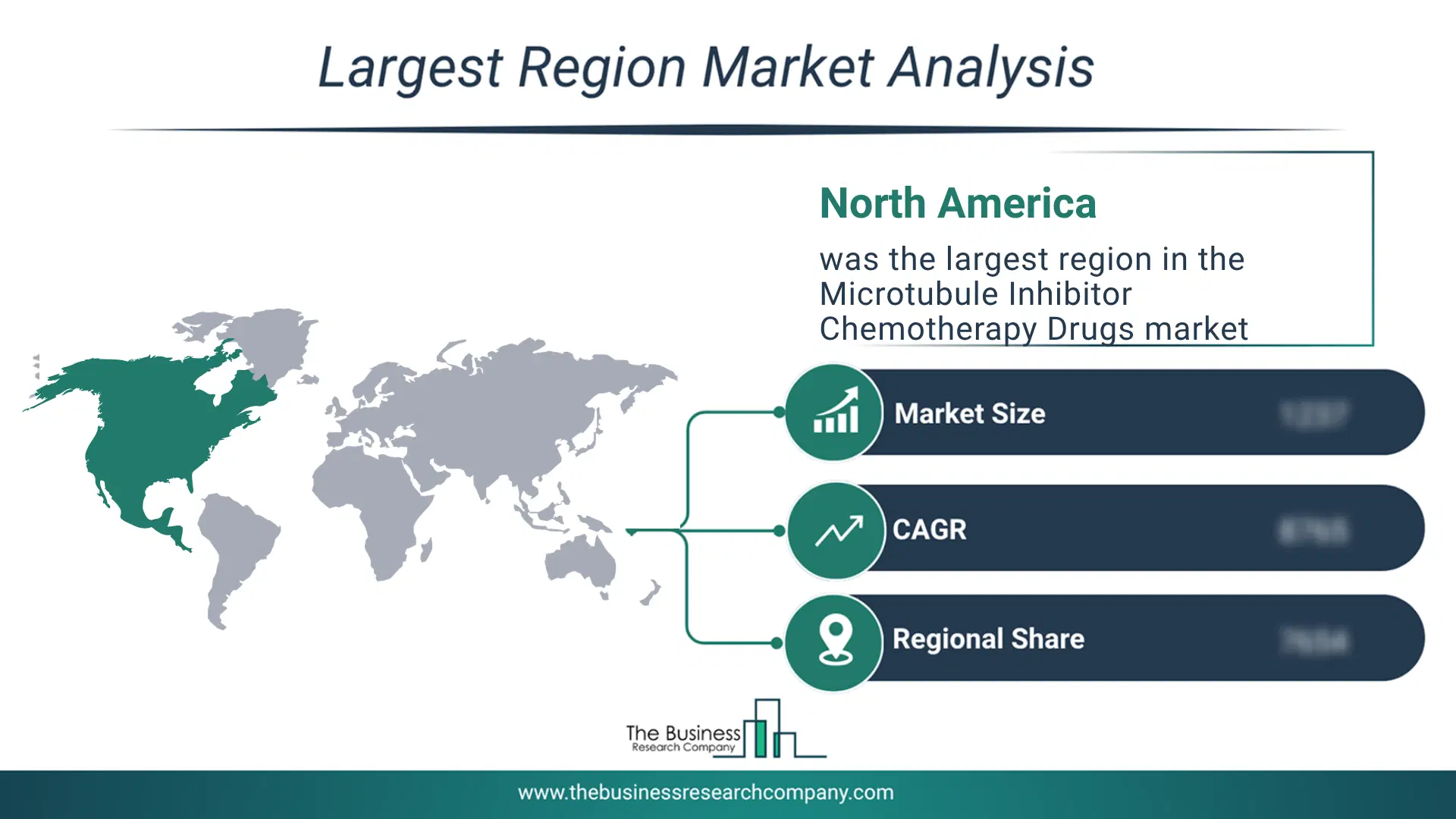
Regional Insights
North America was the largest region in the microtubule inhibitor chemotherapy drugs market in 2025. Asia-Pacific is expected to be the fastest-growing region in the forecast period. The regions covered in this market report are Asia-Pacific, South East Asia, Western Europe, Eastern Europe, North America, South America, Middle East, Africa. The countries covered in this market report are Australia, Brazil, China, France, Germany, India, Indonesia, Japan, Taiwan, Russia, South Korea, UK, USA, Canada, Italy, Spain.What Defines the Microtubule Inhibitor Chemotherapy Drugs Market?
The microtubule inhibitor chemotherapy drugs market consists of supportive care medications, diagnostic agents and biomarkers, biosimilars and generics. Values in this market are ‘factory gate’ values, that is the value of goods sold by the manufacturers or creators of the goods, whether to other entities (including downstream manufacturers, wholesalers, distributors and retailers) or directly to end customers. The value of goods in this market includes related services sold by the creators of the goods.How is Market Value Defined and Measured?
The market value is defined as the revenues that enterprises gain from the sale of goods and/or services within the specified market and geography through sales, grants, or donations in terms of the currency (in USD unless otherwise specified). The revenues for a specified geography are consumption values that are revenues generated by organizations in the specified geography within the market, irrespective of where they are produced. It does not include revenues from resales along the supply chain, either further along the supply chain or as part of other products.
This chart presents market attractiveness based on a quantitative evaluation of growth, competition, strategic alignment, and risk, offering a clear view of opportunity areas for decision-making. This chart is for illustrative purposes; the full report contains the complete analysis.

This chart highlights the Total Addressable Market (TAM) by estimating the maximum revenue opportunity using an assumption-driven approach, supporting strategic planning and opportunity sizing across markets. The chart is illustrative; the full report provides a more comprehensive analysis.
What Key Data and Analysis Are Included in the Microtubule Inhibitor Chemotherapy Drugs Market Report 2026?
The microtubule inhibitor chemotherapy drugs market research report is one of a series of new reports from The Business Research Company that provides market statistics, including industry global market size, regional shares, competitors with the market share, detailed market segments, market trends and opportunities, and any further data you may need to thrive in the microtubule inhibitor chemotherapy drugs industry. The market research report delivers a complete perspective of everything you need, with an in-depth analysis of the current and future state of the industry.Microtubule Inhibitor Chemotherapy Drugs Market Report Forecast Analysis
| Report Attribute | Details |
|---|---|
| Market Size Value In 2026 | $5.77 billion |
| Revenue Forecast In 2030 | $7.23 billion |
| Growth Rate | CAGR of 5.8% from 2026 to 2030 |
| Base Year For Estimation | 2025 |
| Actual Estimates/Historical Data | 2020-2025 |
| Forecast Period | 2026 - 2030 |
| Market Representation | Revenue in USD Billion and CAGR from 2026 to 2030 |
| Segments Covered | Drug Type, Mechanism Of Action, Administration Route, Patient Demographics, Application Area |
| Regional Scope | Asia-Pacific, Western Europe, Eastern Europe, North America, South America, Middle East, Africa |
| Country Scope | The countries covered in the report are Australia, Brazil, China, France, Germany, India, Indonesia, Japan, Taiwan, Russia, South Korea, UK, USA, Canada, Italy, Spain. |
| Key Companies Profiled | Pfizer Inc., Sanofi S.A., Bristol-Myers Squibb Company, Fresenius Kabi AG, Eli Lilly and Company, Teva Pharmaceutical Industries Ltd., Intas Pharmaceuticals Ltd., Sun Pharmaceutical Industries Limited, Eisai Co. Ltd., Aurobindo Pharma Limited, Dr. Reddy’s Laboratories Ltd., Cipla Limited, Hikma Pharmaceuticals PLC, Zydus Lifesciences Limited, Gland Pharma Limited, Natco Pharma Limited, Minakem, Selleck Chemicals LLC, Accord Healthcare Ltd., Focus Biomolecules LLC |
| Customization Scope | Request for Customization |
| Pricing And Purchase Options | Explore Purchase Options |