

Midrange Market Report 2026
Global Outlook – By Component (Hardware, Software, Services), By Processor Architecture (x86 Processors, Advanced Reduced Instruction Set Computer Machine, Reduced Instruction Set Computer), By Deployment Type (On-Premise, Cloud-Based, Hybrid), By Application (Business-Critical Applications, Data Processing And Analytics, Virtualization And Containerization, Database Management, Application Hosting), By End-User Vertical (Banking, Financial Services, And Insurance, Information Technology And Telecommunications, Healthcare And Life Sciences, Manufacturing And Industrial, Government And Defense, Retail And E-Commerce) – Market Size, Trends, Strategies, and Forecast to 2030
Midrange Market Overview
• Midrange market size has reached to $243.33 billion in 2025 • Expected to grow to $262.53 billion in 2030 at a compound annual growth rate (CAGR) of 8.1% • Growth Driver: The Increasing Adoption Of Hybrid Cloud Environments The Growth Of The Market Due To Greater Scalability, Cost Optimization, And Seamless Integration Of On-Premises And Cloud Systems • Market Trend: Next-Generation Enterprise Server Platforms Driving Artificial Intelligence-Enabled Hybrid Cloud Transformation And Secure, Scalable Computing • North America was the largest region in 2025 and Asia-Pacific is the fastest growing region.What Is Covered Under Midrange Market?
Midrange refers to computing systems and infrastructure solutions that are designed to deliver a balance of performance, scalability, and reliability between entry-level systems and high-end enterprise computing environments. These systems are engineered to handle moderate to high workloads, support multi-user operations, and run business-critical applications with improved processing efficiency, availability, and data management capabilities. The main components of the midrange are hardware, software, and services. Hardware refers to midrange computing systems that provide balanced performance, scalability, and cost efficiency for enterprise workloads. These systems are built on different processor architectures, including x86 processors, advanced reduced instruction set computer machine, and reduced instruction set computer, and are deployed through on-premise, cloud-based, and hybrid models. They support various applications, such as business-critical applications, data processing and analytics, virtualization and containerization, database management, and application hosting, and are utilized across multiple end-user verticals, including banking, financial services, and insurance, information technology and telecommunications, healthcare and life sciences, manufacturing and industrial, government and defense, and retail and e-commerce.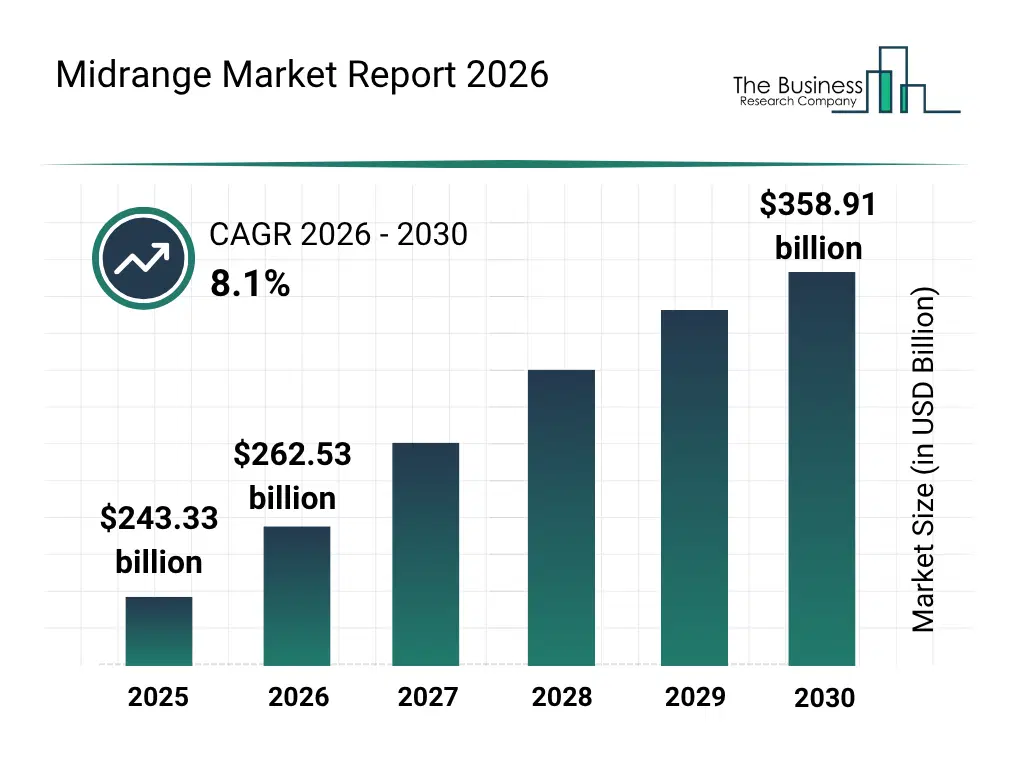
What Is The Midrange Market Size and Share 2026?
The midrange market size has grown strongly in recent years. It will grow from $243.33 billion in 2025 to $262.53 billion in 2026 at a compound annual growth rate (CAGR) of 7.9%. The growth in the historic period can be attributed to enterprise digitization of business operations, rise of client server computing models, growth of database driven applications, expansion of enterprise resource planning systems, increasing demand for shared computing infrastructure.What Is The Midrange Market Growth Forecast?
The midrange market size is expected to see strong growth in the next few years. It will grow to $358.91 billion by 2030 at a compound annual growth rate (CAGR) of 8.1%. The growth in the forecast period can be attributed to rising adoption of hybrid cloud architectures, increasing demand for scalable business critical applications, growth of AI driven workload optimization, expansion of edge computing environments, increasing need for high availability midrange systems. Major trends in the forecast period include hybrid cloud enabled midrange computing systems, AI optimized workload distribution in midrange servers, hyperconverged midrange infrastructure adoption, edge computing integration with midrange systems, virtualization and containerization in midrange environments.
Global Midrange Market Segmentation
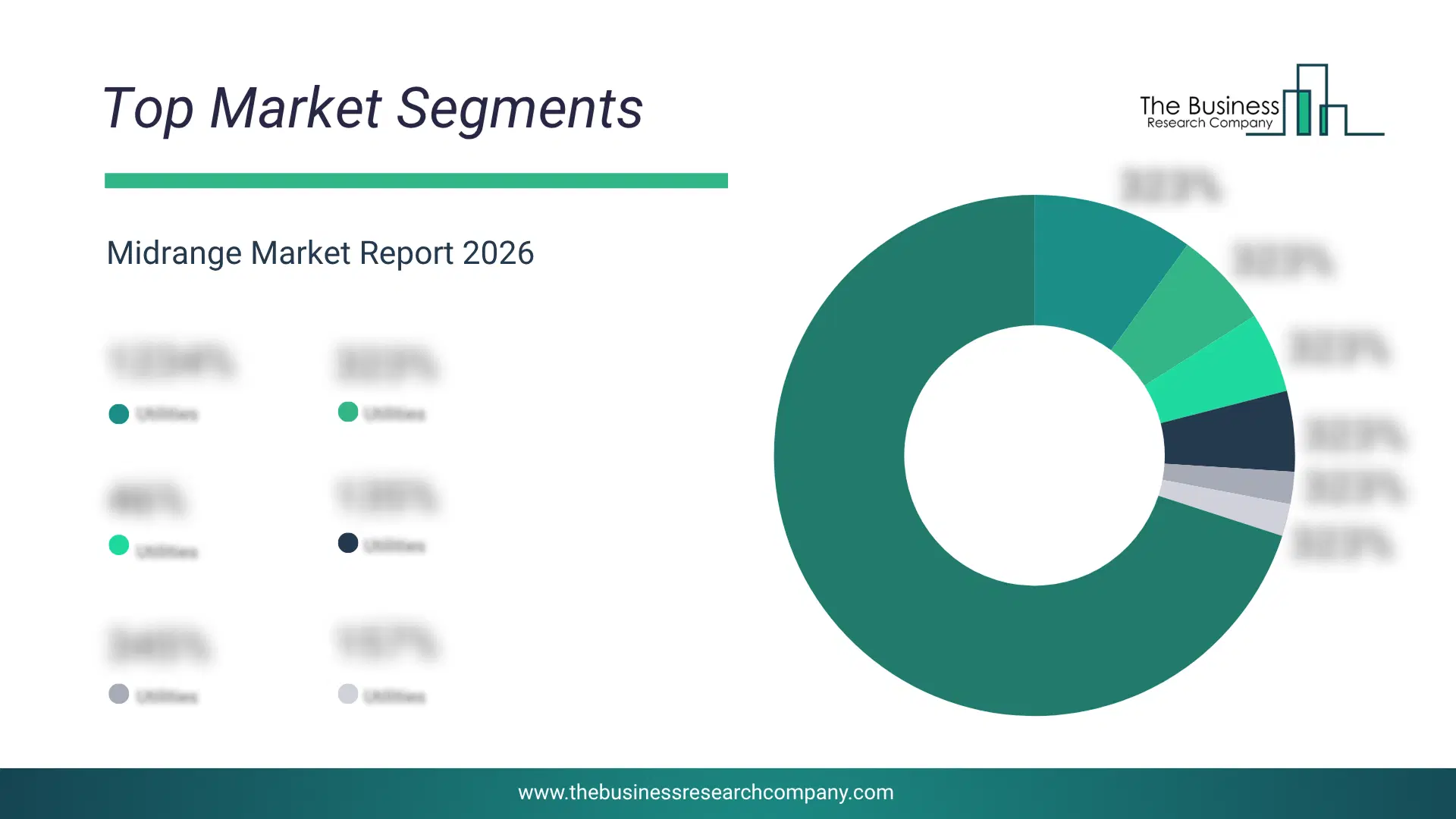
1) By Component: Hardware, Software, Services 2) By Processor Architecture: x86 Processors, Advanced Reduced Instruction Set Computer Machine, Reduced Instruction Set Computer 3) By Deployment Type: On-Premise, Cloud-Based, Hybrid 4) By Application: Business-Critical Applications, Data Processing And Analytics, Virtualization And Containerization, Database Management, Application Hosting 5) By End-User Vertical: Banking, Financial Services, And Insurance, Information Technology And Telecommunications, Healthcare And Life Sciences, Manufacturing And Industrial, Government And Defense, Retail And E-Commerce Subsegments: 1) By Hardware: Rack Servers, Blade Servers, Tower Servers, Hyperconverged Infrastructure Systems, Storage Systems, Networking Equipment, Processor Units, Memory Modules, Power And Cooling Units 2) By Software: Operating Systems, Virtualization Software, Middleware, Database Management Software, Cloud Management Platforms, System Management Software, Security Software, Backup And Recovery Software, Workload Management Software 3) By Services: Consulting Services, Integration And Deployment Services, Managed Services, Support And Maintenance Services, Training And Education Services, Migration Services, Cloud Services, Infrastructure Monitoring Services, Disaster Recovery ServicesWhat Are The Drivers Of The Midrange Market?
The increasing adoption of hybrid cloud environments is expected to propel the growth of the midrange market going forward. Hybrid cloud environments refer to an information technology infrastructure model that combines on-premises data centers, private clouds, and public cloud services, allowing data and applications to be shared and managed across them seamlessly. The increasing adoption of hybrid cloud environments is due to the need for greater scalability and cost optimization, allowing organizations to efficiently expand resources while reducing infrastructure expenses. Hybrid cloud environments enable the midrange by seamlessly integrating on-premises and cloud systems, improving scalability, optimizing resource utilization, and delivering flexible, cost-efficient information technology operations. For instance, in January 2026, according to Spacelift Inc., a US-based software logistics solutions company, nearly 80% of organizations use multiple public clouds and 60% operate more than one private cloud, while 56% of companies with over $500 million in revenue adopt hybrid cloud strategies, and 70% of IT leaders consider a strong hybrid cloud approach essential for successful digital transformation. Therefore, the increasing adoption of hybrid cloud environments is driving the growth of the midrange industry. The growth in enterprise digital transformation initiatives is expected to propel the growth of the midrange market going forward. Enterprise digital transformation initiatives refer to the strategic adoption of digital technologies by organizations to modernize operations, improve efficiency, and enhance customer and employee experiences. Enterprise digital transformation initiatives are rising due to the increasing need for organizations to improve operational efficiency by streamlining workflows, automating routine processes, and enabling faster, more accurate decision-making through integrated digital systems. Midrange enables digital transformation initiatives by providing a scalable, reliable, and efficient computing environment that seamlessly integrates legacy systems with modern cloud and data-driven technologies. For instance, in October 2025, according to the Digital Government Authority, a Saudi Arabia-based government digital regulator, Saudi Arabian government agencies achieved an average digital transformation score of 85.53% compared to 80.96% in 2022, signaling measurable improvement in digital service integration and execution across 226 participating agencies. Therefore, the growth in enterprise digital transformation initiatives is driving the growth of the midrange industry.Key Players In The Global Midrange Market
Major companies operating in the midrange market are Huawei Technologies Co. Ltd.; Dell Technologies Inc.; Hitachi Ltd.; International Business Machines Corporation; Cisco Systems Inc.; Lenovo Group Limited; Oracle Corporation; Quanta Computer Inc.; Hewlett Packard Enterprise Company; Wistron Corporation; Fujitsu Limited; NEC Corporation; ZTE Corporation; Inspur Group Co. Ltd.; Super Micro Computer Inc.; Wiwynn Corporation; Unisys Corporation; New H3C Technologies Co. Ltd.; Acer Inc.; ASUSTeK Computer Inc.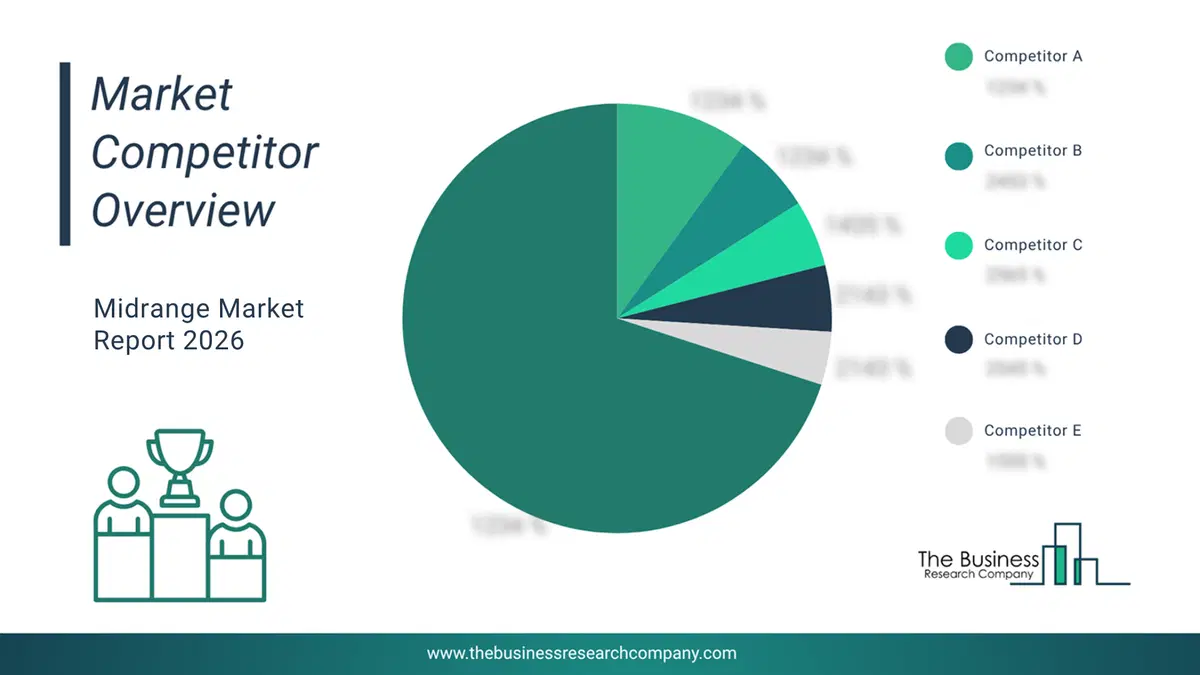
This chart is for illustrative purposes; the full report includes a detailed competitor analysis and comprehensive overview of the top 10 companies in the market.
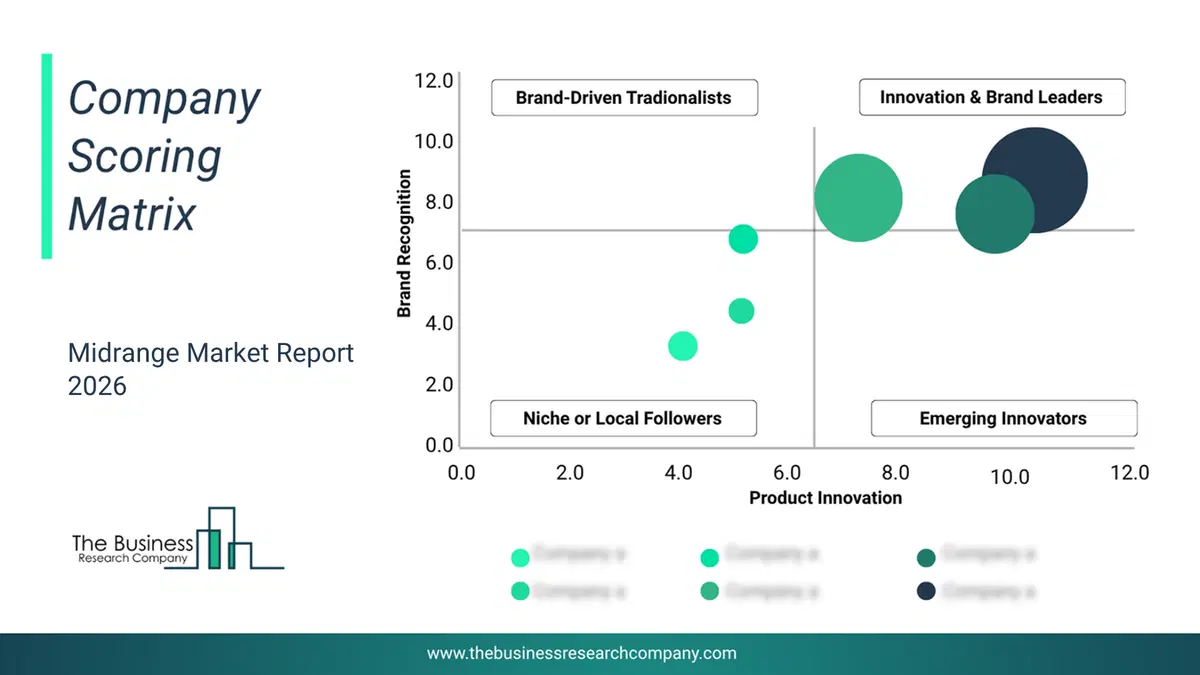
This chart maps companies by product innovation and brand strength, with bubble size indicating relative revenue, helping identify market leaders, challengers, and niche players. This is an illustrative chart; the full report provides a complete and accurate competitive analysis.
Global Midrange Market Trends and Insights
Major companies operating in the midrange market are focusing on developing innovative platforms such as next-generation enterprise server platforms to enhance performance, scalability, and support AI-driven hybrid cloud environments. A next-generation enterprise server platform refers to an advanced computing infrastructure designed to deliver high resilience, autonomous operations, AI integration, and hybrid cloud compatibility. For instance, in July 2025, International Business Machines Corporation (IBM), a US-based technology and consulting company, launched Power11 servers and next-generation enterprise server platforms to enhance enterprise computing performance with advanced artificial intelligence acceleration, improved energy efficiency, and optimized hybrid cloud integration, enabling organizations to efficiently manage complex, data-intensive workloads with greater scalability, automation, and reliability. The platform includes built-in cybersecurity capabilities such as less than one-minute ransomware threat detection and quantum-safe cryptography to protect data against emerging threats. These platforms also support seamless hybrid deployment across on-premise and cloud environments via IBM Power Virtual Server, ensuring consistent workload portability.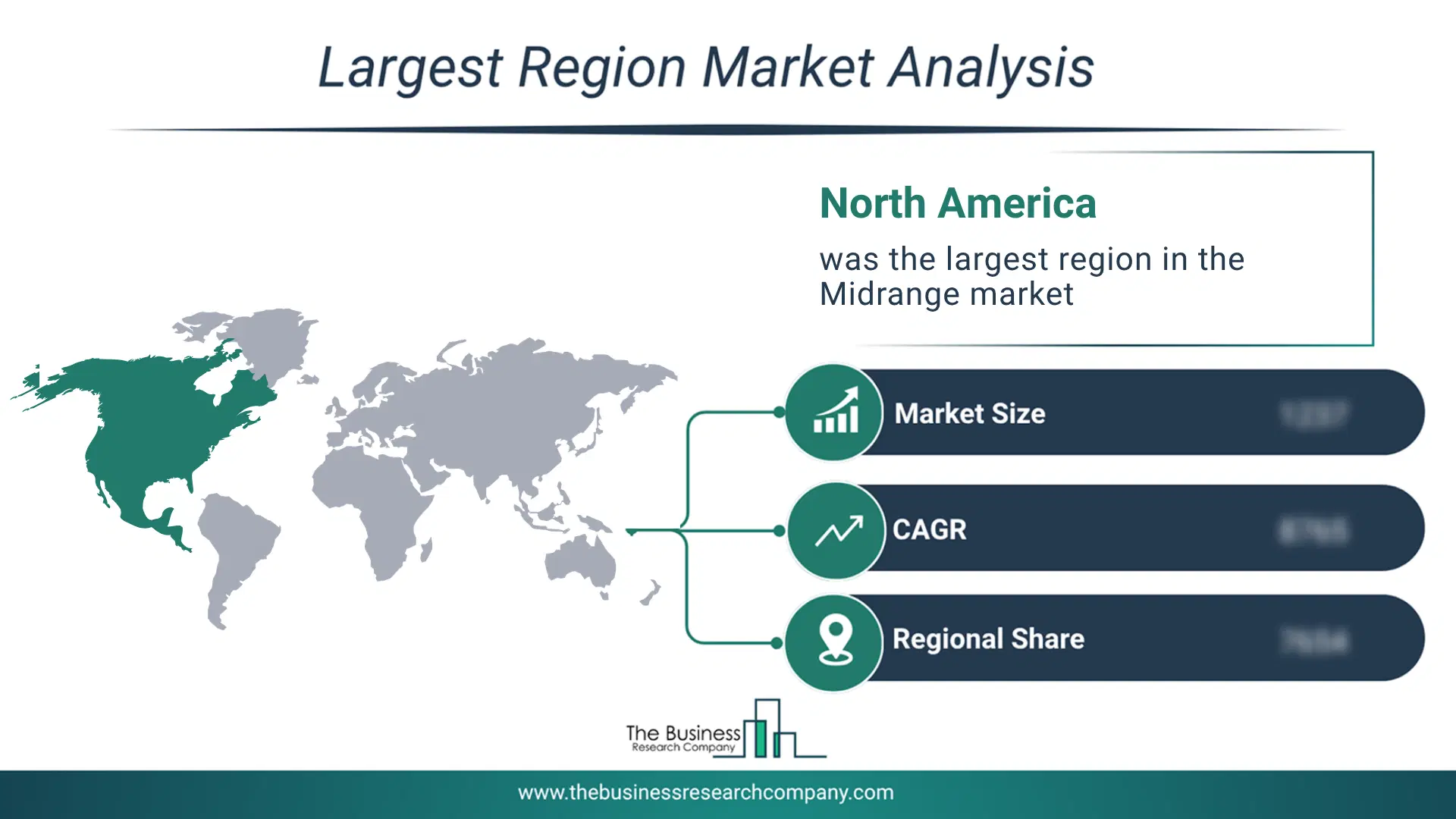
Regional Insights
North America was the largest region in the midrange market in 2025. Asia-Pacific is expected to be the fastest-growing region in the forecast period. The regions covered in this market report are Asia-Pacific, South East Asia, Western Europe, Eastern Europe, North America, South America, Middle East, Africa. The countries covered in this market report are Australia, Brazil, China, France, Germany, India, Indonesia, Japan, Taiwan, Russia, South Korea, UK, USA, Canada, Italy, Spain.What Defines the Midrange Market?
The midrange market consists of revenues earned by entities by providing services such as integrated manufacturing support, information technology infrastructure management, business process outsourcing, engineering and design services, and supply chain and logistics services. The market value includes the value of related goods sold by the service provider or included within the service offering. The midrange market also includes sales of midrange servers, storage systems, and rack-based computing units. Values in this market are ‘factory gate’ values, that is the value of goods sold by the manufacturers or creators of the goods, whether to other entities (including downstream manufacturers, wholesalers, distributors and retailers) or directly to end customers. The value of goods in this market includes related services sold by the creators of the goods.How is Market Value Defined and Measured?
The market value is defined as the revenues that enterprises gain from the sale of goods and/or services within the specified market and geography through sales, grants, or donations in terms of the currency (in USD unless otherwise specified). The revenues for a specified geography are consumption values that are revenues generated by organizations in the specified geography within the market, irrespective of where they are produced. It does not include revenues from resales along the supply chain, either further along the supply chain or as part of other products.
This chart presents market attractiveness based on a quantitative evaluation of growth, competition, strategic alignment, and risk, offering a clear view of opportunity areas for decision-making. This chart is for illustrative purposes; the full report contains the complete analysis.

This chart highlights the Total Addressable Market (TAM) by estimating the maximum revenue opportunity using an assumption-driven approach, supporting strategic planning and opportunity sizing across markets. The chart is illustrative; the full report provides a more comprehensive analysis.
What Key Data and Analysis Are Included in the Midrange Market Report 2026?
The midrange market research report is one of a series of new reports from The Business Research Company that provides market statistics, including industry global market size, regional shares, competitors with the market share, detailed market segments, market trends and opportunities, and any further data you may need to thrive in the midrange industry. The market research report delivers a complete perspective of everything you need, with an in-depth analysis of the current and future state of the industry.Midrange Market Report Forecast Analysis
| Report Attribute | Details |
|---|---|
| Market Size Value In 2026 | $262.53 billion |
| Revenue Forecast In 2030 | $358.91 billion |
| Growth Rate | CAGR of 8.1% from 2026 to 2030 |
| Base Year For Estimation | 2025 |
| Actual Estimates/Historical Data | 2020-2025 |
| Forecast Period | 2026 - 2030 |
| Market Representation | Revenue in USD Billion and CAGR from 2026 to 2030 |
| Segments Covered | Component, Processor Architecture, Deployment Type, Application, End-User Vertical |
| Regional Scope | Asia-Pacific, Western Europe, Eastern Europe, North America, South America, Middle East, Africa |
| Country Scope | The Countries Covered In This Market Report Are Australia, Brazil, China, France, Germany, India, Indonesia, Japan, Taiwan, Russia, South Korea, Uk, Usa, Canada, Italy, Spain. |
| Key Companies Profiled | Huawei Technologies Co. Ltd., Dell Technologies Inc., Hitachi Ltd., International Business Machines Corporation, Cisco Systems Inc., Lenovo Group Limited, Oracle Corporation, Quanta Computer Inc., Hewlett Packard Enterprise Company, Wistron Corporation, Fujitsu Limited, NEC Corporation, ZTE Corporation, Inspur Group Co. Ltd., Super Micro Computer Inc., Wiwynn Corporation, Unisys Corporation, New H3C Technologies Co. Ltd., Acer Inc., ASUSTeK Computer Inc. |
| Customization Scope | Request for Customization |
| Pricing And Purchase Options | Explore Purchase Options |