

Minimally Invasive Gastrointestinal Surgical Systems Market Report 2026
Global Outlook – By Product Type (Endoscopic Equipment, Laparoscopic Equipment, Robotic Surgical Systems, Access Devices, Visualization Systems), By Technology (Traditional Laparoscopy, Robotic-Assisted Laparoscopy, Single-Incision Surgery, Natural Orifice Transluminal Endoscopic Surgery (NOTES), Augmented Reality-Guided Surgery), By Surgery (Adrenalectomy, Appendectomy, Bariatric Surgery, Cholecystectomy, Colon And Rectal Surgery, Foregut Surgery, Hernia Repair, Other Surgeries), By Application (Diagnostic Application, Therapeutic Application, Preventive Application, Reconstructive Application, Palliative Application), By End User (Hospitals, Ambulatory Surgical Centers, Healthcare Compliance Organizations) – Market Size, Trends, Strategies, and Forecast to 2030
Minimally Invasive Gastrointestinal Surgical Systems Market Overview
• Minimally Invasive Gastrointestinal Surgical Systems market size has reached to $7.22 billion in 2025 • Expected to grow to $10.61 billion in 2030 at a compound annual growth rate (CAGR) of 8% • Growth Driver: Rise In Gastrointestinal Disorders Fueling The Growth Of The Market Due To Poor Dietary Habits And Digestive Health Issues • Market Trend: Advancements In Surgical Precision Through 3D Visualization • North America was the largest region in 2025 and Asia-Pacific is the fastest growing region.What Is Covered Under Minimally Invasive Gastrointestinal Surgical Systems Market?
Minimally invasive gastrointestinal surgical systems are specialized technologies used to carry out procedures within the digestive tract through small incisions or natural openings. These systems are equipped with advanced tools and imaging capabilities that allow for precise movements and enhanced visualization during surgery. The main product types of minimally invasive gastrointestinal surgical systems include endoscopic equipment, laparoscopic equipment, robotic surgical systems, access devices, and visualization systems. Endoscopic equipment refers to devices used for visualizing and performing procedures within the gastrointestinal tract with minimal incisions. It uses different technologies such as traditional laparoscopy, robotic-assisted laparoscopy, single-incision surgery, natural orifice transluminal endoscopic surgery (NOTES), and augmented reality-guided surgery for multiple types of surgeries, including adrenalectomy, appendectomy, bariatric surgery, cholecystectomy, colon and rectal surgery, foregut surgery, hernia repair, and others. It is used by various end users such as hospitals, ambulatory surgical centers (ASCs), clinics, research and academic institutions, and healthcare compliance organizations.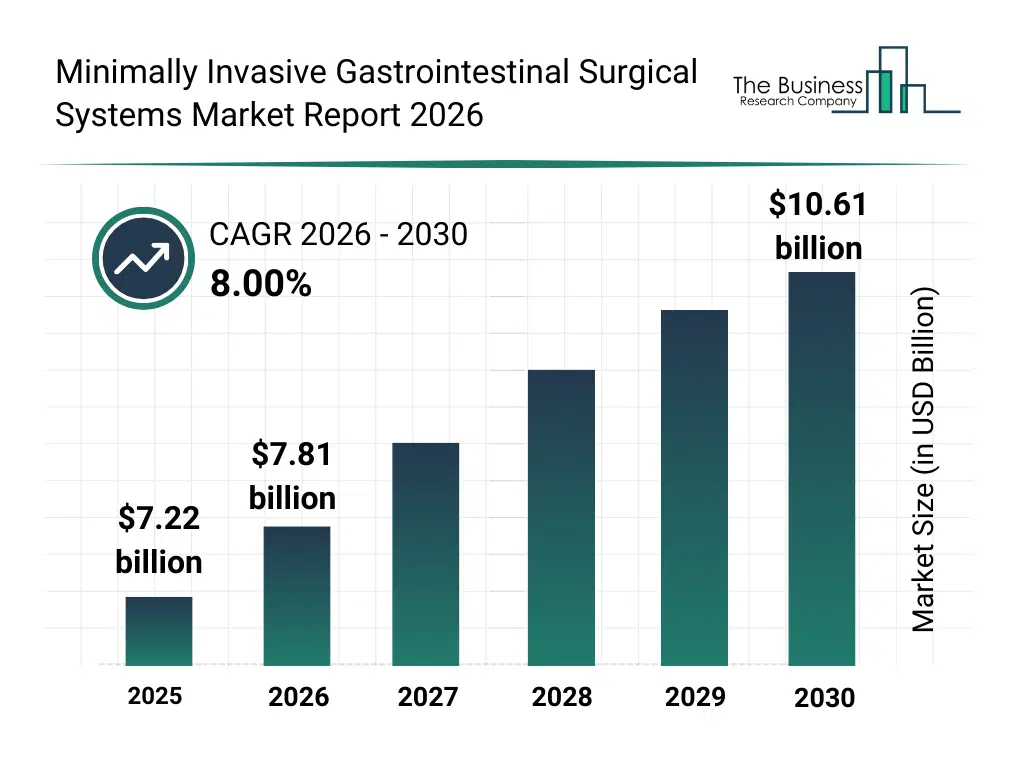
What Is The Minimally Invasive Gastrointestinal Surgical Systems Market Size and Share 2026?
The minimally invasive gastrointestinal surgical systems market size has grown strongly in recent years. It will grow from $7.22 billion in 2025 to $7.81 billion in 2026 at a compound annual growth rate (CAGR) of 8.2%. The growth in the historic period can be attributed to reliance on traditional open surgeries, limited availability of robotic surgical systems, increasing prevalence of gastrointestinal disorders, development of laparoscopic instruments, adoption of standard endoscopic techniques.What Is The Minimally Invasive Gastrointestinal Surgical Systems Market Growth Forecast?
The minimally invasive gastrointestinal surgical systems market size is expected to see strong growth in the next few years. It will grow to $10.61 billion in 2030 at a compound annual growth rate (CAGR) of 8.0%. The growth in the forecast period can be attributed to advancement in robotic-assisted and AR-guided surgical technologies, rising hospital investments in minimally invasive surgery infrastructure, increasing surgeon training programs for advanced procedures, growth in gastrointestinal disease prevalence, integration of AI for surgical planning and precision. Major trends in the forecast period include rising adoption of minimally invasive gastrointestinal surgeries, integration of advanced imaging and visualization systems, growing preference for single-incision and notes procedures, expansion of robotic-assisted laparoscopic surgeries, increased focus on patient safety and post-operative recovery.
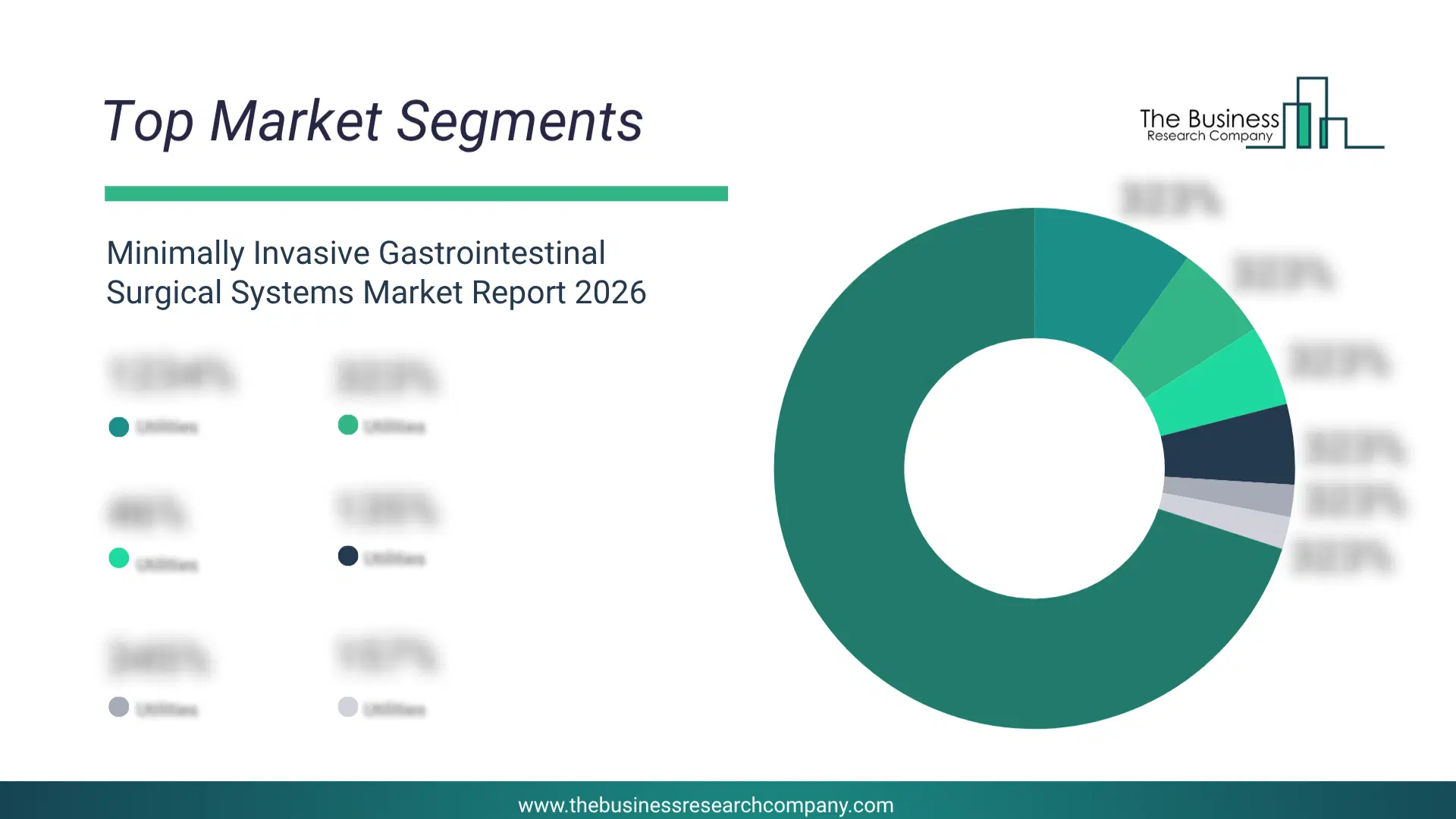
Global Minimally Invasive Gastrointestinal Surgical Systems Market Segmentation
1) By Product Type: Endoscopic Equipment, Laparoscopic Equipment, Robotic Surgical Systems, Access Devices, Visualization Systems 2) By Technology: Traditional Laparoscopy, Robotic-Assisted Laparoscopy, Single-Incision Surgery, Natural Orifice Transluminal Endoscopic Surgery (NOTES), Augmented Reality-Guided Surgery 3) By Surgery: Adrenalectomy, Appendectomy, Bariatric Surgery, Cholecystectomy, Colon And Rectal Surgery, Foregut Surgery, Hernia Repair, Other Surgeries 4) By Application: Diagnostic Application, Therapeutic Application, Preventive Application, Reconstructive Application, Palliative Application 5) By End User: Hospitals, Ambulatory Surgical Centers (ASCs), Clinics, Research And Academic Institutions, Healthcare Compliance Organizations Subsegments: 1) By Endoscopic Equipment: Flexible Endoscopes, Rigid Endoscopes, Capsule Endoscopes, Endoscopic Ultrasound Devices, Endoscopic Imaging Systems 2) By Laparoscopic Equipment: Trocars, Laparoscopes, Insufflators, Hand Instruments, Energy Devices 3) By Robotic Surgical Systems: Multi-Port Robotic Systems, Single-Port Robotic Systems, Microsurgical Robotic Systems, Tethered Capsule Robots, Modular Robotic Platforms 4) By Access Devices: Speculums, Dilators, Cannulas, Surgical Sheaths, Retractors 5) By Visualization Systems: Camera Systems, Light Sources, Display Monitors, Image Processing Units, Recording DevicesWhat Is The Driver Of The Minimally Invasive Gastrointestinal Surgical Systems Market?
The rise in prevalence of gastrointestinal disorders is expected to propel the growth of the minimally invasive gastrointestinal surgical systems market going forward. Gastrointestinal disorders are health problems that affect the digestive system, including the stomach, intestines, and related organs, causing symptoms such as pain, bloating, diarrhea, or constipation. Gastrointestinal disorders are rising due to unhealthy dietary habits, as increasing consumption of processed and low-fiber foods disrupts digestion and harms gut health over time. Minimally invasive gastrointestinal surgical systems support the treatment of gastrointestinal disorders by enabling precise, efficient procedures that reduce complications and promote faster patient recovery. For instance, in June 2025, according to the UK Health Security Agency, a UK-based government department, gastrointestinal infection rates in England rose by 27%, from 96.1 per 100,000 in 2022 to 122.0 in 2024. Therefore, the rise in prevalence of gastrointestinal disorders is driving growth of the minimally invasive gastrointestinal surgical systems industry.Key Players In The Global Minimally Invasive Gastrointestinal Surgical Systems Market
Major companies operating in the minimally invasive gastrointestinal surgical systems market are Johnson & Johnson, Fujifilm Holdings Corporation, Boston Scientific Corporation, Intuitive Surgical Inc., HOYA Corporation, Karl Storz SE & Co. KG, Cook Medical LLC, CONMED Corporation, Applied Medical Resources Corporation, Pentax Medical Corp., Ambu A/S, Richard Wolf GmbH, B. Braun Melsungen AG, W. L. Gore & Associates Inc., Medtronic plc, Olympus Corporation, CMR Surgical, Asensus Surgical, Endo Tools Therapeutics, GI View, Medrobotics, Endotics, EndoQuest Robotics, Aurora Medical Technologies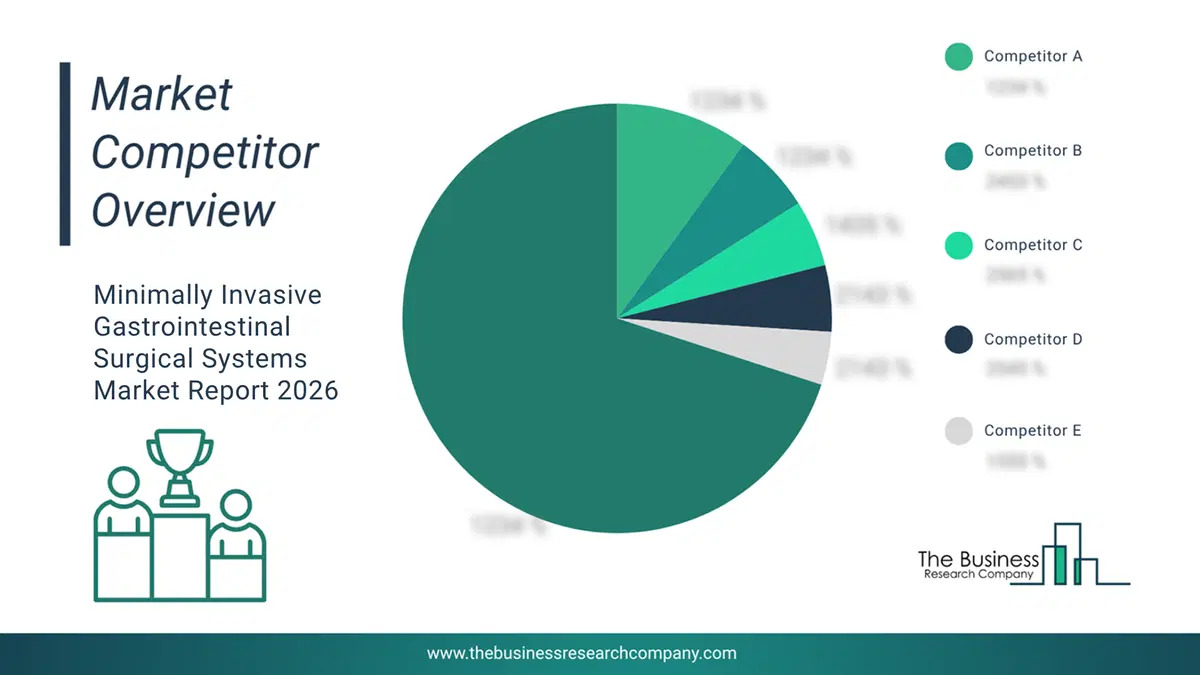
This chart is for illustrative purposes; the full report includes a detailed competitor analysis and comprehensive overview of the top 10 companies in the market.
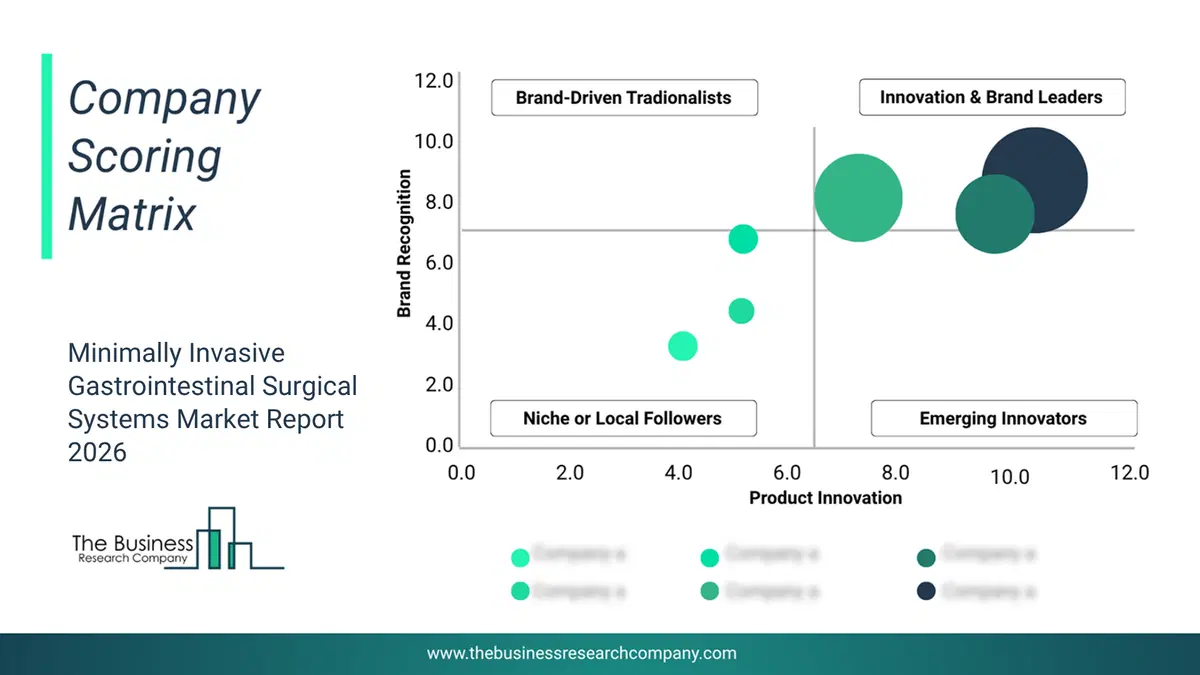
This chart maps companies by product innovation and brand strength, with bubble size indicating relative revenue, helping identify market leaders, challengers, and niche players. This is an illustrative chart; the full report provides a complete and accurate competitive analysis.
Global Minimally Invasive Gastrointestinal Surgical Systems Market Trends and Insights
Major companies operating in the minimally invasive gastrointestinal surgical systems market are focusing on developing innovative approaches, such as integrating an open console with 3D display technology, to enhance surgical precision and visualization, improving patient outcomes. Open console with 3D display is an interactive interface that combines an open-access command console with integrated three-dimensional visualizations for enhanced user interaction and data representation. For instance, in May 2025, Medtronic Plc, an Ireland-based medication company, launched the Hugo robotic-assisted surgery (RAS) system in Korea for the first time, marking a significant advancement in minimally invasive surgery with its modular design, open console featuring a 33-inch 3D display, and versatile application across urological, gynecological, and general surgeries. This launch not only enhances surgical precision and communication among medical teams but also positions Seoul National University Hospital as a leading center for robotic surgery research, education, and expanded clinical use in Korea.What Are Latest Mergers And Acquisitions In The Minimally Invasive Gastrointestinal Surgical Systems Market?
In November 2024, Medtronic Plc, an Ireland-based medical device company, acquired Fortimedix Surgical for an undisclosed amount. Through this acquisition, Medtronic aims to expand its minimally invasive surgical portfolio by integrating Fortimedix Surgical’s innovative surgical technologies. Fortimedix Surgical is a Netherlands-based company that develops innovative medical devices for minimally invasive gastrointestinal (GI) surgeries, particularly those involving endoscopy and single-port access.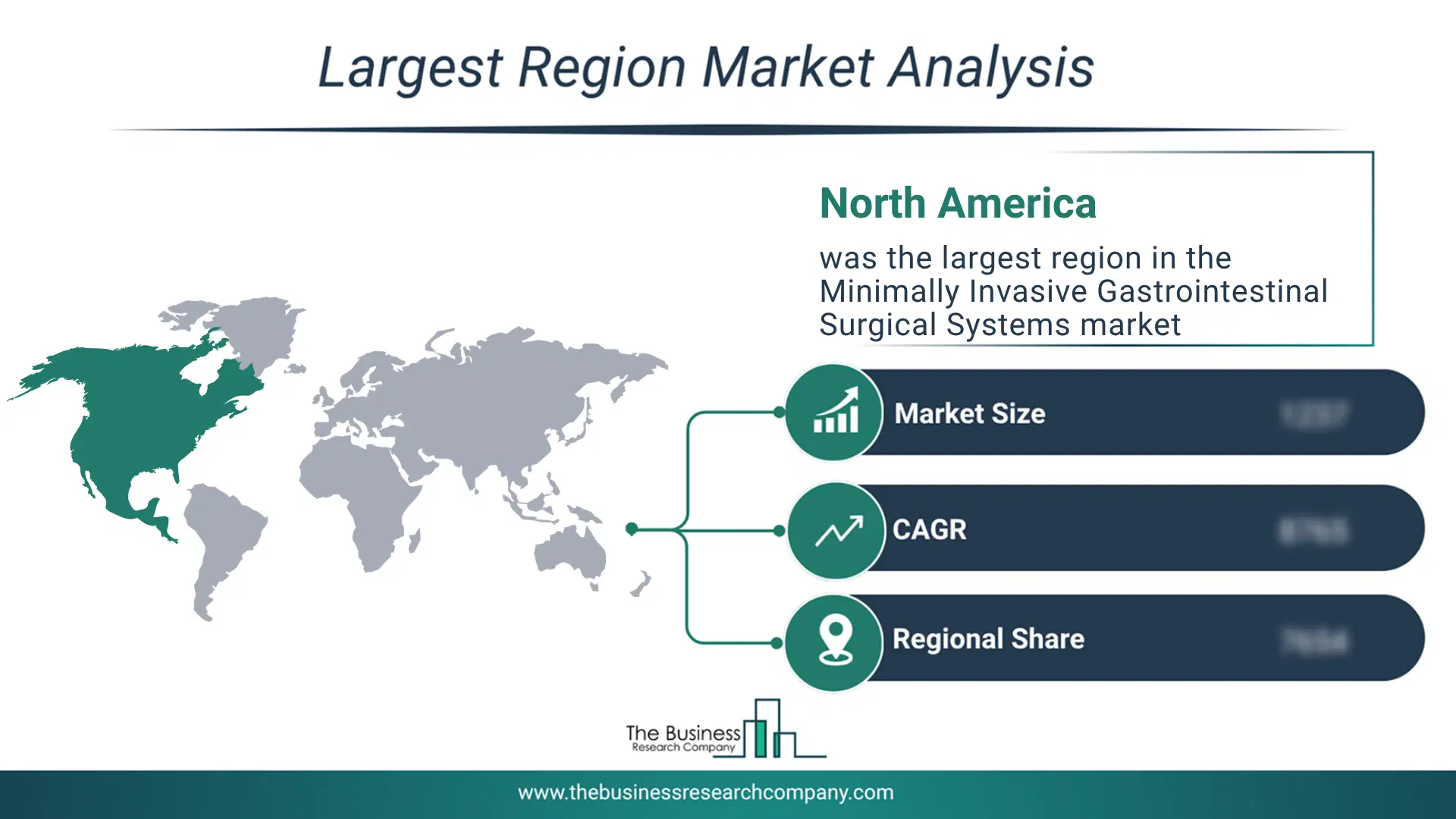
Regional Outlook
North America was the largest region in the minimally invasive gastrointestinal surgical systems market in 2025. Asia-Pacific is expected to be the fastest-growing region in the forecast period. The regions covered in this market report are Asia-Pacific, South East Asia, Western Europe, Eastern Europe, North America, South America, Middle East, Africa. The countries covered in this market report are Australia, Brazil, China, France, Germany, India, Indonesia, Japan, Taiwan, Russia, South Korea, UK, USA, Canada, Italy, SpainWhat Defines the Minimally Invasive Gastrointestinal Surgical Systems Market?
The minimally invasive gastrointestinal surgical systems market consists of revenues earned by entities by providing services such as preoperative assessment, imaging services, anesthesia services, intraoperative monitoring, and postoperative care. The market value includes the value of related goods sold by the service provider or included within the service offering. The minimally invasive gastrointestinal surgical systems market also includes sales of trocar systems, insufflators, surgical staplers, and hand instruments. Values in this market are ‘factory gate’ values, that is, the value of goods sold by the manufacturers or creators of the goods, whether to other entities (including downstream manufacturers, wholesalers, distributors, and retailers) or directly to end customers. The value of goods in this market includes related services sold by the creators of the goods.How is Market Value Defined and Measured?
The market value is defined as the revenues that enterprises gain from the sale of goods and/or services within the specified market and geography through sales, grants, or donations in terms of the currency (in USD unless otherwise specified). The revenues for a specified geography are consumption values that are revenues generated by organizations in the specified geography within the market, irrespective of where they are produced. It does not include revenues from resales along the supply chain, either further along the supply chain or as part of other products.
This chart presents market attractiveness based on a quantitative evaluation of growth, competition, strategic alignment, and risk, offering a clear view of opportunity areas for decision-making. This chart is for illustrative purposes; the full report contains the complete analysis.

This chart highlights the Total Addressable Market (TAM) by estimating the maximum revenue opportunity using an assumption-driven approach, supporting strategic planning and opportunity sizing across markets. The chart is illustrative; the full report provides a more comprehensive analysis.
What Key Data and Analysis Are Included in the Minimally Invasive Gastrointestinal Surgical Systems Market Report 2026?
The minimally invasive gastrointestinal surgical systems market research report is one of a series of new reports from The Business Research Company that provides market statistics, including industry global market size, regional shares, competitors with the market share, detailed market segments, market trends and opportunities, and any further data you may need to thrive in the minimally invasive gastrointestinal surgical systems industry. The market research report delivers a complete perspective of everything you need, with an in-depth analysis of the current and future state of the industry.Minimally Invasive Gastrointestinal Surgical Systems Market Report Forecast Analysis
| Report Attribute | Details |
|---|---|
| Market Size Value In 2026 | $7.81 billion |
| Revenue Forecast In 2030 | $10.61 billion |
| Growth Rate | CAGR of 8% from 2026 to 2030 |
| Base Year For Estimation | 2025 |
| Actual Estimates/Historical Data | 2020-2025 |
| Forecast Period | 2026 - 2030 |
| Market Representation | Revenue in USD Billion and CAGR from 2026 to 2030 |
| Segments Covered | Product Type, Technology, Surgery, Application, End User |
| Regional Scope | Asia-Pacific, Western Europe, Eastern Europe, North America, South America, Middle East, Africa |
| Country Scope | The countries covered in the report are Australia, Brazil, China, France, Germany, India, Indonesia, Japan, Taiwan, Russia, South Korea, UK, USA, Canada, Italy, Spain. |
| Key Companies Profiled | Johnson & Johnson, Fujifilm Holdings Corporation, Boston Scientific Corporation, Intuitive Surgical Inc., HOYA Corporation, Karl Storz SE & Co. KG, Cook Medical LLC, CONMED Corporation, Applied Medical Resources Corporation, Pentax Medical Corp., Ambu A/S, Richard Wolf GmbH, B. Braun Melsungen AG, W. L. Gore & Associates Inc., Medtronic plc, Olympus Corporation, CMR Surgical, Asensus Surgical, Endo Tools Therapeutics, GI View, Medrobotics, Endotics, EndoQuest Robotics, Aurora Medical Technologies |
| Customization Scope | Request for Customization |
| Pricing And Purchase Options | Explore Purchase Options |