

Minimally Invasive Spine Surgery Devices Market Report 2026
Global Outlook – By Product (Cervical Fusion Devices, Vertebral Compression Fracture Treatment Devices, Non-fusion Devices, Spinal Decompression Devices), By Treatment (Disk Herniation, Degenerative Spinal Disease, Spinal Stenosis, Other Treatments), By Procedure (Discectomy, Laminotomy, Foraminotomy), By Application (Fusion Surgery, Non-Fusion Surgery), By End User (Ambulatory Surgical Centers (ASCs), Hospitals) – Market Size, Trends, Strategies, and Forecast to 2030
Minimally Invasive Spine Surgery Devices Market Overview
• Minimally Invasive Spine Surgery Devices market size has reached to $1.16 billion in 2025 • Expected to grow to $1.48 billion in 2030 at a compound annual growth rate (CAGR) of 4.7% • Growth Driver: Increase In Incidences Of Spinal Disorders Fuels Growth In The Minimally Invasive Spine Surgery Devices Market • Market Trend: Advances In Customizable Retractor Systems Revolutionize Minimally Invasive Spine Surgery • North America was the largest region in 2025.What Is Covered Under Minimally Invasive Spine Surgery Devices Market?
Minimally invasive spine surgery devices are specialized tools and instruments designed for performing spinal surgeries with minimal incisions. These devices are used to treat various spinal conditions offering reduced trauma to surrounding tissues. The purpose of these devices is to facilitate quicker recovery, less postoperative pain, and shorter hospital stays compared to traditional open spine surgery methods. The main product types of minimally invasive spine surgery devices are cervical fusion devices, spine biologics, vertebral compression fracture treatment devices, non-fusion devices, spine bone stimulators, and spinal decompression devices. Cervical fusion devices are implants used to join or fuse vertebrae in the neck together to stabilize the spine and relieve pressure on spinal nerves or the spinal cord. The treatment includes disk herniation, degenerative spinal disease, spinal stenosis, and others, and the procedures are discectomy, laminotomy, foraminotomy, facetectomy, and corpectomy. The applications of minimally invasive spine surgery devices are fusion surgery and non-fusion surgery, and they are used by various end users, such as ambulatory surgical centers (ASCS) and hospitals.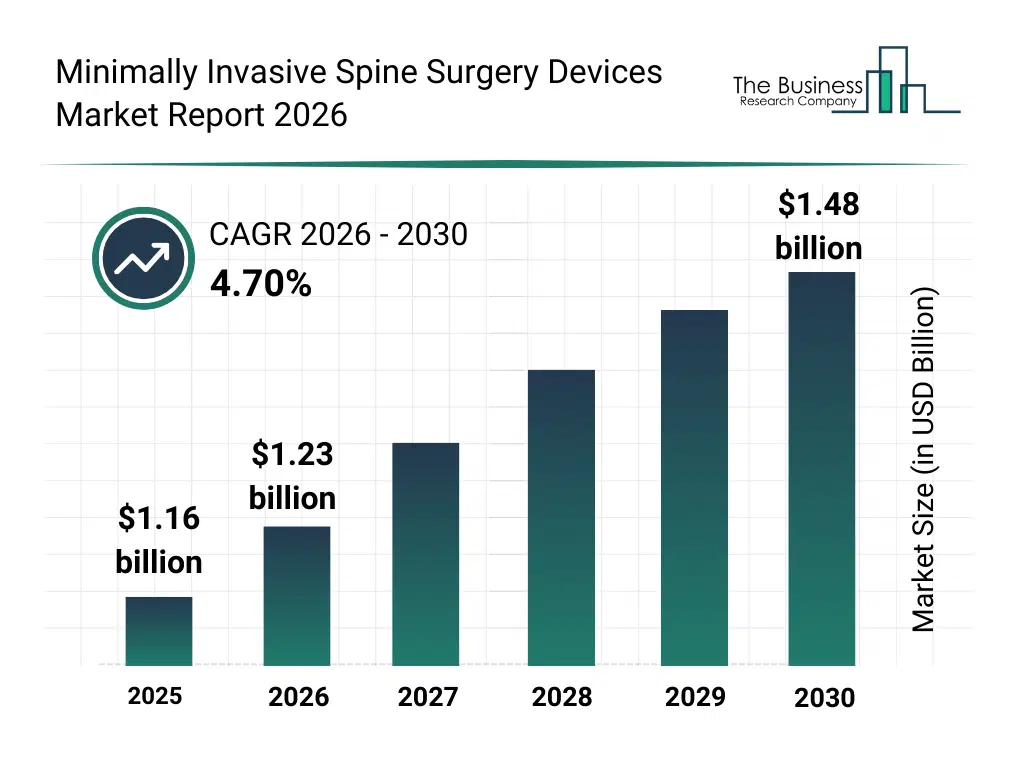
What Is The Minimally Invasive Spine Surgery Devices Market Size and Share 2026?
The minimally invasive spine surgery devices market size has grown strongly in recent years. It will grow from $1.16 billion in 2025 to $1.23 billion in 2026 at a compound annual growth rate (CAGR) of 5.2%. The growth in the historic period can be attributed to rising incidence of degenerative spinal disorders, growing aging population, limitations of conventional open spine surgeries, increasing healthcare expenditure, rising adoption of spinal fusion procedures.What Is The Minimally Invasive Spine Surgery Devices Market Growth Forecast?
The minimally invasive spine surgery devices market size is expected to see steady growth in the next few years. It will grow to $1.48 billion in 2030 at a compound annual growth rate (CAGR) of 4.7%. The growth in the forecast period can be attributed to increasing demand for minimally invasive treatment options, expansion of ambulatory surgical centers, growing preference for motion-preserving spine solutions, rising focus on improved patient outcomes, expanding access to advanced spine care technologies. Major trends in the forecast period include growing adoption of minimally invasive spine procedures, rising preference for outpatient spine surgeries, increasing demand for motion preservation technologies, expansion of minimally invasive fusion and non-fusion techniques, growing focus on faster recovery and reduced hospital stay.
Global Minimally Invasive Spine Surgery Devices Market Segmentation
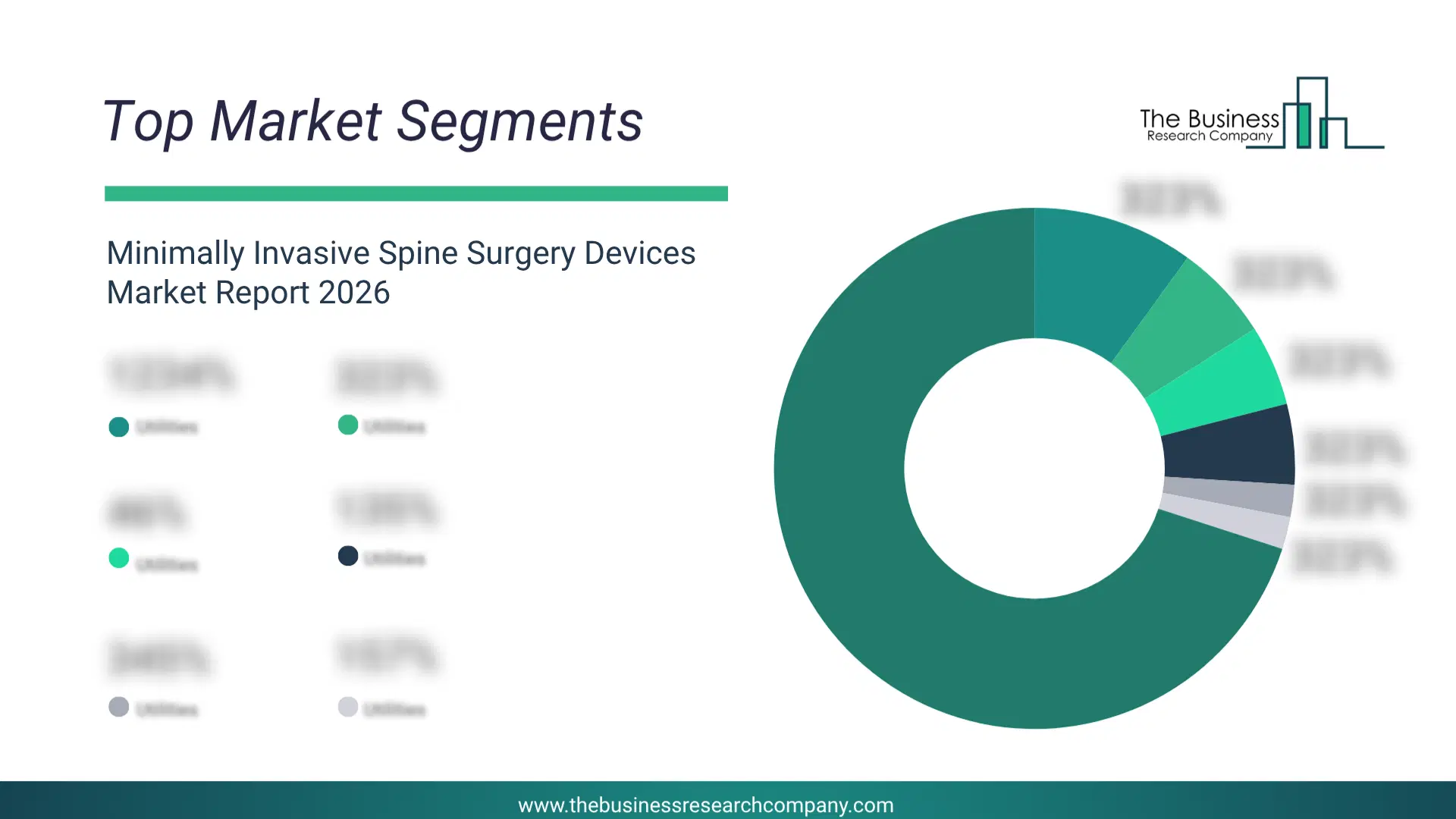
1) By Product: Cervical Fusion Devices, Vertebral Compression Fracture Treatment Devices, Non-fusion Devices, Spinal Decompression Devices 2) By Treatment: Disk Herniation, Degenerative Spinal Disease, Spinal Stenosis, Other Treatments 3) By Procedure: Discectomy, Laminotomy, Foraminotomy 4) By Application: Fusion Surgery, Non-Fusion Surgery 5) By End User: Ambulatory Surgical Centers (ASCs), Hospitals Subsegments: 1) By Cervical Fusion Devices: Anterior Cervical Discectomy And Fusion (ACDF) Devices, Posterior Cervical Fusion Devices, Cervical Spinal Plates, Cervical Screws And Rod Systems 2) By Vertebral Compression Fracture Treatment Devices: Vertebroplasty And Kyphoplasty Kits, Balloon Kyphoplasty Devices, Bone Cement For Vertebroplasty, Percutaneous Spinal Fracture Repair Devices 3) By Non-Fusion Devices: Dynamic Stabilization Systems, Artificial Discs (Lumbar And Cervical), Motion Preservation Devices, Total Disc Replacement Devices, Posterior Dynamic Stabilization Systems 4) By Spinal Decompression Devices: Minimally Invasive Spinal Decompression Systems, Spinal Traction Devices, Percutaneous Discectomy Devices, Spinal Decompression Surgery Instruments, Spinal Distraction DevicesWhat Is The Driver Of The Minimally Invasive Spine Surgery Devices Market?
The increase in incidences of spinal disorders is expected to propel the growth of the minimally invasive spine surgery devices market going forward. Spinal disorders refer to conditions affecting the spine, such as herniated discs, spinal stenosis, and scoliosis, causing pain, stiffness, or neurological symptoms. The rise in spinal disorders is fueled by several factors, such as aging populations, sedentary lifestyles, repetitive stress injuries, and degenerative changes in the spine's structures. Minimally invasive spine surgery devices are used to treat spinal disorders by reducing tissue damage, shortening recovery times, and minimizing post-operative pain compared to traditional open surgery. For instance, in 2024, according to the National Spinal Cord Injury Statistical Center, a US-based department of the University of Alabama at Birmingham (UAB), in 2024, approximately 305,000 individuals in the United States are estimated to have traumatic spinal cord injury (tSCI), with estimates ranging from 257,000 to 388,000 persons. Comparatively, in 2023, the estimated number was around 302,000 individuals, ranging from 255,000 to 383,000 persons. Therefore, the increase in incidences of spinal disorders is driving the growth of the minimally invasive spine surgery devices industry.Key Players In The Global Minimally Invasive Spine Surgery Devices Market
Major companies operating in the minimally invasive spine surgery devices market are Stryker Corporation, Zimmer Biomet Holdings Inc., NuVasive Inc., Globus Medical Inc., MicroPort Scientific Corporation, Orthofix International N.V., Aesculap Inc., Alphatec Holdings Inc., SeaSpine Holdings Corporation, RTI Surgical Inc., Spinal Elements, Xtant Medical, Spine Wave Inc., Zavation Medical Products LLC., Life Spine Inc., Nexxt Spine LLC, CTL Amedica Corporation, Intrinsic Therapeutics Inc., Captiva Spine Inc., DePuy Synthes, Osseus Fusion Systems, SpineGuard S.A.
This chart is for illustrative purposes; the full report includes a detailed competitor analysis and comprehensive overview of the top 10 companies in the market.
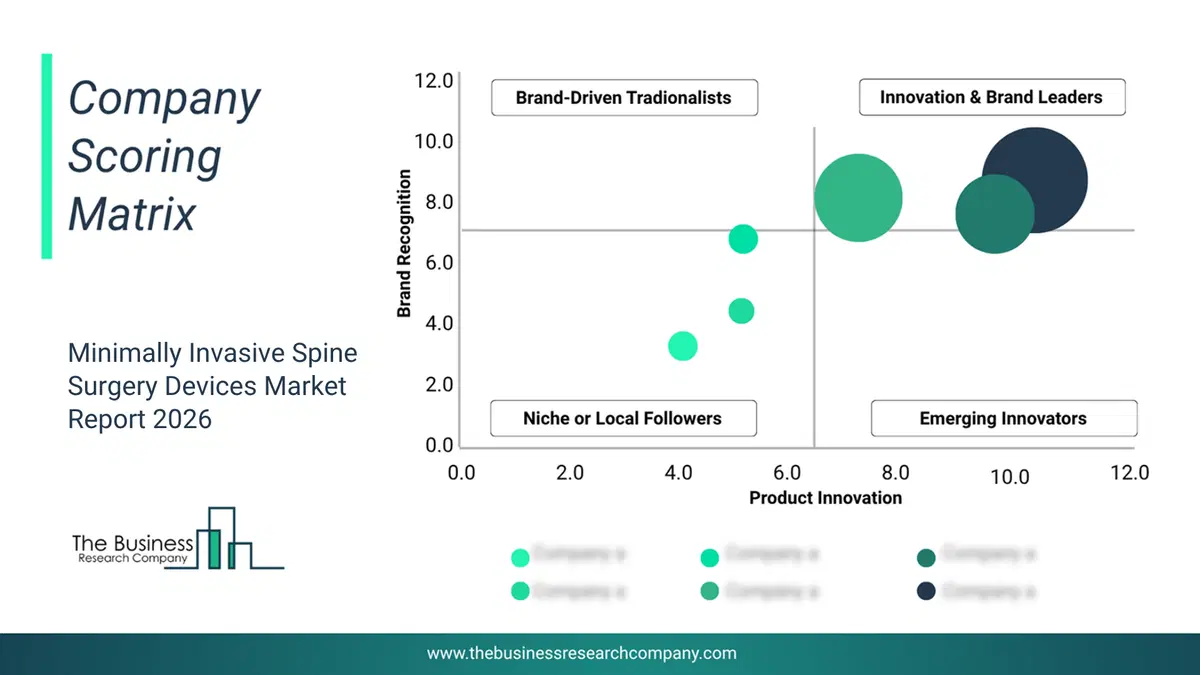
This chart maps companies by product innovation and brand strength, with bubble size indicating relative revenue, helping identify market leaders, challengers, and niche players. This is an illustrative chart; the full report provides a complete and accurate competitive analysis.
Global Minimally Invasive Spine Surgery Devices Market Trends and Insights
Major companies operating in the minimally invasive spine surgery devices market are focusing on developing advanced products, such as customizable retractor systems to enhance surgical precision and improve patient outcomes. Customizable retractor systems in minimally invasive spine surgery provide precise access and enhanced visibility, reducing tissue damage and recovery time. For instance, in April 2023, Orthofix Medical Inc., a US-based medical device company, launched two new retractor systems for minimally invasive spine procedures. The Lattus Lateral Access System offers ease of use, versatile blade retraction, and supports Orthofix's WaveForm L and Regatta NanoMetalene devices. The Fathom Pedicle-Based Retractor System features three active telescoping blade fixations, allowing precise customization and enhancing visualization with minimal tissue disruption. Both systems optimize surgical workflows and address specific patient anatomy.What Are Latest Mergers And Acquisitions In The Minimally Invasive Spine Surgery Devices Market?
In January 2023, Orthofix Medical Inc., a US-based medical device company offering spine surgical devices, merged with SeaSpine Holdings Corporation to develop advanced spine and orthopedics products. The newly merged Orthofix-SeaSpine organization will have a comprehensive biologics portfolio, innovative spinal hardware, bone growth therapies, specialized orthopedic solutions, and a leading surgical navigation system. SeaSpine Holdings Corporation is a US-based medical technology company offering various spine surgical devices.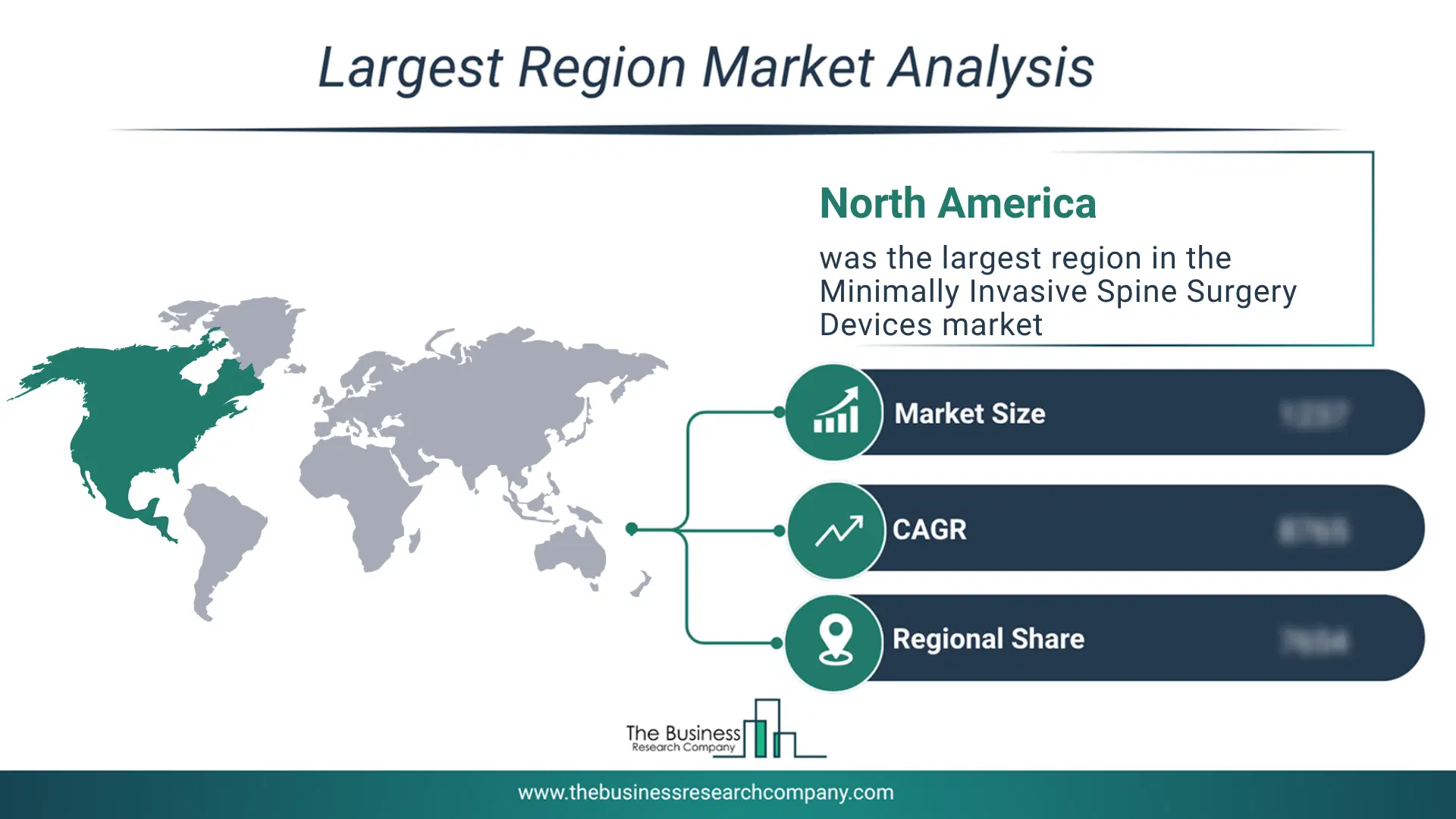
Regional Outlook
North America was the largest region in the minimally invasive spine surgery devices market in 2025. The regions covered in this market report are Asia-Pacific, South East Asia, Western Europe, Eastern Europe, North America, South America, Middle East, Africa. The countries covered in this market report are Australia, Brazil, China, France, Germany, India, Indonesia, Japan, Taiwan, Russia, South Korea, UK, USA, Canada, Italy, SpainWhat Defines the Minimally Invasive Spine Surgery Devices Market?
The minimally invasive spine surgery devices market consists of sales of endoscopes, retractors, and navigational systems. Values in this market are ‘factory gate’ values, that is the value of goods sold by the manufacturers or creators of the goods, whether to other entities (including downstream manufacturers, wholesalers, distributors and retailers) or directly to end customers. The value of goods in this market includes related services sold by the creators of the goods.How is Market Value Defined and Measured?
The market value is defined as the revenues that enterprises gain from the sale of goods and/or services within the specified market and geography through sales, grants, or donations in terms of the currency (in USD unless otherwise specified). The revenues for a specified geography are consumption values that are revenues generated by organizations in the specified geography within the market, irrespective of where they are produced. It does not include revenues from resales along the supply chain, either further along the supply chain or as part of other products.
This chart presents market attractiveness based on a quantitative evaluation of growth, competition, strategic alignment, and risk, offering a clear view of opportunity areas for decision-making. This chart is for illustrative purposes; the full report contains the complete analysis.

This chart highlights the Total Addressable Market (TAM) by estimating the maximum revenue opportunity using an assumption-driven approach, supporting strategic planning and opportunity sizing across markets. The chart is illustrative; the full report provides a more comprehensive analysis.
What Key Data and Analysis Are Included in the Minimally Invasive Spine Surgery Devices Market Report 2026?
The minimally invasive spine surgery devices market research report is one of a series of new reports from The Business Research Company that provides market statistics, including industry global market size, regional shares, competitors with the market share, detailed market segments, market trends and opportunities, and any further data you may need to thrive in the minimally invasive spine surgery devices industry. The market research report delivers a complete perspective of everything you need, with an in-depth analysis of the current and future state of the industry.Minimally Invasive Spine Surgery Devices Market Report Forecast Analysis
| Report Attribute | Details |
|---|---|
| Market Size Value In 2026 | $1.23 billion |
| Revenue Forecast In 2030 | $1.48 billion |
| Growth Rate | CAGR of 4.7% from 2026 to 2030 |
| Base Year For Estimation | 2025 |
| Actual Estimates/Historical Data | 2020-2025 |
| Forecast Period | 2026 - 2030 |
| Market Representation | Revenue in USD Billion and CAGR from 2026 to 2030 |
| Segments Covered | Product, Treatment, Procedure, Application, End User |
| Regional Scope | Asia-Pacific, Western Europe, Eastern Europe, North America, South America, Middle East, Africa |
| Country Scope | The countries covered in the report are Australia, Brazil, China, France, Germany, India, Indonesia, Japan, Taiwan, Russia, South Korea, UK, USA, Canada, Italy, Spain. |
| Key Companies Profiled | Stryker Corporation, Zimmer Biomet Holdings Inc., NuVasive Inc., Globus Medical Inc., MicroPort Scientific Corporation, Orthofix International N.V., Aesculap Inc., Alphatec Holdings Inc., SeaSpine Holdings Corporation, RTI Surgical Inc., Spinal Elements, Xtant Medical, Spine Wave Inc., Zavation Medical Products LLC., Life Spine Inc., Nexxt Spine LLC, CTL Amedica Corporation, Intrinsic Therapeutics Inc., Captiva Spine Inc., DePuy Synthes, Osseus Fusion Systems, SpineGuard S.A. |
| Customization Scope | Request for Customization |
| Pricing And Purchase Options | Explore Purchase Options |