
Mining Waste Management Global Market Opportunities And Strategies To 2035
By Mining Type (Surface, Underground), By Mineral/Metal (Coal, Iron, Gold, Aluminum, Copper, Nickel, Other Minerals Or Metals), By Waste Type (Overburden/Waste Rock, Tailings, Mine Water), And By Region, Opportunities And Strategies – Global Forecast To 2035
Mining Waste Management Market Definition
Mining waste management refers to the processes and practices used to handle, treat, store and dispose of waste materials generated during mining activities, such as overburden, tailings and waste rock. These systems are designed to minimize environmental and health risks associated with mining operations by preventing soil, water and air contamination. The primary purpose of mining waste management is to ensure safe and sustainable disposal of waste while complying with environmental regulations, reducing ecological damage and enabling land rehabilitation after mining activities. The mining waste management market consists of revenues generated by entities (organizations, sole traders and partnerships) that provide services and solutions for the treatment, disposal, recycling and monitoring of mining waste. These services include waste containment, tailings dam construction and management, water treatment, waste recycling, environmental remediation and monitoring systems. Mining waste is typically handled through engineered systems such as tailings storage facilities, waste rock piles and water treatment plants. The processes involve physical, chemical and biological treatment methods to reduce toxicity, control contamination and recover valuable materials where possible.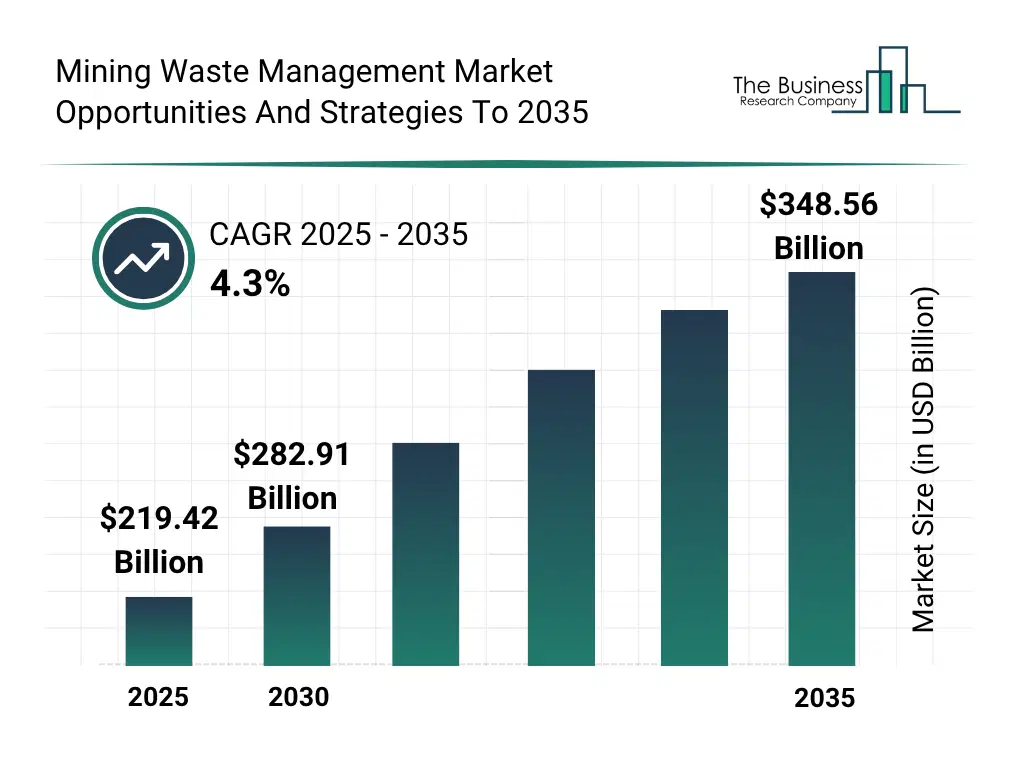
Mining Waste Management Market Size
The global mining waste management market reached a value of nearly $219,418.0 million in 2025, having grown at a compound annual growth rate (CAGR) of 6.1% since 2020. The market is expected to grow from $219,418.0 million in 2025 to $282,906.7 million in 2030 at a rate of 5.2%. The market is then expected to grow at a CAGR of 4.3% from 2030 and reach $348,561.4 million in 2035. Growth in the historic period resulted from Increasing global demand for rare earth metal and minerals, growing mining waste generation, rising industrialization and resource extraction and growing sustainable mining initiatives. Factors that negatively affected growth in the historic period were large volume of tailings and overburden and high waste disposal and treatment costs. Going forward, expanding mining activities in emerging economies, increasing incidents of mining disasters, rising demand for metal recovery from mine waste and increasing environmental compliance requirements will drive the growth. Factors that could hinder the growth of the mining waste management market in the future include high transportation costs for waste materials, limited availability of suitable disposal land and impact of trade wars and tariffs.
Mining Waste Management Market Segmentation
The mining waste management market is segmented by mining type, by mineral/metal, and by waste type.By Mining Type –
The mining waste management market is segmented by mining type into:
- a) Surface
- b) Underground
By Mineral/Metal –
The mining waste management market is segmented by mineral/metal into:
- a) Coal
- b) Iron
- c) Gold
- d) Aluminum
- e) Copper
- f) Nickel
- g) Other Minerals Or Metals
By Waste Type –
The mining waste management market is segmented by waste type into:
- a) Overburden/Waste Rock
- b) Tailings
- c) Mine Water
By Geography - The mining waste management market is segmented by geography into:
- China
- India
- Japan
- Australia
- Indonesia
- South Korea
- USA
- Canada
- Brazil
- France
- Germany
- UK
- Italy
- Spain
- Russia
-
o Asia Pacific
o Africa