
Mobile Healthcare Market Report 2026
Global Outlook – By Device Type (Blood Glucose Monitors, Cardiac Monitors, Hemodynamic Monitors, Neurological Monitors, Respiratory Monitors, Body And Temperature Monitors, Remote Patient Monitoring Devices, Other Device Types), By Service Type (Treatment Services, Diagnostic Services, Monitoring Services, Wellness and Fitness Solutions, Other Service Types), By StakeHolder (Mobile Operators, Healthcare Providers, Application Or Content Players, Other Stake Holders) – Market Size, Trends, Strategies, and Forecast to 2030
Mobile Healthcare Market Overview
• Mobile Healthcare market size has reached to $101.27 billion in 2025 • Expected to grow to $222.32 billion in 2030 at a compound annual growth rate (CAGR) of 17.1% • Growth Driver: The Increase in Telehealth and Telemedicine Driving the Growth of the Mobile Healthcare Market • Market Trend: Cloud-Based Healthcare Communication Enhances Interoperability And Real-Time Care Coordination • North America was the largest region in 2025 and Asia-Pacific is the fastest growing region.Market Gains By 2030 – Top Opportunities By Segment
Market Gain identifies the most promising market opportunities by highlighting the segments or products expected to generate the highest incremental revenue growth over the next five years.
What Is Covered Under Mobile Healthcare Market?
Mobile healthcare refers to a branch of electronic health, which is defined as public and medical health practice supported by mobile devices. Healthcare devices are utilized for the collection and storage of patient information to obtain accurate results, which are used to diagnose and treat various medical conditions. The main types of mobile healthcare devices include blood glucose monitors, cardiac monitors, hemodynamic monitors, neurological monitors, respiratory monitors, body and temperature monitors, remote patient monitoring devices, and others. Blood glucose monitors are small, portable machines used to measure blood sugar levels in the blood. Types of mobile healthcare services include treatment services, diagnostic services, monitoring services, wellness and fitness solutions, and others. The stakeholders associated with mobile healthcare include mobile operators, healthcare providers, application and content players, and others.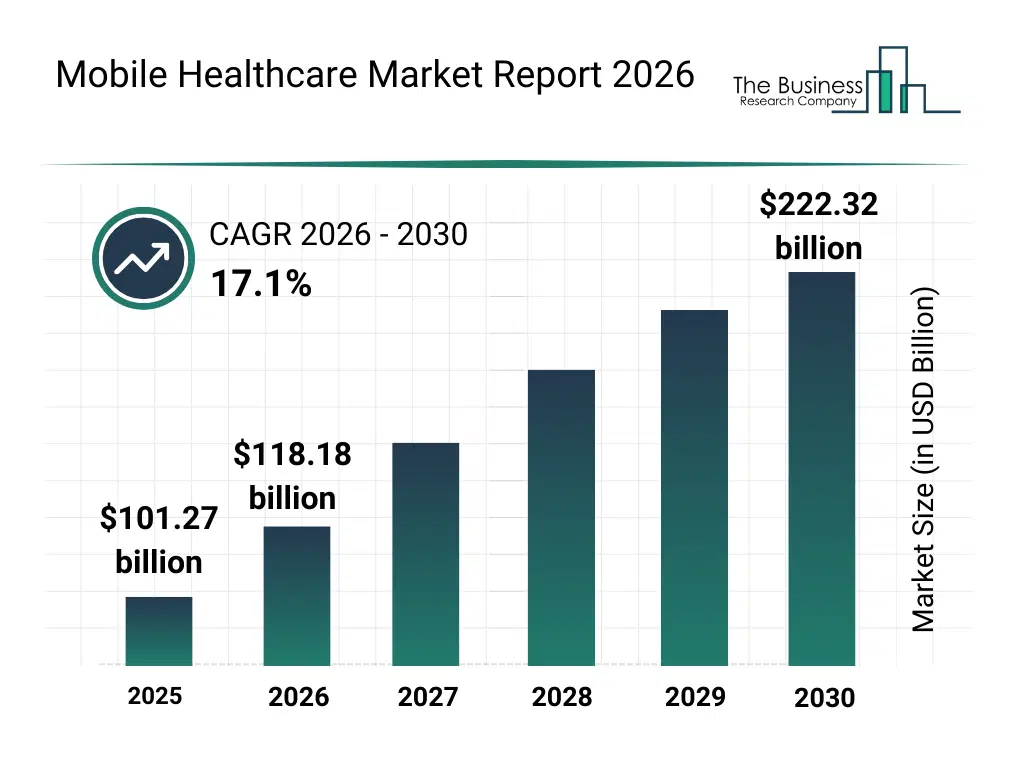
What Is The Mobile Healthcare Market Size and Share 2026?
The mobile healthcare market size has grown rapidly in recent years. It will grow from $101.27 billion in 2025 to $118.18 billion in 2026 at a compound annual growth rate (CAGR) of 16.7%. The growth in the historic period can be attributed to expansion of digital health initiatives, rising prevalence of chronic diseases, growth in smartphone penetration, increased use of wearable health devices, adoption of telemedicine services.What Is The Mobile Healthcare Market Growth Forecast?
The mobile healthcare market size is expected to see rapid growth in the next few years. It will grow to $222.32 billion in 2030 at a compound annual growth rate (CAGR) of 17.1%. The growth in the forecast period can be attributed to increasing demand for personalized healthcare, rising investments in connected health ecosystems, expansion of ai-enabled clinical decision support, growing focus on preventive healthcare, increasing adoption of home-based care models. Major trends in the forecast period include increasing adoption of remote patient monitoring solutions, rising use of mobile diagnostic applications, growing integration of wearable health devices, expansion of telehealth and virtual care platforms, enhanced focus on real-time health data analytics.
Global Mobile Healthcare Market Segmentation
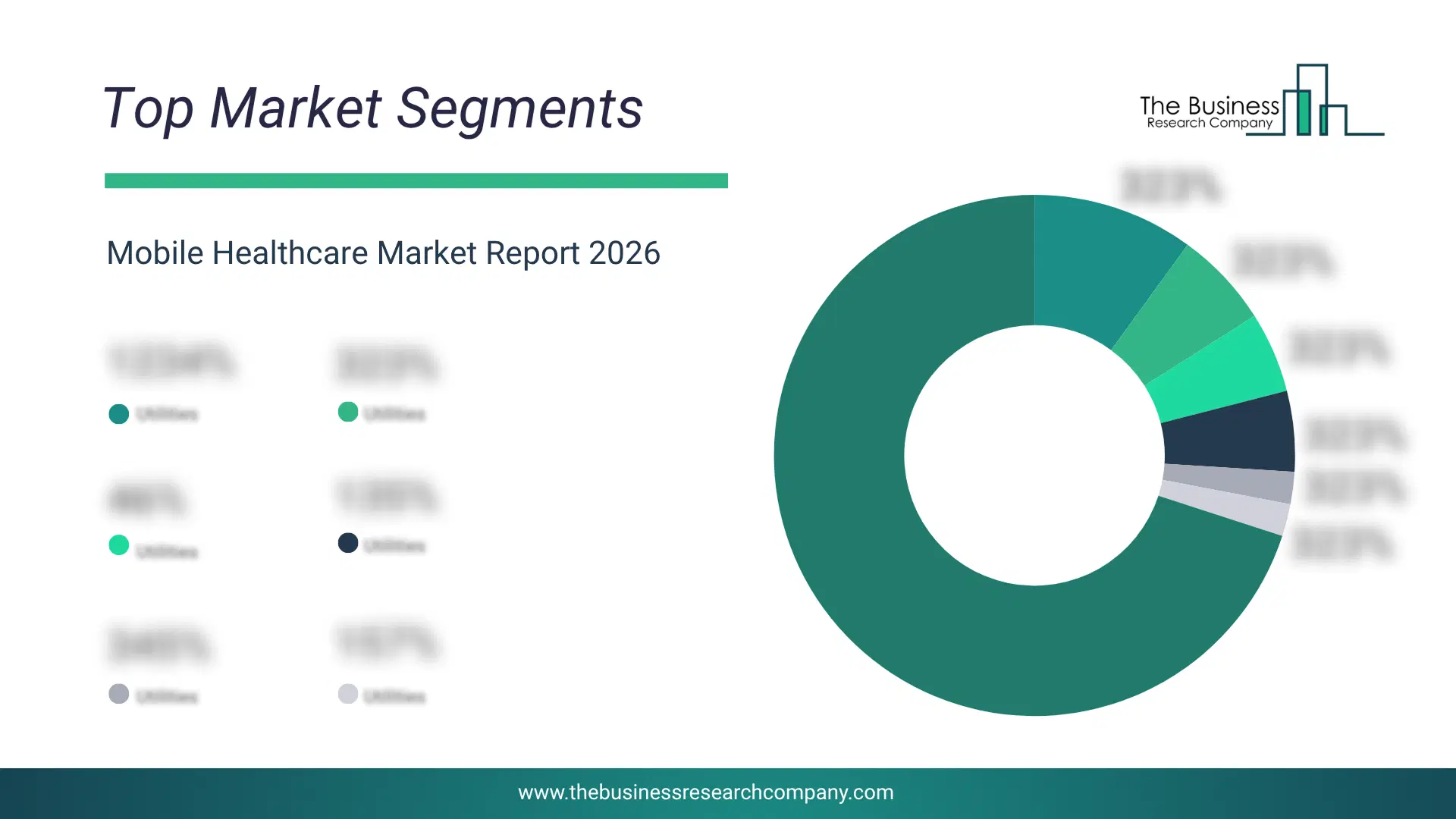
1) By Device Type: Blood Glucose Monitors, Cardiac Monitors, Hemodynamic Monitors, Neurological Monitors, Respiratory Monitors, Body And Temperature Monitors, Remote Patient Monitoring Devices, Other Device Types 2) By Service Type: Treatment Services, Diagnostic Services, Monitoring Services, Wellness and Fitness Solutions, Other Service Types 3) By StakeHolder: Mobile Operators, Healthcare Providers, Application Or Content Players, Other Stake Holders Subsegments: 1) By Blood Glucose Monitors: Continuous Glucose Monitors (CGMs), Connected Blood Glucose Meters 2) By Cardiac Monitors: Wearable ECG Monitors, Holter Monitors, Event Monitors 3) By Hemodynamic Monitors: Non-Invasive Hemodynamic Monitors, Wearable Blood Pressure Monitors 4) By Neurological Monitors: Wearable EEG Monitors, Mobile Neurological Assessment Devices 5) By Respiratory Monitors: Pulse Oximeters, Portable Spirometers, Connected Capnometers 6) By Body And Temperature Monitor: Wearable Body Temperature Monitors, Smart Thermometers 7) By Remote Patient Monitoring Devices: Wearable Monitoring Devices, Smartphone-Based Monitoring Devices 8) By Other Device Types: Smart Inhalers, Smart Pill Bottles, Connected Weight Scales, Mobile Health Tracking Devices The top segments in the mobile healthcare market will be: • Blood Glucose Monitors will reach $51.43 Billion by 2030. • Cardiac Monitors will reach $42.67 Billion by 2030. • Remote Patient Monitoring Devices will reach $40.44 Billion by 2030. • Body And Temperature Monitor will reach $29.1 Billion by 2030. • Respiratory Monitors will reach $23.06 Billion by 2030.What Is The Driver Of The Mobile Healthcare Market?
The increase in telehealth and telemedicine is expected to propel the growth of mobile healthcare market going forward. Telehealth refers to the use of telecommunications technology to provide a wide range of healthcare services and information remotely, while telemedicine specifically involves remote clinical consultations and healthcare delivery. Telehealth and telemedicine leverage mobile technologies to provide remote healthcare services, offering increased accessibility and convenience for patients. Mobile healthcare apps and platforms are integrated with telehealth services, allowing healthcare providers to access patient data and records during virtual consultations. For instance, in February 2025, according to the American Hospital Association (AHA), a US-based hospital association, over 12.6 % of Medicare beneficiaries received a telehealth service in the last quarter of 2023. Therefore, the increase in telehealth and telemedicine is driving the growth of the mobile healthcare industry.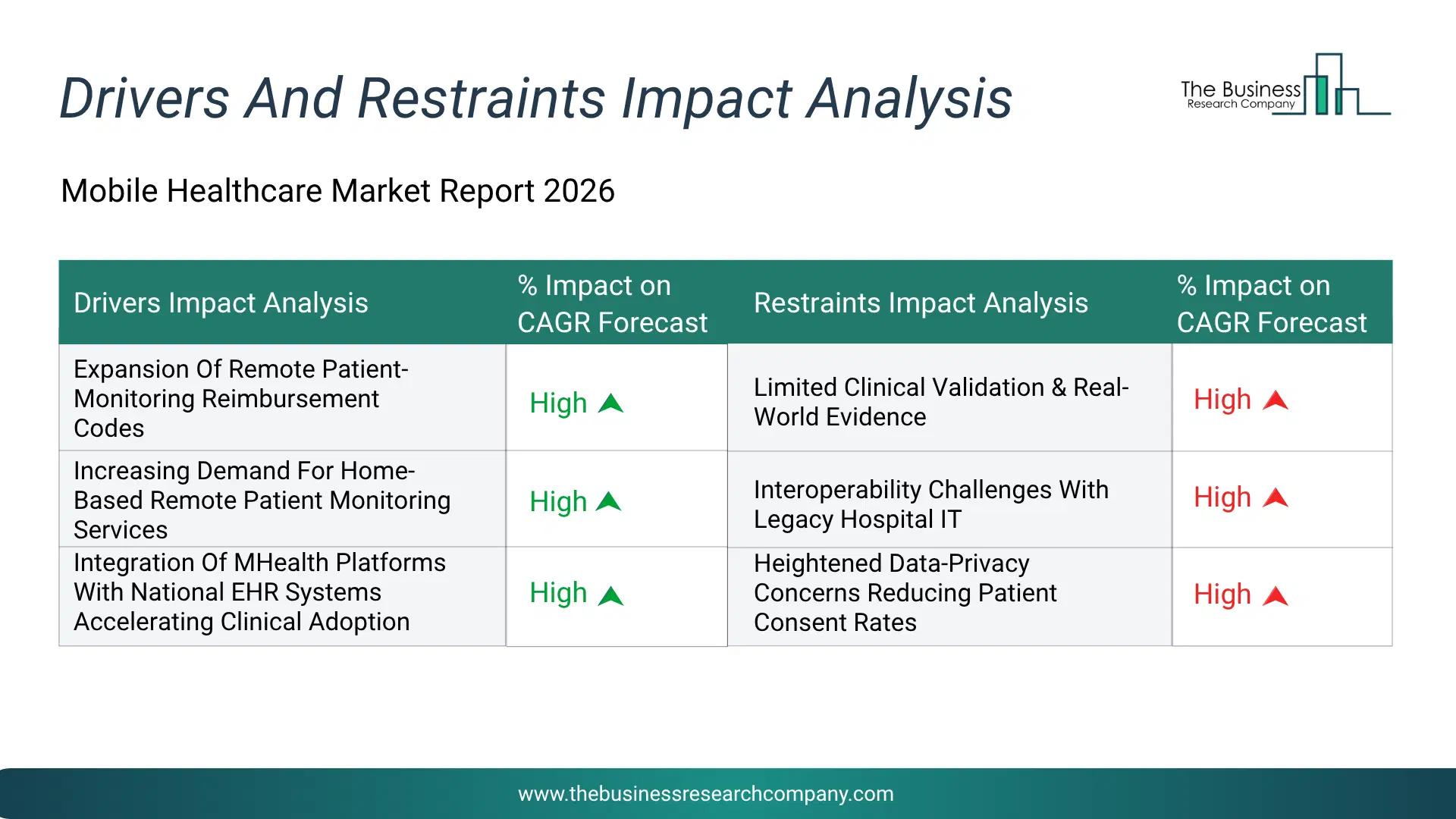
Infographic Chart Showing Key Market Drivers Analysis And Restraints For Mobile Healthcare Market
The chart presents an impact analysis of key drivers and restraints, quantifying their relative influence on the market's growth rate and helping assess the balance between growth enablers and limiting factors. This chart offers a high-level perspective; the full report contains more detailed insights.
How Will The Drivers Impact Growth In The Global Mobile Healthcare Market?
• Expansion Of Remote Patient-Monitoring Reimbursement Codes (High) – During the forecast period, the expansion of remote patient-monitoring reimbursement codes is expected to become a key growth driver for the mobile healthcare market by 2030. Healthcare systems and payers are increasingly recognizing the value of continuous remote monitoring in improving patient outcomes and reducing hospital readmissions. The introduction of broader reimbursement frameworks is encouraging providers to deploy mobile healthcare solutions across a wider patient base while ensuring sustainable revenue generation. This support is accelerating adoption of connected monitoring devices and digital care pathways across clinical settings. • Increasing Demand For Home-Based Remote Patient Monitoring Services (High) – During the forecast period, the increasing demand for home-based remote patient monitoring services is expected to emerge as a major factor driving the expansion of the mobile healthcare market by 2030. Patients are increasingly seeking convenient healthcare solutions that enable continuous monitoring without frequent hospital visits. Mobile healthcare technologies support real-time health tracking, timely interventions, and improved care accessibility, particularly for aging populations and individuals managing long-term conditions. Healthcare providers are also expanding virtual care programs to enhance patient engagement and optimize resource utilization. • Integration Of MHealth Platforms With National EHR Systems Accelerating Clinical Adoption (High) – During the forecast period, the integration of mhealth platforms with national EHR systems is expected to act as a key growth catalyst for the mobile healthcare market by 2030. Seamless interoperability between mobile health applications and electronic health records enables more efficient clinical decision-making and comprehensive patient data management. Healthcare organizations are increasingly adopting connected digital ecosystems that improve care coordination, reduce administrative complexity, and enhance information accessibility across providers. As healthcare digitization initiatives continue to expand globally, demand for interoperable mobile health solutions is expected to increase significantly.How Will The Restraints Impact Growth In The Global Mobile Healthcare Market?
• Limited Clinical Validation & Real-World Evidence (High) – During the forecast period, the limited clinical validation & real-world evidence acts as a major restraint for the mobile healthcare market because many mobile health applications and connected devices still lack sufficient clinical testing and long-term performance validation. Healthcare providers often hesitate to fully adopt these technologies without strong scientific evidence proving their accuracy, reliability, and effectiveness in real-world medical settings. Regulatory authorities also require extensive validation before approving healthcare technologies for widespread clinical use. This slows product commercialization and increases development costs for manufacturers. Patients may also lose confidence in mobile healthcare solutions if device accuracy is inconsistent. The absence of standardized clinical benchmarks further creates uncertainty among hospitals and insurers regarding treatment outcomes. As a result, limited clinical validation restricts broader adoption of mobile healthcare technologies across healthcare systems. • Interoperability Challenges With Legacy Hospital IT (High) – During the forecast period, the interoperability challenges with legacy hospital it significantly restrains the mobile healthcare market by creating difficulties in integrating modern mobile health platforms with outdated hospital information systems. Many healthcare facilities still operate on legacy it infrastructure that lacks compatibility with advanced mobile applications and connected medical devices. This creates data-sharing inefficiencies, workflow disruptions, and higher implementation costs during digital transformation processes. Healthcare providers may face technical barriers while transferring patient information securely across different systems and platforms. Limited interoperability can also reduce the effectiveness of remote patient monitoring and coordinated healthcare delivery. In addition, hospitals often require significant investments to upgrade existing systems for seamless integration. Consequently, these technical and financial challenges slow the adoption of mobile healthcare solutions globally. • Heightened Data-Privacy Concerns Reducing Patient Consent Rates (High) – During the forecast period, the heightened data-privacy concerns reducing patient consent rates acts as a critical restraint for the mobile healthcare market because mobile health platforms collect and store highly sensitive patient information. Increasing incidents of cyberattacks, data breaches, and unauthorized access have raised concerns regarding the security of personal medical records. Patients are becoming more cautious about sharing health data through mobile applications and wearable devices due to fears of privacy misuse. Strict data protection regulations also increase compliance requirements for healthcare providers and technology companies. Failure to ensure secure data management can damage consumer trust and negatively impact adoption rates. Healthcare organizations must invest heavily in cybersecurity infrastructure and encryption technologies to maintain patient confidence. Therefore, growing privacy concerns continue to limit the widespread acceptance of mobile healthcare services.Key Players In The Global Mobile Healthcare Market
Major companies operating in the mobile healthcare market are Apple Inc.; Koninklijke Philips N V; Omron Corporation; Dexcom Inc.; Masimo Corporation; AliveCor Inc.; BioTelemetry Inc.; AgaMatrix Inc.; Withings S A; Teladoc Health Inc.; Amwell Inc.; Doctor on Demand Inc.; Omada Health Inc.; Hims & Hers Health Inc.; Lemonaid Health Inc.; K Health Inc.; 98point6 Inc.; HealthTap Inc.; Carbon Health Inc.; One Medical Group Inc.; Forward Health Inc.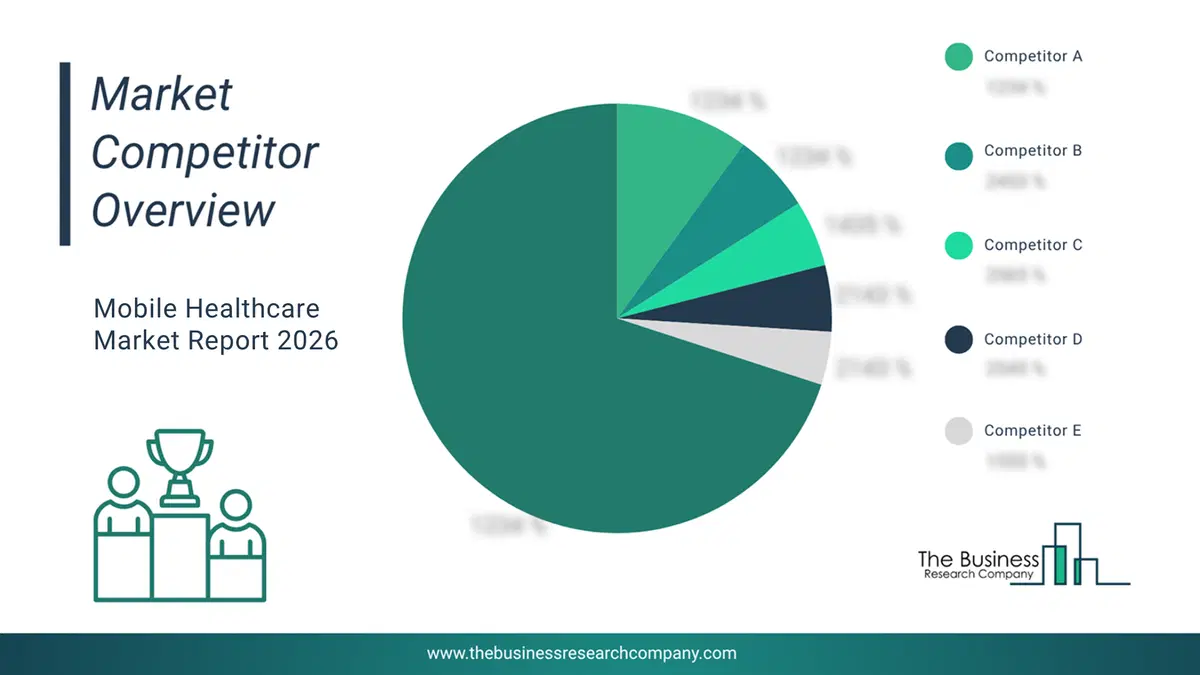
This chart is for illustrative purposes; the full report includes a detailed competitor analysis and comprehensive overview of the top 10 companies in the market.
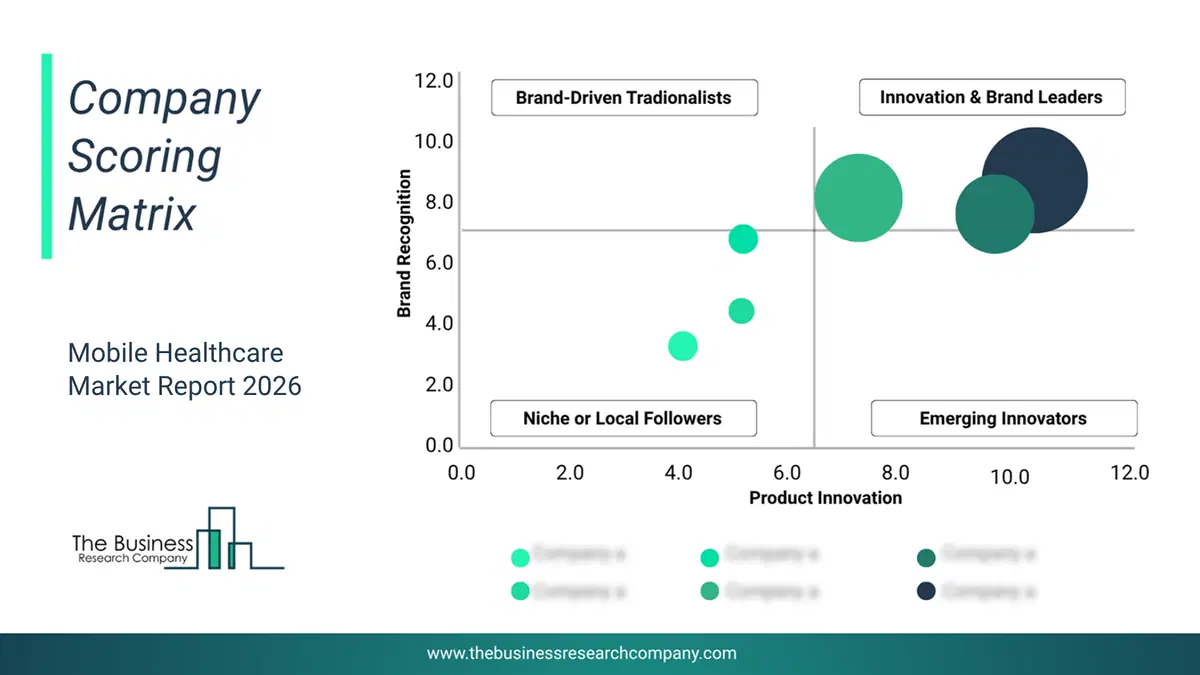
This chart maps companies by product innovation and brand strength, with bubble size indicating relative revenue, helping identify market leaders, challengers, and niche players. This is an illustrative chart; the full report provides a complete and accurate competitive analysis.
Global Mobile Healthcare Market Trends and Insights
Major companies operating in the mobile healthcare market are developing cloud-based healthcare solutions to gain a competitive edge in the market. Cloud-based healthcare system refers to the use of cloud computing technologies and services to store, manage, access, and analyse healthcare-related data, information, and applications. For instance, in March 2023, Fujitsu Limited, a Japan-based information and communication technology company, launched a cloud-based healthcare platform that automatically converts electronic medical record data into the HL7 FHIR standard, aggregates vital signs, step counts, and calorie consumption data, and operates on Microsoft Azure’s secure cloud environment in compliance with the Japanese Ministry of Health’s data protection guidelines. Designed to support remote monitoring, interoperability, and real-time collaboration, this platform enables healthcare providers to deliver more coordinated, data-driven care while ensuring compliance with national standards.What Are Latest Mergers And Acquisitions In The Mobile Healthcare Market?
In September 2024, Asker Healthcare Group, a Sweden-based company providing medical products and solutions, acquired Hugo Technology Ltd for an undisclosed amount. By integrating Hugo Technology, both companies aim to utilise their synergies to improve service offerings and support for customers. This collaboration is expected to create opportunities for cross-border benefits and enhanced customer support. Hugo Technology Ltd., a US-based company, specialises in providing technical services, including maintenance and repair for medical devices.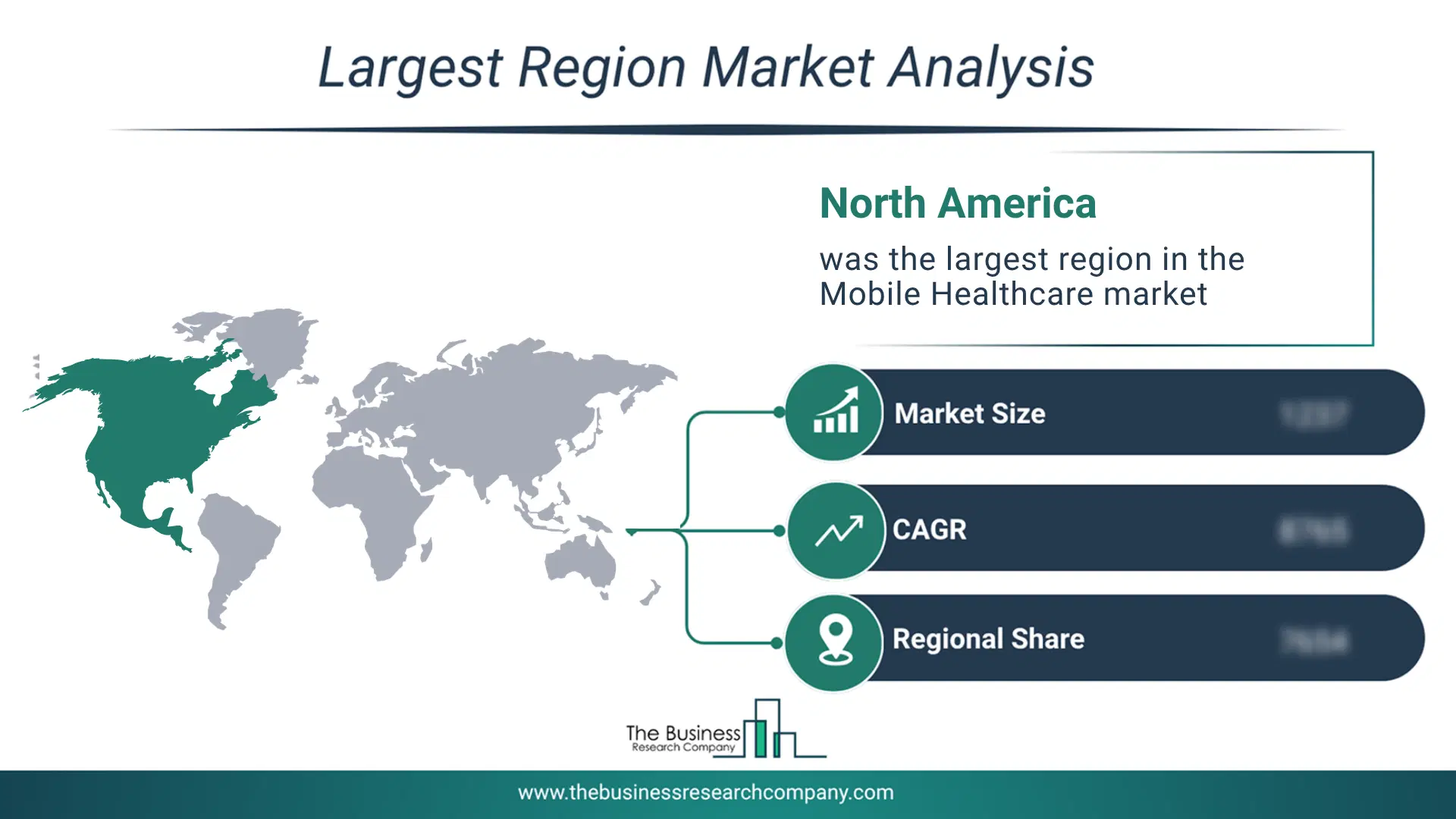
Regional Insights
North America was the largest region in the mobile healthcare market in 2025.Asia-Pacific is expected to be the fastest-growing region in the forecast period. The regions covered in this market report are Asia-Pacific, South East Asia, Western Europe, Eastern Europe, North America, South America, Middle East, Africa. The countries covered in this market report are Australia, Brazil, China, France, Germany, India, Indonesia, Japan, Taiwan, Russia, South Korea, UK, USA, Canada, Italy, SpainWhat Defines the Mobile Healthcare Market?
The mobile healthcare market includes revenues earned by entities by helping users track their biorhythms, monitor sleep, calories, diet, and well-being and allowing users to place an order and then have the needed medication delivered. The market value includes the value of related goods sold by the service provider or included within the service offering. Only goods and services traded between entities or sold to end consumers are included.How is Market Value Defined and Measured?
The market value is defined as the revenues that enterprises gain from the sale of goods and/or services within the specified market and geography through sales, grants, or donations in terms of the currency (in USD unless otherwise specified). The revenues for a specified geography are consumption values that are revenues generated by organizations in the specified geography within the market, irrespective of where they are produced. It does not include revenues from resales along the supply chain, either further along the supply chain or as part of other products.
This chart presents market attractiveness based on a quantitative evaluation of growth, competition, strategic alignment, and risk, offering a clear view of opportunity areas for decision-making. This chart is for illustrative purposes; the full report contains the complete analysis.

This chart highlights the Total Addressable Market (TAM) by estimating the maximum revenue opportunity using an assumption-driven approach, supporting strategic planning and opportunity sizing across markets. The chart is illustrative; the full report provides a more comprehensive analysis.
What Key Data and Analysis Are Included in the Mobile Healthcare Market Report 2026?
The mobile healthcare market research report is one of a series of new reports from The Business Research Company that provides market statistics, including industry global market size, regional shares, competitors with the market share, detailed market segments, market trends and opportunities, and any further data you may need to thrive in the mobile healthcare industry. The market research report delivers a complete perspective of everything you need, with an in-depth analysis of the current and future state of the industry.Mobile Healthcare Market Report Forecast Analysis
| Report Attribute | Details |
|---|---|
| Market Size Value In 2026 | $118.18 billion |
| Revenue Forecast In 2030 | $222.32 billion |
| Growth Rate | CAGR of 16.7% from 2026 to 2030 |
| Base Year For Estimation | 2025 |
| Actual Estimates/Historical Data | 2020-2025 |
| Forecast Period | 2026 - 2030 |
| Market Representation | Revenue in USD Billion and CAGR from 2026 to 2030 |
| Segments Covered | Device Type, Service Type, StakeHolder |
| Regional Scope | Asia-Pacific, Western Europe, Eastern Europe, North America, South America, Middle East, Africa |
| Country Scope | The countries covered in the report are Australia, Brazil, China, France, Germany, India, Indonesia, Japan, Taiwan, Russia, South Korea, UK, USA, Canada, Italy, Spain. |
| Key Companies Profiled | Apple Inc.; Koninklijke Philips N V; Omron Corporation; Dexcom Inc.; Masimo Corporation; AliveCor Inc.; BioTelemetry Inc.; AgaMatrix Inc.; Withings S A; Teladoc Health Inc.; Amwell Inc.; Doctor on Demand Inc.; Omada Health Inc.; Hims & Hers Health Inc.; Lemonaid Health Inc.; K Health Inc.; 98point6 Inc.; HealthTap Inc.; Carbon Health Inc.; One Medical Group Inc.; Forward Health Inc. |
| Customization Scope | Request for Customization |
| Pricing And Purchase Options | Explore Purchase Options |