
Mobility As A Service Market Report 2026
Global Outlook – By Service Type (Ride Hailing, Car Sharing, Micromobility, Bus Sharing, Train Services), By Solution Type (Technology Platforms, Payment Engines, Navigation Solutions, Telecom Connectivity Providers, Ticketing Solutions, Insurance Services), By Application (IOS, Android, Other Applications), By End Use (Personal, Business) – Market Size, Trends, Strategies, and Forecast to 2030
Mobility As A Service Market Overview
• Mobility As A Service market size has reached to $236 billion in 2025 • Expected to grow to $461.93 billion in 2030 at a compound annual growth rate (CAGR) of 14.3% • Growth Driver: The Global Surge In shared mobility Adoption And Its Impact On The Growing Mobility As A Service Market • Market Trend: Strategic Collaborations And Partnerships Driving Expansion In The Mobility As A Service Market • Asia-Pacific was the largest region in 2025.Market Gains By 2030 – Top Opportunities By Segment
Market Gain identifies the most promising market opportunities by highlighting the segments or products expected to generate the highest incremental revenue growth over the next five years.
What Is Covered Under Mobility As A Service Market?
Mobility as a service is a process that creates a single, comprehensive, and on-demand mobility service by integrating different modes of transportation and services related to transportation. MaaS is a real-time, on-demand platform that enables customers to book and pay for any combination of transportation options, including taxis, auto rentals, and bike and car-sharing services. The main types of services in mobility as a service are ride hailing, car sharing, micromobility, bus sharing, train services and the solutions include technology platforms, payment engines, navigation solutions, telecom connectivity providers, ticketing solutions, and insurance services. Ride-hailing is the practice of a customer placing an online ride order, typically through a smartphone application. A ride-hailing platform is used as a middleman between the passenger and the driver and receives the customer's request for a ride. The mobility as a service is applied in iOS, android, and other applications to be used for personal and business purposes.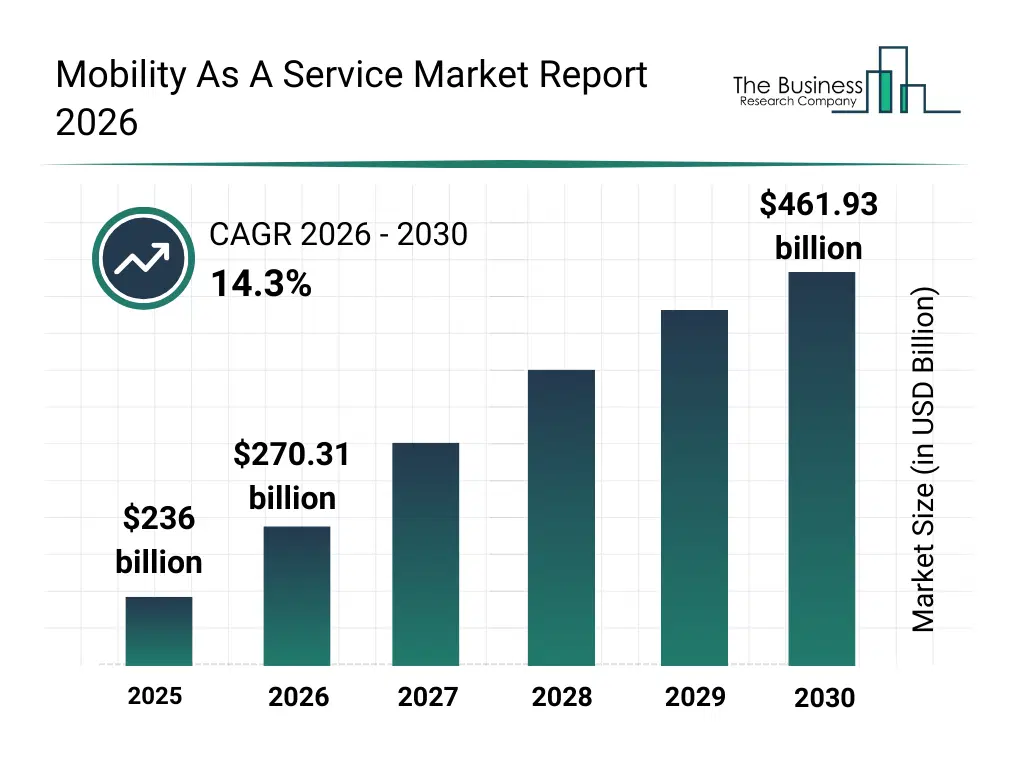
What Is The Mobility As A Service Market Size and Share 2026?
The mobility as a service market size has grown rapidly in recent years. It will grow from $236 billion in 2025 to $270.31 billion in 2026 at a compound annual growth rate (CAGR) of 14.5%. The growth in the historic period can be attributed to urbanization-driven transport demand, expansion of ride-hailing services, growth of smartphone-based navigation tools, rising congestion in urban centers, increasing availability of shared mobility options.What Is The Mobility As A Service Market Growth Forecast?
The mobility as a service market size is expected to see rapid growth in the next few years. It will grow to $461.93 billion in 2030 at a compound annual growth rate (CAGR) of 14.3%. The growth in the forecast period can be attributed to growing investments in smart mobility ecosystems, rising focus on sustainable urban transport, expansion of electric and shared mobility services, increasing use of real-time mobility data, stronger public-private mobility partnerships. Major trends in the forecast period include increasing integration of multi-modal transport platforms, rising adoption of unified mobility payment systems, growing demand for on-demand transportation services, expansion of micromobility integration, enhanced focus on user-centric mobility apps.
Global Mobility As A Service Market Segmentation
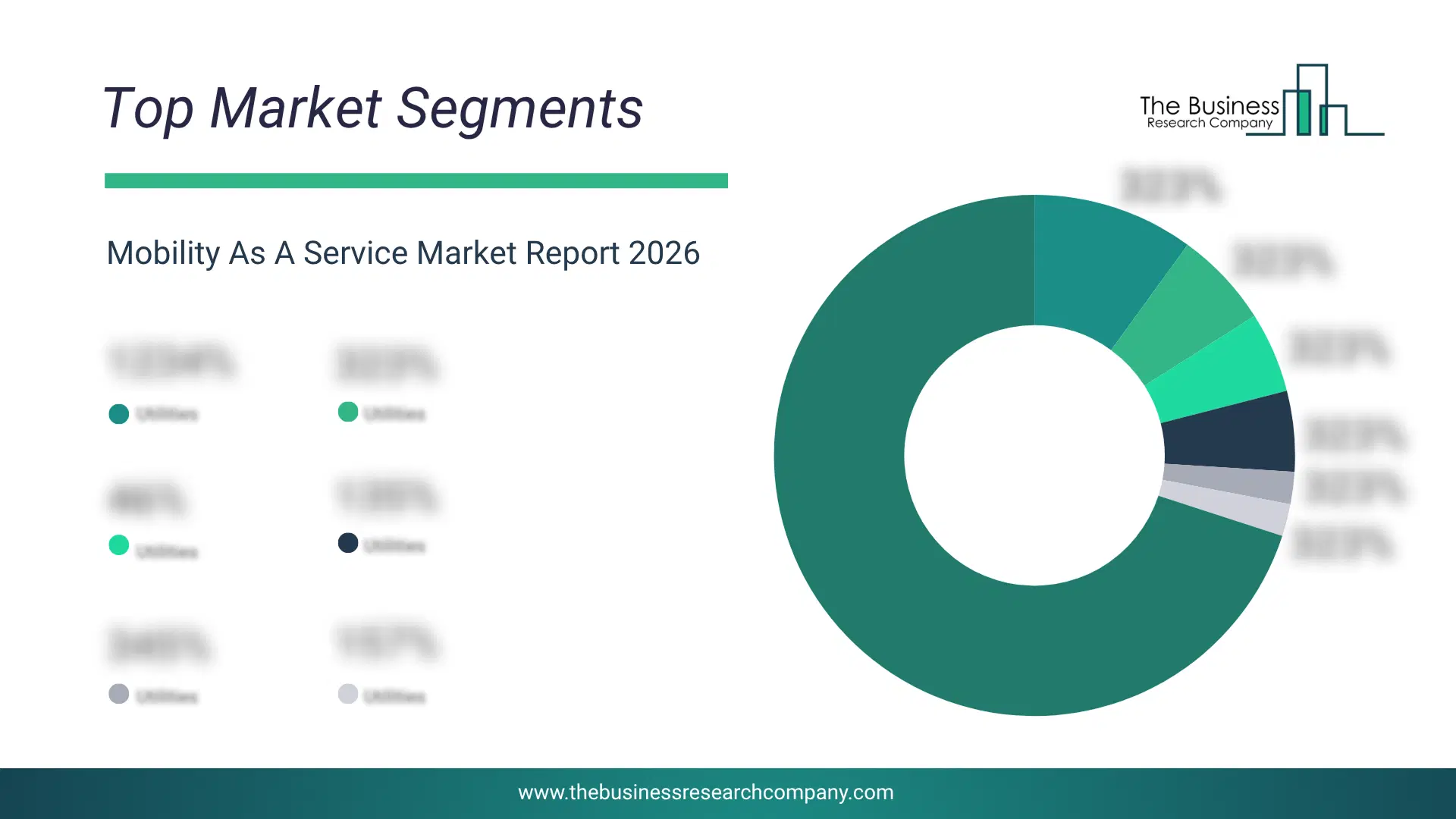
1) By Service Type: Ride Hailing, Car Sharing, Micromobility, Bus Sharing, Train Services 2) By Solution Type: Technology Platforms, Payment Engines, Navigation Solutions, Telecom Connectivity Providers, Ticketing Solutions, Insurance Services 3) By Application: IOS, Android, Other Applications 4) By End Use: Personal, Business Subsegments: 1) By Ride Hailing: Taxi Services, Ride-Sharing Services 2) By Car Sharing: Peer-To-Peer Car Sharing, Corporate Car Sharing 3) By Micromobility: E-Scooters, E-Bikes, Shared Mopeds 4) By Bus Sharing: On-Demand Bus Services, Fixed Route Bus Services 5) By Train Services: Commuter Rail Services, Intercity Train Services The top segments in the mobility as a service market will be: • Android will reach $160642.33 Million by 2025. • Personal will reach $154282.77 Million by 2025. • Ride Hailing will reach $90858.38 Million by 2025. • IOS will reach $65231.86 Million by 2025. • Business will reach $63230.37 Million by 2025.What Is The Driver Of The Mobility As A Service Market?
The rise in the adoption of shared mobility around the globe is expected to propel the growth of mobility as a service market. Sharing mobility refers to various ridesharing practices, such as carpooling, vanpooling, bike sharing, and on-demand ride services as an alternative to shuttles, private transit services, fixed-route bus and rail services, and paratransit. Mobility as a service eases shared mobility by bringing in technology and application. For instance, in April 2023, according to the Department for Transport, a UK-based ministerial department of the government, the number of private taxi hire vehicles reached 89,600, reflecting an 11% increase compared to March 2022. Therefore, the rising adoption of shared mobility will drive mobility as a service industry.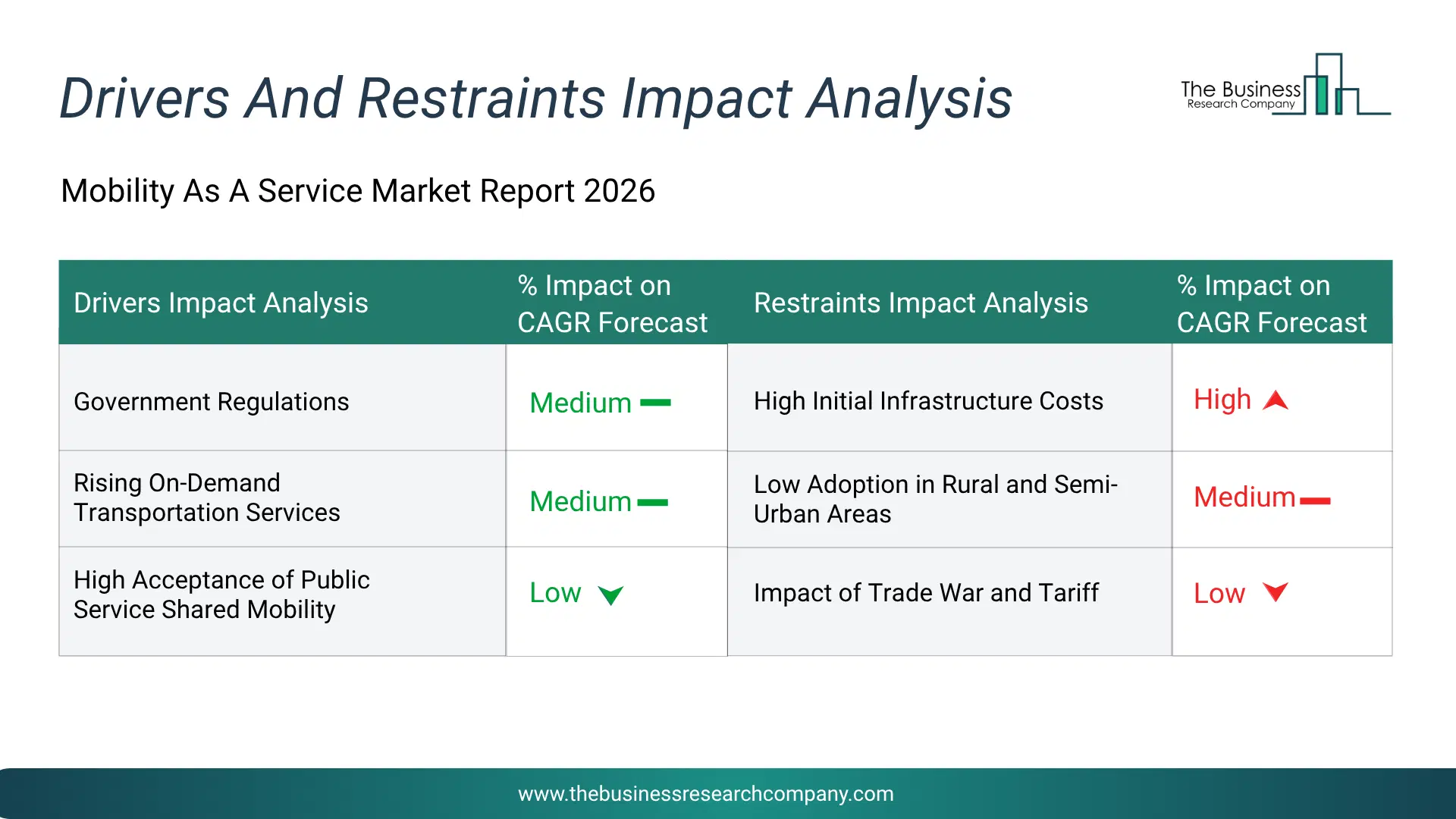
Infographic Chart Showing Key Market Drivers Analysis And Restraints For Mobility As A Service Market
The chart presents an impact analysis of key drivers and restraints, quantifying their relative influence on the market's growth rate and helping assess the balance between growth enablers and limiting factors. This chart offers a high-level perspective; the full report contains more detailed insights.
How Will The Drivers Impact Growth In The Global Mobility As A Service Market?
• Government Regulations (Medium) – The government regulations will become a key driver of growth in the mobility as a service market by 2030. They create a framework that encourages the adoption of MaaS (mobility as a service) platforms by ensuring safety, transparency and accountability across mobility services. Clear policies on aggregator operations, data sharing and fare structures foster trust among users and operators, which in turn stimulates investment in MaaS technologies. These regulations also push service providers to upgrade digital platforms and compliance systems, thereby accelerating market growth. Furthermore, governments are increasingly adopting open data policies, mandating transport operators to share real-time service data, which facilitates the development of integrated MaaS solutions. As a result, the government regulations is anticipated to contributing to a 1.5% annual growth in the market. • Rising On-Demand Transportation Services (Medium) – The rising on-demand transportation services will emerge as a major factor driving the expansion of the market by 2030. This rising demand places emphasis on the efficiency and scalability of software systems, encouraging continuous innovation in MaaS (mobility as a service) platforms. As more people choose flexible mobility, service providers expand digital integrations, strengthening the market. Additionally, the proliferation of smartphones and mobile applications has made on-demand transportation more accessible, further fueling the growth of MaaS platforms. Consequently, the rising on-demand transportation services is projected to contributing to a 1.0% annual growth in the market. • High Acceptance of Public Service Shared Mobility (Low) – The high acceptance of public service shared mobility will serve as a key growth catalyst for the market by 2030. The willingness of users to embrace shared mobility options supports the shift from personal vehicle ownership to platform-based services. Greater acceptance of pooling, ride-sharing and micro-mobility increases reliance on software platforms that unify these services. This trend strengthens the role of MaaS (mobility as a service) platforms in offering seamless, multimodal travel experiences, thereby driving wider market penetration. Moreover, the environmental benefits associated with shared mobility options are encouraging both users and policymakers to support and adopt MaaS solutions. Therefore, this high acceptance of public service shared mobility is projected to supporting to a 0.8% annual growth in the market. • Growing Tourism and Travel Industry (Low) – The growing tourism and travel industry will become a significant driver contributing to the growth of the market by 2030. The expansion of tourism and travel generates a higher need for flexible and accessible transport solutions across regions. This growth fuels the demand for MaaS (mobility as a service) platforms capable of integrating diverse mobility options into single, user-friendly systems. As travelers seek convenience and efficiency, the reliance on digital solutions increases, creating favourable conditions for MaaS adoption. Additionally, the rise of digital platforms and mobile applications has made it easier for tourists to access and utilize MaaS services, further driving market growth. Consequently, the growing tourism and travel industry is projected to contributing to a 0.5% annual growth in the market.How Will The Restraints Impact Growth In The Global Mobility As A Service Market?
• High Initial Infrastructure Costs (Medium) – High Initial Infrastructure Costs will restrict the growth of the Mobility As A Service market during the forecast period. MaaS implementation requires significant investment in technology platforms, fleet management systems, and integrated infrastructure. High upfront costs create barriers for smaller operators and cities with limited budgets. Cost constraints can limit the deployment of comprehensive MaaS solutions and affect market growth. • Low Adoption in Rural and Semi-Urban Areas (Low) – Low Adoption in Rural and Semi-Urban Areas will restrict the growth of the Mobility As A Service market during the forecast period. MaaS adoption faces challenges in rural and semi-urban areas with lower population density and limited transportation options. Infrastructure and demand constraints affect the viability of MaaS services in these areas. Geographic coverage gaps can limit market reach and growth potential for MaaS providers. • Impact of Trade War and Tariff (Low) – Impact of Trade War and Tariff will restrict the growth of the Mobility As A Service market during the forecast period. Trade tensions and economic uncertainty can affect investment in transportation infrastructure and technology. Reduced public spending during trade disputes may limit MaaS deployment. Trade barriers may also impact the availability and cost of MaaS technology and vehicles.Key Players In The Global Mobility As A Service Market
Major companies operating in the mobility as a service market are Uber Technologies Inc.; SkedGo Pty Ltd; Moovit Inc.; Moovel Group GmbH; UbiGo Innovation AB; Citymapper Ltd.; Communauto Inc.; Lyft Inc.; ANI Technologies Pvt Ltd.; Avis Budget Group Inc.; Beijing Xiaoju Technology Co. Ltd.; Grab Holdings Inc.; Hertz Global Holdings Inc.; Europcar Mobility Group S A; Sixt SE; Didi Chuxing Technology Co. Ltd.; Ola Cabs Technology Pvt. Ltd.; BlaBlaCar SAS; Zipcar Inc.; Car2Go North America LLC; DriveNow North America LLC; LimeBike Inc.; Bird Rides Inc.; Spin Inc.; Jump Mobility Inc.; Transit App Inc.; MaaS Global Oy; Beeline Singapore Pte Ltd; Karhoo Technologies Ltd.; Bolt Technology OU; Free2Move Services; Wunder Mobility GmbH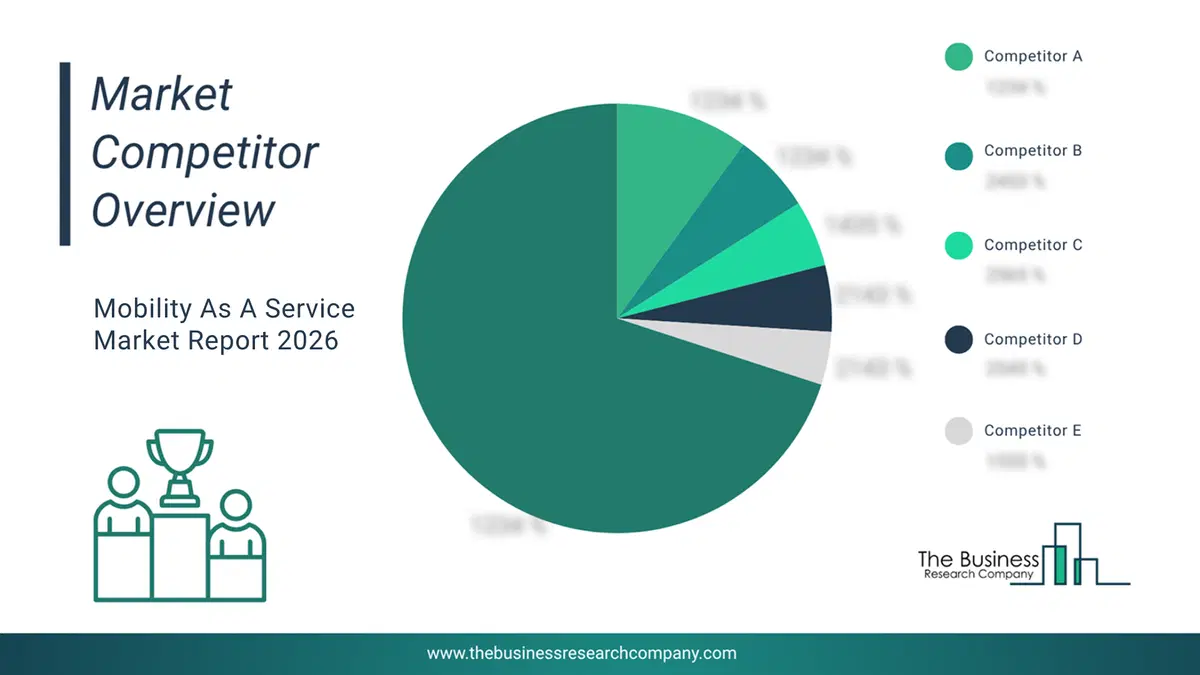
This chart is for illustrative purposes; the full report includes a detailed competitor analysis and comprehensive overview of the top 10 companies in the market.
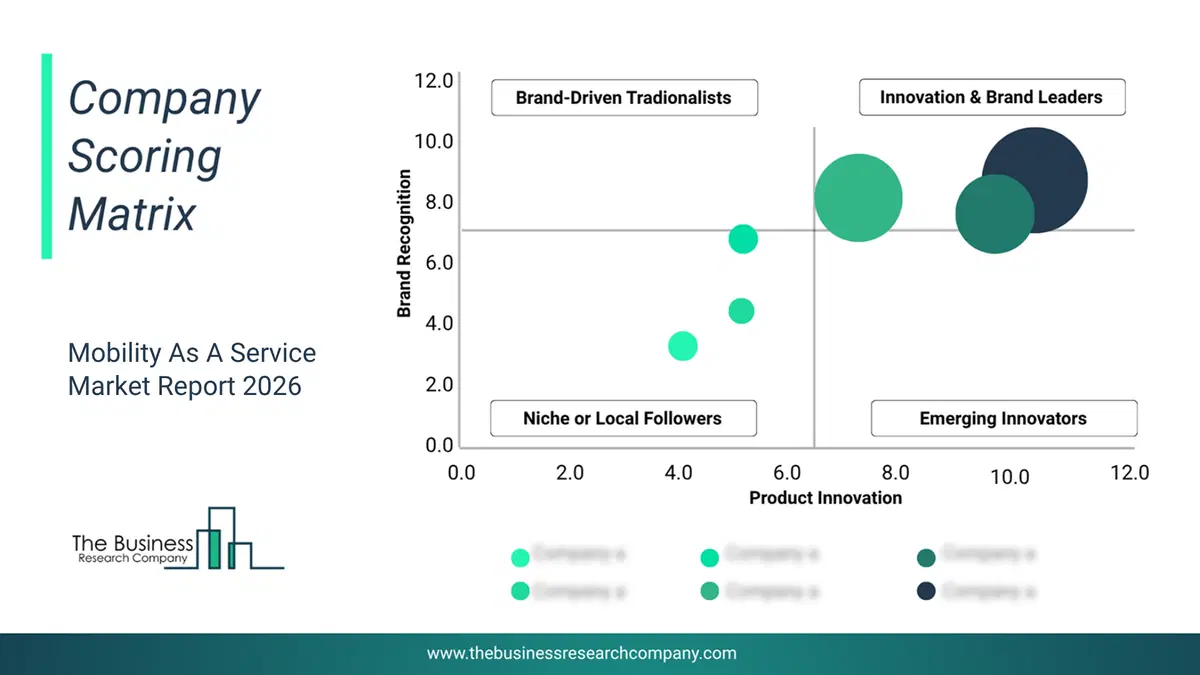
This chart maps companies by product innovation and brand strength, with bubble size indicating relative revenue, helping identify market leaders, challengers, and niche players. This is an illustrative chart; the full report provides a complete and accurate competitive analysis.
Global Mobility As A Service Market Trends and Insights
Major companies are strategically entering partnerships and collaborations with start-ups and mid-sized companies in the mobility as a service market to broaden the products and services offered by the company. Strategic collaborations and partnership agreements help companies expand their existing product portfolio and geographical reach. For instance, in April 2023, kia corporation, South Korea based Automobile manufacturer partnered with South Korea based provider of online taxi-hailing and parking services, kakao mobilty. With this partnership Both parties to construct customer-centric mobility services using extensive vehicle operation data and interaction between in-vehicle-infotainment and software platforms and Business to expand at global level as well as in target areas for logistics and transportation of people with mobility barriers.What Are Latest Mergers And Acquisitions In The Mobility As A Service Market?
In April 2024, uMob, a Netherlands-based software company, acquired MaaS Global for an undisclosed amount. This acquisition marks a significant step for uMob as it aims to enhance its Mobility-as-a-Service (MaaS) platform by integrating the technology and expertise developed by MaaS Global over the past decade. MaaS Global is a Finland-based software company specializing in the Whim mobility app.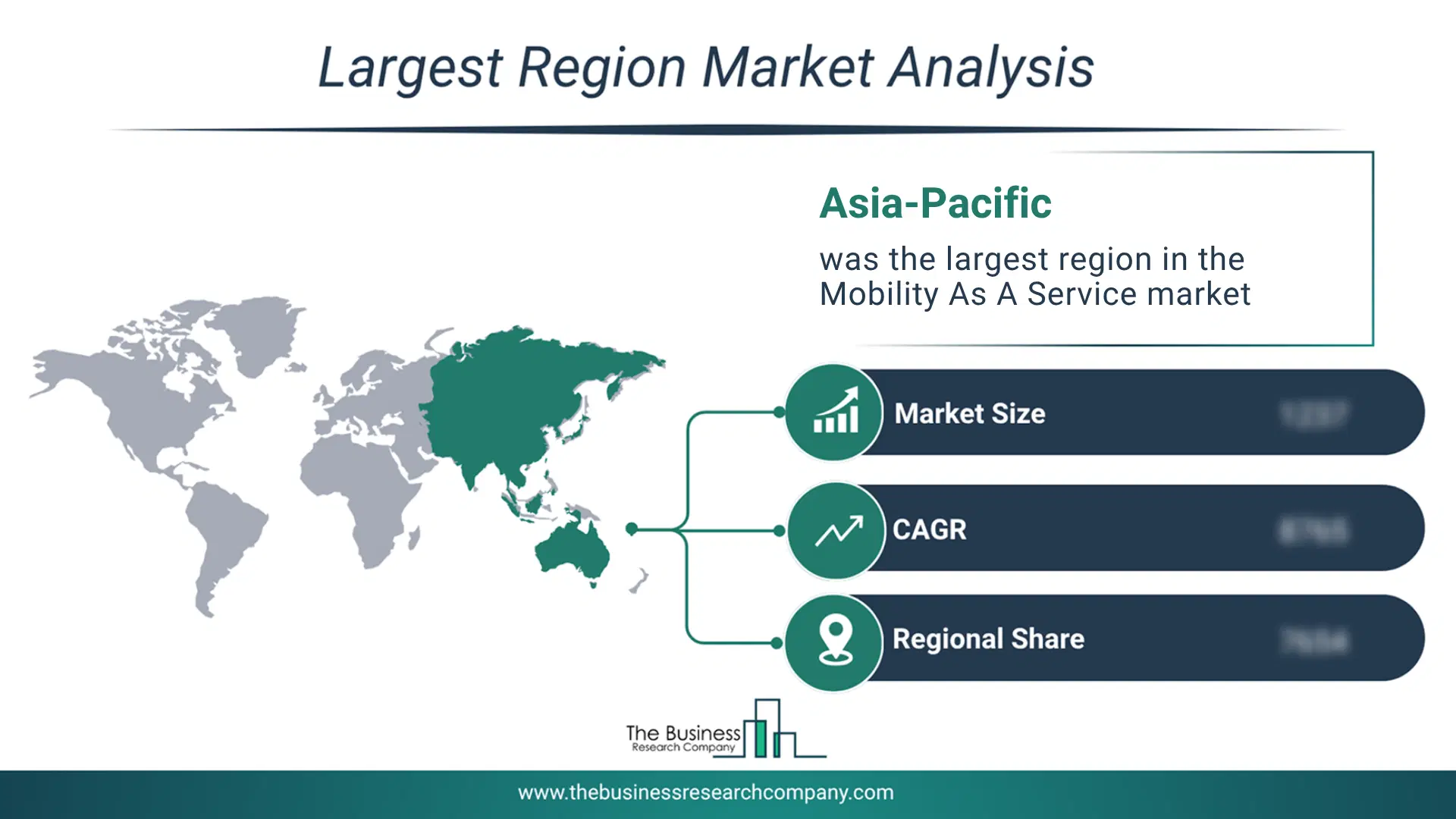
Regional Insights
Asia-Pacific was the largest region in the mobility as a service market in 2025. The regions covered in this market report are Asia-Pacific, South East Asia, Western Europe, Eastern Europe, North America, South America, Middle East, Africa. The countries covered in this market report are Australia, Brazil, China, France, Germany, India, Indonesia, Japan, Taiwan, Russia, South Korea, UK, USA, Canada, Italy, SpainWhat Defines the Mobility As A Service Market?
The mobility as a service market includes revenues earned by entities through car rental and shuttle services. The market value includes the value of related goods sold by the service provider or included within the service offering. Only goods and services traded between entities or sold to end consumers are included.How is Market Value Defined and Measured?
The market value is defined as the revenues that enterprises gain from the sale of goods and/or services within the specified market and geography through sales, grants, or donations in terms of the currency (in USD unless otherwise specified). The revenues for a specified geography are consumption values that are revenues generated by organizations in the specified geography within the market, irrespective of where they are produced. It does not include revenues from resales along the supply chain, either further along the supply chain or as part of other products.
This chart presents market attractiveness based on a quantitative evaluation of growth, competition, strategic alignment, and risk, offering a clear view of opportunity areas for decision-making. This chart is for illustrative purposes; the full report contains the complete analysis.

This chart highlights the Total Addressable Market (TAM) by estimating the maximum revenue opportunity using an assumption-driven approach, supporting strategic planning and opportunity sizing across markets. The chart is illustrative; the full report provides a more comprehensive analysis.
What Key Data and Analysis Are Included in the Mobility As A Service Market Report 2026?
The mobility as a service market research report is one of a series of new reports from The Business Research Company that provides market statistics, including industry global market size, regional shares, competitors with the market share, detailed market segments, market trends and opportunities, and any further data you may need to thrive in the mobility as a service industry. The market research report delivers a complete perspective of everything you need, with an in-depth analysis of the current and future state of the industry.Mobility As A Service Market Report Forecast Analysis
| Report Attribute | Details |
|---|---|
| Market Size Value In 2026 | $270.31 billion |
| Revenue Forecast In 2030 | $461.93 billion |
| Growth Rate | CAGR of 14.5% from 2026 to 2030 |
| Base Year For Estimation | 2025 |
| Actual Estimates/Historical Data | 2020-2025 |
| Forecast Period | 2026 - 2030 |
| Market Representation | Revenue in USD Billion and CAGR from 2026 to 2030 |
| Segments Covered | Service Type, Solution Type, Application, End Use |
| Regional Scope | Asia-Pacific, Western Europe, Eastern Europe, North America, South America, Middle East, Africa |
| Country Scope | The countries covered in the report are Australia, Brazil, China, France, Germany, India, Indonesia, Japan, Taiwan, Russia, South Korea, UK, USA, Canada, Italy, Spain. |
| Key Companies Profiled | Uber Technologies Inc.; SkedGo Pty Ltd; Moovit Inc.; Moovel Group GmbH; UbiGo Innovation AB; Citymapper Ltd.; Communauto Inc.; Lyft Inc.; ANI Technologies Pvt Ltd.; Avis Budget Group Inc.; Beijing Xiaoju Technology Co. Ltd.; Grab Holdings Inc.; Hertz Global Holdings Inc.; Europcar Mobility Group S A; Sixt SE; Didi Chuxing Technology Co. Ltd.; Ola Cabs Technology Pvt. Ltd.; BlaBlaCar SAS; Zipcar Inc.; Car2Go North America LLC; DriveNow North America LLC; LimeBike Inc.; Bird Rides Inc.; Spin Inc.; Jump Mobility Inc.; Transit App Inc.; MaaS Global Oy; Beeline Singapore Pte Ltd; Karhoo Technologies Ltd.; Bolt Technology OU; Free2Move Services; Wunder Mobility GmbH |
| Customization Scope | Request for Customization |
| Pricing And Purchase Options | Explore Purchase Options |