
Mosquito Borne Diseases Market Report 2026
Global Outlook – By Disease Type (Malaria, Dengue, Yellow Fever, West Nile Virus, Chikungunya, Zika Virus, Other Disease Types), By Treatment Type (Medication, Vaccination, Vector Control Methods, Immunotherapy, Supportive Care, Other Treatment Types), By End User (Hospitals, Clinics, Diagnostic Centers, Research Institutes, Government Organizations, Non-Governmental Organizations, Other End Users) - Market Size, Trends, Strategies, and Forecast to 2030
Mosquito Borne Diseases Market Overview
• Mosquito Borne Diseases market size has reached to $3.3 billion in 2025 • Expected to grow to $4.81 billion in 2030 at a compound annual growth rate (CAGR) of 7.8% • Growth Driver: Surge In International Travel Drives Growth In The Market • Market Trend: Technological Innovations In Mosquito Repellents For Enhanced Protection Against Mosquito-Borne Diseases • North America was the largest region in 2025 and Latin America is the fastest growing region.What Is Covered Under Mosquito Borne Diseases Market?
Mosquito borne diseases are a group of infectious illnesses caused by parasites, viruses, and bacteria transmitted to humans through the bites of infected female mosquitoes, leading to widespread health concerns, increased morbidity and mortality rates, and the need for effective prevention and control measures in both endemic and non-endemic regions worldwide. The main disease types of mosquito-borne diseases are malaria, dengue, yellow fever, west nile virus, chikungunya, zika virus, and others. Malaria refers to a mosquito-borne infectious disease caused by parasites of the genus plasmodium, transmitted to humans through the bites of infected female Anopheles mosquitoes. It includes various treatment types, including medication, vaccination, vector control methods, immunotherapy, supportive care, and others, catering to various end users such as hospitals, clinics, diagnostic centers, research institutes, government organizations, non-governmental organizations, and others.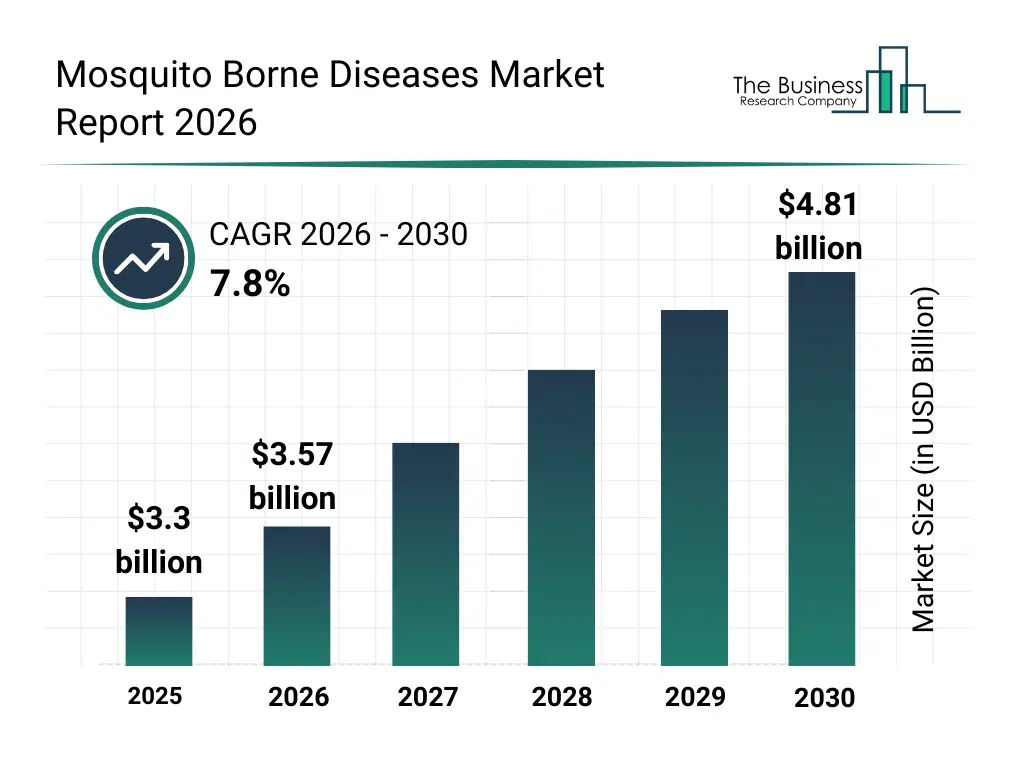
What Is The Mosquito Borne Diseases Market Size and Share 2026?
The mosquito borne diseases market size has grown strongly in recent years. It will grow from $3.3 billion in 2025 to $3.57 billion in 2026 at a compound annual growth rate (CAGR) of 8.1%. The growth in the historic period can be attributed to climate-driven mosquito expansion, limited access to vaccines, high burden in tropical regions, dependence on government eradication programs, rising incidence of dengue and malaria.What Is The Mosquito Borne Diseases Market Growth Forecast?
The mosquito borne diseases market size is expected to see strong growth in the next few years. It will grow to $4.81 billion in 2030 at a compound annual growth rate (CAGR) of 7.8%. The growth in the forecast period can be attributed to emerging genetic control technologies, expanding vaccination programs, increasing global health funding, rapid adoption of digital disease surveillance, rising demand for advanced mosquito control products. Major trends in the forecast period include rising demand for precision vector surveillance, increased use of AI-powered disease prediction models, expansion of iot-based mosquito monitoring systems, growth in eco-friendly and sustainable vector control solutions, integration of digital health platforms for remote disease tracking.
Global Mosquito Borne Diseases Market Segmentation
1) By Disease Type: Malaria, Dengue, Yellow Fever, West Nile Virus, Chikungunya, Zika Virus, Other Disease Types 2) By Treatment Type: Medication, Vaccination, Vector Control Methods, Immunotherapy, Supportive Care, Other Treatment Types 3) By End User: Hospitals, Clinics, Diagnostic Centers, Research Institutes, Government Organizations, Non-Governmental Organizations, Other End Users Subsegments: 1) By Malaria: Plasmodium Falciparum Malaria, Plasmodium Vivax Malaria 2) By Dengue: Dengue Fever, Severe Dengue (Dengue Hemorrhagic Fever) 3) By Yellow Fever: Acute Yellow Fever, Chronic Yellow Fever 4) By West Nile Virus: Neuroinvasive Disease (Encephalitis, Meningitis), Non-neuroinvasive Disease 5) By Chikungunya: Acute Chikungunya, Chronic Chikungunya 6) By Zika Virus: Acute Zika Infection, Congenital Zika Syndrome 7) By Other Disease Types: Japanese Encephalitis, La Crosse Encephalitis, Eastern Equine Encephalitis (EEE)What Is The Driver Of The Mosquito Borne Diseases Market?
The surge in international travel is expected to propel the growth of the mosquito borne diseases market going forward. The surge in international travel is driven by increased demand for leisure, business, and reunions post-pandemic, alongside greater accessibility and improved travel infrastructure. International travel contributes to the spread of mosquito-borne diseases by increasing exposure to mosquito habitats, facilitating the movement of disease-carrying mosquitoes, and hindering effective vector control measures. For instance, in September 2024, according to the UN Tourism, a Spain-based tourism agency, approximately 1.1 billion international tourist arrivals (overnight visitors) were recorded from January to September 2024, showing an increase of about 11% compared to the same period in 2023. Therefore, the surge in international travel is driving growth in the mosquito borne diseases industry.Key Players In The Global Mosquito Borne Diseases Market
Major companies operating in the mosquito borne diseases market are Johnson & Johnson, Merck & Co Inc, Sanofi SA, Novartis AG, GlaxoSmithKline plc, Serum Institute of India Pvt Ltd, Emergent BioSolutions, Valneva SE, Bharat Biotech, Syngenta, Orkin Inc, RTI International, Vector Control International, Clarke Environmental Mosquito Management, Oxitec Ltd, Abbott Laboratories, Takeda Pharmaceuticals, Sun Pharmaceutical Industries Ltd, Pfizer Inc, Roche Holding AG, Moderna Inc, BioNTech SE, CSL Limited, Bayer AG, BASF SE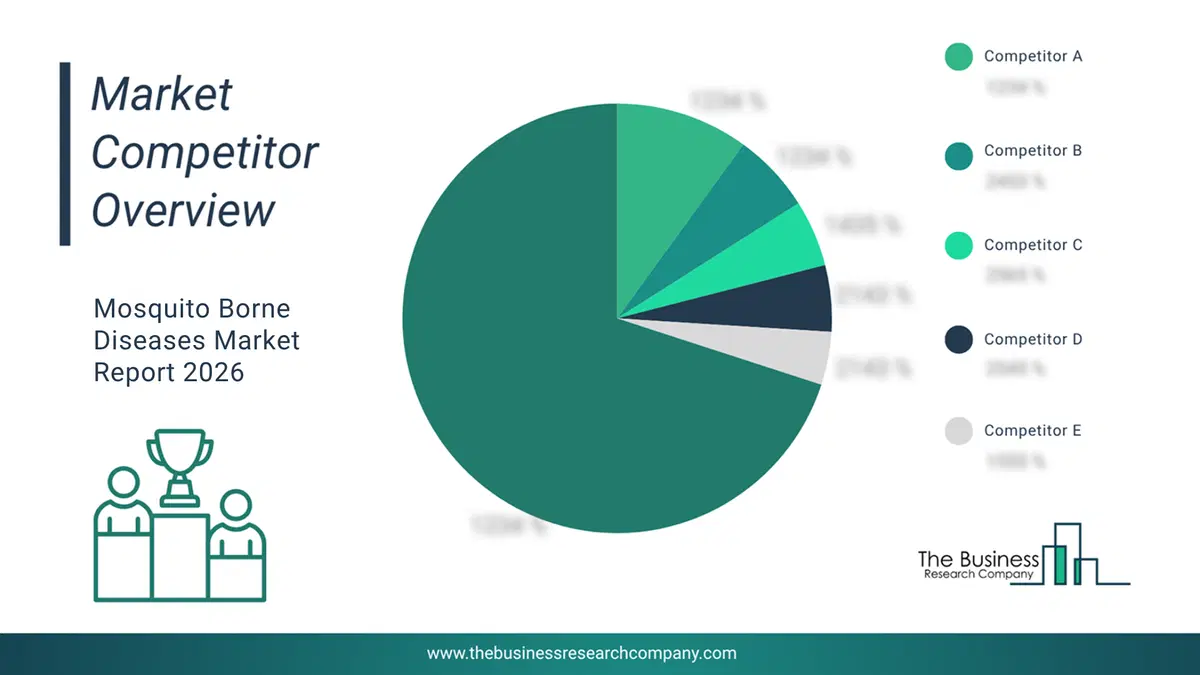
This chart is for illustrative purposes; the full report includes a detailed competitor analysis and comprehensive overview of the top 10 companies in the market.
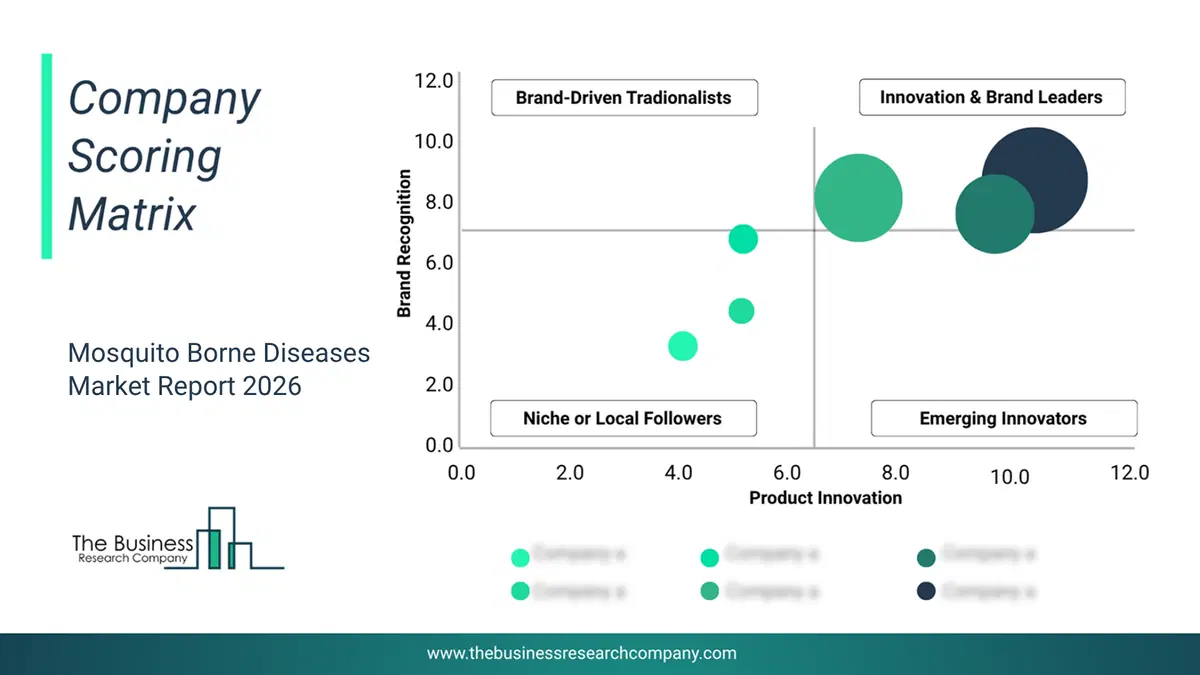
This chart maps companies by product innovation and brand strength, with bubble size indicating relative revenue, helping identify market leaders, challengers, and niche players. This is an illustrative chart; the full report provides a complete and accurate competitive analysis.
Global Mosquito Borne Diseases Market Trends and Insights
Major companies operating in the mosquito-borne diseases market are focusing on developing innovative products, such as advanced mosquito repellents, to enhance the effectiveness of protection against diseases such as malaria, dengue, and Zika. Advanced mosquito repellents refer to innovative products that use long-lasting, effective ingredients or technologies, such as microencapsulation, natural compounds, or wearable devices, to provide enhanced protection against mosquitoes. For instance, in March 2023, Mortein, an Australia-based household insecticide brand, launched Mortein Smart+, a cutting-edge liquid vaporizer designed to offer protection against mosquitoes. This product provides two hours of residual protection even after being turned off, addressing the rising threat of mosquito-borne diseases with quicker and more effective repellency. The launch highlights Mortein's dedication to offering reliable solutions for families, particularly in the fight against mosquito-borne illnesses.What Are Latest Mergers And Acquisitions In The Mosquito Borne Diseases Market?
In February 2024, Kao Corporation, a Japan-based chemicals company, partnered with Earth Corporation to tackle mosquito-borne diseases in Thailand. Together, they launched the ARS Mos Shooter, an eco-friendly spray formulated with advanced surfactant technology and lemongrass essential oil to hinder mosquito flight. This initiative aims to reduce the incidence of dengue fever by promoting community engagement and raising public health awareness. Earth Corporation is a Japan-based company that manufactures and sells household products and insecticides and is actively engaged in addressing mosquito-borne infectious diseases.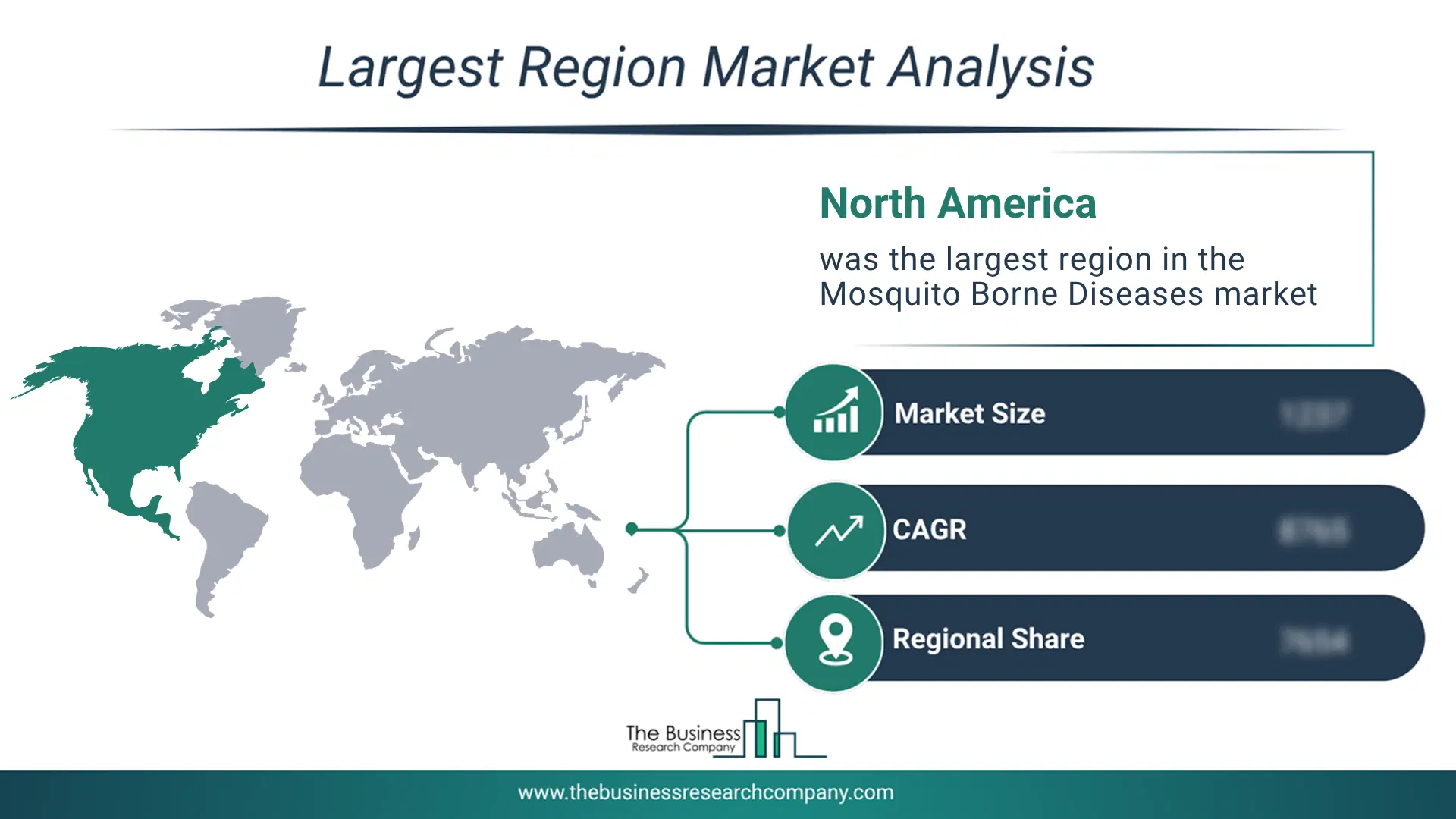
Regional Outlook
North America was the largest region in the mosquito borne diseases market in 2025. Latin America is expected to be the fastest-growing region in the forecast period. The regions covered in this market report are Asia-Pacific, South East Asia, Western Europe, Eastern Europe, North America, South America, Middle East, Africa. The countries covered in this market report are Australia, Brazil, China, France, Germany, India, Indonesia, Japan, Taiwan, Russia, South Korea, UK, USA, Canada, Italy, Spain.What Defines the Mosquito Borne Diseases Market?
The mosquito borne diseases market consists of sales of insecticide-treated bed nets, antimalarial medications, adult mosquito control products, diagnostic kits, and protective clothing. Values in this market are ‘factory gate’ values, that is, the value of goods sold by the manufacturers or creators of the goods, whether to other entities (including downstream manufacturers, wholesalers, distributors, and retailers) or directly to end customers. The value of goods in this market includes related services sold by the creators of the goods.How is Market Value Defined and Measured?
The market value is defined as the revenues that enterprises gain from the sale of goods and/or services within the specified market and geography through sales, grants, or donations in terms of the currency (in USD unless otherwise specified). The revenues for a specified geography are consumption values that are revenues generated by organizations in the specified geography within the market, irrespective of where they are produced. It does not include revenues from resales along the supply chain, either further along the supply chain or as part of other products.
This chart presents market attractiveness based on a quantitative evaluation of growth, competition, strategic alignment, and risk, offering a clear view of opportunity areas for decision-making. This chart is for illustrative purposes; the full report contains the complete analysis.

This chart highlights the Total Addressable Market (TAM) by estimating the maximum revenue opportunity using an assumption-driven approach, supporting strategic planning and opportunity sizing across markets. The chart is illustrative; the full report provides a more comprehensive analysis.
What Key Data and Analysis Are Included in the Mosquito Borne Diseases Market Report 2026?
The mosquito borne diseases market research report is one of a series of new reports from The Business Research Company that provides market statistics, including industry global market size, regional shares, competitors with the market share, detailed market segments, market trends and opportunities, and any further data you may need to thrive in the mosquito borne diseases industry. The market research report delivers a complete perspective of everything you need, with an in-depth analysis of the current and future state of the industry.Mosquito Borne Diseases Market Report Forecast Analysis
| Report Attribute | Details |
|---|---|
| Market Size Value In 2026 | $3.57 billion |
| Revenue Forecast In 2030 | $4.81 billion |
| Growth Rate | CAGR of 7.8% from 2026 to 2030 |
| Base Year For Estimation | 2025 |
| Actual Estimates/Historical Data | 2020-2025 |
| Forecast Period | 2026 - 2030 |
| Market Representation | Revenue in USD Billion and CAGR from 2026 to 2030 |
| Segments Covered | Disease Type, Treatment Type, End User |
| Regional Scope | Asia-Pacific, Western Europe, Eastern Europe, North America, South America, Middle East, Africa |
| Country Scope | The countries covered in the report are Australia, Brazil, China, France, Germany, India, Indonesia, Japan, Taiwan, Russia, South Korea, UK, USA, Canada, Italy, Spain |
| Key Companies Profiled | Johnson & Johnson, Merck & Co Inc, Sanofi SA, Novartis AG, GlaxoSmithKline plc, Serum Institute of India Pvt Ltd, Emergent BioSolutions, Valneva SE, Bharat Biotech, Syngenta, Orkin Inc, RTI International, Vector Control International, Clarke Environmental Mosquito Management, Oxitec Ltd, Abbott Laboratories, Takeda Pharmaceuticals, Sun Pharmaceutical Industries Ltd, Pfizer Inc, Roche Holding AG, Moderna Inc, BioNTech SE, CSL Limited, Bayer AG, BASF SE |
| Customization Scope | Request for Customization |
| Pricing And Purchase Options | Explore Purchase Options |