
MSI-H And dMMR Market Report 2026
Global Outlook – By Treatment Type (Immune Checkpoint Inhibitors (ICIs), Combination Therapy), By Indication (Endometrial, Gastric, Colorectal Cancer, Small Intestine Cancer, Cervical Cancer, Other Indications), By Stage (Early Stages, Advanced Stages), By End User (Hospitals, Oncology Clinics, Research Institutions, Homecare) – Market Size, Trends, Strategies, and Forecast to 2030
MSI-H And dMMR Market Overview
• MSI-H And dMMR market size has reached to $7.57 billion in 2025 • Expected to grow to $21.13 billion in 2030 at a compound annual growth rate (CAGR) of 22.7% • Growth Driver: Rising Prevalence Of Cancer Is Fueling The Market Due To Increasing Demand For Personalized Immunotherapy Approaches • Market Trend: Innovative Combination Therapies Transforming MSI-H And dMMR Cancer Treatment • North America was the largest region in 2025.What Is Covered Under MSI-H And dMMR Market?
MSI-H (microsatellite instability-high) and dMMR (deficient mismatch repair) refer to genetic abnormalities where the DNA repair system fails to correct replication errors, leading to high mutation rates. These markers are commonly found in certain cancers, such as colorectal and endometrial. Tumors with MSI-H and dMMR often respond well to immunotherapy due to their high immunogenicity. The main treatment types for MSI-H and dMMR include immune checkpoint inhibitors (ICIs) and combination therapies. Immune checkpoint inhibitors are drugs that enhance the immune system's ability to fight cancer by blocking proteins such as PD-1, PD-L1, or CTLA-4, which tumors use to suppress immune responses. These treatments are used across various indications, including endometrial cancer, gastric cancer, colorectal cancer, small intestine cancer, cervical cancer, and other indications, and are applicable across different cancer stages, including early stages and advanced stages. These therapies are administered in various settings, such as hospitals, oncology clinics, research institutions, and homecare environments.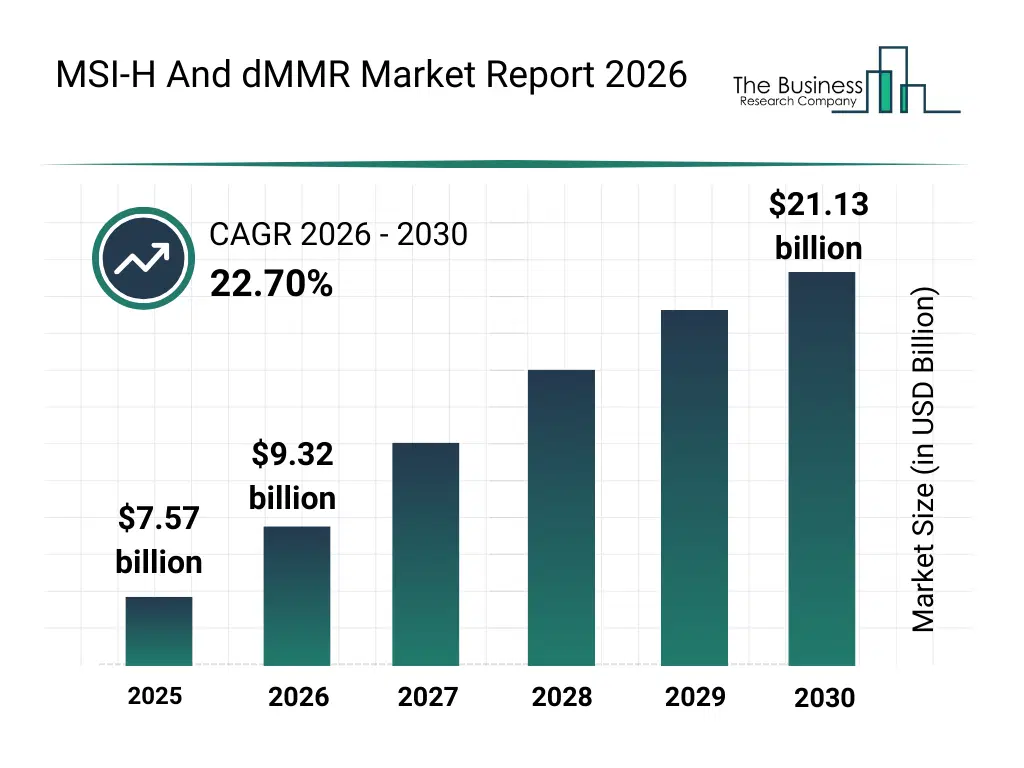
What Is The MSI-H And dMMR Market Size and Share 2026?
The msi-h and dmmr market size has grown exponentially in recent years. It will grow from $7.57 billion in 2025 to $9.32 billion in 2026 at a compound annual growth rate (CAGR) of 23.1%. The growth in the historic period can be attributed to discovery of msi-h and dmmr biomarkers, early success of immune checkpoint inhibitors, rising colorectal and endometrial cancer incidence, expansion of molecular diagnostics, regulatory approvals for biomarker-based therapies.What Is The MSI-H And dMMR Market Growth Forecast?
The msi-h and dmmr market size is expected to see exponential growth in the next few years. It will grow to $21.13 billion in 2030 at a compound annual growth rate (CAGR) of 22.7%. The growth in the forecast period can be attributed to growth in precision oncology adoption, increasing use of genomic testing in cancer care, expansion of immunotherapy indications, rising investment in biomarker research, growing clinical evidence supporting tumor-agnostic approaches. Major trends in the forecast period include increasing adoption of immunotherapy for msi-h and dmmr tumors, growing use of companion diagnostics for patient stratification, rising focus on tumor-agnostic cancer treatments, expansion of combination immunotherapy regimens, increasing awareness of biomarker-driven oncology.
Global MSI-H And dMMR Market Segmentation
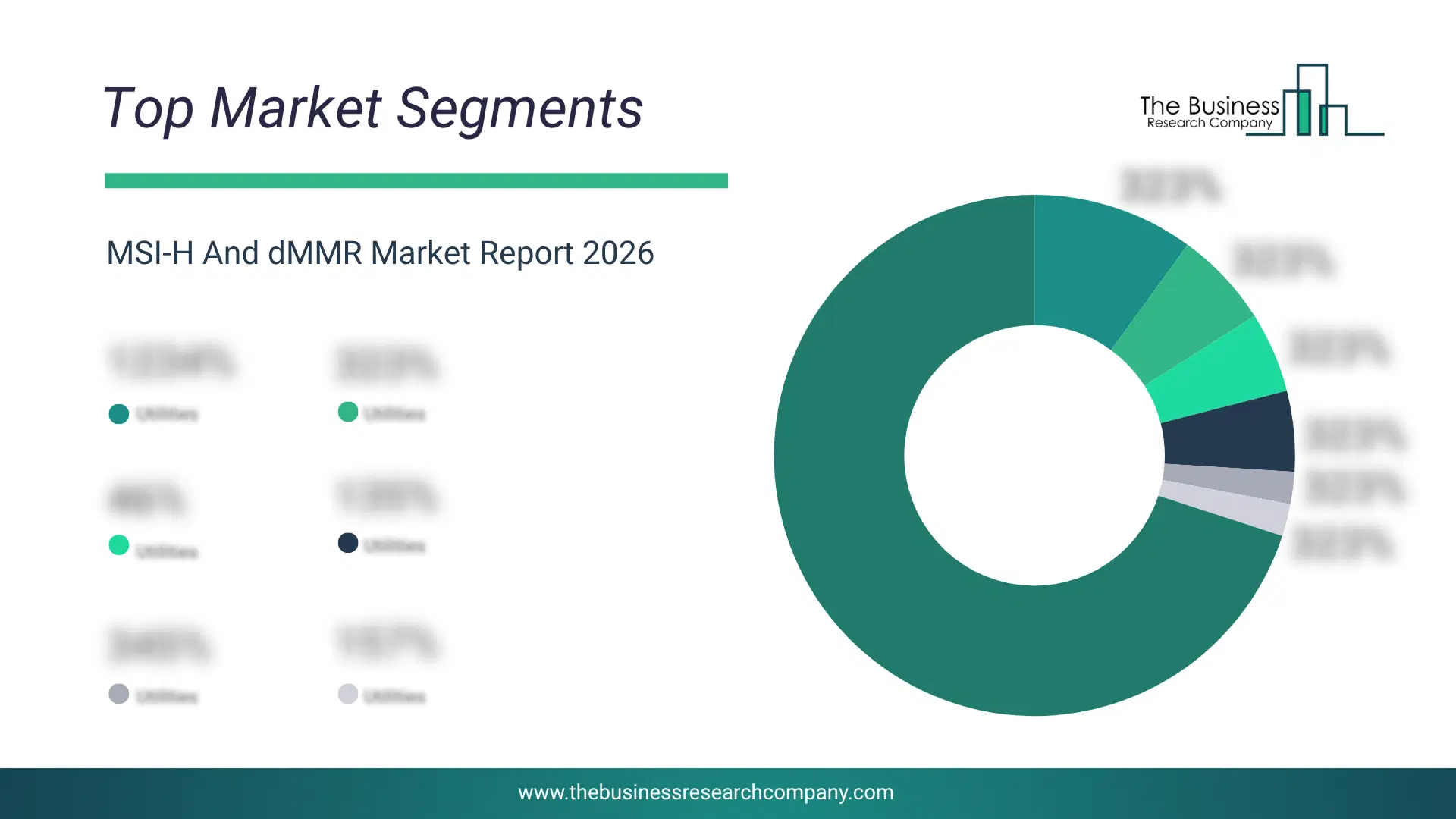
1) By Treatment Type: Immune Checkpoint Inhibitors (ICIs), Combination Therapy 2) By Indication: Endometrial, Gastric, Colorectal Cancer, Small Intestine Cancer, Cervical Cancer, Other Indications 3) By Stage: Early Stages, Advanced Stages 4) By End User: Hospitals, Oncology Clinics, Research Institutions, Homecare Subsegments: 1) By Immune Checkpoint Inhibitors (ICIs): Programmed Cell Death Protein 1 Inhibitors, Programmed Cell Death Ligand 1 Inhibitors, Cytotoxic T-Lymphocyte Antigen 4 Inhibitors 2) By Combination Therapy: Immune Checkpoint Inhibitor + Chemotherapy, Immune Checkpoint Inhibitor + Targeted Therapy, Immune Checkpoint Inhibitor + Radiation Therapy, Immune Checkpoint Inhibitor + Other ImmunotherapiesWhat Is The Driver Of The MSI-H And dMMR Market?
The rising prevalence of cancer is expected to propel the growth of the MSI-H and dMMR market going forward. Cancer refers to a group of diseases characterized by the uncontrolled growth and spread of abnormal cells in the body. The rising prevalence of cancer is primarily due to aging populations, as the risk of developing cancer increases significantly with age because of the cumulative effect of genetic mutations and prolonged exposure to risk factors over time. MSI-H and dMMR are used in cancer to identify tumors with high mutation rates due to defects in DNA repair mechanisms. These biomarkers help guide immunotherapy decisions, as such tumors are more likely to respond to immune checkpoint inhibitors, and they also provide insight into prognosis and potential genetic syndromes. For instance, in January 2024, according to the American Cancer Society, a US-based non-profit organization, in 2023, an estimated 1,958,310 new cancer cases and 609,820 cancer-related deaths were expected in the United States. These numbers are projected to rise in 2024, with approximately 2,001,140 new cancer cases and 611,720 deaths anticipated, highlighting a continuing increase in cancer incidence and mortality. Therefore, the rising prevalence of cancer is driving the growth of the MSI-H and dMMR industry.Key Players In The Global MSI-H And dMMR Market
Major companies operating in the msi-h and dmmr market are Pfizer Inc., F. Hoffmann-La Roche Ltd, Merck & Co. Inc., AbbVie Inc., Bayer AG, Novartis International AG, AstraZeneca PLC, Bristol-Myers Squibb Company, GSK plc., Takeda Pharmaceutical Company, Incyte Corporation, Exact Sciences Corp., BeiGene LTD., Summit Therapeutics Inc., Tempus Labs Inc., Guardant Health, NeoGenomics Laboratories Inc., Promega Corporation, Caris Life Sciences, and Owkin.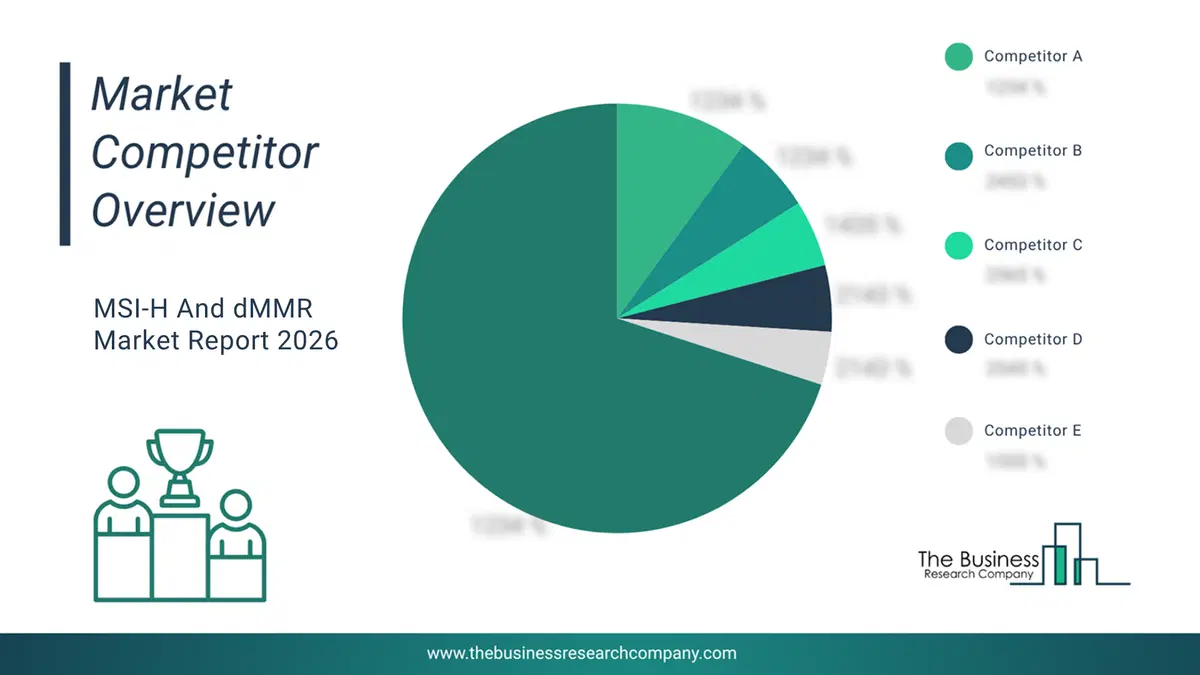
This chart is for illustrative purposes; the full report includes a detailed competitor analysis and comprehensive overview of the top 10 companies in the market.
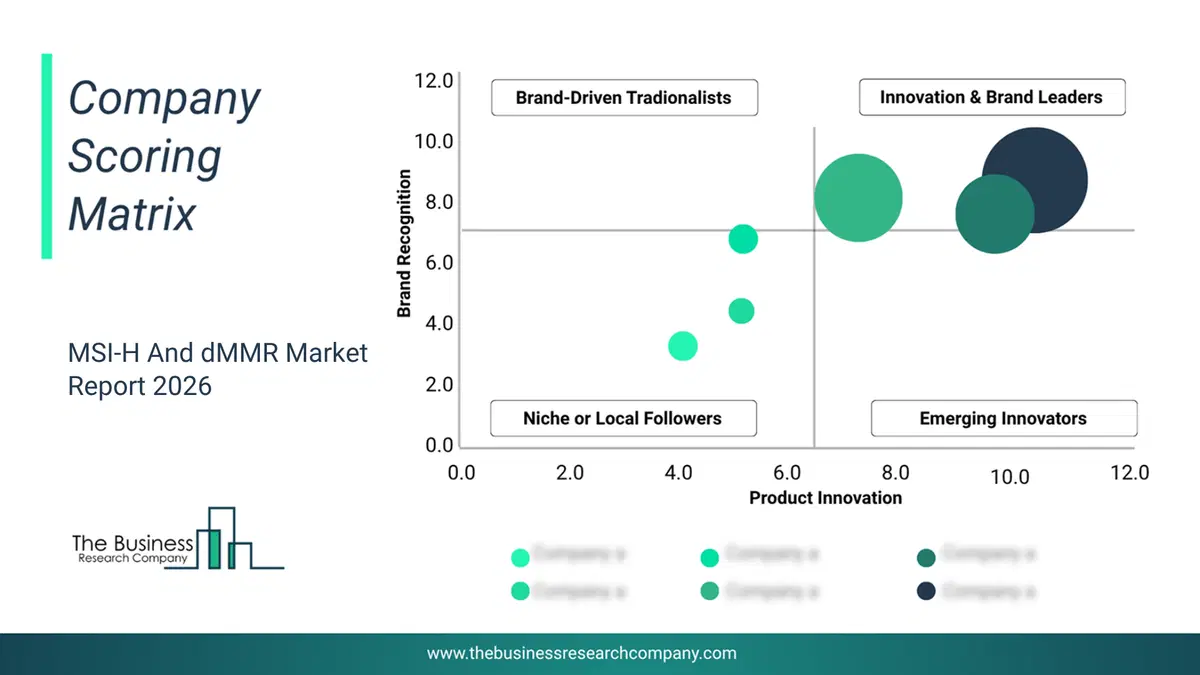
This chart maps companies by product innovation and brand strength, with bubble size indicating relative revenue, helping identify market leaders, challengers, and niche players. This is an illustrative chart; the full report provides a complete and accurate competitive analysis.
Global MSI-H And dMMR Market Trends and Insights
Major companies operating in the MSI-H and dMMR market are focusing on developing innovative treatments, such as combination therapy, to enhance treatment efficacy and improve patient outcomes. Combination therapy for MSI-H and dMMR cancers involves using two or more treatment modalities, commonly immunotherapy agents such as checkpoint inhibitors or combining immunotherapy with chemotherapy, targeted therapy, or radiation. This approach aims to enhance treatment response, overcome resistance, and improve survival outcomes in patients with tumors that exhibit high microsatellite instability or deficient mismatch repair. For instance, in April 2025, Bristol-Myers Squibb Company, a US-based pharmaceutical company, received United States Food and Drug Administration (FDA) approval for the combination of nivolumab (Opdivo) and ipilimumab (Yervoy) as a first-line treatment for metastatic colorectal cancer (mCRC) with microsatellite instability-high (MSI-H) or mismatch repair deficient (dMMR) features, further advancing treatment options for this challenging cancer subtype. This approval marks a significant milestone in the treatment of MSI-H and dMMR cancers, as it provides a new, effective therapeutic option that targets multiple pathways to improve patient survival and response rates, addressing the unmet medical needs in this patient population.What Are Latest Mergers And Acquisitions In The MSI-H And dMMR Market?
In December 2023, Owkin Inc., a France-based company specializing in AI-driven drug discovery and precision medicine, partnered with Merck & Co. Inc. to develop AI-powered digital pathology diagnostics for cancer. This collaboration aims to enhance MSI-H testing rates across various cancer types in the EU market, including endometrial, gastric, small intestinal, and biliary cancers, by leveraging artificial intelligence to improve diagnostic accuracy, streamline laboratory workflows, and better match patients with appropriate treatments. Merck & Co. Inc. is a US-based pharmaceutical company that focuses on providing KEYTRUDA (pembrolizumab) for adult and pediatric patients with unresectable or metastatic microsatellite instability-high (MSI-H) cancer.
Regional Insights
North America was the largest region in the MSI-H and dMMR market in 2025. The regions covered in this market report are Asia-Pacific, South East Asia, Western Europe, Eastern Europe, North America, South America, Middle East, Africa. The countries covered in this market report are Australia, Brazil, China, France, Germany, India, Indonesia, Japan, Taiwan, Russia, South Korea, UK, USA, Canada, Italy, Spain.What Defines the MSI-H And dMMR Market?
The MSI-H and dMMR market consists of revenues earned by entities by providing services such as genetic and molecular diagnostic testing, personalized treatment planning, and immunotherapy administration. The market value includes the value of related goods sold by the service provider or included within the service offering. The MSI-H and dMMR market consists of sales of bispecific antibodies, monoclonal antibodies, and oncolytic virus therapy. Values in this market are ‘factory gate’ values, that is the value of goods sold by the manufacturers or creators of the goods, whether to other entities (including downstream manufacturers, wholesalers, distributors and retailers) or directly to end customers. The value of goods in this market includes related services sold by the creators of the goods.How is Market Value Defined and Measured?
The market value is defined as the revenues that enterprises gain from the sale of goods and/or services within the specified market and geography through sales, grants, or donations in terms of the currency (in USD unless otherwise specified). The revenues for a specified geography are consumption values that are revenues generated by organizations in the specified geography within the market, irrespective of where they are produced. It does not include revenues from resales along the supply chain, either further along the supply chain or as part of other products.
This chart presents market attractiveness based on a quantitative evaluation of growth, competition, strategic alignment, and risk, offering a clear view of opportunity areas for decision-making. This chart is for illustrative purposes; the full report contains the complete analysis.

This chart highlights the Total Addressable Market (TAM) by estimating the maximum revenue opportunity using an assumption-driven approach, supporting strategic planning and opportunity sizing across markets. The chart is illustrative; the full report provides a more comprehensive analysis.
What Key Data and Analysis Are Included in the MSI-H And dMMR Market Report 2026?
The msi-h and dmmr market research report is one of a series of new reports from The Business Research Company that provides market statistics, including industry global market size, regional shares, competitors with the market share, detailed market segments, market trends and opportunities, and any further data you may need to thrive in the msi-h and dmmr industry. The market research report delivers a complete perspective of everything you need, with an in-depth analysis of the current and future state of the industry.MSI-H And dMMR Market Report Forecast Analysis
| Report Attribute | Details |
|---|---|
| Market Size Value In 2026 | $9.32 billion |
| Revenue Forecast In 2030 | $21.13 billion |
| Growth Rate | CAGR of 23.1% from 2026 to 2030 |
| Base Year For Estimation | 2025 |
| Actual Estimates/Historical Data | 2020-2025 |
| Forecast Period | 2026 - 2030 |
| Market Representation | Revenue in USD Billion and CAGR from 2026 to 2030 |
| Segments Covered | Treatment Type, Indication, Stage, End User |
| Regional Scope | Asia-Pacific, Western Europe, Eastern Europe, North America, South America, Middle East, Africa |
| Country Scope | The countries covered in the report are Australia, Brazil, China, France, Germany, India, Indonesia, Japan, Taiwan, Russia, South Korea, UK, USA, Canada, Italy, Spain. |
| Key Companies Profiled | Pfizer Inc., F. Hoffmann-La Roche Ltd, Merck & Co. Inc., AbbVie Inc., Bayer AG, Novartis International AG, AstraZeneca PLC, Bristol-Myers Squibb Company, GSK plc., Takeda Pharmaceutical Company, Incyte Corporation, Exact Sciences Corp., BeiGene LTD., Summit Therapeutics Inc., Tempus Labs Inc., Guardant Health, NeoGenomics Laboratories Inc., Promega Corporation, Caris Life Sciences, and Owkin. |
| Customization Scope | Request for Customization |
| Pricing And Purchase Options | Explore Purchase Options |